Informed Consent
Speaker
Dr. Abhinav Prakash Arya
Department of General Surgery
AIIMS, Deoghar
Informed Consent
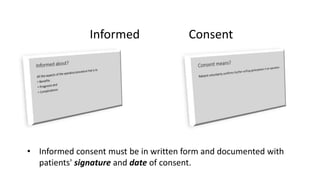
• Informed consent must be in written form and documented with
patients' signature and date of consent.
Consent means?
Patient voluntarily confirms his/her willing participation in an operation
Informed about?
All the aspects of the operation/procedure that is its
• Benefits
• Prognosis and
• Complications
Legality
• Autonomy: patients have to make decisions according to their beliefs
or preference
• Competence: ability or capacity to make specific decision for oneself
• Battery: application of force to a person’s body without consent
• Negligence: Failure in duty of care
Components of Informed Consent
1. Competence
2. Disclosure
3. Understanding
4. Voluntariness
5. Consent
Capacity to Consent
• To give informed consent, a person must have the capacity to
understand and communicate what they are agreeing to.
• People who lack capacity:
1. Children (<16yr)
2. Mentally Incapable
3. Living Will
4. Emergency Situations
Checklist
1. Name of operation
2. Nature of proposed treatment
3. What the operation involves
4. Other treatment options or alternatives
5. Potential complications
6. Risks of operation
7. Risks of no treatment
Modes of Consent
1. Implied Consent
2. Express written consent
3. Express verbal consent
SPECIAL CONSIDERATIONS
1. Emergencies
Treatment can be provided without consent where where delay in
treatment would lead to serious harm or death
NB: However, you must respect any valid advance refusals that you
know about or are drawn to your attention.
2. Mentally Incapable Patients
• Assess patient’s competence to make an informed decision.
• If unable to decide, and provided they comply, treatment may be instigated
that is judged to be in their best interest.
3. Advanced Statements/ Living Will
• A/S made by patients before loosing their capacity of informed consent must
be respected.
4. Children
• Under 16 – Parents or Guardians would see at the best of interest of
the child
• Over 16 – regarded as young adults and have capacity to decide
• Unlike adults if competent child refuses treatment , a person with
parental responsibility or a court may authorize treatment deemed in
the child’s best of interest
5. Pregnancy
• Right to autonomy
• Right to refuse treatment that is intended to benefit the unborn child.
Consequences of failure to obtain valid consent
• Treatment without consent = BATTERY
• (Including No consent or WRONG procedure)
• Treatment with poor or invalid consent = NEGLIGENCE
Thank You
abhinav.generalsurgery@aiimsdeoghar.edu.in

Informed consent

  • 1.
    Informed Consent Speaker Dr. AbhinavPrakash Arya Department of General Surgery AIIMS, Deoghar
  • 2.
    Informed Consent • Informedconsent must be in written form and documented with patients' signature and date of consent.
  • 3.
    Consent means? Patient voluntarilyconfirms his/her willing participation in an operation
  • 4.
    Informed about? All theaspects of the operation/procedure that is its • Benefits • Prognosis and • Complications
  • 5.
    Legality • Autonomy: patientshave to make decisions according to their beliefs or preference • Competence: ability or capacity to make specific decision for oneself • Battery: application of force to a person’s body without consent • Negligence: Failure in duty of care
  • 6.
    Components of InformedConsent 1. Competence 2. Disclosure 3. Understanding 4. Voluntariness 5. Consent
  • 7.
    Capacity to Consent •To give informed consent, a person must have the capacity to understand and communicate what they are agreeing to. • People who lack capacity: 1. Children (<16yr) 2. Mentally Incapable 3. Living Will 4. Emergency Situations
  • 8.
    Checklist 1. Name ofoperation 2. Nature of proposed treatment 3. What the operation involves 4. Other treatment options or alternatives 5. Potential complications 6. Risks of operation 7. Risks of no treatment
  • 9.
    Modes of Consent 1.Implied Consent 2. Express written consent 3. Express verbal consent
  • 10.
    SPECIAL CONSIDERATIONS 1. Emergencies Treatmentcan be provided without consent where where delay in treatment would lead to serious harm or death NB: However, you must respect any valid advance refusals that you know about or are drawn to your attention.
  • 11.
    2. Mentally IncapablePatients • Assess patient’s competence to make an informed decision. • If unable to decide, and provided they comply, treatment may be instigated that is judged to be in their best interest. 3. Advanced Statements/ Living Will • A/S made by patients before loosing their capacity of informed consent must be respected.
  • 12.
    4. Children • Under16 – Parents or Guardians would see at the best of interest of the child • Over 16 – regarded as young adults and have capacity to decide • Unlike adults if competent child refuses treatment , a person with parental responsibility or a court may authorize treatment deemed in the child’s best of interest 5. Pregnancy • Right to autonomy • Right to refuse treatment that is intended to benefit the unborn child.
  • 13.
    Consequences of failureto obtain valid consent • Treatment without consent = BATTERY • (Including No consent or WRONG procedure) • Treatment with poor or invalid consent = NEGLIGENCE
  • 14.