1. Definition of EBV / Infectious mononucleosis
2. Pathophysiology
3. Clinical presentation / complication
4. Risk factors
5. Diagnosis
6. Treatment and management
Definition
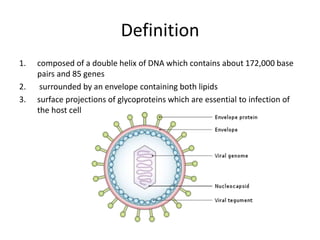
1. composed of a double helix of DNA which contains about 172,000 base
pairs and 85 genes
2. surrounded by an envelope containing both lipids
3. surface projections of glycoproteins which are essential to infection of
the host cell
Definition
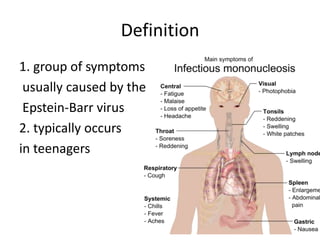
1. group of symptoms
usually caused by the
Epstein-Barr virus
2. typically occurs
in teenagers
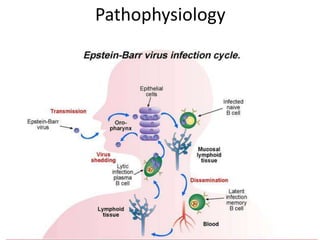
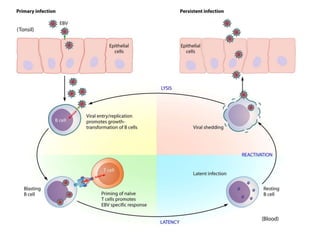
Pathophysiology
Clinical presentation
Typically presented with
1. Fever
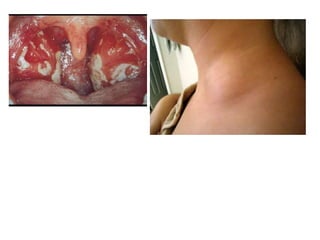
2. Pharyngitis
3. Lymphadenopathy
4. Fatiuge
5. Atypical lymphocytosis
6. Splenomegaly
Complications
1- Neurologic complications (encephalitis, seizures,
peripheral neuropathy, viral meningitis)
• 2- Hematologic complications Granulocytopenia,
Thrombocytopenia, Hemolytic anemia
3- Splenic rupture
4- Respiratory complications upper airway obstruction
due to pharyngeal or paratracheal lymphadenopathy
5- Hepatic complications elevated aminotransferase
levels
Risk factors
• Anyone who regularly comes into close
contact with large numbers of people is at an
increased risk for mono
• people between the ages of 15 and 30
• School / College Students
• medical Staff
Diagnosis
• Most important diagnostic test is full history
and clinical examination
• Look for the classical tried ( fever – pharyngitis
– lymphadenopathy )
• Look for the other symptoms
Laboratory investigations
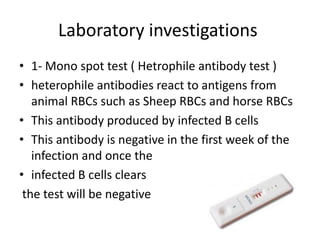
• 1- Mono spot test ( Hetrophile antibody test )
• heterophile antibodies react to antigens from
animal RBCs such as Sheep RBCs and horse RBCs
• This antibody produced by infected B cells
• This antibody is negative in the first week of the
infection and once the
• infected B cells clears
the test will be negative
Laboratory investigations
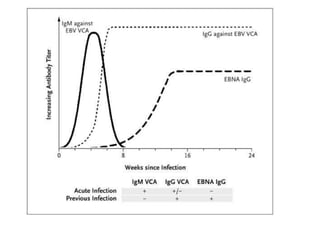
• 2- Anti- VCA Antibody
• Anti viral caspid antigene Antibodies
• Produced by the immune system
• Appears early in the course of the infection and persist
permanently
• 3- Anti EBNA Antibody
• Appears late after the infection
• If all Labs are negative and you still suspect
Mononucleosis infection then look for other causes ?
Other causes of infectious
mononucleosis
• CMV
• HIV
• Toxoplasmosis
• Human herpesvirus type 6 (HHV-6)
• Hepatitis
Laboratory investigations
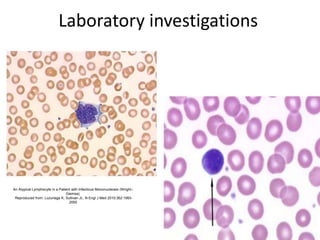
An Atypical Lymphocyte in a Patient with Infectious Mononucleosis (Wright–
Giemsa).
Reproduced from: Luzuriaga K, Sullivan JL. N Engl J Med 2010;362:1993-
2000
Imaging
Treatment and management
• In most cases is supportive tratment only….
1. Rest
2. Hydrated
3. pain medications such as acetaminophen
Acyclovir ?
inhibits permissive EBV infection through inhibition of EBV
DNA-polymerase but has no effect on latent infection or
ability to cure the infection
Treatment and management
• Corticosteroids ?
• generally should not be used in uncomplicated
disease
• helpful for complications such as impending
airway obstruction, severe thrombocytopenia,
and hemolytic anemia
infectious mononucleosis

infectious mononucleosis

  • 2.
    1. Definition ofEBV / Infectious mononucleosis 2. Pathophysiology 3. Clinical presentation / complication 4. Risk factors 5. Diagnosis 6. Treatment and management
  • 3.
    Definition 1. composed ofa double helix of DNA which contains about 172,000 base pairs and 85 genes 2. surrounded by an envelope containing both lipids 3. surface projections of glycoproteins which are essential to infection of the host cell
  • 4.
    Definition 1. group ofsymptoms usually caused by the Epstein-Barr virus 2. typically occurs in teenagers
  • 5.
  • 7.
    Clinical presentation Typically presentedwith 1. Fever 2. Pharyngitis 3. Lymphadenopathy 4. Fatiuge 5. Atypical lymphocytosis 6. Splenomegaly
  • 9.
    Complications 1- Neurologic complications(encephalitis, seizures, peripheral neuropathy, viral meningitis) • 2- Hematologic complications Granulocytopenia, Thrombocytopenia, Hemolytic anemia 3- Splenic rupture 4- Respiratory complications upper airway obstruction due to pharyngeal or paratracheal lymphadenopathy 5- Hepatic complications elevated aminotransferase levels
  • 10.
    Risk factors • Anyonewho regularly comes into close contact with large numbers of people is at an increased risk for mono • people between the ages of 15 and 30 • School / College Students • medical Staff
  • 11.
    Diagnosis • Most importantdiagnostic test is full history and clinical examination • Look for the classical tried ( fever – pharyngitis – lymphadenopathy ) • Look for the other symptoms
  • 12.
    Laboratory investigations • 1-Mono spot test ( Hetrophile antibody test ) • heterophile antibodies react to antigens from animal RBCs such as Sheep RBCs and horse RBCs • This antibody produced by infected B cells • This antibody is negative in the first week of the infection and once the • infected B cells clears the test will be negative
  • 13.
    Laboratory investigations • 2-Anti- VCA Antibody • Anti viral caspid antigene Antibodies • Produced by the immune system • Appears early in the course of the infection and persist permanently • 3- Anti EBNA Antibody • Appears late after the infection • If all Labs are negative and you still suspect Mononucleosis infection then look for other causes ?
  • 14.
    Other causes ofinfectious mononucleosis • CMV • HIV • Toxoplasmosis • Human herpesvirus type 6 (HHV-6) • Hepatitis
  • 16.
    Laboratory investigations An AtypicalLymphocyte in a Patient with Infectious Mononucleosis (Wright– Giemsa). Reproduced from: Luzuriaga K, Sullivan JL. N Engl J Med 2010;362:1993- 2000
  • 17.
  • 18.
    Treatment and management •In most cases is supportive tratment only…. 1. Rest 2. Hydrated 3. pain medications such as acetaminophen Acyclovir ? inhibits permissive EBV infection through inhibition of EBV DNA-polymerase but has no effect on latent infection or ability to cure the infection
  • 19.
    Treatment and management •Corticosteroids ? • generally should not be used in uncomplicated disease • helpful for complications such as impending airway obstruction, severe thrombocytopenia, and hemolytic anemia