Indoor Positioning System using BLE Beacons
Authors: Ajin Tom, Aniket Rege, Abhishek Shanthkumar
Contributors: Prateek Wadhwani, Manisha Jhawar, Ashritha Kandiraju, Snehal Jauhri
National Institute of Techology Karnataka, Surathkal
Objectives
The major objective of the project was to create
an indoor positioning system (IPS) to locate peo-
ple inside a building infrastructure using sensory
information collected by mobile devices, specifi-
cally by measuring distances to nearby Bluetooth
anchor nodes using Bluetooth Low Energy (BLE)
technology, and dynamically displaying the loca-
tion in a GUI. This can be extended to applica-
tions in:
• Indoor Positioning/Navigation
• Mobile Tracking
• Location Sharing
• Proximity Notifications
• Contextualized Information
• Real-Time Messaging
Motivation
BLE vs. GPS for IPS
GPS technology is generally used for tracking ob-
jects through satellites in lower Earth orbit. It is ac-
curate to a distance of 5-10 meters.In an indoor envi-
ronment, this level of accuracy is not usable. Hence
we use BLE nodes and a trilateration algorithm to
obtain an accuracy suitable for these dimensions.
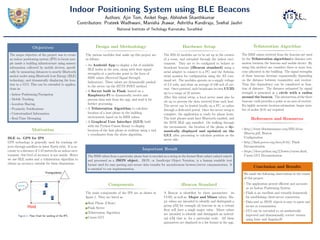
Figure 1: Flow Chart for working of the IPS
Design and Methodology
The various modules that make up this project are
as follows:
• An Android App to display a list of available
BLE nodes in the area, along with their signal
strengths at a particular point in the form of
RSSI values (Received Signal Strength
Indication). These values are dynamically pushed
to the server via the HTTP POST method.
• A Server built in Flask, hosted on a
Raspberry-Pi to dynamically receive and
process data sent from the app, and send it for
further processing.
• A Trilateration Algorithm to calculate
location of a host phone in the building
environment based on its RSSI values.
• A Graphcal User Interface (GUI) built
with the Python Curses library to display
location of the host phone in realtime using x and
y coordinates from the above algorithm.
Hardware Setup
The HM-10 modules are to be set up in the corners
of a room, and extended through the indoor envi-
ronment. They are to be configured to behave as
broadcast beacons (iBeacon standard) using a
serial adapter to connect to a PC, and the Arduino
serial monitor for configuration using the AT com-
mand set. The modules operate on a supply voltage
of 3.3 volts, and draw an average of 180 mA of cur-
rent. Once powered, each broadcasts its own UUID
up to a range of 10 meters.
After this initial setup, a local server must also be
set up to process the data received from each host.
The server can be hosted locally on a PC, or online
through a dedicated portal. Once the server setup is
complete, the application is ready for phone hosts.
The host phones must have Bluetooth enabled, and
the ISTE BLE app installed. On walking through
the environment, the location of the phone is dy-
namically displayed and updated on the
GUI, after processing to calculate position on the
server side.
Important Result
The RSSI values from a particular phone host is encoded as a string in the format Host,value1,value2,value3;
and processed as a JSON object. JSON, or JavaScript Object Notation, is a human readable text
format used for easy parsing and secure data transfer for asynchronous browser/server communication. It
is essential to our implementation.
Components
The main components of the IPS are as shown in
figure 1. They are listed as:
1 Host Phone (Client)
2 Flask Server
3 Trilateration Algorithm
4 Curses GUI
iBeacon Standard
A Beacon is identified by three parameters: its
UUID, as well as Major and Minor values. Ma-
jor values are intended to identify and distinguish a
group âĂŞ for example all beacons in on a certain
floor will have a single major value. Minor values
are intended to identify and distinguish an individ-
ual âĂŞ that is, for a particular node. All these
parameters are displayed in a list format in the app.
Trilateration Algorithm
The RSSI values received from the beacons are used
by the Trilateration algorithmfor distance esti-
mation between the beacons and mobile device. By
using this method one considers three or more bea-
cons allocated in the building. The signal strengths
of these beacons decrease exponentially depending
on the distance between transmitter and receiver.
Thus this dependency can be considered as func-
tion of distance. The distance estimated by signal
strength is presented as a circle with a radius
around the beacon. The intersection of the three
beacons’ radii provides a point or an area of receiver.
For highly accurate location estimation, larger num-
ber of nodes (6-8) are required.
References and Resources
• http://www.blueluminance.com/HM-10-as-
iBeacon.pdf, Beacon
Configuration
• http://flask.pocoo.org/docs/0.10/, Flask
Documentation
• https://docs.python.org/2/howto/curses.html,
Curses GUI Documentation
Conclusion and Results
We made the following observations in the course
of this project:
• The application proved efficient and accurate
as an Indoor Positioning System
• Flask is an excellent and versatile framework
for establishing client-server connection
• Data sent as JSON objects is easy to parse and
secure in transmission
• GUI can be extended to an aesthetically
improved and dimensionally correct version
using Ionic and AngularJS

indoor-positioning-system

  • 1.
    Indoor Positioning Systemusing BLE Beacons Authors: Ajin Tom, Aniket Rege, Abhishek Shanthkumar Contributors: Prateek Wadhwani, Manisha Jhawar, Ashritha Kandiraju, Snehal Jauhri National Institute of Techology Karnataka, Surathkal Objectives The major objective of the project was to create an indoor positioning system (IPS) to locate peo- ple inside a building infrastructure using sensory information collected by mobile devices, specifi- cally by measuring distances to nearby Bluetooth anchor nodes using Bluetooth Low Energy (BLE) technology, and dynamically displaying the loca- tion in a GUI. This can be extended to applica- tions in: • Indoor Positioning/Navigation • Mobile Tracking • Location Sharing • Proximity Notifications • Contextualized Information • Real-Time Messaging Motivation BLE vs. GPS for IPS GPS technology is generally used for tracking ob- jects through satellites in lower Earth orbit. It is ac- curate to a distance of 5-10 meters.In an indoor envi- ronment, this level of accuracy is not usable. Hence we use BLE nodes and a trilateration algorithm to obtain an accuracy suitable for these dimensions. Figure 1: Flow Chart for working of the IPS Design and Methodology The various modules that make up this project are as follows: • An Android App to display a list of available BLE nodes in the area, along with their signal strengths at a particular point in the form of RSSI values (Received Signal Strength Indication). These values are dynamically pushed to the server via the HTTP POST method. • A Server built in Flask, hosted on a Raspberry-Pi to dynamically receive and process data sent from the app, and send it for further processing. • A Trilateration Algorithm to calculate location of a host phone in the building environment based on its RSSI values. • A Graphcal User Interface (GUI) built with the Python Curses library to display location of the host phone in realtime using x and y coordinates from the above algorithm. Hardware Setup The HM-10 modules are to be set up in the corners of a room, and extended through the indoor envi- ronment. They are to be configured to behave as broadcast beacons (iBeacon standard) using a serial adapter to connect to a PC, and the Arduino serial monitor for configuration using the AT com- mand set. The modules operate on a supply voltage of 3.3 volts, and draw an average of 180 mA of cur- rent. Once powered, each broadcasts its own UUID up to a range of 10 meters. After this initial setup, a local server must also be set up to process the data received from each host. The server can be hosted locally on a PC, or online through a dedicated portal. Once the server setup is complete, the application is ready for phone hosts. The host phones must have Bluetooth enabled, and the ISTE BLE app installed. On walking through the environment, the location of the phone is dy- namically displayed and updated on the GUI, after processing to calculate position on the server side. Important Result The RSSI values from a particular phone host is encoded as a string in the format Host,value1,value2,value3; and processed as a JSON object. JSON, or JavaScript Object Notation, is a human readable text format used for easy parsing and secure data transfer for asynchronous browser/server communication. It is essential to our implementation. Components The main components of the IPS are as shown in figure 1. They are listed as: 1 Host Phone (Client) 2 Flask Server 3 Trilateration Algorithm 4 Curses GUI iBeacon Standard A Beacon is identified by three parameters: its UUID, as well as Major and Minor values. Ma- jor values are intended to identify and distinguish a group âĂŞ for example all beacons in on a certain floor will have a single major value. Minor values are intended to identify and distinguish an individ- ual âĂŞ that is, for a particular node. All these parameters are displayed in a list format in the app. Trilateration Algorithm The RSSI values received from the beacons are used by the Trilateration algorithmfor distance esti- mation between the beacons and mobile device. By using this method one considers three or more bea- cons allocated in the building. The signal strengths of these beacons decrease exponentially depending on the distance between transmitter and receiver. Thus this dependency can be considered as func- tion of distance. The distance estimated by signal strength is presented as a circle with a radius around the beacon. The intersection of the three beacons’ radii provides a point or an area of receiver. For highly accurate location estimation, larger num- ber of nodes (6-8) are required. References and Resources • http://www.blueluminance.com/HM-10-as- iBeacon.pdf, Beacon Configuration • http://flask.pocoo.org/docs/0.10/, Flask Documentation • https://docs.python.org/2/howto/curses.html, Curses GUI Documentation Conclusion and Results We made the following observations in the course of this project: • The application proved efficient and accurate as an Indoor Positioning System • Flask is an excellent and versatile framework for establishing client-server connection • Data sent as JSON objects is easy to parse and secure in transmission • GUI can be extended to an aesthetically improved and dimensionally correct version using Ionic and AngularJS