Rebecca Seippel, Thomas DeMarco, and Julia Kemper


8/17/12


                                       Indirect Statement


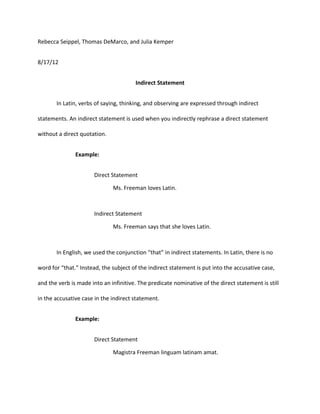
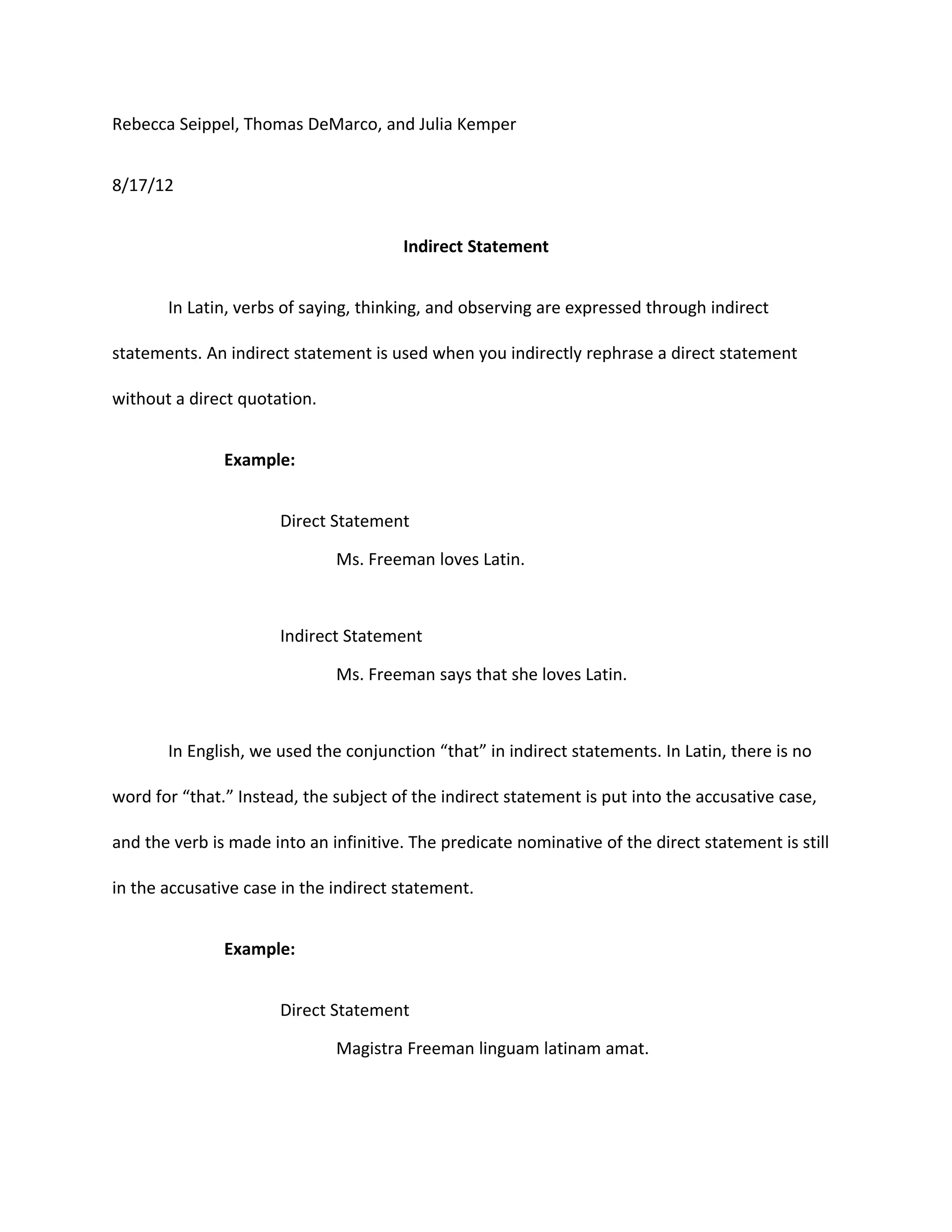
       In Latin, verbs of saying, thinking, and observing are expressed through indirect

statements. An indirect statement is used when you indirectly rephrase a direct statement

without a direct quotation.


               Example:


                      Direct Statement

                              Ms. Freeman loves Latin.


                      Indirect Statement

                              Ms. Freeman says that she loves Latin.


       In English, we used the conjunction “that” in indirect statements. In Latin, there is no

word for “that.” Instead, the subject of the indirect statement is put into the accusative case,

and the verb is made into an infinitive. The predicate nominative of the direct statement is still

in the accusative case in the indirect statement.


               Example:


                      Direct Statement

                              Magistra Freeman linguam latinam amat.
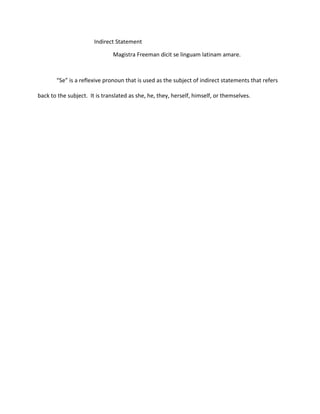
Indirect Statement

                               Magistra Freeman dicit se linguam latinam amare.


       “Se” is a reflexive pronoun that is used as the subject of indirect statements that refers

back to the subject. It is translated as she, he, they, herself, himself, or themselves.
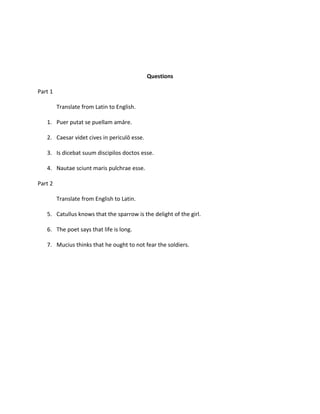
Questions

Part 1

         Translate from Latin to English.

   1. Puer putat se puellam amāre.

   2. Caesar videt cives in periculō esse.

   3. Is dicebat suum discipilos doctos esse.

   4. Nautae sciunt maris pulchrae esse.

Part 2

         Translate from English to Latin.

   5. Catullus knows that the sparrow is the delight of the girl.

   6. The poet says that life is long.

   7. Mucius thinks that he ought to not fear the soldiers.
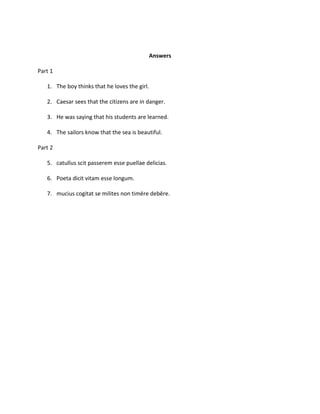
Answers

Part 1

   1. The boy thinks that he loves the girl.

   2. Caesar sees that the citizens are in danger.

   3. He was saying that his students are learned.

   4. The sailors know that the sea is beautiful.

Part 2

   5. catullus scit passerem esse puellae delicias.

   6. Poeta dicit vitam esse longum.

   7. mucius cogitat se milites non timēre debēre.

Indirectstatement

  • 1.
    Rebecca Seippel, ThomasDeMarco, and Julia Kemper 8/17/12 Indirect Statement In Latin, verbs of saying, thinking, and observing are expressed through indirect statements. An indirect statement is used when you indirectly rephrase a direct statement without a direct quotation. Example: Direct Statement Ms. Freeman loves Latin. Indirect Statement Ms. Freeman says that she loves Latin. In English, we used the conjunction “that” in indirect statements. In Latin, there is no word for “that.” Instead, the subject of the indirect statement is put into the accusative case, and the verb is made into an infinitive. The predicate nominative of the direct statement is still in the accusative case in the indirect statement. Example: Direct Statement Magistra Freeman linguam latinam amat.
  • 2.
    Indirect Statement Magistra Freeman dicit se linguam latinam amare. “Se” is a reflexive pronoun that is used as the subject of indirect statements that refers back to the subject. It is translated as she, he, they, herself, himself, or themselves.
  • 3.
    Questions Part 1 Translate from Latin to English. 1. Puer putat se puellam amāre. 2. Caesar videt cives in periculō esse. 3. Is dicebat suum discipilos doctos esse. 4. Nautae sciunt maris pulchrae esse. Part 2 Translate from English to Latin. 5. Catullus knows that the sparrow is the delight of the girl. 6. The poet says that life is long. 7. Mucius thinks that he ought to not fear the soldiers.
  • 4.
    Answers Part 1 1. The boy thinks that he loves the girl. 2. Caesar sees that the citizens are in danger. 3. He was saying that his students are learned. 4. The sailors know that the sea is beautiful. Part 2 5. catullus scit passerem esse puellae delicias. 6. Poeta dicit vitam esse longum. 7. mucius cogitat se milites non timēre debēre.