PRESENTED BY
BHUPESHKUMAR M.V. NANHE
DEPARTMENT OF FORENSIC SCIENCE,
SHRI SHIVAJI COLLEGE OF ARTS, COMMERCE & SCIENCE, AKOLA (MH)
Synopsis
Introduction to Computer Security Incident
Goals of Incident Response
Experts involves in Incident Response
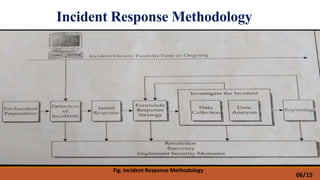
Incident Response Methodology
Pre-Incident Preparation
Detection of Incident
Formulate a Response Strategy
Data Collection
Data Analysis
Reporting
Resolution
02/15
Introduction to Computer Security Incident
Computer Security Incident as any unlawful, unauthorized or
unacceptable action that involve a computer system or a computer
network.
Such actions can be;
Email harassment
Embezzlement
Possession and dissemination of child pornography
DoS attacks
Theft of trade secretes
03/15
Goals of Incident Response
Confirms whether an incident occurred or not
Minimizes disruption of business and network operation
Promote accumulation of accurate information
Protect privacy rights established by law and policy
Provide accurate report and useful recommendations
Allows criminal or civil actions against perpetrator(s)
Protect your organization’s reputation and assest
Educates senior management
04/15
Experts involves in Incident Response Process
Computer Security Incident Response Team (CSIRT) respond the
incident and that includes followings experts.
 Technical experts,
 Cyber Security experts,
 Legal counsel,
 Corporate security officer,
 Business Managers,
 End User
 Human Recourses personnel
 Workers
05/15
Incident Response Methodology
Fig. Incident Response Methodology
06/15
Pre-Incident Preparation
Preparation of Organization
Implementing host based security
Implementing network based security
Employing an intrusion detection system (IDS)
Creating strong access control
Training end user
Preparation of CSIRT
The hardware needed to investigate computer security incidents
The software needed to investigate computer security incidents
The documentation needed to investigate computer security incidents
07/15
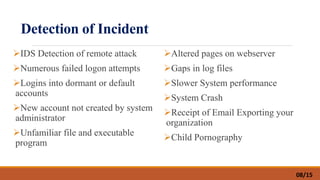
Detection of Incident
IDS Detection of remote attack
Numerous failed logon attempts
Logins into dormant or default
accounts
New account not created by system
administrator
Unfamiliar file and executable
program
Altered pages on webserver
Gaps in log files
Slower System performance
System Crash
Receipt of Email Exporting your
organization
Child Pornography
08/15
Initial Response
Interviewing the system administration
Interviewing business unit personnel
Reviewing the IDS report and network-based logs to identify the
data
Reviewing the network topologies and access control list .
09/15
Formulate a Response Strategy
Based on the results of all known facts, determine the best response and
obtain management approval.
Determine what civil, criminal, administrative or other actions area
appropriate to take, based on the conclusion drawn from the investigation.
10/15
Data Collection
1. Network Based Evidence
Obtain IDS logs
Obtain existing router logs
Obtain relevant firewall logs
Perform network monitoring
Obtain Backup
2. Host Based Evidence
Obtain volatile data during a live response
Obtain the system time/date for every file on the victim system
 Obtain backup
3. Other Evidence
 Obtain oral testimony from witnesses
11/15
Forensic Analysis
Fig. Forensic Analysis 12/15
Reporting
Documents immediately
Write concisely
Use standard format
13/15
Resolution
Identify the organization’s top priorities and resolve them
 Returning all the system in operational status
Implement proper computer as well as network security
Restore any affected or compromised system
 Apply corrections required to address any host-based vulnerabilities
14/15
15/15

Incident response process

  • 1.
    PRESENTED BY BHUPESHKUMAR M.V.NANHE DEPARTMENT OF FORENSIC SCIENCE, SHRI SHIVAJI COLLEGE OF ARTS, COMMERCE & SCIENCE, AKOLA (MH)
  • 2.
    Synopsis Introduction to ComputerSecurity Incident Goals of Incident Response Experts involves in Incident Response Incident Response Methodology Pre-Incident Preparation Detection of Incident Formulate a Response Strategy Data Collection Data Analysis Reporting Resolution 02/15
  • 3.
    Introduction to ComputerSecurity Incident Computer Security Incident as any unlawful, unauthorized or unacceptable action that involve a computer system or a computer network. Such actions can be; Email harassment Embezzlement Possession and dissemination of child pornography DoS attacks Theft of trade secretes 03/15
  • 4.
    Goals of IncidentResponse Confirms whether an incident occurred or not Minimizes disruption of business and network operation Promote accumulation of accurate information Protect privacy rights established by law and policy Provide accurate report and useful recommendations Allows criminal or civil actions against perpetrator(s) Protect your organization’s reputation and assest Educates senior management 04/15
  • 5.
    Experts involves inIncident Response Process Computer Security Incident Response Team (CSIRT) respond the incident and that includes followings experts.  Technical experts,  Cyber Security experts,  Legal counsel,  Corporate security officer,  Business Managers,  End User  Human Recourses personnel  Workers 05/15
  • 6.
    Incident Response Methodology Fig.Incident Response Methodology 06/15
  • 7.
    Pre-Incident Preparation Preparation ofOrganization Implementing host based security Implementing network based security Employing an intrusion detection system (IDS) Creating strong access control Training end user Preparation of CSIRT The hardware needed to investigate computer security incidents The software needed to investigate computer security incidents The documentation needed to investigate computer security incidents 07/15
  • 8.
    Detection of Incident IDSDetection of remote attack Numerous failed logon attempts Logins into dormant or default accounts New account not created by system administrator Unfamiliar file and executable program Altered pages on webserver Gaps in log files Slower System performance System Crash Receipt of Email Exporting your organization Child Pornography 08/15
  • 9.
    Initial Response Interviewing thesystem administration Interviewing business unit personnel Reviewing the IDS report and network-based logs to identify the data Reviewing the network topologies and access control list . 09/15
  • 10.
    Formulate a ResponseStrategy Based on the results of all known facts, determine the best response and obtain management approval. Determine what civil, criminal, administrative or other actions area appropriate to take, based on the conclusion drawn from the investigation. 10/15
  • 11.
    Data Collection 1. NetworkBased Evidence Obtain IDS logs Obtain existing router logs Obtain relevant firewall logs Perform network monitoring Obtain Backup 2. Host Based Evidence Obtain volatile data during a live response Obtain the system time/date for every file on the victim system  Obtain backup 3. Other Evidence  Obtain oral testimony from witnesses 11/15
  • 12.
  • 13.
  • 14.
    Resolution Identify the organization’stop priorities and resolve them  Returning all the system in operational status Implement proper computer as well as network security Restore any affected or compromised system  Apply corrections required to address any host-based vulnerabilities 14/15
  • 15.