IMS MO
SIP Signaling Flow
with QoS
IP Multimedia Subsystem Series
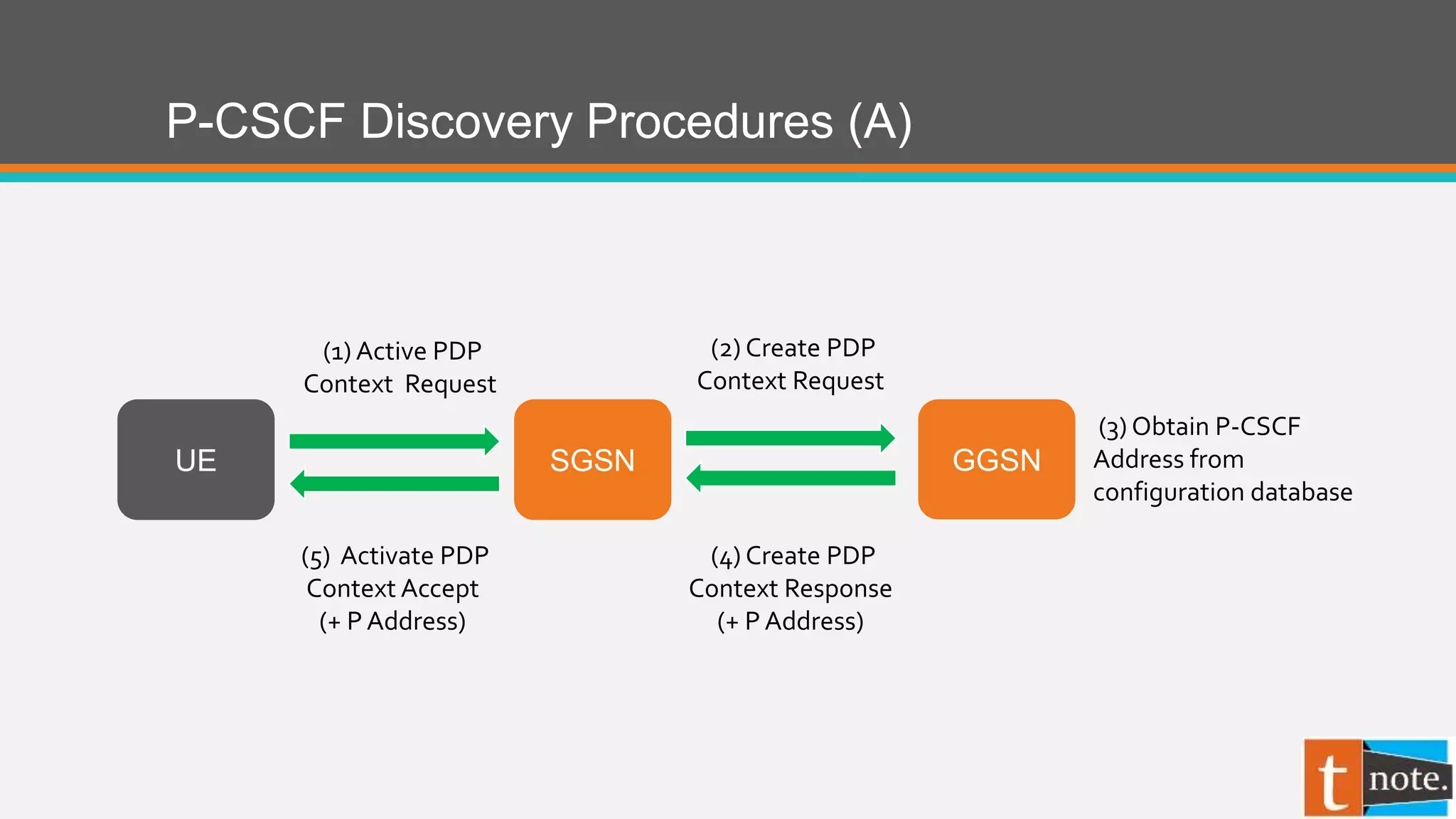
P-CSCF Discovery Procedures (A)
UE SGSN GGSN
(1) Active PDP
Context Request
(2) Create PDP
Context Request
(4) Create PDP
Context Response
(+ P Address)
(5) Activate PDP
Context Accept
(+ P Address)
(3) Obtain P-CSCF
Address from
configuration database
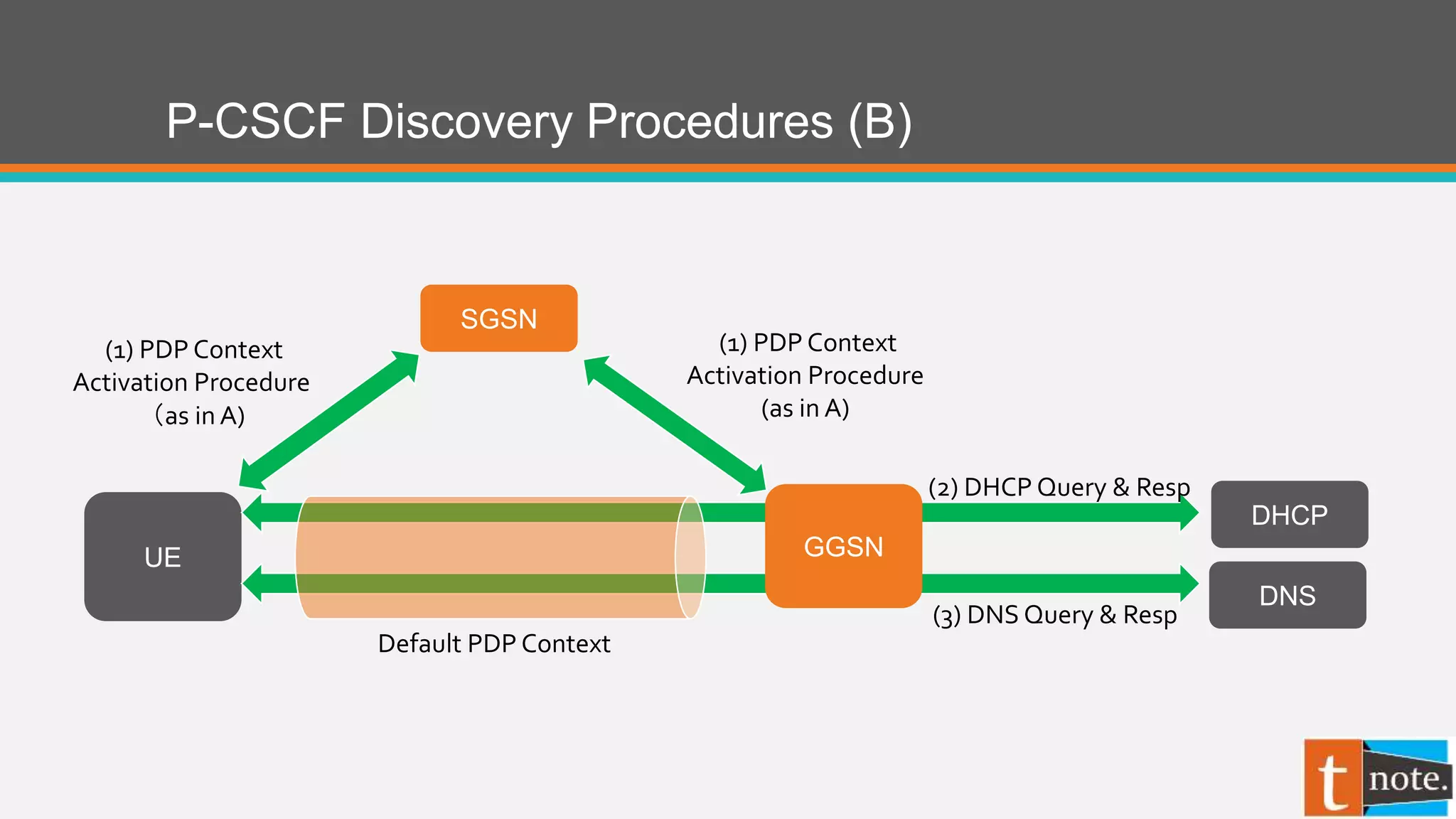
P-CSCF Discovery Procedures (B)
(1) PDP Context
Activation Procedure
(as in A)
UE
SGSN
DHCP
DNS
GGSN
(1) PDP Context
Activation Procedure
(as in A)
(2) DHCP Query & Resp
(3) DNS Query & Resp
Default PDP Context
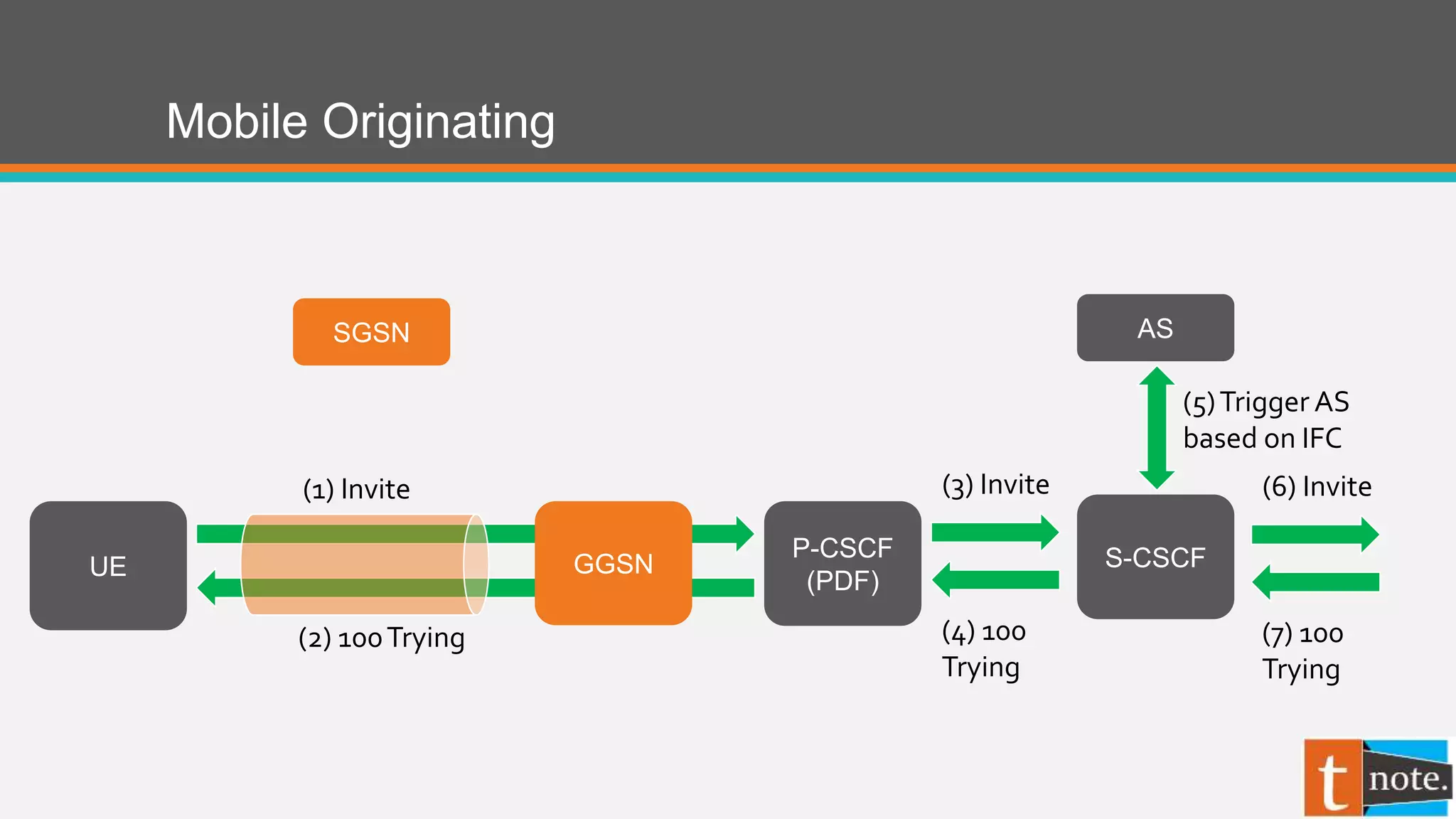
Mobile Originating
P-CSCF
(PDF)
(3) Invite
(4) 100
Trying
UE
SGSN
GGSN
(1) Invite
(2) 100Trying
S-CSCF
(6) Invite
(7) 100
Trying
AS
(5)Trigger AS
based on IFC
P-CSCF
(PDF)
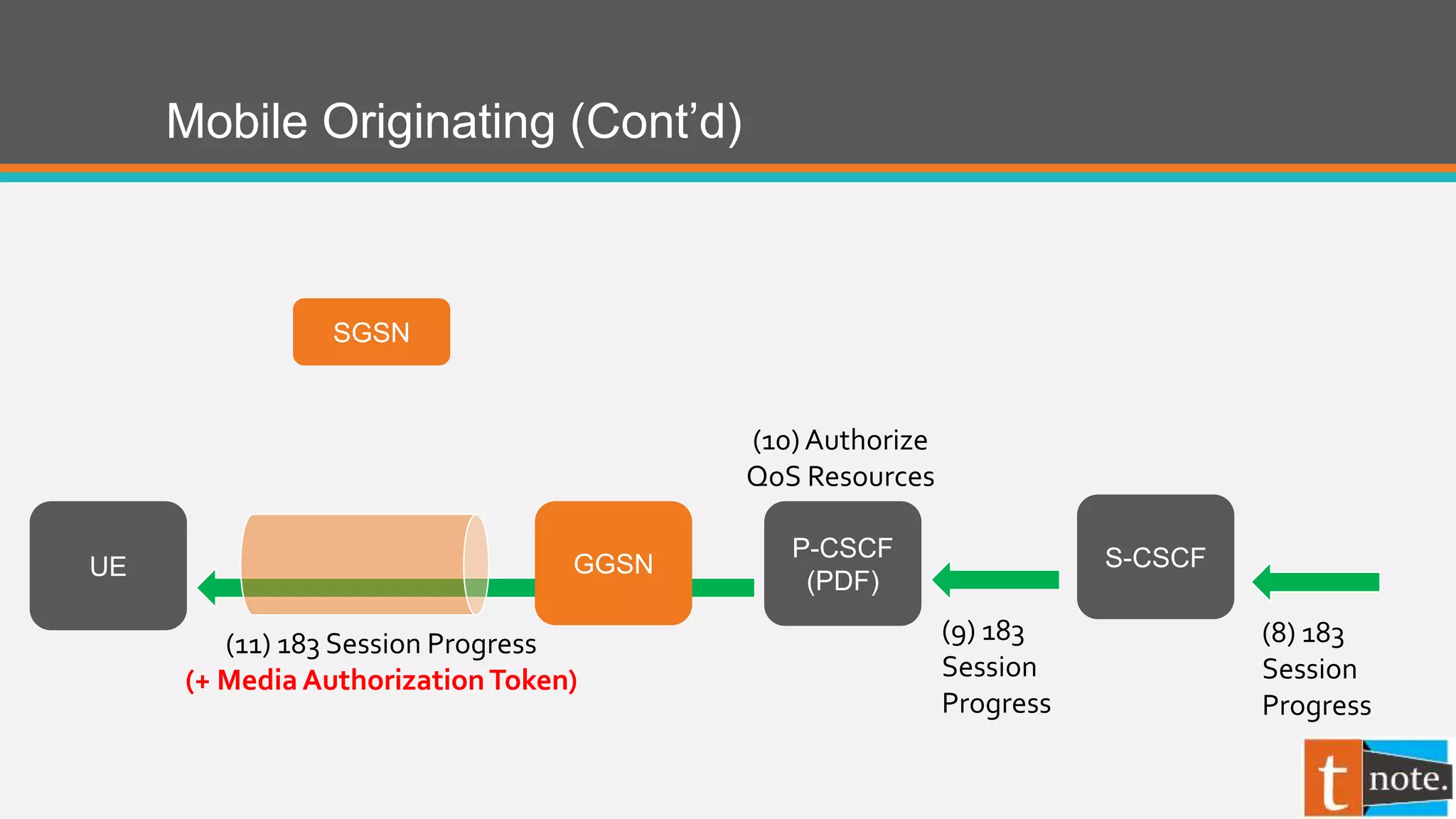
(9) 183
Session
Progress
UE
SGSN
GGSN
(11) 183 Session Progress
(+ MediaAuthorizationToken)
S-CSCF
(8) 183
Session
Progress
Mobile Originating (Cont’d)
(10) Authorize
QoS Resources
Mobile Originating (Cont’d)
P-CSCF
(PDF)
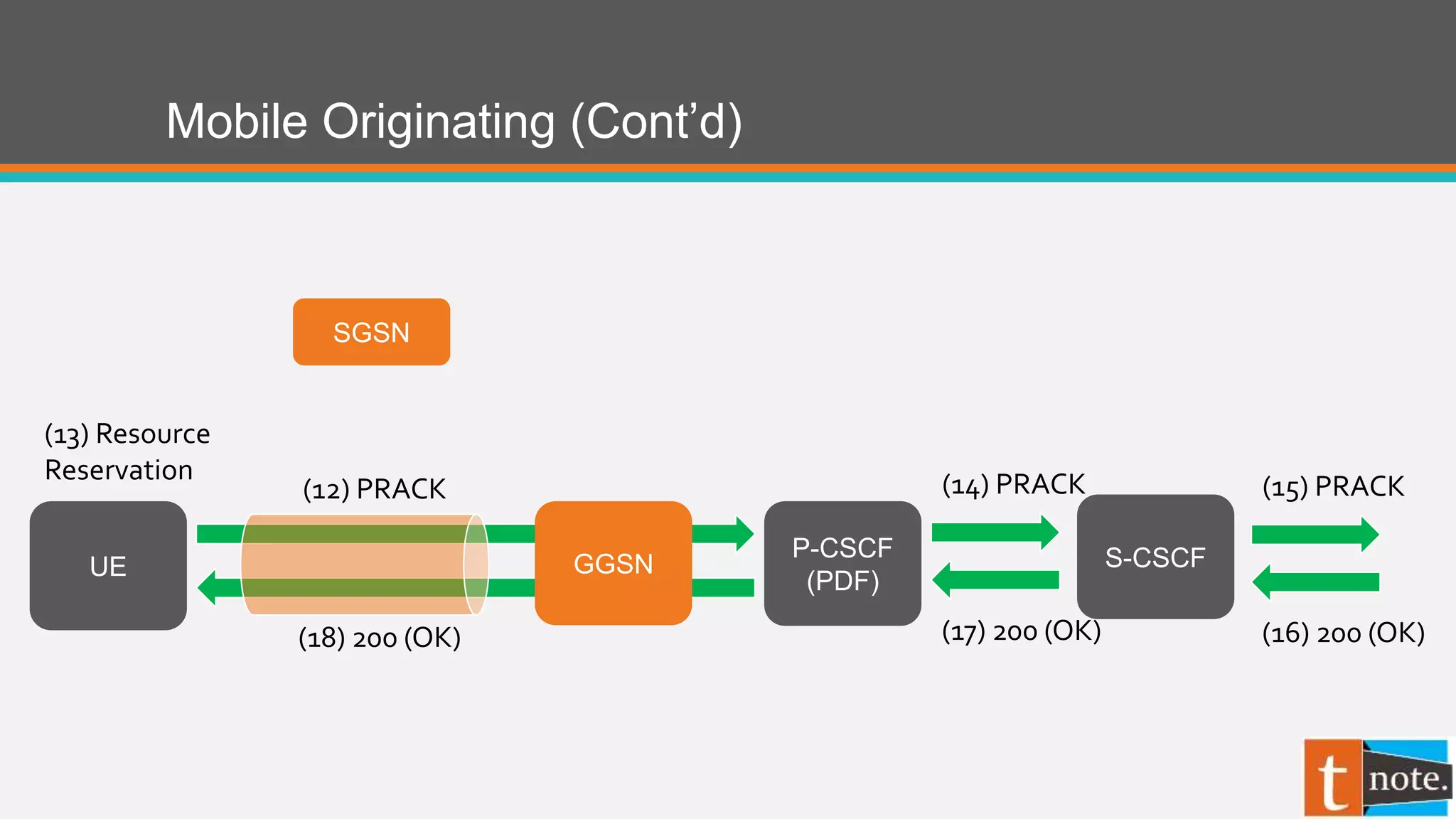
(14) PRACK
(17) 200 (OK)
UE
SGSN
GGSN
(12) PRACK
(18) 200 (OK)
S-CSCF
(15) PRACK
(16) 200 (OK)
(13) Resource
Reservation
Mobile Originating (Cont’d)
P-CSCF
(PDF)UE
SGSN
GGSN S-CSCF
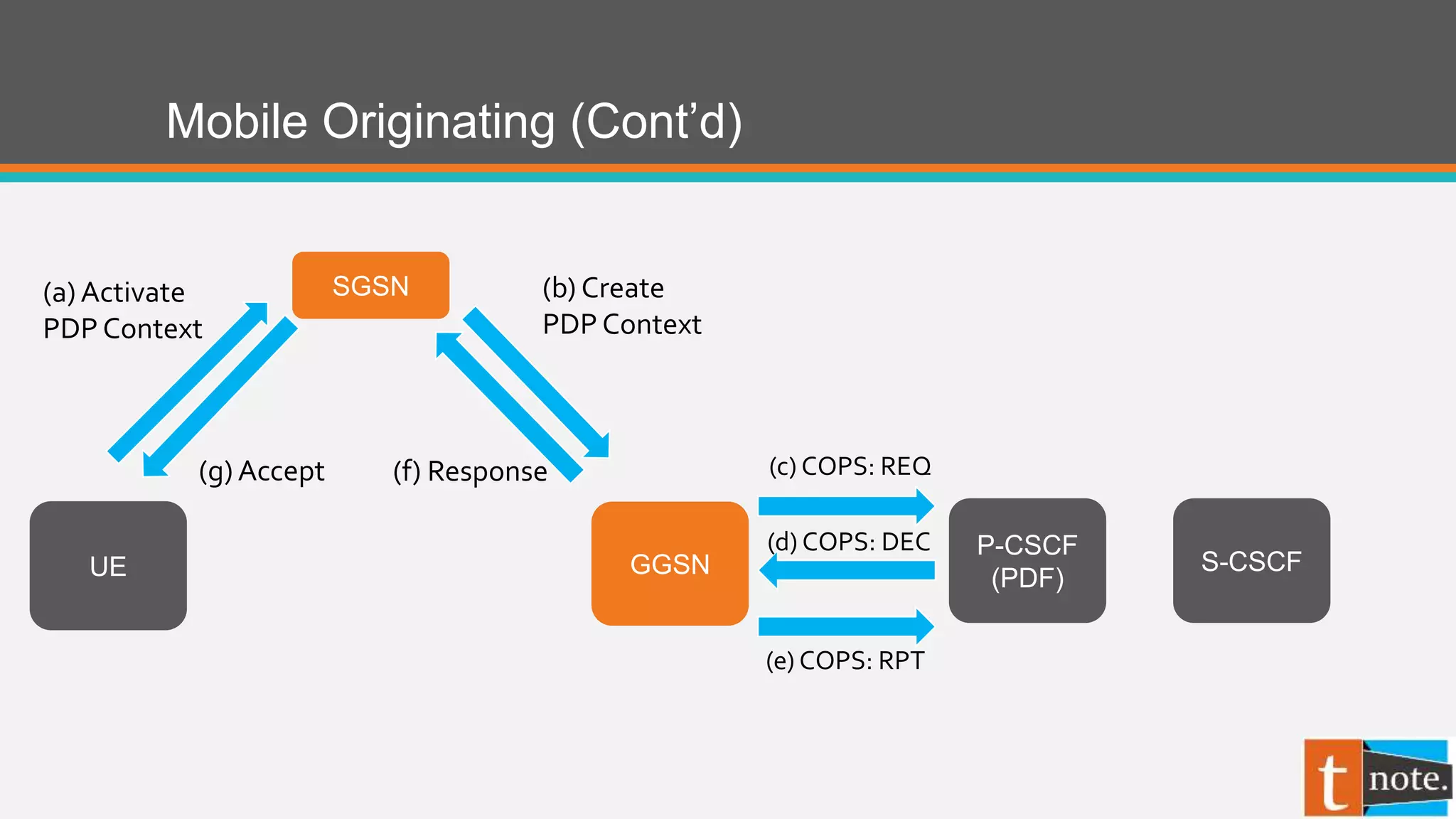
(a) Activate
PDP Context
(b) Create
PDP Context
(c) COPS: REQ
(d) COPS: DEC
(e) COPS: RPT
(f) Response(g) Accept
Mobile Originating (Cont’d)
P-CSCF
(PDF)
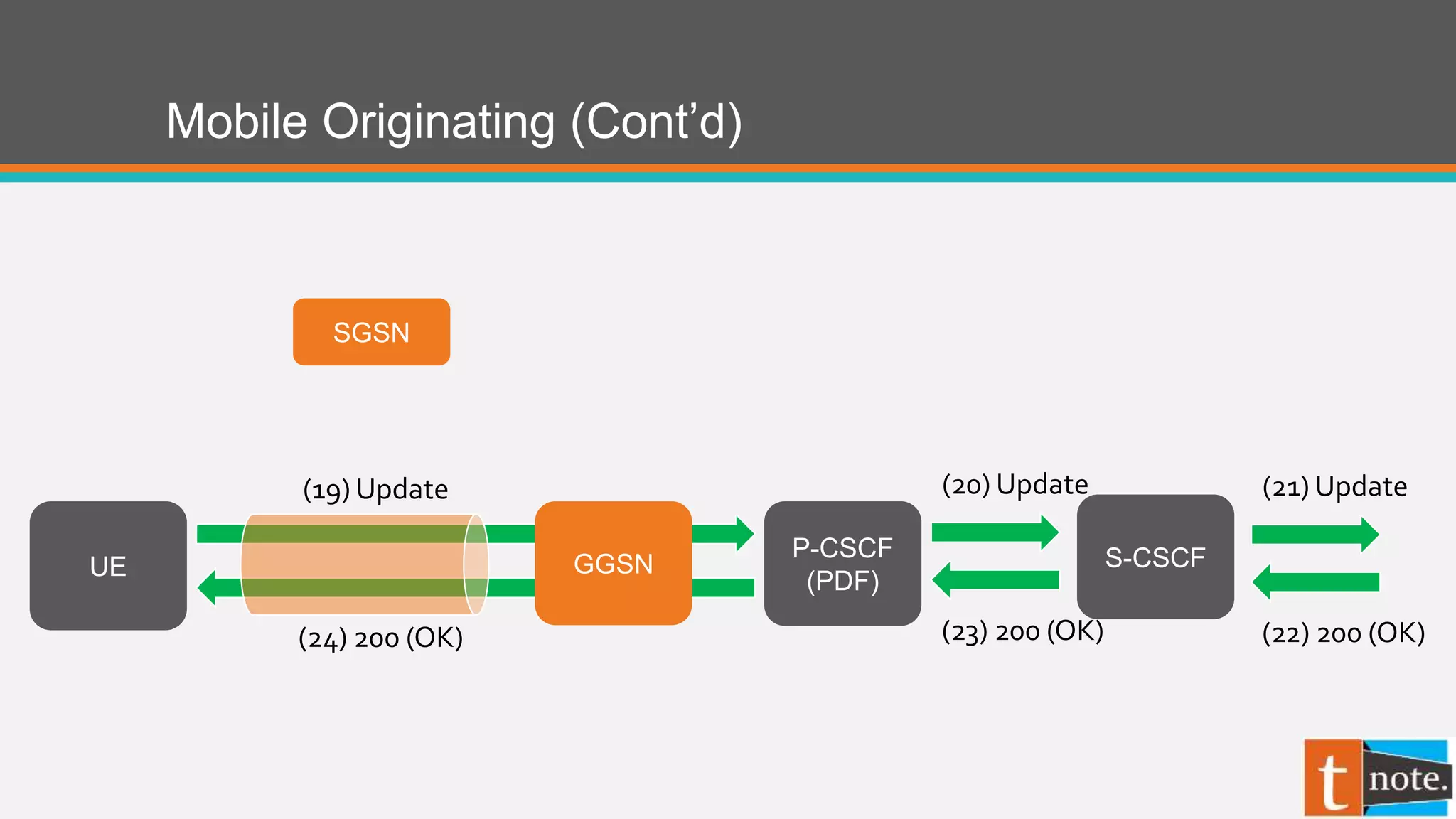
(20) Update
(23) 200 (OK)
UE
SGSN
GGSN
(19) Update
(24) 200 (OK)
S-CSCF
(21) Update
(22) 200 (OK)
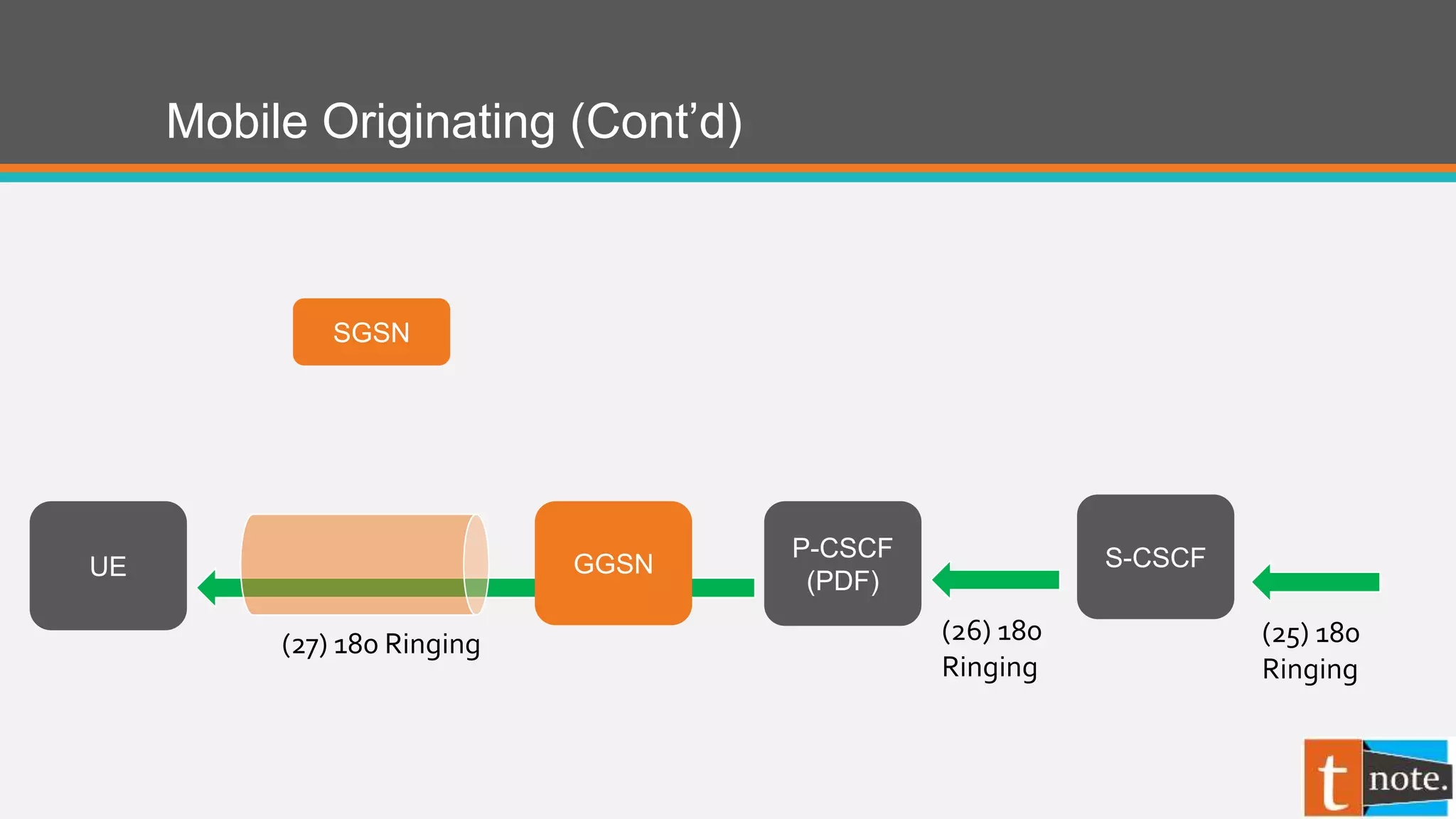
P-CSCF
(PDF)
(26) 180
Ringing
UE
SGSN
GGSN
(27) 180 Ringing
S-CSCF
(25) 180
Ringing
Mobile Originating (Cont’d)
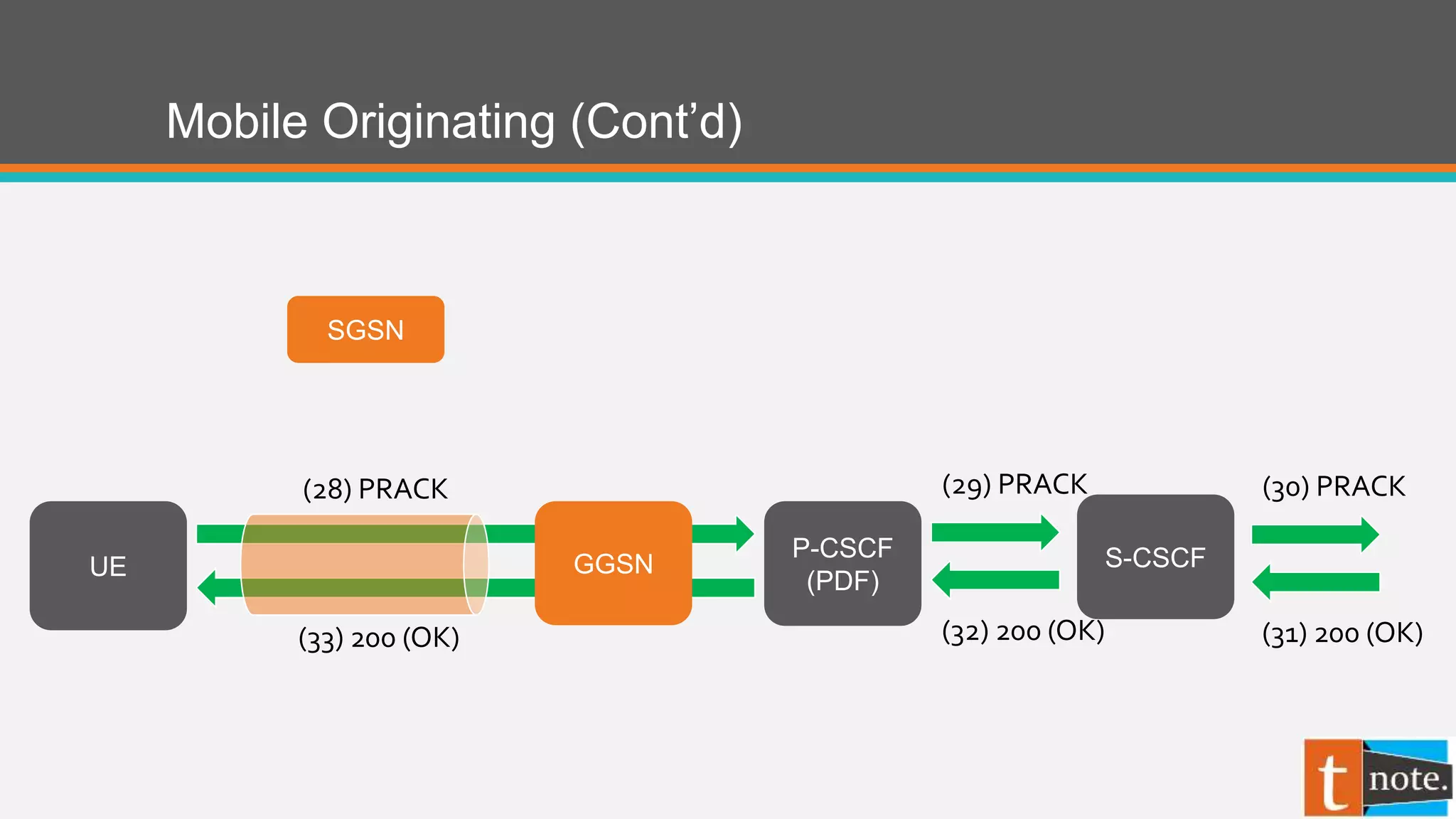
P-CSCF
(PDF)
(29) PRACK
(32) 200 (OK)
UE
SGSN
GGSN
(28) PRACK
(33) 200 (OK)
S-CSCF
(30) PRACK
(31) 200 (OK)
Mobile Originating (Cont’d)
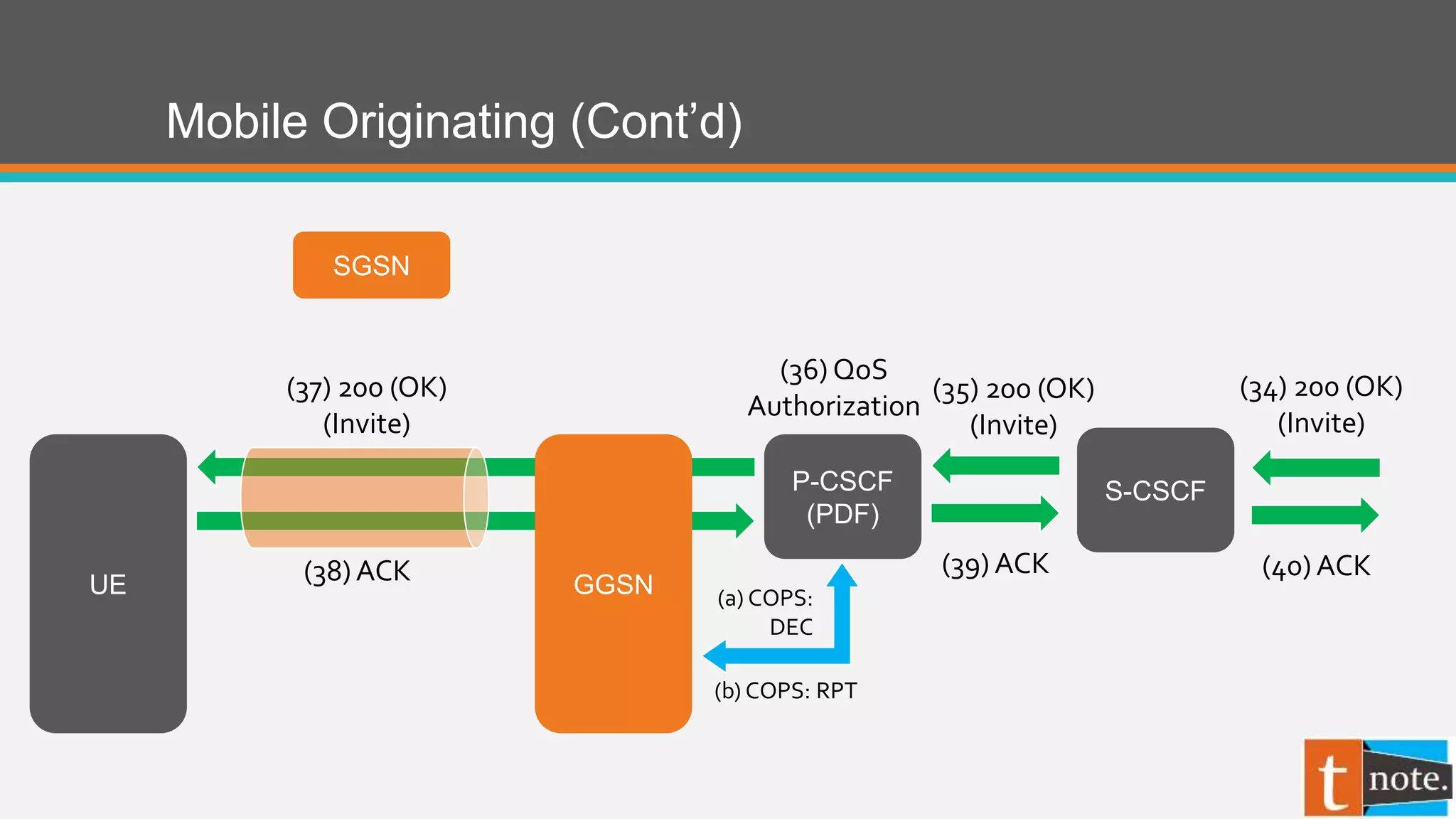
P-CSCF
(PDF)
(39) ACK
UE
SGSN
GGSN
(36) QoS
Authorization
S-CSCF
(34) 200 (OK)
(Invite)
(40) ACK
(35) 200 (OK)
(Invite)
(37) 200 (OK)
(Invite)
(38) ACK
(a) COPS:
DEC
(b) COPS: RPT
Mobile Originating (Cont’d)
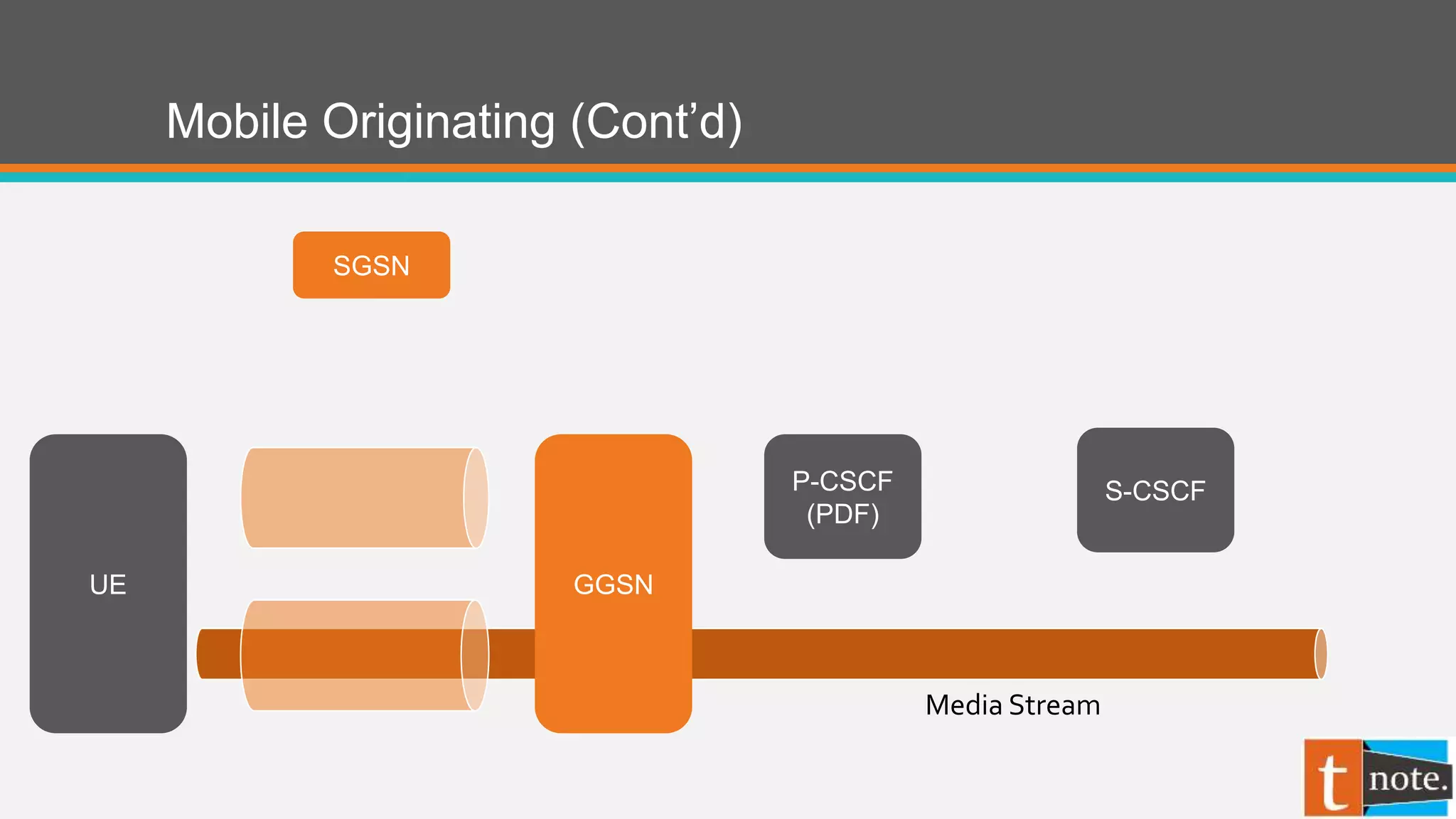
P-CSCF
(PDF)
UE
SGSN
S-CSCF
Media Stream
GGSN
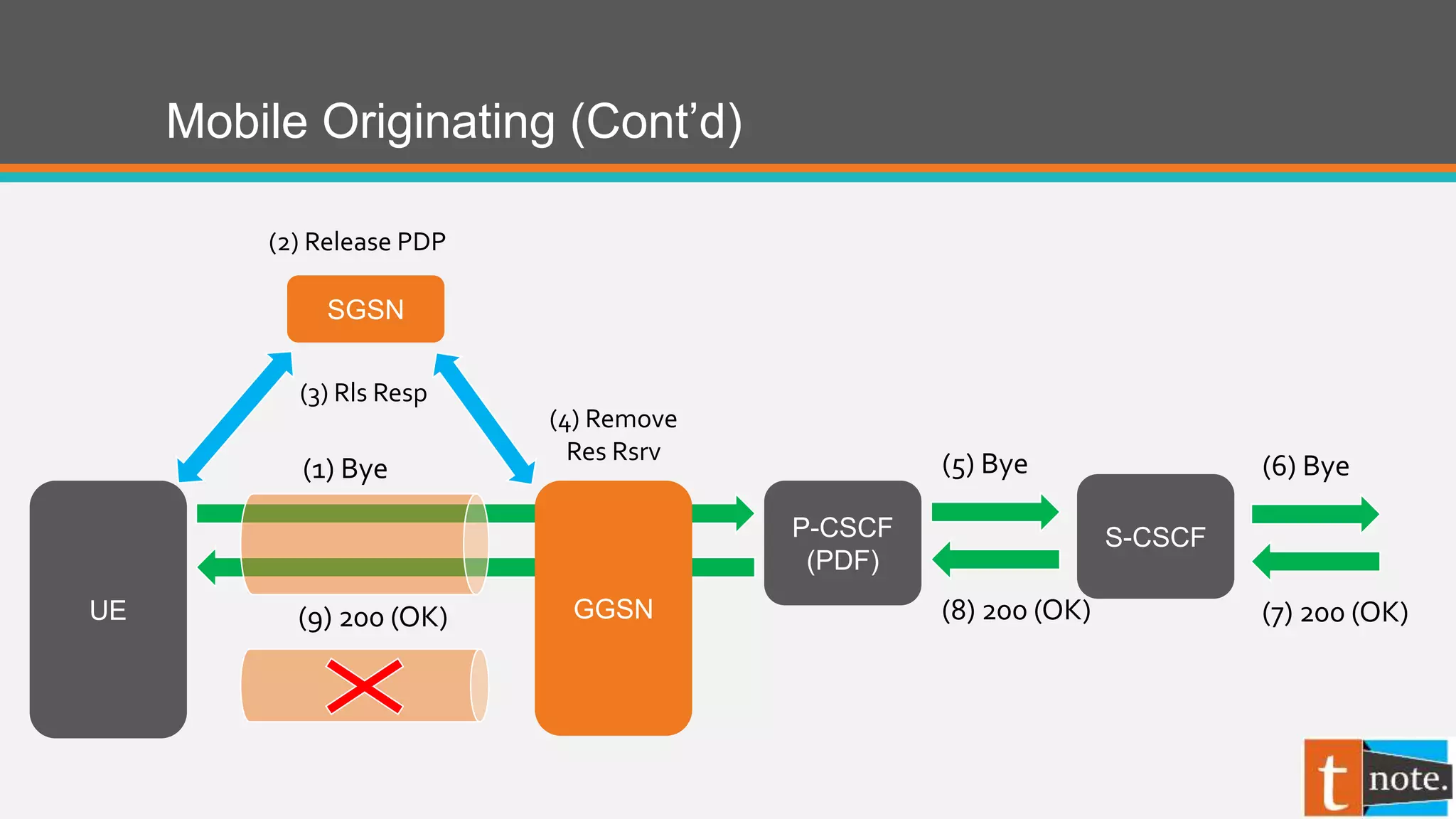
Mobile Originating (Cont’d)
P-CSCF
(PDF)
(5) Bye
(8) 200 (OK)UE
SGSN
GGSN
(1) Bye
(9) 200 (OK)
S-CSCF
(6) Bye
(7) 200 (OK)
(2) Release PDP
(3) Rls Resp
(4) Remove
Res Rsrv
thank you

IMS MO SIP Signaling Flow with QoS

Editor's Notes

  • #13 Procedures: When the called party answers, the terminating endpoint sends a 200 (OK) final response to the INVITE request (6), as specified by the termination procedures and the S-CSCF to S-CSCF procedures, to the S-CSCF. The S-CSCF sends a 200 (OK) final response along the signalling path back to the P-CSCF. The P-CSCF approves the commitment of the QoS resources if it was not approved already in step (X). The P-CSCF forwards the 200 (OK) final response to the session originator. UE can start the media flow(s) for this session. The UE starts the media flow for this session, and responds to the 200 (OK) response (37) with an ACK request sent to the P-CSCF. The P-CSCF forwards the ACK request to the S-CSCF. The S-CSCF forwards the ACK request to the terminating endpoint, per the S-CSCF to S-CSCF procedure.
  • #14 Procedures: One mobile party hangs up, which generates a SIP BYE request from the UE to the P-CSCF. Steps 2 and 3 may take place before or after Step 1 and in parallel with Step 4. The UE initiates the release of the bearer PDP context. The GPRS subsystem releases the PDP context. The IP network resources that had were reserved for the message receive path to the mobile for this session are now released. This is initiated from the GGSN. If RSVP was used to allocated resources, then the appropriate release messages for that protocol would invoked here. The GPRS subsystem responds to the UE. The P-CSCF removes the authorization for resources that had previously been issued for this endpoint for this session. This step will also result in a release indication to the GPRS subsystem to confirm that the IP bearers associated with the session have been deleted. The P-CSCF sends a SIP BYE request to the S-CSCF of the releasing party. The SIP BYE request is sent from the S-CSCF to the S-CSCF of the network of the other party. The S-CSCF of the other party forwards the 200 OK response to its local S-CSCF. The S-CSCF of the releasing party forwards the 200 OK response to the P-CSCF of the releasing party. The P-CSCF of the releasing party forwards the 200 OK response to the UE.