Downloaded 262 times
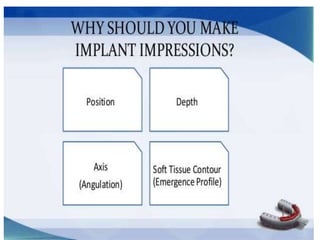
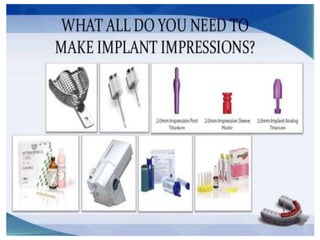
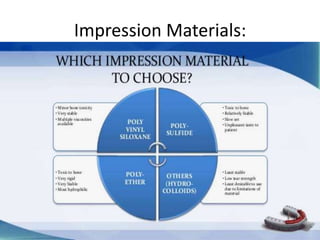
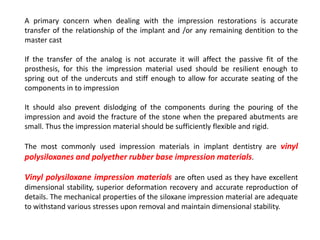

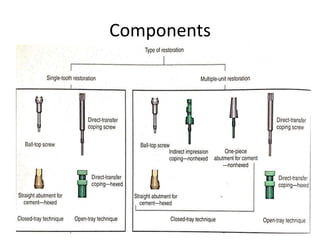
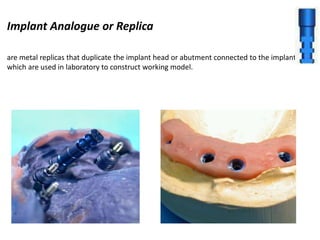
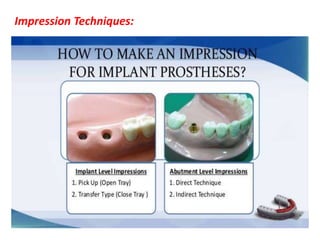
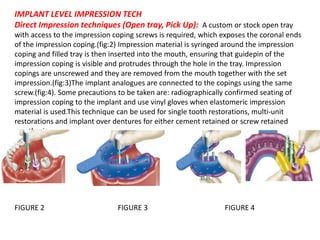
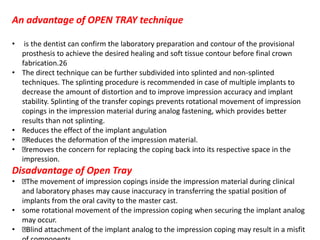
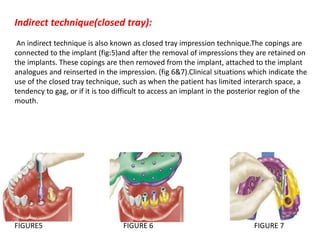
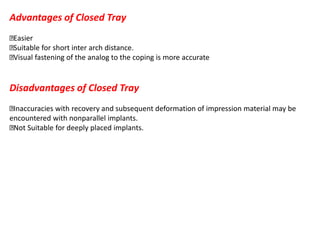
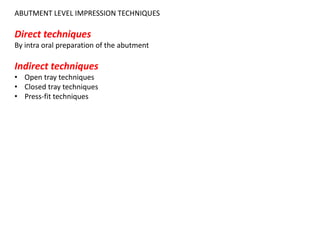



The document discusses various impression techniques used for dental implants. It describes the key components used, such as implant analogues and impression copings. The most common impression materials are vinyl polysiloxanes and polyether rubbers due to their dimensional stability and detail reproduction. Direct open tray techniques involve exposing the impression coping screws and incorporating the copings into the impression tray. Indirect closed tray techniques retain the copings in the mouth and reattach them to analogues in the lab. Factors like implant angulation, number of implants, and interarch space determine whether open or closed tray methods are preferred. Accurate transfer of the implant positions is crucial for passive fitting of the final prosthesis.


