

Implementation
Deblina Roy
M.Sc Nursing 1st Year
K.G.M.U. Institute of Nursing
INTRODUCTION
• Implementation, the fourth step of the nursing process,
formally begins after the nurse develops a plan of care. With
a care plan based on clear and relevant nursing diagnoses.
Nursing Intervention
• A nursing intervention is any treatment based on clinical
judgment and knowledge that a nurse performs to
enhance patient outcomes (Bulechek et al., 2008).
• Ideally the interventions a nurse uses are evidenced based
,providing the most current, up-to-date, and effective
approaches for managing patient problems. Interventions
include direct and indirect care measures aimed at individuals,
families, and/or the community.
TYPES OF INTERVENTION
•Direct care
•Indirect care.
Domains of Nursing practice
• The Helping Role
• The Teaching-Coaching Function
• The Diagnostic and Patient-Monitoring
Function
• Effective Management of Rapidly Changing
Situations
• Administering and Monitoring Therapeutic
Interventions and Regimens
• Monitoring and Ensuring the Quality
of Health Care Practices
• Organizational and Work-Role Competencies
CRITICAL THINKING IN
IMPLEMENTATION
• Before implementing a planned intervention, use critical
thinking to confirm whether the intervention is correct and
still appropriate for the patient’s clinical situation
• you have to exercise good judgment and decision making
before actually delivering each intervention
• Review the set of all possible nursing interventions for the
patient’s problem
• Review all possible consequences associated with each
possible nursing action
• of all possible conditions determine the probability
sequences
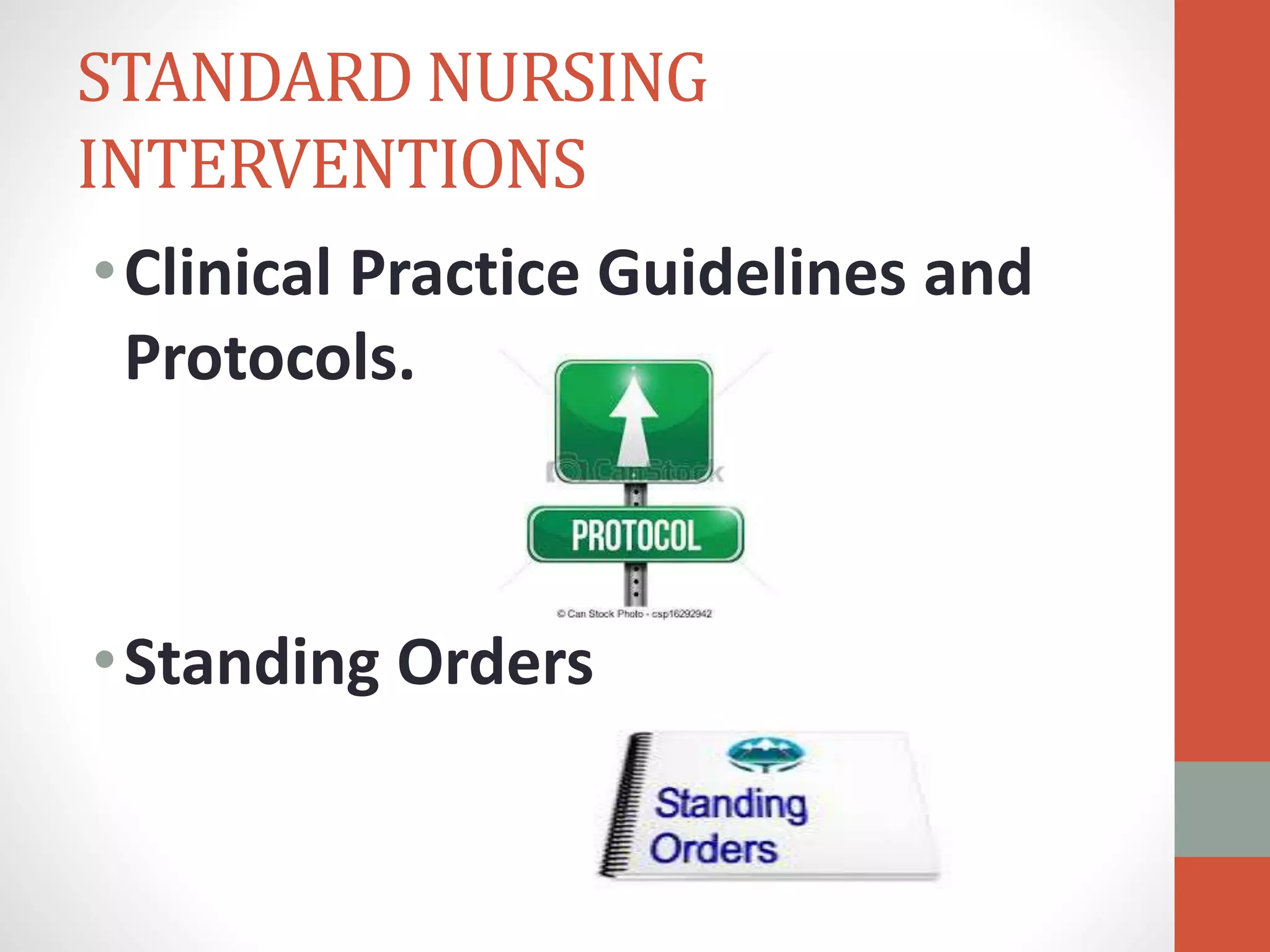
STANDARD NURSING
INTERVENTIONS
•Clinical Practice Guidelines and
Protocols.
•Standing Orders
Purposes of implementation
1.Standardization of the nomenclature
(e.g.,labeling, describing) of nursing
interventions; standardizes the
language nurses use to describe sets
of actions in delivering patient care
2.Expanding nursing knowledge about
connections among nursingdiagnoses,
treatments,and outcomes; connections
determined through the study of actual
patient care using a database that the
classification generates
3.Developing nursing and health care
information systems
4.Teaching decision making to nursing
students; defining and classifying
nursing interventions to teach beginning
nurses how to determine a patient’s
need for care and to respond appropriately
5.Determining the cost of
services provided by nurses
6.Planning for resources needed in
all types of nursing practice
settings
7.Language to communicate the
unique functions of nursing
8.Link with the classification
systems of other health care
providers
Process of Implementation
• Reassessing the Patient
• Reviewing and Revising the Existing Nursing
Care Plan
• Organizing Resources and Care Delivery
• Anticipating and Preventing Complications
• Identifying Areas of Assistance.
• Implementation Skills
Implementation
•Cognitive Skills
•Interpersonal Skills
•Psychomotor Skills
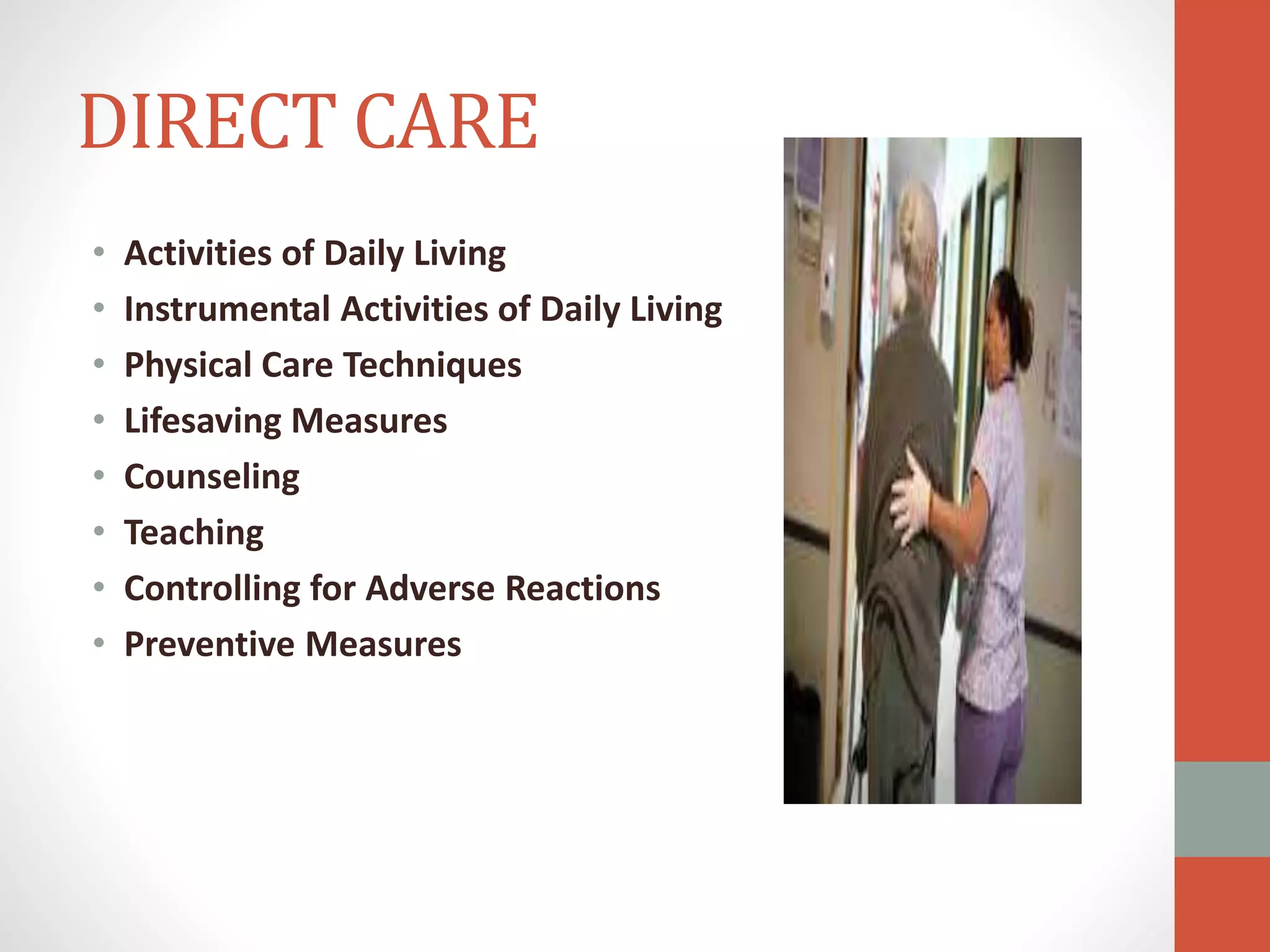
DIRECT CARE
• Activities of Daily Living
• Instrumental Activities of Daily Living
• Physical Care Techniques
• Lifesaving Measures
• Counseling
• Teaching
• Controlling for Adverse Reactions
• Preventive Measures
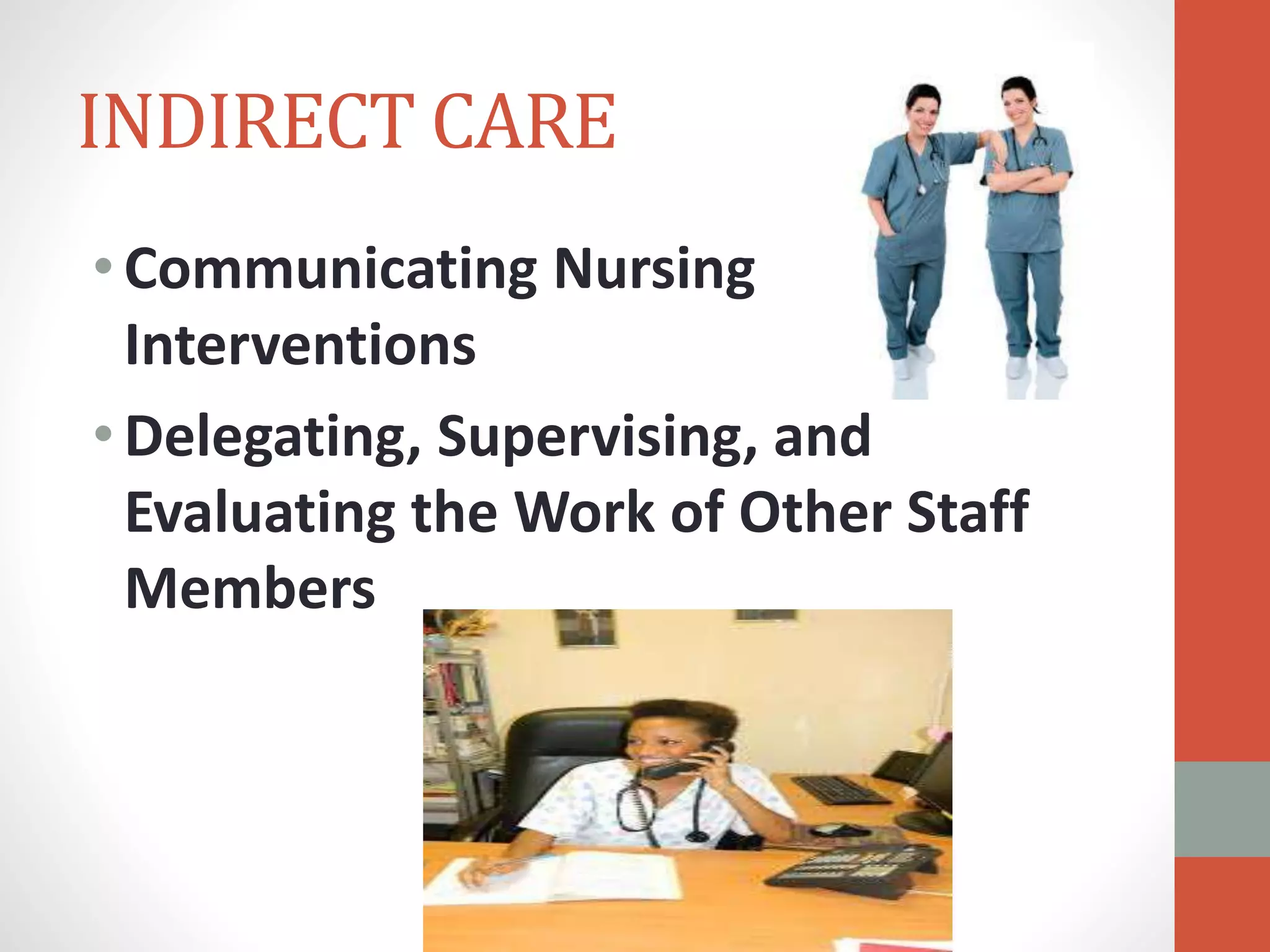
INDIRECT CARE
•Communicating Nursing
Interventions
•Delegating, Supervising, and
Evaluating the Work of Other Staff
Members
ACHIEVING PATIENT GOALS
• Regardless of the type of interventions, you
implement nursing care to achieve patient goals
and outcomes. In most clinical situations
multiple interventions are necessary to achieve
select outcomes.
• Another way to achieve patient goals is to help
them adhere to their treatment plan
Key Points
• Implementation is the fourth step of the nursing process in
which nurses initiate interventions that are designed to
achieve the goals and expected outcomes of the patient’s
plan of care.
• A direct-care intervention is a treatment performed through
interactions with a patient that can include nurse-initiated,
physician-initiated, and collaborative approaches.
• Always think first and determine if an intervention is correct
and appropriate and if you have the resources needed to
implement it.
•
• Clinical guidelines or protocols are evidence-based
documents that guide decisions and interventions for
specific health care problems.
• When preparing to perform an intervention, reassess the
patient, review and revise the existing nursing care plan,
organize resources and care delivery approaches, anticipate
and prevent complications, and implement the intervention.
• The implementation of nursing care often requires
additional knowledge, nursing skills, and personnel
resources.
• Before beginning to perform interventions, make sure that
the patient is as physically and psychologically comfortable
as possible.
• Use good judgment and sound clinical decision making when
performing any intervention to ensure that no nursing action
is automatic.
• To anticipate and prevent complications, identify risks to the
patient, adapt interventions to the situation, evaluate the
relative benefit of a treatment versus the risk, and initiate
risk prevention measures.
• Methods used to ensure that you administer physical care
techniques appropriately include protecting you and the
patient from injury, using proper infection control practices,
staying organized, and following applicable practice
guidelines.
• When you delegate aspects of a patient’s care, you are
responsible for ensuring that each task is assigned
appropriately and completed according to the standard of
care.
• To complete any nursing procedure, you need to know the
procedure, its frequency, the steps, and the expected
outcomes.
Example
• Assessed the sign and symptoms of dehydration.
• Assessed the vital signs
• Hand washing is done
• Knowledge and explanation is given before and after every
procedure.
• Provided oral fluids
• Provided ORS
• Provided the IV Fluids
• Intake output chart is maintained
• Monitored the urine output .
• Monitored the bowel pattern
• Provided anti emetic medications according to the Doctor’s order .
• Provided antidiarrheal according to the Doctor’s order
• Sent the stool for RE
• Explained the patient and the family members about the present
condition .
Thank You

Implementation in nursing process , an important nursing intervention

  • 1.
    Implementation Deblina Roy M.Sc Nursing1st Year K.G.M.U. Institute of Nursing
  • 2.
    INTRODUCTION • Implementation, thefourth step of the nursing process, formally begins after the nurse develops a plan of care. With a care plan based on clear and relevant nursing diagnoses.
  • 3.
    Nursing Intervention • Anursing intervention is any treatment based on clinical judgment and knowledge that a nurse performs to enhance patient outcomes (Bulechek et al., 2008). • Ideally the interventions a nurse uses are evidenced based ,providing the most current, up-to-date, and effective approaches for managing patient problems. Interventions include direct and indirect care measures aimed at individuals, families, and/or the community.
  • 4.
    TYPES OF INTERVENTION •Directcare •Indirect care.
  • 5.
    Domains of Nursingpractice • The Helping Role • The Teaching-Coaching Function • The Diagnostic and Patient-Monitoring Function • Effective Management of Rapidly Changing Situations • Administering and Monitoring Therapeutic Interventions and Regimens • Monitoring and Ensuring the Quality of Health Care Practices • Organizational and Work-Role Competencies
  • 6.
    CRITICAL THINKING IN IMPLEMENTATION •Before implementing a planned intervention, use critical thinking to confirm whether the intervention is correct and still appropriate for the patient’s clinical situation • you have to exercise good judgment and decision making before actually delivering each intervention • Review the set of all possible nursing interventions for the patient’s problem • Review all possible consequences associated with each possible nursing action • of all possible conditions determine the probability sequences
  • 7.
    STANDARD NURSING INTERVENTIONS •Clinical PracticeGuidelines and Protocols. •Standing Orders
  • 8.
    Purposes of implementation 1.Standardizationof the nomenclature (e.g.,labeling, describing) of nursing interventions; standardizes the language nurses use to describe sets of actions in delivering patient care
  • 9.
    2.Expanding nursing knowledgeabout connections among nursingdiagnoses, treatments,and outcomes; connections determined through the study of actual patient care using a database that the classification generates
  • 10.
    3.Developing nursing andhealth care information systems 4.Teaching decision making to nursing students; defining and classifying nursing interventions to teach beginning nurses how to determine a patient’s need for care and to respond appropriately
  • 11.
    5.Determining the costof services provided by nurses 6.Planning for resources needed in all types of nursing practice settings
  • 12.
    7.Language to communicatethe unique functions of nursing 8.Link with the classification systems of other health care providers
  • 13.
    Process of Implementation •Reassessing the Patient • Reviewing and Revising the Existing Nursing Care Plan • Organizing Resources and Care Delivery • Anticipating and Preventing Complications • Identifying Areas of Assistance. • Implementation Skills
  • 14.
  • 15.
    DIRECT CARE • Activitiesof Daily Living • Instrumental Activities of Daily Living • Physical Care Techniques • Lifesaving Measures • Counseling • Teaching • Controlling for Adverse Reactions • Preventive Measures
  • 16.
    INDIRECT CARE •Communicating Nursing Interventions •Delegating,Supervising, and Evaluating the Work of Other Staff Members
  • 18.
    ACHIEVING PATIENT GOALS •Regardless of the type of interventions, you implement nursing care to achieve patient goals and outcomes. In most clinical situations multiple interventions are necessary to achieve select outcomes. • Another way to achieve patient goals is to help them adhere to their treatment plan
  • 19.
    Key Points • Implementationis the fourth step of the nursing process in which nurses initiate interventions that are designed to achieve the goals and expected outcomes of the patient’s plan of care. • A direct-care intervention is a treatment performed through interactions with a patient that can include nurse-initiated, physician-initiated, and collaborative approaches. • Always think first and determine if an intervention is correct and appropriate and if you have the resources needed to implement it. •
  • 20.
    • Clinical guidelinesor protocols are evidence-based documents that guide decisions and interventions for specific health care problems. • When preparing to perform an intervention, reassess the patient, review and revise the existing nursing care plan, organize resources and care delivery approaches, anticipate and prevent complications, and implement the intervention. • The implementation of nursing care often requires additional knowledge, nursing skills, and personnel resources.
  • 21.
    • Before beginningto perform interventions, make sure that the patient is as physically and psychologically comfortable as possible. • Use good judgment and sound clinical decision making when performing any intervention to ensure that no nursing action is automatic. • To anticipate and prevent complications, identify risks to the patient, adapt interventions to the situation, evaluate the relative benefit of a treatment versus the risk, and initiate risk prevention measures.
  • 22.
    • Methods usedto ensure that you administer physical care techniques appropriately include protecting you and the patient from injury, using proper infection control practices, staying organized, and following applicable practice guidelines. • When you delegate aspects of a patient’s care, you are responsible for ensuring that each task is assigned appropriately and completed according to the standard of care. • To complete any nursing procedure, you need to know the procedure, its frequency, the steps, and the expected outcomes.
  • 23.
    Example • Assessed thesign and symptoms of dehydration. • Assessed the vital signs • Hand washing is done • Knowledge and explanation is given before and after every procedure. • Provided oral fluids • Provided ORS • Provided the IV Fluids • Intake output chart is maintained • Monitored the urine output . • Monitored the bowel pattern • Provided anti emetic medications according to the Doctor’s order . • Provided antidiarrheal according to the Doctor’s order • Sent the stool for RE • Explained the patient and the family members about the present condition .
  • 24.