M.Sc. Psychiatric Nursing
King George’s Medical University
National Mental Health program
UHM , Kanpur.
Overview
 Mental health
 Child mental health and mental illness
 Common psychiatric disorders in childhood with
their symptoms and management.
 ADHD
 Autism
 Mental Retardation
 Dissociative and somatoform disorders
 Learning disabilities
 Other common child psychiatric disorders
मनोविकार (Mental disorder)
 किसी व्यक्ति िे मानससि स्वास््य िी वह क्स्िति है
क्िसे किसी स्वस्ि व्यक्ति से िुलना िरने पर 'सामान्य'
नह ीं िहा िािा। स्वस्ि व्यक्तियों िी िुलना में मनोरोगों
से ग्रस्ि व्यक्तियों िा व्यवहार असामान्य अिवा
दुरनुिू ल (mal adaptive) तनर्ााररि किया िािा है और
क्िसमें महत्वपूर्ा व्यिा अिवा असमिािा अन्िग्रास्ि होिी
है। इन्हें मनोरोग, मानसिक रोग, मानसिक
बीमारी अिवा मानसिक विकार भी िहिे हैं।
बाल्यािस्था के विकार
 ये िान िर शायद आपिो आश्चया हो कि बच्चे भी
मनोवविारों िा सशिार हो सििे हैं।
 डीएसएम, िा चौिा सींस्िरर् बाल्यावस्िा िे ववसभन्न
प्रिार िे वविारों िा समार्ान ढूींढिा है, आमिौर पर यह
पहल बार शैशविाल, बाल्यावस्िा या किशोरावस्िा में
पहचान में आिे हैं।
 इन में से िु छ सावर्ान-अभाव अतिसकिय वविार पाए
िािे हैं क्िसमें बच्चा सावर्ान या एिाग्र नह ीं रहिा या
वह अत्यधर्ि फु िीला व्यवहार िरिा है।
 और स्वल न वविार क्िसमें बच्चा अींिमुाखी हो िािा है,
बबल्िु ल नह ीं मुस्िु रािा और देर से भाषा सीखिा है।
ि्य
 मनोरोग धचकित्सि द्वारा दवाएीं बिायी गई हैं िो इनिा सेवन अवश्य
िरना चाहहए।
 दूसर बीमाररयों िी िरह यह रोग भी आींिररि स्िर पर िैववि असींिुलन
िी विह से होिा है।
 तनगरानी में दवाएीं लेना िारगर होिा है, अब िो नई दवाओीं िे उपलब्र्
होने िे बाद लींबी अवधर् िि दवाएीं लेने िे मामले िम हो रहे हैं।
 दवाओीं िे सेवन से मनोवविारों में िाफी िमी होिी है, खासिौर से िब
िबकि इलाि शुरूआिी चरर् में आरींभ हो िाए।
 मनोवविारों िे उपचार में द िाने वाल दवाएीं रासायतनि असींिुलन िो
बहाल िरिी हैं, िु छ दवाओीं से नीींद आिी है लेकिन वे नीींद िी गोसलयाीं
नह ीं होिीीं।
 अवसाद िैसे मनोवविार भी मर्ुमेह या उच्च रतिचाप िी िरह िे रोग ह
होिे हैं और इनिे सलए भी ववषेशज्ञ िी देखरेख में इलाि िराने िी
आवश्यििा होिी है।
गलि र्ारर्ाएीं
 मानसिक रोग या पागलपन एि ऐसा शब्द है क्िससे इसिे िारर्ों एवीं उपचार िे
ववषय में न िाने कििनी भ्ाींतियााँ एवीं आशींिाएाँ िुडी हैं। िु छ लोग इसे एि
असाध्य, आनुवाींसशि एवीं छू ि िी बीमार मानिे हैं, िो िु छ िादू-टोना, भूि-प्रेि व
डायन िा प्रिोप। िु छ लोग इसे बीमार न मानिर क्िम्मेदाररयों से बचने िा
नाटि मात्र भी मानिे हैं।
 अज्ञानी लोग उपचार िे सलए स्िानीय या निद ि ओझा, पींडडि, मुल्ला आहद िे
पास िािर अनावश्यि भभूि, िडी-बूट िा सेवन िरिे हैं ििा अमानवीय ढींग से
सिाये िािे हैं िाकि 'वपशाचात्मा' िा प्रिोप दूर किया िा सिे ।
 यह सब गलि है। सह र्ारर्ा यह है कि यह बीमार है और वैज्ञातनि ढींग से
धचकित्सा ववज्ञान द्वारा इसिा इलाि सींभव है। ये भी िही नहीीं है कि-
 मानससि वविार िोई रोग नह ीं हैं बक्ल्ि बुर आत्माओीं िी विह से पैदा होिे हैं।
 दवाओीं िे सेवन से बचना चाहहए।
 आपिो यह रोग अपनी िमिोर से हुआ है और इससे बचाव िरना चाहहए।
 दवाएीं नुिसानदायि होिी हैं, ये तनभारिा बढािी हैं और िीवनभर लेनी पडिी हैं।
 ज्यादािर मनोवविारों िा िोई इलाि नह ीं होिा।
 बच्चों िो दवाएीं नह ीं द िानी चाहहए।
 इलाि िे सलए नीींद िी गोसलयाीं द िािी हैं।
 अवसाद िैसे मिा अपने आप ठीि होिे हैं या प्रभाववि व्यक्ति िे प्रयासों से।
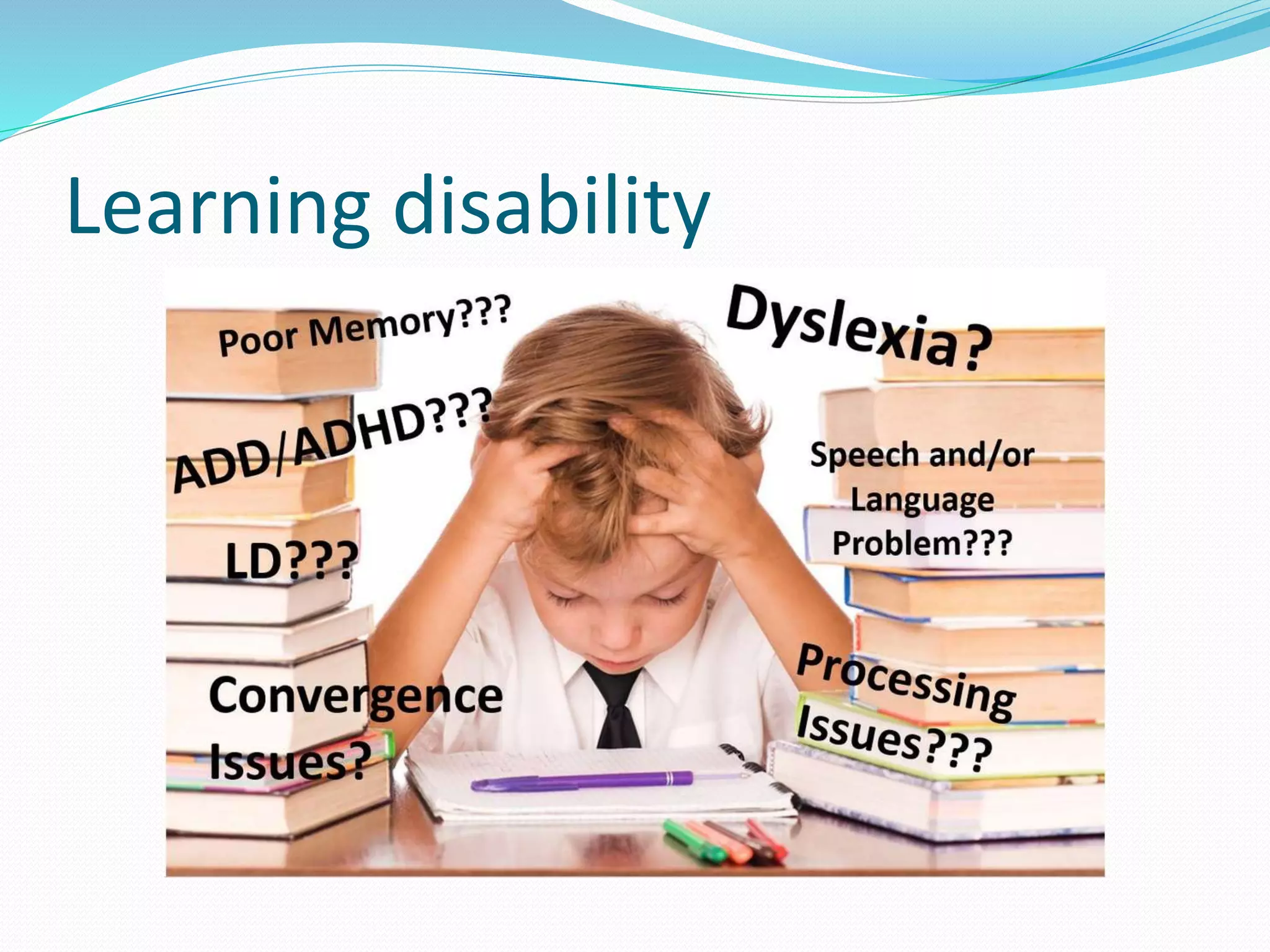
Learning disability
डिस्लेक्सिया
 एि अधर्गम वविलाींगिा है क्िसिा प्रिट िरर् मुख्य रूप से
वार्ी
 या सलखखिभाषा िे दृश्य अींिन िी िहठनाइयों िे रूप में होिा
है,
 ववशेष िौर पर मनुष्य-तनसमाि लेखन प्रर्ासलयोंिो पढने में
 यह देखने या सुनने िी गैर-नयूरोलोक्ििल िमी, या बेिार
अिवा अपयााप्ि पाठन तनदेशों िैसे अन्य िारिों से उत्पन्न
पाठन िहठनाइयों से अलग है,
 यह इस बाि िा सुझाव देिा है कि बुद्धर् द्वारा सलखखि
और भावषि भाषाओँ िो सींसाधर्ि िरने में अींिर िे िारर्
डडस्लेक्तसया होिी है।
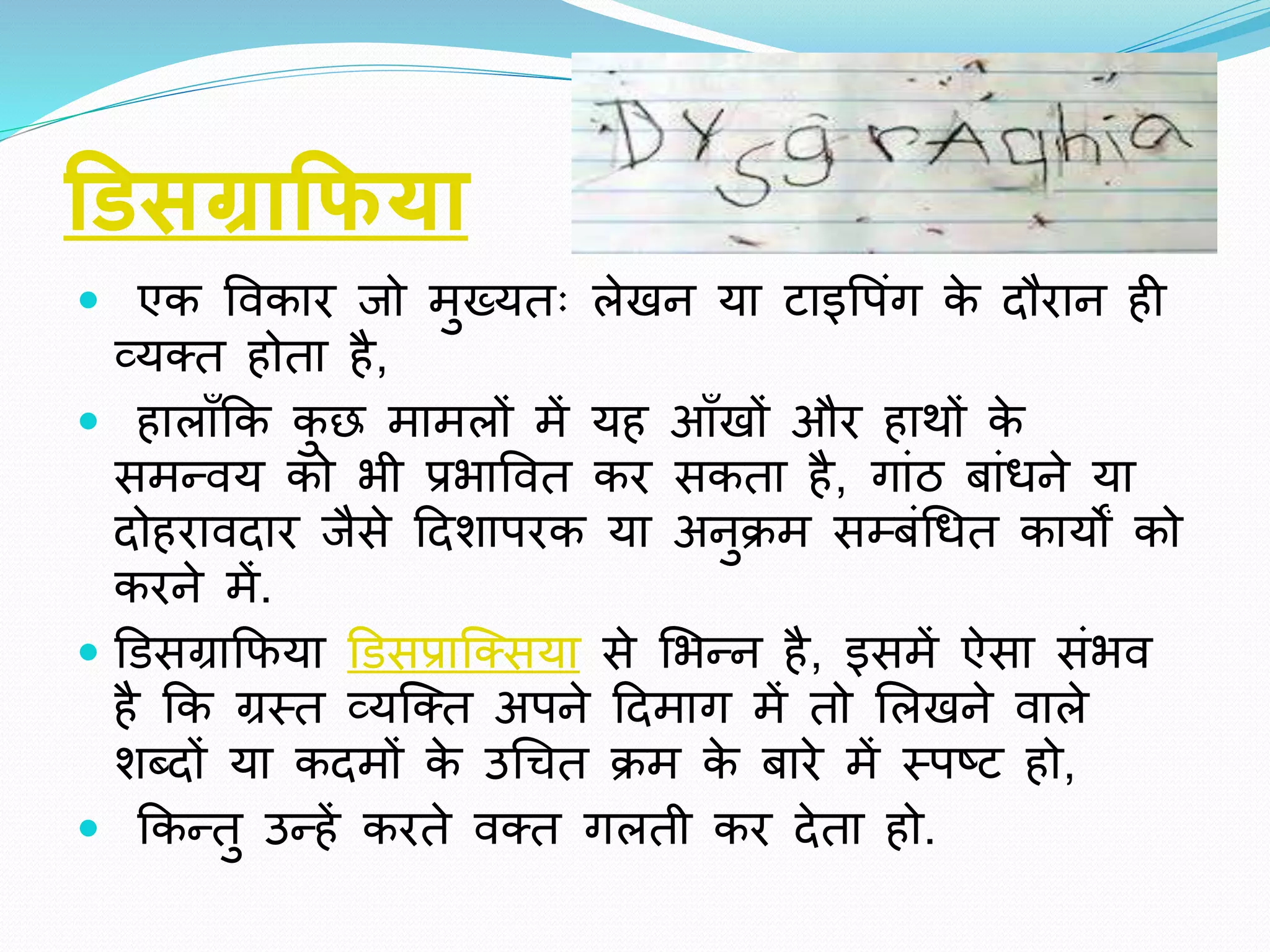
डििग्राफिया
 एि वविार िो मुख्यिः लेखन या टाइवपींग िे दौरान ह
व्यति होिा है,
 हालााँकि िु छ मामलों में यह आाँखों और हािों िे
समन्वय िो भी प्रभाववि िर सििा है, गाींठ बाींर्ने या
दोहरावदार िैसे हदशापरि या अनुिम सम्बींधर्ि िायों िो
िरने में.
 डडसग्राकफया डडसप्राक्तसया से सभन्न है, इसमें ऐसा सींभव
है कि ग्रस्ि व्यक्ति अपने हदमाग में िो सलखने वाले
शब्दों या िदमों िे उधचि िम िे बारे में स्पष्ट हो,
 किन्िु उन्हें िरिे वति गलिी िर देिा हो.
डििकै ल्सयूसलया
 एि स्नायववि क्स्िति है क्िसमे आदमी िो िु छ सीखने
में या सींख्याओीं िे साि िहठनाई होिी है।
 अतसर इससे ग्रस्ि लोग गखर्ि िी िहटल अवर्ारर्ाओीं
और ससद्र्ाींिों िो िो समझ लेिे हैं किन्िु फामूाला
समझने या सार्ारर् गुर्ाभाग िरने में उनिो हदतिि
आिी है।
विसिष्ट भाषा विकार(SLI)
 एि भाषा सम्बींधर्ि वविार है िो भाषा िो प्रिट िरने
और समझने, दोनों िो प्रभाववि िरिा है। एसएलआइ िो
एि "ववशुद्र्" भाषा वविार िे रूप में पररभावषि किया
िािा है,
 अिााि यह अन्य किसी वविासात्मि वविार िैसे श्रवर्
शक्ति िा ख़िम होना या मक्स्िष्ि िी चोट, से सम्बींधर्ि
या उनिे िारर् नह ीं होिा है।
 research तनष्िषों से ऐसा लगिा है डडस्लेक्तसया और
एसएलआइ, दोनों िो एि मल्ट -ररस्ि मॉडल द्वारा
समझाया िा सििा है, क्िसमे सींज्ञानात्मि प्रकियाओीं िे
साि आनुवींसशि िारि भी शासमल हैं।
सलटररींग
 भाषर् िे प्रवाह िा एि वविार है क्िसमे दर और लय
दोनों शासमल है,
 इसिे पररर्ाम स्वरूप उनिे भाषर् िो समझना मुक्श्िल
होिा है। भाषर् बेिरिीब और बबना लय िे होिा है,
 शब्दों िो िल्द िल्द और झटिे दार िर िे से बोला
िािा है और वातय दोषपूर्ा होिे हैं।
 तलटर िरने वाले िे व्यक्तित्व में अधर्गम वविलाींगिा
वाले व्यक्तियों िे व्यक्तित्व से िाफी समानिा होिी है।
Other childhood psychiatric
disorders
 Disruptive mood disregulation disorder
 Oppositional defiant disorder
 Conduct disorder
 Tourette’s Syndrome
 Stereotypic movement disorder
 Vocal Tic disorders
 Enuresis
 Encopressis
Disruptive mood dysregulation
disorder
 Disruptive mood dysregulation disorder (DMDD)
is a mental disorder in children and adolescents
characterized by a persistently irritable or angry mood
and frequent temper outbursts that are
disproportionate to the situation and significantly
more severe than the typical reaction of same-aged
peers.
 3.2% of children in the community have chronic
problems with irritability and temper, the essential
features of DMDD
Oppositional defiant disorder
 Oppositional defiant disorder (ODD) is defined by
the DSM-5 as "a pattern of angry/irritable mood,
argumentative/defiant behavior, or vindictiveness
lasting at least six months".
 Unlike children with conduct disorder (CD), children
with oppositional defiant disorder are not aggressive
towards people or animals, do not destroy property,
and do not show a pattern of theft or deceit.
ODD
Conduct disorder
 Conduct disorder (CD) is a mental disorder diagnosed in
childhood or adolescence that presents itself through a
repetitive and persistent pattern of behavior in which the
basic rights of others or major age-appropriate norms are
violated. These behaviors are often referred to as "antisocial
behaviors.“
 It is often seen as the precursor to antisocial personality
disorder, which is not diagnosed until the individual is 18
years old.
 Conduct disorder is estimated to affect 51.1 million people
globally as of 2013.
Sign and Symptoms
 aggressive conduct
 deceitful behavior
 destructive behavior
 violation of rules
 Aggressive Conduct
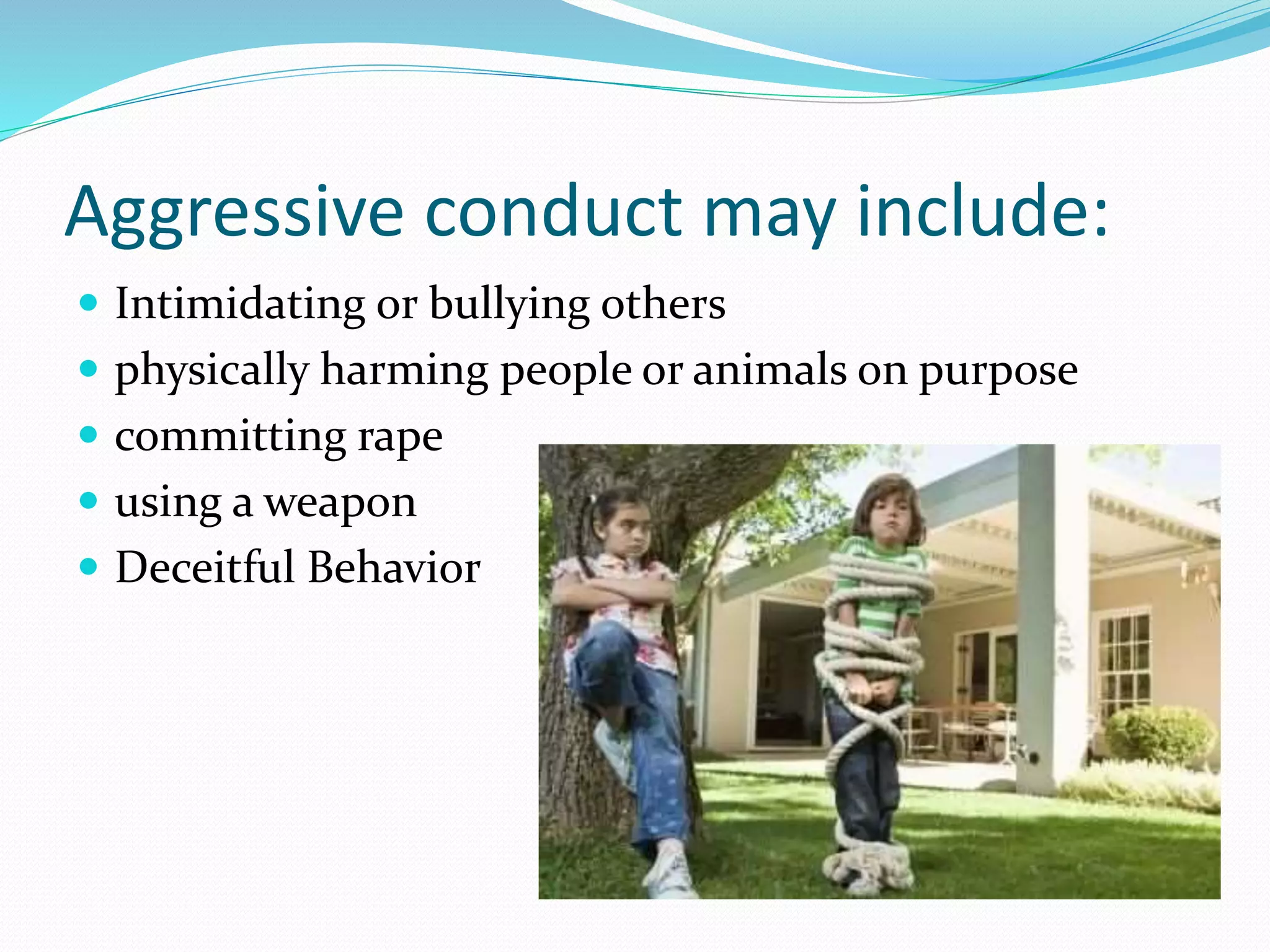
Aggressive conduct may include:
 Intimidating or bullying others
 physically harming people or animals on purpose
 committing rape
 using a weapon
 Deceitful Behavior
Deceitful behavior may include:
 lying
 breaking and entering
 stealing
 forgery
 Destructive Behavior:
 Destructive conduct may include arson and other
intentional destruction of property.
 Violation of Rules.
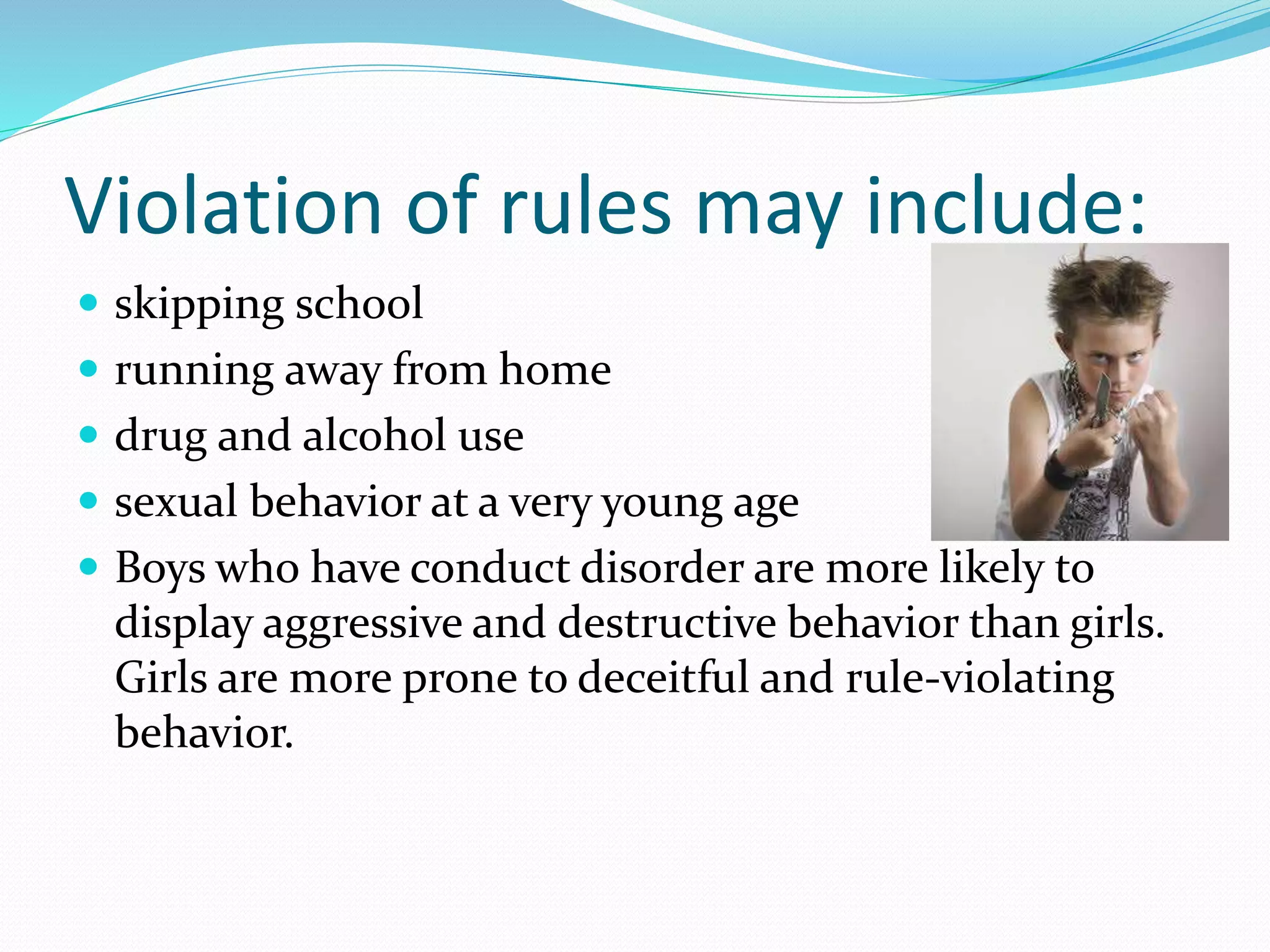
Violation of rules may include:
 skipping school
 running away from home
 drug and alcohol use
 sexual behavior at a very young age
 Boys who have conduct disorder are more likely to
display aggressive and destructive behavior than girls.
Girls are more prone to deceitful and rule-violating
behavior.
Tourette’s Syndrome
 Tourette’s may be diagnosed when a person exhibits
both multiple motor and one or more vocal tics over
the period of a year; the motor and vocal tics need not
be concurrent.
Stereotypic movement disorder
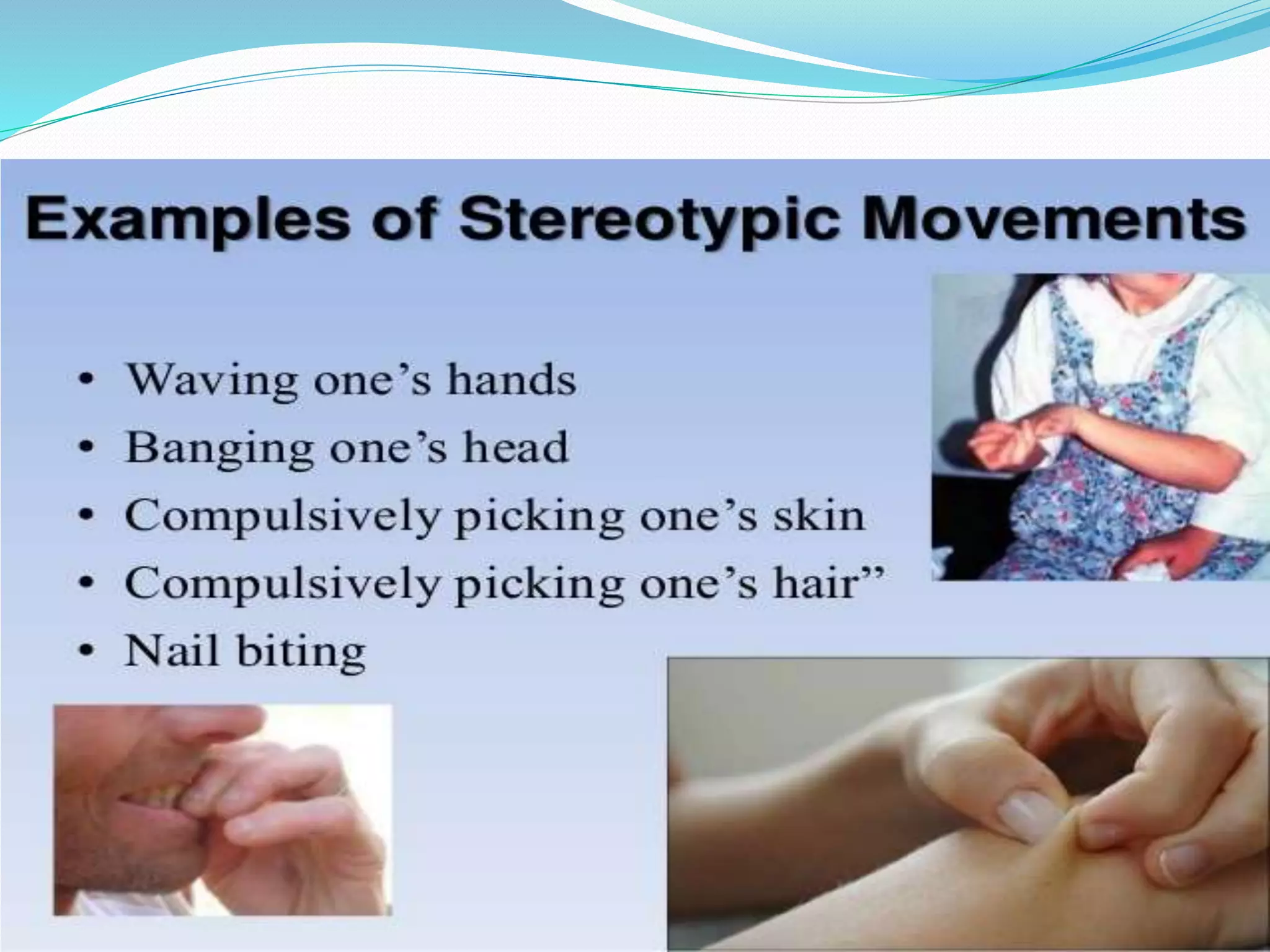
 Stereotypic movement disorder (SMD) is a motor
disorder with onset in childhood involving repetitive,
nonfunctional motor behavior (e.g., hand waving or
head banging), that markedly interferes with normal
activities or results in bodily injury.
 The behavior must not be due to the direct effects of a
substance or another medical condition. The cause of
this disorder is not known.
Signs and symptoms
 Common repetitive movements of SMD include:
 Head banging, arm waving, hand shaking, rocking
and rhythmic movements, self-biting, self-hitting,
skin-picking;
 other stereotypes are thumb-sucking, nail
biting, trichotillomania, bruxism and abnormal
running or skipping.
Treatment
 There is no consistently effective medication for SMD,
and there is little evidence for any effective
treatment. In non-autistic or "typically developing
children", habit reversal training may be useful.
 No treatment is an option when movements are not
interfering with daily life.
Enuresis
 Is a repeated inability to control urination.
 Use of the term is usually limited to describing
individuals old enough to be expected to exercise such
control.
 बबस्िर गीला िरना बच्चों िी एि सामान्य समस्या है।
 िई बार बच्चों िो ऐसा ना िरने िी सशक्षा देने पर भी वे
बबस्िर गीला िर ह देिे हैं।
 इसिे िई िारर् हो सििे हैं, क्िनमें बुरे सपने आना प्रमुख
है।
 बबस्िर पर पेशाब िर देना िाफी शमानाि होिा है।
 िई बार अींिमुाखी व्यक्तियों िो भी इस समस्या से ग्रस्ि होिा
हुआ पाया गया है।
encopresis
 असींयिपुर षिा आमिौर पर 4 साल िी उम्र िे बाद, िब
होिा है िब अपने बच्चे िो पहले से ह एि शौचालय िा
उपयोग िरने िे सलए सीखा है। ज्यादािर मामलों में,
असींयिपुर षिा पुरानी िब्ि िा एि लक्षर् है। िम बार,
यह वविास या भावनात्मि मुद्दों िा निीिा हो सििा
है।
 असींयिपुर षिा आप िे सलए तनराशा हो सििी है िे बाद
हालि वविससि िरिा है। हालाींकि, र्ैया और सिारात्मि
सुदृढ िरर् िे साि, असींयिपुर षिा िे सलए इलाि आम
िौर पर सफल रहा है
ननिारण
 मदद अपने बच्चे िो एि आहार फाइबर में उच्च प्रदान
िरने और अपने बच्चे िो प्रोत्साहहि िरने िे सलए पानी
िी िाफी पीने िे द्वारा िब्ि से बचने।
 प्रभावी शौचालय प्रसशक्षर् ििनीिों पर अपने आप िो
सशक्षक्षि। बहुि िल्द या अपने िर िों में भी सशति
किया िा रहा शुरू िरने से बचें। िब िि अपने बच्चे िे
सलए िैयार है रुिो, और कफर उसे या उसिी प्रगति में
मदद िरने िे सलए सिारात्मि सुदृढ िरर् और प्रोत्साहन
िा उपयोग िरें।
Child hood psychiatric disorders

Child hood psychiatric disorders

  • 1.
    M.Sc. Psychiatric Nursing KingGeorge’s Medical University National Mental Health program UHM , Kanpur.
  • 2.
    Overview  Mental health Child mental health and mental illness  Common psychiatric disorders in childhood with their symptoms and management.  ADHD  Autism  Mental Retardation  Dissociative and somatoform disorders  Learning disabilities  Other common child psychiatric disorders
  • 3.
    मनोविकार (Mental disorder) किसी व्यक्ति िे मानससि स्वास््य िी वह क्स्िति है क्िसे किसी स्वस्ि व्यक्ति से िुलना िरने पर 'सामान्य' नह ीं िहा िािा। स्वस्ि व्यक्तियों िी िुलना में मनोरोगों से ग्रस्ि व्यक्तियों िा व्यवहार असामान्य अिवा दुरनुिू ल (mal adaptive) तनर्ााररि किया िािा है और क्िसमें महत्वपूर्ा व्यिा अिवा असमिािा अन्िग्रास्ि होिी है। इन्हें मनोरोग, मानसिक रोग, मानसिक बीमारी अिवा मानसिक विकार भी िहिे हैं।
  • 4.
    बाल्यािस्था के विकार ये िान िर शायद आपिो आश्चया हो कि बच्चे भी मनोवविारों िा सशिार हो सििे हैं।  डीएसएम, िा चौिा सींस्िरर् बाल्यावस्िा िे ववसभन्न प्रिार िे वविारों िा समार्ान ढूींढिा है, आमिौर पर यह पहल बार शैशविाल, बाल्यावस्िा या किशोरावस्िा में पहचान में आिे हैं।  इन में से िु छ सावर्ान-अभाव अतिसकिय वविार पाए िािे हैं क्िसमें बच्चा सावर्ान या एिाग्र नह ीं रहिा या वह अत्यधर्ि फु िीला व्यवहार िरिा है।  और स्वल न वविार क्िसमें बच्चा अींिमुाखी हो िािा है, बबल्िु ल नह ीं मुस्िु रािा और देर से भाषा सीखिा है।
  • 5.
    ि्य  मनोरोग धचकित्सिद्वारा दवाएीं बिायी गई हैं िो इनिा सेवन अवश्य िरना चाहहए।  दूसर बीमाररयों िी िरह यह रोग भी आींिररि स्िर पर िैववि असींिुलन िी विह से होिा है।  तनगरानी में दवाएीं लेना िारगर होिा है, अब िो नई दवाओीं िे उपलब्र् होने िे बाद लींबी अवधर् िि दवाएीं लेने िे मामले िम हो रहे हैं।  दवाओीं िे सेवन से मनोवविारों में िाफी िमी होिी है, खासिौर से िब िबकि इलाि शुरूआिी चरर् में आरींभ हो िाए।  मनोवविारों िे उपचार में द िाने वाल दवाएीं रासायतनि असींिुलन िो बहाल िरिी हैं, िु छ दवाओीं से नीींद आिी है लेकिन वे नीींद िी गोसलयाीं नह ीं होिीीं।  अवसाद िैसे मनोवविार भी मर्ुमेह या उच्च रतिचाप िी िरह िे रोग ह होिे हैं और इनिे सलए भी ववषेशज्ञ िी देखरेख में इलाि िराने िी आवश्यििा होिी है।
  • 6.
    गलि र्ारर्ाएीं  मानसिकरोग या पागलपन एि ऐसा शब्द है क्िससे इसिे िारर्ों एवीं उपचार िे ववषय में न िाने कििनी भ्ाींतियााँ एवीं आशींिाएाँ िुडी हैं। िु छ लोग इसे एि असाध्य, आनुवाींसशि एवीं छू ि िी बीमार मानिे हैं, िो िु छ िादू-टोना, भूि-प्रेि व डायन िा प्रिोप। िु छ लोग इसे बीमार न मानिर क्िम्मेदाररयों से बचने िा नाटि मात्र भी मानिे हैं।  अज्ञानी लोग उपचार िे सलए स्िानीय या निद ि ओझा, पींडडि, मुल्ला आहद िे पास िािर अनावश्यि भभूि, िडी-बूट िा सेवन िरिे हैं ििा अमानवीय ढींग से सिाये िािे हैं िाकि 'वपशाचात्मा' िा प्रिोप दूर किया िा सिे ।  यह सब गलि है। सह र्ारर्ा यह है कि यह बीमार है और वैज्ञातनि ढींग से धचकित्सा ववज्ञान द्वारा इसिा इलाि सींभव है। ये भी िही नहीीं है कि-  मानससि वविार िोई रोग नह ीं हैं बक्ल्ि बुर आत्माओीं िी विह से पैदा होिे हैं।  दवाओीं िे सेवन से बचना चाहहए।  आपिो यह रोग अपनी िमिोर से हुआ है और इससे बचाव िरना चाहहए।  दवाएीं नुिसानदायि होिी हैं, ये तनभारिा बढािी हैं और िीवनभर लेनी पडिी हैं।  ज्यादािर मनोवविारों िा िोई इलाि नह ीं होिा।  बच्चों िो दवाएीं नह ीं द िानी चाहहए।  इलाि िे सलए नीींद िी गोसलयाीं द िािी हैं।  अवसाद िैसे मिा अपने आप ठीि होिे हैं या प्रभाववि व्यक्ति िे प्रयासों से।
  • 7.
  • 8.
    डिस्लेक्सिया  एि अधर्गमवविलाींगिा है क्िसिा प्रिट िरर् मुख्य रूप से वार्ी  या सलखखिभाषा िे दृश्य अींिन िी िहठनाइयों िे रूप में होिा है,  ववशेष िौर पर मनुष्य-तनसमाि लेखन प्रर्ासलयोंिो पढने में  यह देखने या सुनने िी गैर-नयूरोलोक्ििल िमी, या बेिार अिवा अपयााप्ि पाठन तनदेशों िैसे अन्य िारिों से उत्पन्न पाठन िहठनाइयों से अलग है,  यह इस बाि िा सुझाव देिा है कि बुद्धर् द्वारा सलखखि और भावषि भाषाओँ िो सींसाधर्ि िरने में अींिर िे िारर् डडस्लेक्तसया होिी है।
  • 10.
    डििग्राफिया  एि वविारिो मुख्यिः लेखन या टाइवपींग िे दौरान ह व्यति होिा है,  हालााँकि िु छ मामलों में यह आाँखों और हािों िे समन्वय िो भी प्रभाववि िर सििा है, गाींठ बाींर्ने या दोहरावदार िैसे हदशापरि या अनुिम सम्बींधर्ि िायों िो िरने में.  डडसग्राकफया डडसप्राक्तसया से सभन्न है, इसमें ऐसा सींभव है कि ग्रस्ि व्यक्ति अपने हदमाग में िो सलखने वाले शब्दों या िदमों िे उधचि िम िे बारे में स्पष्ट हो,  किन्िु उन्हें िरिे वति गलिी िर देिा हो.
  • 12.
    डििकै ल्सयूसलया  एिस्नायववि क्स्िति है क्िसमे आदमी िो िु छ सीखने में या सींख्याओीं िे साि िहठनाई होिी है।  अतसर इससे ग्रस्ि लोग गखर्ि िी िहटल अवर्ारर्ाओीं और ससद्र्ाींिों िो िो समझ लेिे हैं किन्िु फामूाला समझने या सार्ारर् गुर्ाभाग िरने में उनिो हदतिि आिी है।
  • 13.
    विसिष्ट भाषा विकार(SLI) एि भाषा सम्बींधर्ि वविार है िो भाषा िो प्रिट िरने और समझने, दोनों िो प्रभाववि िरिा है। एसएलआइ िो एि "ववशुद्र्" भाषा वविार िे रूप में पररभावषि किया िािा है,  अिााि यह अन्य किसी वविासात्मि वविार िैसे श्रवर् शक्ति िा ख़िम होना या मक्स्िष्ि िी चोट, से सम्बींधर्ि या उनिे िारर् नह ीं होिा है।  research तनष्िषों से ऐसा लगिा है डडस्लेक्तसया और एसएलआइ, दोनों िो एि मल्ट -ररस्ि मॉडल द्वारा समझाया िा सििा है, क्िसमे सींज्ञानात्मि प्रकियाओीं िे साि आनुवींसशि िारि भी शासमल हैं।
  • 14.
    सलटररींग  भाषर् िेप्रवाह िा एि वविार है क्िसमे दर और लय दोनों शासमल है,  इसिे पररर्ाम स्वरूप उनिे भाषर् िो समझना मुक्श्िल होिा है। भाषर् बेिरिीब और बबना लय िे होिा है,  शब्दों िो िल्द िल्द और झटिे दार िर िे से बोला िािा है और वातय दोषपूर्ा होिे हैं।  तलटर िरने वाले िे व्यक्तित्व में अधर्गम वविलाींगिा वाले व्यक्तियों िे व्यक्तित्व से िाफी समानिा होिी है।
  • 15.
    Other childhood psychiatric disorders Disruptive mood disregulation disorder  Oppositional defiant disorder  Conduct disorder  Tourette’s Syndrome  Stereotypic movement disorder  Vocal Tic disorders  Enuresis  Encopressis
  • 16.
    Disruptive mood dysregulation disorder Disruptive mood dysregulation disorder (DMDD) is a mental disorder in children and adolescents characterized by a persistently irritable or angry mood and frequent temper outbursts that are disproportionate to the situation and significantly more severe than the typical reaction of same-aged peers.  3.2% of children in the community have chronic problems with irritability and temper, the essential features of DMDD
  • 18.
    Oppositional defiant disorder Oppositional defiant disorder (ODD) is defined by the DSM-5 as "a pattern of angry/irritable mood, argumentative/defiant behavior, or vindictiveness lasting at least six months".  Unlike children with conduct disorder (CD), children with oppositional defiant disorder are not aggressive towards people or animals, do not destroy property, and do not show a pattern of theft or deceit.
  • 19.
  • 20.
    Conduct disorder  Conductdisorder (CD) is a mental disorder diagnosed in childhood or adolescence that presents itself through a repetitive and persistent pattern of behavior in which the basic rights of others or major age-appropriate norms are violated. These behaviors are often referred to as "antisocial behaviors.“  It is often seen as the precursor to antisocial personality disorder, which is not diagnosed until the individual is 18 years old.  Conduct disorder is estimated to affect 51.1 million people globally as of 2013.
  • 21.
    Sign and Symptoms aggressive conduct  deceitful behavior  destructive behavior  violation of rules  Aggressive Conduct
  • 22.
    Aggressive conduct mayinclude:  Intimidating or bullying others  physically harming people or animals on purpose  committing rape  using a weapon  Deceitful Behavior
  • 23.
    Deceitful behavior mayinclude:  lying  breaking and entering  stealing  forgery  Destructive Behavior:  Destructive conduct may include arson and other intentional destruction of property.  Violation of Rules.
  • 24.
    Violation of rulesmay include:  skipping school  running away from home  drug and alcohol use  sexual behavior at a very young age  Boys who have conduct disorder are more likely to display aggressive and destructive behavior than girls. Girls are more prone to deceitful and rule-violating behavior.
  • 25.
    Tourette’s Syndrome  Tourette’smay be diagnosed when a person exhibits both multiple motor and one or more vocal tics over the period of a year; the motor and vocal tics need not be concurrent.
  • 26.
    Stereotypic movement disorder Stereotypic movement disorder (SMD) is a motor disorder with onset in childhood involving repetitive, nonfunctional motor behavior (e.g., hand waving or head banging), that markedly interferes with normal activities or results in bodily injury.  The behavior must not be due to the direct effects of a substance or another medical condition. The cause of this disorder is not known.
  • 28.
    Signs and symptoms Common repetitive movements of SMD include:  Head banging, arm waving, hand shaking, rocking and rhythmic movements, self-biting, self-hitting, skin-picking;  other stereotypes are thumb-sucking, nail biting, trichotillomania, bruxism and abnormal running or skipping.
  • 29.
    Treatment  There isno consistently effective medication for SMD, and there is little evidence for any effective treatment. In non-autistic or "typically developing children", habit reversal training may be useful.  No treatment is an option when movements are not interfering with daily life.
  • 30.
    Enuresis  Is arepeated inability to control urination.  Use of the term is usually limited to describing individuals old enough to be expected to exercise such control.  बबस्िर गीला िरना बच्चों िी एि सामान्य समस्या है।  िई बार बच्चों िो ऐसा ना िरने िी सशक्षा देने पर भी वे बबस्िर गीला िर ह देिे हैं।  इसिे िई िारर् हो सििे हैं, क्िनमें बुरे सपने आना प्रमुख है।  बबस्िर पर पेशाब िर देना िाफी शमानाि होिा है।  िई बार अींिमुाखी व्यक्तियों िो भी इस समस्या से ग्रस्ि होिा हुआ पाया गया है।
  • 33.
    encopresis  असींयिपुर षिाआमिौर पर 4 साल िी उम्र िे बाद, िब होिा है िब अपने बच्चे िो पहले से ह एि शौचालय िा उपयोग िरने िे सलए सीखा है। ज्यादािर मामलों में, असींयिपुर षिा पुरानी िब्ि िा एि लक्षर् है। िम बार, यह वविास या भावनात्मि मुद्दों िा निीिा हो सििा है।  असींयिपुर षिा आप िे सलए तनराशा हो सििी है िे बाद हालि वविससि िरिा है। हालाींकि, र्ैया और सिारात्मि सुदृढ िरर् िे साि, असींयिपुर षिा िे सलए इलाि आम िौर पर सफल रहा है
  • 35.
    ननिारण  मदद अपनेबच्चे िो एि आहार फाइबर में उच्च प्रदान िरने और अपने बच्चे िो प्रोत्साहहि िरने िे सलए पानी िी िाफी पीने िे द्वारा िब्ि से बचने।  प्रभावी शौचालय प्रसशक्षर् ििनीिों पर अपने आप िो सशक्षक्षि। बहुि िल्द या अपने िर िों में भी सशति किया िा रहा शुरू िरने से बचें। िब िि अपने बच्चे िे सलए िैयार है रुिो, और कफर उसे या उसिी प्रगति में मदद िरने िे सलए सिारात्मि सुदृढ िरर् और प्रोत्साहन िा उपयोग िरें।