Implant Occlusion
Summary Based on
Occlusion for implant-supported fixed dental prostheses in partially
edentulous patients: a literature review and current concepts
Judy Chia-Chun Yuan , Cortino Sukotjo
*

Department of Restorative Dentistry, University of Illinois at Chicago College of Dentistry, Chicago, IL, USA
•

•

•

•

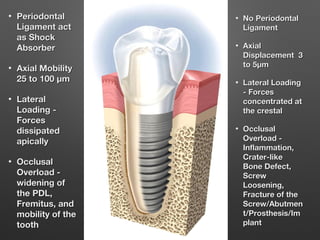
Periodontal
Ligament act
as Shock
Absorber
Axial Mobility
25 to 100 μm
Lateral
Loading Forces
dissipated
apically
Occlusal
Overload widening of
the PDL,
Fremitus, and
mobility of the
tooth

•

No Periodontal
Ligament

•

Axial
Displacement 3
to 5μm

•

Lateral Loading
- Forces
concentrated at
the crestal

•

Occlusal
Overload Inflammation,
Crater-like
Bone Defect,
Screw
Loosening,
Fracture of the
Screw/Abutmen
t/Prosthesis/Im
plant
Implant Occlusal Scheme
•

Flat Fossa and Grooves for wide freedom in centric

•

Shallow Occlusal Anatomy

•

Narrow Occlusal Table - 30% to 40% smaller for molars (Widths >
Implant Diameter - Cantilever Effect - Bending Effect)
•

Narrow Table - More Axial, Less non-Axial

•

Reduced Cuspal Inclination - Less Bending forces, more axial

•

Occlusal Material - Material with high modulus of elasticity

•

Night Guard - Parafunction
Single Unit

•

Avoid excursive guidance

•

Increased proximal contact
Multiple Unit - Anterior
•

Light contact in maximum intercuspation (30 μm)

•

Flatten vertical and horizontal overlap and protrusive
guidance to reduce lateral forces

•

Selective excursive guidance for best biomechanical
abutment distribution
Multiple Unit - Posterior
•

Excursive guidance on well-supported anterior
natural teeth with posterior teeth disclusion in
eccentric movements

•

Canine protected or mutually protected occlusion if
canine present

•

Group function occlusal scheme if canine
absent/prosthesis replacing bilateral distal extension

•

Optimum abutment support for working guidance
Occlusion Check
•

Maximum Intercuspation - Contact in the Centre, Light
contact (30 μm)

•

Firm occlusion with shim stock (8–30 μm)
passing through

•

Anterior guidance with natural dentition, if possible

•

No contact on lateral movements - working, nonworking

•

Group Function - if no natural tooth for lateral guidance
Implant occlusion
Implant occlusion
Implant occlusion

Implant occlusion

  • 1.
    Implant Occlusion Summary Basedon Occlusion for implant-supported fixed dental prostheses in partially edentulous patients: a literature review and current concepts Judy Chia-Chun Yuan , Cortino Sukotjo * Department of Restorative Dentistry, University of Illinois at Chicago College of Dentistry, Chicago, IL, USA
  • 2.
    • • • • Periodontal Ligament act as Shock Absorber AxialMobility 25 to 100 μm Lateral Loading Forces dissipated apically Occlusal Overload widening of the PDL, Fremitus, and mobility of the tooth • No Periodontal Ligament • Axial Displacement 3 to 5μm • Lateral Loading - Forces concentrated at the crestal • Occlusal Overload Inflammation, Crater-like Bone Defect, Screw Loosening, Fracture of the Screw/Abutmen t/Prosthesis/Im plant
  • 3.
    Implant Occlusal Scheme • FlatFossa and Grooves for wide freedom in centric • Shallow Occlusal Anatomy • Narrow Occlusal Table - 30% to 40% smaller for molars (Widths > Implant Diameter - Cantilever Effect - Bending Effect) • Narrow Table - More Axial, Less non-Axial • Reduced Cuspal Inclination - Less Bending forces, more axial • Occlusal Material - Material with high modulus of elasticity • Night Guard - Parafunction
  • 4.
    Single Unit • Avoid excursiveguidance • Increased proximal contact
  • 5.
    Multiple Unit -Anterior • Light contact in maximum intercuspation (30 μm) • Flatten vertical and horizontal overlap and protrusive guidance to reduce lateral forces • Selective excursive guidance for best biomechanical abutment distribution
  • 6.
    Multiple Unit -Posterior • Excursive guidance on well-supported anterior natural teeth with posterior teeth disclusion in eccentric movements • Canine protected or mutually protected occlusion if canine present • Group function occlusal scheme if canine absent/prosthesis replacing bilateral distal extension • Optimum abutment support for working guidance
  • 7.
    Occlusion Check • Maximum Intercuspation- Contact in the Centre, Light contact (30 μm) • Firm occlusion with shim stock (8–30 μm) passing through • Anterior guidance with natural dentition, if possible • No contact on lateral movements - working, nonworking • Group Function - if no natural tooth for lateral guidance