Download as PDF, PPTX
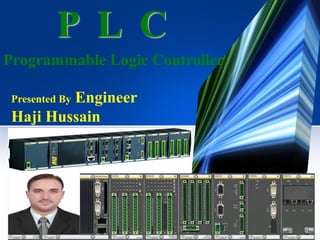
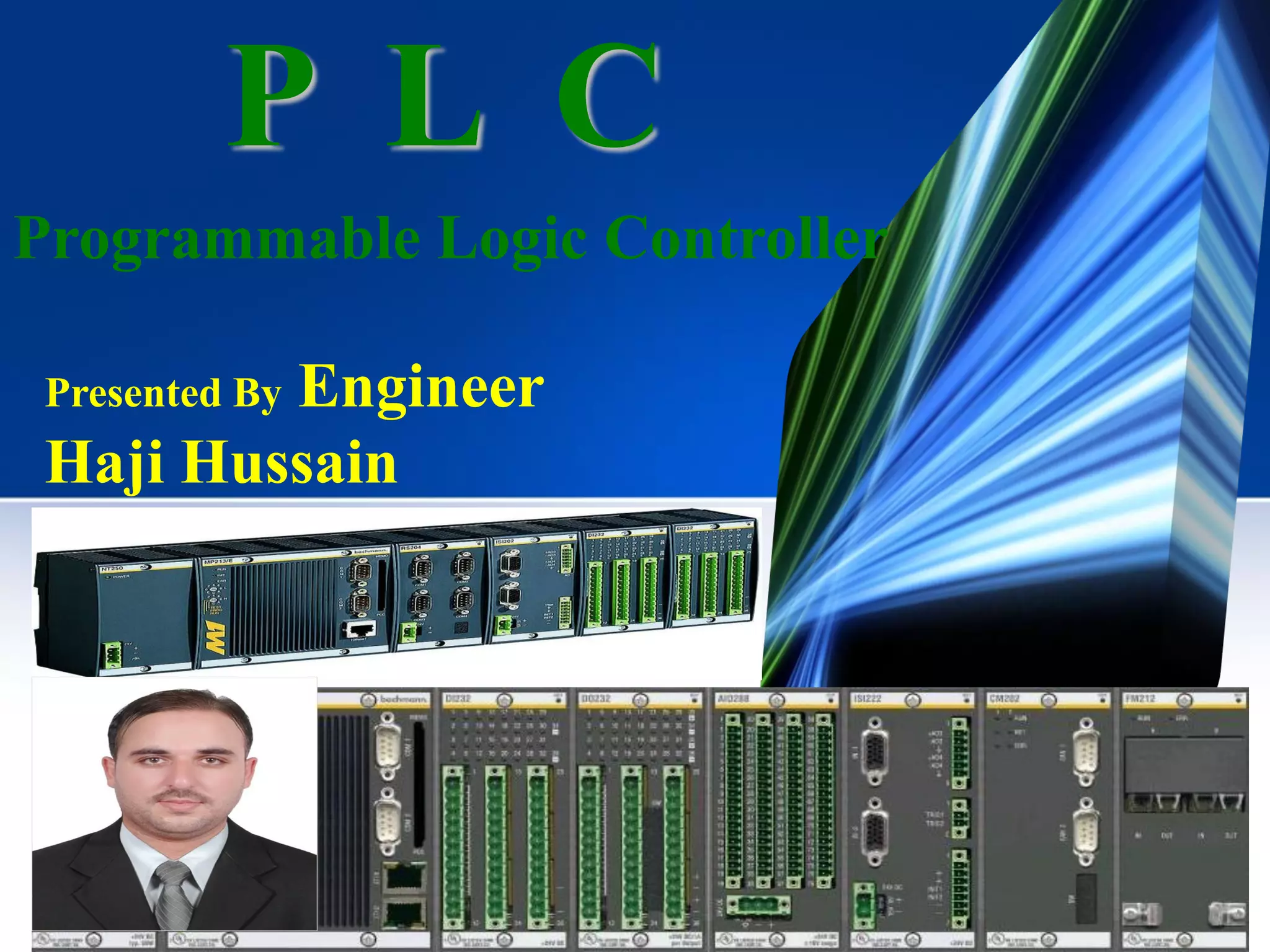
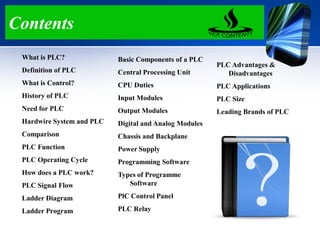
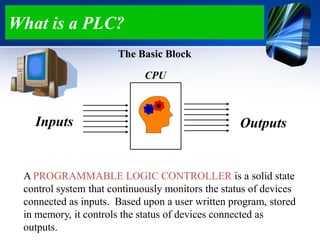
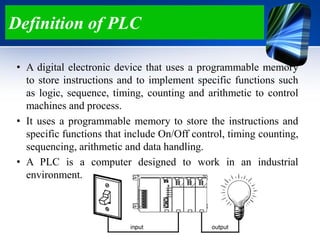
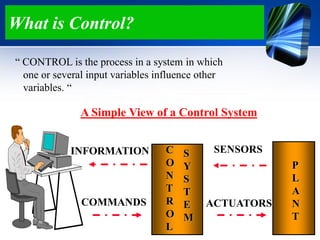
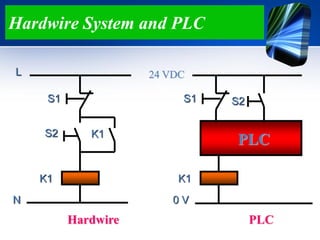
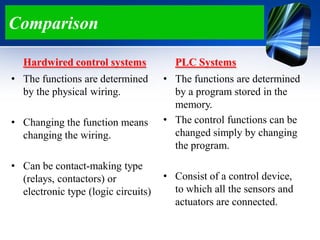
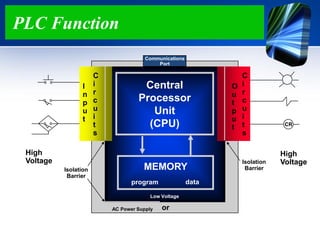
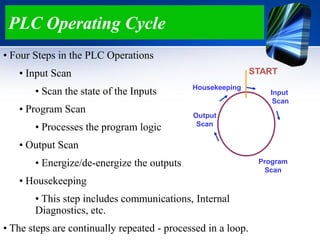
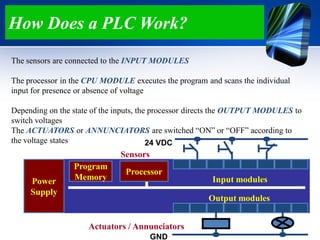
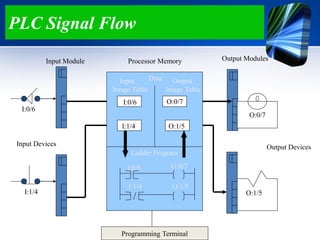
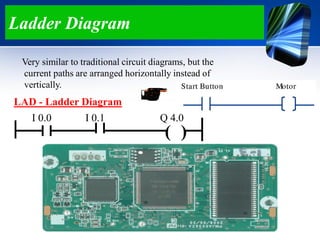
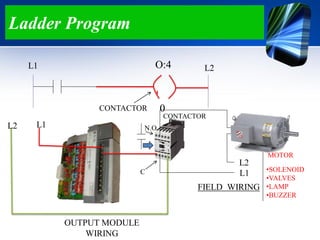
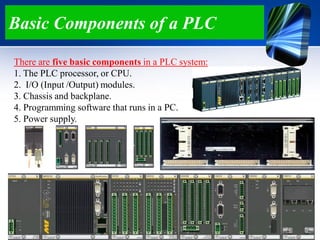
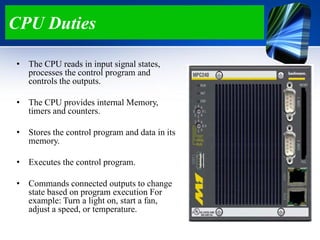
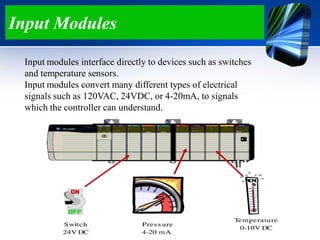
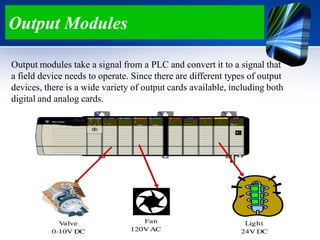
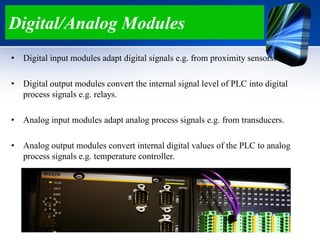
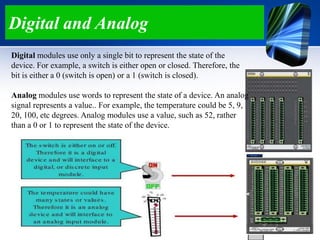
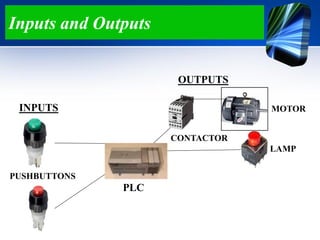
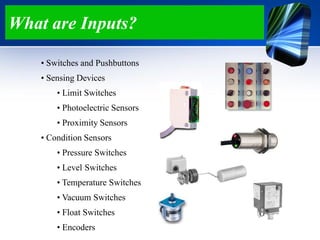
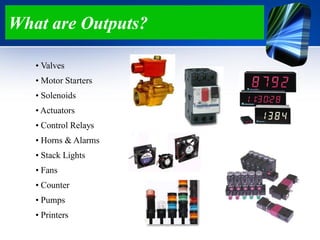
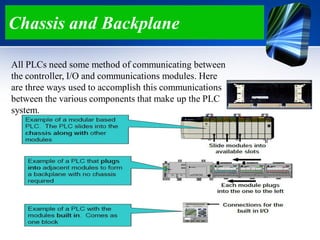
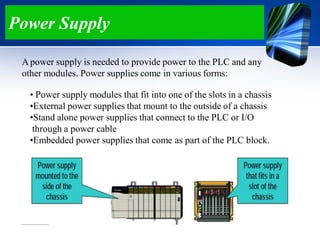
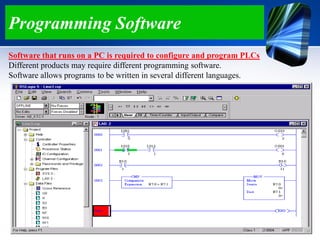
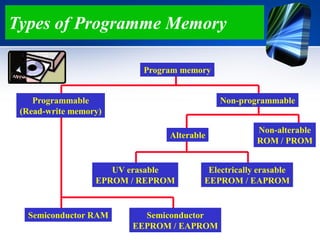
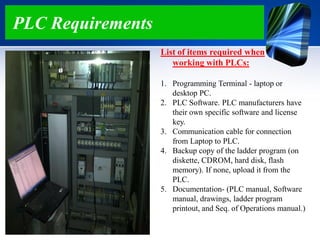
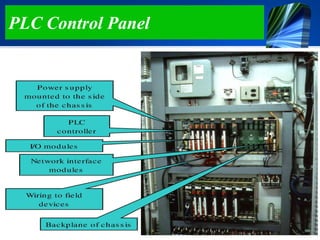
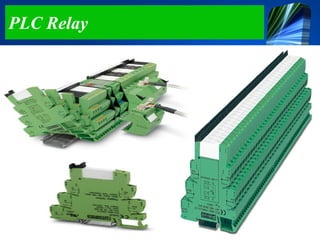
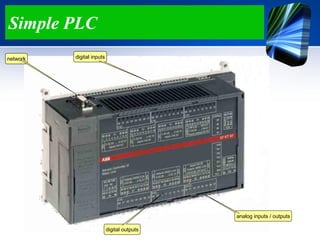
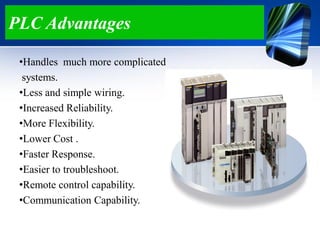
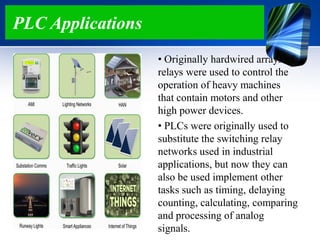
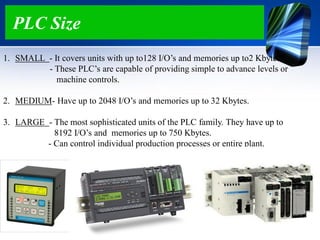
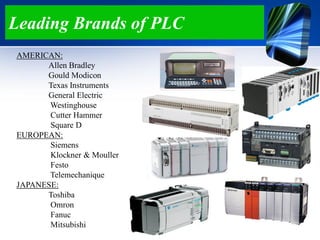

The document provides an overview of programmable logic controllers (PLCs), including their definition, history, components, functions, programming, and applications. Key points covered include: - PLCs are digital electronic devices that use a programmable memory to implement control functions like logic and sequencing to control machines and processes. - They were developed in the 1960s to replace hardwired control panels and provide easier modification of control programs. - The basic components of a PLC system are the central processing unit, input/output modules, power supply, and programming software. - PLCs continuously cycle through scanning inputs, running the user-created program, and updating outputs. The program is stored in memory


![Waching machine[1]](https://cdn.slidesharecdn.com/ss_thumbnails/wachingmachine1-190420045344-thumbnail.jpg?width=640&height=640&fit=bounds)


