MHC AND DISEASE
SUSCEPTIBILITY
PRESENTED BY,
D.IRENE
16PGZ001.
M.Sc. Zoology (spl in Biotechnology),
Lady Doak College,
Madurai.
https://en.wikipedia.org/wiki/Jean_Dausset#/media/File:Je
an_Dausset_1968.jpg
Jean Dausset
Immune cells recognize
foreign antigens…..??????
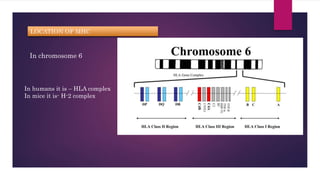
LOCATION OF MHC
In chromosome 6
In humans it is – HLA complex
In mice it is- H-2 complex
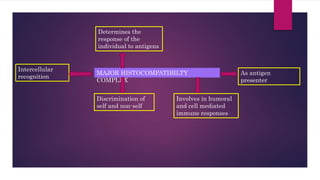
MAJOR HISTOCOMPATIBILTY
COMPLEX
Intercellular
recognition
Discrimination of
self and non-self
Involves in humoral
and cell mediated
immune responses
As antigen
presenter
Determines the
response of the
individual to antigens
http://nakimedicalblog.tumblr.com/post/67561960318/im
mense-immunology-insight-delayed-type-of
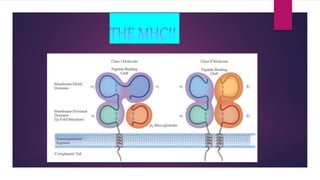
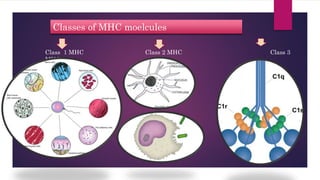
Classes of MHC moelcules
Class 1 MHC Class 2 MHC Class 3
MHC
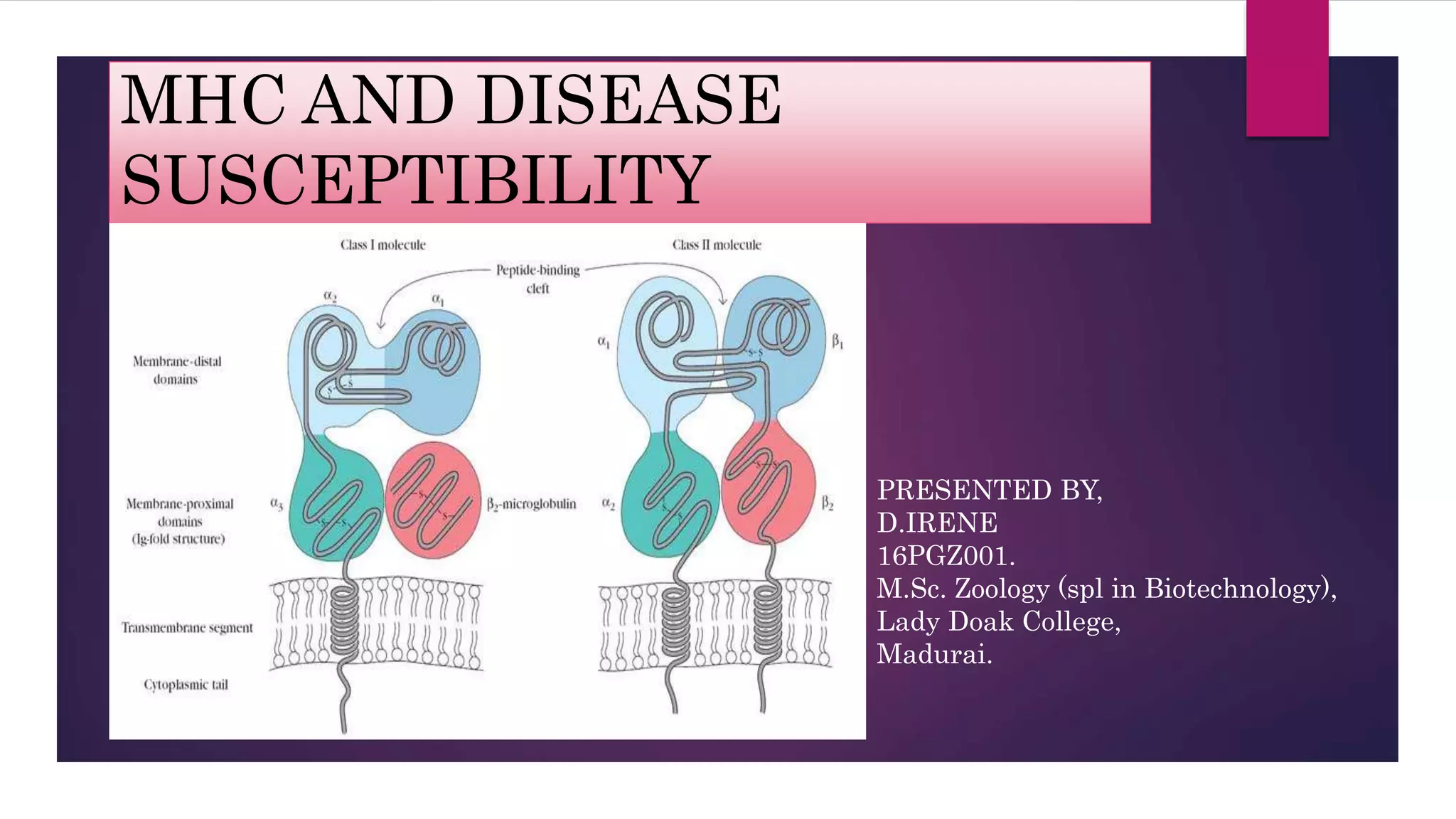
Class 1 MHC molecule
-45 kDa α and 12kDa β2
microglobulin.
-α chain is a transmembrane
glycoprotein encoded by
polymorphic genes within the
A, B, and C regions of the
human HLA complex.
-peptide size 8-10 amino acids.
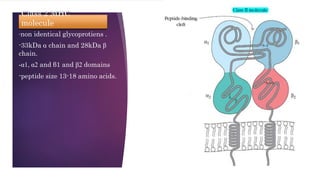
Class 2 MHC
molecule
-non identical glycoprotiens .
-33kDa α chain and 28kDa β
chain.
-α1, α2 and β1 and β2 domains
-peptide size 13-18 amino acids.
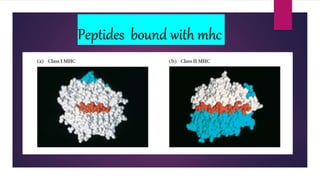
Peptides bound with mhc
-Allelic variants of MHC are many.
-codominantly expressed.
-a group of linked MHC genes is generally inherited from
parents. – haplotypes
- Because of individual allelic differences in the peptide binding
clefts of the class I MHC molecules, different
individuals within a species will have the ability to bind
different
sets of viral peptides
-broad specificity.
MHC and disease susceptibility
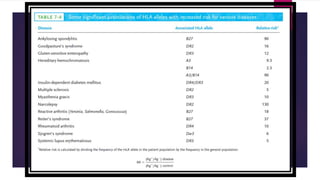
HLA genes occur at a higher frequency-
Diseases associated with MHC-
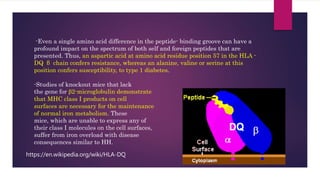
-Even a single amino acid difference in the peptide- binding groove can have a
profound impact on the spectrum of both self and foreign peptides that are
presented. Thus, an aspartic acid at amino acid residue position 57 in the HLA -
DQ β chain confers resistance, whereas an alanine, valine or serine at this
position confers susceptibility, to type 1 diabetes.
-Studies of knockout mice that lack
the gene for β2-microglobulin demonstrate
that MHC class I products on cell
surfaces are necessary for the maintenance
of normal iron metabolism. These
mice, which are unable to express any of
their class I molecules on the cell surfaces,
suffer from iron overload with disease
consequences similar to HH.
https://en.wikipedia.org/wiki/HLA-DQ
Disease susceptibility in cheetah
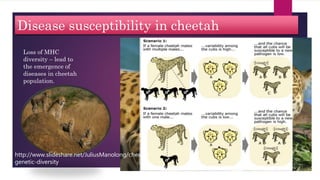
Loss of MHC
diversity – lead to
the emergence of
diseases in cheetah
population.
http://www.slideshare.net/JuliusManolong/cheetah-
genetic-diversity
-High level of MHC polymorphism that has been observed in various species may provide
the advantage of a broad range of antigen presenting MHC molecules.
-MHC diversity appears to protect a
species from a wide range of infectious diseases
1. Richard Goldsby, Janis Kuby., Immunology, 5th edition. pg 162-182.
2.Ivan .M Roitt., Roitts essential immunology.,12th edition., pg 482-486.
3.https://www.ncbi.nlm,nih.gov/pmc /articles/PMC248657/
4. https://www.ncbi.nlm.nih.gov/pmc/articles/PMC2291482/
5. http://www.els.net/WileyCDA/ElsArticle/refId-a0024246.html
Mhc and disease susceptibility

Mhc and disease susceptibility

  • 1.
    MHC AND DISEASE SUSCEPTIBILITY PRESENTEDBY, D.IRENE 16PGZ001. M.Sc. Zoology (spl in Biotechnology), Lady Doak College, Madurai.
  • 2.
  • 3.
    Immune cells recognize foreignantigens…..??????
  • 5.
    LOCATION OF MHC Inchromosome 6 In humans it is – HLA complex In mice it is- H-2 complex
  • 6.
    MAJOR HISTOCOMPATIBILTY COMPLEX Intercellular recognition Discrimination of selfand non-self Involves in humoral and cell mediated immune responses As antigen presenter Determines the response of the individual to antigens
  • 7.
  • 8.
    Classes of MHCmoelcules Class 1 MHC Class 2 MHC Class 3 MHC
  • 9.
    Class 1 MHCmolecule -45 kDa α and 12kDa β2 microglobulin. -α chain is a transmembrane glycoprotein encoded by polymorphic genes within the A, B, and C regions of the human HLA complex. -peptide size 8-10 amino acids.
  • 10.
    Class 2 MHC molecule -nonidentical glycoprotiens . -33kDa α chain and 28kDa β chain. -α1, α2 and β1 and β2 domains -peptide size 13-18 amino acids.
  • 11.
  • 12.
    -Allelic variants ofMHC are many. -codominantly expressed. -a group of linked MHC genes is generally inherited from parents. – haplotypes - Because of individual allelic differences in the peptide binding clefts of the class I MHC molecules, different individuals within a species will have the ability to bind different sets of viral peptides -broad specificity.
  • 13.
    MHC and diseasesusceptibility HLA genes occur at a higher frequency- Diseases associated with MHC-
  • 15.
    -Even a singleamino acid difference in the peptide- binding groove can have a profound impact on the spectrum of both self and foreign peptides that are presented. Thus, an aspartic acid at amino acid residue position 57 in the HLA - DQ β chain confers resistance, whereas an alanine, valine or serine at this position confers susceptibility, to type 1 diabetes. -Studies of knockout mice that lack the gene for β2-microglobulin demonstrate that MHC class I products on cell surfaces are necessary for the maintenance of normal iron metabolism. These mice, which are unable to express any of their class I molecules on the cell surfaces, suffer from iron overload with disease consequences similar to HH. https://en.wikipedia.org/wiki/HLA-DQ
  • 16.
    Disease susceptibility incheetah Loss of MHC diversity – lead to the emergence of diseases in cheetah population. http://www.slideshare.net/JuliusManolong/cheetah- genetic-diversity
  • 17.
    -High level ofMHC polymorphism that has been observed in various species may provide the advantage of a broad range of antigen presenting MHC molecules. -MHC diversity appears to protect a species from a wide range of infectious diseases
  • 18.
    1. Richard Goldsby,Janis Kuby., Immunology, 5th edition. pg 162-182. 2.Ivan .M Roitt., Roitts essential immunology.,12th edition., pg 482-486. 3.https://www.ncbi.nlm,nih.gov/pmc /articles/PMC248657/ 4. https://www.ncbi.nlm.nih.gov/pmc/articles/PMC2291482/ 5. http://www.els.net/WileyCDA/ElsArticle/refId-a0024246.html