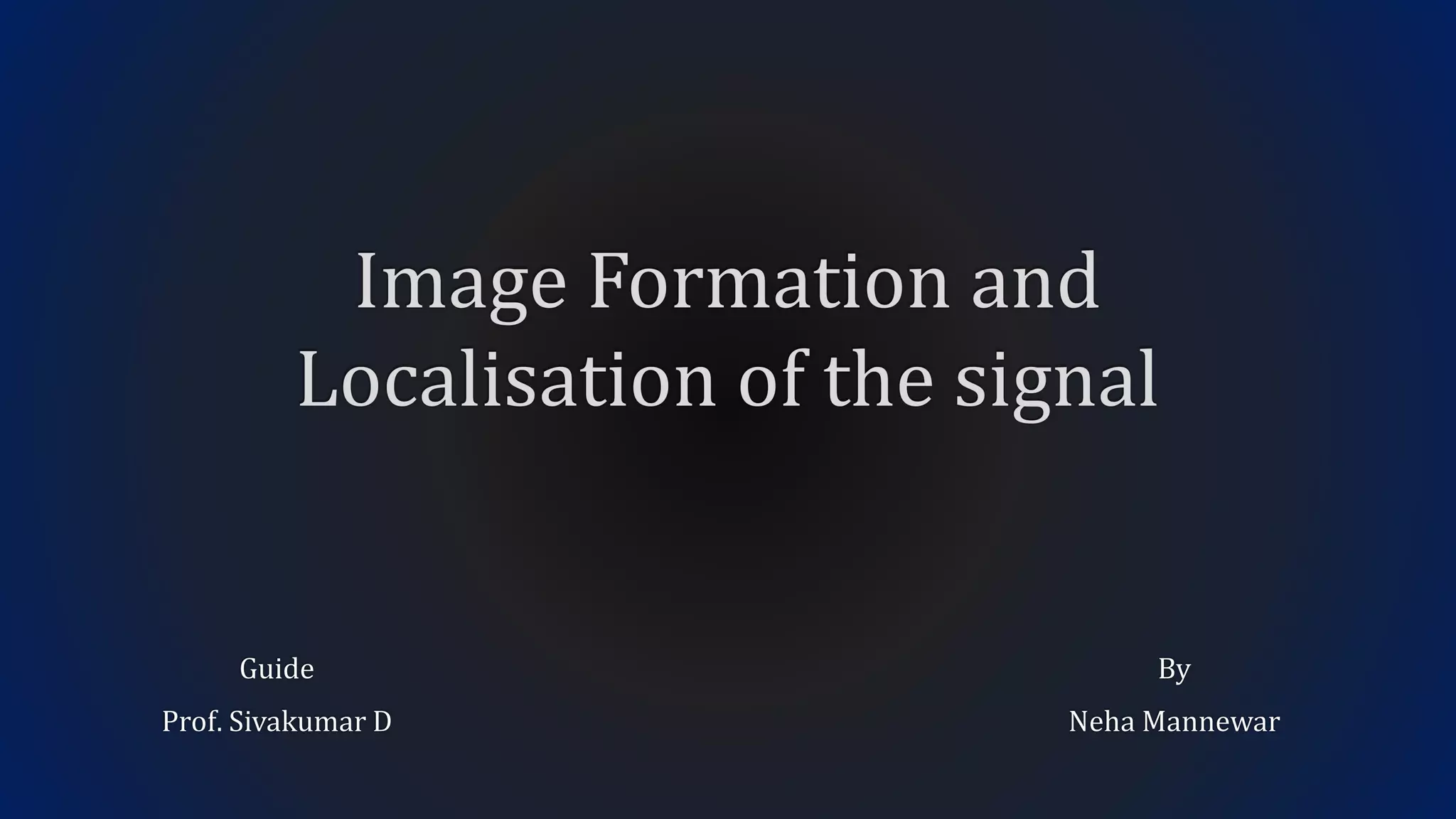
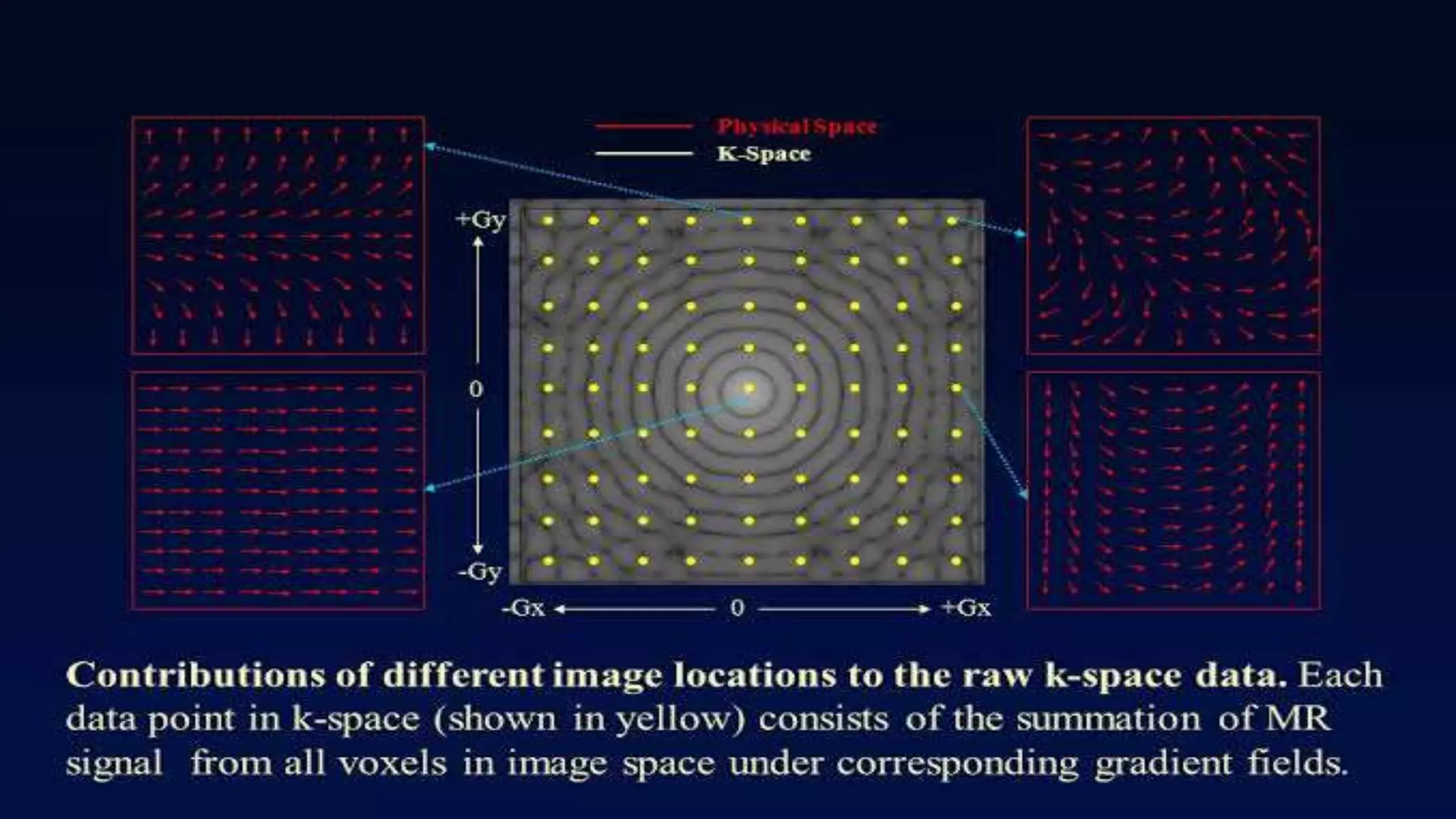
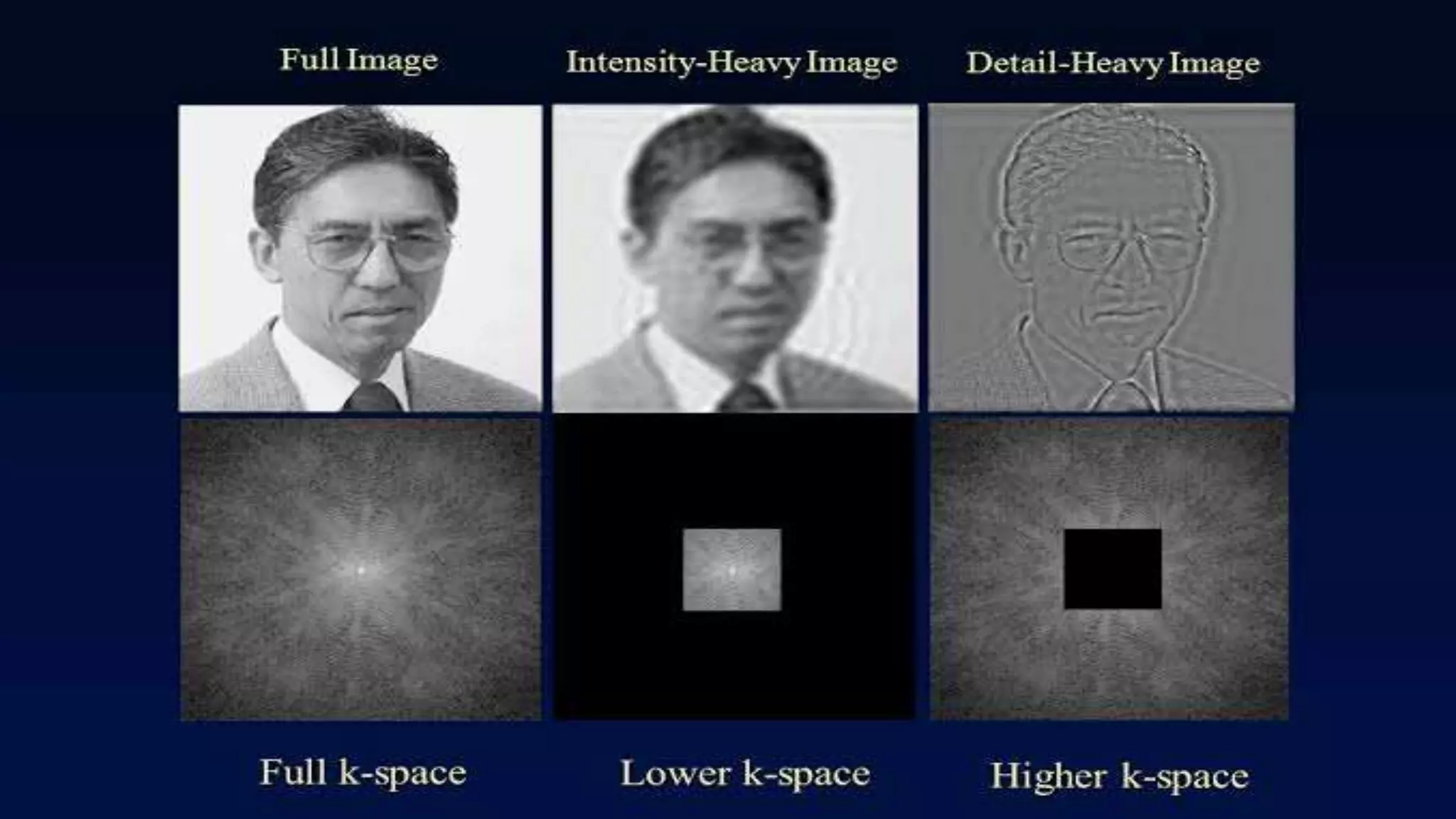
MRI does not use Projection, reflection or refraction mechanism which is commonly used in optical
imaging methods to form image.
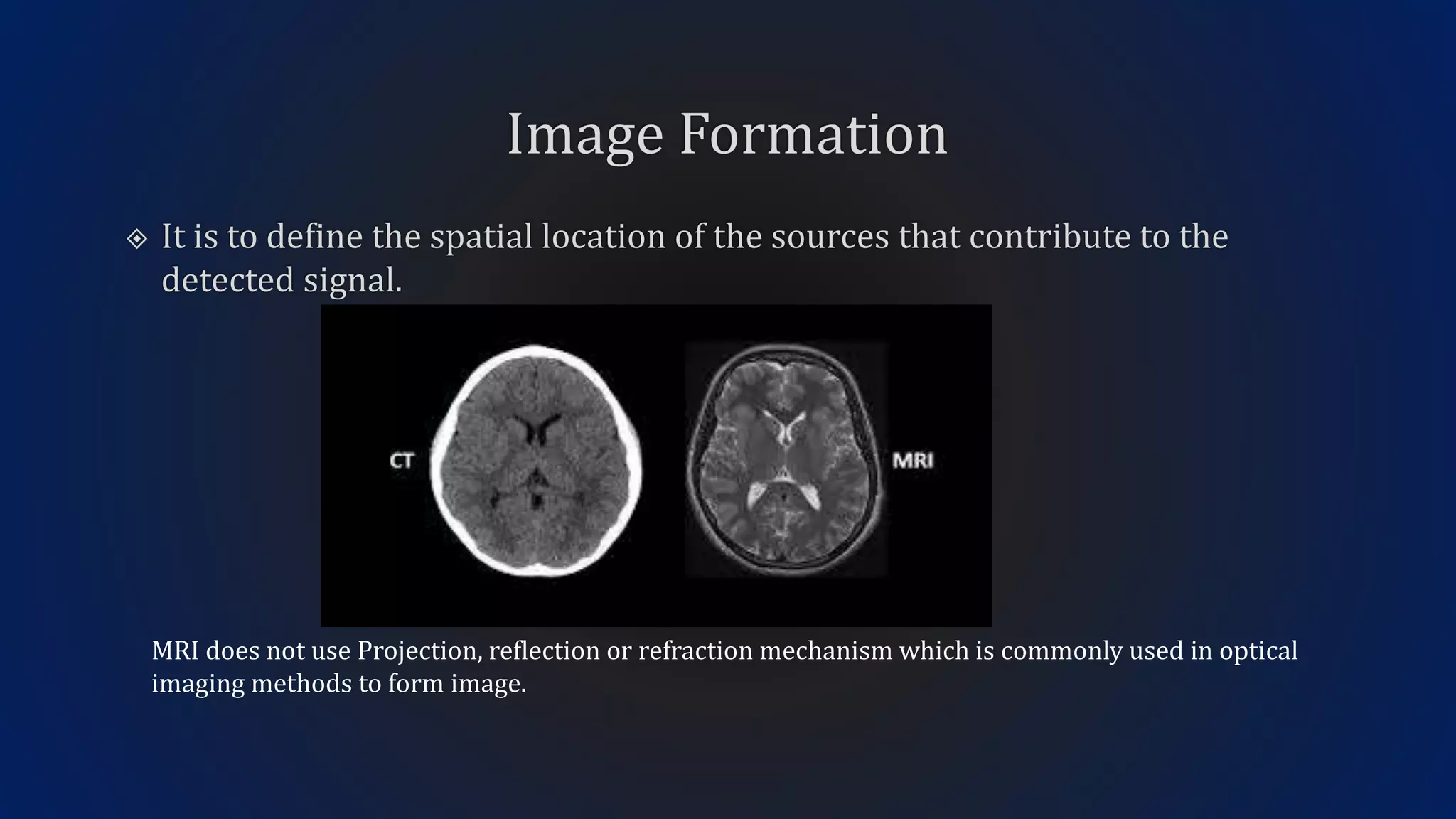
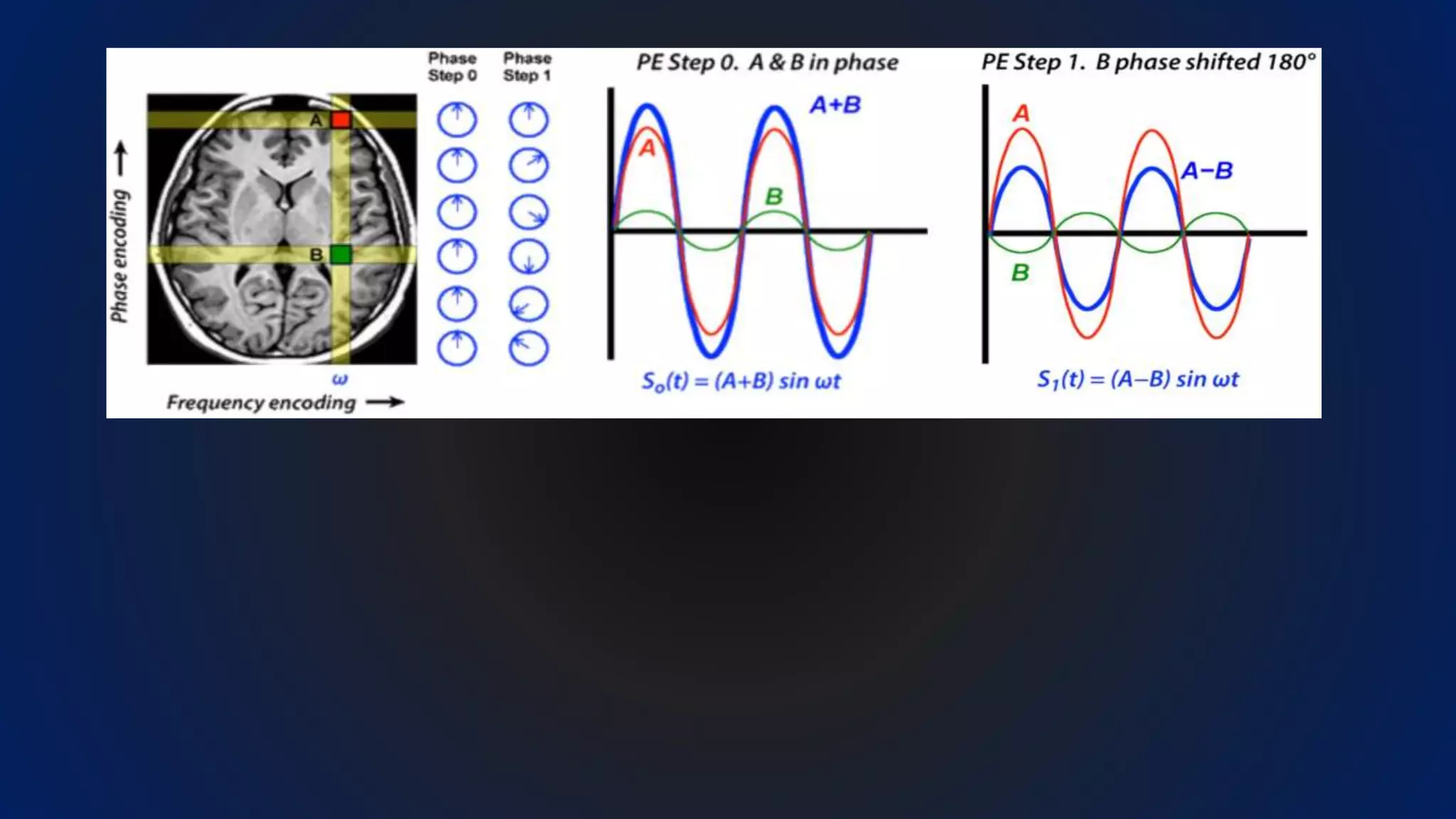
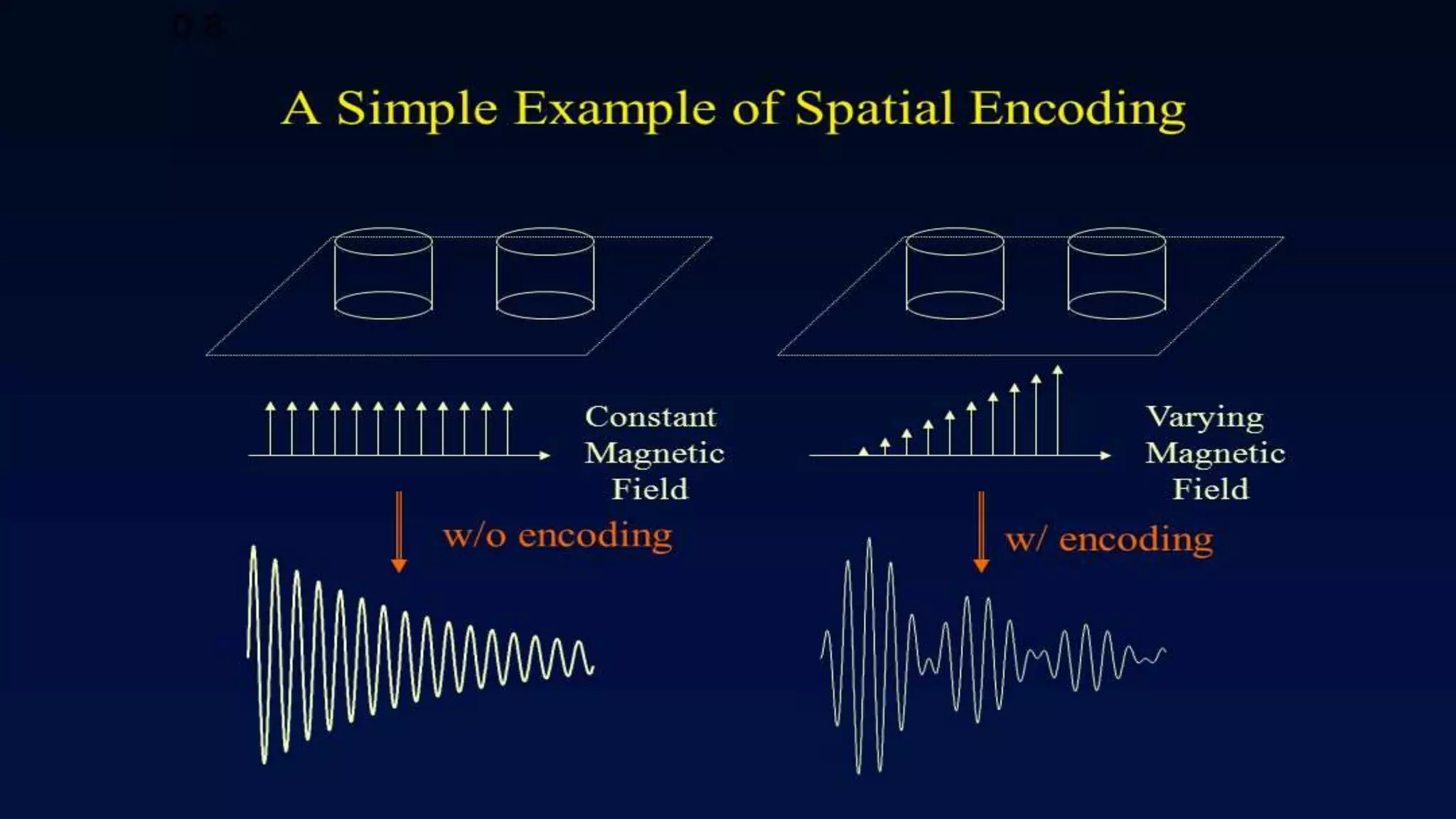
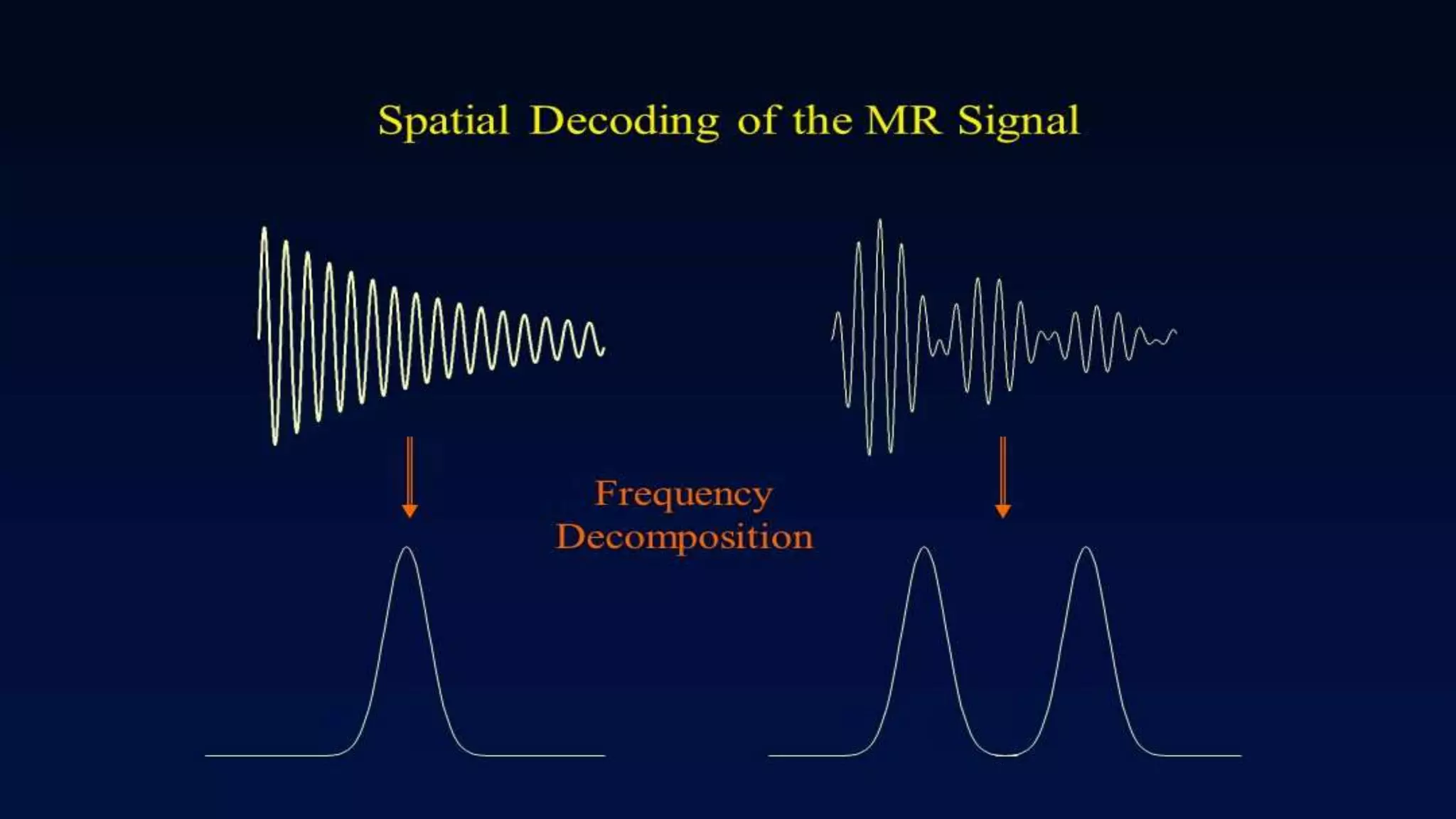
The Spatial information of the proton pools contributing MR
signal is determined by the spatial frequency and phase of their
magnetization.
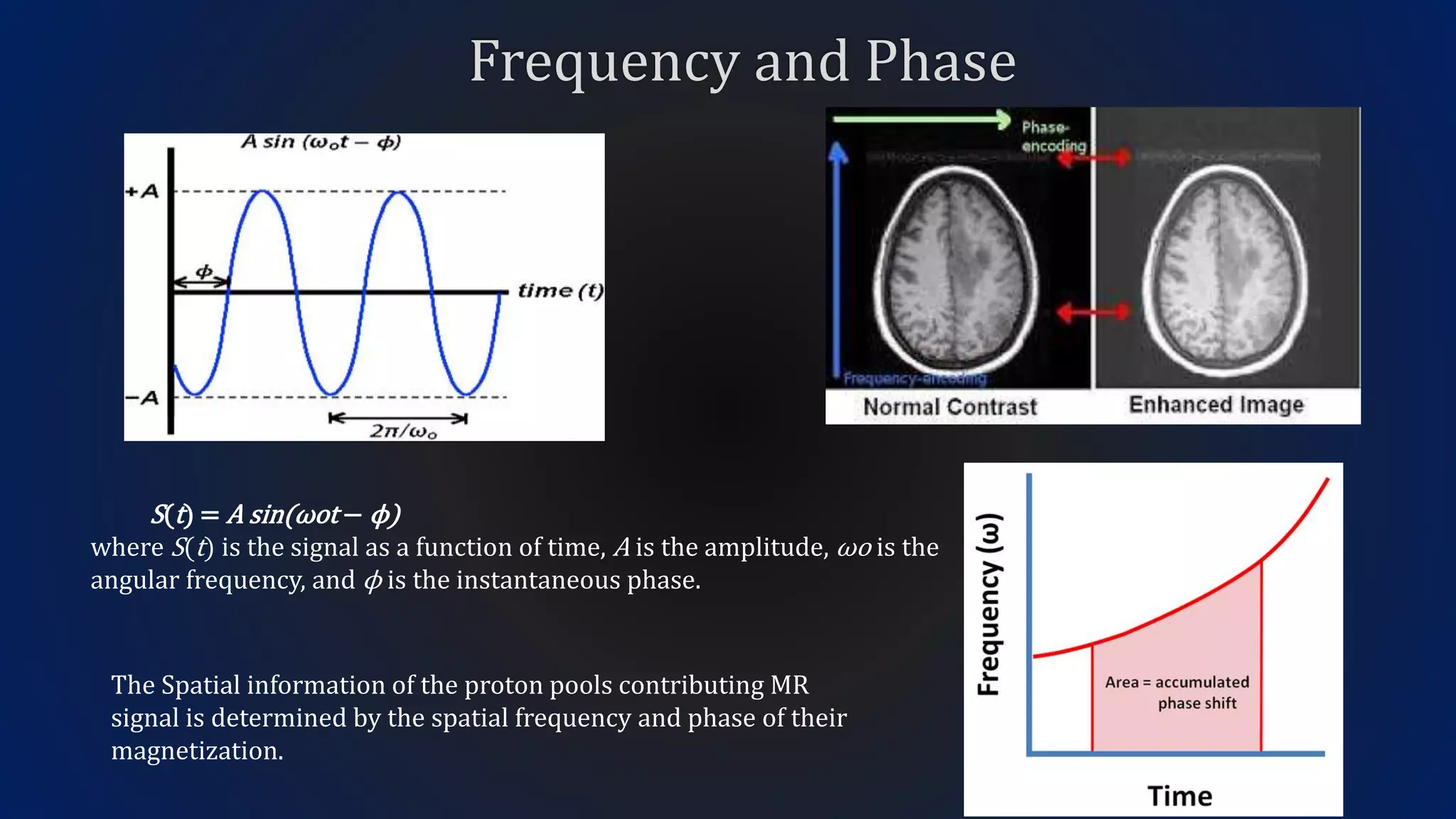
S(t) = A sin(ωot − ϕ)
where S(t) is the signal as a function of time, A is the amplitude, ωo is the
angular frequency, and ϕ is the instantaneous phase.
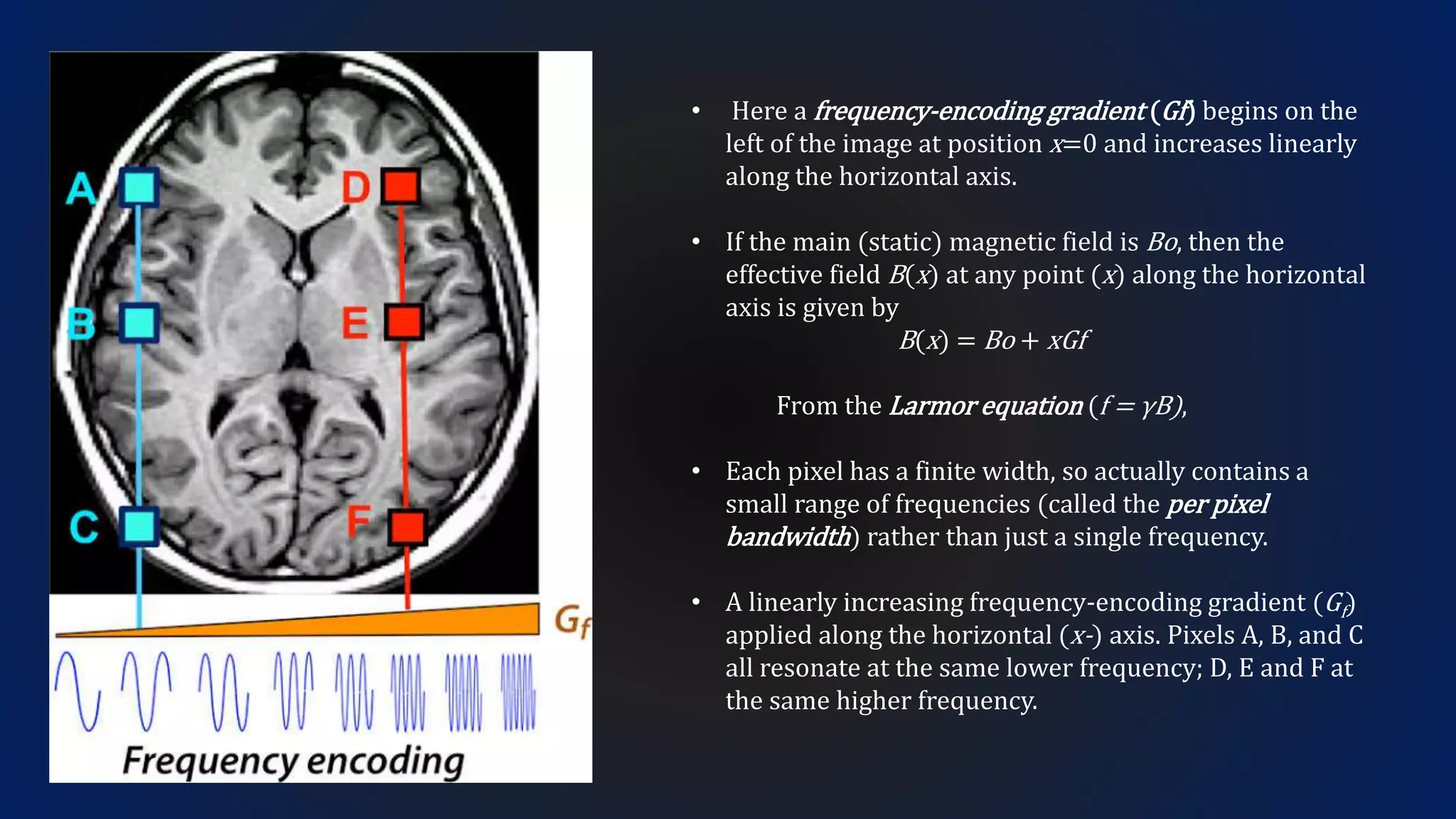
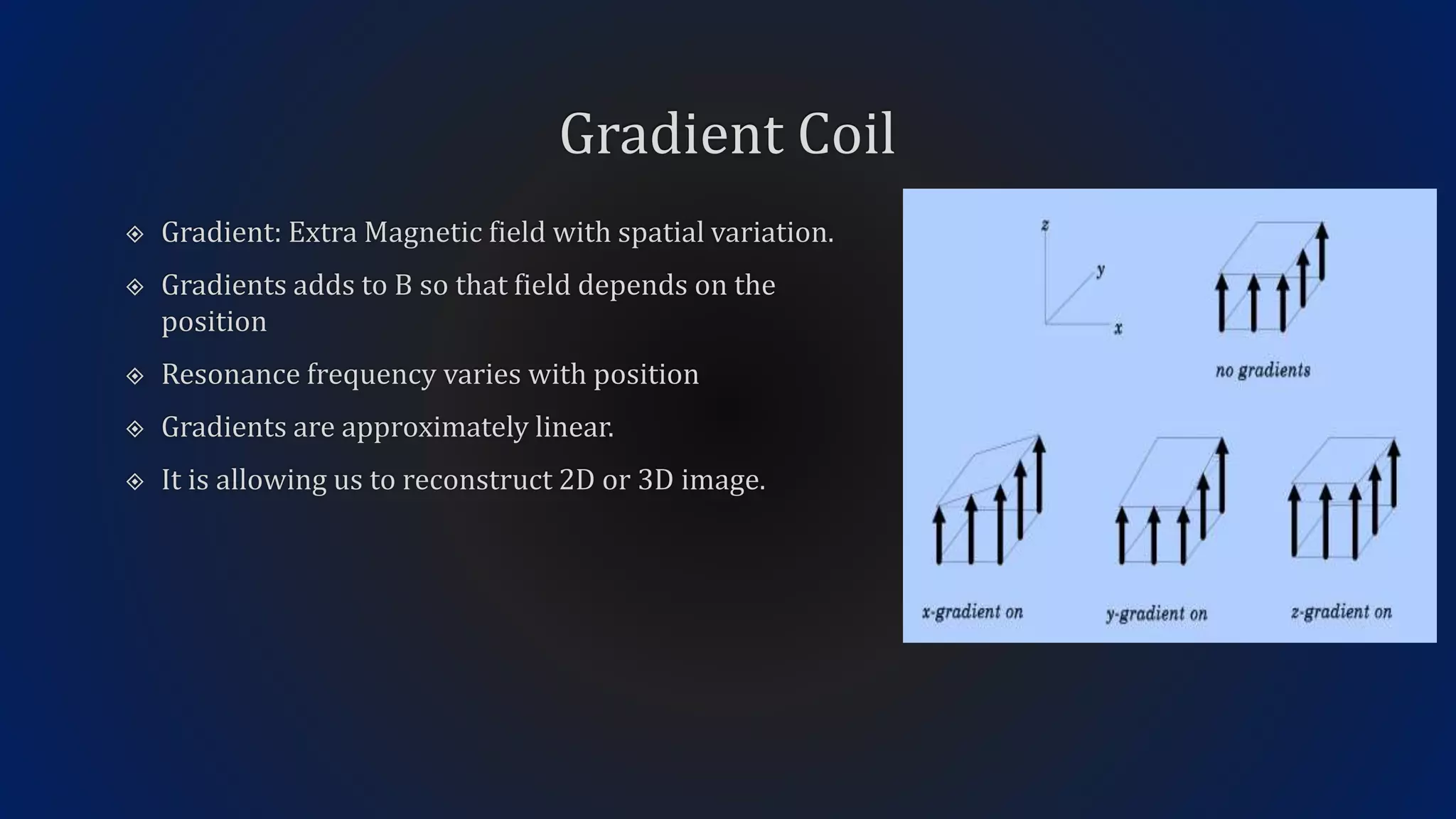
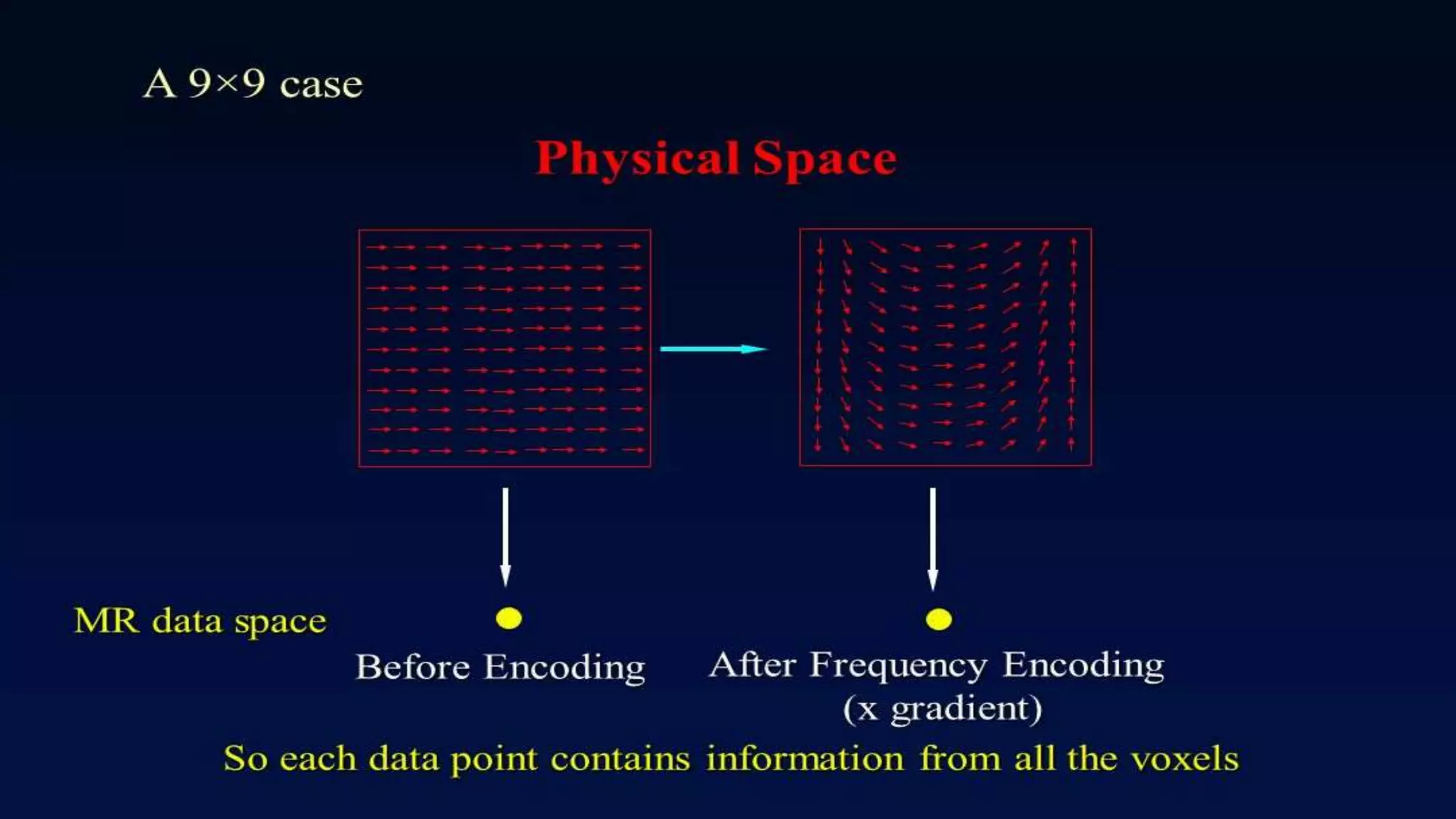
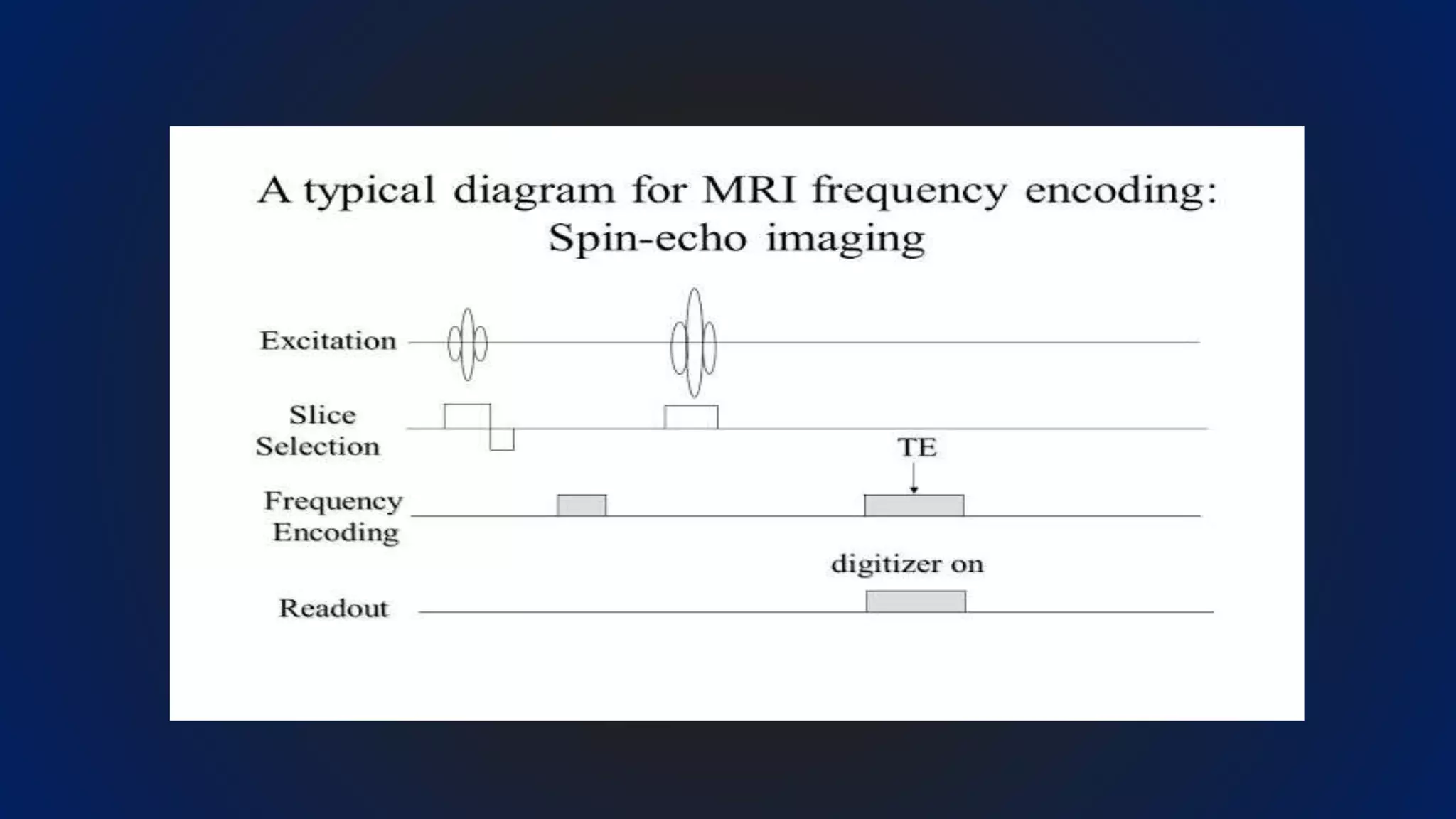
• Here a frequency-encoding gradient (Gf) begins on the
left of the image at position x=0 and increases linearly
along the horizontal axis.
• If the main (static) magnetic field is Bo, then the
effective field B(x) at any point (x) along the horizontal
axis is given by
B(x) = Bo + xGf
From the Larmor equation (f = γB),
• Each pixel has a finite width, so actually contains a
small range of frequencies (called the per pixel
bandwidth) rather than just a single frequency.
• A linearly increasing frequency-encoding gradient (Gf)
applied along the horizontal (x-) axis. Pixels A, B, and C
all resonate at the same lower frequency; D, E and F at
the same higher frequency.
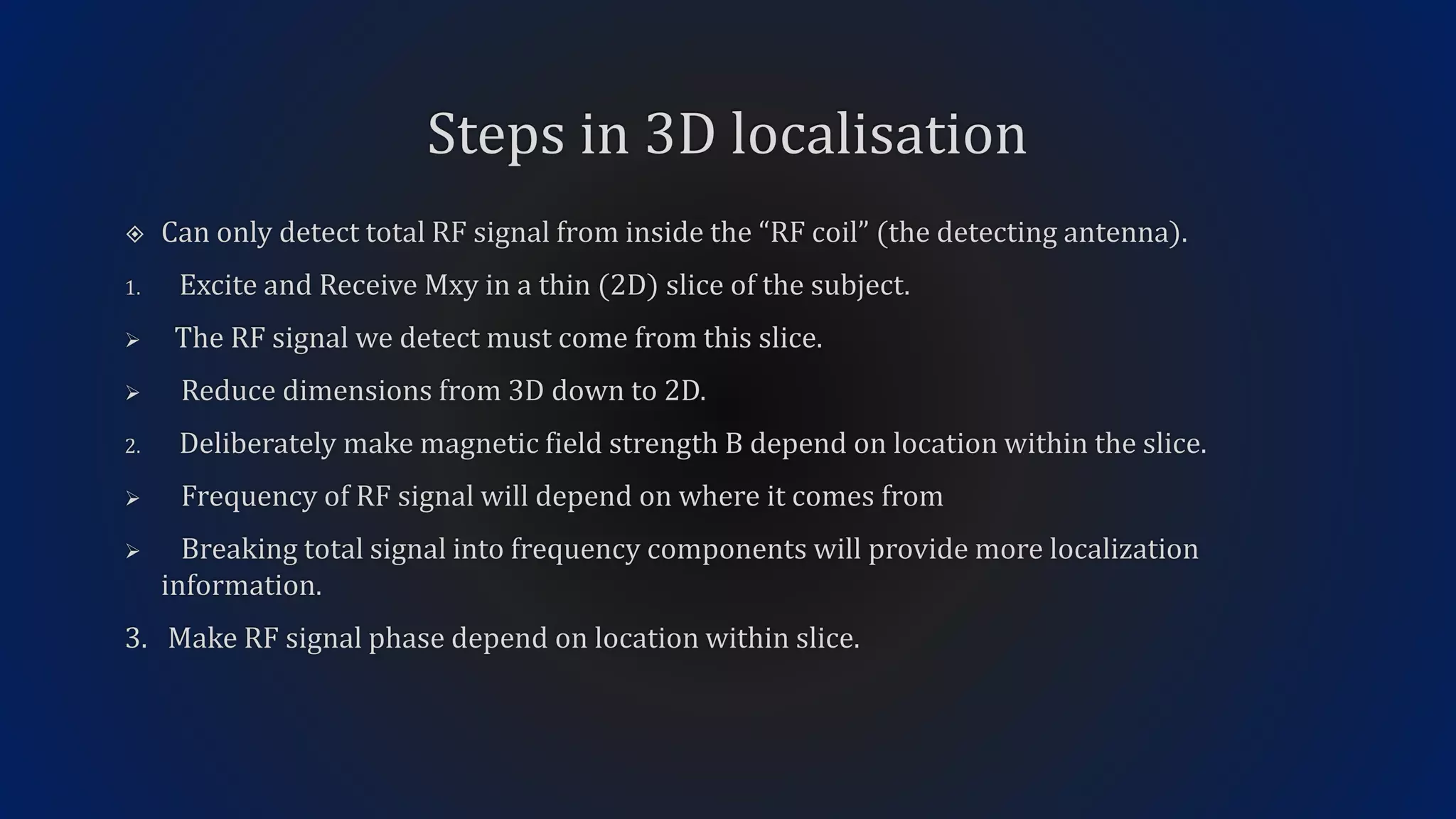
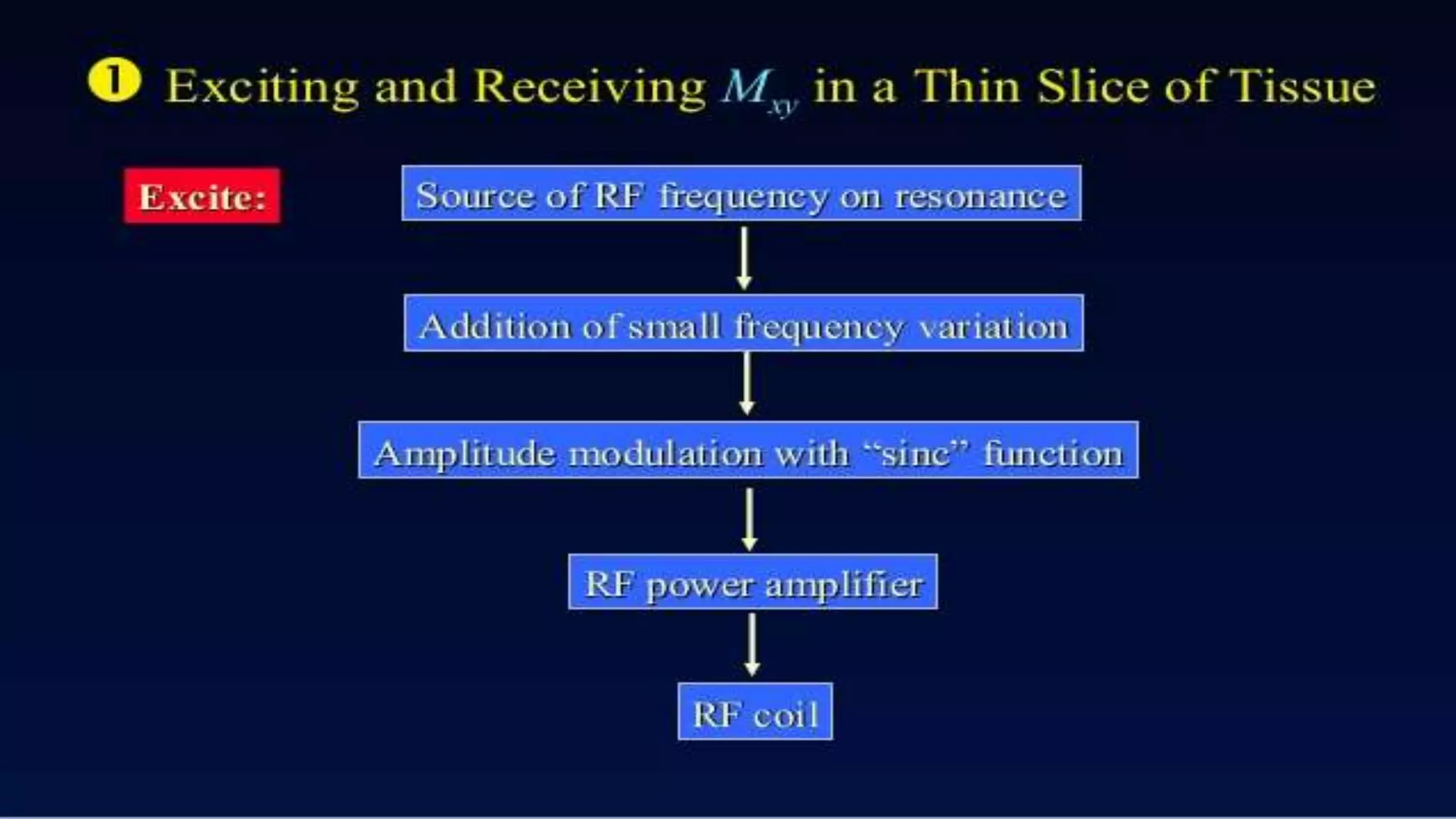
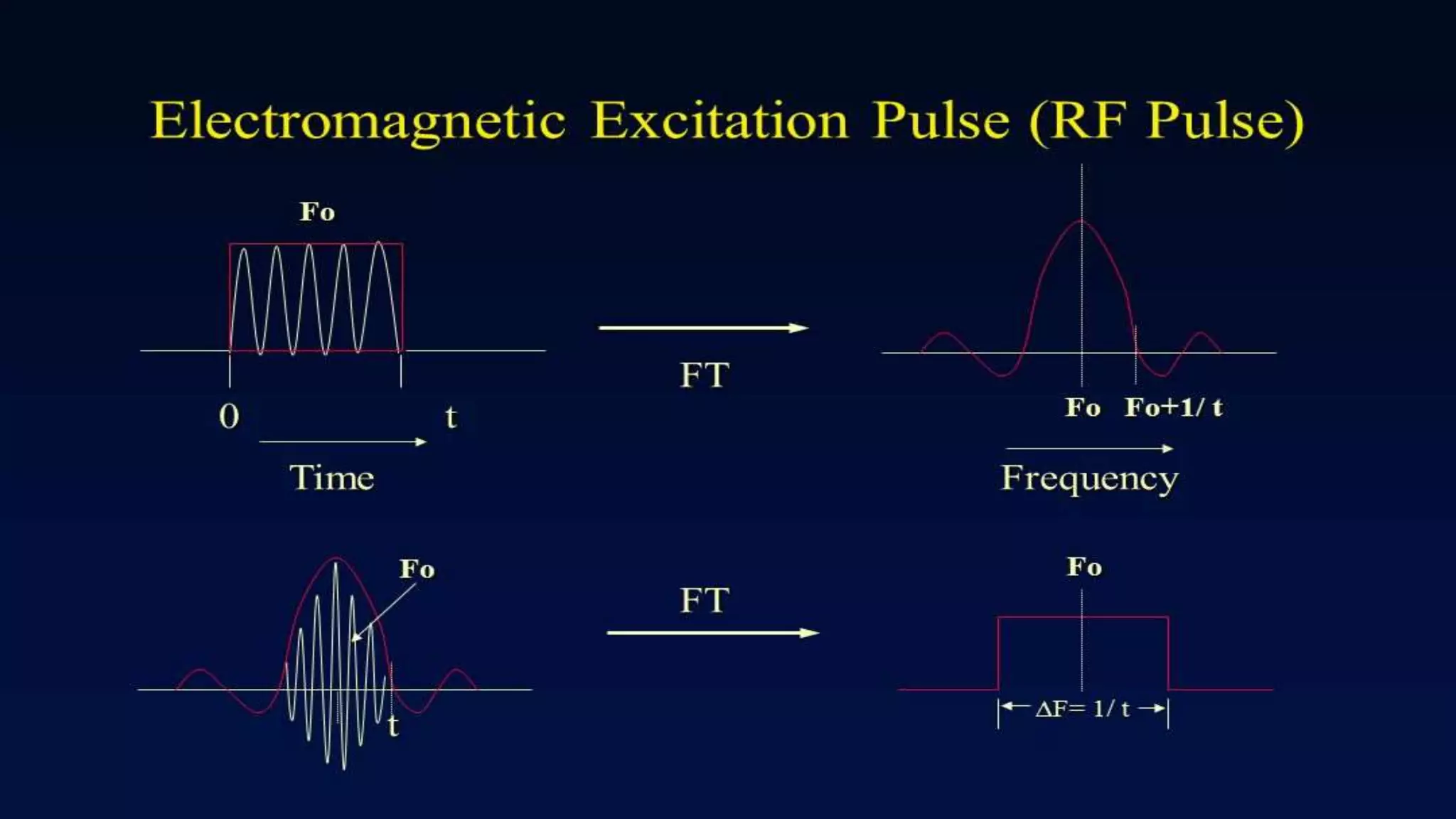
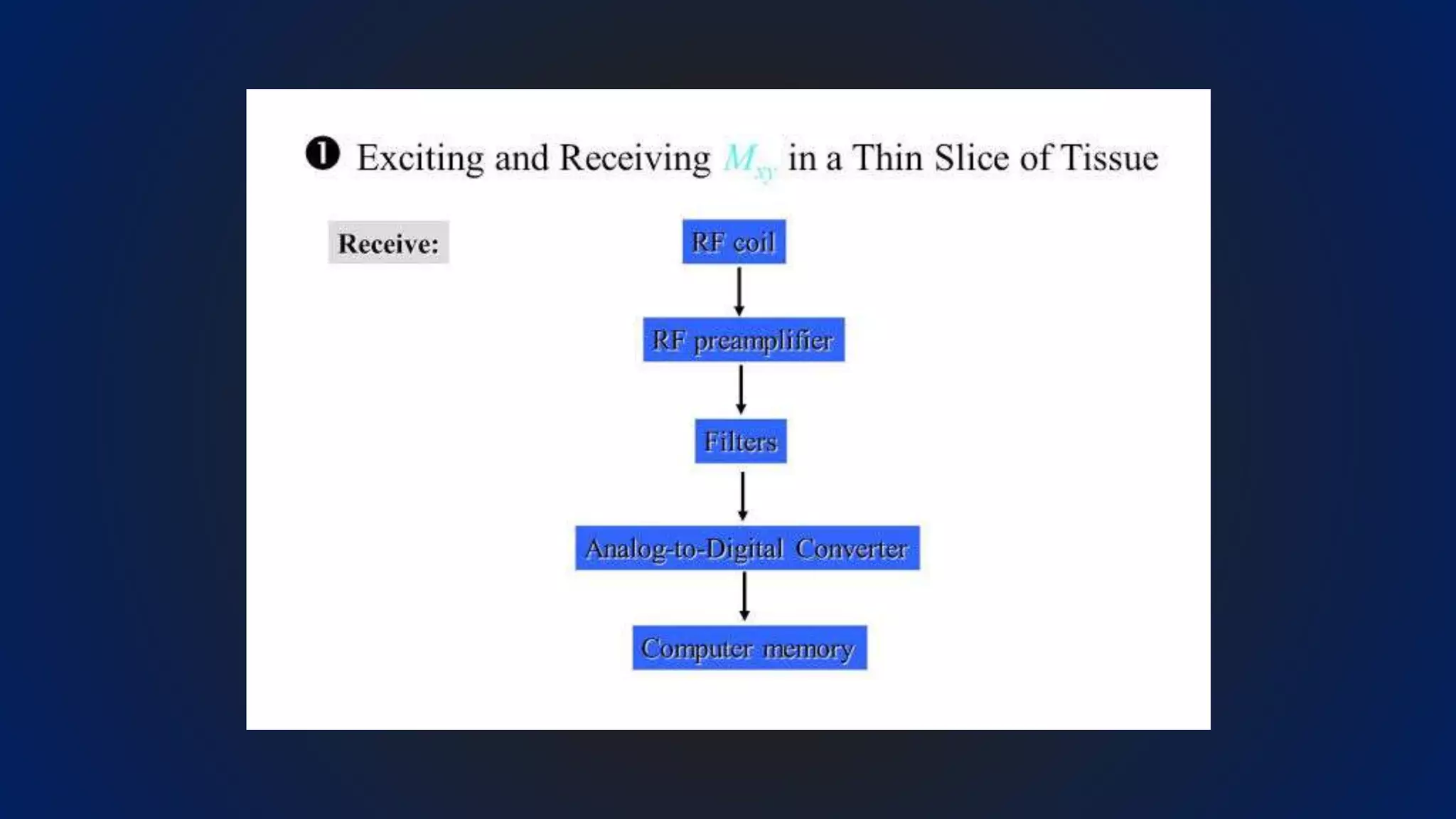
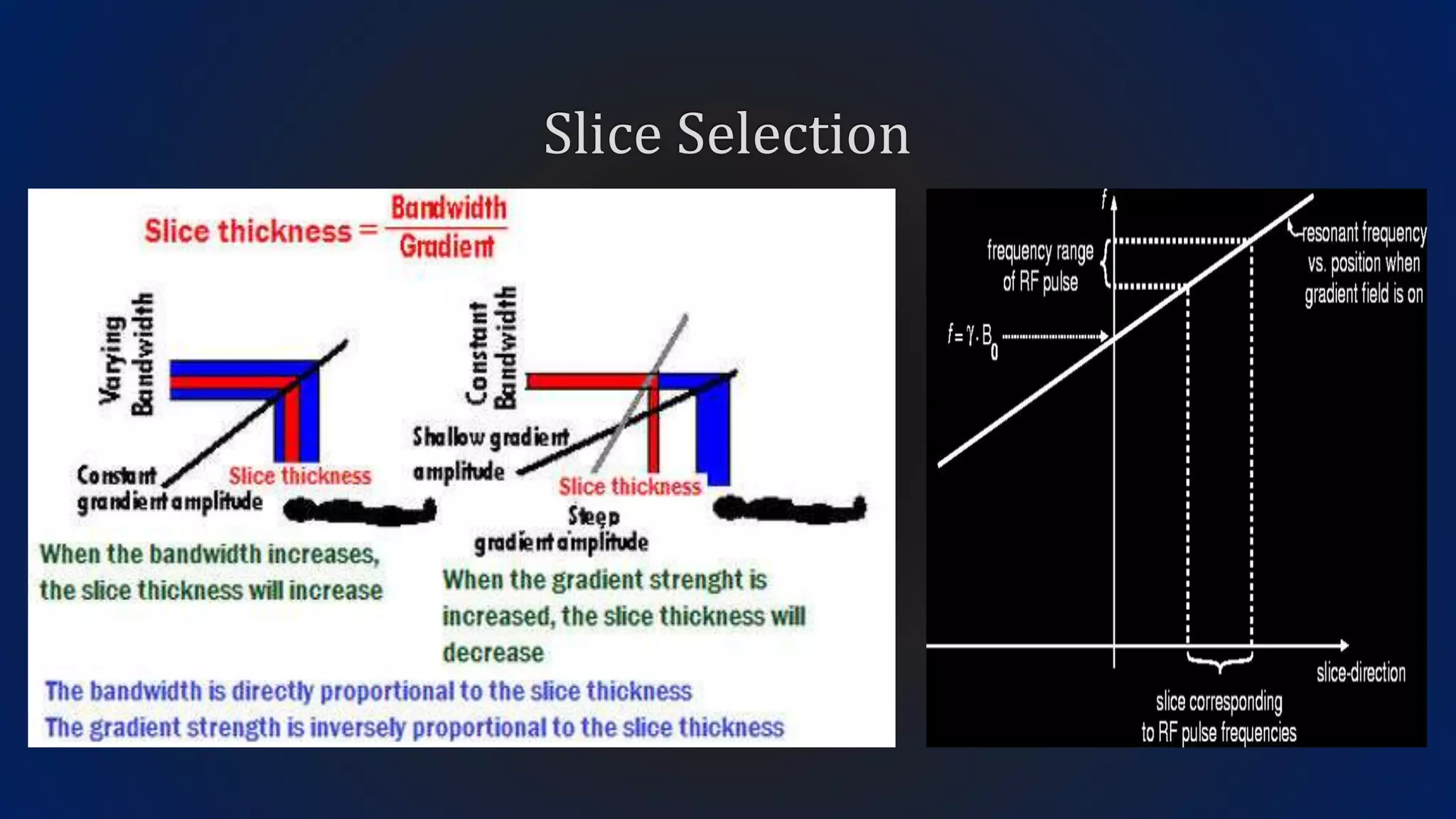
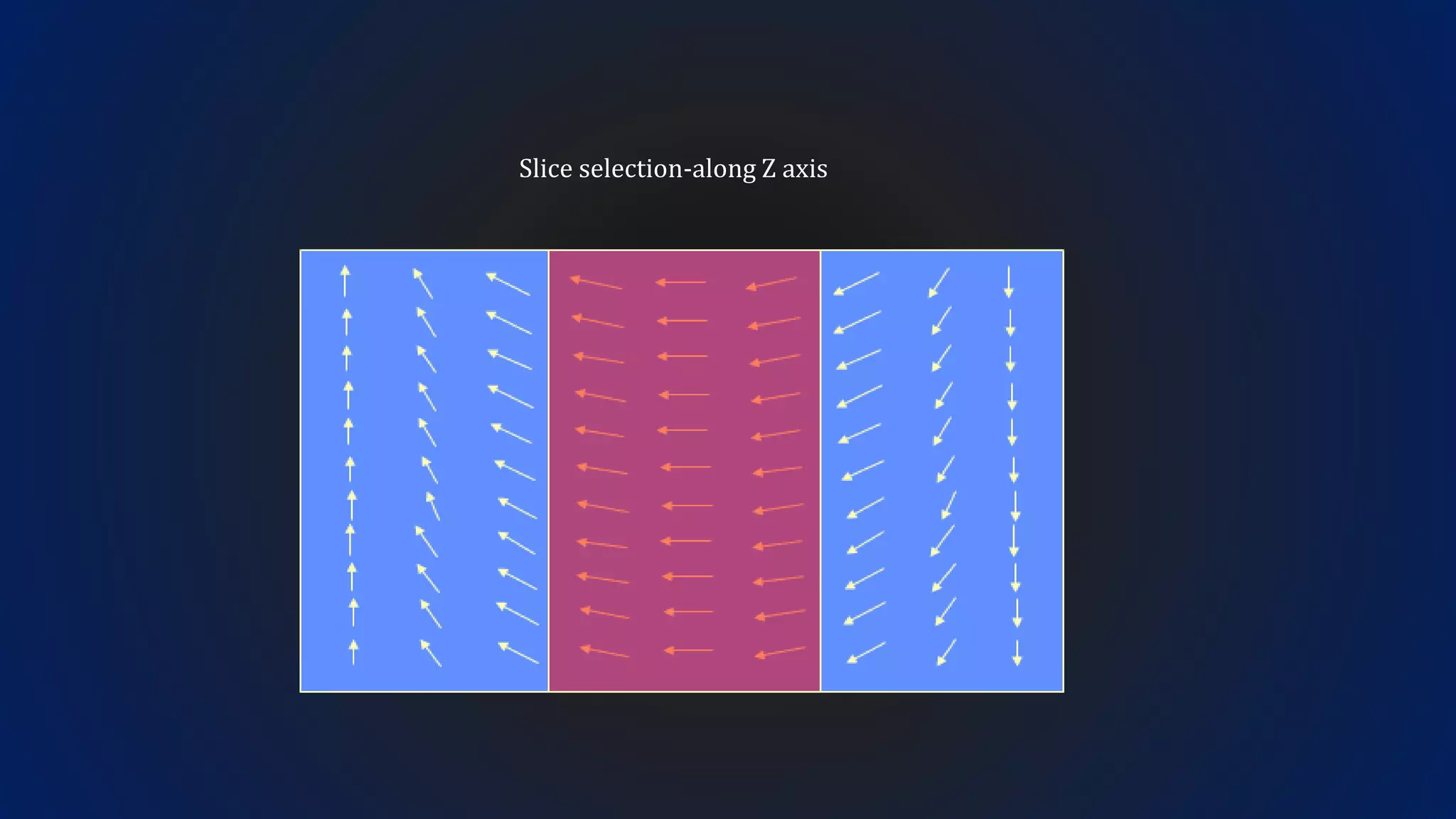
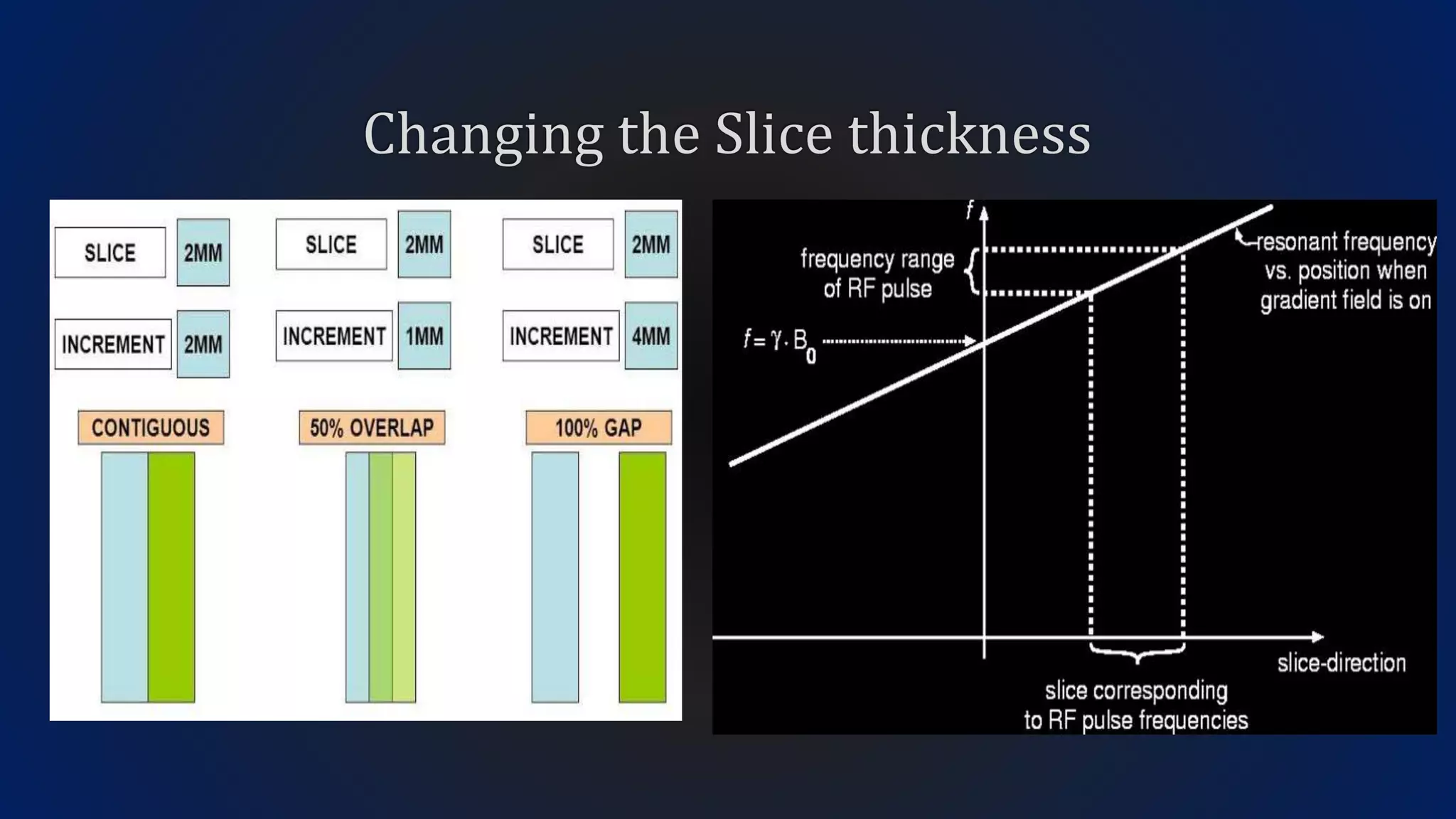
Slice selection-along Z axis
Image formation and localisation of the signal

Image formation and localisation of the signal

  • 2.
    MRI does notuse Projection, reflection or refraction mechanism which is commonly used in optical imaging methods to form image.
  • 3.
    The Spatial informationof the proton pools contributing MR signal is determined by the spatial frequency and phase of their magnetization. S(t) = A sin(ωot − ϕ) where S(t) is the signal as a function of time, A is the amplitude, ωo is the angular frequency, and ϕ is the instantaneous phase.
  • 4.
    • Here afrequency-encoding gradient (Gf) begins on the left of the image at position x=0 and increases linearly along the horizontal axis. • If the main (static) magnetic field is Bo, then the effective field B(x) at any point (x) along the horizontal axis is given by B(x) = Bo + xGf From the Larmor equation (f = γB), • Each pixel has a finite width, so actually contains a small range of frequencies (called the per pixel bandwidth) rather than just a single frequency. • A linearly increasing frequency-encoding gradient (Gf) applied along the horizontal (x-) axis. Pixels A, B, and C all resonate at the same lower frequency; D, E and F at the same higher frequency.
  • 17.