High Impact Planning & Programming For a New Generation of Learners
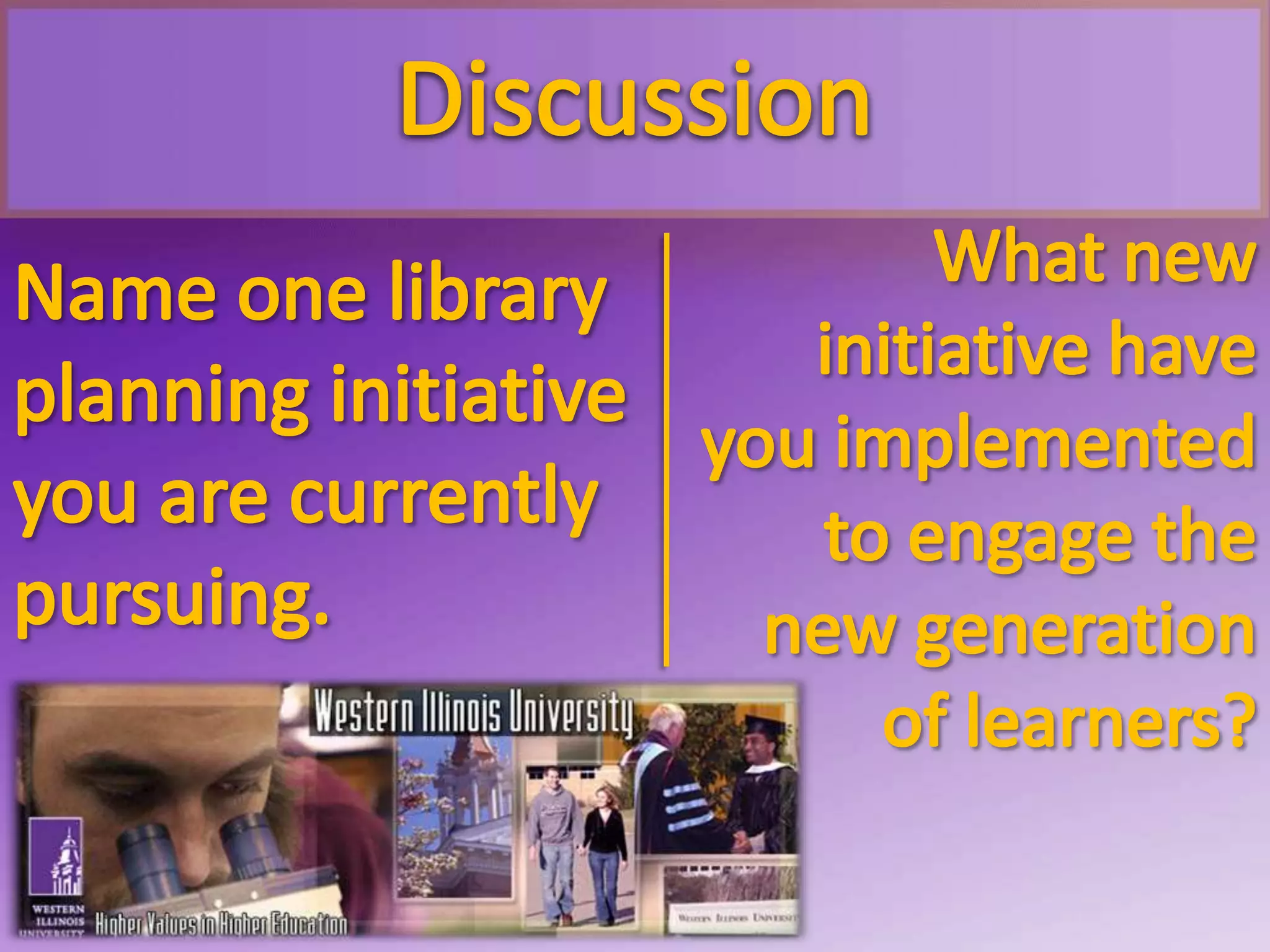
Name one library planning initiative you are currently pursuing. What new initiative have you implemented to engage the new generation of learners?
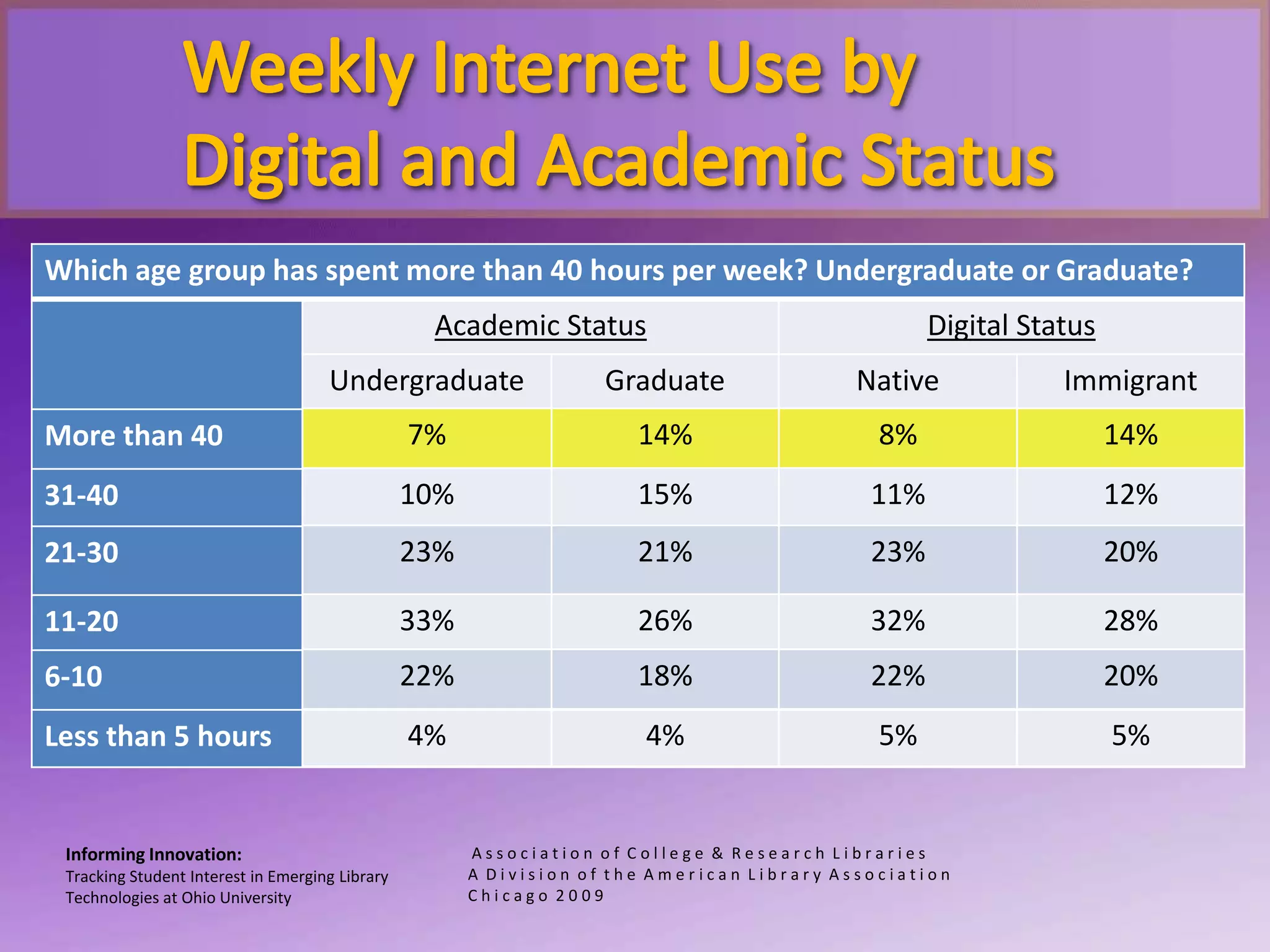
Weekly Internet Use by Digital and Academic StatusInforming Innovation:Tracking Student Interest in Emerging LibraryTechnologies at Ohio University A s s o c i a t i o n  o f  C o l l e g e  &  R e s e a r c h  L i b r a r i e sA  D i v i s i o n  o f  t h e  A m e r i c a n  L i b r a r y  A s s o c i a t i o nC h i c a g o  2 0 0 9
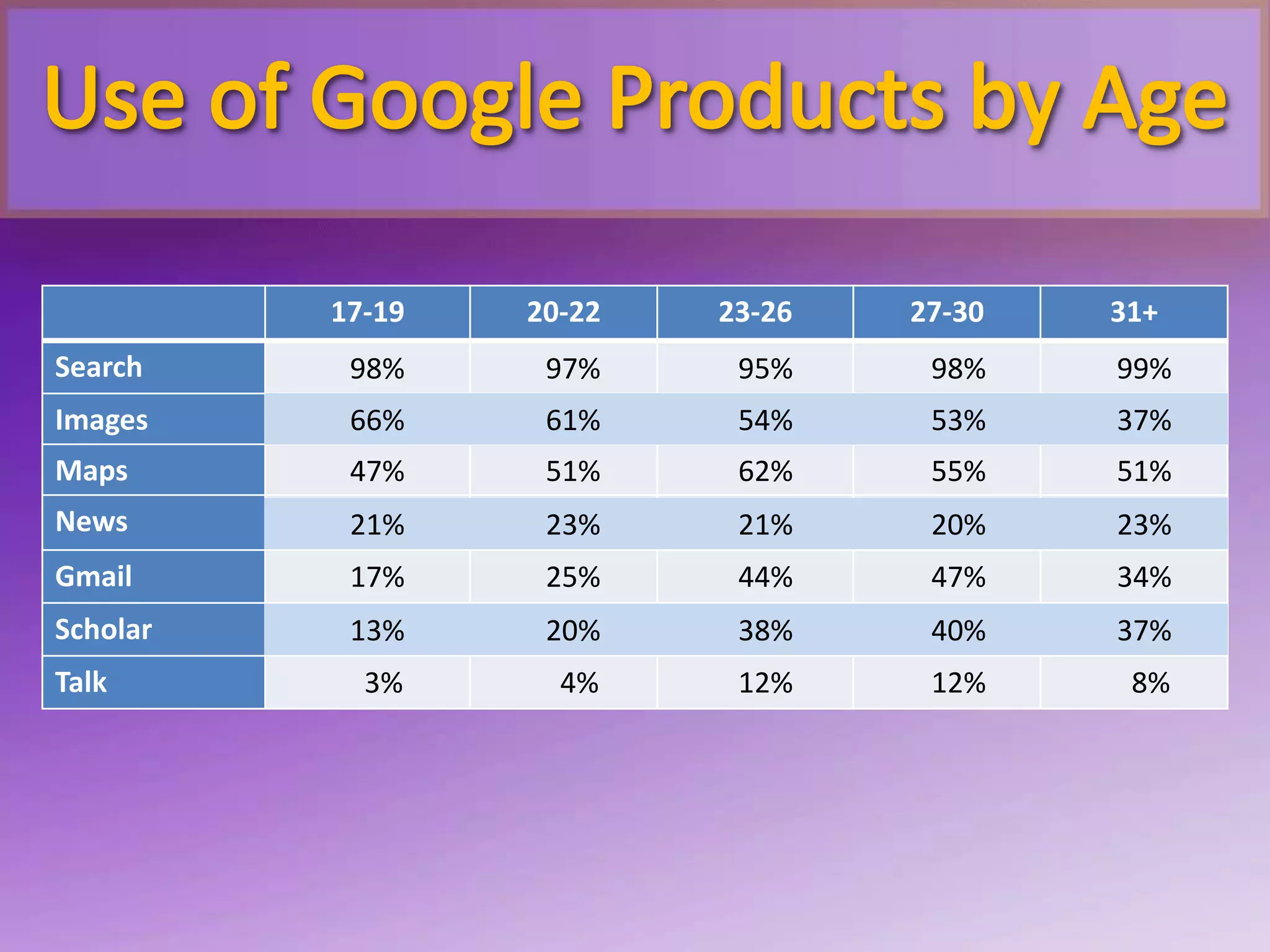
Use of Google Products by Age          98%	  97%	           95%                   98%                  99%          66%	  61%	           54%                   53%                  37%          47%	  51%	           62%                   55%                  51%          21%	  23%	           21%                   20%                  23%          17%	  25%	           44%                   47%                  34%          13%	  20%	           38%                   40%                  37%            3%	  	    4%	           12%                   12%                    8%
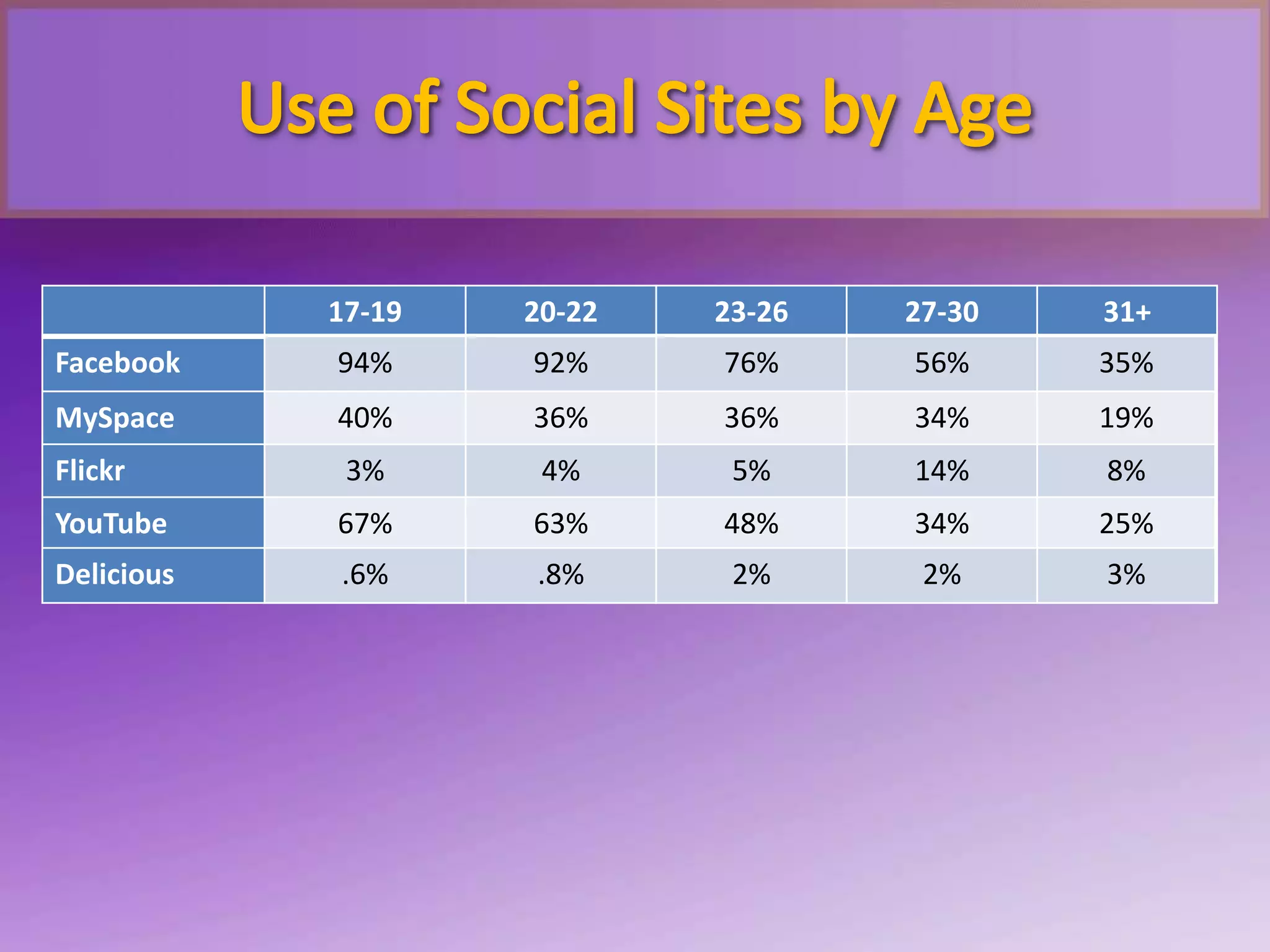
Use of Social Sites by Age
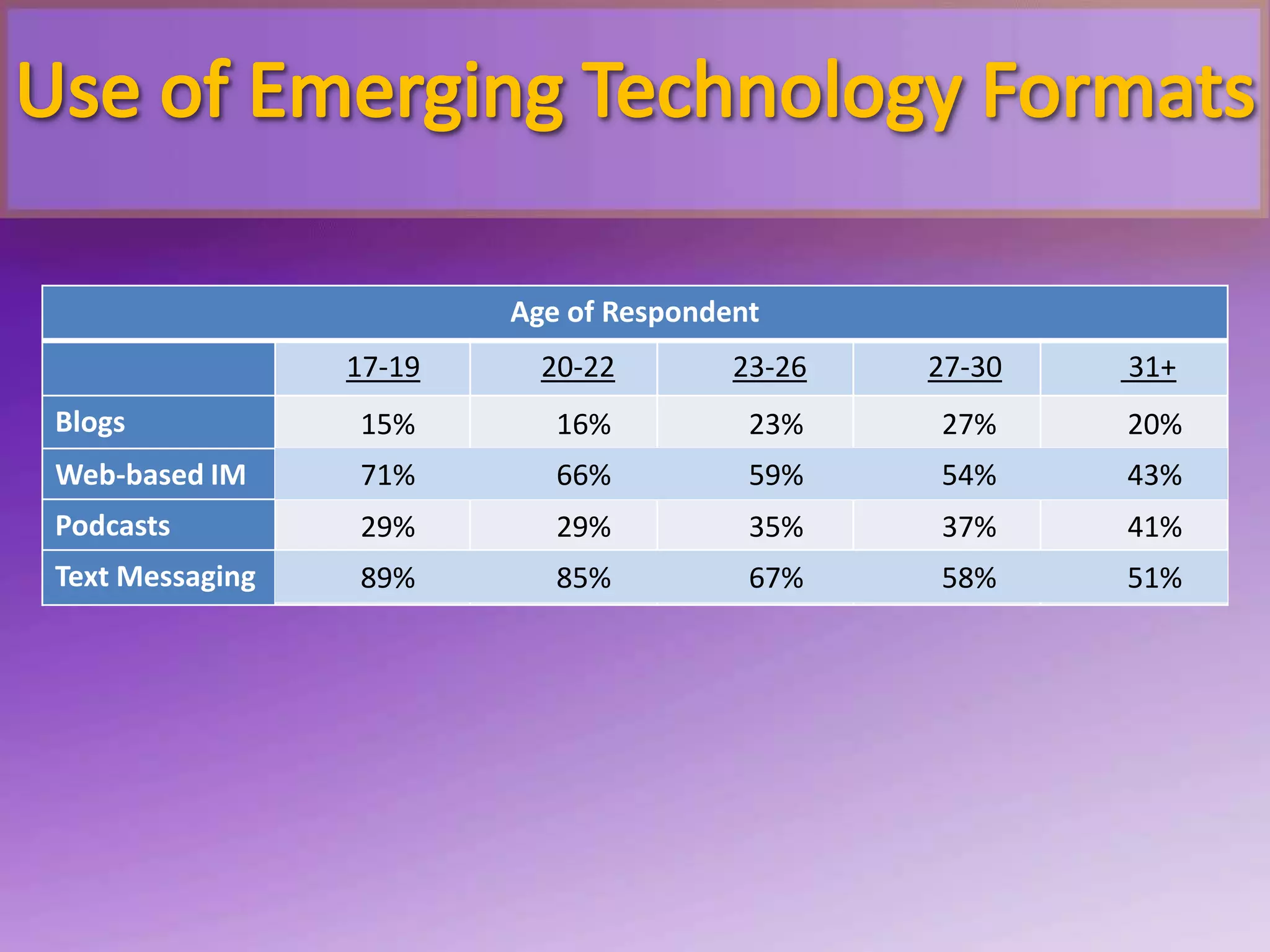
Use of Emerging Technology Formats          15%	  16%	           23%                   27%                  20%          71%	  66%	           59%                   54%                  43%          29%	  29%	           35%                   37%                  41%          89%	  85%	           67%                   58%                  51%
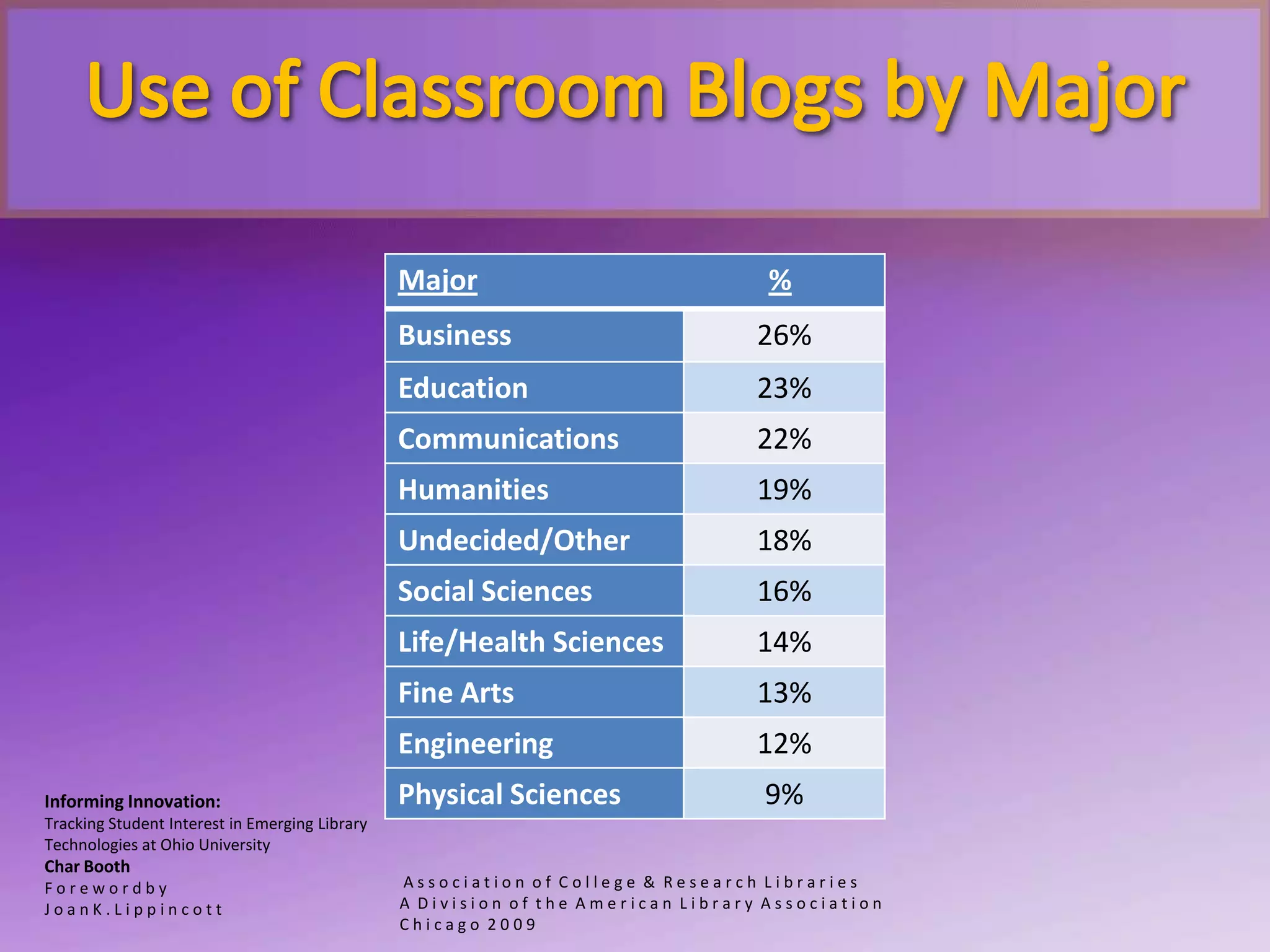
Use of Classroom Blogs by MajorInforming Innovation:Tracking Student Interest in Emerging LibraryTechnologies at Ohio UniversityChar BoothF o r e w o r d b yJ o a n K . L i p pi n c o t t A s s o c i a t i o n  o f  C o l l e g e  &  R e s e a r c h  L i b r a r i e sA  D i v i s i o n  o f  t h e  A m e r i c a n  L i b r a r y  A s s o c i a t i o nC h i c a g o  2 0 0 9
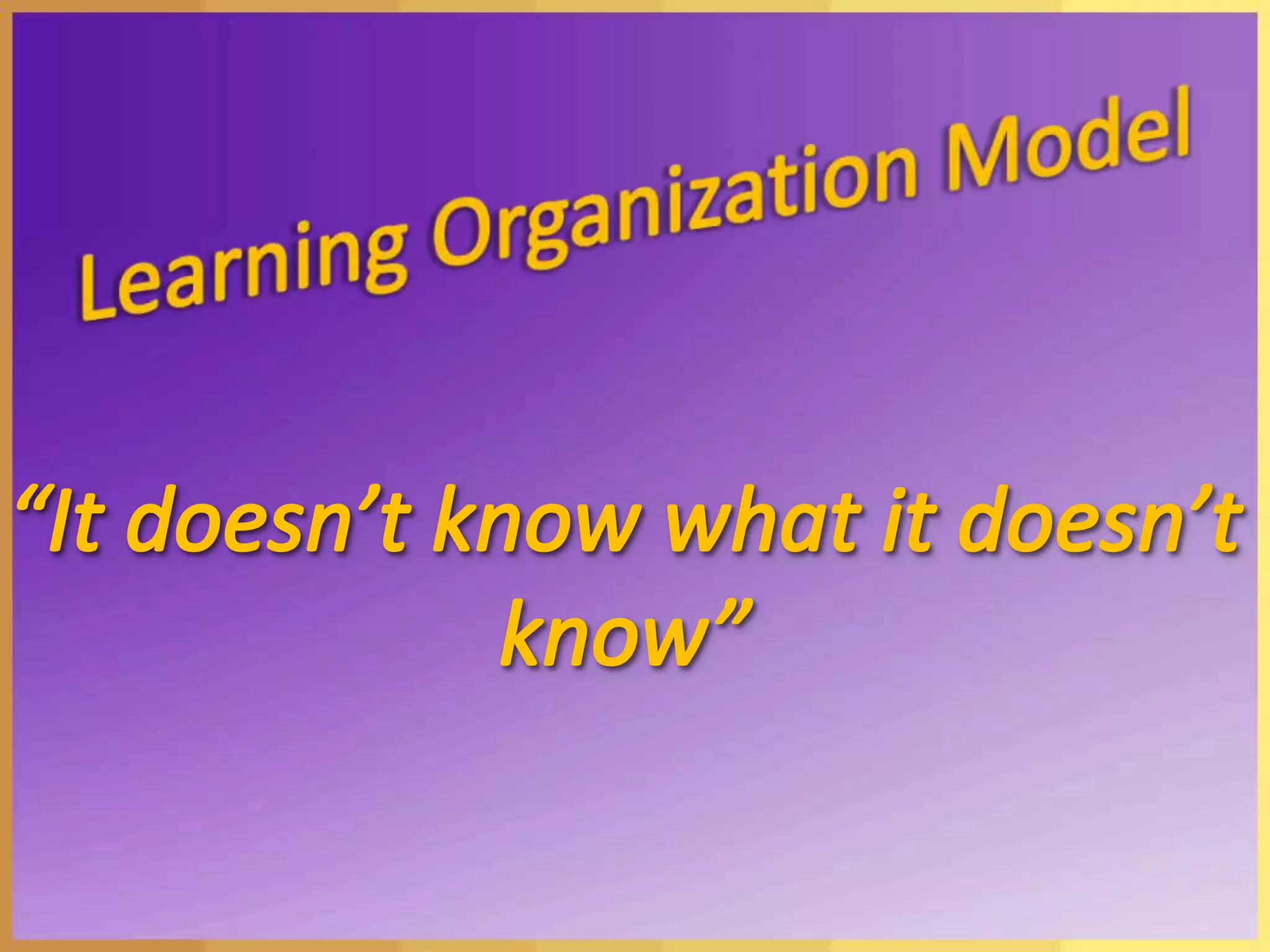
Learning Organization Model“It doesn’t know what it doesn’t know”
Managing the Unexpected Preserve a balance of values.
 Restate your goals in the form of mistakes that must not occur.
 Remember that mindfulness takes effort.Managing the Unexpected Create awareness of vulnerability.
 Cultivate humility.
 Be glad when you’re having a bad day!Managing the Unexpected Create an error-friendly learning culture.
 Encourage alternative frames of reference.
 Strengthen fantasy as a tool for managing the unexpected.Managing the Unexpected Speak up!
 Put a premium on interpersonal skills.
 Surface unique knowledge.
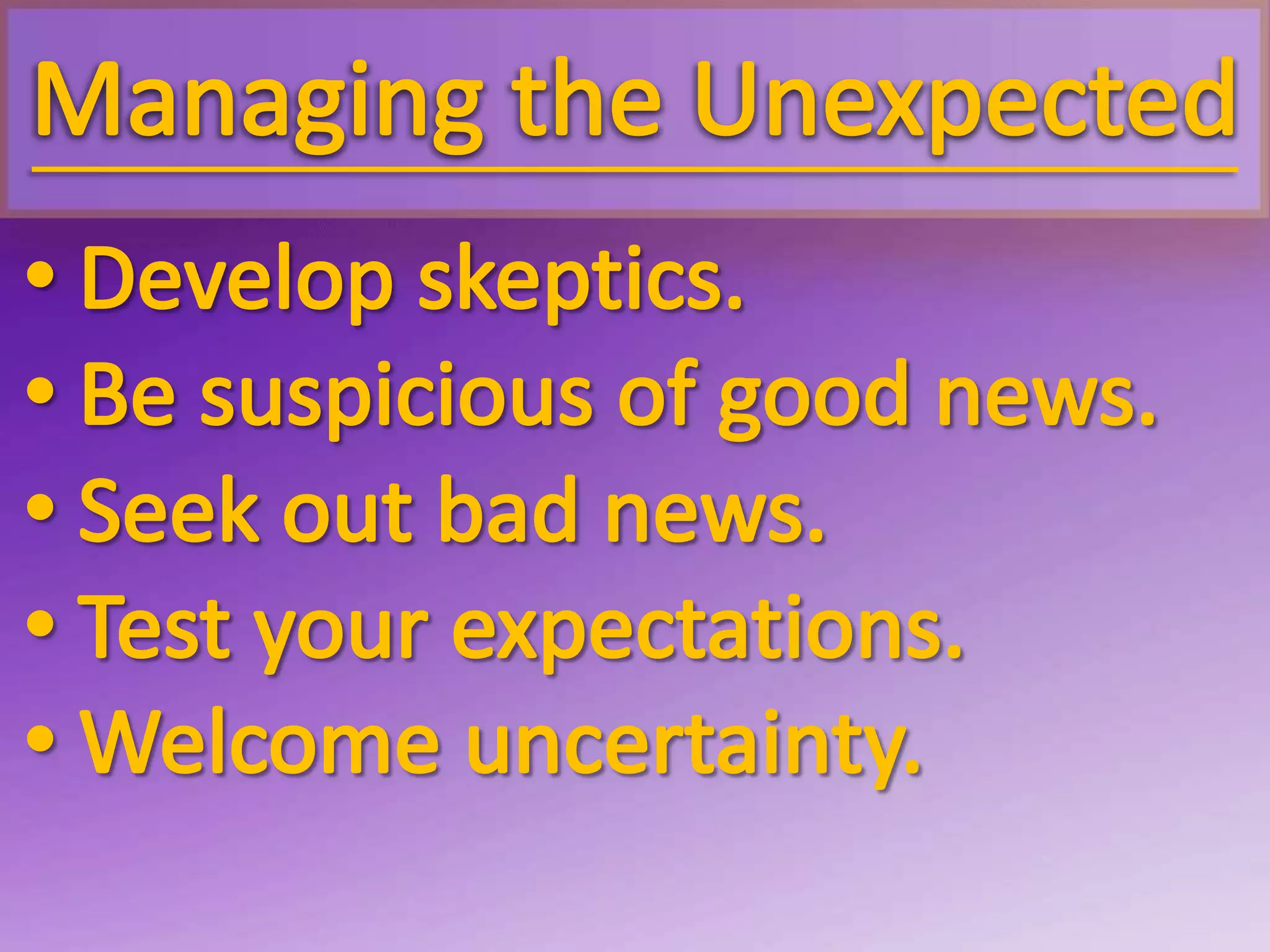
 Be careful when you label something a fact.Managing the Unexpected Develop skeptics.
 Be suspicious of good news.
 Seek out bad news.
 Test your expectations.
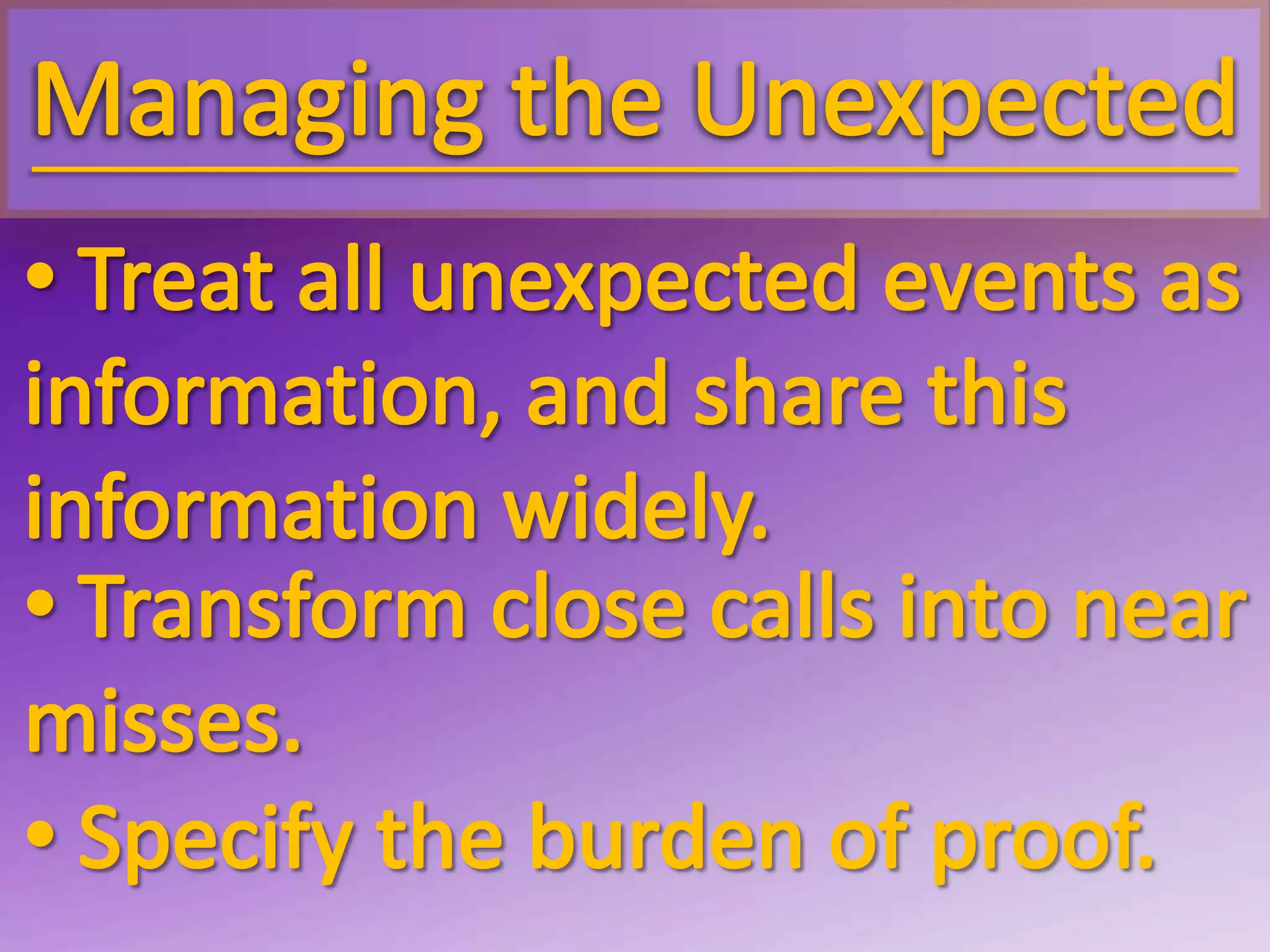
 Welcome uncertainty.Managing the Unexpected Treat all unexpected events as information, and share this information widely.
 Transform close calls into near misses.
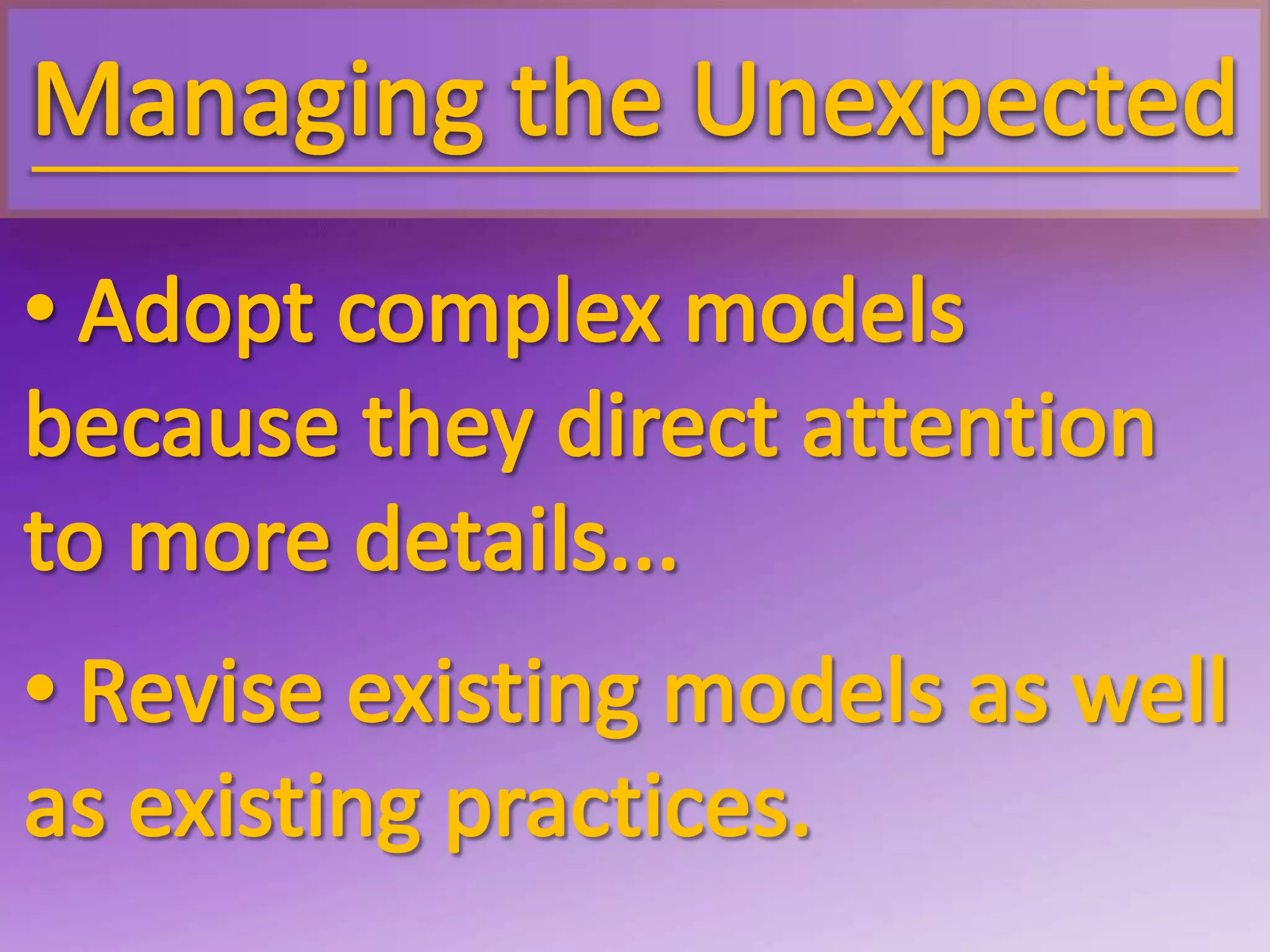
 Specify the burden of proof.Managing the Unexpected Adopt complex models because they direct attention to more details...
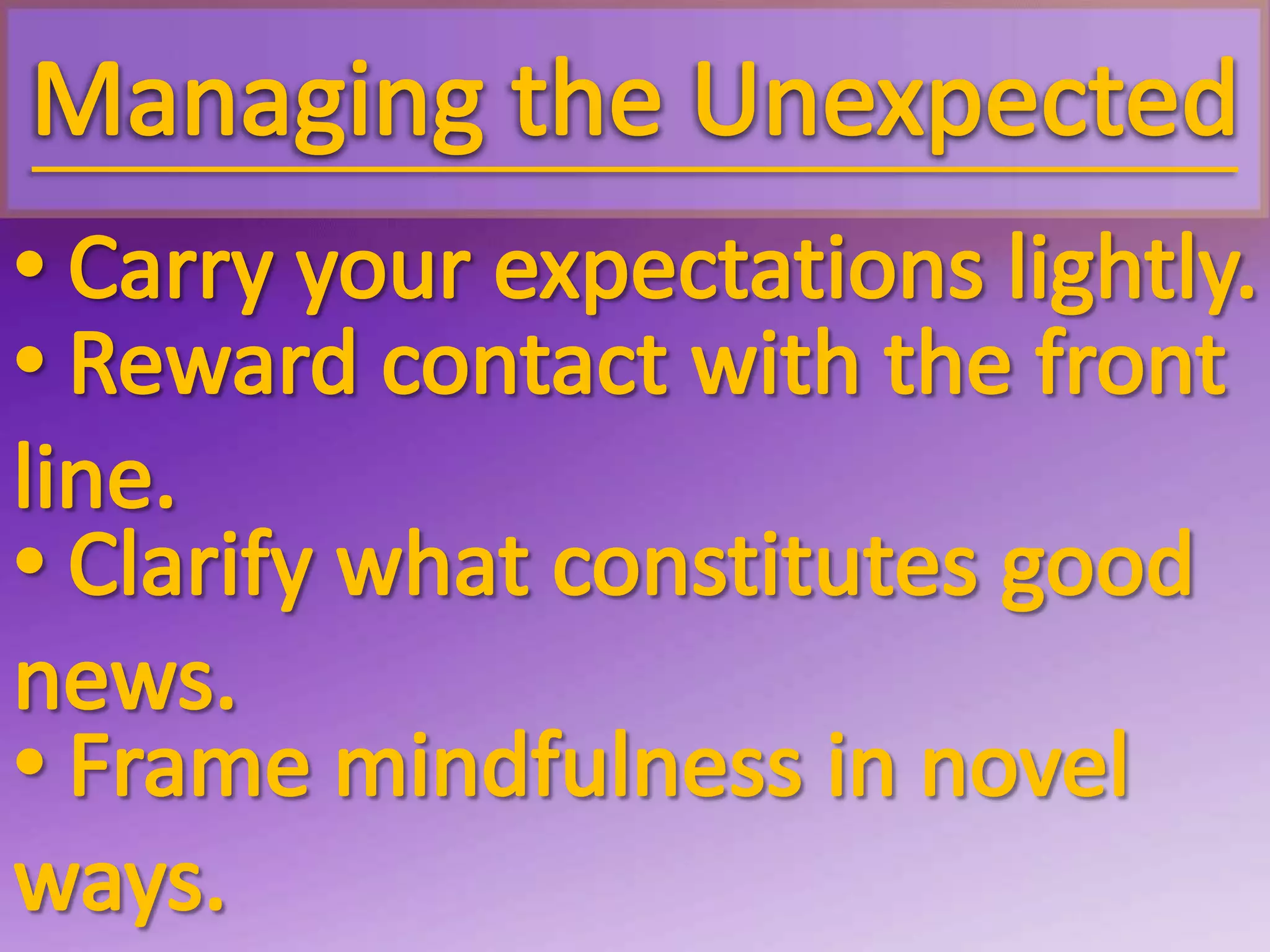
 Revise existing models as well as existing practices.Managing the Unexpected Carry your expectations lightly.
 Reward contact with the front line.
 Clarify what constitutes good news.
 Frame mindfulness in novel ways.Managing the UnexpectedWeick, Karl E. and Kathleen M. Sutcliffe.Managing the Unexpected. Jossey-Bass: 	A Wiley Co. 2001
Active Planning For Dynamic InstructionBySean CordesOctober 8, 2009
ProgrammingScheduling
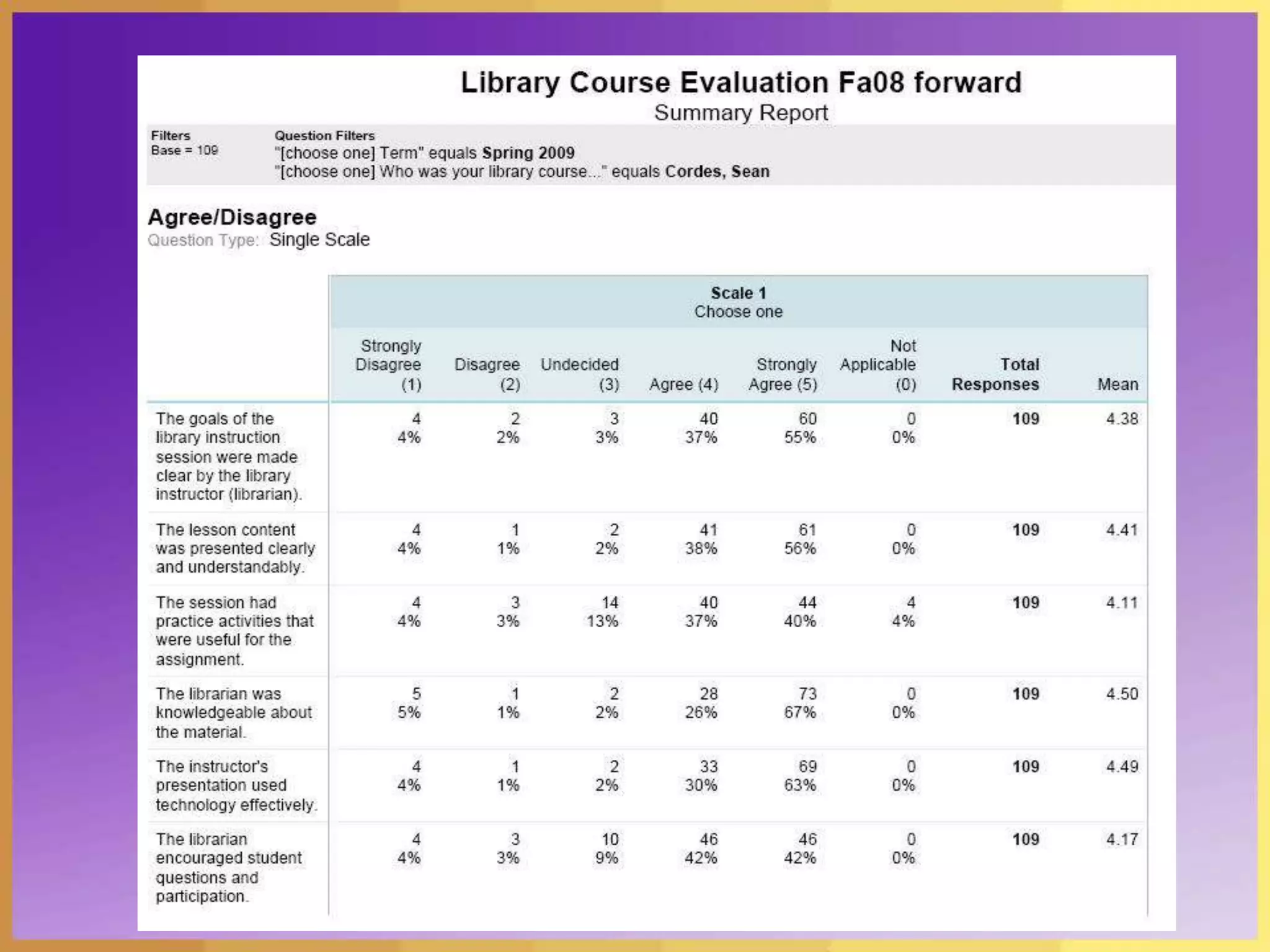
Assessment
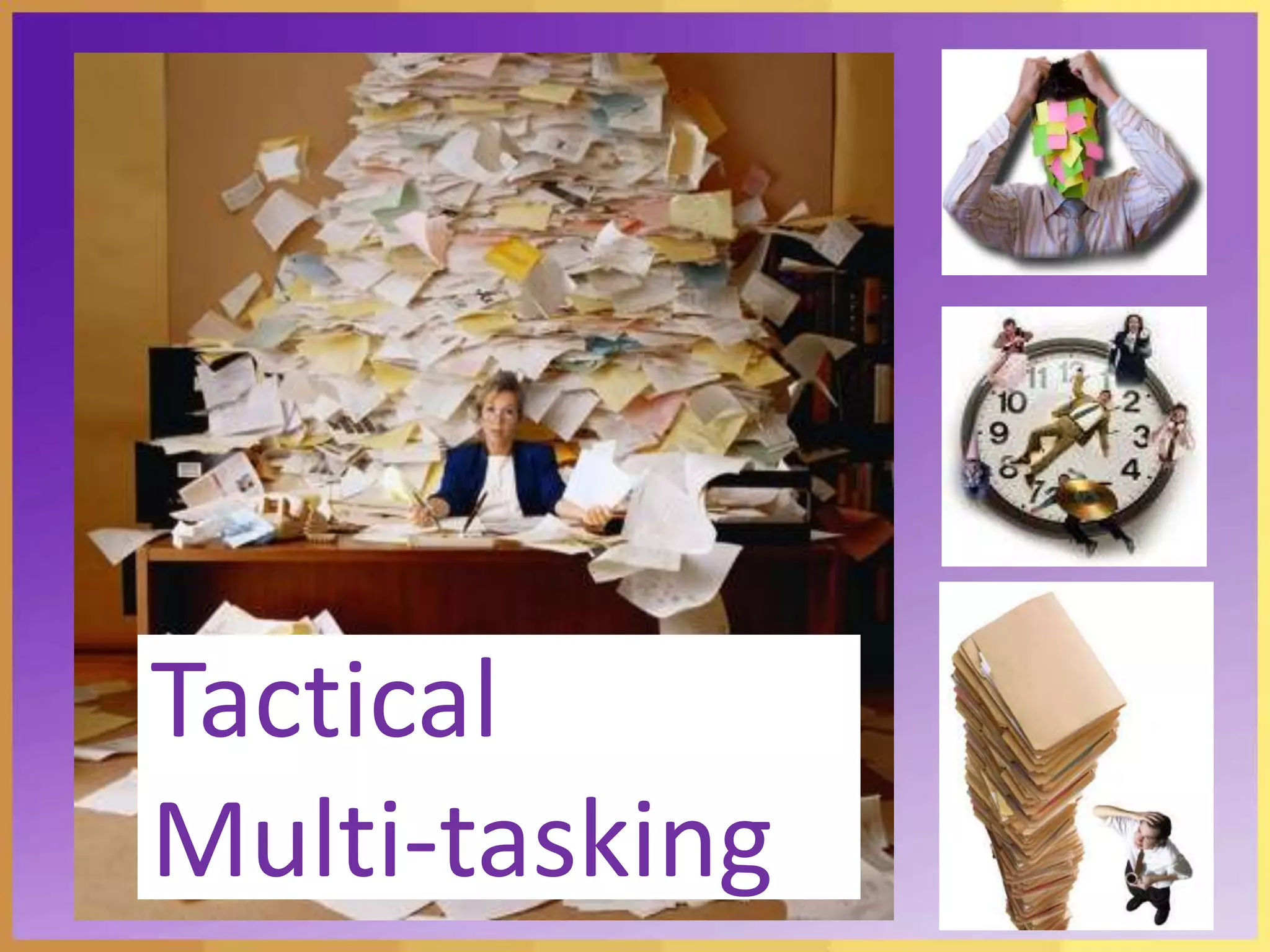
ReportingTacticalMulti-tasking
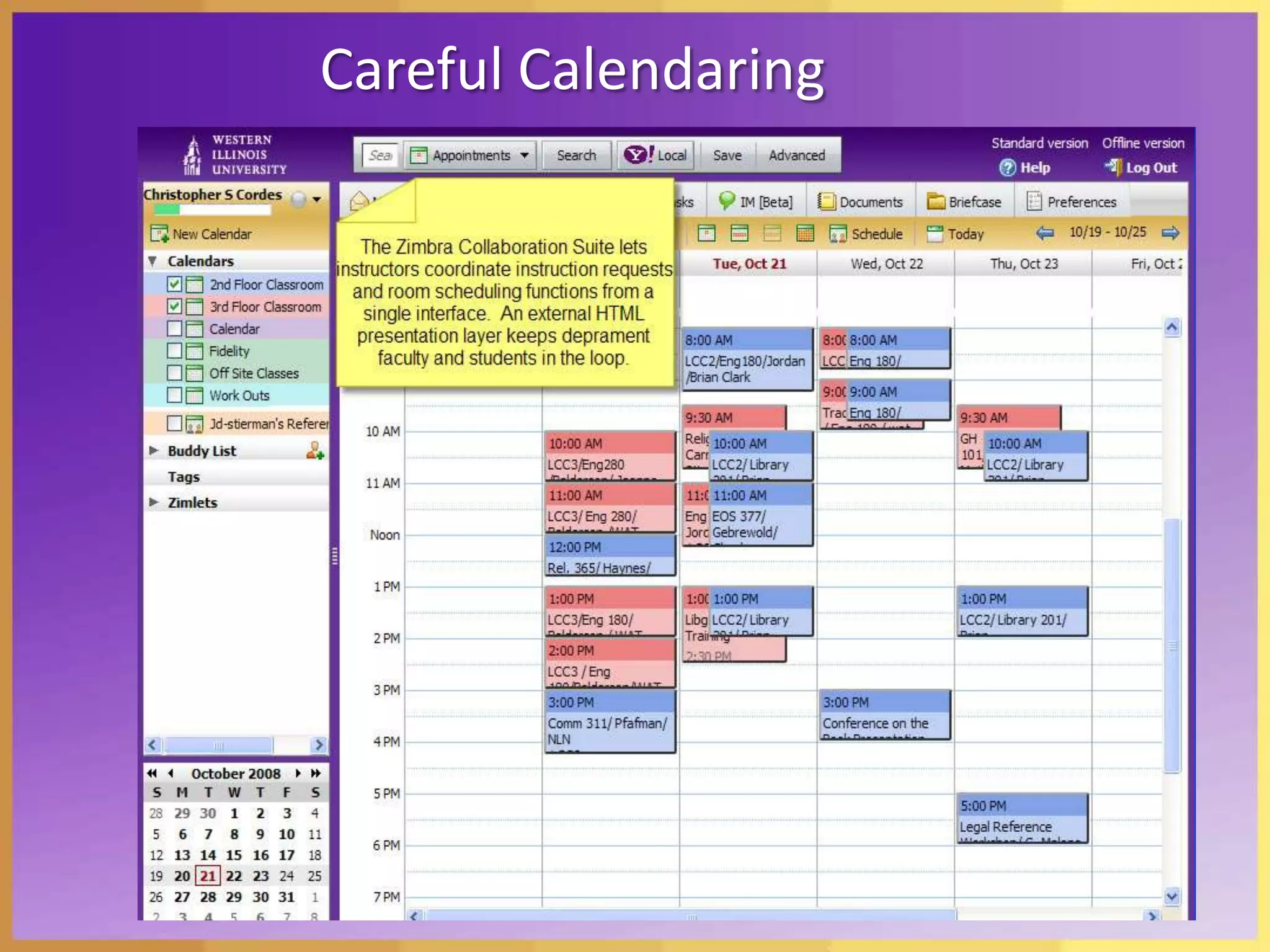
Careful Calendaring
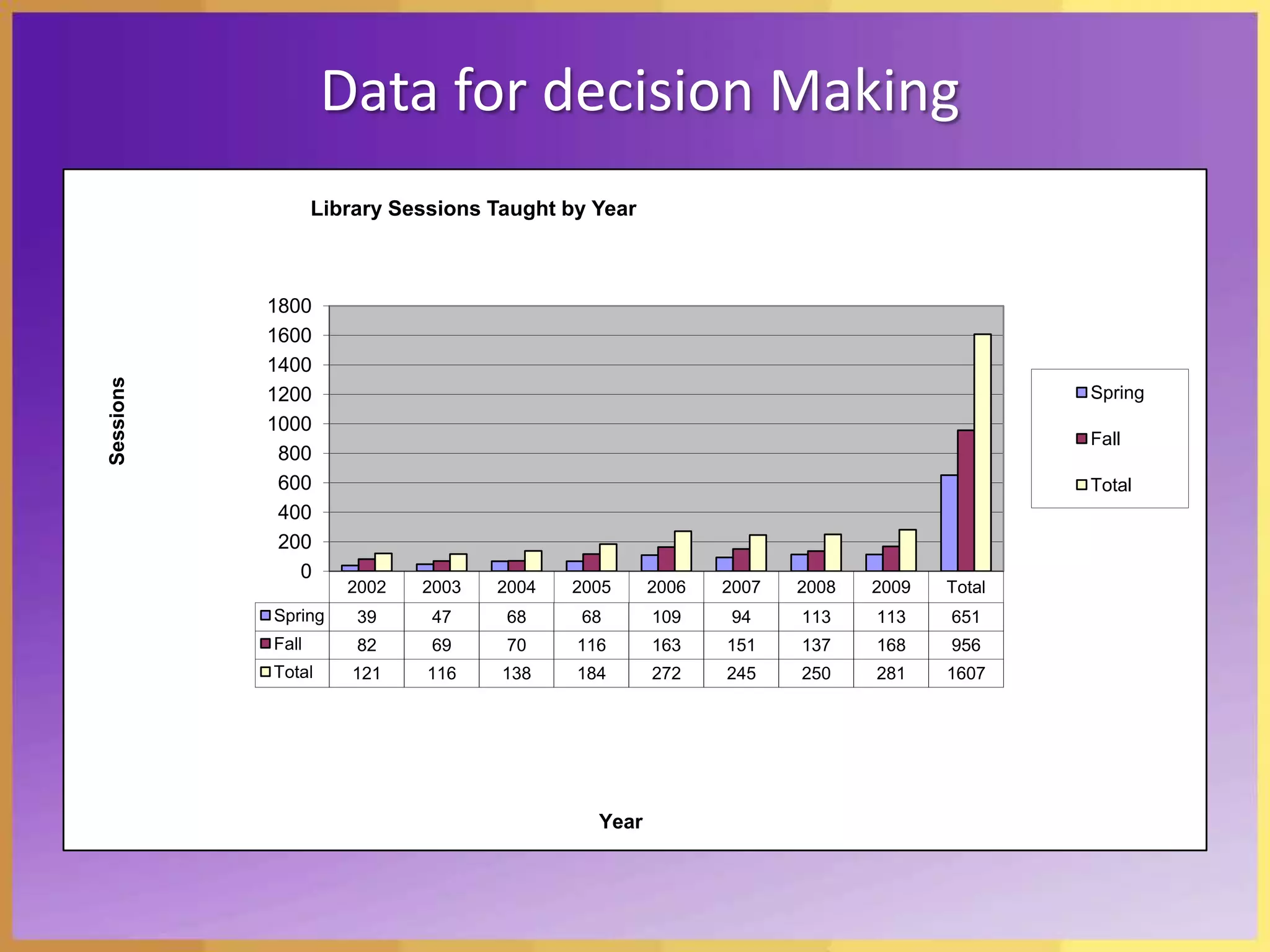
Data for decision Making
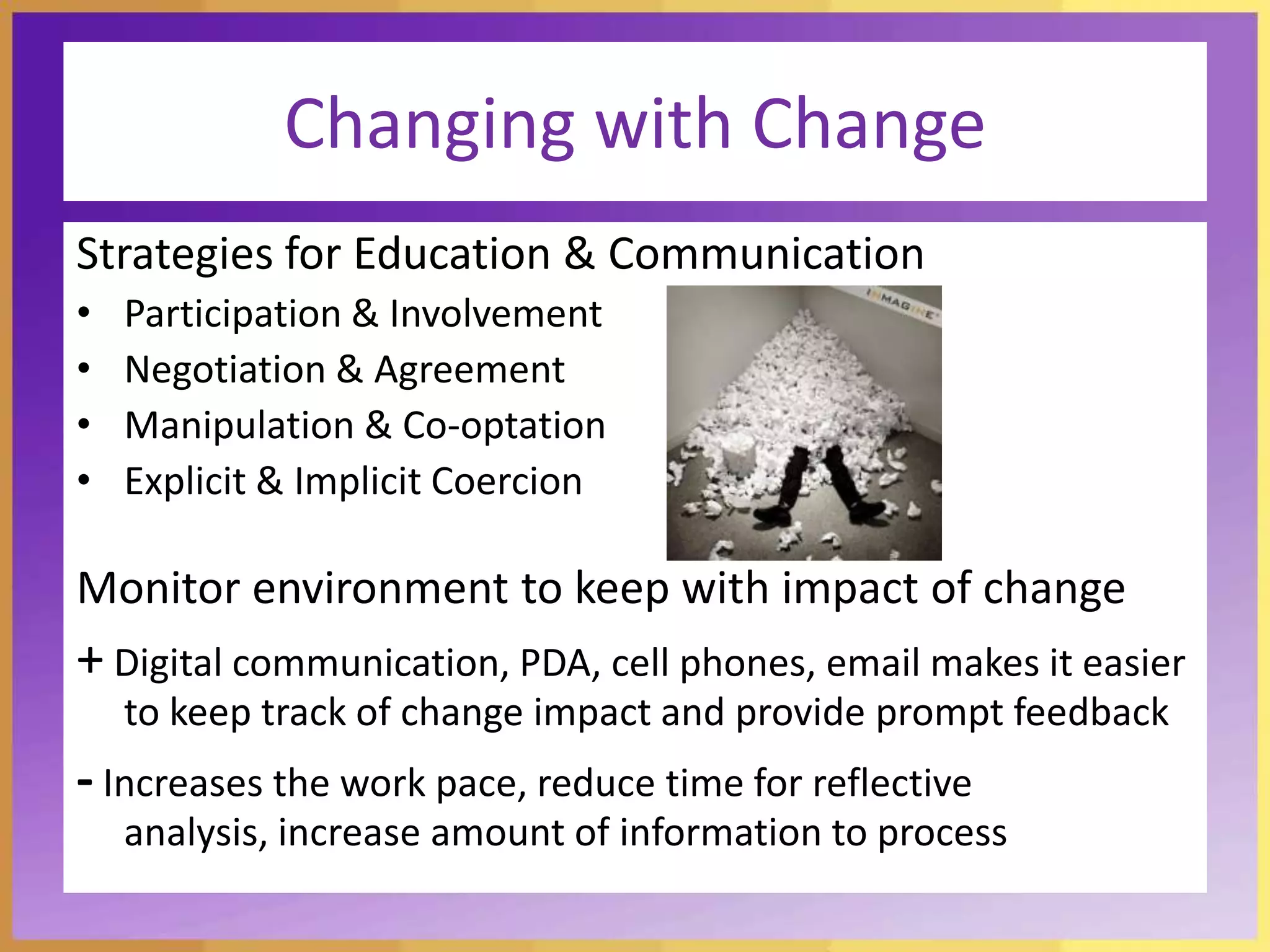
Changing with ChangeStrategies for Education & CommunicationParticipation & Involvement
Negotiation & Agreement
Manipulation & Co-optation
Explicit & Implicit CoercionMonitor environment to keep with impact of change+ Digital communication, PDA, cell phones, email makes it easier to keep track of change impact and provide prompt feedback- Increases the work pace, reduce time for reflective analysis, increase amount of information to process
PracticeBreaking it down
Skill Building
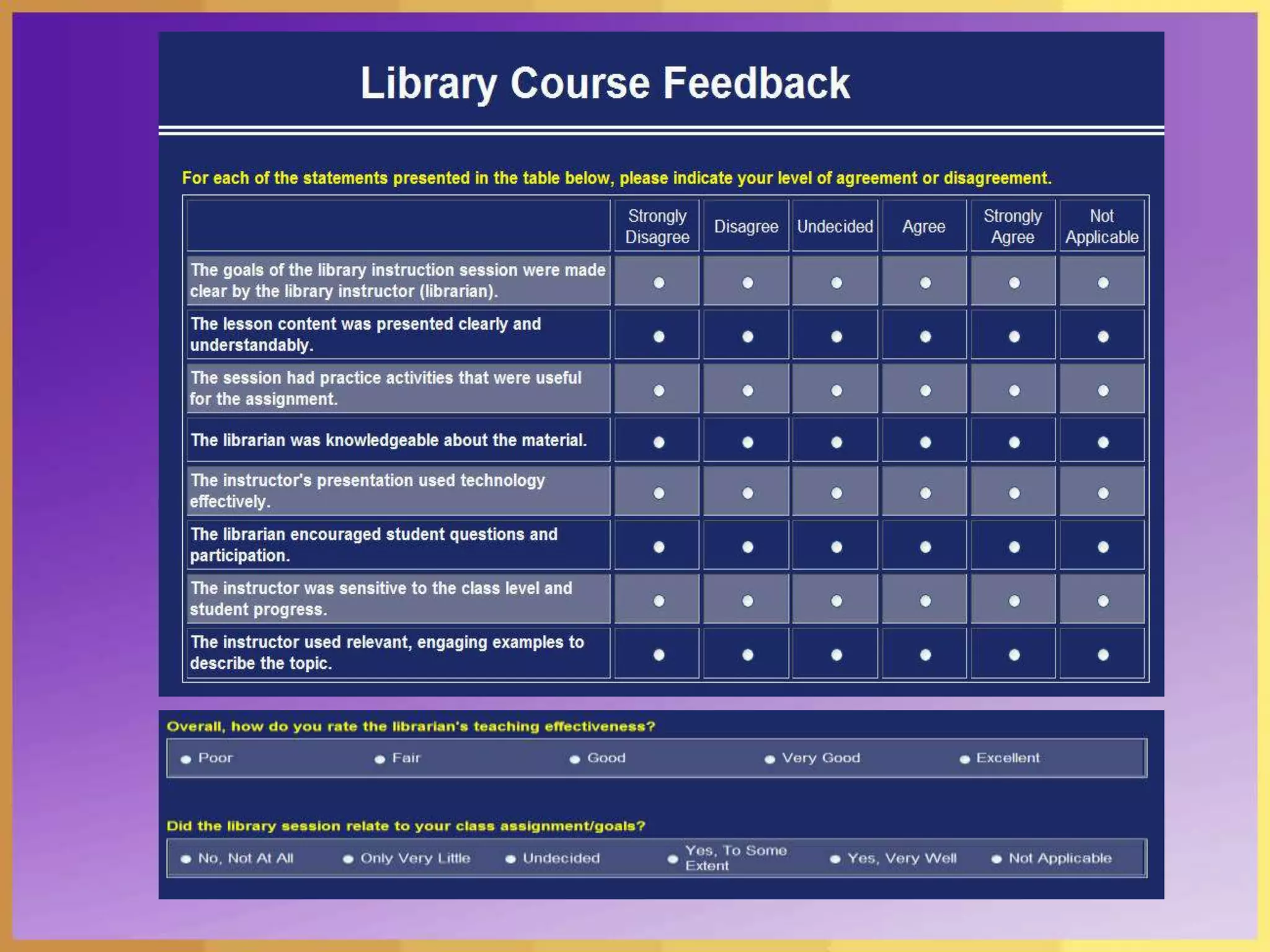
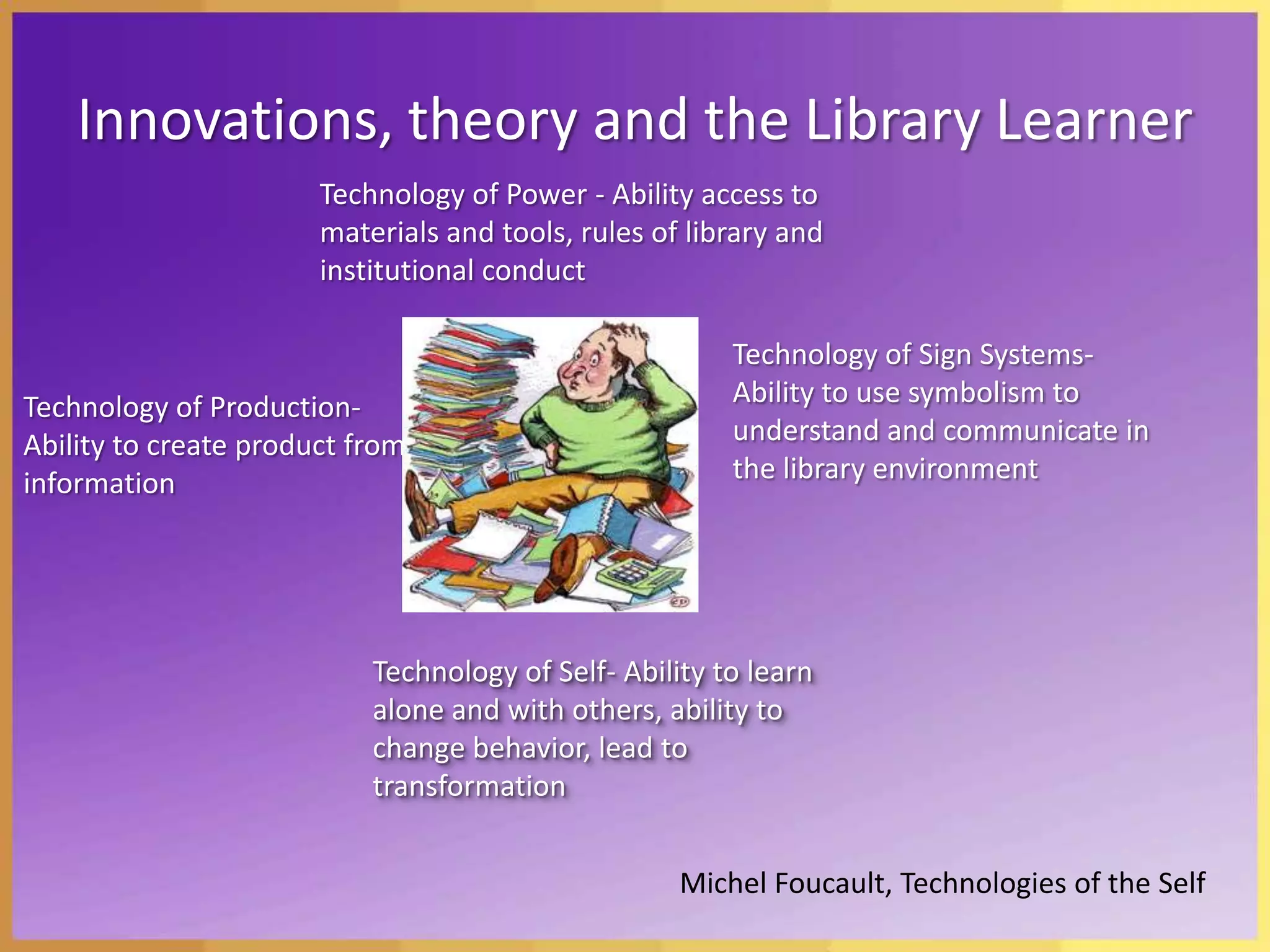
FeedbackInnovations, theory and the Library LearnerTechnology of Power - Ability access to materials and tools, rules of library and institutional conductTechnology of Sign Systems-Ability to use symbolism to understand and communicate in the library environmentTechnology of Production-Ability to create product from informationTechnology of Self- Ability to learn alone and with others, ability to change behavior, lead to transformationMichel Foucault, Technologies of the Self
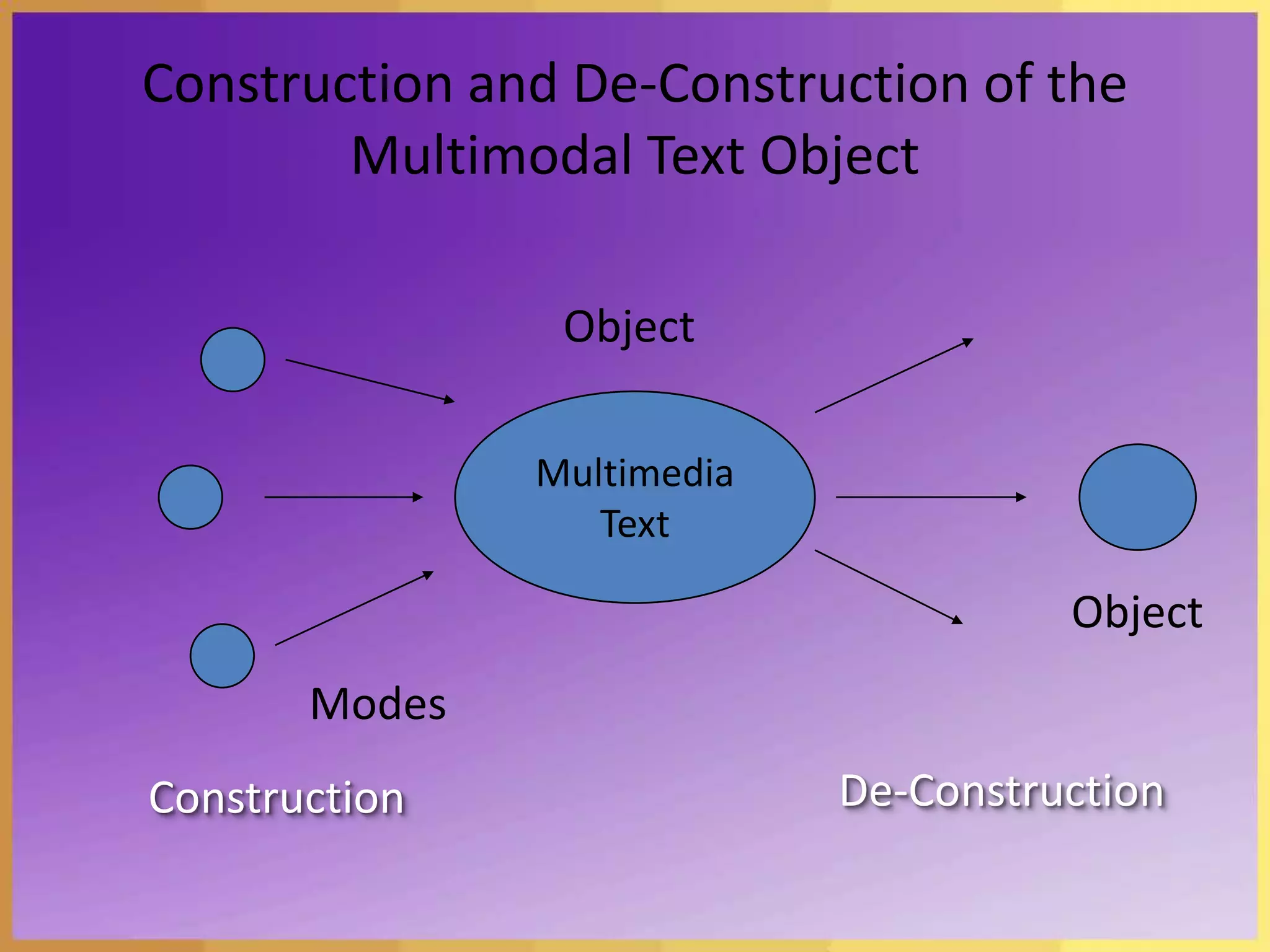
Construction and De-Construction of the Multimodal Text ObjectObjectMultimediaTextObjectModesDe-ConstructionConstruction
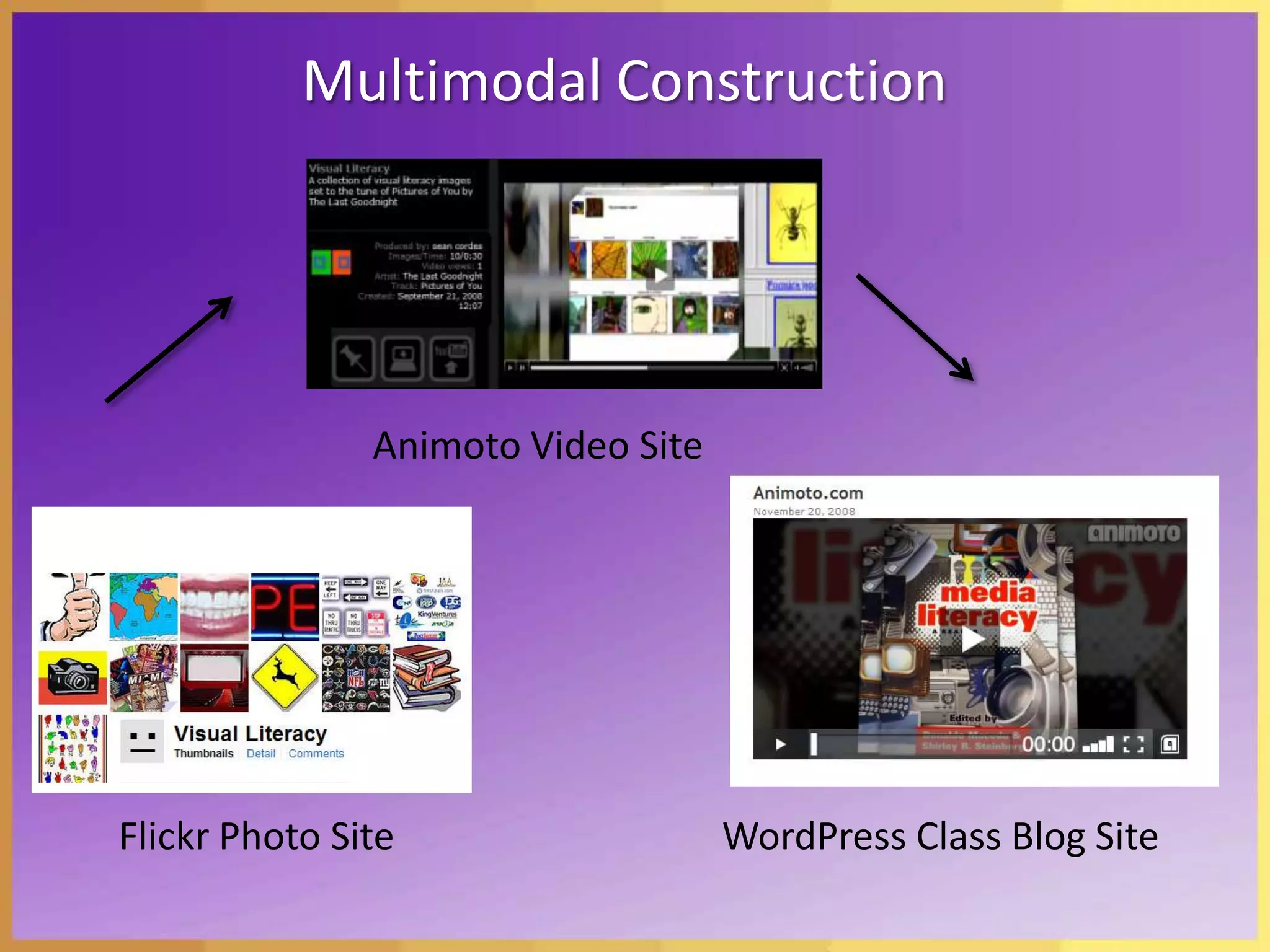
Multimodal ConstructionAnimoto Video SiteFlickr Photo SiteWordPress Class Blog Site
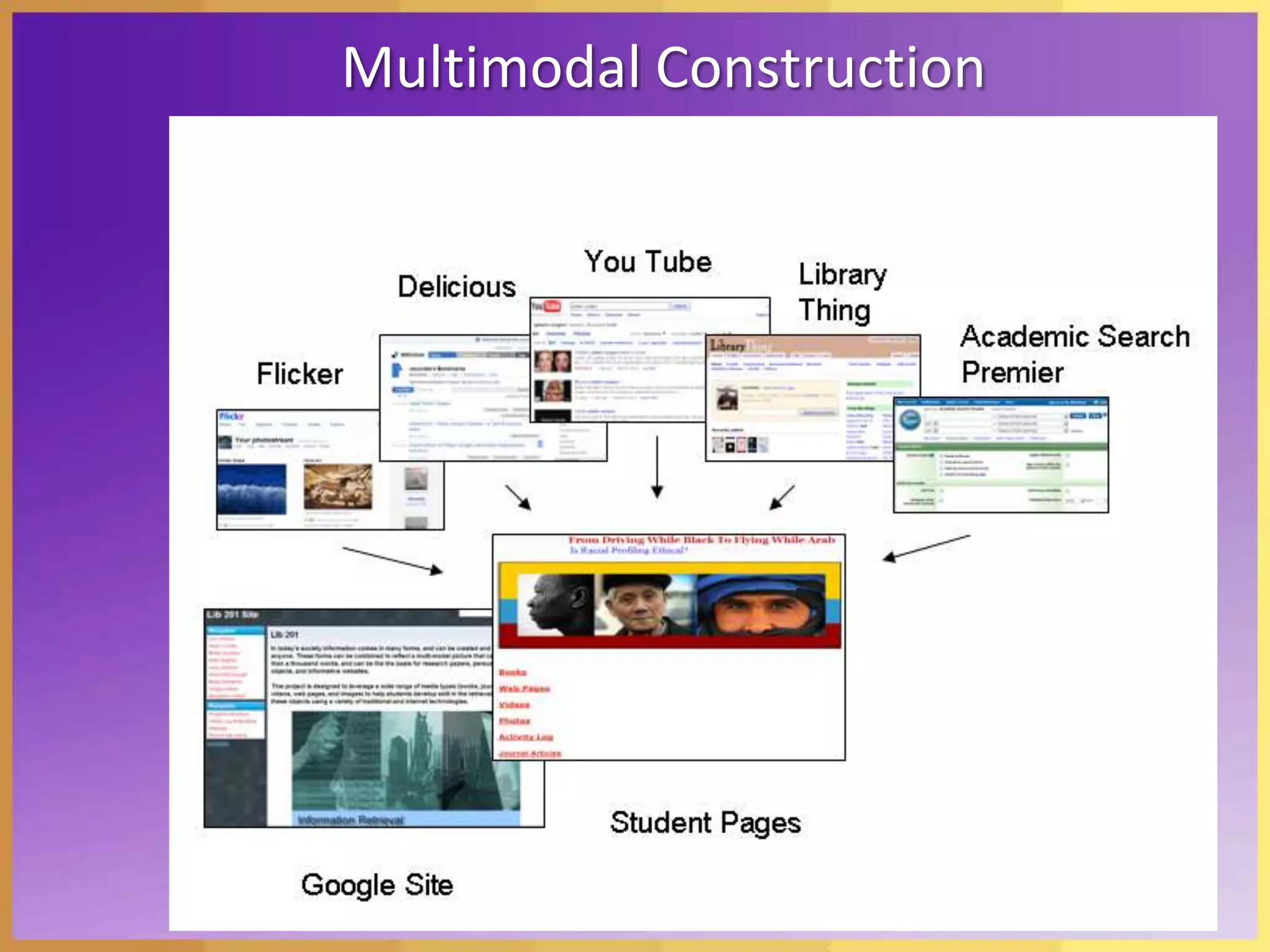
Multimodal Construction
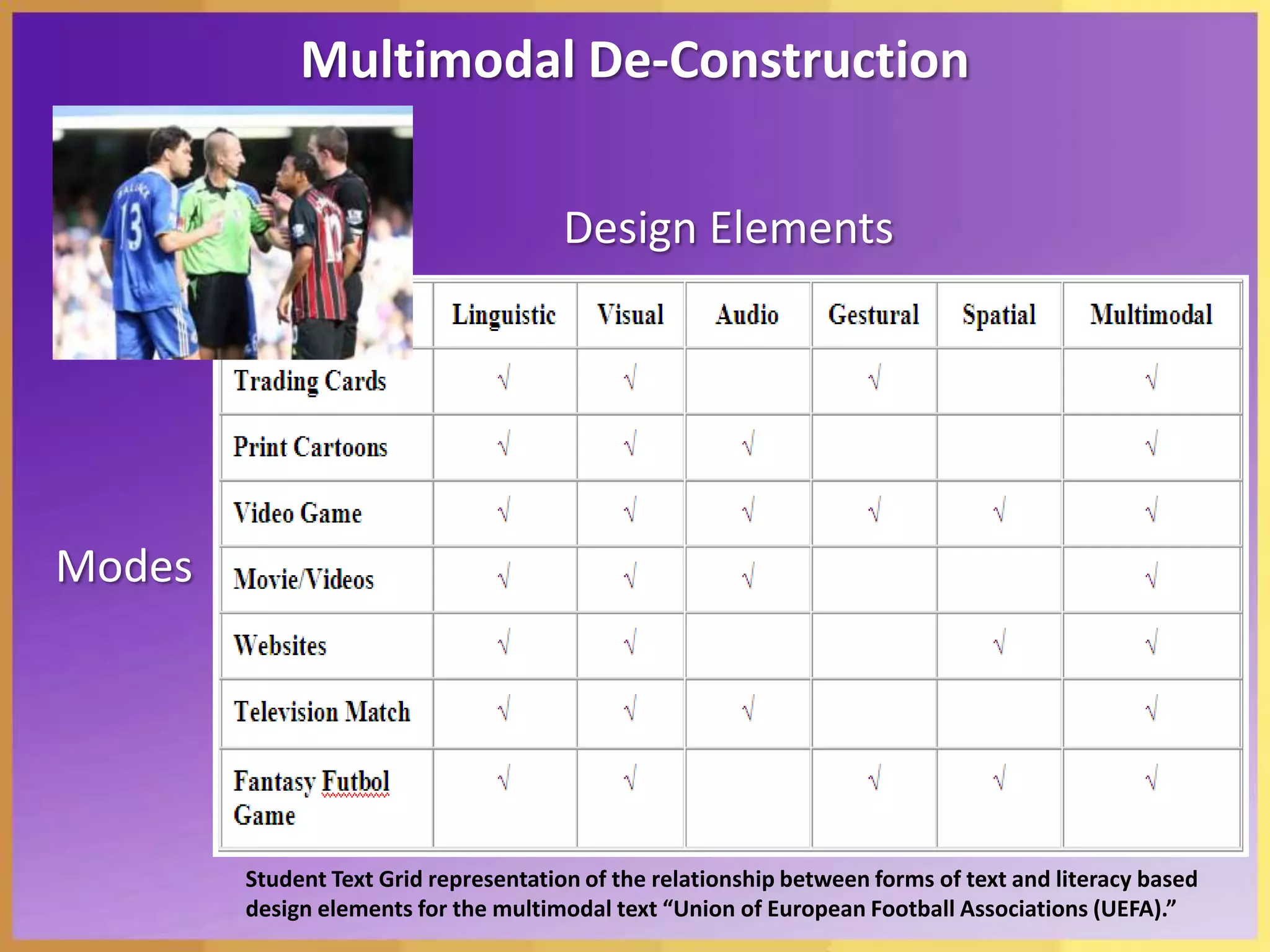
Multimodal De-ConstructionDesign ElementsModesStudent Text Grid representation of the relationship between forms of text and literacy based design elements for the multimodal text “Union of European Football Associations (UEFA).”
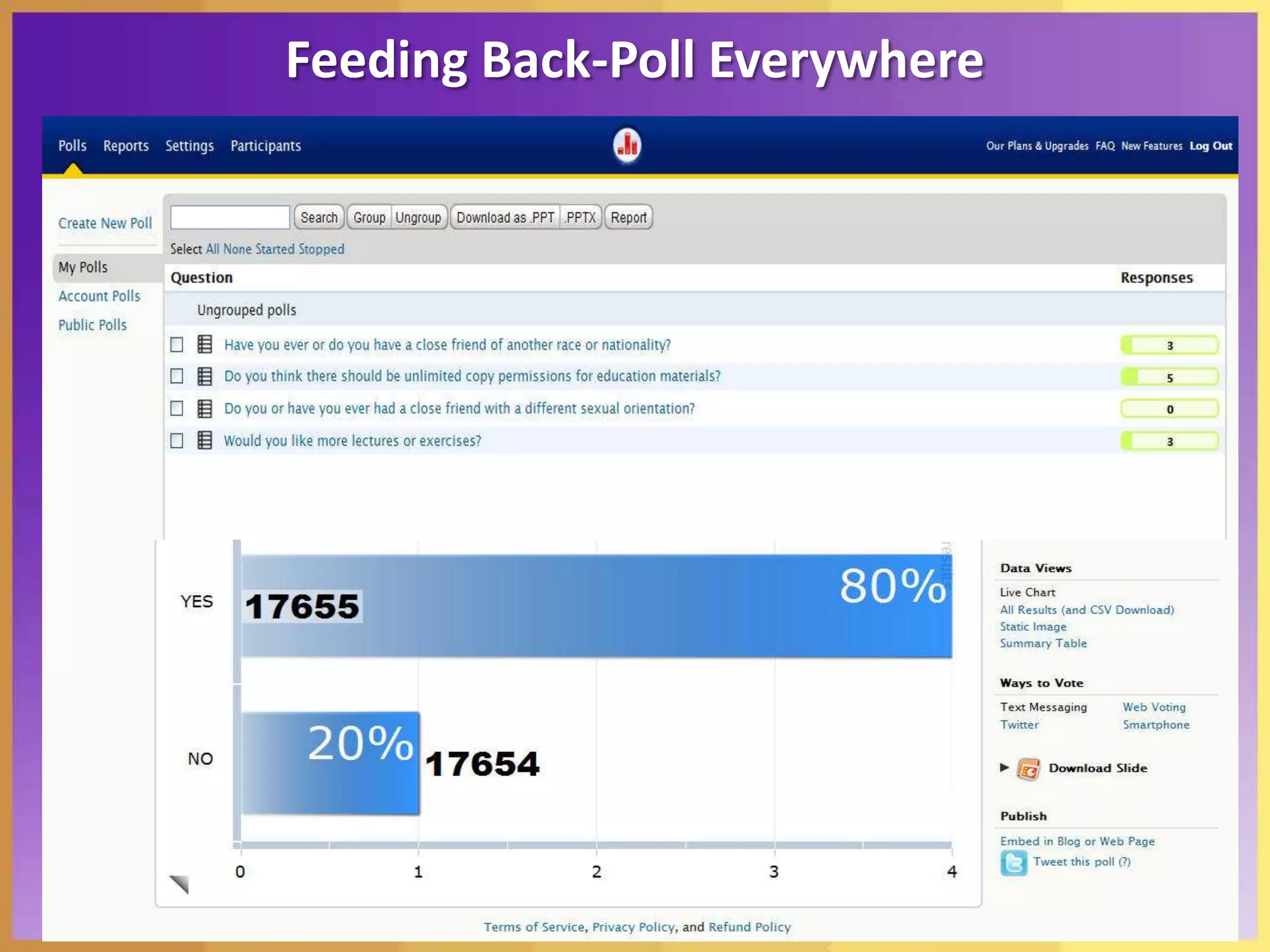
Feeding Back-Poll Everywhere
Merging & Creating Traditional Library ServicesByT. J. UrbanskiOctober 8, 2009
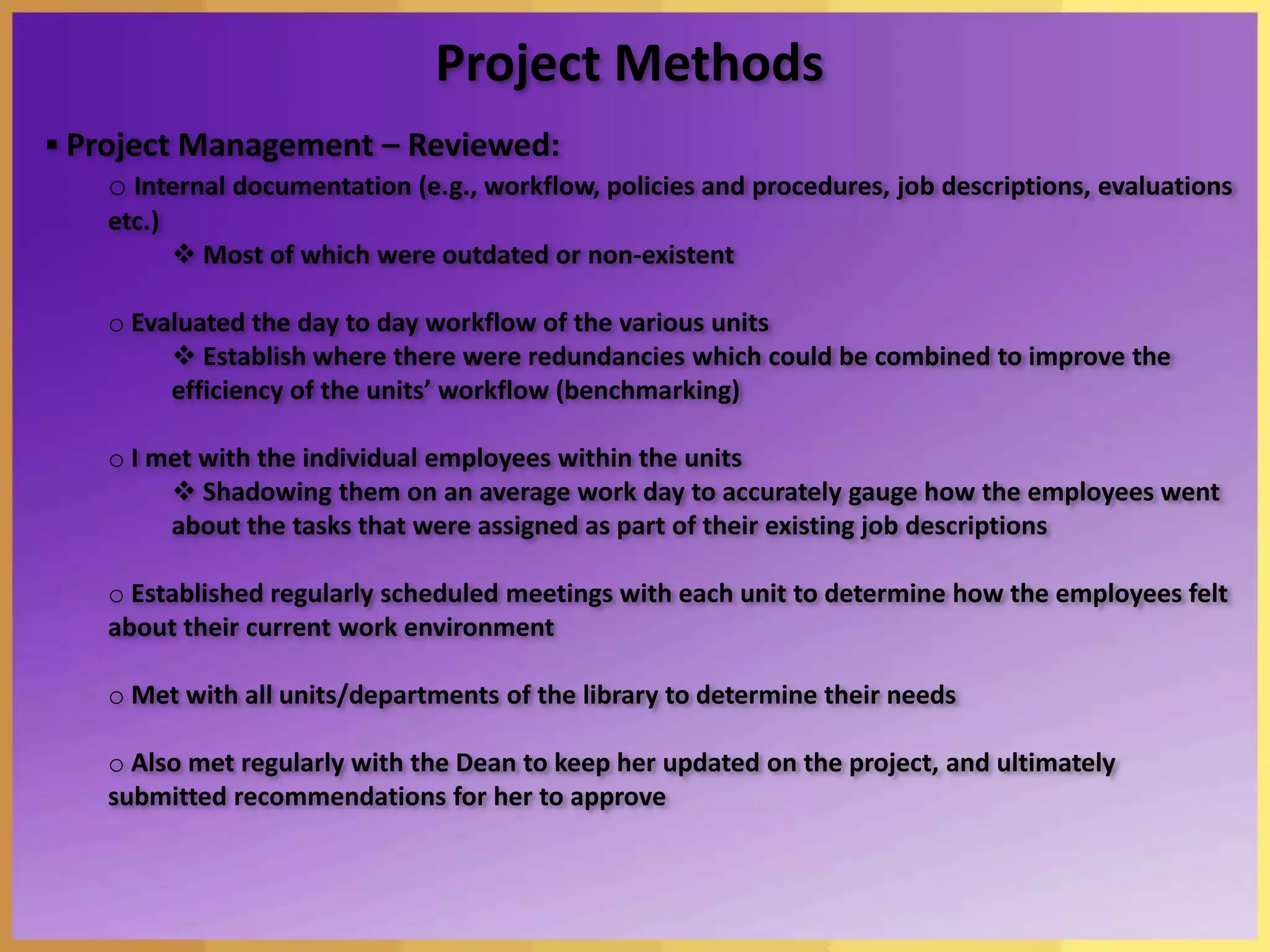
In July 2008, I was tasked by Dr. Self to review the existing organizational structure and workflow and work space of the Library Support Services (LSS) units of the University Libraries  Cataloging
 Acquisitions
 Circulation
Interlibrary Loan (ILL)
 2 campus branch libraries Review Existing Organizational StructureTo insure the library was meeting the changing needs of our users
http://www.youtube.com/watch?v=48Xnxgjot0k
A Vision of Students Today (4:44)
“I will read 8 books this year, 2300 web pages & 1281 FaceBook profiles”
Different learning behaviors and information gathering techniques
Customer service expectations
Digital natives (online access to photos, audio, etc.)
Would rather watch a video on subject than read text based materials
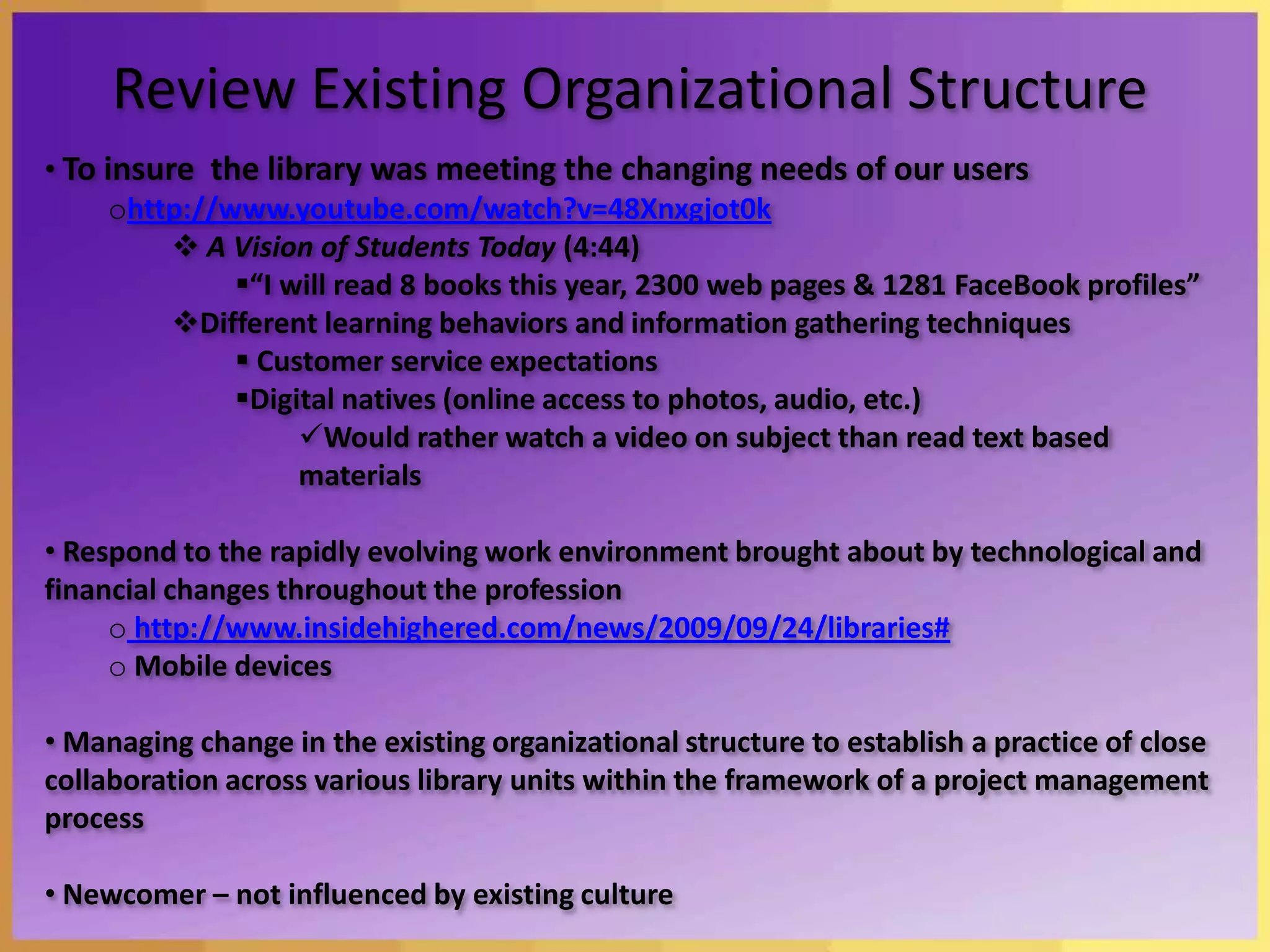
 Respond to the rapidly evolving work environment brought about by technological and financial changes throughout the profession
 http://www.insidehighered.com/news/2009/09/24/libraries#
 Mobile devices
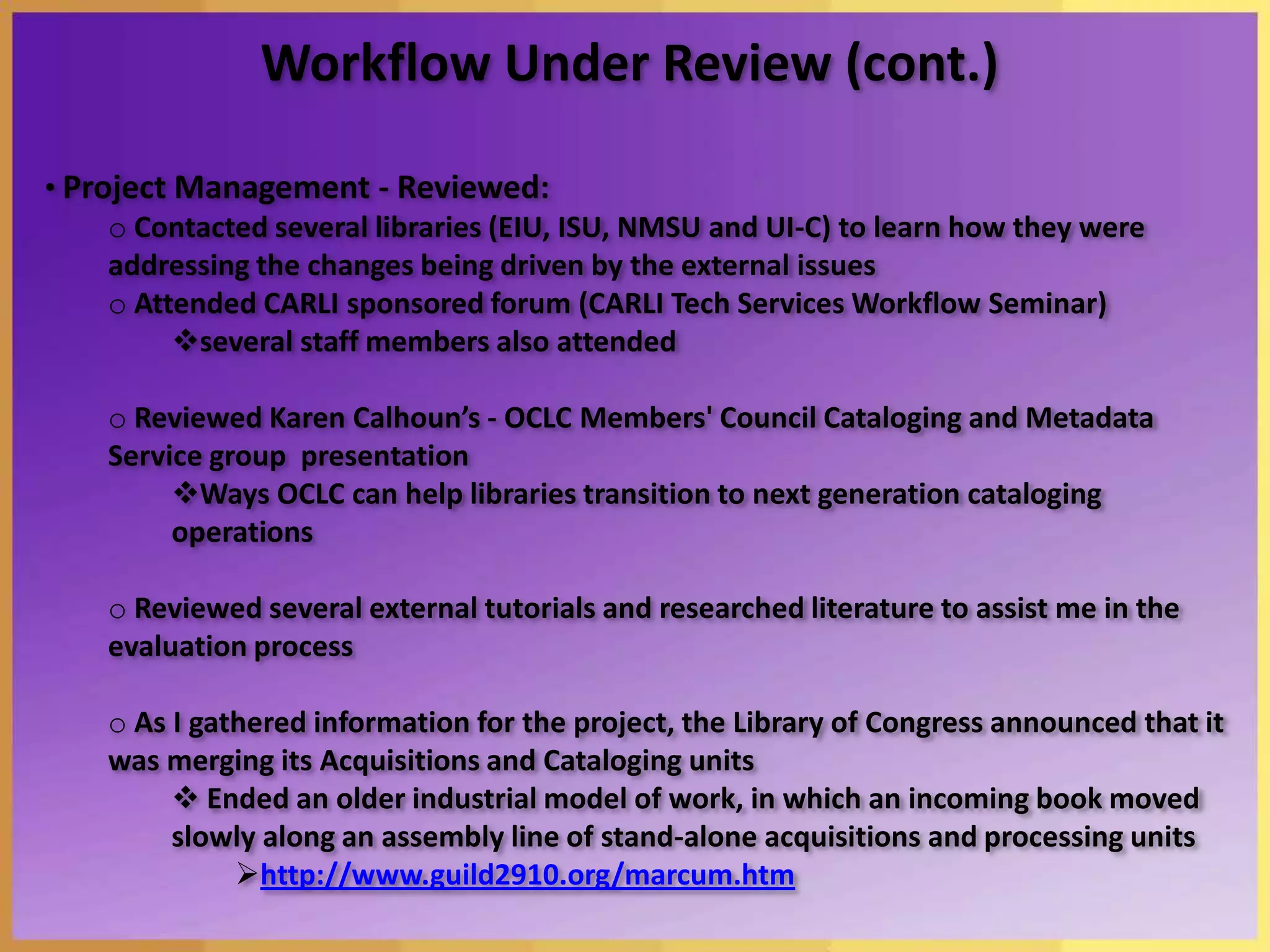
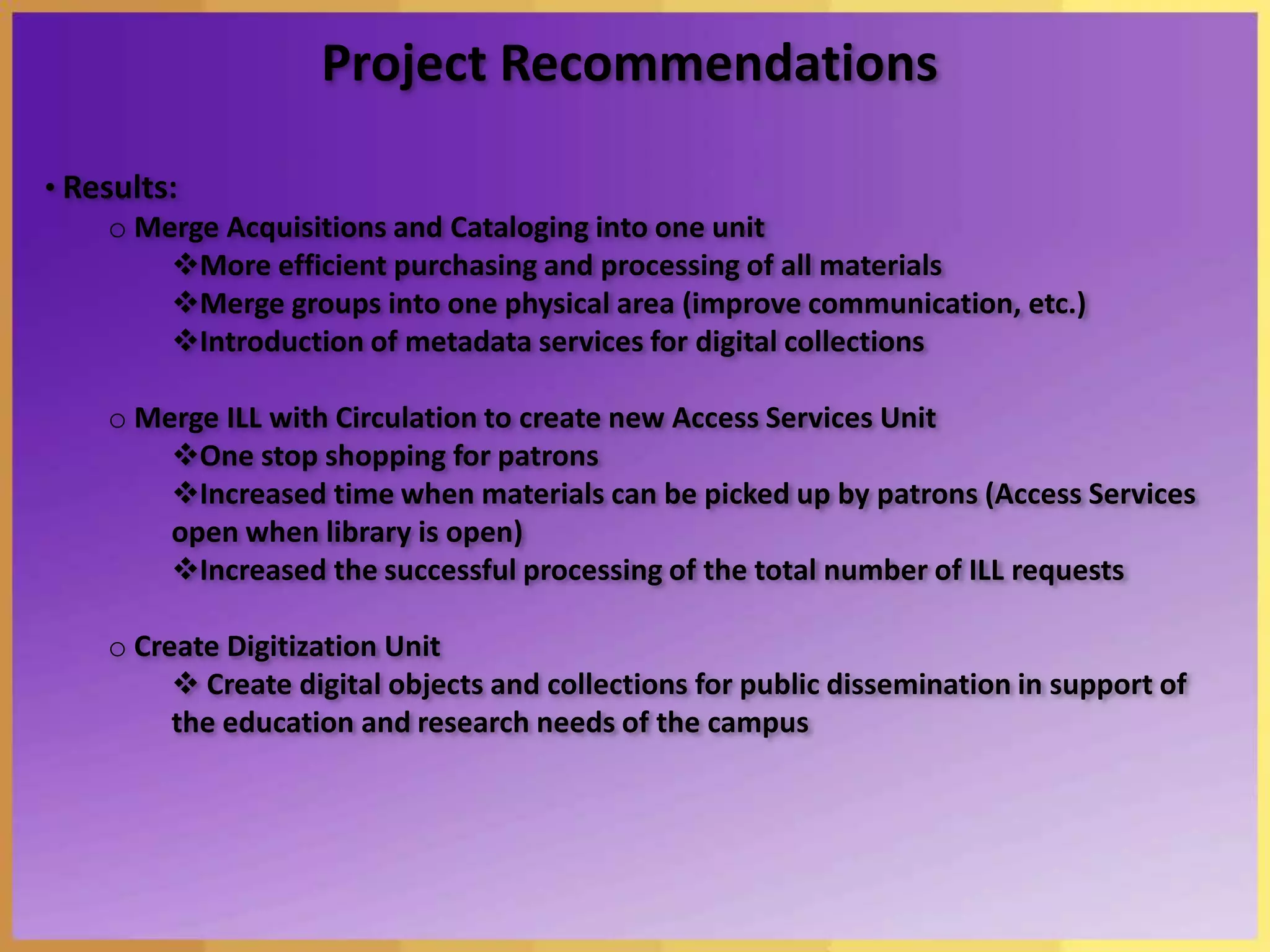
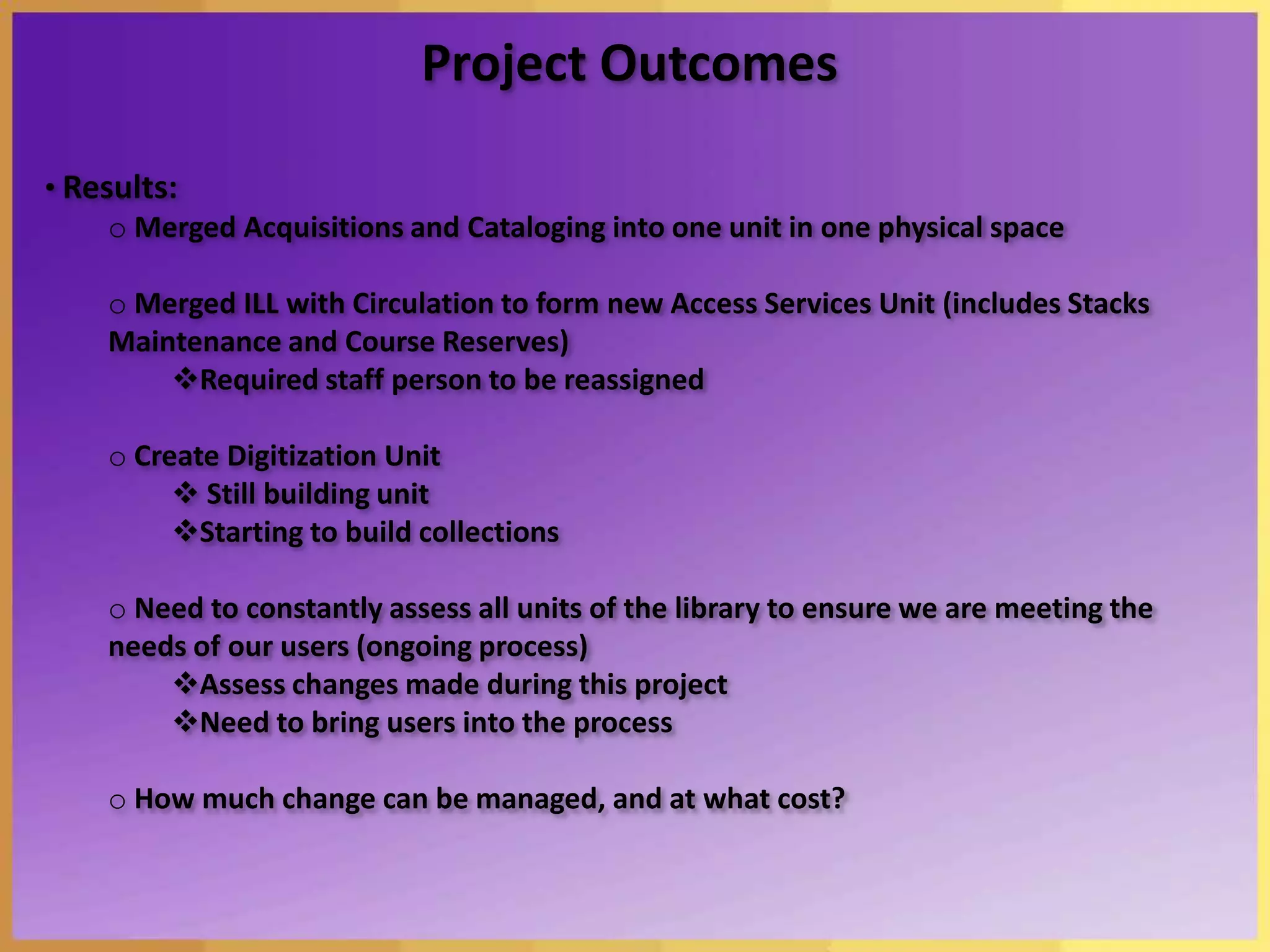
 Managing change in the existing organizational structure to establish a practice of close collaboration across various library units within the framework of a project management process
 Newcomer – not influenced by existing cultureScope of ProjectInitial scope of the project
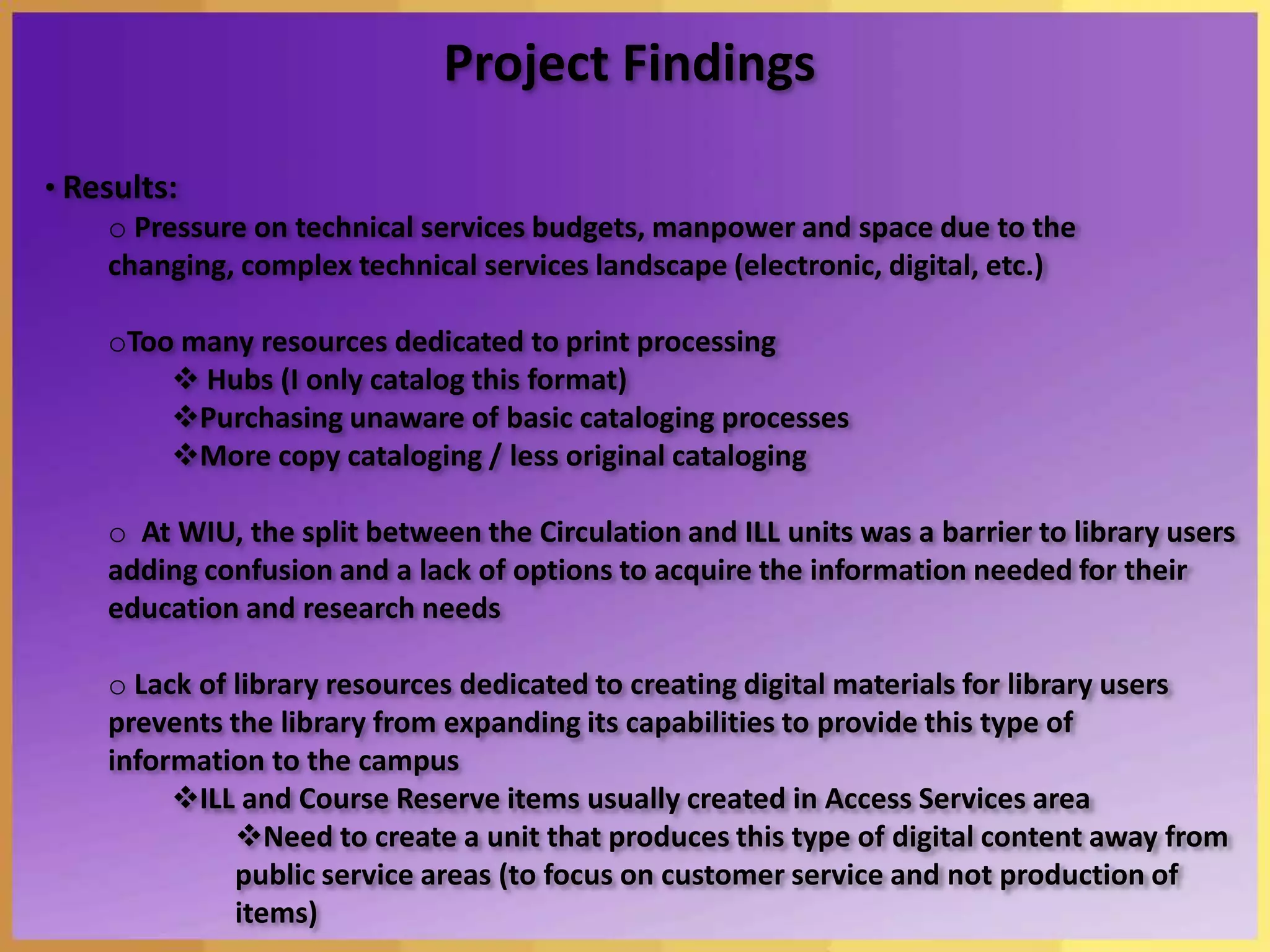
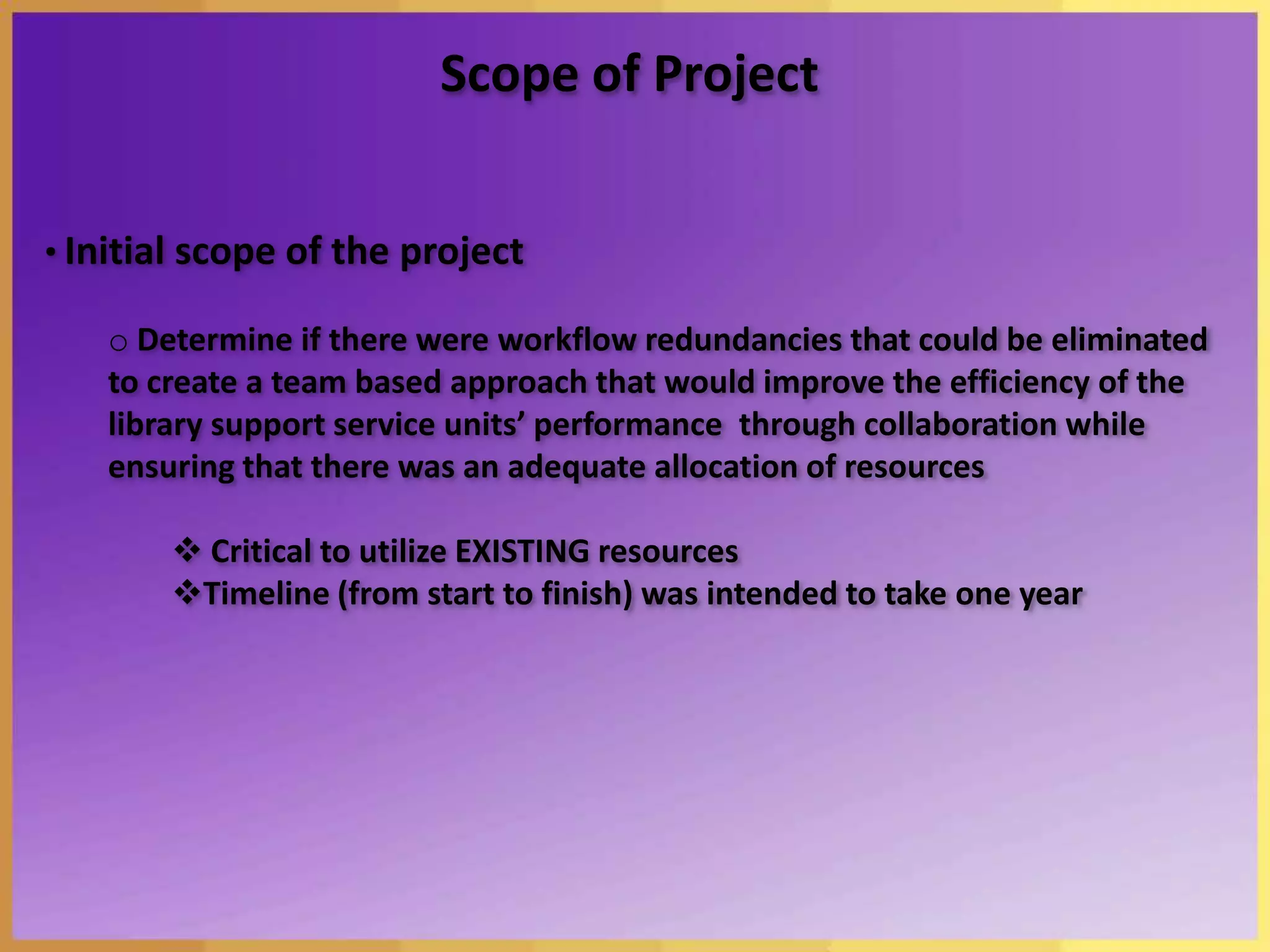
Determine if there were workflow redundancies that could be eliminated to create a team based approach that would improve the efficiency of the library support service units’ performance  through collaboration while ensuring that there was an adequate allocation of resources
ILA Presentation

Editor's Notes

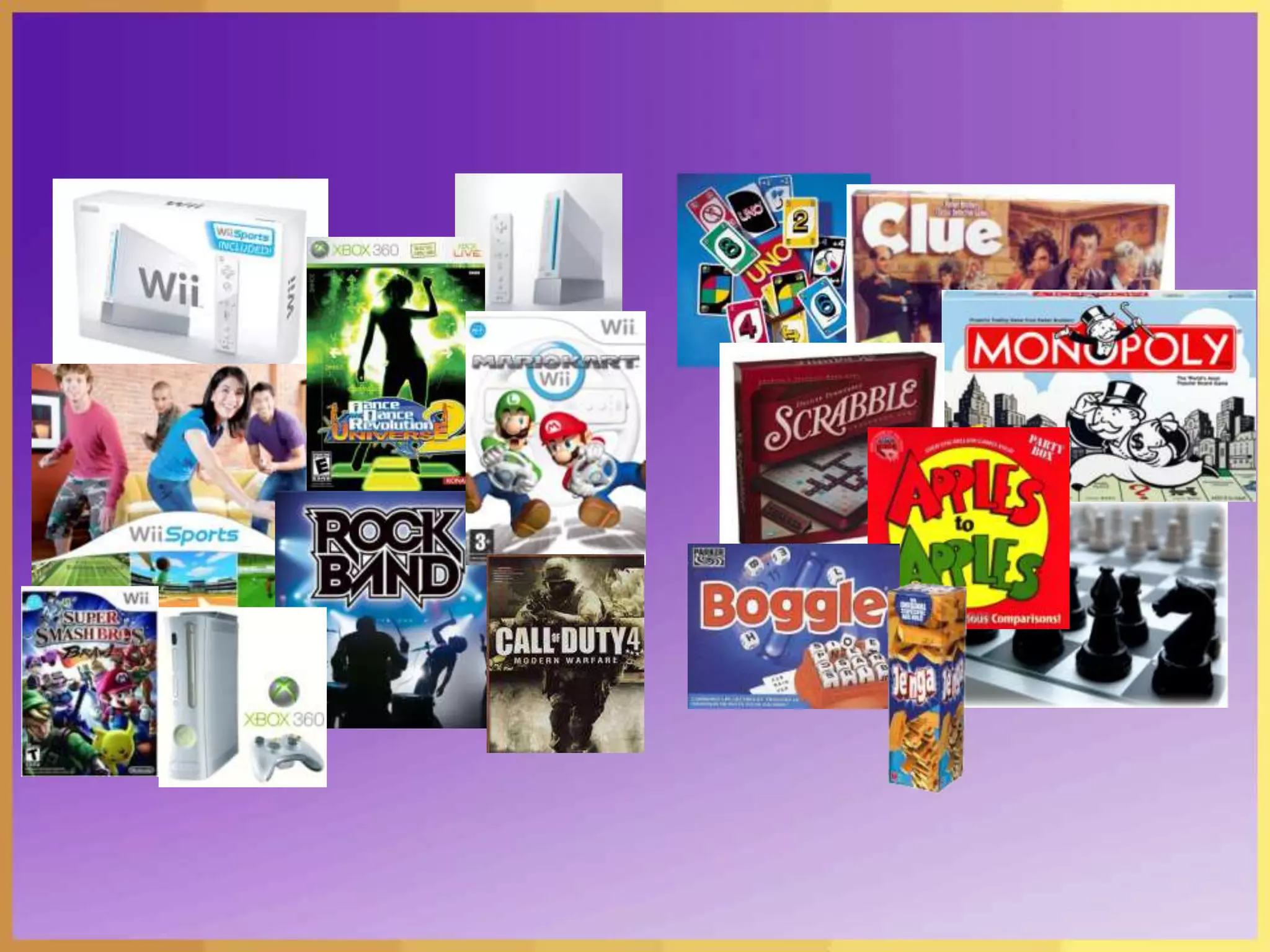
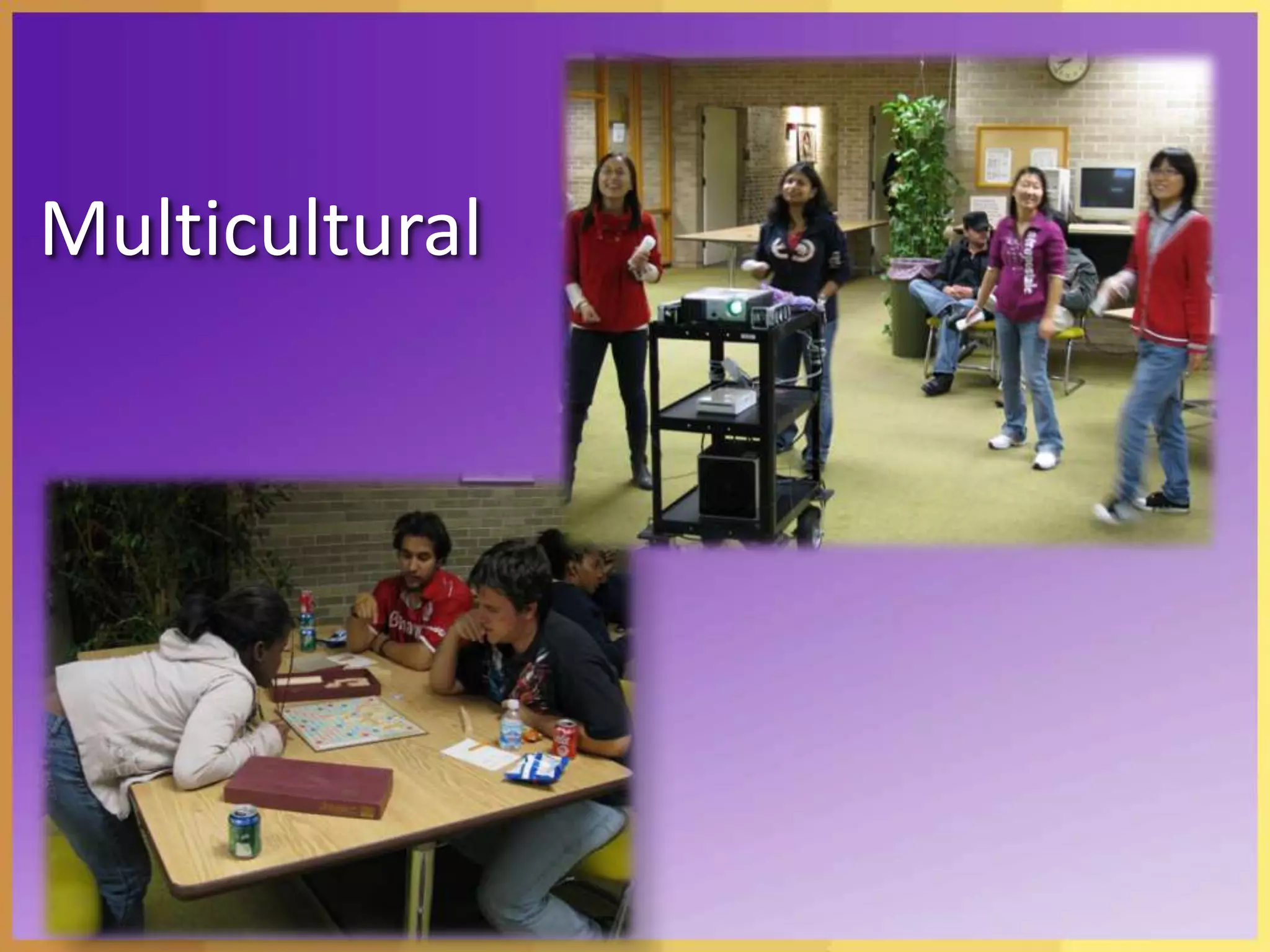
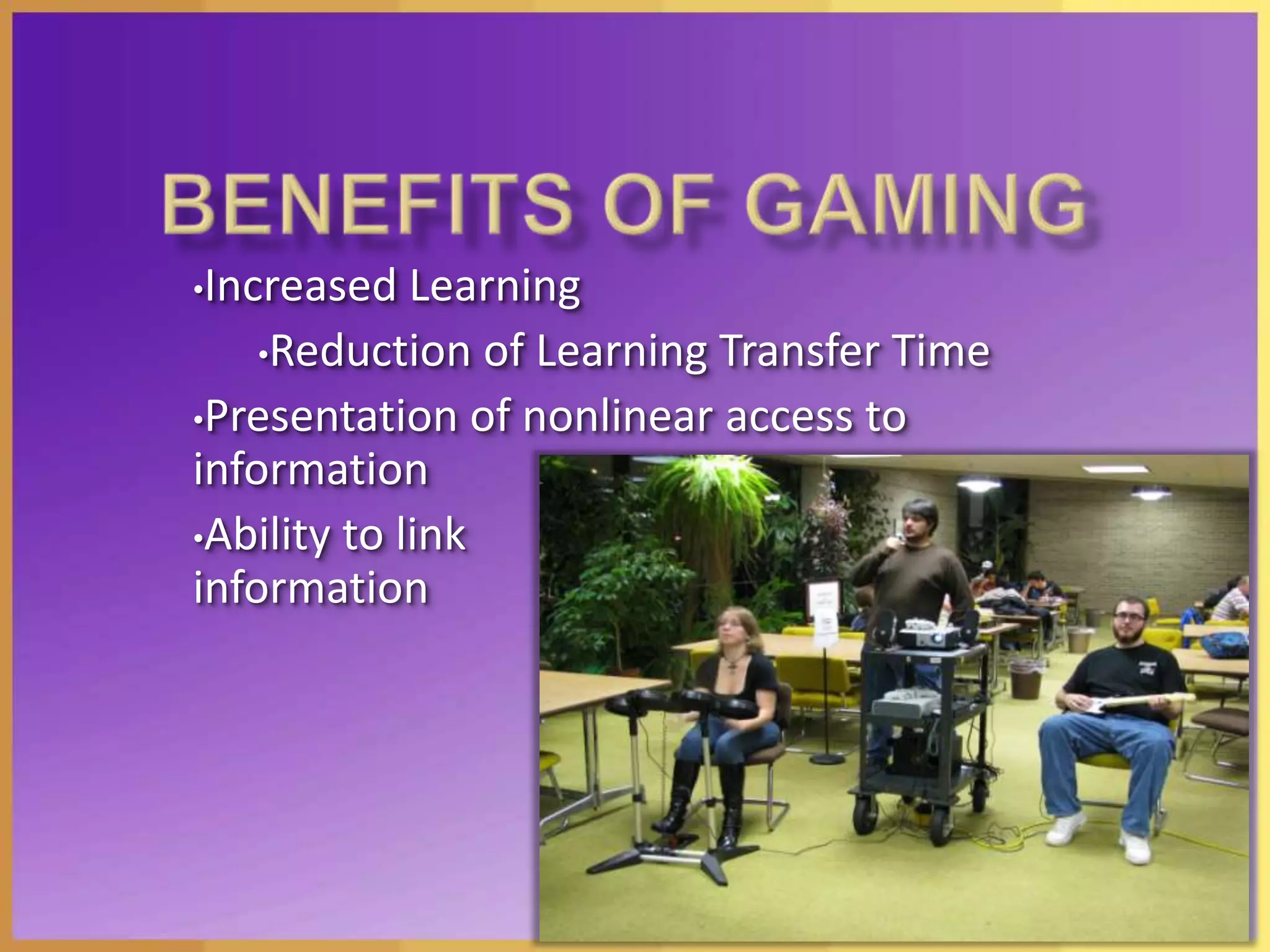
  • #48 While we have a variety of games, we expected most of the interest to be focused on the video/electronic games. Wii Sports, Rock Band, and Call of Duty (LAN) were popular;
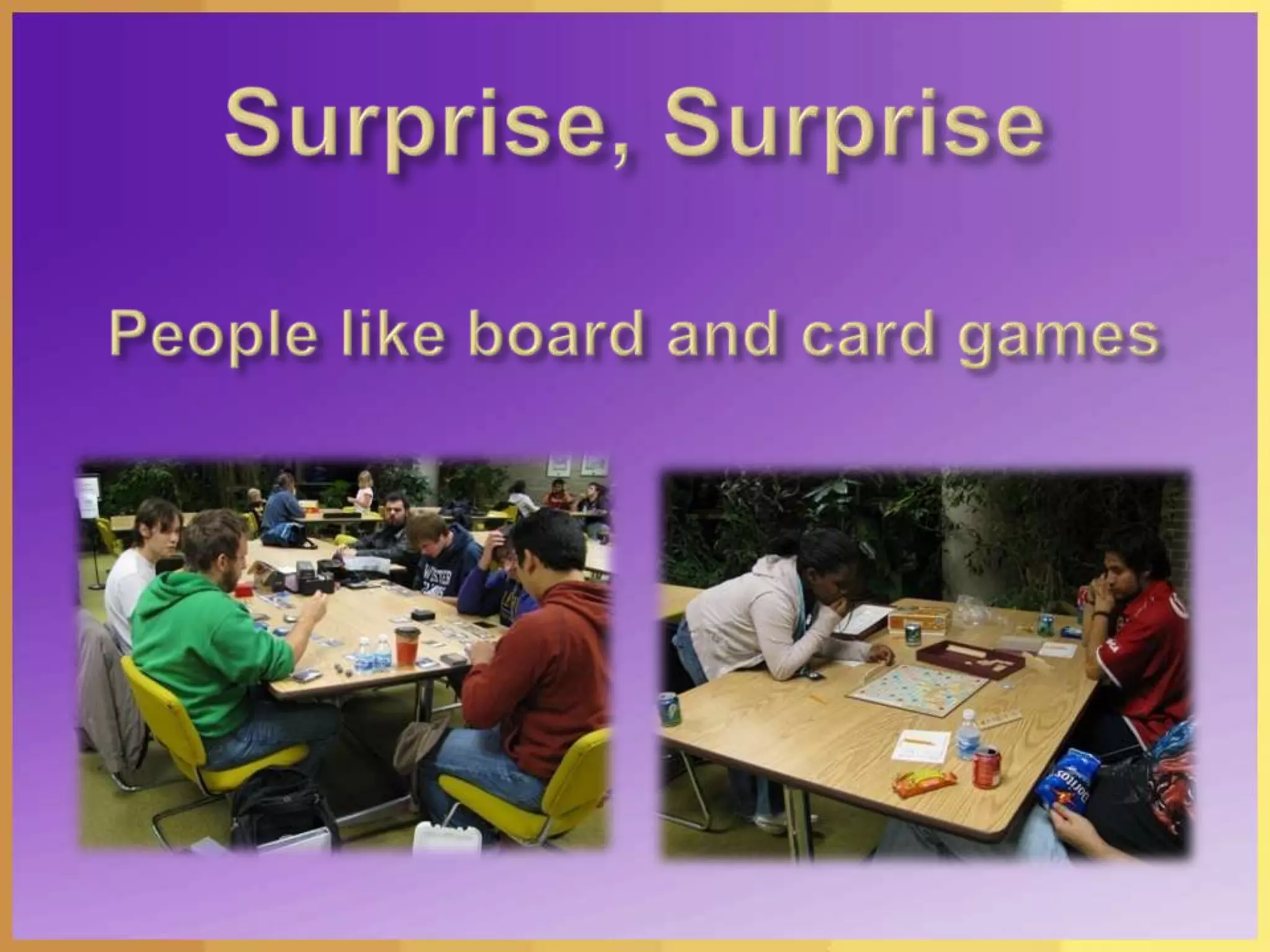
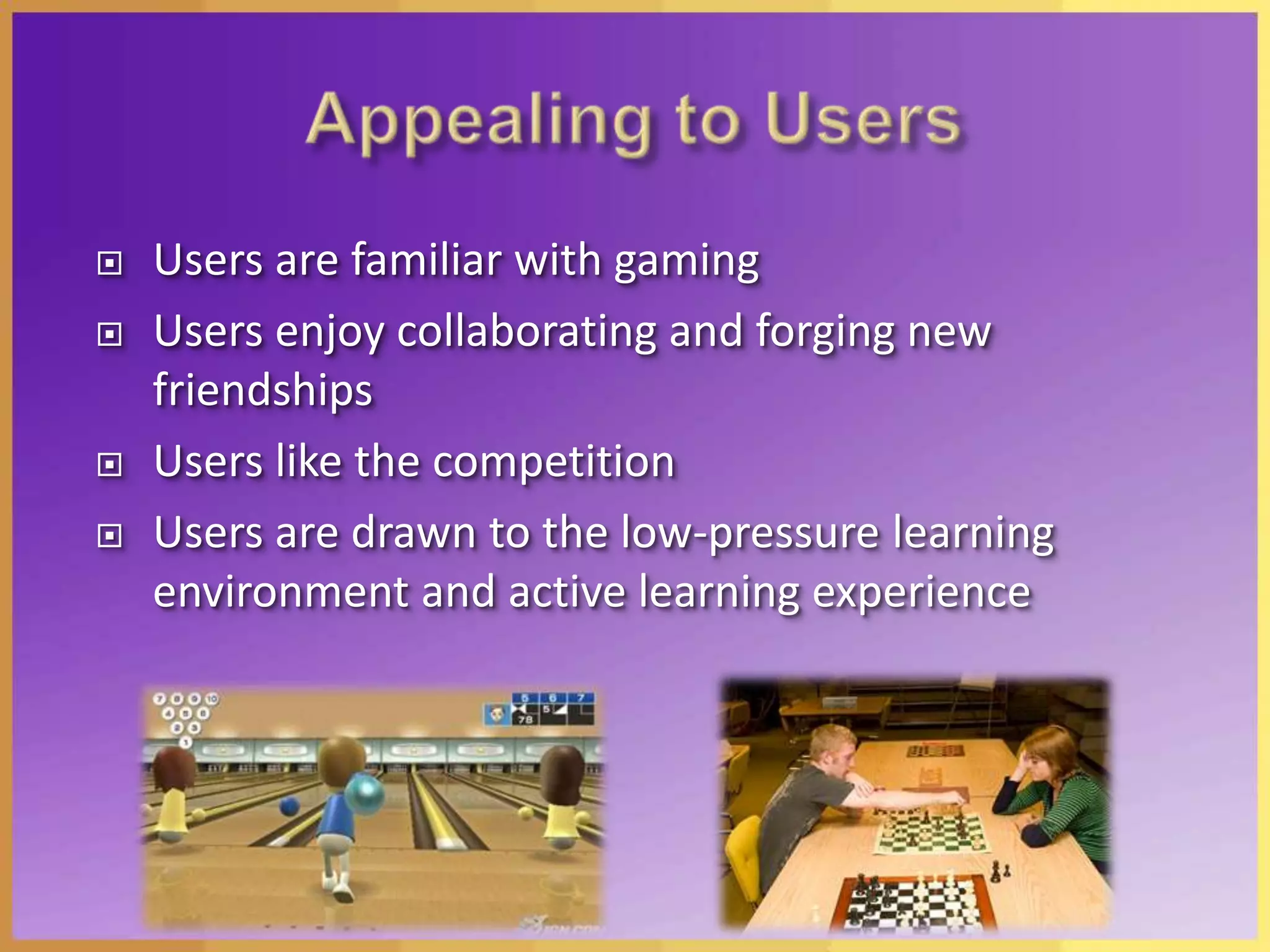
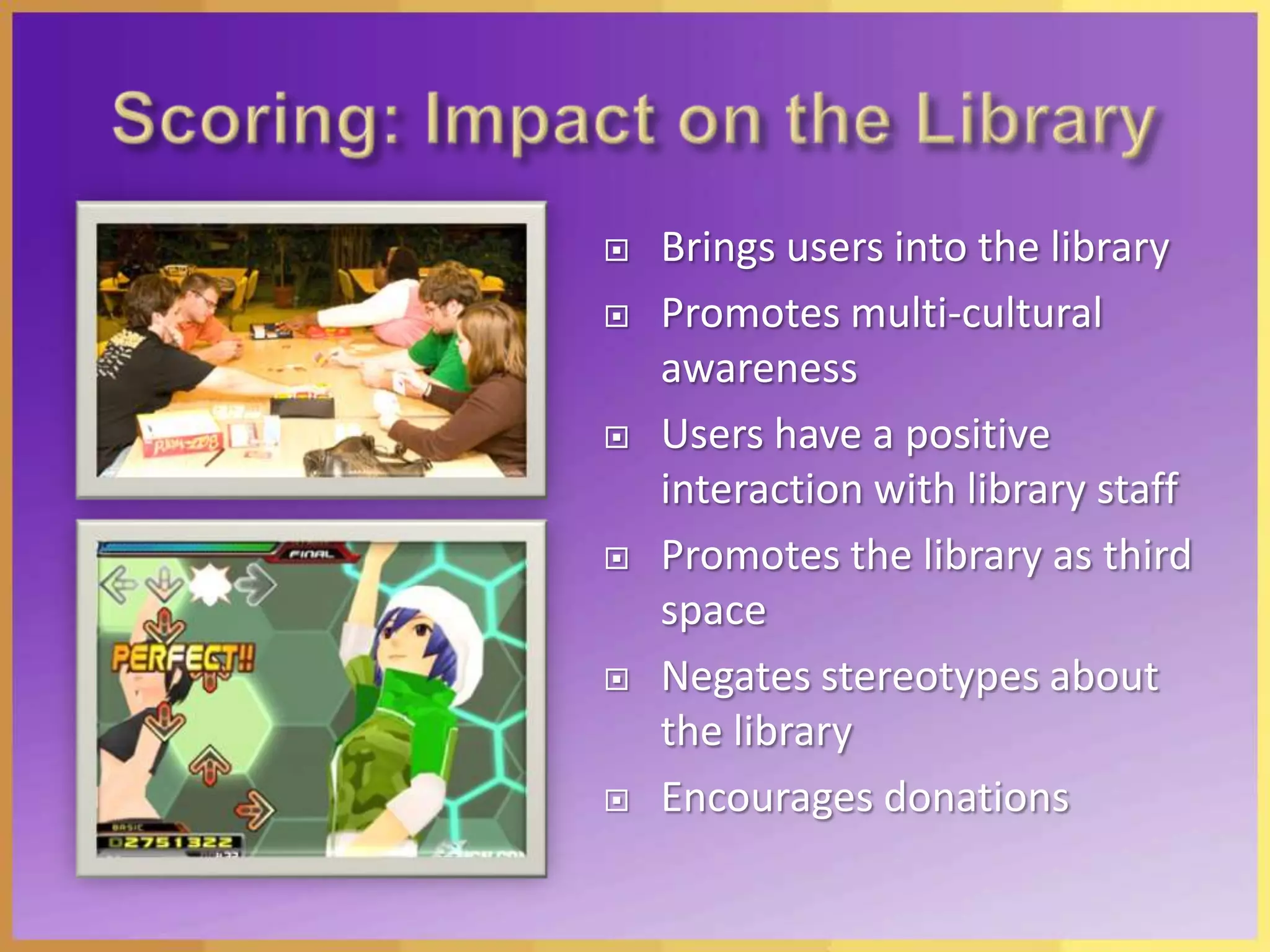
  • #49 however, majority of attendees wanted to play board and card games. Perhaps this was because playing these types of games allows for a more social experience. Attendees taught each other how to play and strategize while they conversed freely about university life, personal interests, etc. Magic the happening and scrabble
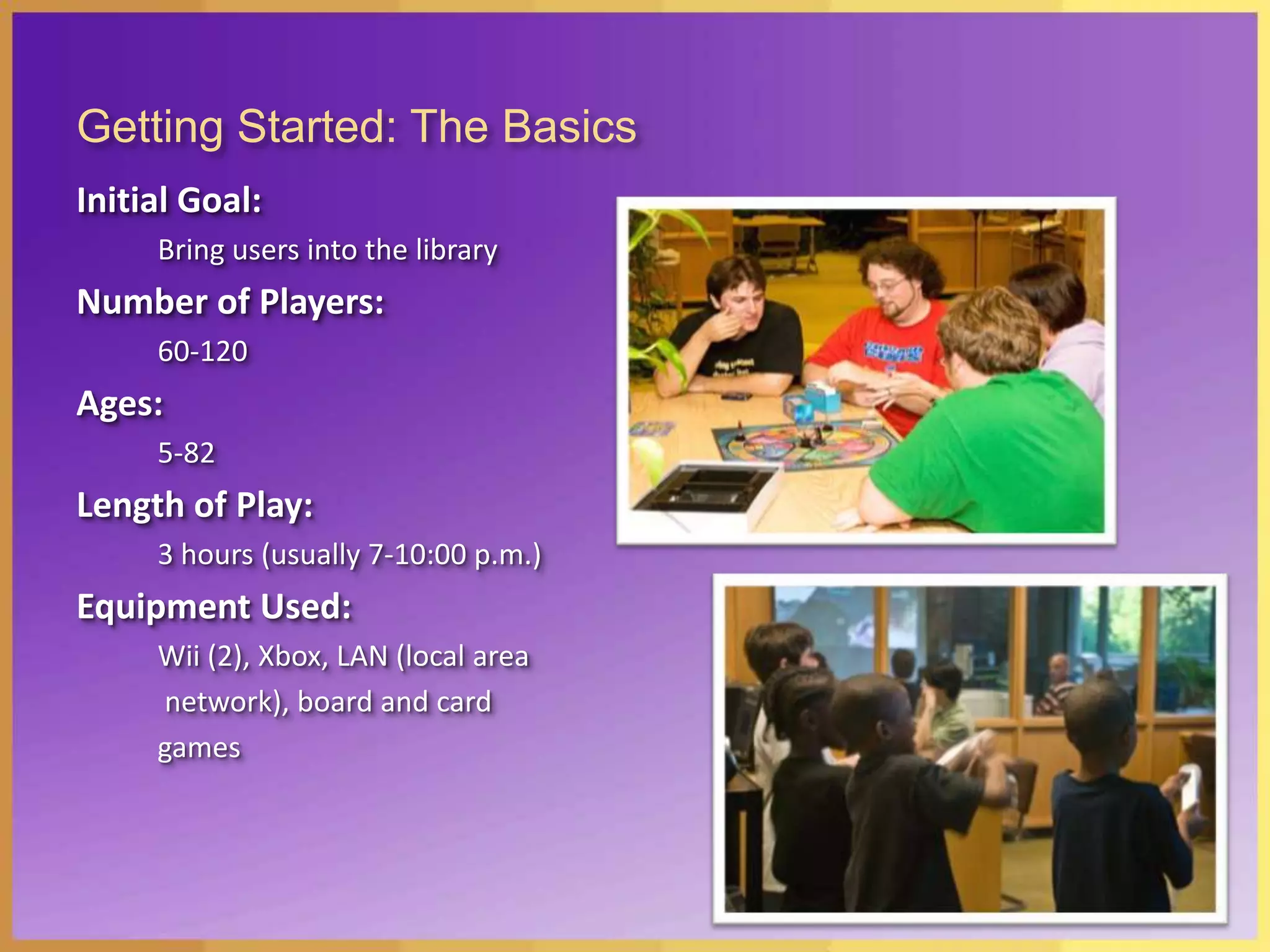
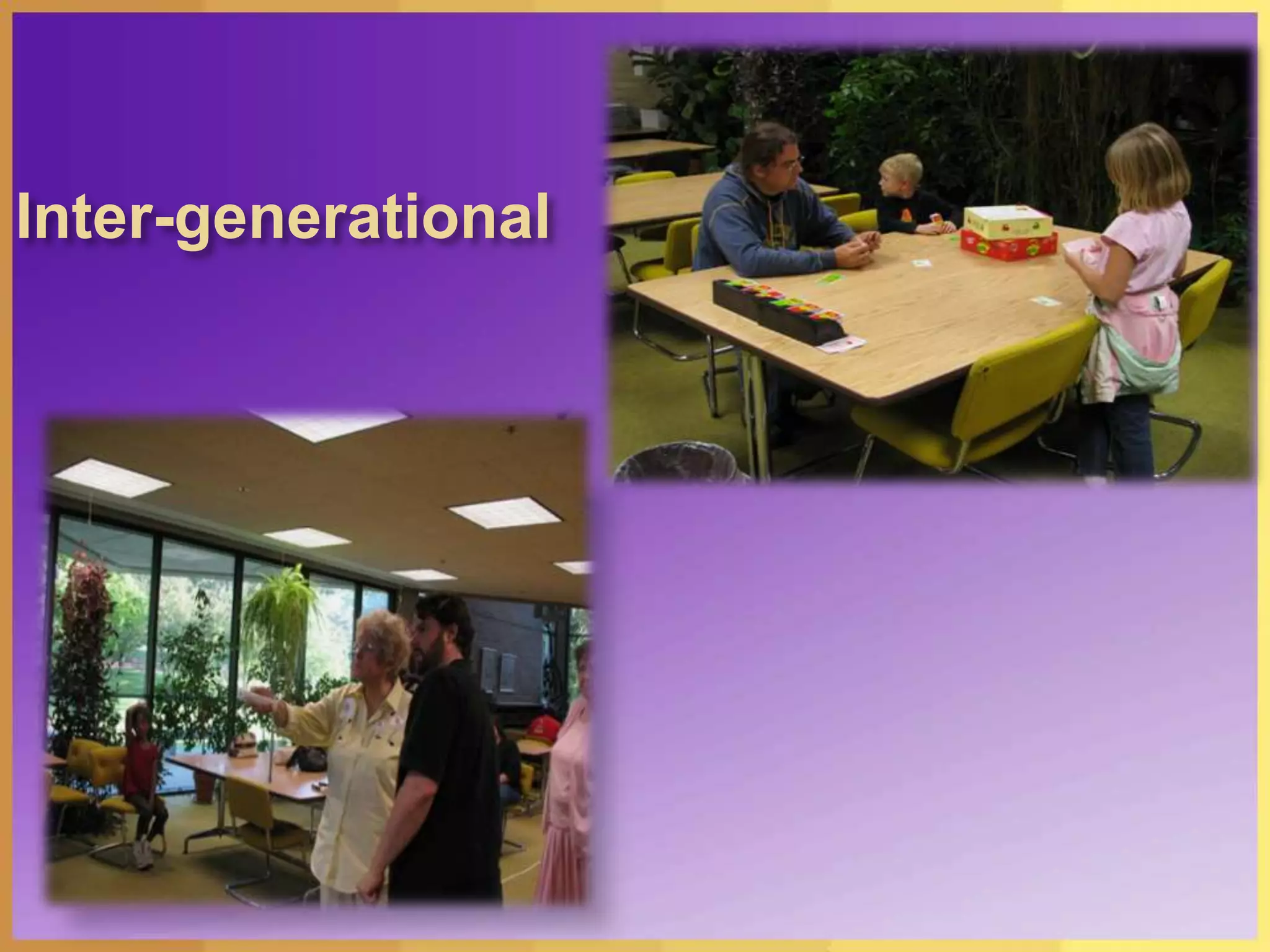
  • #51 We found the younger generation would teach the older generation how to play video games and then the older generation would teach the younger generation how to play the more traditional board or card games.
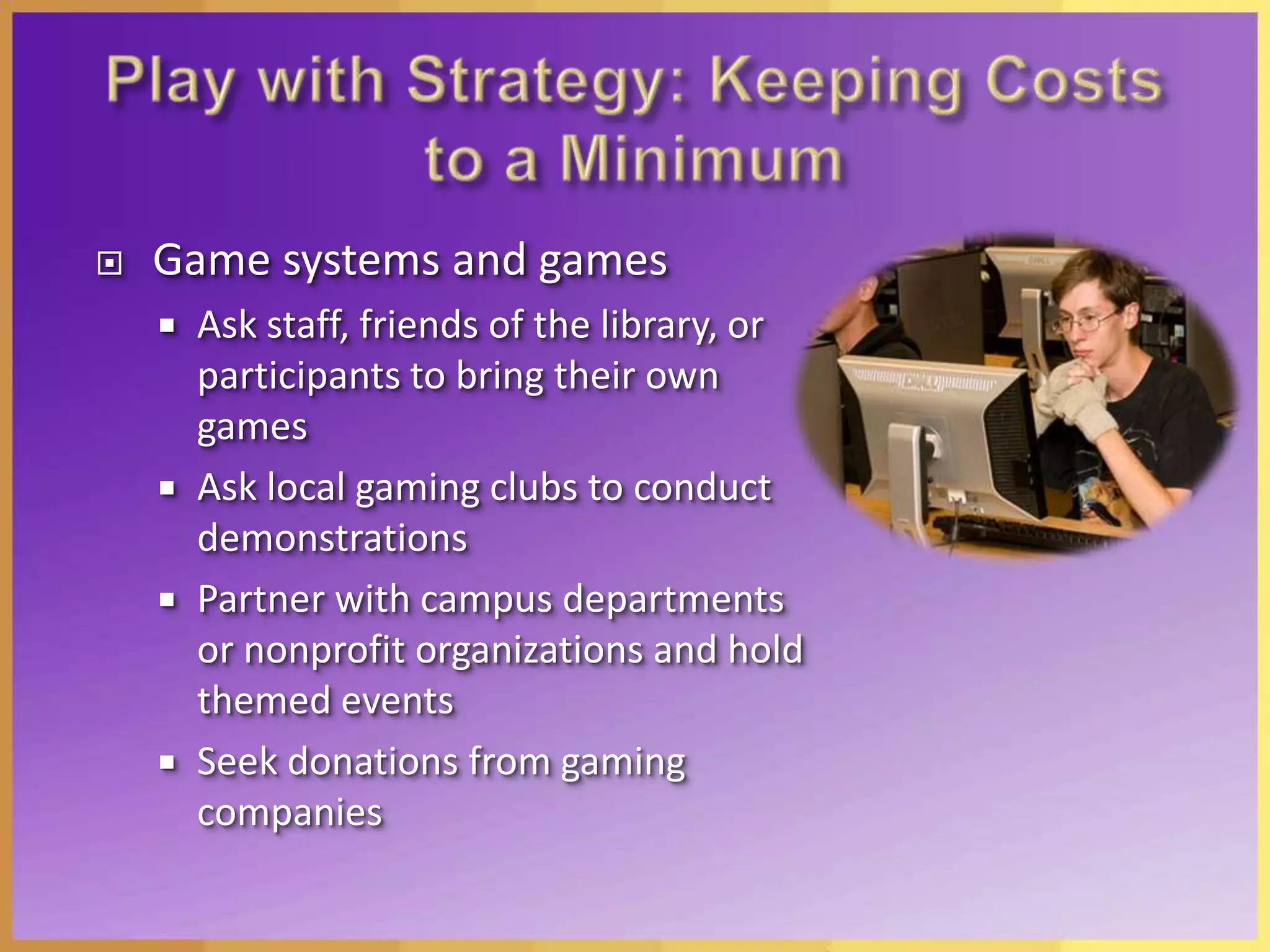
  • #52 Of course the library can purchase game systems and games, but if you are just getting started or need additional games (refer to slide). *Themed Events: Health & Wellness Theme at WIU: We partnered with the Student Health Center, Counseling Center, and Alcohol and Other Drug Resource Center for a themed Game Nite. The groups brought health-related games (corn hole while wearing beer goggles and sex jeopardy), prizes and handouts. This was one of our best-attended Game Nites, and we didn’t have to do much additional preparation. *Donations from Gaming Companies: Wizards of the Coast will send libraries free starter kits of Dungeons & Dragons.
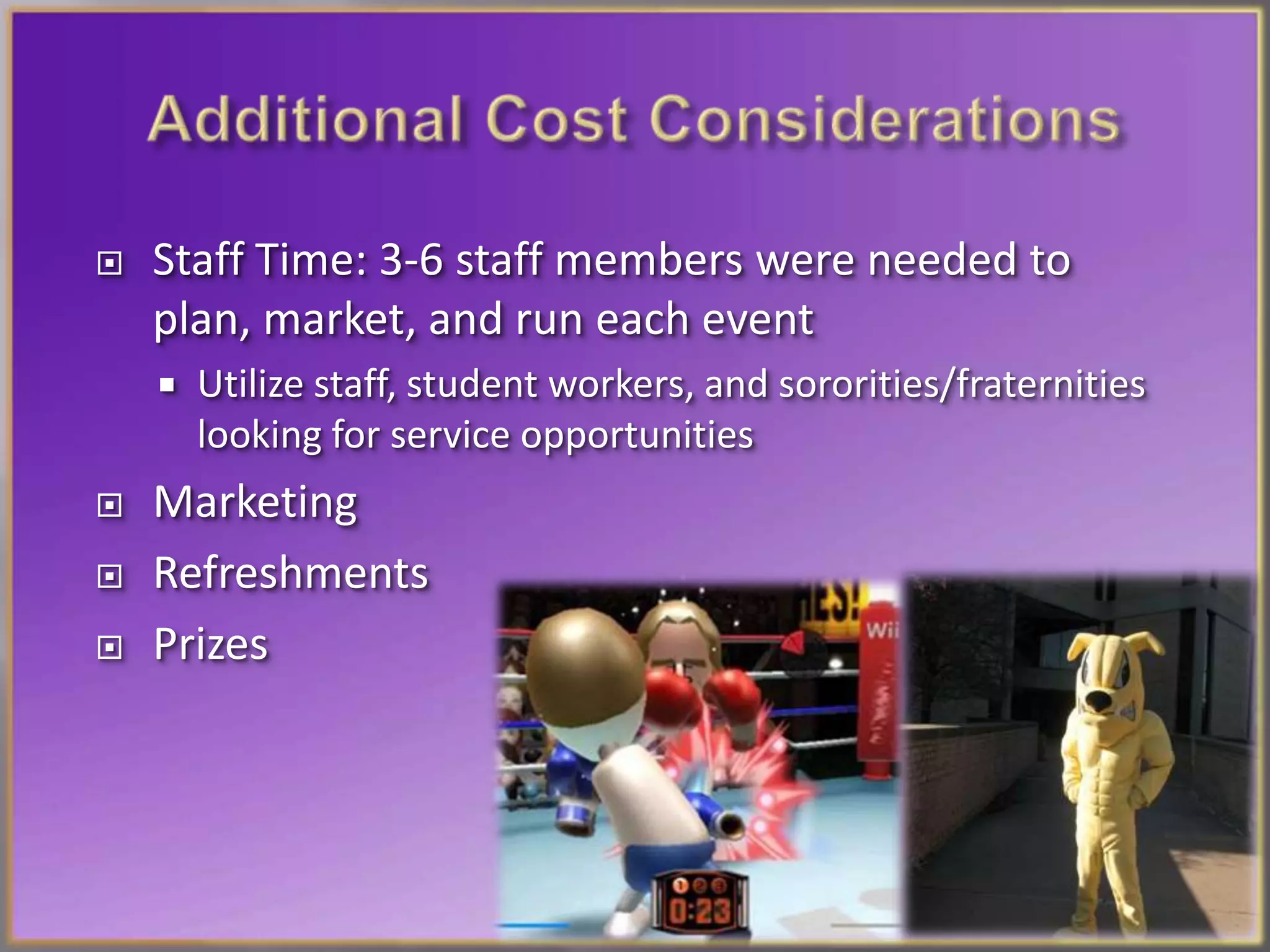
  • #53 We needed at least 3-6 staff members to successfully plan, market, and run Game Nite. This may be a stretch for some libraries, so look for allies. You may be surprised by who is interested in helping out.*Marketing: Rocky video, campus news channel, demos in Union, fliers, emails, FB, student newspaper, and radio
  • #55 Gaming actually helps develop skills that will benefit students in the workforce. They are presented with a problem and need to solve it by assessing the situation, coming up with possible solutions (strategizing), collaborating with coworkers, and implementing the solution.
  • #56 Gaming is a familiar activity, so users are drawn to the event as a result of a past positive experience. Users also crave collaboration and even though we usually picture a gamer as someone sitting at the television or computer alone; he/she is often times playing against another individual or individuals online. Users enjoy collaborating and learning in a low-pressure environment, which is unlike the traditional classroom environment. Exploring at one’s own pace without an authoritative figure (the professor).