Tech Fest 2013
WIU Library Instruction Unit
Sean Cordes
Mahrya Carncross
Justin Georges
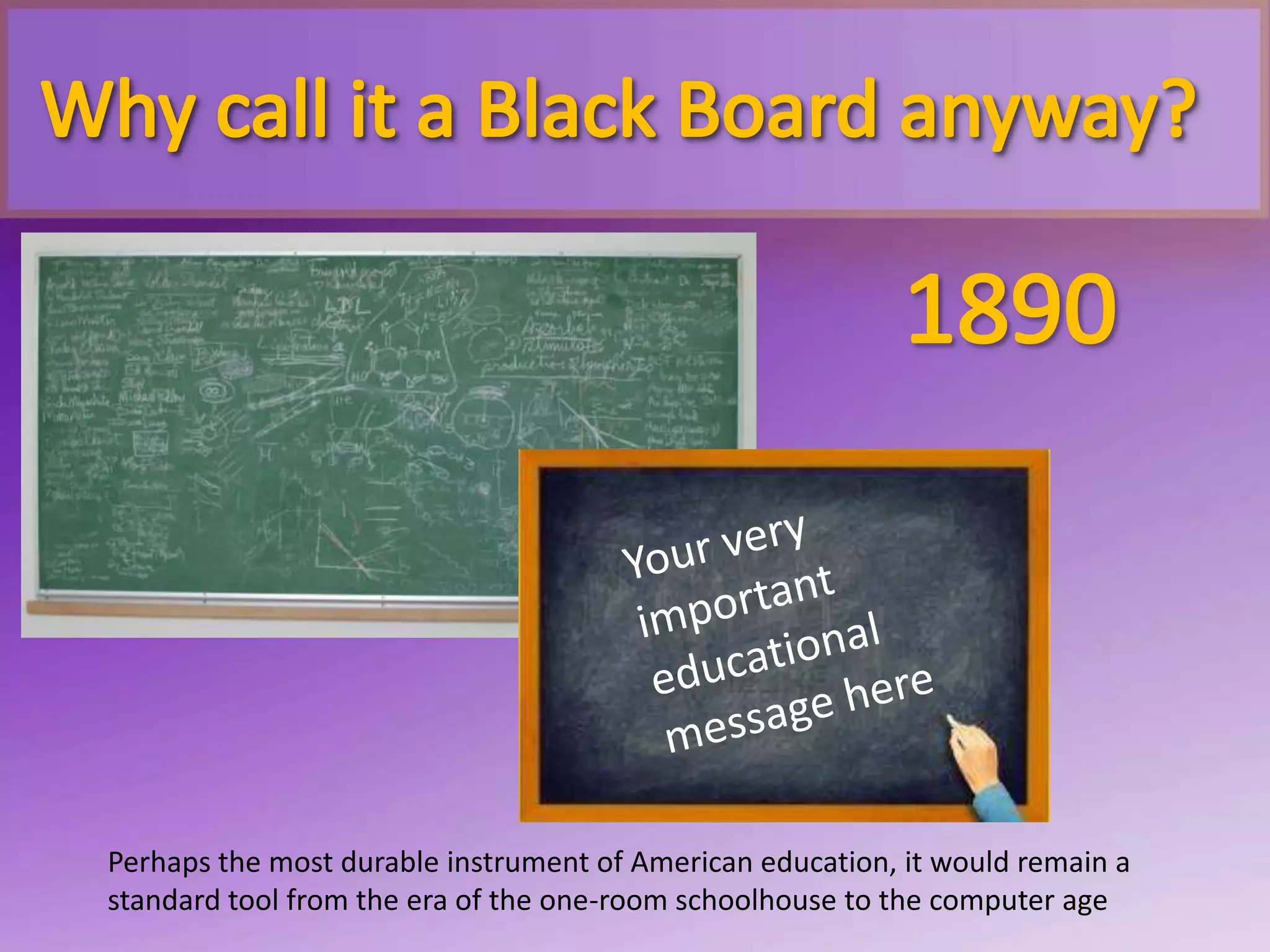
Perhaps the most durable instrument of American education, it would remain a
standard tool from the era of the one-room schoolhouse to the computer age
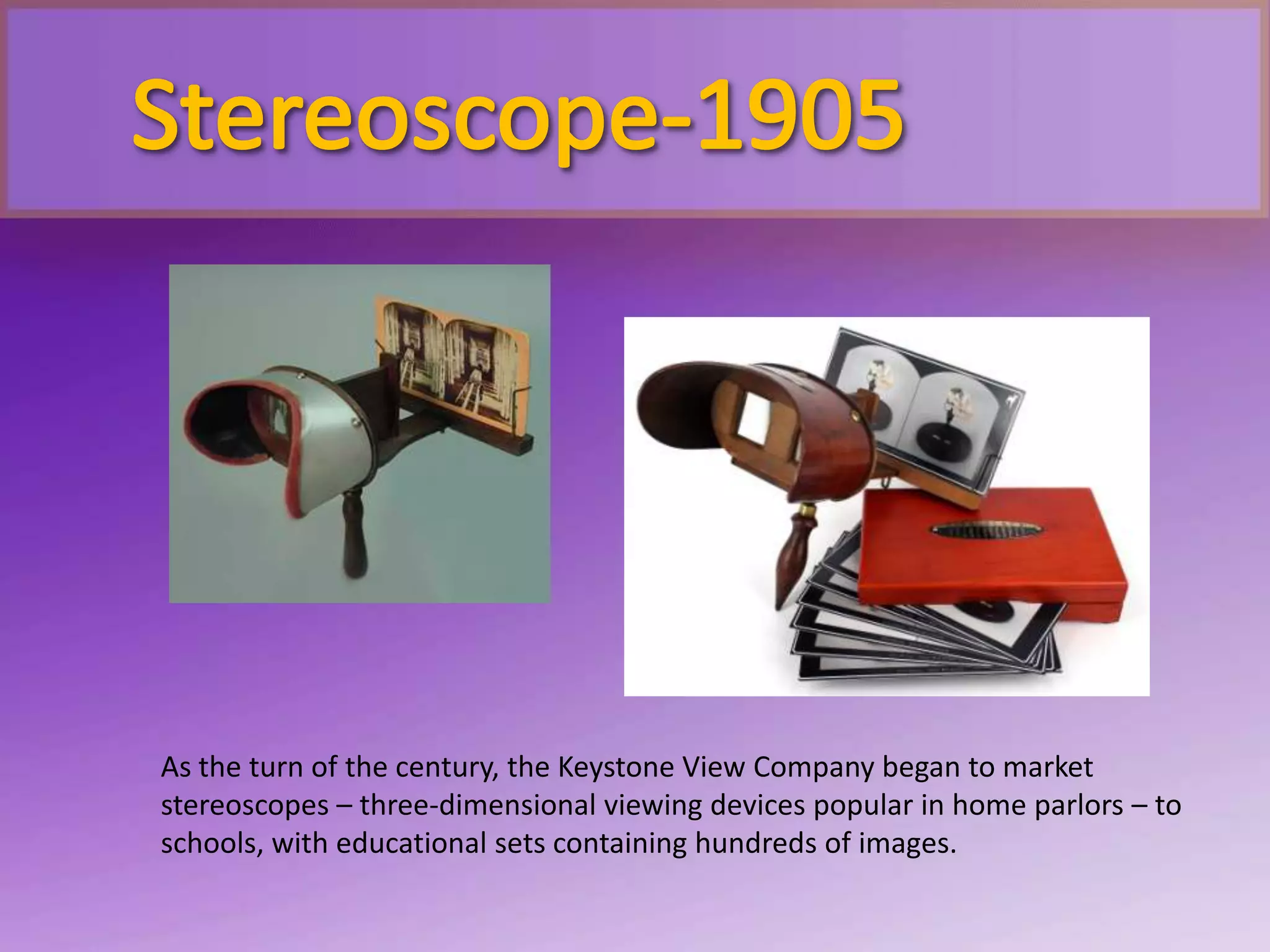
As the turn of the century, the Keystone View Company began to market
stereoscopes – three-dimensional viewing devices popular in home parlors – to
schools, with educational sets containing hundreds of images.
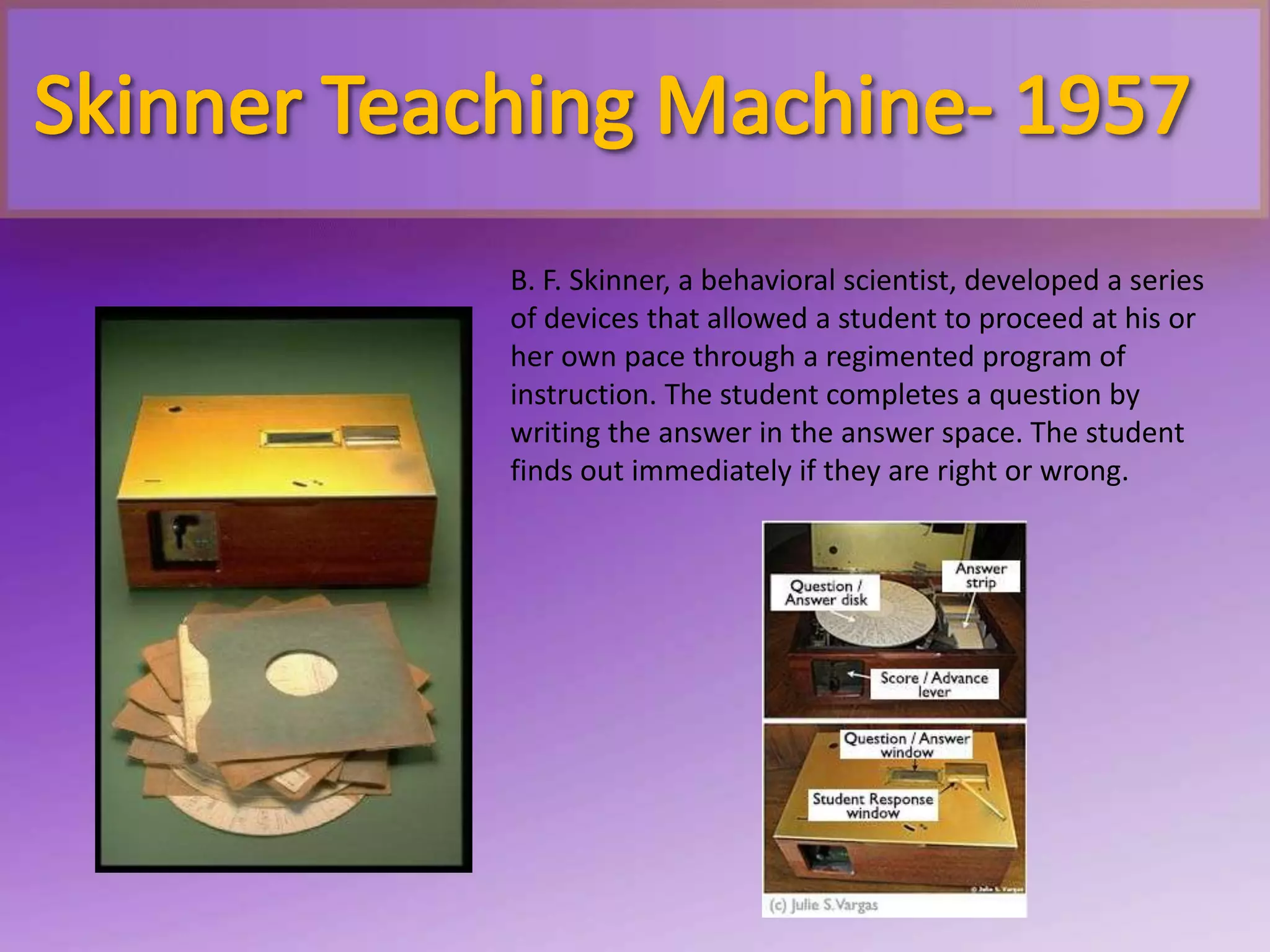
B. F. Skinner, a behavioral scientist, developed a series
of devices that allowed a student to proceed at his or
her own pace through a regimented program of
instruction. The student completes a question by
writing the answer in the answer space. The student
finds out immediately if they are right or wrong.
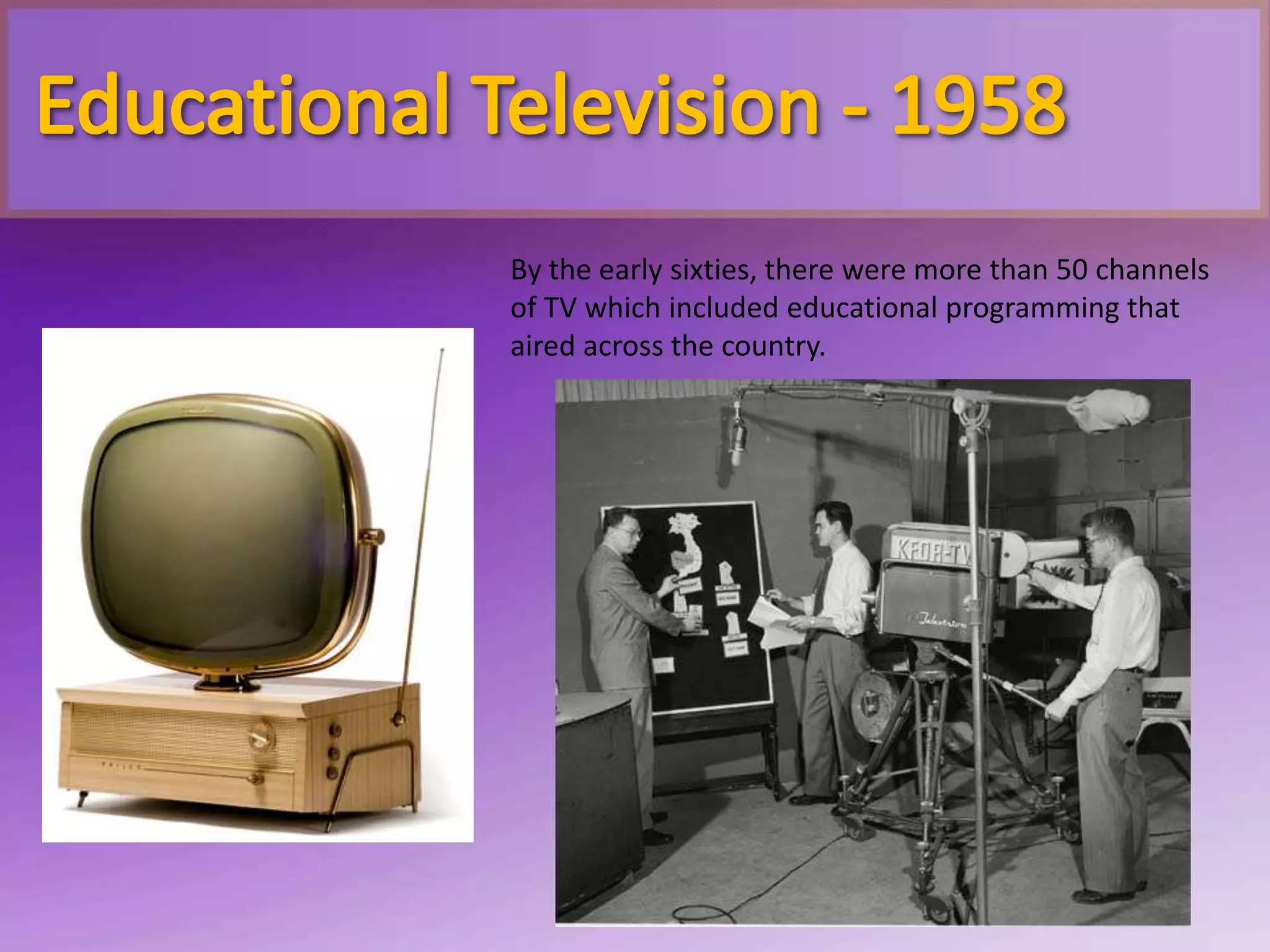
By the early sixties, there were more than 50 channels
of TV which included educational programming that
aired across the country.
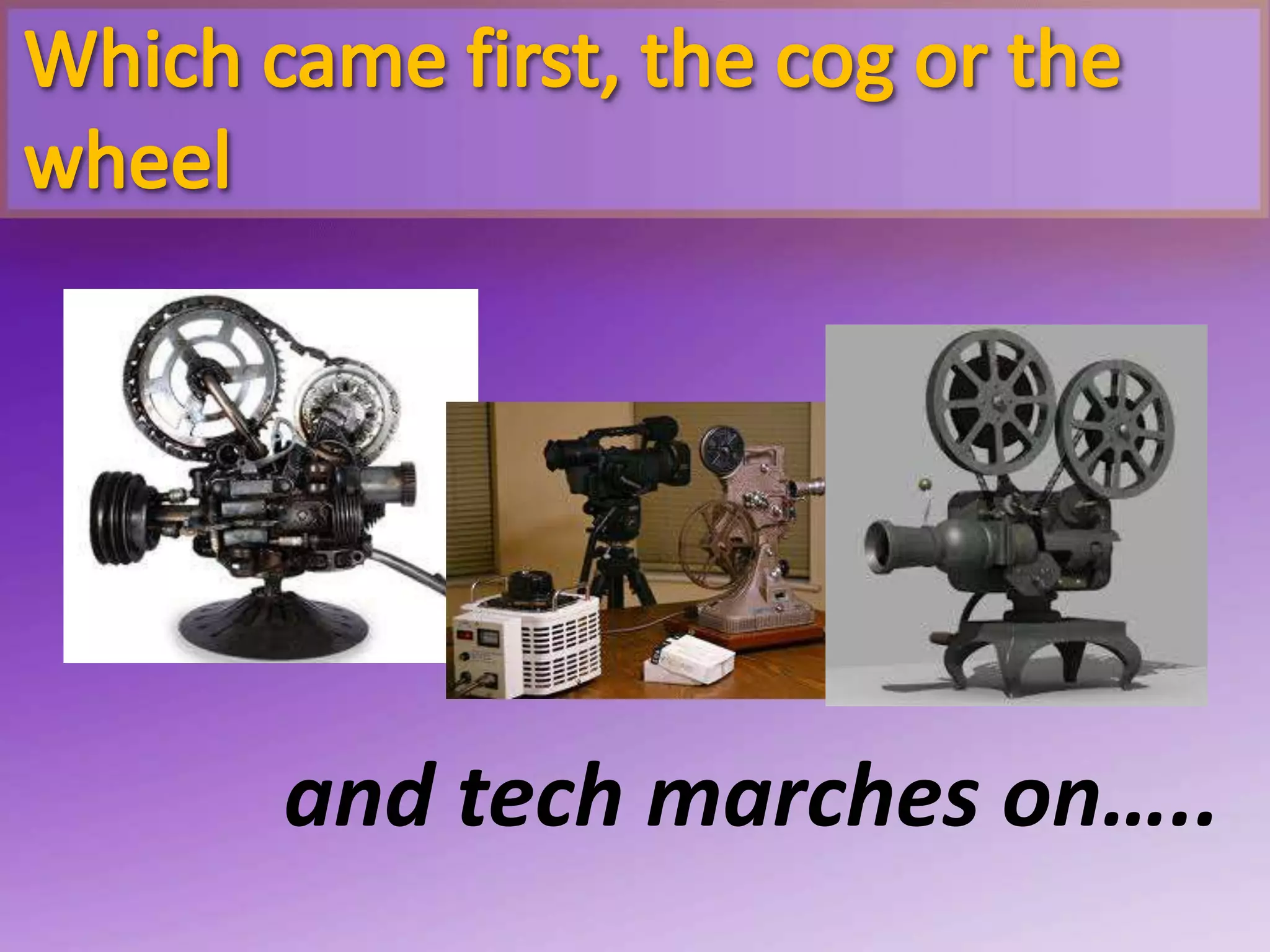
and tech marches on…..
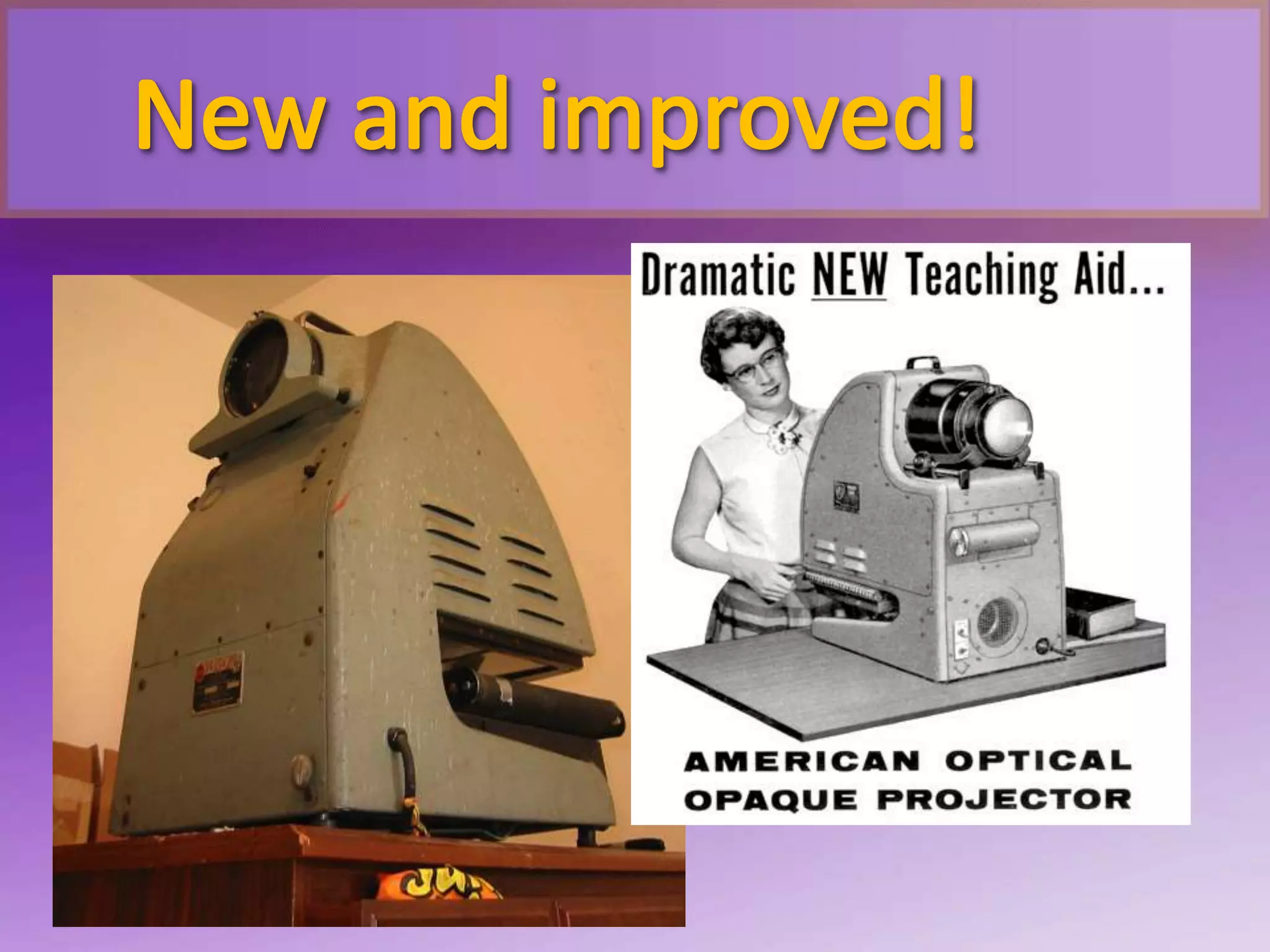
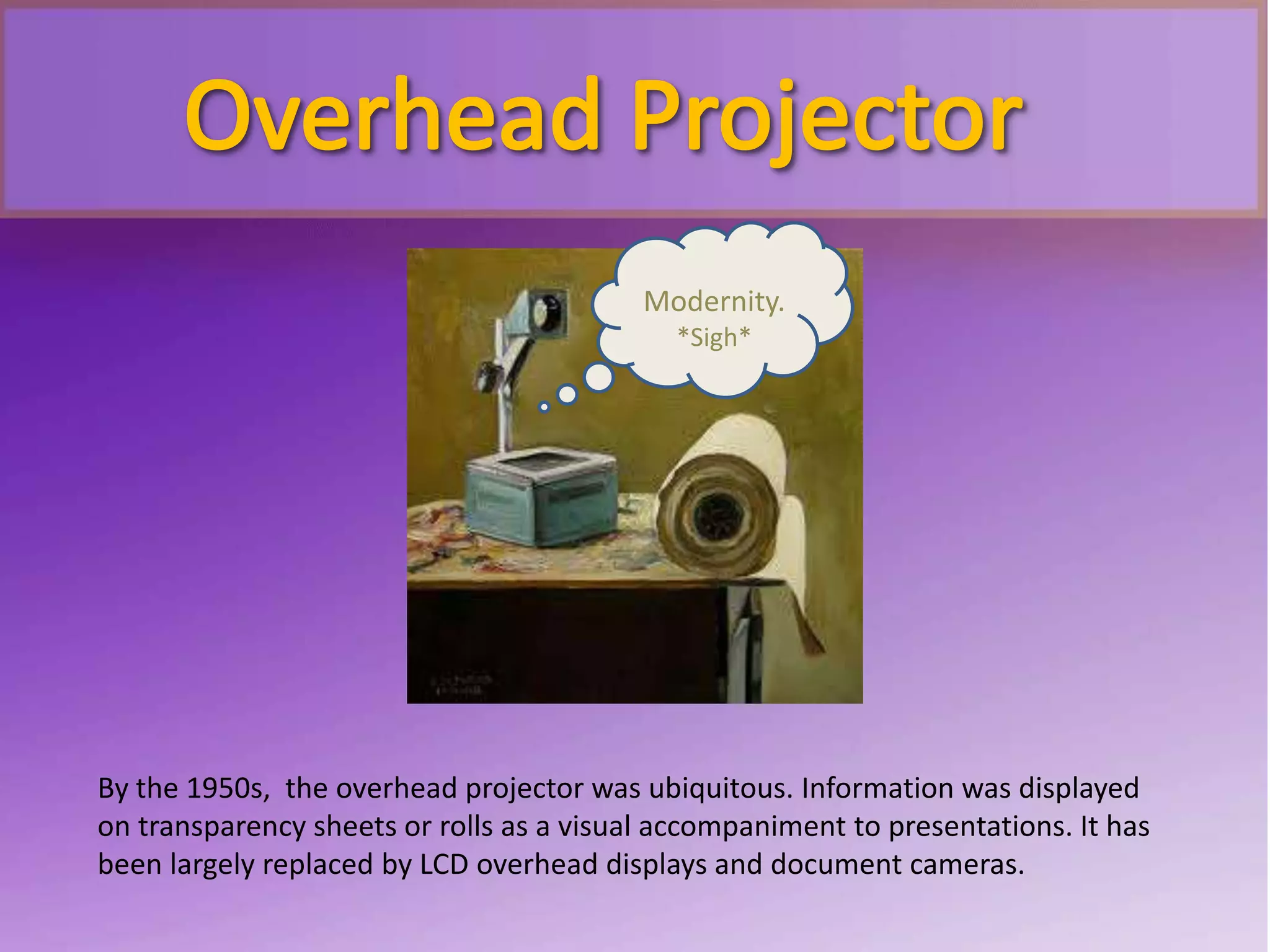
By the 1950s, the overhead projector was ubiquitous. Information was displayed
on transparency sheets or rolls as a visual accompaniment to presentations. It has
been largely replaced by LCD overhead displays and document cameras.
Modernity.
*Sigh*
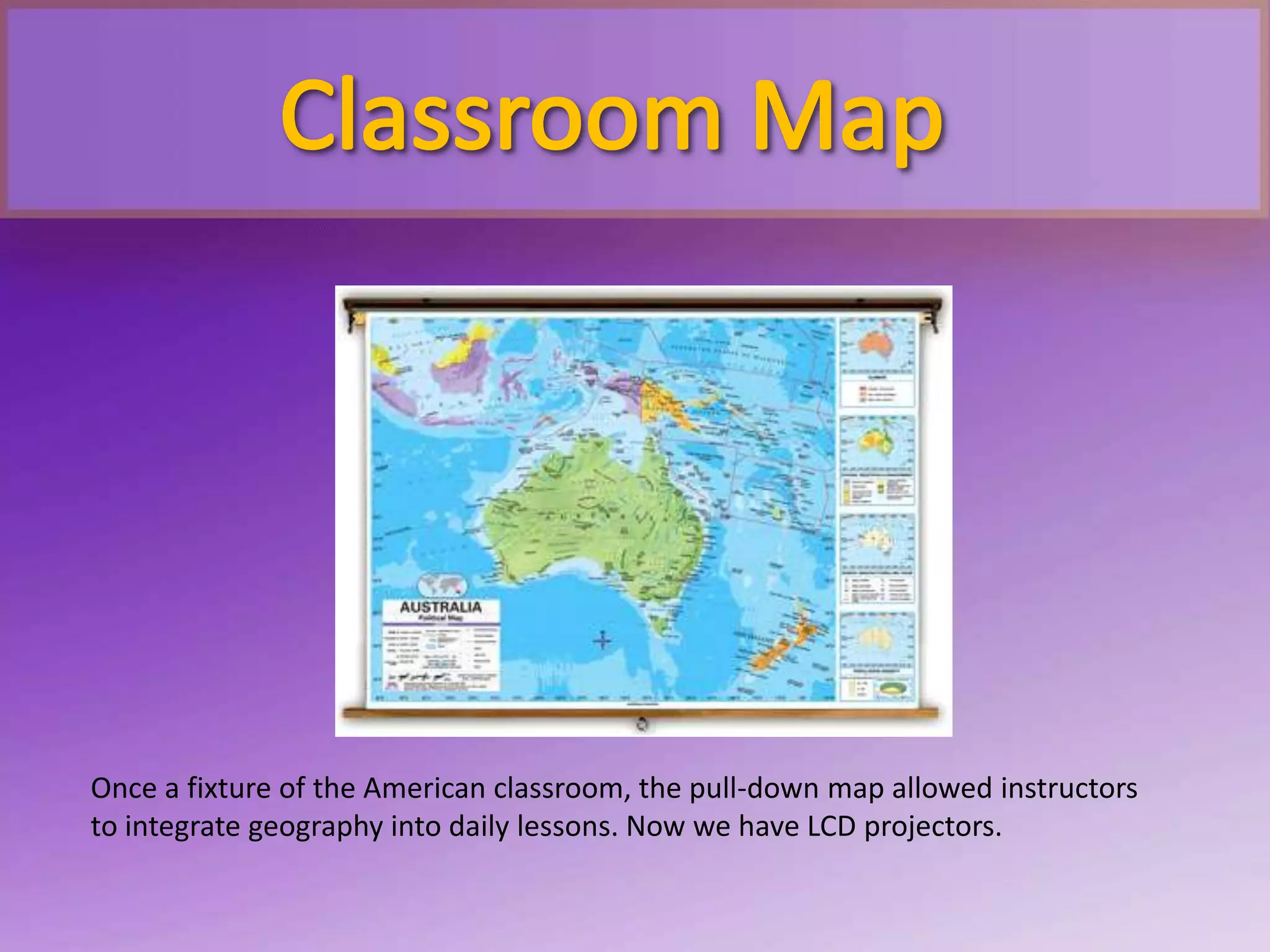
Once a fixture of the American classroom, the pull-down map allowed instructors
to integrate geography into daily lessons. Now we have LCD projectors.
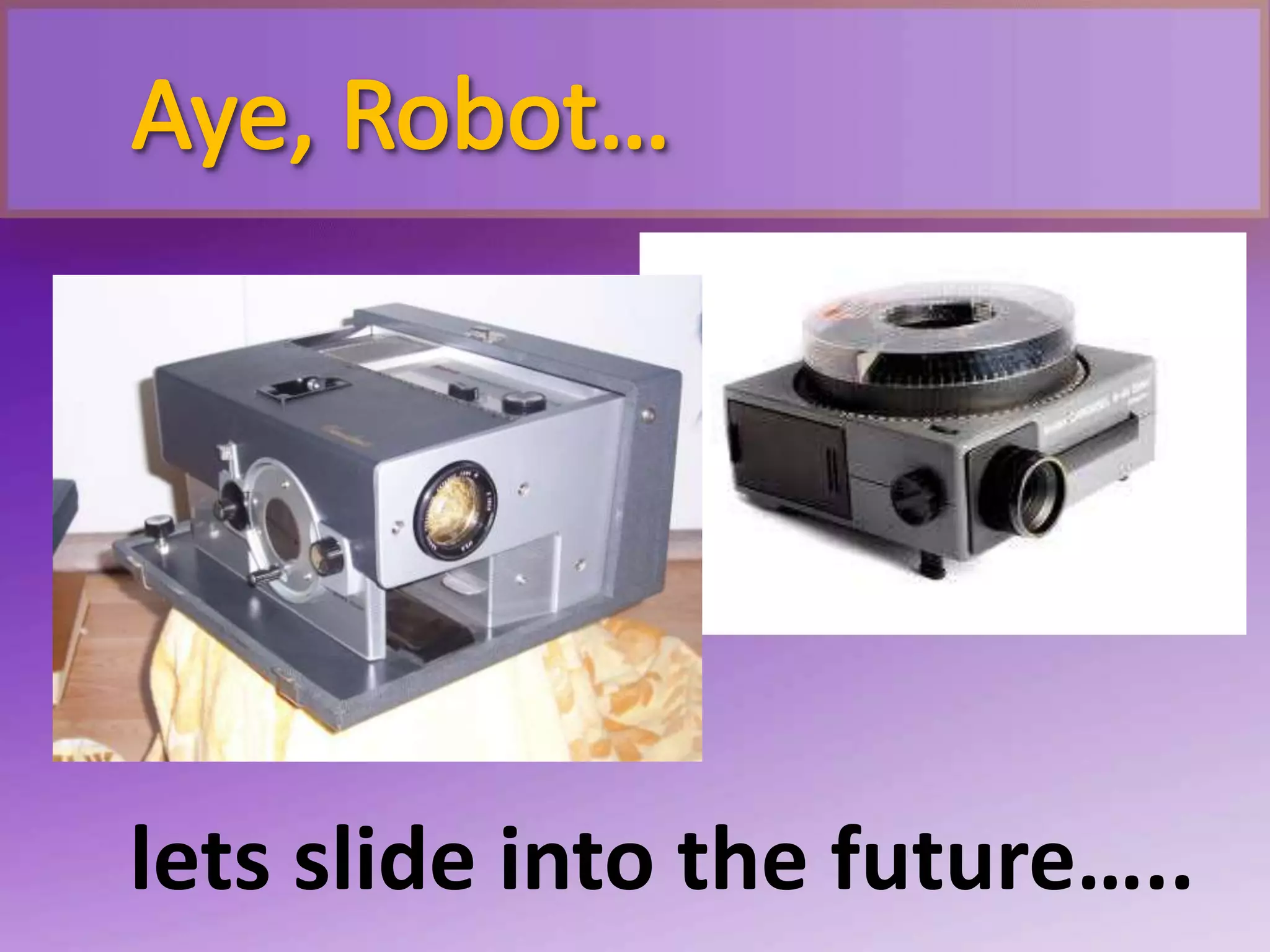
lets slide into the future…..
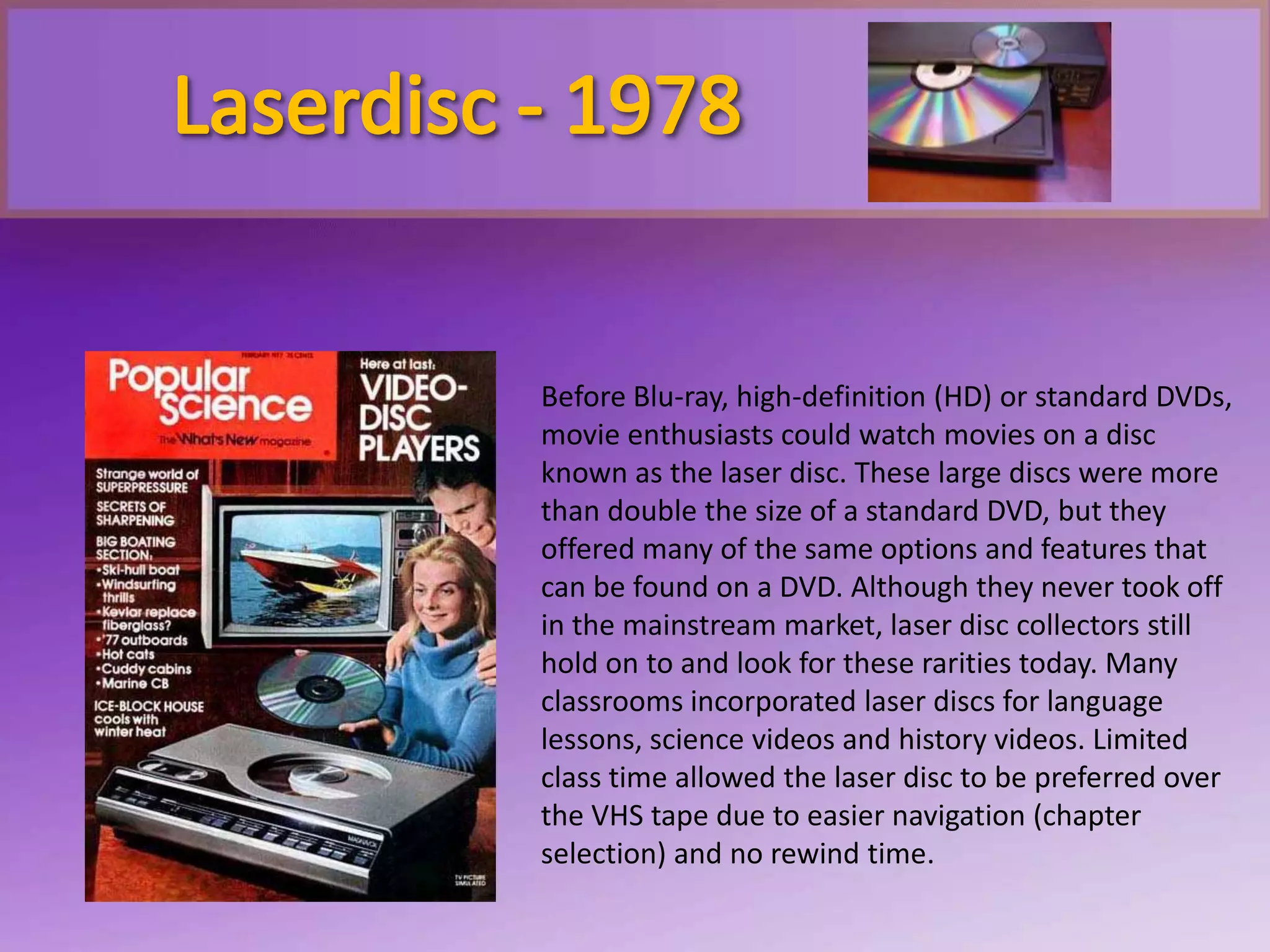
Before Blu-ray, high-definition (HD) or standard DVDs,
movie enthusiasts could watch movies on a disc
known as the laser disc. These large discs were more
than double the size of a standard DVD, but they
offered many of the same options and features that
can be found on a DVD. Although they never took off
in the mainstream market, laser disc collectors still
hold on to and look for these rarities today. Many
classrooms incorporated laser discs for language
lessons, science videos and history videos. Limited
class time allowed the laser disc to be preferred over
the VHS tape due to easier navigation (chapter
selection) and no rewind time.
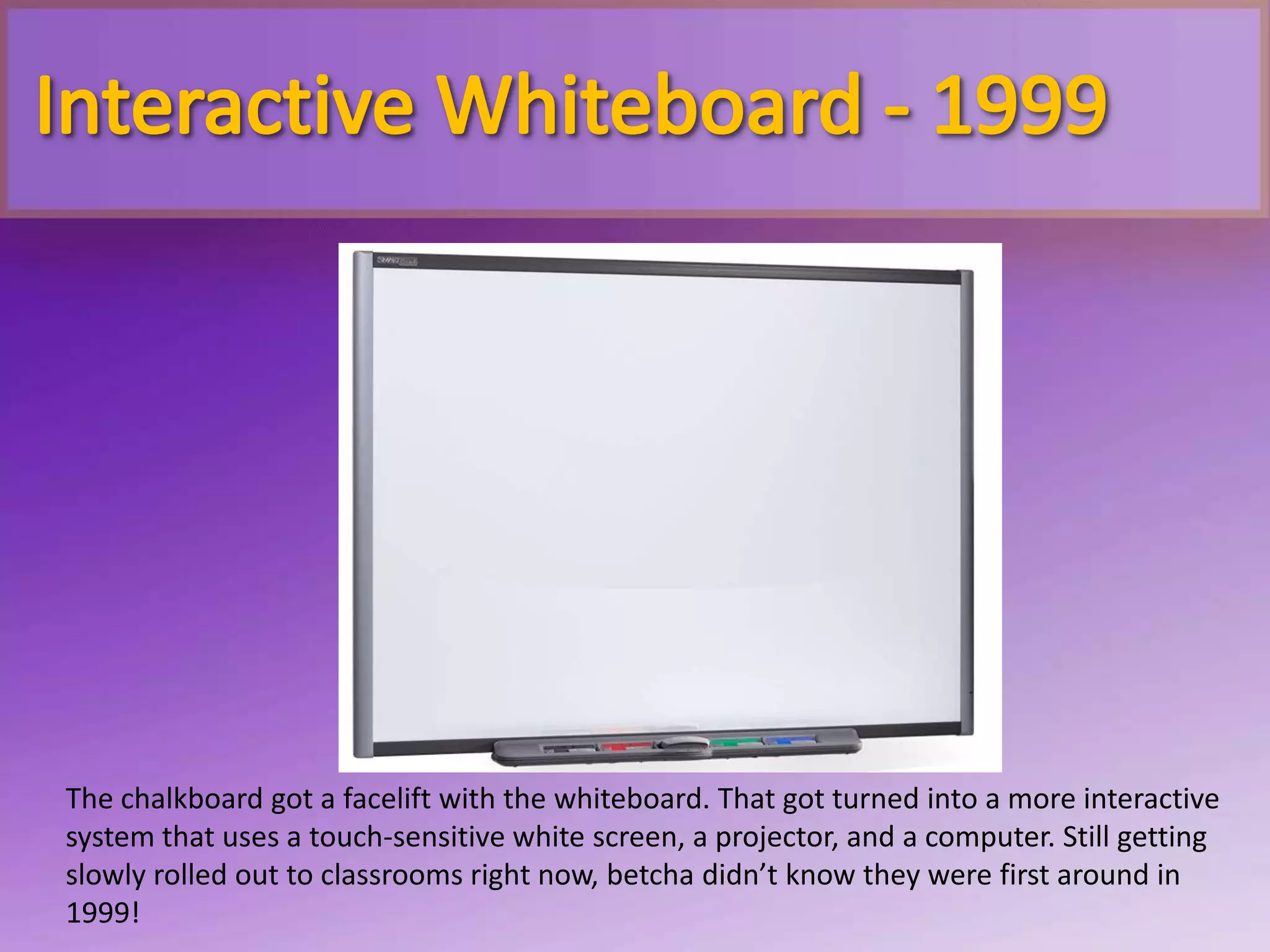
The chalkboard got a facelift with the whiteboard. That got turned into a more interactive
system that uses a touch-sensitive white screen, a projector, and a computer. Still getting
slowly rolled out to classrooms right now, betcha didn’t know they were first around in
1999!
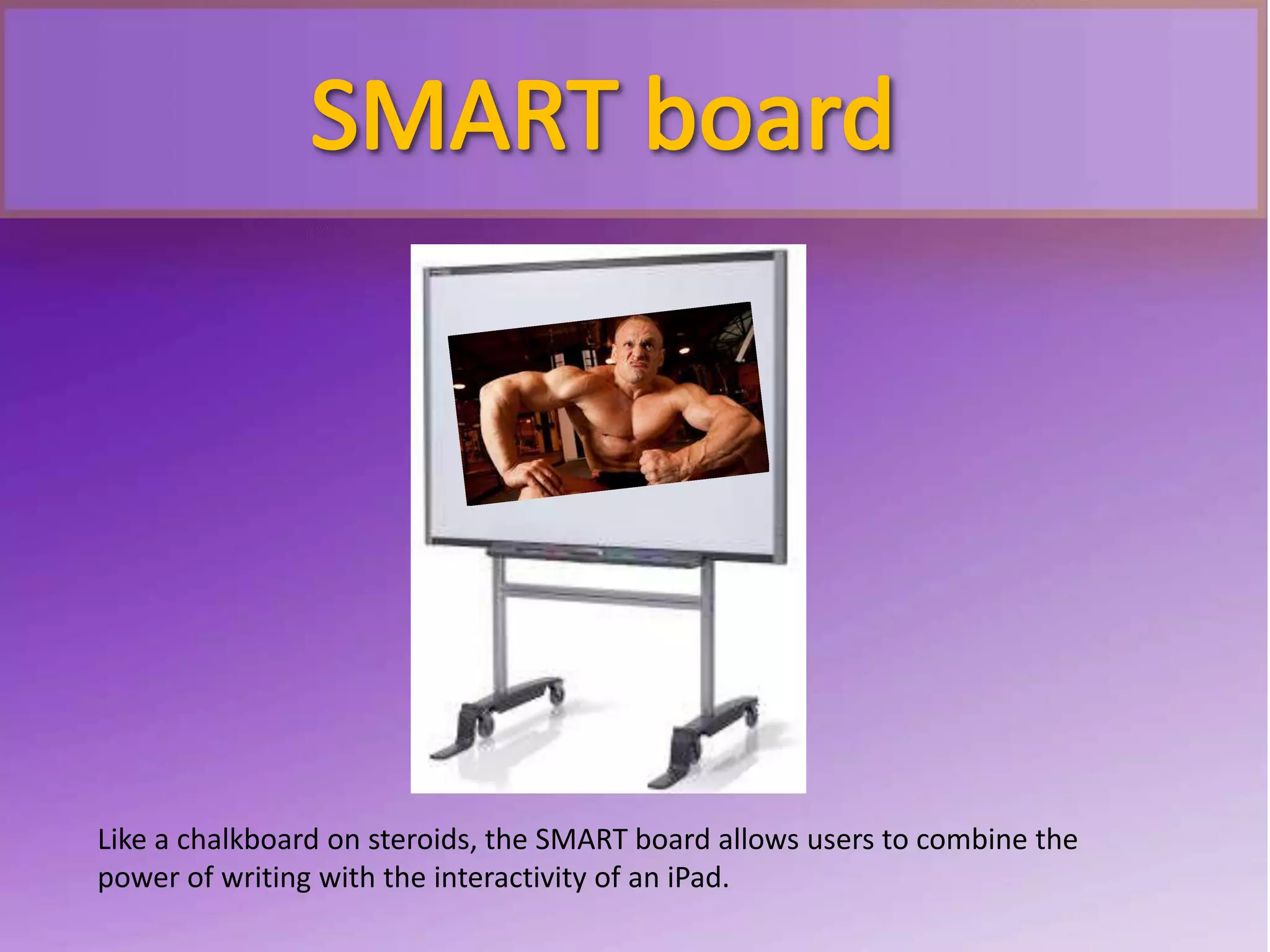
Like a chalkboard on steroids, the SMART board allows users to combine the
power of writing with the interactivity of an iPad.
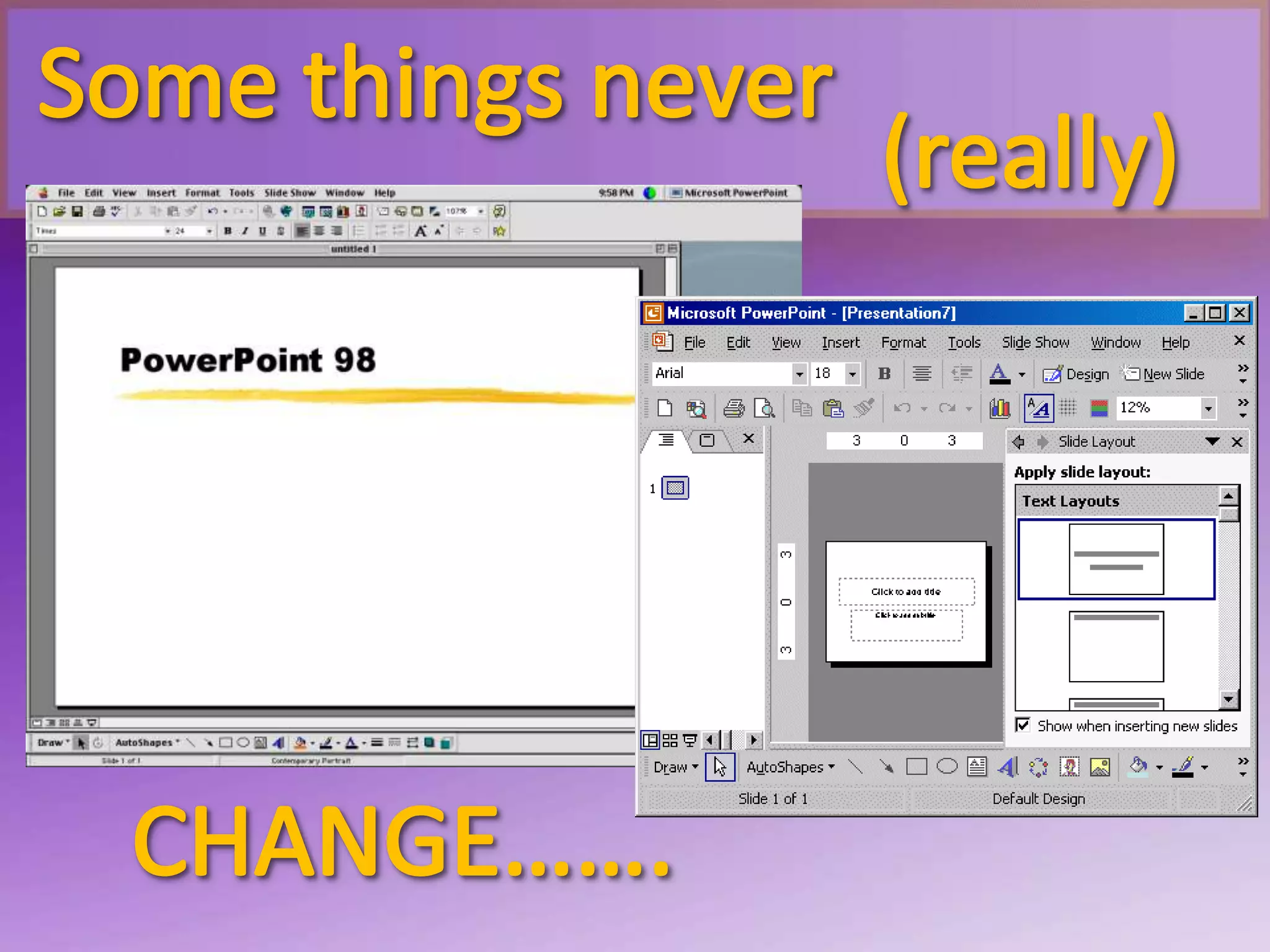
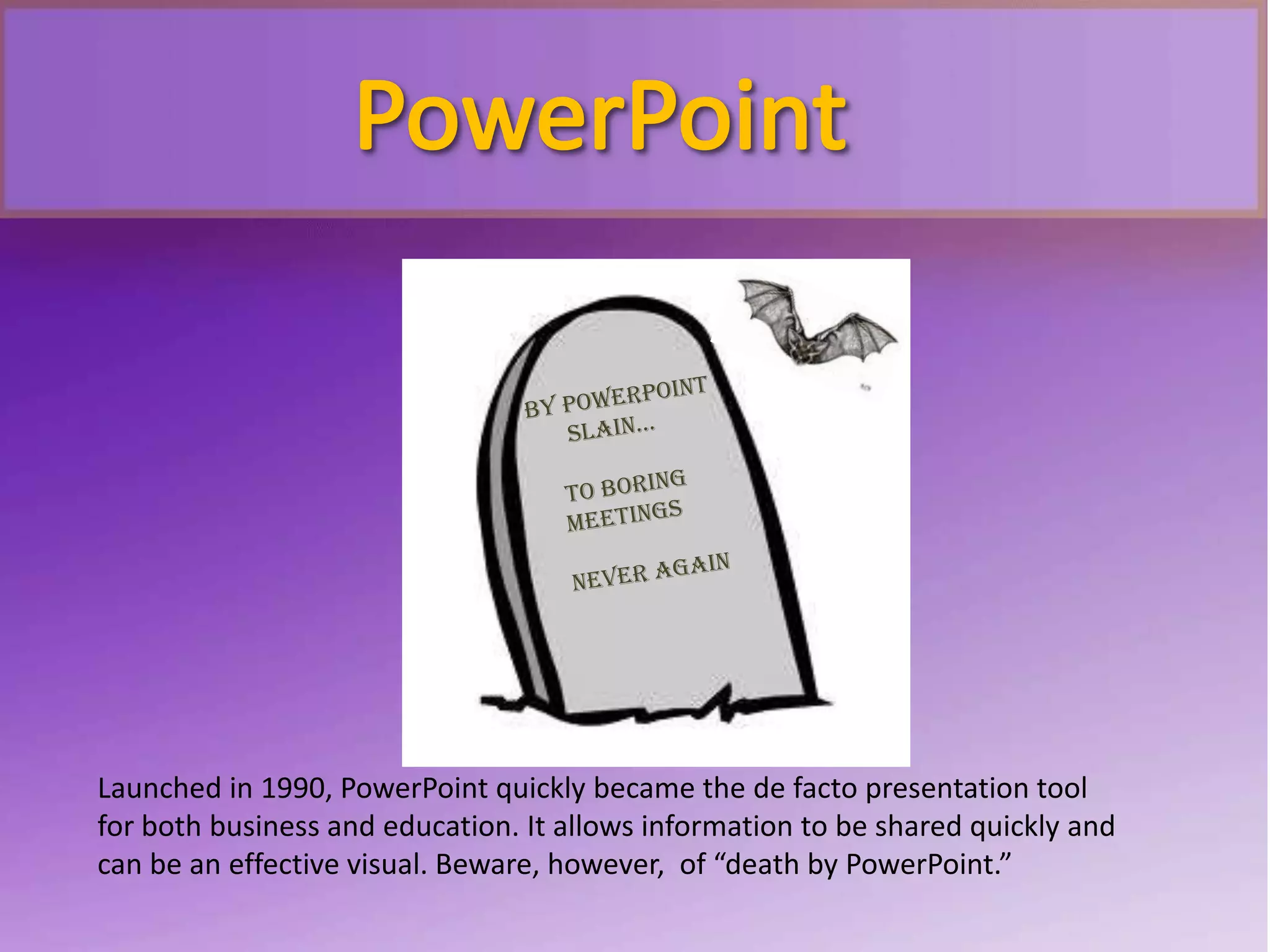
Launched in 1990, PowerPoint quickly became the de facto presentation tool
for both business and education. It allows information to be shared quickly and
can be an effective visual. Beware, however, of “death by PowerPoint.”
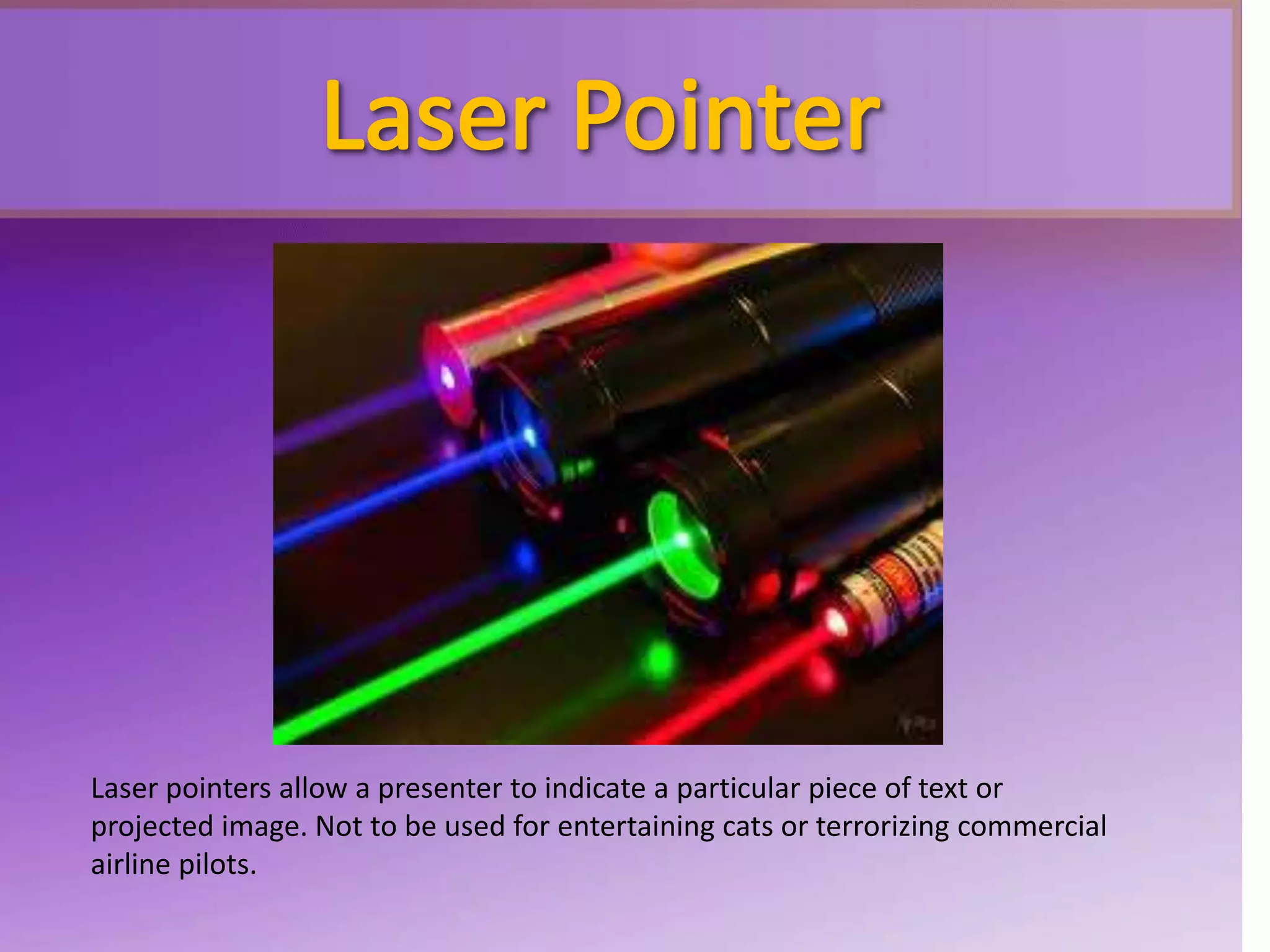
Laser pointers allow a presenter to indicate a particular piece of text or
projected image. Not to be used for entertaining cats or terrorizing commercial
airline pilots.
Tech Fest 2013-Presentation tools through the ages.

Tech Fest 2013-Presentation tools through the ages.

  • 1.
    Tech Fest 2013 WIULibrary Instruction Unit Sean Cordes Mahrya Carncross Justin Georges
  • 2.
    Perhaps the mostdurable instrument of American education, it would remain a standard tool from the era of the one-room schoolhouse to the computer age
  • 3.
    As the turnof the century, the Keystone View Company began to market stereoscopes – three-dimensional viewing devices popular in home parlors – to schools, with educational sets containing hundreds of images.
  • 4.
    B. F. Skinner,a behavioral scientist, developed a series of devices that allowed a student to proceed at his or her own pace through a regimented program of instruction. The student completes a question by writing the answer in the answer space. The student finds out immediately if they are right or wrong.
  • 5.
    By the earlysixties, there were more than 50 channels of TV which included educational programming that aired across the country.
  • 7.
  • 9.
    By the 1950s,the overhead projector was ubiquitous. Information was displayed on transparency sheets or rolls as a visual accompaniment to presentations. It has been largely replaced by LCD overhead displays and document cameras. Modernity. *Sigh*
  • 10.
    Once a fixtureof the American classroom, the pull-down map allowed instructors to integrate geography into daily lessons. Now we have LCD projectors.
  • 11.
    lets slide intothe future…..
  • 12.
    Before Blu-ray, high-definition(HD) or standard DVDs, movie enthusiasts could watch movies on a disc known as the laser disc. These large discs were more than double the size of a standard DVD, but they offered many of the same options and features that can be found on a DVD. Although they never took off in the mainstream market, laser disc collectors still hold on to and look for these rarities today. Many classrooms incorporated laser discs for language lessons, science videos and history videos. Limited class time allowed the laser disc to be preferred over the VHS tape due to easier navigation (chapter selection) and no rewind time.
  • 13.
    The chalkboard gota facelift with the whiteboard. That got turned into a more interactive system that uses a touch-sensitive white screen, a projector, and a computer. Still getting slowly rolled out to classrooms right now, betcha didn’t know they were first around in 1999!
  • 14.
    Like a chalkboardon steroids, the SMART board allows users to combine the power of writing with the interactivity of an iPad.
  • 16.
    Launched in 1990,PowerPoint quickly became the de facto presentation tool for both business and education. It allows information to be shared quickly and can be an effective visual. Beware, however, of “death by PowerPoint.”
  • 17.
    Laser pointers allowa presenter to indicate a particular piece of text or projected image. Not to be used for entertaining cats or terrorizing commercial airline pilots.