International Journal of Computer Applications Technology and Research
Volume 3– Issue 1, 24 - 28, 2014

Proposed Algorithm for Surveillance Applications
Youssef Benabbassi
University of Bechar
RIIR Laboratory, Oran
Bechar, Algeria

Hafid Haffaf
University of Oran
RIIR Laboratory, Oran
Oran, Algeria

Congduc Pham
University of Pau
Pau LIUPPA, France
Pau, France

Abstract: Technological systems are vulnerable to faults. In many fault situations, the system operation has to be stopped to avoid
damage to machinery and humans. As a consequence, the detection and the handling of faults play an increasing role in modern
technology, where many highly automated components interact in a complex way such that a fault in a single component may cause
the malfunction of the whole system. This work introduces the main ideas of fault diagnosis and fault-tolerant control under the optics
of various research work done in this area. It presents the Arduino technology in both hardware and software sides. The purpose of this
paper is to propose a diagnostic algorithm based on this technology. A case study is proposed for this setting. Moreover, we explained
and discussed the result of our algorithm.
Keywords: Technological systems, control system, actuator faults, Arduino, sensors faults

1. INTRODUCTION
The manufacturing systems consist of many different machine
tools, robots and transportation systems all of which have to
correctly satisfy their purpose in order to ensure an efficient
and high-quality production. Mobile communication provides
another example where networked components interact so
heavily that component faults have far reaching consequences.
In the general sense, a fault is something that changes the
behavior of a system such that the system does no longer
satisfy its purpose. In large systems, every component has
been designed to accomplish a certain function and the overall
system works satisfactorily only if all components provide the
service they are designed for. Therefore, a fault in a single
component usually changes the performance of the overall
system. The presence of a fault detection and isolation (FDI)
system is then necessary to detect the occurrence of a fault
and isolate it. Normally, the task which comes after the
isolation of a fault is its repairing. The problem of FDI and
Fault Tolerant Control (FTC) is an important problem to deal
with, since faults in sensors, actuators and components are
usually associated to increasing operating costs, offspecification production, line shut-down and possible
detrimental environment impact.
Overall, fault-tolerant control is a complex interdisciplinary
research field that covers a diverse range of engineering
disciplines, such as modeling and identification, applied
mathematics, applied statistics, stochastic system theory,
reliability and risk analysis, computing, communication,
control, signal processing, sensors and actuators, as well as
hardware and software implementation techniques.
The measures should be carried out by the control equipment,
in order to avoid production deteriorations or damage to
machines and humans. Their aim is to make the system fault
tolerant. The control algorithm adapts to the faulty plant and
the overall system satisfies its function again as it is shown in
Figure 1.
In the literature, most of the motivation and research work in
fault tolerant control involves solving problems encountered
in safety critical systems such as aircraft.

www.ijcat.com

In [1] the author proposes a solution for fault detection and
isolation using system dynamics identification techniques. In
[2] the authors propose a fault detection and isolation scheme
for industrial systems based on multiple operating model.
Rosa and al. in [3] describe an application of a new fault
detection and isolation (FDI) technique based on set-valued
observers (SVOs) to a linear parameter varying (LPV)
longitudinal aircraft dynamic model. The authors in [4]
propose parameter estimation methods for fault detection and
isolation. In [5] Tharrault and al. propose fault detection and
isolation with robust principal component analysis. This
proposed scheme avoids the combinatorial explosion of faulty
scenarios related to multiple faults to be considered. The
authors in [6] designed closed-loop fault-tolerant control for
uncertain nonlinear systems. This solution is based on a new
algebraic estimation technique of the derivatives of a time
signal. This yields good estimates of the unknown parameters
and of the residuals of the fault indicators.
A general active fault-tolerant control framework is proposed
in [7] for nonlinear systems with sensor faults. According to
their identifiability, all sensor faults are divided into two
classes: identifiable faults and non-identifiable faults.
In [8] the authors propose a new fault-tolerant control
methodology using adaptive estimation and control
approaches based on the learning capabilities of neural
networks or fuzzy systems. On-line approximation-based
stable adaptive neural/fuzzy control is studied for a class of
input–output feedback linearizable time-varying nonlinear
systems. The authors in [9] discussed the problem of
designing fault tolerant compensators that stabilize a given
system both in the nominal situation, as well as in the
situation where one of the sensors or one of the actuators has
failed.
The paper is organized as follows. Section 2 presents the
Fault-Tolerant Control. Section 3 presents a case study.
Section 4 presents our algorithm proposed for diagnosis based
on Aduino programming. Finally, section 5 concludes the
paper and points out open research problems.

24
International Journal of Computer Applications Technology and Research
Volume 3– Issue 1, 24 - 28, 2014

2. FAULT-TOLERANT CONTROL
2.1 Definitions
System: A system is a set of interconnected components.
Each of the components has been chosen or designed by the
system engineer so as to achieve some function of interest. A
function describes what the design engineer expects the
components to perform, independently of how it is performed.
A component performs some function because it has been
designed so as to exploit some physical principles. Which in
general are expressed by some relationships between the time
evolution of some system variables. Such relationships are
called constraints, and the time evolution of a variable is
called its trajectory [10][11].
Fault: A fault in a dynamical system is a deviation of the
system structure or the system parameters from the nominal
situation. Examples for structural changes are the blocking of
an actuator, the loss of a sensor or the disconnection of a
system component.

from permanent damage. A controlled shut-down brings the
technological process into a safe state, if specified conditions
are met. Dedicated actuators stop the process. The over-all
system is then called a fail-safe system.

2.3.2 Reliability
It is the probability that a system accomplishes its intended
function for a specified period of time under normal
conditions. Fault-tolerant control cannot change the reliability
of the plant components, but it improves the reliability of the
overall system, because with a fault-tolerant controller the
overall system remains operational after the appearance of
faults.

2.3.3 Availability
It is the probability of a system to be operational when
needed. Contrary to reliability it also depends on the
maintenance policies, which are applied to the system
components.

2.3.4 Dependability
It lumps together the three properties of reliability, availability
and safety. A dependable system is a fail-safe system with
high availability and reliability.

Figure 1. Fault-tolerant system

2.2 Classification of faults
The faults are often classified as follows:
Plant faults: such faults change the dynamical I/O properties
of the system.
Sensor fault: the plant properties are not affected, but the
sensor readings have substantial errors.
Actuators faults: the plant properties are not affected, but the
influence of the controller on the plant is interrupted or
modified.

Figure 2. Fault diagnosis

2.4 Physical redundancy and analytical
redundancy
Fault tolerance necessitates redundancies. The main
advantage of fault-tolerant control over measures for fault
tolerance is the fact that fault-tolerant control makes
intelligent use of the redundancies included in the system and
in the information about the system in order to increase the
system availability. The analytical redundancy is cheaper than
duplicating all vulnerable components.
Three methods for ensuring fault tolerance are:

2.3 Fault-tolerant control notions
The aims of fault-tolerant control are related to these notions,
which result from different views on faulty systems:

2.3.1 Safety
It describes the absence of danger. A safety system is a part of
the control equipment that protects a technological system

www.ijcat.com

2.4.1 Robust control
A fixed controller is designed that tolerates changes of the
plant dynamics. The controlled system satisfies its goals under
all faulty conditions. Fault tolerance is obtained without
changing the controller parameters. It is, therefore, called
passive fault tolerance.

25
International Journal of Computer Applications Technology and Research
Volume 3– Issue 1, 24 - 28, 2014
2.4.2 Adaptive control
The controller parameters are adapted to changes of the plant
parameters. If these changes are caused by some fault,
adaptive control may provide active fault tolerance.

2.4.3 Diagnosis steps
For fault-tolerant control, the location and the magnitude of
the fault have to be found. Different names are used to
distinguish the diagnosis steps according to their depth:




Fault detection: Decide whether or not a fault has
occurred. This step determines the time at which the
system is subject to some fault.
Fault isolation: find in which component a fault has
occurred. This step determines the location of the
fault.
Fault identification and fault estimation: identify the
fault and estimate its magnitude. This step
determines the kind of fault and its severity.

Fault diagnosis: The existence of faults has
and the faults have to be identified.

to be detected

Control re-designs: The controller has to be adapted to the
faulty situation so that the overall system continues to satisfy
its goal.

3. CASE STUDY
This section presents the technique to monitor our process
using an Arduino-based microcontroller programmed. More
details on the Arduino-Uno and programming will be given in
the next section. Our process is seen as a functional system
which outputs values indicating the status of its operation.
This operating state is classified either correct mode
operation, malfunction or faulty. The first output, indicates the
temperature (T) released, and the second indicates the
pressure (P) collected during operation of the process. In
nominal mode, the values of these two variables are the zero
state (0). So the system is safe mode. But once one of the two
values of these two variables changes to state one (1) this
means that the system switches to malfunction. An alarm is
triggered, indicating the presence of this fault, which requires
adequate operation, either cooler level, or at the compressor.
In the worst case we ordered a forced shutdown of the system.
As these two variables are monitored, one can have the four
possible modes of operation of the system, they are given as
follows in table 1:
Temperature
(T)
0
0
1
1

Pressure
(P)
0
1
0
1

Operating Mode
Functional (safe)
Dysfunction (in compressor)
Dysfunction (in cooling)
Failure

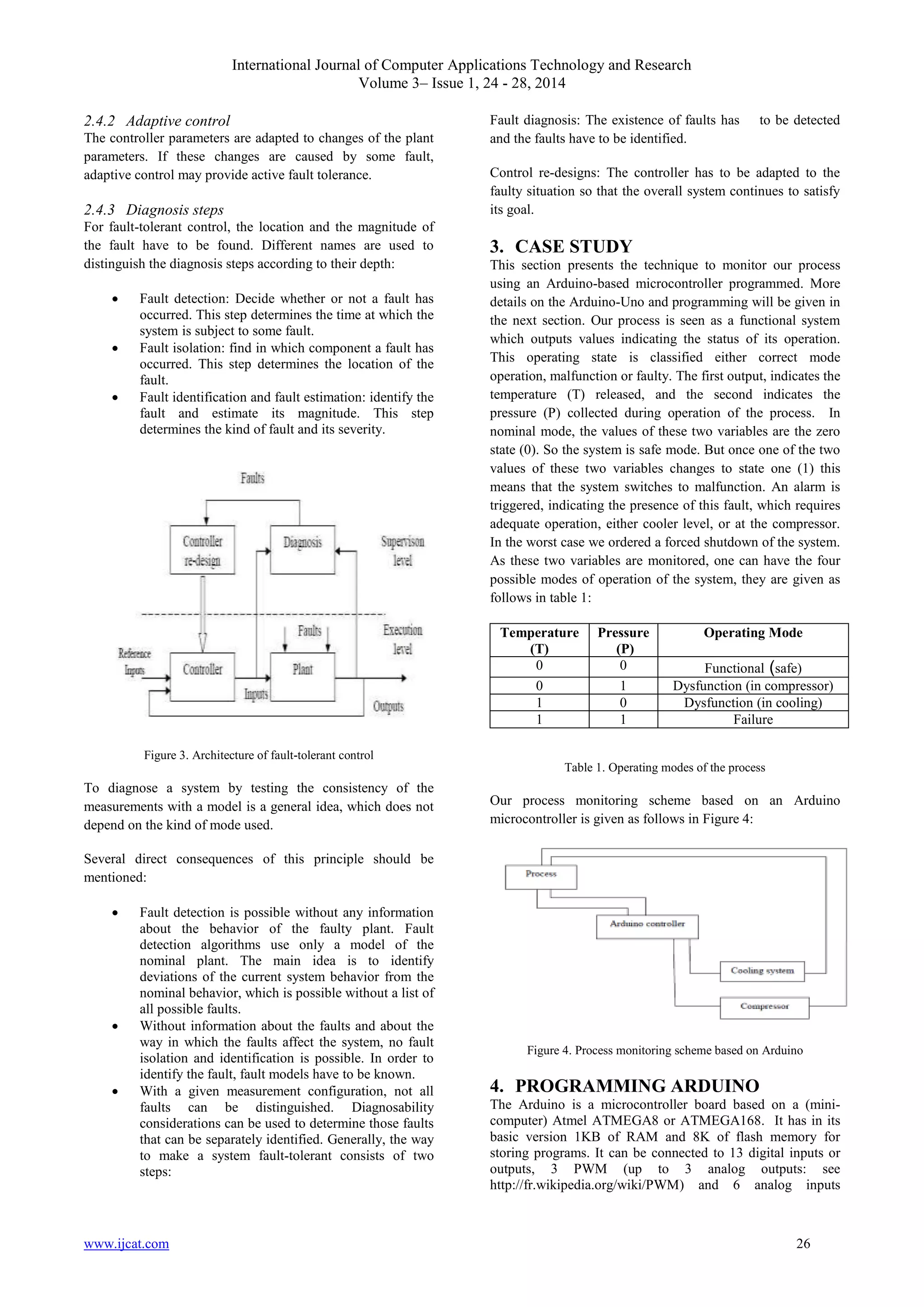
Figure 3. Architecture of fault-tolerant control
Table 1. Operating modes of the process

To diagnose a system by testing the consistency of the
measurements with a model is a general idea, which does not
depend on the kind of mode used.

Our process monitoring scheme based on an Arduino
microcontroller is given as follows in Figure 4:

Several direct consequences of this principle should be
mentioned:






Fault detection is possible without any information
about the behavior of the faulty plant. Fault
detection algorithms use only a model of the
nominal plant. The main idea is to identify
deviations of the current system behavior from the
nominal behavior, which is possible without a list of
all possible faults.
Without information about the faults and about the
way in which the faults affect the system, no fault
isolation and identification is possible. In order to
identify the fault, fault models have to be known.
With a given measurement configuration, not all
faults can be distinguished. Diagnosability
considerations can be used to determine those faults
that can be separately identified. Generally, the way
to make a system fault-tolerant consists of two
steps:

www.ijcat.com

Figure 4. Process monitoring scheme based on Arduino

4. PROGRAMMING ARDUINO
The Arduino is a microcontroller board based on a (minicomputer) Atmel ATMEGA8 or ATMEGA168. It has in its
basic version 1KB of RAM and 8K of flash memory for
storing programs. It can be connected to 13 digital inputs or
outputs, 3 PWM (up to 3 analog outputs: see
http://fr.wikipedia.org/wiki/PWM) and 6 analog inputs

26
International Journal of Computer Applications Technology and Research
Volume 3– Issue 1, 24 - 28, 2014
converting 10 bits. In the most common version, the
communication with the computer is via a USB port as shown
in Figure 5. There are several versions of the Arduino,
including a miniaturized version [12]. The card has an internal
software system (editable) and user programs.

Figure 5. Arduino Uno board

Arduino programs are written in C or C++. The Arduino IDE,
as shown in Figure 6, comes with a software library called
“Wiring” from the original Wiring project, which makes
many common input/output operations much easier. Users
only need define two functions to make a runnable cyclic
executive program. The first function is setup (). This function
is launched once at the start of a program that can initialize
settings. The second function is loop (). It is called repeatedly
until the board powers off.

Figure 6. Arduino IDE

Our proposed diagnostic algorithm is defined as follows:

The program is written on the IDE Aduino then it was
compiled. The executable code is loaded to the Arduino

www.ijcat.com

27
International Journal of Computer Applications Technology and Research
Volume 3– Issue 1, 24 - 28, 2014
board. The system is connected to the Arduino. At this point,
the Arduino board controls the system. The results of the
implementation of our application are given as follows:
The system provides two output values. The first represents
the state of the temperature and the other represents the state
of the pressure, in which the operation of the system
continues. Then the system generates these two values to the
Arduino board, in the pin 13 we find the value indicating the
status of the temperature, zero (0) means nothing to report,
one (1) means that there is an anomaly to report. So, the state
of pin 7 passes to state one (1). It triggers an alarm and
proceeds by actuating the cooler. Pin 12 gives the value
indicating the status of the pressure, zero (0) means nothing to
report, one (1) means that there is an anomaly report. So, the
pin 8 passes to state one (1). It triggers an alarm and proceeds
by actuating the pressure regulator. In both cases the system
switches to malfunction. In the event, the two anomalies occur
together the system switches to state alarmed. In the worst
case, we proceed by a forced shutdown of the system.

5. CONCLUSION
This paper has presented a brief introduction to the fields of
FTC and FDI. An algorithm for monitoring a system was
proposed by using Arduino technology.
As an emerging and active area of research in automatic
control, fault-tolerant control has recently attracted more and
more attention. When a fault occurs in a system, the main
problem to be addressed is to raise an alarm, ideally diagnose
what fault has occurred, and then decide how to deal with it.
The problem of detecting a fault, finding the source/location
and then taking appropriate action is the basis of fault tolerant
control.
In our future work we are interested in neuro-fuzzy
modeling and diagnosis.

6. REFERENCES
[1] L., Jiang.2011. Sensor fault detection and isolation using
system dynamics identification techniques. PhD Thesis.
University of Michigan, USA.

industriel systems based on multiple operating model.
Control Engineering Practice 16,2 (2008) 225-239.
[3] P., Rosa, C., Silvestre, J.S., Shamma, and M., Athans.
2010. Fault detection and isolation of an Aircraft using
Set-Valued Observers. Georgia, USA.
[4] T., Escobet and L., Travé-Massuyès. 1995. Parameter
estimation methods for fault detection and isolation.
Campus de Terrassa, Barcelona, Spain.
[5] Y., Tharrault, G., Mourot, J., Ragot and D., Maquin.
2008. Fault detection and isolation with robust principal
component analysis. Int.J.Appl.Math.Comput.Sci., 2008,
Vol. 18, N°4, 429-442.
[6] M., Fliess, C., Join, and H., Sira-Ramirez. 2006. Closedloop fault-tolerant control for uncertain nonlinear
systems. Ecole plytechnique. Palaiseau, France.
[7] Y., Wang, D., Zhou, S., Joe Qin, and H., Wang. 2008.
Active fault-tolerant control for a class of nonlinear
systems with sensor faults. International journal of
control, automation, and systems, vol.6 n°.3, (2008), pp.
339-350.
[8] Y., Diao, K.M., Passino. 2002. Intelligent fault-tolerant
control using adaptive and learning methods. Control
Engineering Practice 10 (2002) 801-817.
[9] J., Stroustrup, and V.,D., Blonded. 2004. A simultaneous
stabilization approach to (passive) fault tolerant control.
Department of control engineering institute of electronic
systems, Denmark.
[10] M., Staroswiecki, M. Blanke, and N., Eva. 2001.
Concepts and methods in fault-tolerant control. Book.
[11] M., Staroswiecki, M., Blank, M., Kinnaert, J., Lunze.
2006. Diagnosis and fault-tolerant control. Springer.
[12] J.,N., Montagné. 2006. Initiation à la mise en œuvre
matérielle et logicielle d’Arduino. Livret en français,
Centre de Ressources Art Sensitif.

[2] M., Rodrigues, D. Theillol, M., Adama and D., Sauter.
2008. A fault detection and isolation scheme for

www.ijcat.com

28

Proposed Algorithm for Surveillance Applications

  • 1.
    International Journal ofComputer Applications Technology and Research Volume 3– Issue 1, 24 - 28, 2014 Proposed Algorithm for Surveillance Applications Youssef Benabbassi University of Bechar RIIR Laboratory, Oran Bechar, Algeria Hafid Haffaf University of Oran RIIR Laboratory, Oran Oran, Algeria Congduc Pham University of Pau Pau LIUPPA, France Pau, France Abstract: Technological systems are vulnerable to faults. In many fault situations, the system operation has to be stopped to avoid damage to machinery and humans. As a consequence, the detection and the handling of faults play an increasing role in modern technology, where many highly automated components interact in a complex way such that a fault in a single component may cause the malfunction of the whole system. This work introduces the main ideas of fault diagnosis and fault-tolerant control under the optics of various research work done in this area. It presents the Arduino technology in both hardware and software sides. The purpose of this paper is to propose a diagnostic algorithm based on this technology. A case study is proposed for this setting. Moreover, we explained and discussed the result of our algorithm. Keywords: Technological systems, control system, actuator faults, Arduino, sensors faults 1. INTRODUCTION The manufacturing systems consist of many different machine tools, robots and transportation systems all of which have to correctly satisfy their purpose in order to ensure an efficient and high-quality production. Mobile communication provides another example where networked components interact so heavily that component faults have far reaching consequences. In the general sense, a fault is something that changes the behavior of a system such that the system does no longer satisfy its purpose. In large systems, every component has been designed to accomplish a certain function and the overall system works satisfactorily only if all components provide the service they are designed for. Therefore, a fault in a single component usually changes the performance of the overall system. The presence of a fault detection and isolation (FDI) system is then necessary to detect the occurrence of a fault and isolate it. Normally, the task which comes after the isolation of a fault is its repairing. The problem of FDI and Fault Tolerant Control (FTC) is an important problem to deal with, since faults in sensors, actuators and components are usually associated to increasing operating costs, offspecification production, line shut-down and possible detrimental environment impact. Overall, fault-tolerant control is a complex interdisciplinary research field that covers a diverse range of engineering disciplines, such as modeling and identification, applied mathematics, applied statistics, stochastic system theory, reliability and risk analysis, computing, communication, control, signal processing, sensors and actuators, as well as hardware and software implementation techniques. The measures should be carried out by the control equipment, in order to avoid production deteriorations or damage to machines and humans. Their aim is to make the system fault tolerant. The control algorithm adapts to the faulty plant and the overall system satisfies its function again as it is shown in Figure 1. In the literature, most of the motivation and research work in fault tolerant control involves solving problems encountered in safety critical systems such as aircraft. www.ijcat.com In [1] the author proposes a solution for fault detection and isolation using system dynamics identification techniques. In [2] the authors propose a fault detection and isolation scheme for industrial systems based on multiple operating model. Rosa and al. in [3] describe an application of a new fault detection and isolation (FDI) technique based on set-valued observers (SVOs) to a linear parameter varying (LPV) longitudinal aircraft dynamic model. The authors in [4] propose parameter estimation methods for fault detection and isolation. In [5] Tharrault and al. propose fault detection and isolation with robust principal component analysis. This proposed scheme avoids the combinatorial explosion of faulty scenarios related to multiple faults to be considered. The authors in [6] designed closed-loop fault-tolerant control for uncertain nonlinear systems. This solution is based on a new algebraic estimation technique of the derivatives of a time signal. This yields good estimates of the unknown parameters and of the residuals of the fault indicators. A general active fault-tolerant control framework is proposed in [7] for nonlinear systems with sensor faults. According to their identifiability, all sensor faults are divided into two classes: identifiable faults and non-identifiable faults. In [8] the authors propose a new fault-tolerant control methodology using adaptive estimation and control approaches based on the learning capabilities of neural networks or fuzzy systems. On-line approximation-based stable adaptive neural/fuzzy control is studied for a class of input–output feedback linearizable time-varying nonlinear systems. The authors in [9] discussed the problem of designing fault tolerant compensators that stabilize a given system both in the nominal situation, as well as in the situation where one of the sensors or one of the actuators has failed. The paper is organized as follows. Section 2 presents the Fault-Tolerant Control. Section 3 presents a case study. Section 4 presents our algorithm proposed for diagnosis based on Aduino programming. Finally, section 5 concludes the paper and points out open research problems. 24
  • 2.
    International Journal ofComputer Applications Technology and Research Volume 3– Issue 1, 24 - 28, 2014 2. FAULT-TOLERANT CONTROL 2.1 Definitions System: A system is a set of interconnected components. Each of the components has been chosen or designed by the system engineer so as to achieve some function of interest. A function describes what the design engineer expects the components to perform, independently of how it is performed. A component performs some function because it has been designed so as to exploit some physical principles. Which in general are expressed by some relationships between the time evolution of some system variables. Such relationships are called constraints, and the time evolution of a variable is called its trajectory [10][11]. Fault: A fault in a dynamical system is a deviation of the system structure or the system parameters from the nominal situation. Examples for structural changes are the blocking of an actuator, the loss of a sensor or the disconnection of a system component. from permanent damage. A controlled shut-down brings the technological process into a safe state, if specified conditions are met. Dedicated actuators stop the process. The over-all system is then called a fail-safe system. 2.3.2 Reliability It is the probability that a system accomplishes its intended function for a specified period of time under normal conditions. Fault-tolerant control cannot change the reliability of the plant components, but it improves the reliability of the overall system, because with a fault-tolerant controller the overall system remains operational after the appearance of faults. 2.3.3 Availability It is the probability of a system to be operational when needed. Contrary to reliability it also depends on the maintenance policies, which are applied to the system components. 2.3.4 Dependability It lumps together the three properties of reliability, availability and safety. A dependable system is a fail-safe system with high availability and reliability. Figure 1. Fault-tolerant system 2.2 Classification of faults The faults are often classified as follows: Plant faults: such faults change the dynamical I/O properties of the system. Sensor fault: the plant properties are not affected, but the sensor readings have substantial errors. Actuators faults: the plant properties are not affected, but the influence of the controller on the plant is interrupted or modified. Figure 2. Fault diagnosis 2.4 Physical redundancy and analytical redundancy Fault tolerance necessitates redundancies. The main advantage of fault-tolerant control over measures for fault tolerance is the fact that fault-tolerant control makes intelligent use of the redundancies included in the system and in the information about the system in order to increase the system availability. The analytical redundancy is cheaper than duplicating all vulnerable components. Three methods for ensuring fault tolerance are: 2.3 Fault-tolerant control notions The aims of fault-tolerant control are related to these notions, which result from different views on faulty systems: 2.3.1 Safety It describes the absence of danger. A safety system is a part of the control equipment that protects a technological system www.ijcat.com 2.4.1 Robust control A fixed controller is designed that tolerates changes of the plant dynamics. The controlled system satisfies its goals under all faulty conditions. Fault tolerance is obtained without changing the controller parameters. It is, therefore, called passive fault tolerance. 25
  • 3.
    International Journal ofComputer Applications Technology and Research Volume 3– Issue 1, 24 - 28, 2014 2.4.2 Adaptive control The controller parameters are adapted to changes of the plant parameters. If these changes are caused by some fault, adaptive control may provide active fault tolerance. 2.4.3 Diagnosis steps For fault-tolerant control, the location and the magnitude of the fault have to be found. Different names are used to distinguish the diagnosis steps according to their depth:    Fault detection: Decide whether or not a fault has occurred. This step determines the time at which the system is subject to some fault. Fault isolation: find in which component a fault has occurred. This step determines the location of the fault. Fault identification and fault estimation: identify the fault and estimate its magnitude. This step determines the kind of fault and its severity. Fault diagnosis: The existence of faults has and the faults have to be identified. to be detected Control re-designs: The controller has to be adapted to the faulty situation so that the overall system continues to satisfy its goal. 3. CASE STUDY This section presents the technique to monitor our process using an Arduino-based microcontroller programmed. More details on the Arduino-Uno and programming will be given in the next section. Our process is seen as a functional system which outputs values indicating the status of its operation. This operating state is classified either correct mode operation, malfunction or faulty. The first output, indicates the temperature (T) released, and the second indicates the pressure (P) collected during operation of the process. In nominal mode, the values of these two variables are the zero state (0). So the system is safe mode. But once one of the two values of these two variables changes to state one (1) this means that the system switches to malfunction. An alarm is triggered, indicating the presence of this fault, which requires adequate operation, either cooler level, or at the compressor. In the worst case we ordered a forced shutdown of the system. As these two variables are monitored, one can have the four possible modes of operation of the system, they are given as follows in table 1: Temperature (T) 0 0 1 1 Pressure (P) 0 1 0 1 Operating Mode Functional (safe) Dysfunction (in compressor) Dysfunction (in cooling) Failure Figure 3. Architecture of fault-tolerant control Table 1. Operating modes of the process To diagnose a system by testing the consistency of the measurements with a model is a general idea, which does not depend on the kind of mode used. Our process monitoring scheme based on an Arduino microcontroller is given as follows in Figure 4: Several direct consequences of this principle should be mentioned:    Fault detection is possible without any information about the behavior of the faulty plant. Fault detection algorithms use only a model of the nominal plant. The main idea is to identify deviations of the current system behavior from the nominal behavior, which is possible without a list of all possible faults. Without information about the faults and about the way in which the faults affect the system, no fault isolation and identification is possible. In order to identify the fault, fault models have to be known. With a given measurement configuration, not all faults can be distinguished. Diagnosability considerations can be used to determine those faults that can be separately identified. Generally, the way to make a system fault-tolerant consists of two steps: www.ijcat.com Figure 4. Process monitoring scheme based on Arduino 4. PROGRAMMING ARDUINO The Arduino is a microcontroller board based on a (minicomputer) Atmel ATMEGA8 or ATMEGA168. It has in its basic version 1KB of RAM and 8K of flash memory for storing programs. It can be connected to 13 digital inputs or outputs, 3 PWM (up to 3 analog outputs: see http://fr.wikipedia.org/wiki/PWM) and 6 analog inputs 26
  • 4.
    International Journal ofComputer Applications Technology and Research Volume 3– Issue 1, 24 - 28, 2014 converting 10 bits. In the most common version, the communication with the computer is via a USB port as shown in Figure 5. There are several versions of the Arduino, including a miniaturized version [12]. The card has an internal software system (editable) and user programs. Figure 5. Arduino Uno board Arduino programs are written in C or C++. The Arduino IDE, as shown in Figure 6, comes with a software library called “Wiring” from the original Wiring project, which makes many common input/output operations much easier. Users only need define two functions to make a runnable cyclic executive program. The first function is setup (). This function is launched once at the start of a program that can initialize settings. The second function is loop (). It is called repeatedly until the board powers off. Figure 6. Arduino IDE Our proposed diagnostic algorithm is defined as follows: The program is written on the IDE Aduino then it was compiled. The executable code is loaded to the Arduino www.ijcat.com 27
  • 5.
    International Journal ofComputer Applications Technology and Research Volume 3– Issue 1, 24 - 28, 2014 board. The system is connected to the Arduino. At this point, the Arduino board controls the system. The results of the implementation of our application are given as follows: The system provides two output values. The first represents the state of the temperature and the other represents the state of the pressure, in which the operation of the system continues. Then the system generates these two values to the Arduino board, in the pin 13 we find the value indicating the status of the temperature, zero (0) means nothing to report, one (1) means that there is an anomaly to report. So, the state of pin 7 passes to state one (1). It triggers an alarm and proceeds by actuating the cooler. Pin 12 gives the value indicating the status of the pressure, zero (0) means nothing to report, one (1) means that there is an anomaly report. So, the pin 8 passes to state one (1). It triggers an alarm and proceeds by actuating the pressure regulator. In both cases the system switches to malfunction. In the event, the two anomalies occur together the system switches to state alarmed. In the worst case, we proceed by a forced shutdown of the system. 5. CONCLUSION This paper has presented a brief introduction to the fields of FTC and FDI. An algorithm for monitoring a system was proposed by using Arduino technology. As an emerging and active area of research in automatic control, fault-tolerant control has recently attracted more and more attention. When a fault occurs in a system, the main problem to be addressed is to raise an alarm, ideally diagnose what fault has occurred, and then decide how to deal with it. The problem of detecting a fault, finding the source/location and then taking appropriate action is the basis of fault tolerant control. In our future work we are interested in neuro-fuzzy modeling and diagnosis. 6. REFERENCES [1] L., Jiang.2011. Sensor fault detection and isolation using system dynamics identification techniques. PhD Thesis. University of Michigan, USA. industriel systems based on multiple operating model. Control Engineering Practice 16,2 (2008) 225-239. [3] P., Rosa, C., Silvestre, J.S., Shamma, and M., Athans. 2010. Fault detection and isolation of an Aircraft using Set-Valued Observers. Georgia, USA. [4] T., Escobet and L., Travé-Massuyès. 1995. Parameter estimation methods for fault detection and isolation. Campus de Terrassa, Barcelona, Spain. [5] Y., Tharrault, G., Mourot, J., Ragot and D., Maquin. 2008. Fault detection and isolation with robust principal component analysis. Int.J.Appl.Math.Comput.Sci., 2008, Vol. 18, N°4, 429-442. [6] M., Fliess, C., Join, and H., Sira-Ramirez. 2006. Closedloop fault-tolerant control for uncertain nonlinear systems. Ecole plytechnique. Palaiseau, France. [7] Y., Wang, D., Zhou, S., Joe Qin, and H., Wang. 2008. Active fault-tolerant control for a class of nonlinear systems with sensor faults. International journal of control, automation, and systems, vol.6 n°.3, (2008), pp. 339-350. [8] Y., Diao, K.M., Passino. 2002. Intelligent fault-tolerant control using adaptive and learning methods. Control Engineering Practice 10 (2002) 801-817. [9] J., Stroustrup, and V.,D., Blonded. 2004. A simultaneous stabilization approach to (passive) fault tolerant control. Department of control engineering institute of electronic systems, Denmark. [10] M., Staroswiecki, M. Blanke, and N., Eva. 2001. Concepts and methods in fault-tolerant control. Book. [11] M., Staroswiecki, M., Blank, M., Kinnaert, J., Lunze. 2006. Diagnosis and fault-tolerant control. Springer. [12] J.,N., Montagné. 2006. Initiation à la mise en œuvre matérielle et logicielle d’Arduino. Livret en français, Centre de Ressources Art Sensitif. [2] M., Rodrigues, D. Theillol, M., Adama and D., Sauter. 2008. A fault detection and isolation scheme for www.ijcat.com 28