Ignorance is Risk Manage by Measurement Through the Use of a Control Framework Jeromie Jackson- CISM, CISSP Security Solutions Architect Technology Integration Group (TIG)‏ [email_address] 858-205-3645- BB 619-368-7353-cell
Brief Bio. President- San Diego OWASP Vice President- San Diego ISACA CISM, CISSP Since 1996 CISM, COBIT, & ITIL Certified SANS Mentor Security Solutions Architect @ TIG Articles *  Covered on Forbes Magazine * Credit Union Business Magazine * Credit Union Magazine * CU Times * Insurance & Technology Review * CMP Media * Storage Inc. Speaking Events * SPC 2009 * SecureIT 2008 * SecureIT 2009 * Interop * Government Technology  Conference (GTC)‏ * Many Credit Union Leagues
Risk is a Business Issue “ Ignoring or misunderstanding financial risks played a substantial role in creating the world financial crisis in 2008.” “ Organizations need to assess risk as part of cost-cutting decisions and should manage increased IT risks to prevent operation failures that will lead to further loss.” - Gartner, “Managing IT Risks During Cost-Cutting Periods”, October 22, 2008
Risk is a Business Issue (Cont.)‏ CardSystems Solutions Inc.  Mid 2005 breach of 40 million credit cards.  Visa & Mastercard terminated their processing capability- they soon went under 35+ million data records were breached in 2008 in the United States-Theft Resource Center Heartland Payment Systems Jan 20, 2009 100 Million Transactions Per Month http://www.2008breach.com 252,276,206 records with personal information since January 1995  -http://www.privacyrights.org
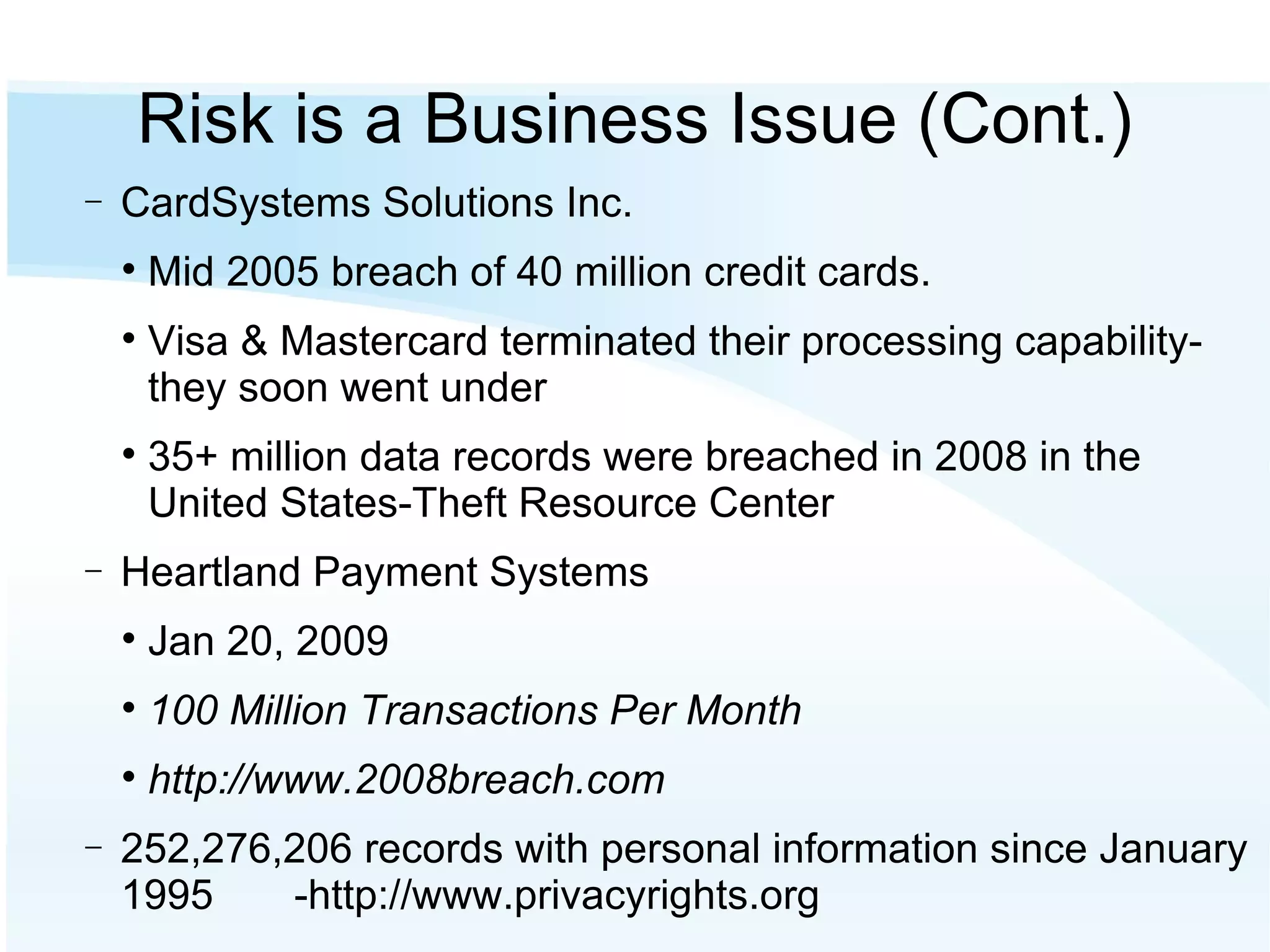
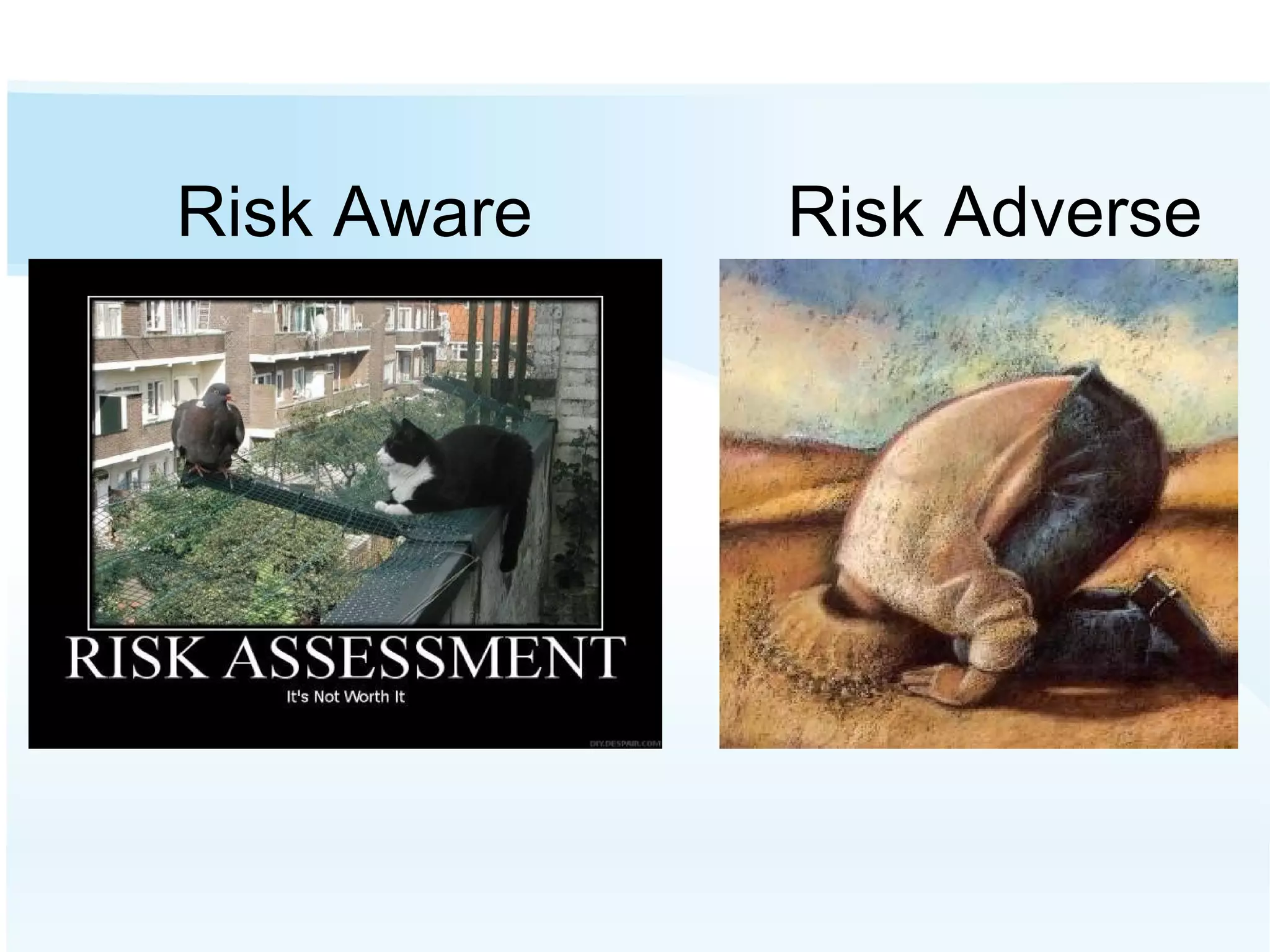
Risk Aware  Risk Adverse
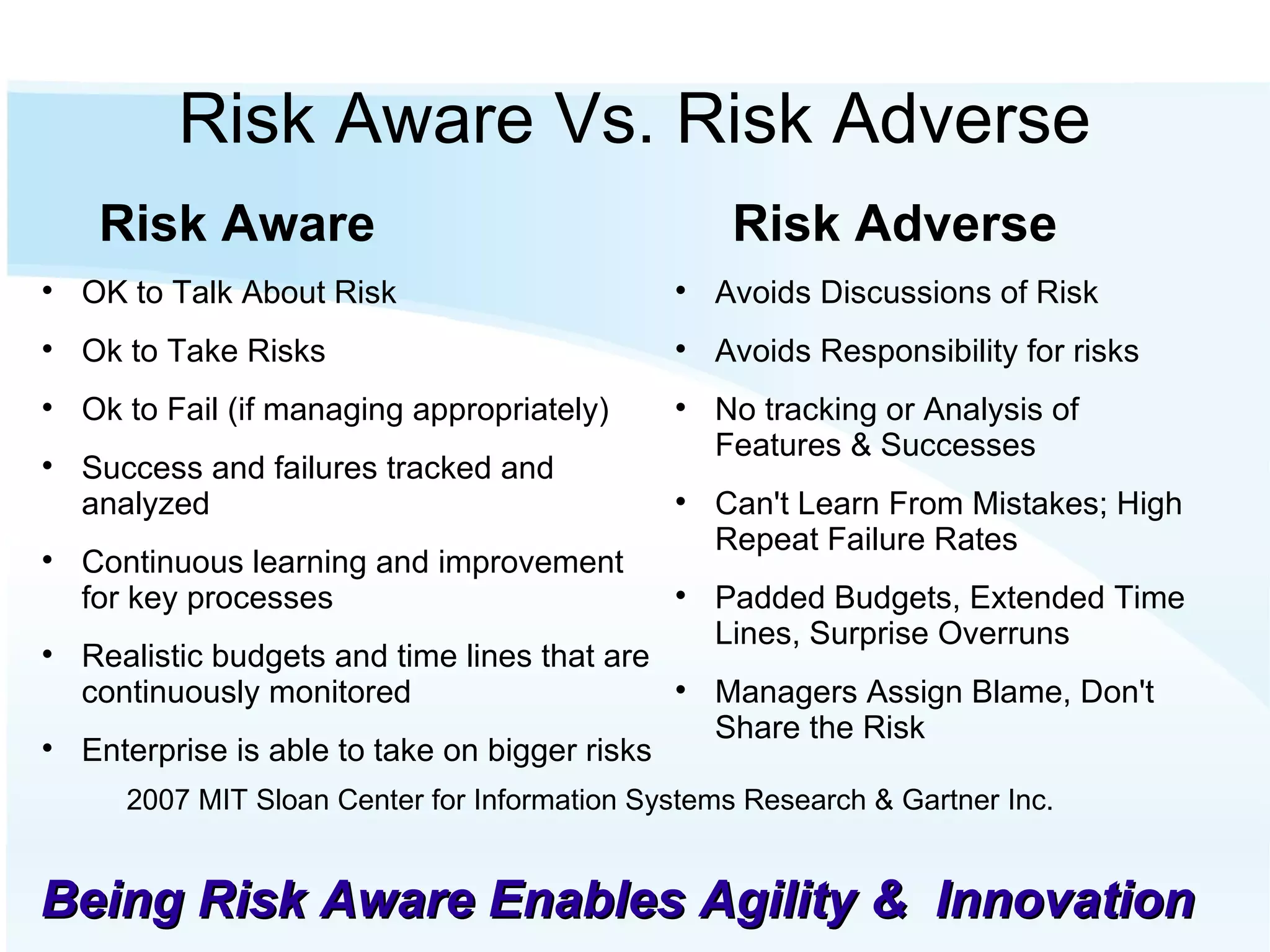
Risk Adverse Avoids Discussions of Risk Avoids Responsibility for risks No tracking or Analysis of Features & Successes Can't Learn From Mistakes; High Repeat Failure Rates Padded Budgets, Extended Time Lines, Surprise Overruns Managers Assign Blame, Don't Share the Risk Risk Aware Vs. Risk Adverse Risk Aware OK to Talk About Risk Ok to Take Risks Ok to Fail (if managing appropriately)‏ Success and failures tracked and analyzed Continuous learning and improvement for key processes Realistic budgets and time lines that are continuously monitored Enterprise is able to take on bigger risks 2007 MIT Sloan Center for Information Systems Research & Gartner Inc. Being Risk Aware Enables Agility &  Innovation
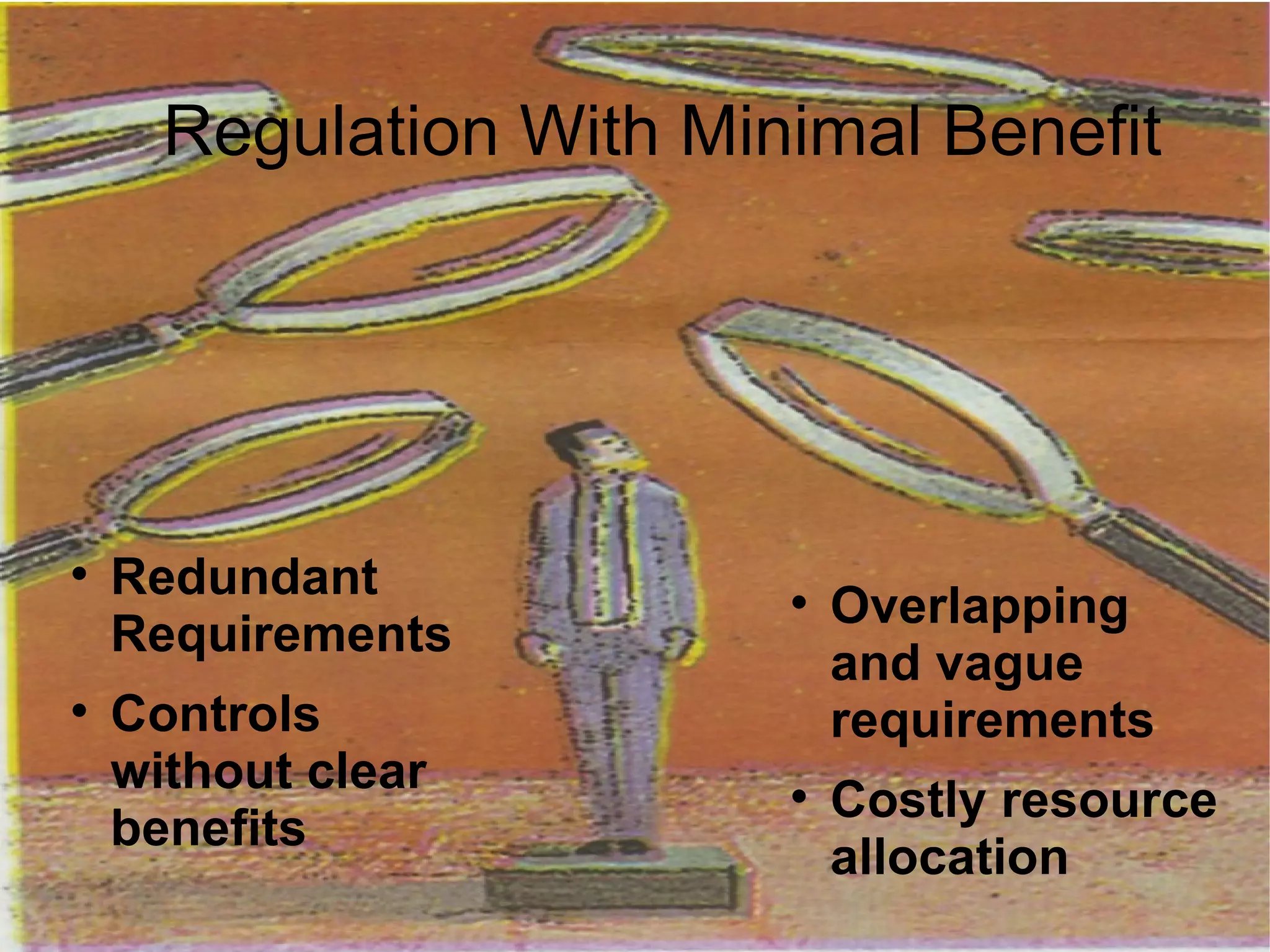
Regulation With Minimal Benefit Redundant Requirements Controls without clear benefits Overlapping and vague requirements Costly resource allocation
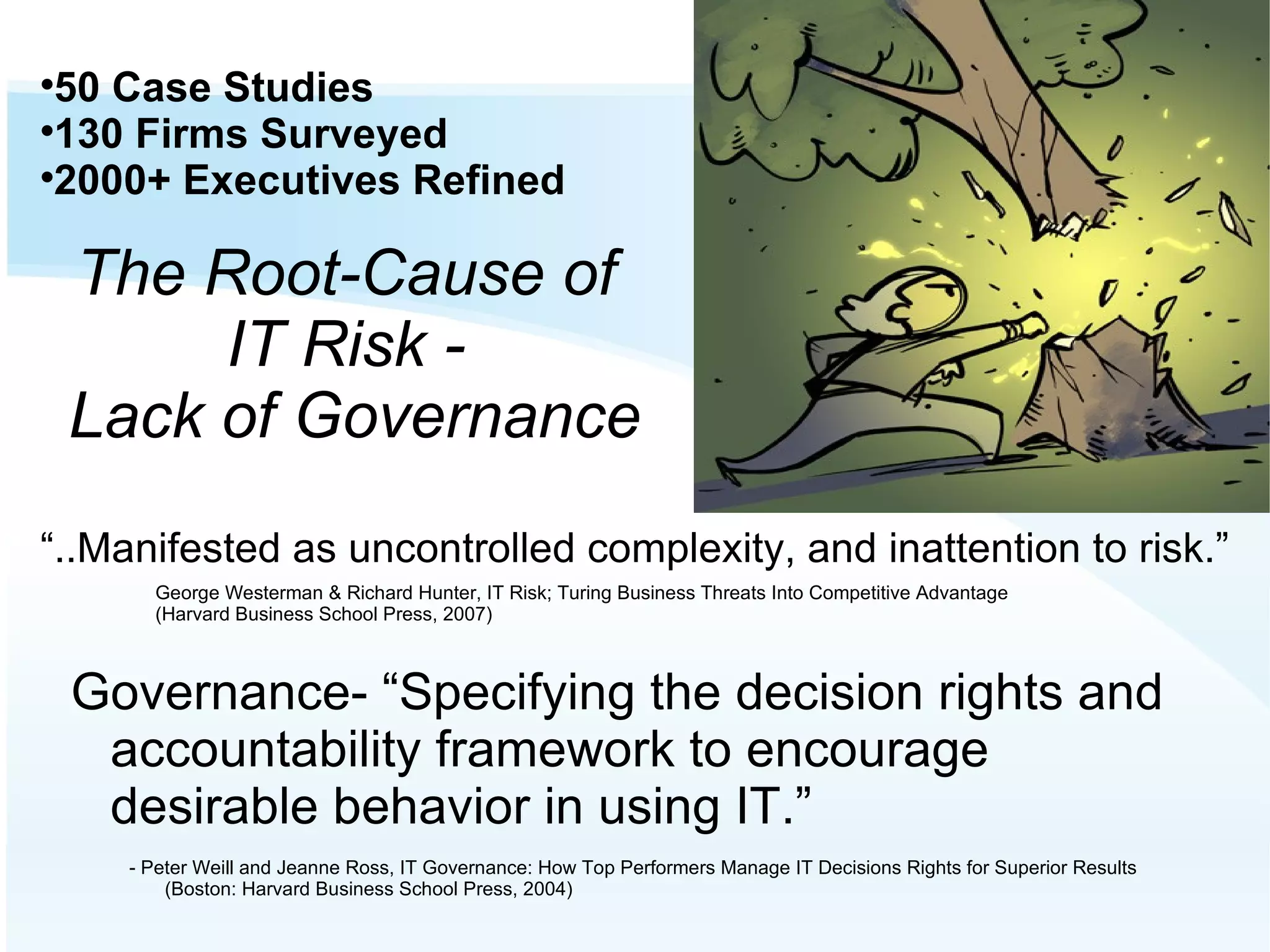
Governance- “Specifying the decision rights and accountability framework to encourage desirable behavior in using IT.” - Peter Weill and Jeanne Ross, IT Governance: How Top Performers Manage IT Decisions Rights for Superior Results (Boston: Harvard Business School Press, 2004)‏ The Root-Cause of IT Risk - Lack of Governance 50 Case Studies 130 Firms Surveyed 2000+ Executives Refined George Westerman & Richard Hunter, IT Risk; Turing Business Threats Into Competitive Advantage (Harvard Business School Press, 2007)‏ “ ..Manifested as uncontrolled complexity, and inattention to risk.”
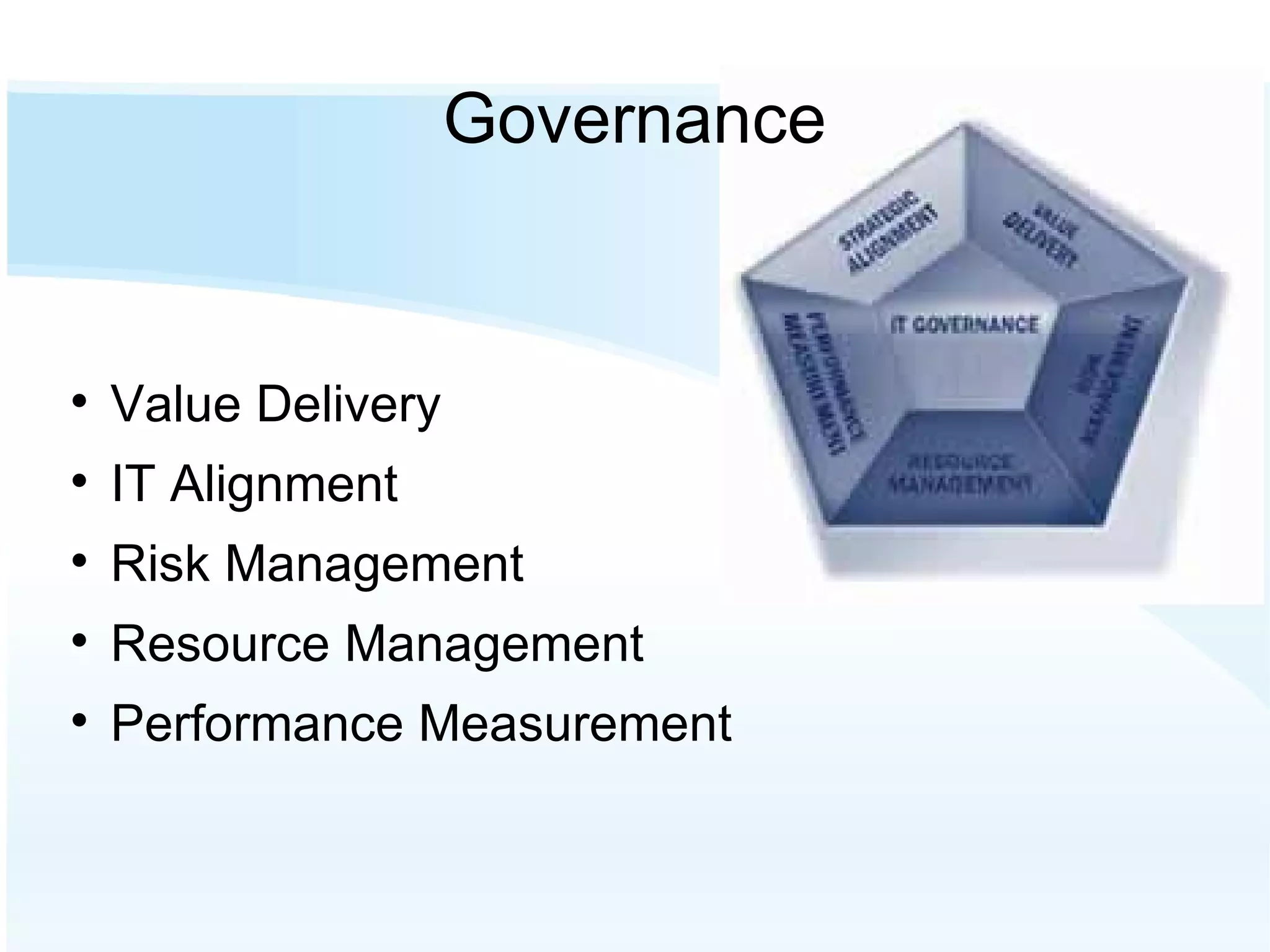
Governance Value Delivery IT Alignment Risk Management Resource Management Performance Measurement
Leading the Trauma Unit
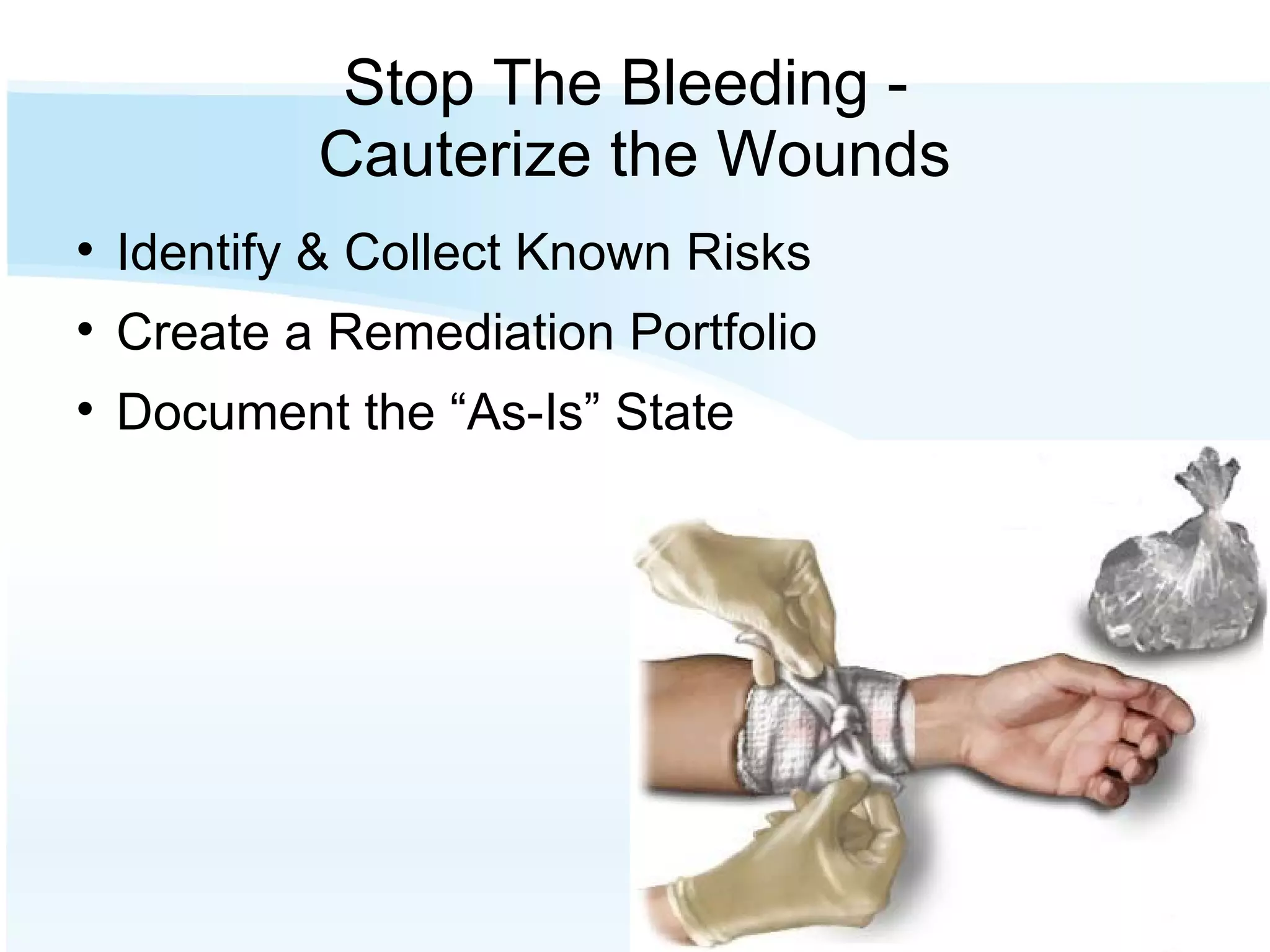
Stop The Bleeding -  Cauterize the Wounds Identify & Collect Known Risks Create a Remediation Portfolio Document the “As-Is” State
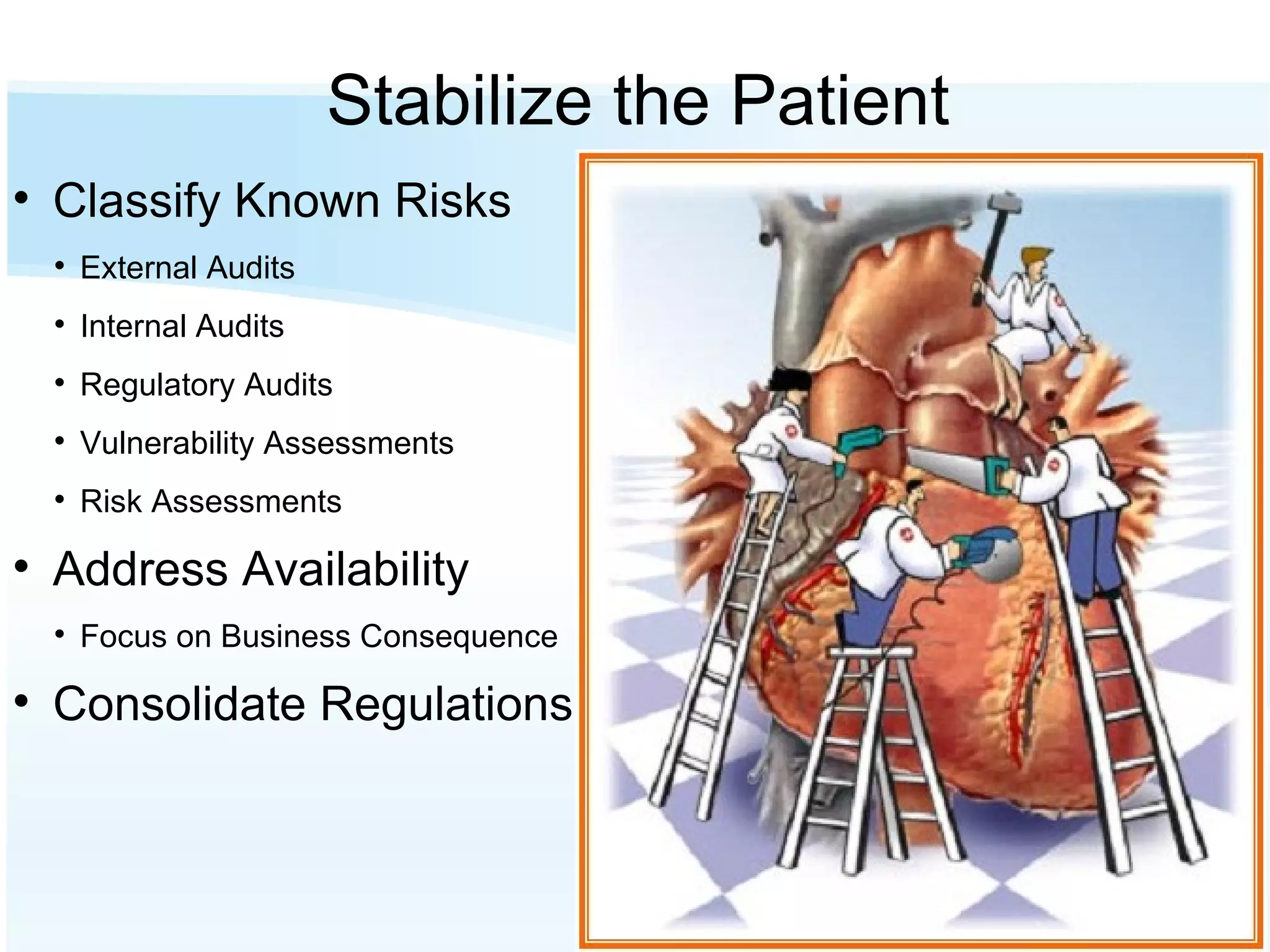
Stabilize the Patient Classify Known Risks  External Audits Internal Audits Regulatory Audits Vulnerability Assessments Risk Assessments Address Availability Focus on Business Consequence Consolidate Regulations
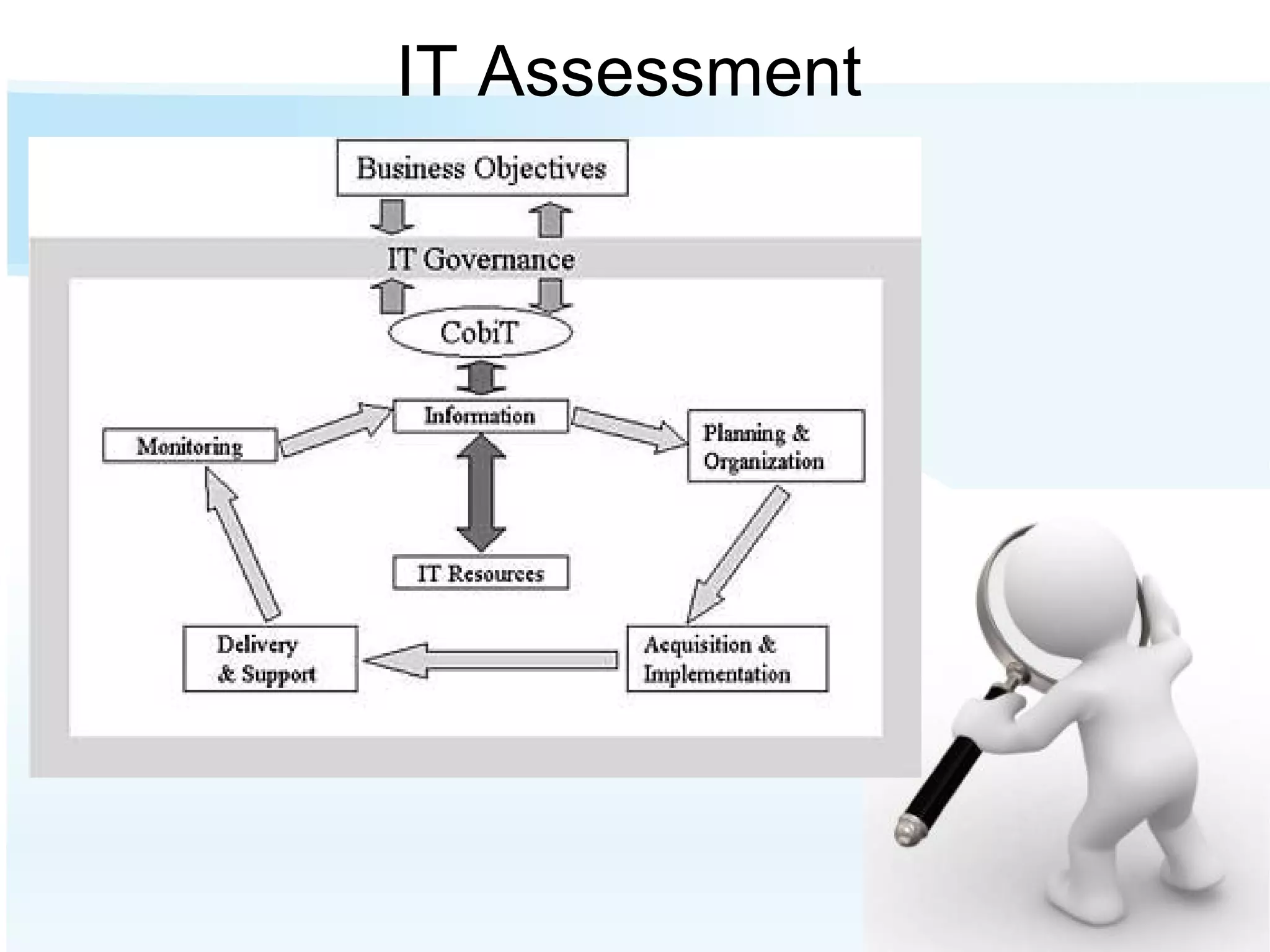
IT Assessment
Common IT Audit Deficiencies Third-Party agreements and contracts weak Employee Awareness Training needed improvement Too many privileged accounts Inability to document user privileges Log collection weak Critical assets not clearly defined & documented DR/BCP not regularly tested Internal controls not routinely reviewed Change management documentation & consistency lacking ERP systems riddled with segregation issues -  Paul Proctor and Gartner Risk & Compliance Research Community, March 2007
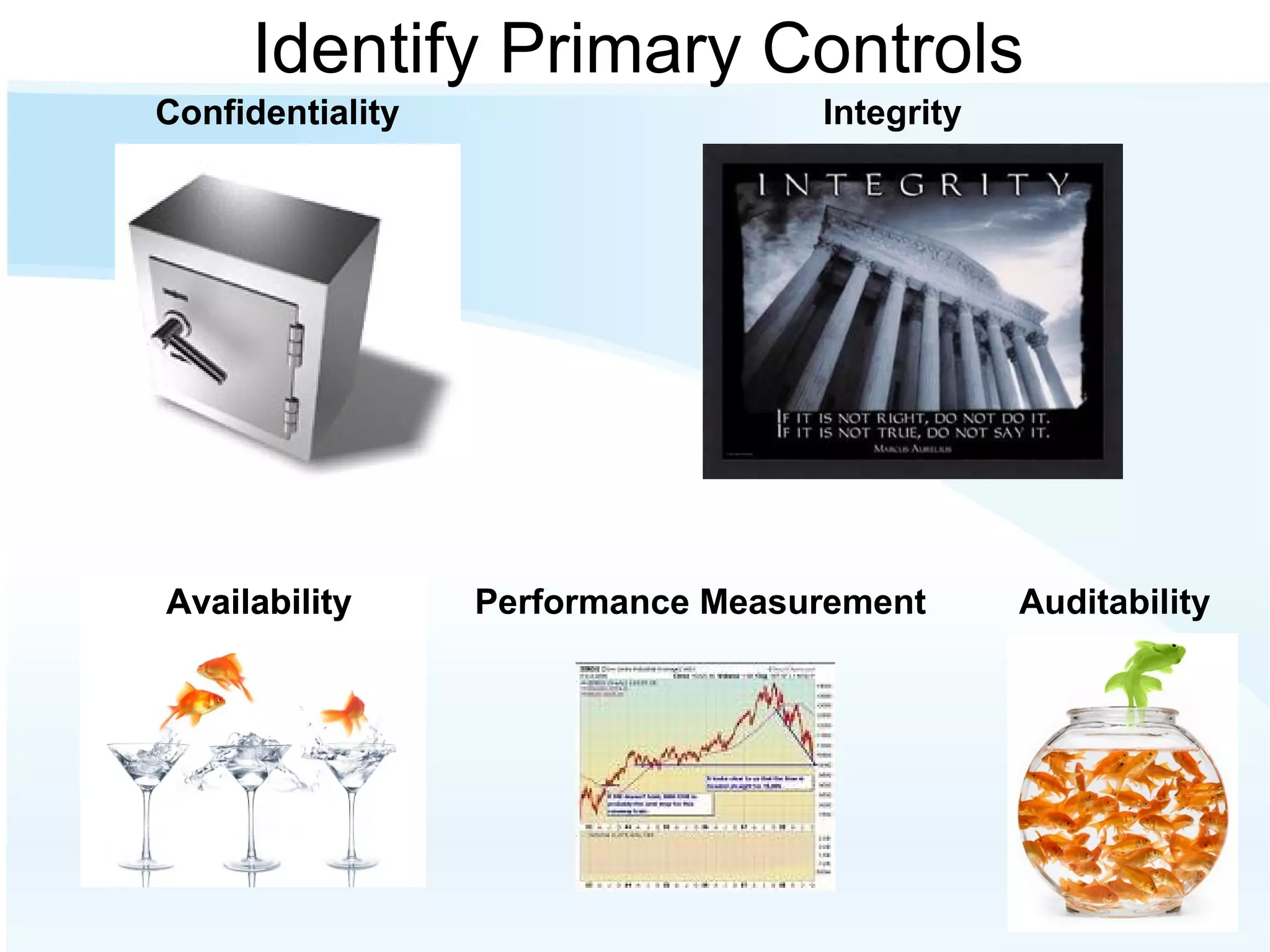
Identify Primary Controls Confidentiality Confidentiality Integrity Availability Availability Auditability Availability Performance Measurement
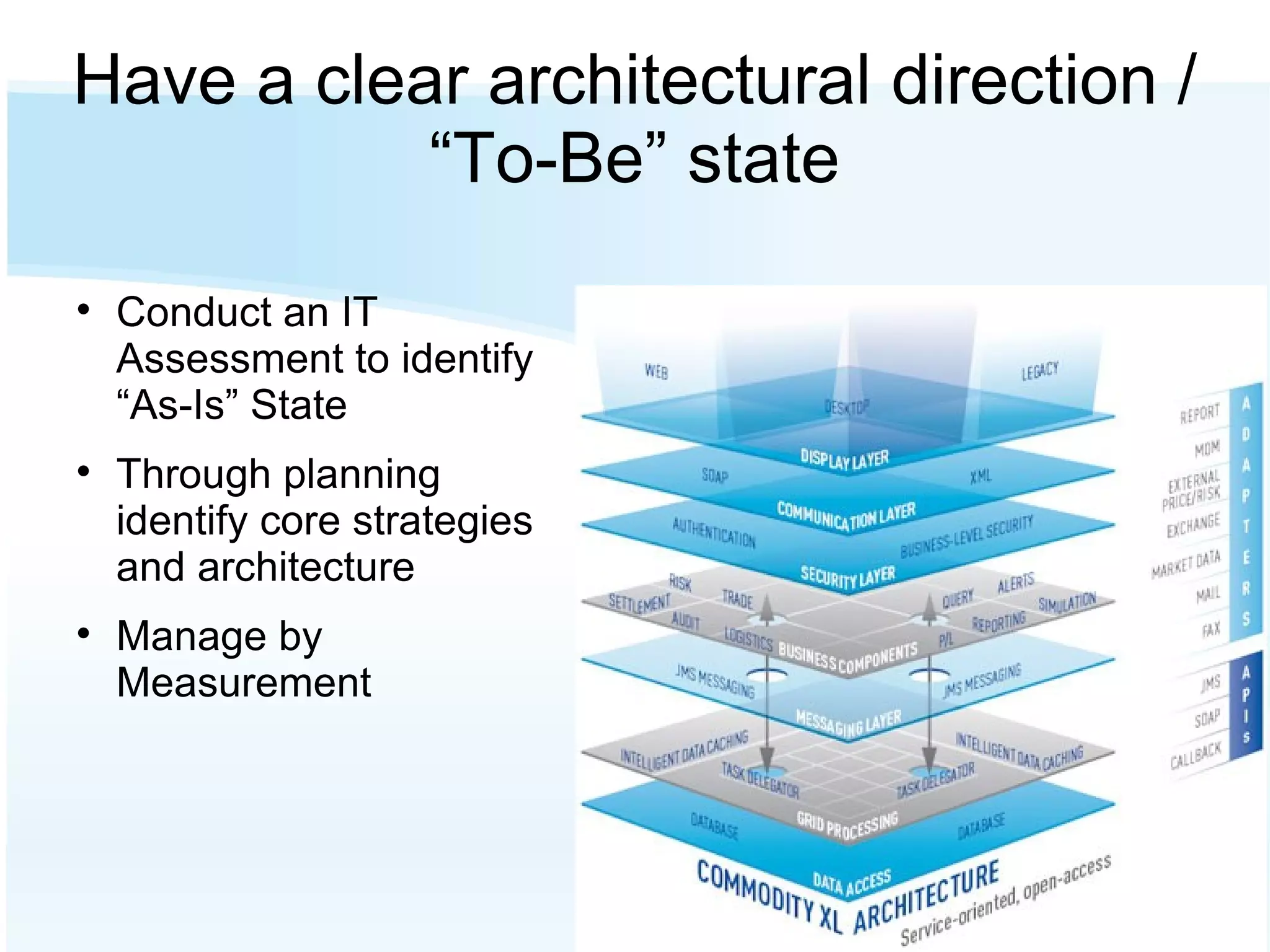
Have a clear architectural direction / “To-Be” state Conduct an IT Assessment to identify “As-Is” State Through planning identify core strategies and architecture Manage by Measurement
Optimize Remediation Assert Compliance Simultaneously Regulatory Convergence
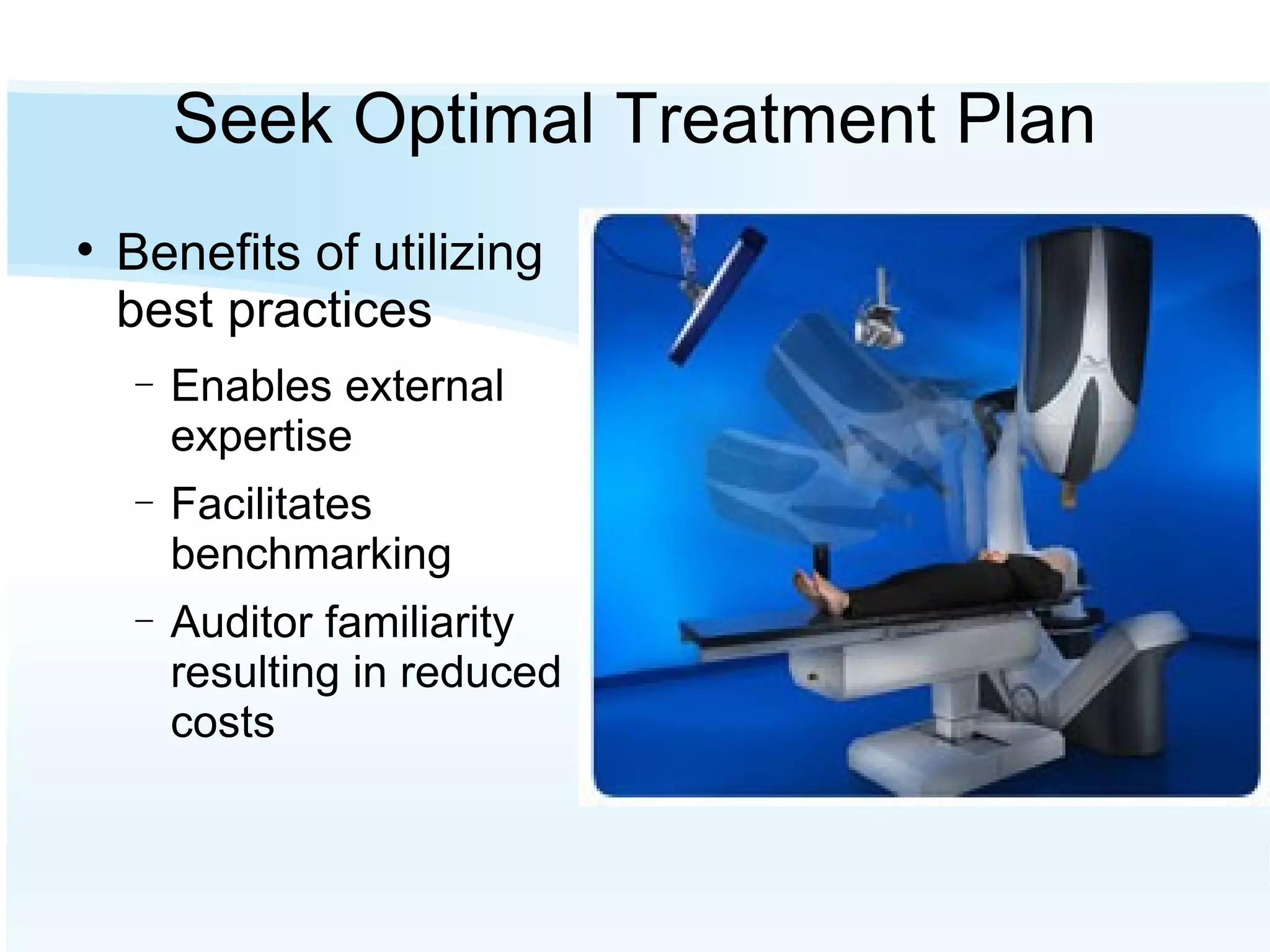
Seek Optimal Treatment Plan Benefits of utilizing best practices Enables external expertise Facilitates benchmarking Auditor familiarity resulting in reduced costs
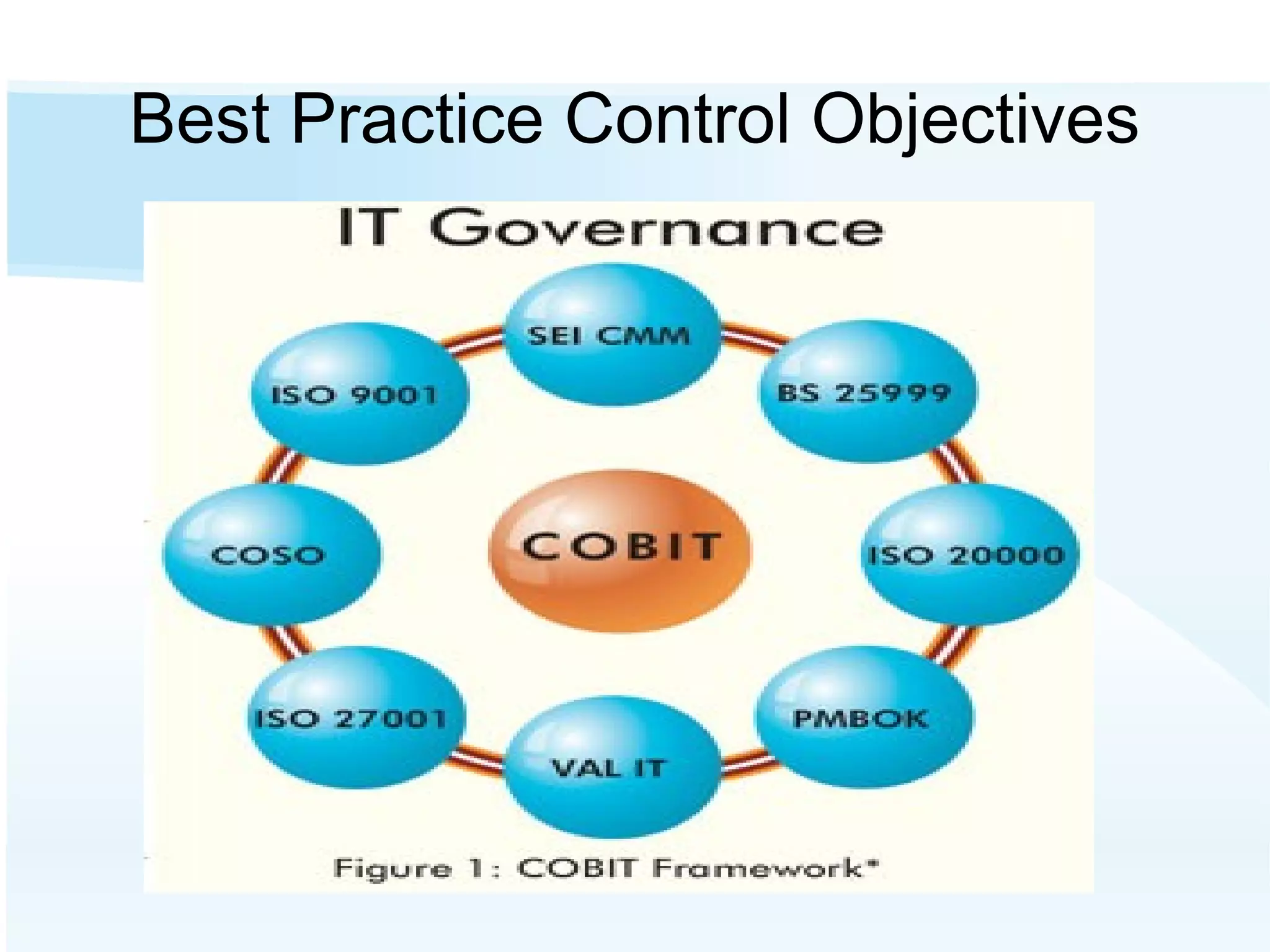
Best Practice Control Objectives
Components of Controls Defines a specific goal Aligns with business objectives Describes the focus required to manage Summarizes how the goal will be achieved Defines potential KPIs/KGIs RACI Table
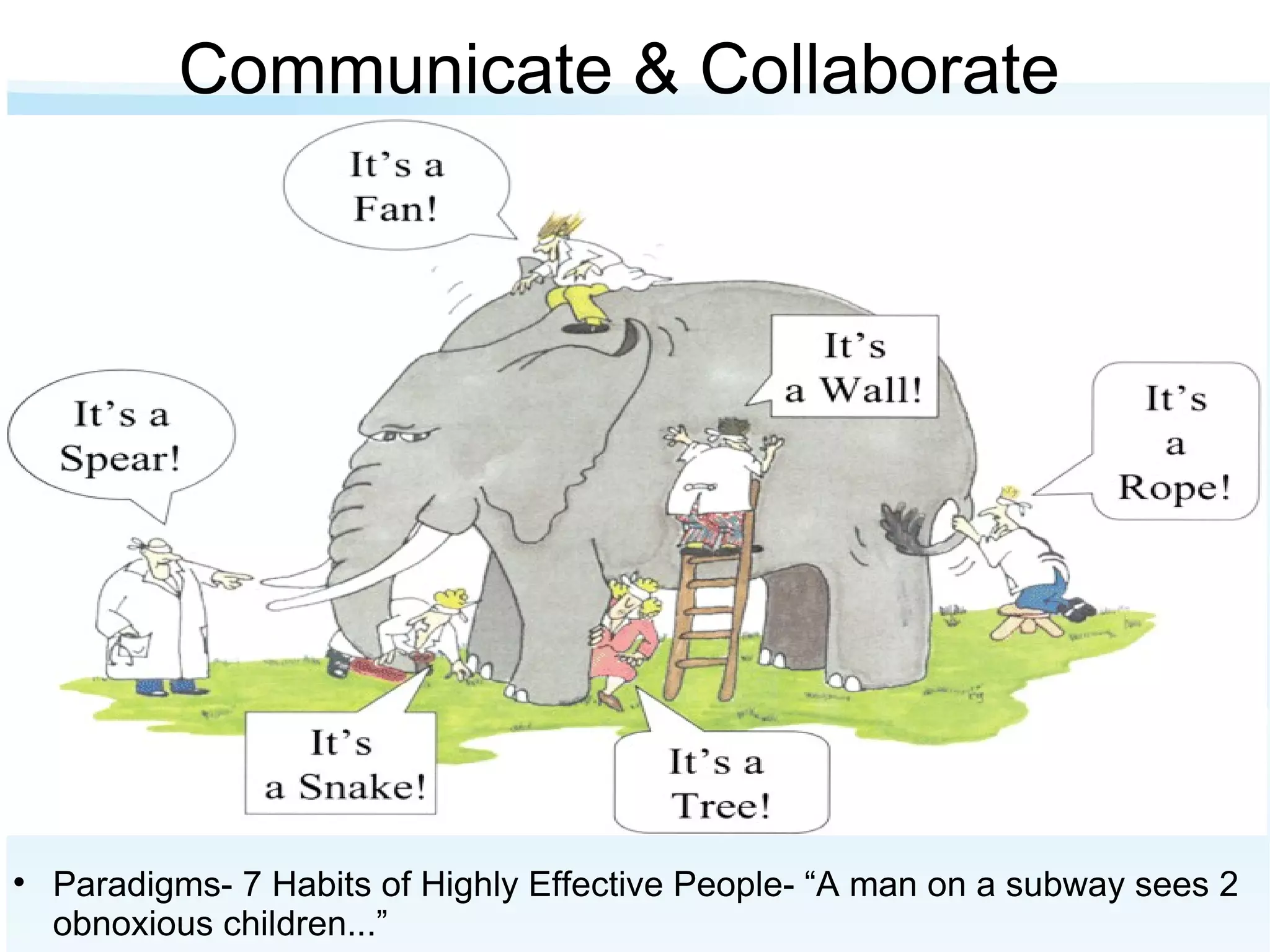
Communicate & Collaborate Paradigms- 7 Habits of Highly Effective People- “A man on a subway sees 2 obnoxious children...”
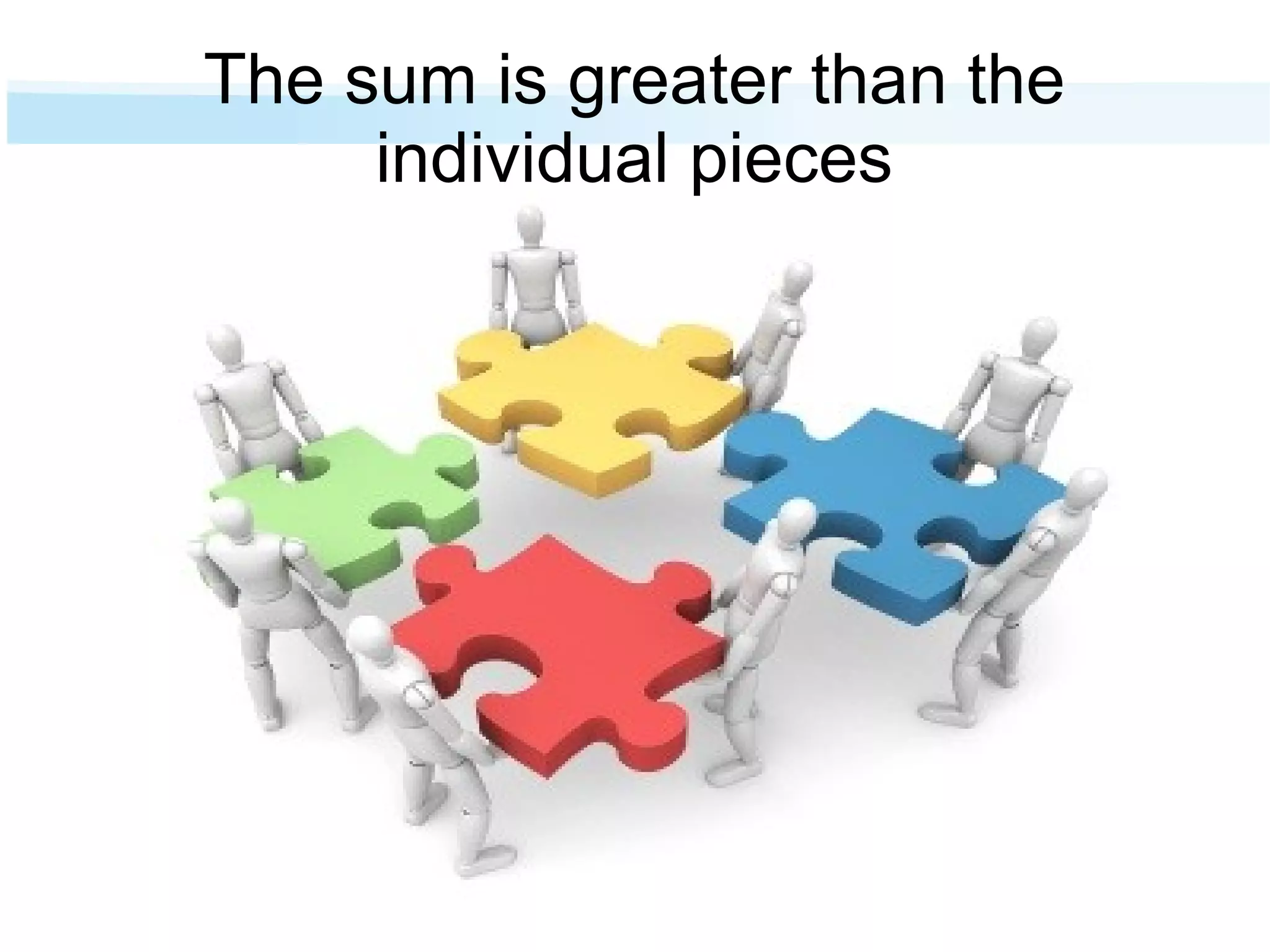
The sum is greater than the individual pieces
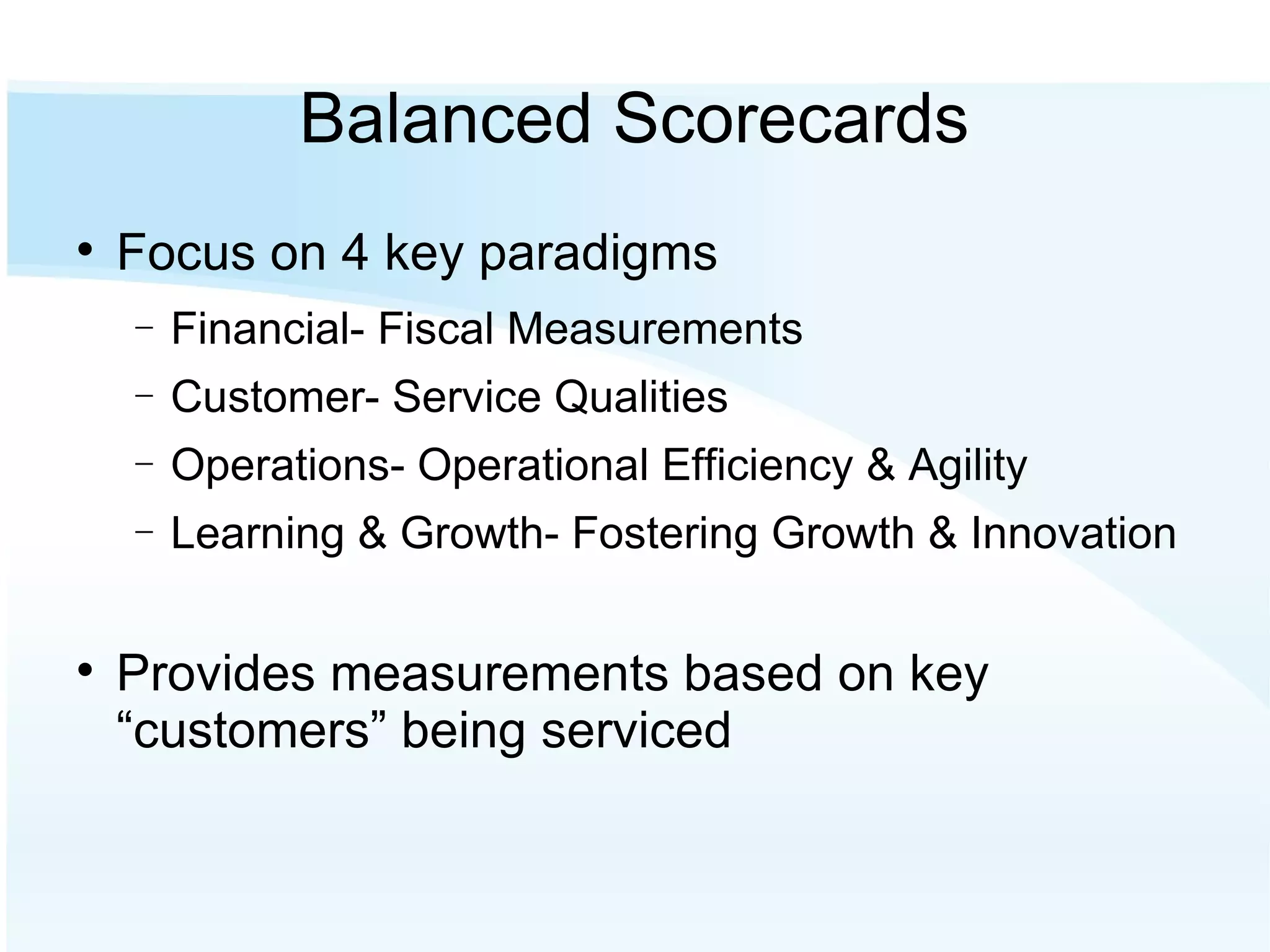
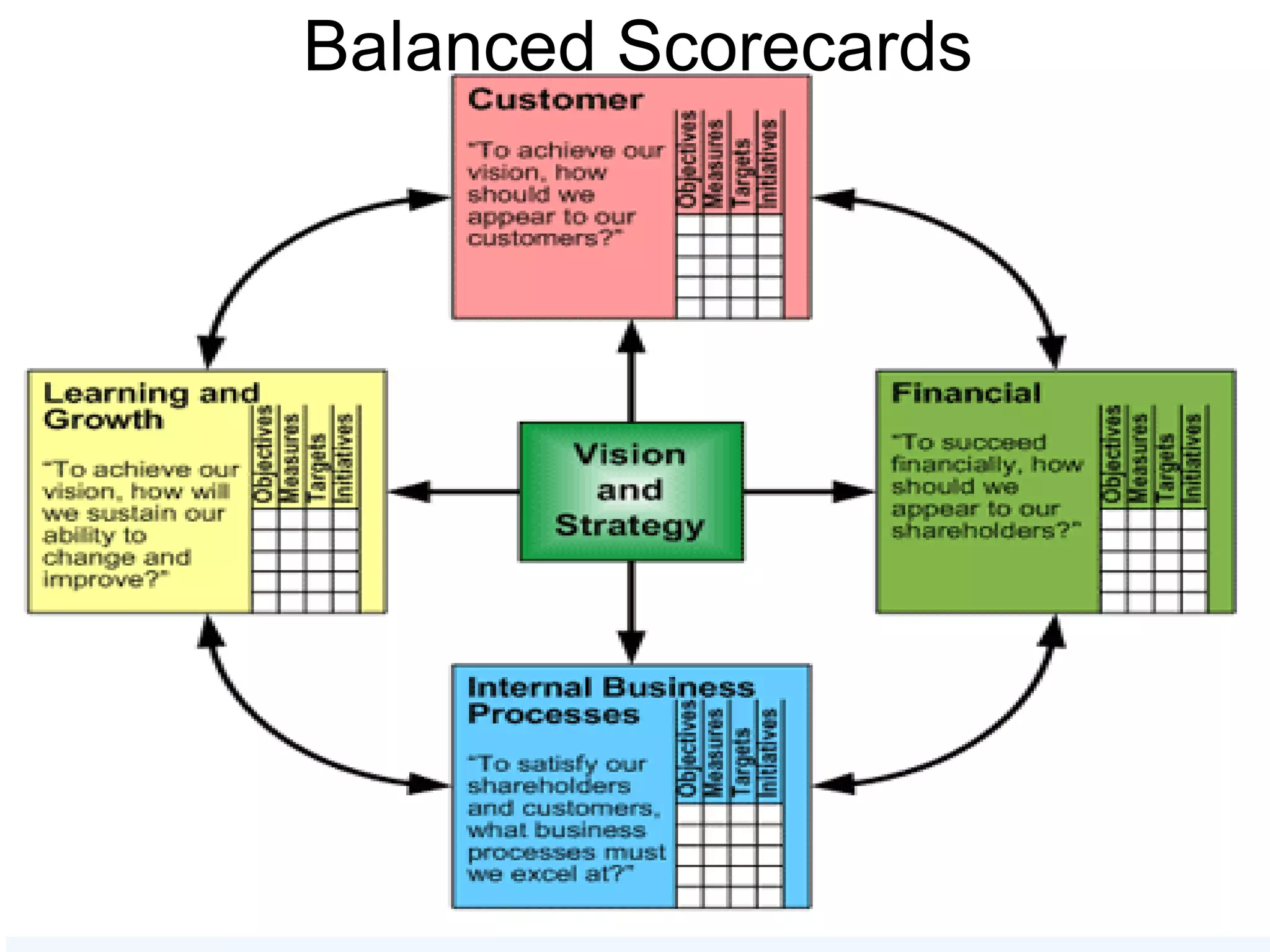
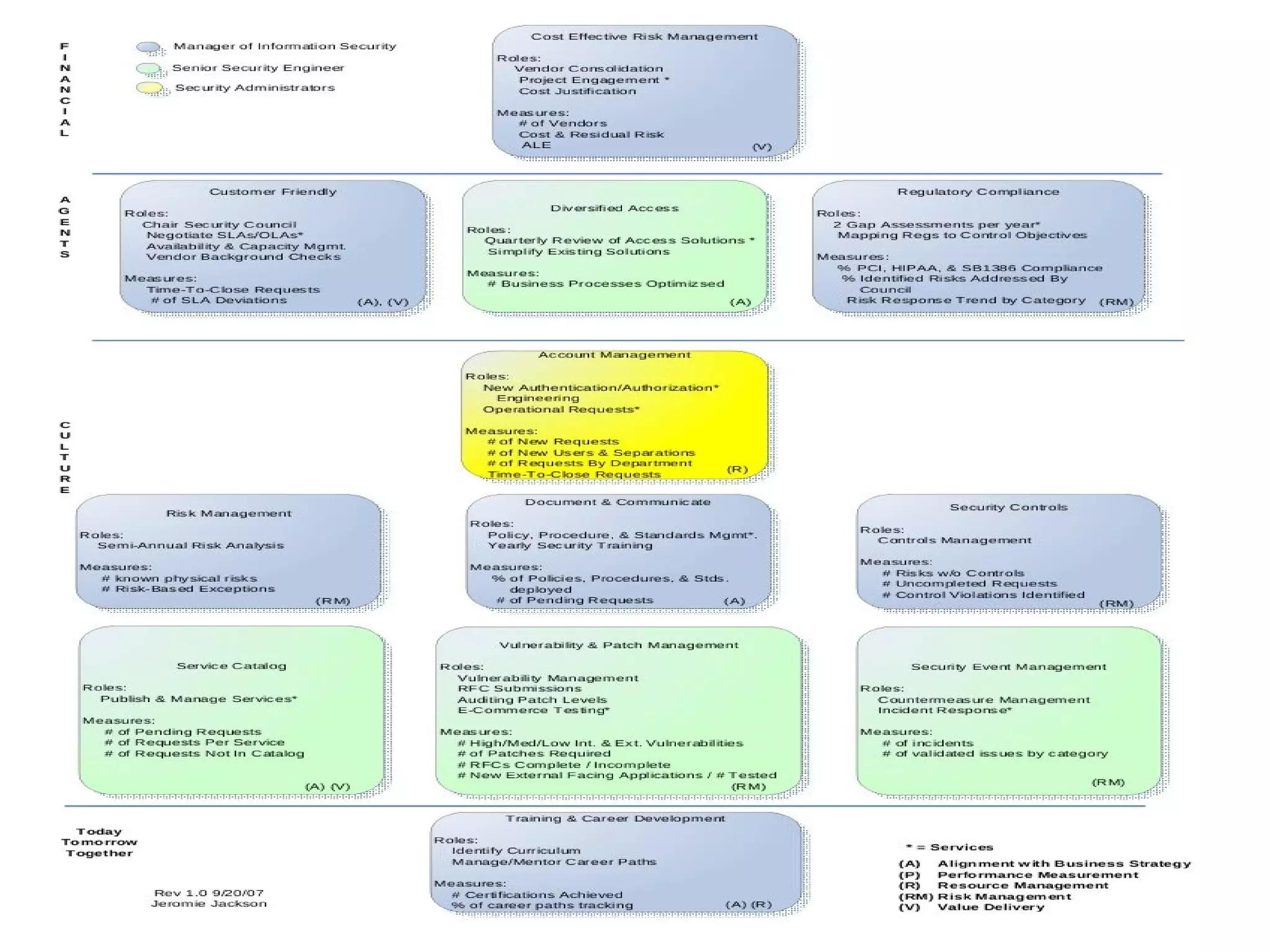
Balanced Scorecards Focus on 4 key paradigms Financial- Fiscal Measurements Customer- Service Qualities Operations- Operational Efficiency & Agility Learning & Growth- Fostering Growth & Innovation Provides measurements based on key “customers” being serviced
Balanced Scorecards
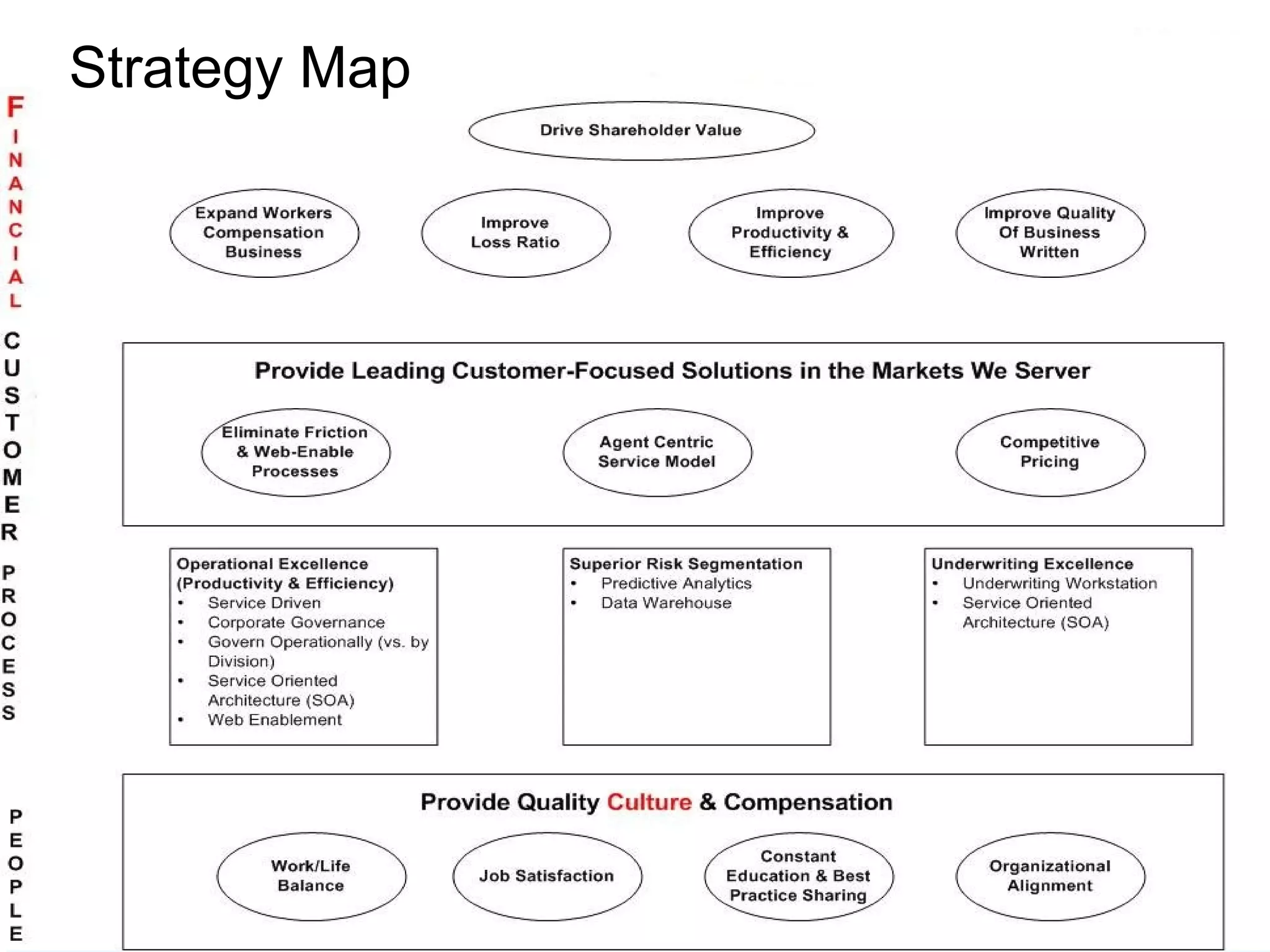
Strategy Maps Describe the “To-Be” state graphically Facilitate collaboration Minimize jargon Collaborate
Strategy Map
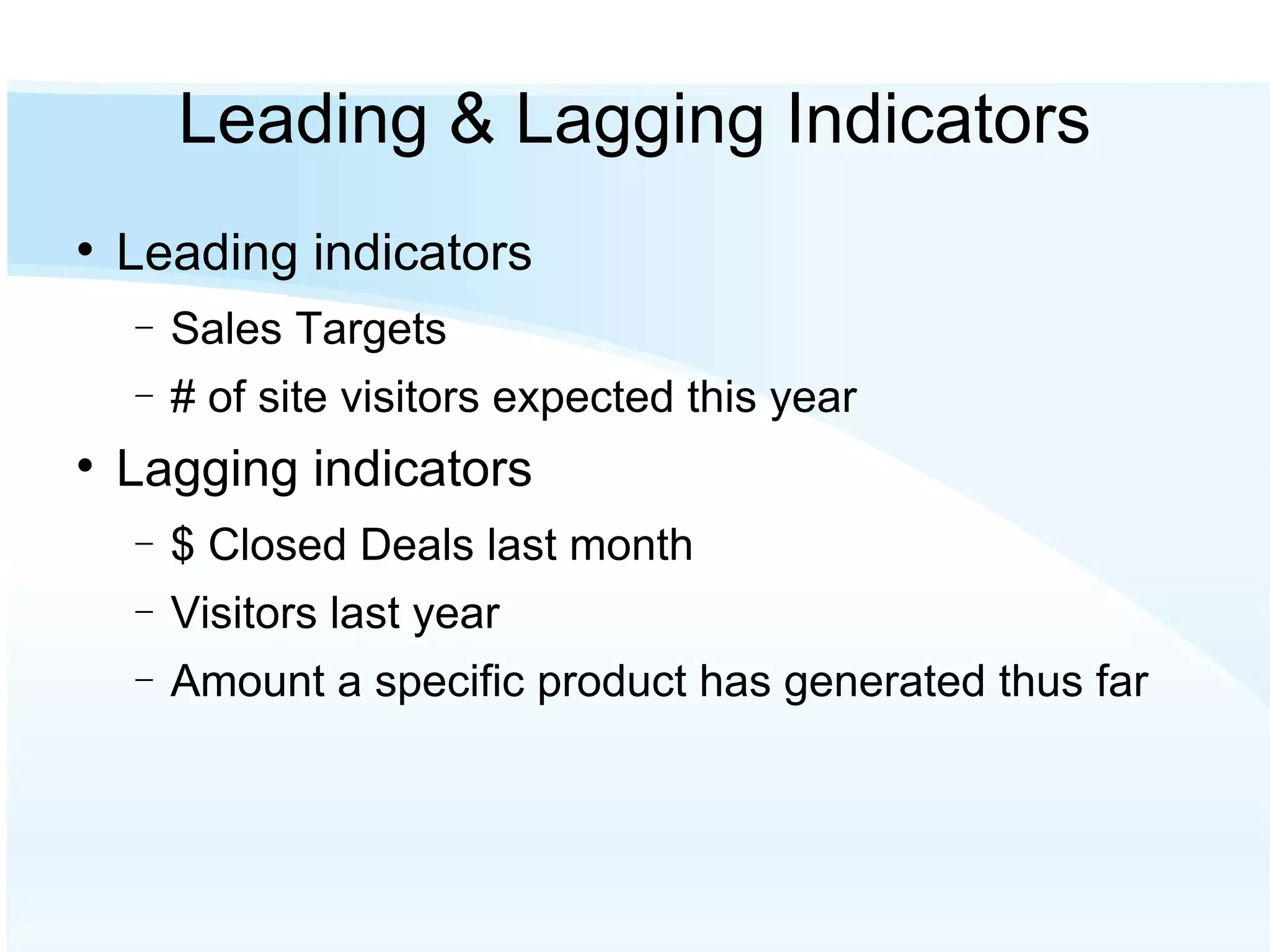
Leading & Lagging Indicators Leading indicators Sales Targets # of site visitors expected this year Lagging indicators $ Closed Deals last month Visitors last year Amount a specific product has generated thus far
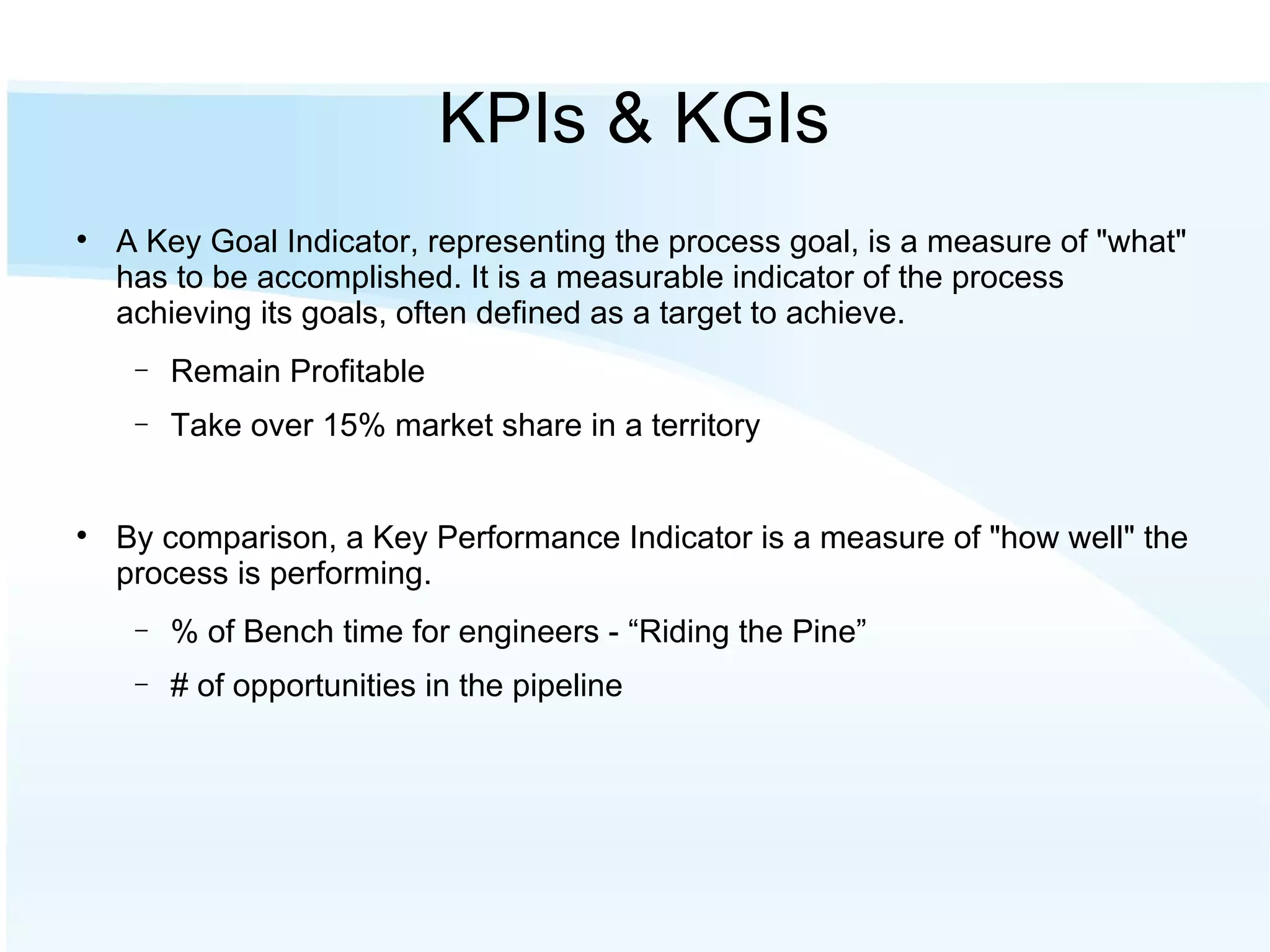
KPIs & KGIs A Key Goal Indicator, representing the process goal, is a measure of "what" has to be accomplished. It is a measurable indicator of the process achieving its goals, often defined as a target to achieve. Remain Profitable Take over 15% market share in a territory By comparison, a Key Performance Indicator is a measure of "how well" the process is performing.  % of Bench time for engineers - “Riding the Pine” # of opportunities in the pipeline
 
Prudent Management is not just for the enterprise anymore Governance has been slowly adopted in the SMB space Perceived as an “enterprise play” ROI/CBA/NPV communication muddled with jargon Talk to your audience- don't belabor acronyms and frameworks. Focus on sound stewardship principals.
References Privacy Violations- www.privacyrights.org COBIT - www.isaca.org/cobit VAL IT - www.isaca.org/valit Strategy Maps -  http://www.valuebasedmanagement.net/methods_strategy_maps_strategic_communication.html BSC - http://www.balancedscorecard.org/ Lean Six-Sigma - www.qimacros.com Harvard Business Review
Questions? 5 Jeromie Jackson- CISM, CISSP Security Solutions Architect Technology Integration Group (TIG)‏ [email_address] 858-205-3645- BB 619-368-7353-cell

Ignorance Is Risk

  • 1.
    Ignorance is RiskManage by Measurement Through the Use of a Control Framework Jeromie Jackson- CISM, CISSP Security Solutions Architect Technology Integration Group (TIG)‏ [email_address] 858-205-3645- BB 619-368-7353-cell
  • 2.
    Brief Bio. President-San Diego OWASP Vice President- San Diego ISACA CISM, CISSP Since 1996 CISM, COBIT, & ITIL Certified SANS Mentor Security Solutions Architect @ TIG Articles * Covered on Forbes Magazine * Credit Union Business Magazine * Credit Union Magazine * CU Times * Insurance & Technology Review * CMP Media * Storage Inc. Speaking Events * SPC 2009 * SecureIT 2008 * SecureIT 2009 * Interop * Government Technology Conference (GTC)‏ * Many Credit Union Leagues
  • 3.
    Risk is aBusiness Issue “ Ignoring or misunderstanding financial risks played a substantial role in creating the world financial crisis in 2008.” “ Organizations need to assess risk as part of cost-cutting decisions and should manage increased IT risks to prevent operation failures that will lead to further loss.” - Gartner, “Managing IT Risks During Cost-Cutting Periods”, October 22, 2008
  • 4.
    Risk is aBusiness Issue (Cont.)‏ CardSystems Solutions Inc. Mid 2005 breach of 40 million credit cards. Visa & Mastercard terminated their processing capability- they soon went under 35+ million data records were breached in 2008 in the United States-Theft Resource Center Heartland Payment Systems Jan 20, 2009 100 Million Transactions Per Month http://www.2008breach.com 252,276,206 records with personal information since January 1995 -http://www.privacyrights.org
  • 5.
    Risk Aware Risk Adverse
  • 6.
    Risk Adverse AvoidsDiscussions of Risk Avoids Responsibility for risks No tracking or Analysis of Features & Successes Can't Learn From Mistakes; High Repeat Failure Rates Padded Budgets, Extended Time Lines, Surprise Overruns Managers Assign Blame, Don't Share the Risk Risk Aware Vs. Risk Adverse Risk Aware OK to Talk About Risk Ok to Take Risks Ok to Fail (if managing appropriately)‏ Success and failures tracked and analyzed Continuous learning and improvement for key processes Realistic budgets and time lines that are continuously monitored Enterprise is able to take on bigger risks 2007 MIT Sloan Center for Information Systems Research & Gartner Inc. Being Risk Aware Enables Agility & Innovation
  • 7.
    Regulation With MinimalBenefit Redundant Requirements Controls without clear benefits Overlapping and vague requirements Costly resource allocation
  • 8.
    Governance- “Specifying thedecision rights and accountability framework to encourage desirable behavior in using IT.” - Peter Weill and Jeanne Ross, IT Governance: How Top Performers Manage IT Decisions Rights for Superior Results (Boston: Harvard Business School Press, 2004)‏ The Root-Cause of IT Risk - Lack of Governance 50 Case Studies 130 Firms Surveyed 2000+ Executives Refined George Westerman & Richard Hunter, IT Risk; Turing Business Threats Into Competitive Advantage (Harvard Business School Press, 2007)‏ “ ..Manifested as uncontrolled complexity, and inattention to risk.”
  • 9.
    Governance Value DeliveryIT Alignment Risk Management Resource Management Performance Measurement
  • 10.
  • 11.
    Stop The Bleeding- Cauterize the Wounds Identify & Collect Known Risks Create a Remediation Portfolio Document the “As-Is” State
  • 12.
    Stabilize the PatientClassify Known Risks External Audits Internal Audits Regulatory Audits Vulnerability Assessments Risk Assessments Address Availability Focus on Business Consequence Consolidate Regulations
  • 13.
  • 14.
    Common IT AuditDeficiencies Third-Party agreements and contracts weak Employee Awareness Training needed improvement Too many privileged accounts Inability to document user privileges Log collection weak Critical assets not clearly defined & documented DR/BCP not regularly tested Internal controls not routinely reviewed Change management documentation & consistency lacking ERP systems riddled with segregation issues - Paul Proctor and Gartner Risk & Compliance Research Community, March 2007
  • 15.
    Identify Primary ControlsConfidentiality Confidentiality Integrity Availability Availability Auditability Availability Performance Measurement
  • 16.
    Have a cleararchitectural direction / “To-Be” state Conduct an IT Assessment to identify “As-Is” State Through planning identify core strategies and architecture Manage by Measurement
  • 17.
    Optimize Remediation AssertCompliance Simultaneously Regulatory Convergence
  • 18.
    Seek Optimal TreatmentPlan Benefits of utilizing best practices Enables external expertise Facilitates benchmarking Auditor familiarity resulting in reduced costs
  • 19.
  • 20.
    Components of ControlsDefines a specific goal Aligns with business objectives Describes the focus required to manage Summarizes how the goal will be achieved Defines potential KPIs/KGIs RACI Table
  • 21.
    Communicate & CollaborateParadigms- 7 Habits of Highly Effective People- “A man on a subway sees 2 obnoxious children...”
  • 22.
    The sum isgreater than the individual pieces
  • 23.
    Balanced Scorecards Focuson 4 key paradigms Financial- Fiscal Measurements Customer- Service Qualities Operations- Operational Efficiency & Agility Learning & Growth- Fostering Growth & Innovation Provides measurements based on key “customers” being serviced
  • 24.
  • 25.
    Strategy Maps Describethe “To-Be” state graphically Facilitate collaboration Minimize jargon Collaborate
  • 26.
  • 27.
    Leading & LaggingIndicators Leading indicators Sales Targets # of site visitors expected this year Lagging indicators $ Closed Deals last month Visitors last year Amount a specific product has generated thus far
  • 28.
    KPIs & KGIsA Key Goal Indicator, representing the process goal, is a measure of "what" has to be accomplished. It is a measurable indicator of the process achieving its goals, often defined as a target to achieve. Remain Profitable Take over 15% market share in a territory By comparison, a Key Performance Indicator is a measure of "how well" the process is performing. % of Bench time for engineers - “Riding the Pine” # of opportunities in the pipeline
  • 29.
  • 30.
    Prudent Management isnot just for the enterprise anymore Governance has been slowly adopted in the SMB space Perceived as an “enterprise play” ROI/CBA/NPV communication muddled with jargon Talk to your audience- don't belabor acronyms and frameworks. Focus on sound stewardship principals.
  • 31.
    References Privacy Violations-www.privacyrights.org COBIT - www.isaca.org/cobit VAL IT - www.isaca.org/valit Strategy Maps - http://www.valuebasedmanagement.net/methods_strategy_maps_strategic_communication.html BSC - http://www.balancedscorecard.org/ Lean Six-Sigma - www.qimacros.com Harvard Business Review
  • 32.
    Questions? 5 JeromieJackson- CISM, CISSP Security Solutions Architect Technology Integration Group (TIG)‏ [email_address] 858-205-3645- BB 619-368-7353-cell