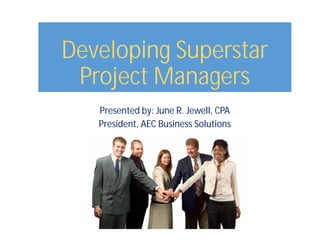









Developing Superstar
Project Managers
Presented by: June R. Jewell, CPA
President, AEC Business Solutions
June R. Jewell, CPA
 Author of best-selling book, Find
the Lost Dollars: 6 Steps to
Increase Profits in Architecture,
Engineering and Environmental
Firms
 President, AEC Business
Solutions
 Over 28 years as a business
management and Deltek
consultant
My mission is to help our client’s
make more money on their
projects
Agenda
State of the industry – 2015
Some Anecdotal Indications
Risks to Growth
Some Project Manager Stats
How do we evaluate our Project Managers (PMs)?
What is a Superstar Project Manager?
What Do PMs Really Do?
Challenges to Being a Superstar PM
What do PMs need to know?
What data do they need to do their jobs?
Using software to help PMs deliver profitable projects
How do we help them to be more successful?
Copyright 2015, AEC Business Solutions, LLC
Poll #1
Do you personally manage
projects?
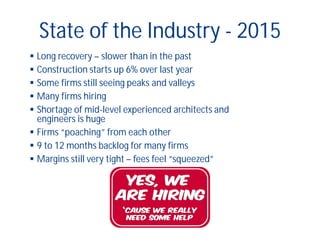
State of the Industry - 2015
 Long recovery – slower than in the past
 Construction starts up 6% over last year
 Some firms still seeing peaks and valleys
 Many firms hiring
 Shortage of mid-level experienced architects and
engineers is huge
 Firms “poaching” from each other
 9 to 12 months backlog for many firms
 Margins still very tight – fees feel “squeezed”
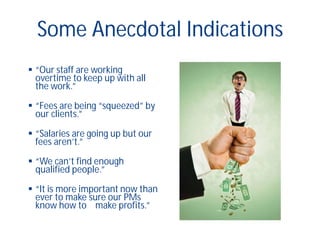
Some Anecdotal Indications
 “Our staff are working
overtime to keep up with all
the work.”
 “Fees are being “squeezed” by
our clients.”
 “Salaries are going up but our
fees aren’t.”
 “We can’t find enough
qualified people.”
 “It is more important now than
ever to make sure our PMs
know how to make profits.”
Risks to Growth
Culture challenges
Adding people too fast
Different skill levels
PMs pulled in too many
directions
How do “we” do it?
Inconsistency and
chaos…
Some PM Statistics
 52% of firms have a formal Project Manager title*
 45% report their role as a PM is a full-time assignment*
 42% report their PMs always participate in establishing project
budgets
 56% finish projects on budget
 49% face some direct consequences for not staying within the
project budget
 48% say their PMs are always responsible for establishing
project schedules
 43% report they always participate in writing or designing the
project scope
 59% say project managers always review invoices before they go
out
 11% report PMs are always responsible for collecting fees
 46% feel their level of authority accurately reflects their level of
responsibility
*Zweig Group Project Management Survey 2014
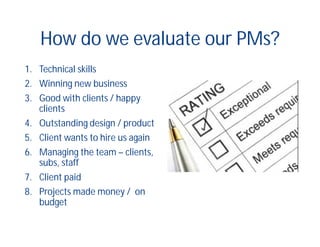
How do we evaluate our PMs?
1. Technical skills
2. Winning new business
3. Good with clients / happy
clients
4. Outstanding design / product
5. Client wants to hire us again
6. Managing the team – clients,
subs, staff
7. Client paid
8. Projects made money / on
budget
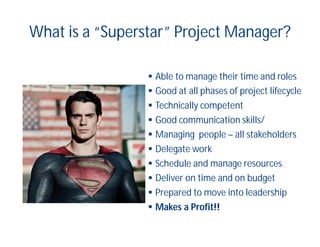
What is a “Superstar” Project Manager?
 Able to manage their time and roles
 Good at all phases of project lifecycle
 Technically competent
 Good communication skills/
 Managing people – all stakeholders
 Delegate work
 Schedule and manage resources
 Deliver on time and on budget
 Prepared to move into leadership
 Makes a Profit!!
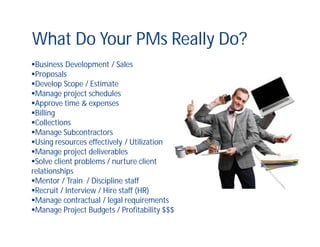
What Do Your PMs Really Do?
Business Development / Sales
Proposals
Develop Scope / Estimate
Manage project schedules
Approve time & expenses
Billing
Collections
Manage Subcontractors
Using resources effectively / Utilization
Manage project deliverables
Solve client problems / nurture client
relationships
Mentor / Train / Discipline staff
Recruit / Interview / Hire staff (HR)
Manage contractual / legal requirements
Manage Project Budgets / Profitability $$$
Challenges to being a
Superstar PM
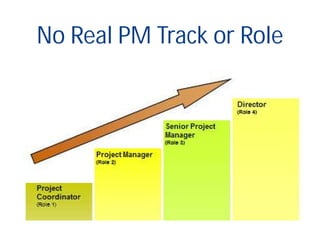
No Real PM Track or Role
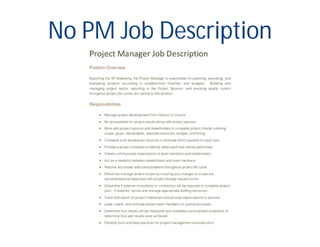
No PM Job Description
What they do doesn’t match
their job description
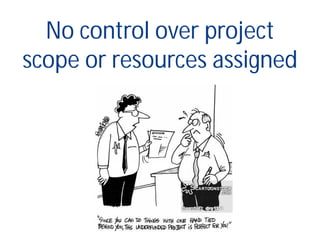
No control over project
scope or resources assigned
Not given the data they
need to manage projects
Lack of Performance
Metrics and Goals
No Accountability!
Poll #2
What else can your firm do to help
your PMs to be more successful?
What Do PMs Need to Know?
 Basics of how profit is made on projects: Labor, Expenses,
Overhead
 Relationship of utilization to profitability: How overhead is
affected by non-billable time
 Terminology: Work-in-Process, AR, Net Revenues, Net Multiplier,
Overhead Rate, Realization, Utilization, Backlog, Variance, etc.
 How to read reports
 Budgeting and planning resources within the scope / fee of the
contract
 Effectively communicating the scope to the team
 Controlling the subcontractor budget, scope and billing
 Managing staff, delegating work, handling difficult clients and
problems that arise during the project.
What Data Do PMs Need?
 Budget to actual by project / phase
(real time is best)
 Aged accounts receivable
 Employee utilization for their direct
reports
 Backlog / Burn Rate / Earned Value
 Company overhead rate
 Billing (cost) rates of their staff
 Project profitability
 Departmental analysis (Dept.
Heads)
 Forecast of probable wins
 Staff availability
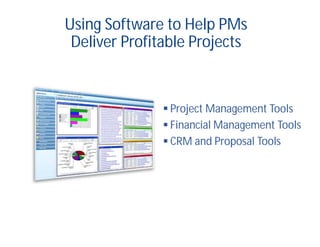
Using Software to Help PMs
Deliver Profitable Projects
 Project Management Tools
 Financial Management Tools
 CRM and Proposal Tools
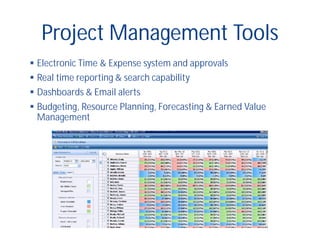
Project Management Tools
 Electronic Time & Expense system and approvals
 Real time reporting & search capability
 Dashboards & Email alerts
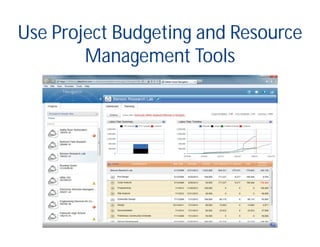
 Budgeting, Resource Planning, Forecasting & Earned Value
Management
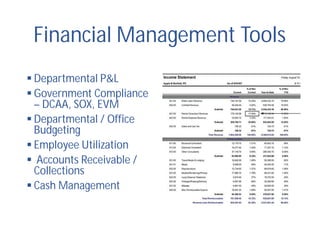
Financial Management Tools
 Departmental P&L
 Government Compliance
– DCAA, SOX, EVM
 Departmental / Office
Budgeting
 Employee Utilization
 Accounts Receivable /
Collections
 Cash Management
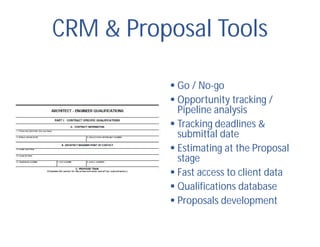
CRM & Proposal Tools
 Go / No-go
 Opportunity tracking /
Pipeline analysis
 Tracking deadlines &
submittal date
 Estimating at the Proposal
stage
 Fast access to client data
 Qualifications database
 Proposals development
How Can You Help PMs to
Become Superstars?
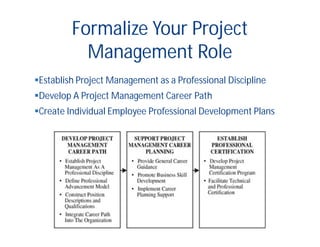
Establish Project Management as a Professional Discipline
Develop A Project Management Career Path
Create Individual Employee Professional Development Plans
Formalize Your Project
Management Role
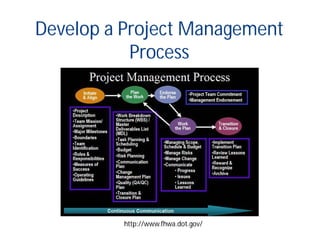
Develop a Project Management
Process
http://www.fhwa.dot.gov/
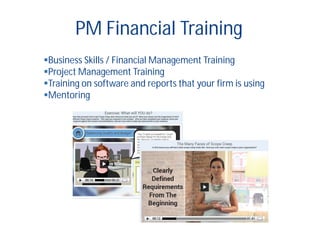
Business Skills / Financial Management Training
Project Management Training
Training on software and reports that your firm is using
Mentoring
PM Financial Training
Project Control Administrative Role
Instant Access to Real Time
Proposal and Project Data
Send Alerts, Notifications and
Reminders
Use Project Budgeting and Resource
Management Tools
Accountability - Clear Cut Goals and
Measurable Results!!!!!
What is one change you can make
today to help your Project
Managers become Superstars?
COPYRIGHT 2015 AEC BUSINESS SOLUTIONS
Connect with Me!

Developing Superstar Project Managers

  • 1.
    Developing Superstar Project Managers Presentedby: June R. Jewell, CPA President, AEC Business Solutions
  • 2.
    June R. Jewell,CPA  Author of best-selling book, Find the Lost Dollars: 6 Steps to Increase Profits in Architecture, Engineering and Environmental Firms  President, AEC Business Solutions  Over 28 years as a business management and Deltek consultant My mission is to help our client’s make more money on their projects
  • 3.
    Agenda State of theindustry – 2015 Some Anecdotal Indications Risks to Growth Some Project Manager Stats How do we evaluate our Project Managers (PMs)? What is a Superstar Project Manager? What Do PMs Really Do? Challenges to Being a Superstar PM What do PMs need to know? What data do they need to do their jobs? Using software to help PMs deliver profitable projects How do we help them to be more successful? Copyright 2015, AEC Business Solutions, LLC
  • 4.
    Poll #1 Do youpersonally manage projects?
  • 5.
    State of theIndustry - 2015  Long recovery – slower than in the past  Construction starts up 6% over last year  Some firms still seeing peaks and valleys  Many firms hiring  Shortage of mid-level experienced architects and engineers is huge  Firms “poaching” from each other  9 to 12 months backlog for many firms  Margins still very tight – fees feel “squeezed”
  • 6.
    Some Anecdotal Indications “Our staff are working overtime to keep up with all the work.”  “Fees are being “squeezed” by our clients.”  “Salaries are going up but our fees aren’t.”  “We can’t find enough qualified people.”  “It is more important now than ever to make sure our PMs know how to make profits.”
  • 7.
    Risks to Growth Culturechallenges Adding people too fast Different skill levels PMs pulled in too many directions How do “we” do it? Inconsistency and chaos…
  • 8.
    Some PM Statistics 52% of firms have a formal Project Manager title*  45% report their role as a PM is a full-time assignment*  42% report their PMs always participate in establishing project budgets  56% finish projects on budget  49% face some direct consequences for not staying within the project budget  48% say their PMs are always responsible for establishing project schedules  43% report they always participate in writing or designing the project scope  59% say project managers always review invoices before they go out  11% report PMs are always responsible for collecting fees  46% feel their level of authority accurately reflects their level of responsibility *Zweig Group Project Management Survey 2014
  • 9.
    How do weevaluate our PMs? 1. Technical skills 2. Winning new business 3. Good with clients / happy clients 4. Outstanding design / product 5. Client wants to hire us again 6. Managing the team – clients, subs, staff 7. Client paid 8. Projects made money / on budget
  • 10.
    What is a“Superstar” Project Manager?  Able to manage their time and roles  Good at all phases of project lifecycle  Technically competent  Good communication skills/  Managing people – all stakeholders  Delegate work  Schedule and manage resources  Deliver on time and on budget  Prepared to move into leadership  Makes a Profit!!
  • 11.
    What Do YourPMs Really Do? Business Development / Sales Proposals Develop Scope / Estimate Manage project schedules Approve time & expenses Billing Collections Manage Subcontractors Using resources effectively / Utilization Manage project deliverables Solve client problems / nurture client relationships Mentor / Train / Discipline staff Recruit / Interview / Hire staff (HR) Manage contractual / legal requirements Manage Project Budgets / Profitability $$$
  • 12.
    Challenges to beinga Superstar PM
  • 13.
    No Real PMTrack or Role
  • 14.
    No PM JobDescription
  • 15.
    What they dodoesn’t match their job description
  • 16.
    No control overproject scope or resources assigned
  • 17.
    Not given thedata they need to manage projects
  • 18.
  • 19.
  • 20.
    Poll #2 What elsecan your firm do to help your PMs to be more successful?
  • 21.
    What Do PMsNeed to Know?  Basics of how profit is made on projects: Labor, Expenses, Overhead  Relationship of utilization to profitability: How overhead is affected by non-billable time  Terminology: Work-in-Process, AR, Net Revenues, Net Multiplier, Overhead Rate, Realization, Utilization, Backlog, Variance, etc.  How to read reports  Budgeting and planning resources within the scope / fee of the contract  Effectively communicating the scope to the team  Controlling the subcontractor budget, scope and billing  Managing staff, delegating work, handling difficult clients and problems that arise during the project.
  • 22.
    What Data DoPMs Need?  Budget to actual by project / phase (real time is best)  Aged accounts receivable  Employee utilization for their direct reports  Backlog / Burn Rate / Earned Value  Company overhead rate  Billing (cost) rates of their staff  Project profitability  Departmental analysis (Dept. Heads)  Forecast of probable wins  Staff availability
  • 23.
    Using Software toHelp PMs Deliver Profitable Projects  Project Management Tools  Financial Management Tools  CRM and Proposal Tools
  • 24.
    Project Management Tools Electronic Time & Expense system and approvals  Real time reporting & search capability  Dashboards & Email alerts  Budgeting, Resource Planning, Forecasting & Earned Value Management
  • 25.
    Financial Management Tools Departmental P&L  Government Compliance – DCAA, SOX, EVM  Departmental / Office Budgeting  Employee Utilization  Accounts Receivable / Collections  Cash Management
  • 26.
    CRM & ProposalTools  Go / No-go  Opportunity tracking / Pipeline analysis  Tracking deadlines & submittal date  Estimating at the Proposal stage  Fast access to client data  Qualifications database  Proposals development
  • 27.
    How Can YouHelp PMs to Become Superstars?
  • 28.
    Establish Project Managementas a Professional Discipline Develop A Project Management Career Path Create Individual Employee Professional Development Plans Formalize Your Project Management Role
  • 29.
    Develop a ProjectManagement Process http://www.fhwa.dot.gov/
  • 30.
    Business Skills /Financial Management Training Project Management Training Training on software and reports that your firm is using Mentoring PM Financial Training
  • 31.
  • 32.
    Instant Access toReal Time Proposal and Project Data
  • 33.
  • 34.
    Use Project Budgetingand Resource Management Tools
  • 35.
    Accountability - ClearCut Goals and Measurable Results!!!!!
  • 36.
    What is onechange you can make today to help your Project Managers become Superstars?
  • 37.
    COPYRIGHT 2015 AECBUSINESS SOLUTIONS
  • 38.