1.5 Classifying Animals
Phylum Vertebrates
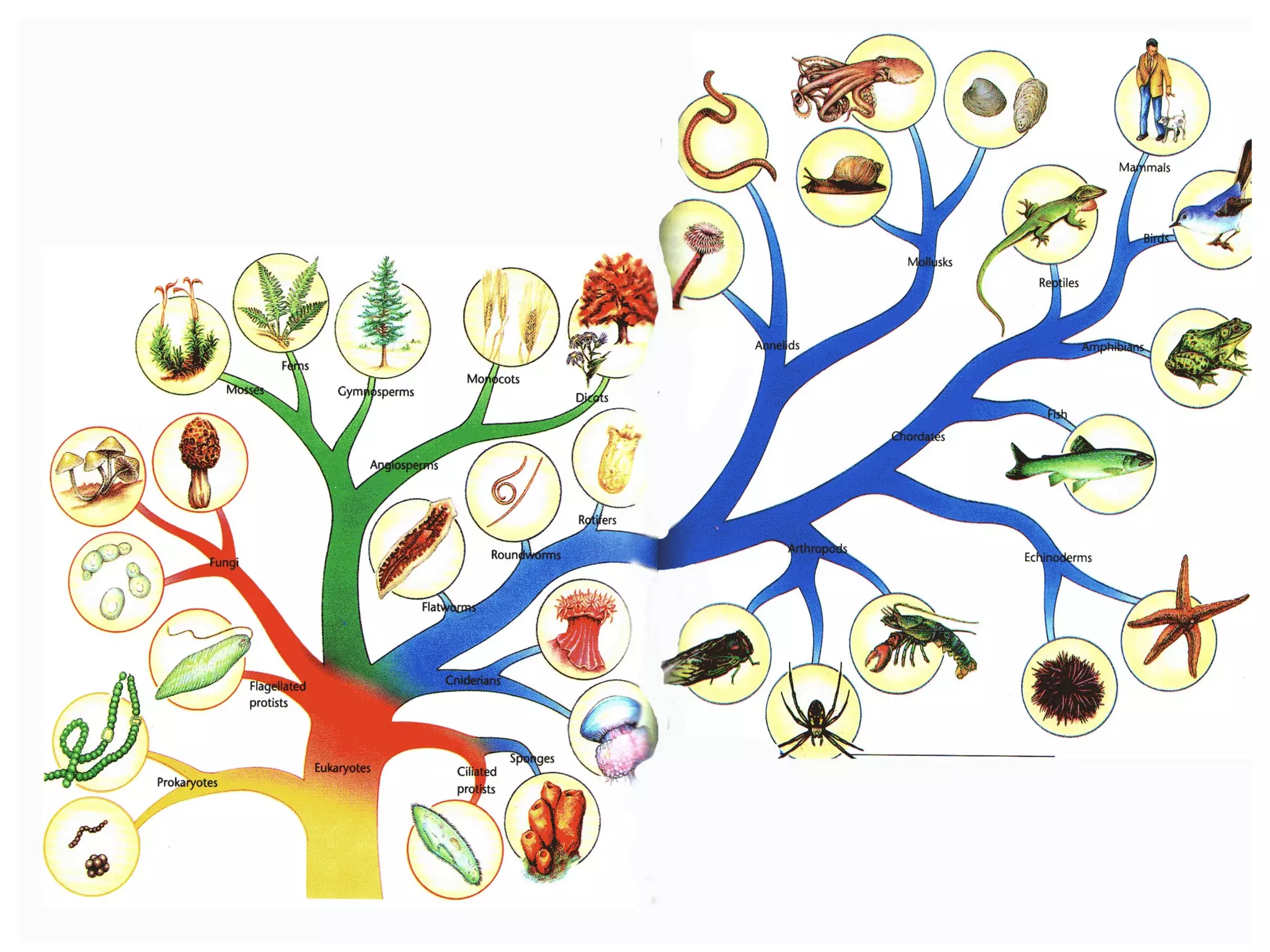
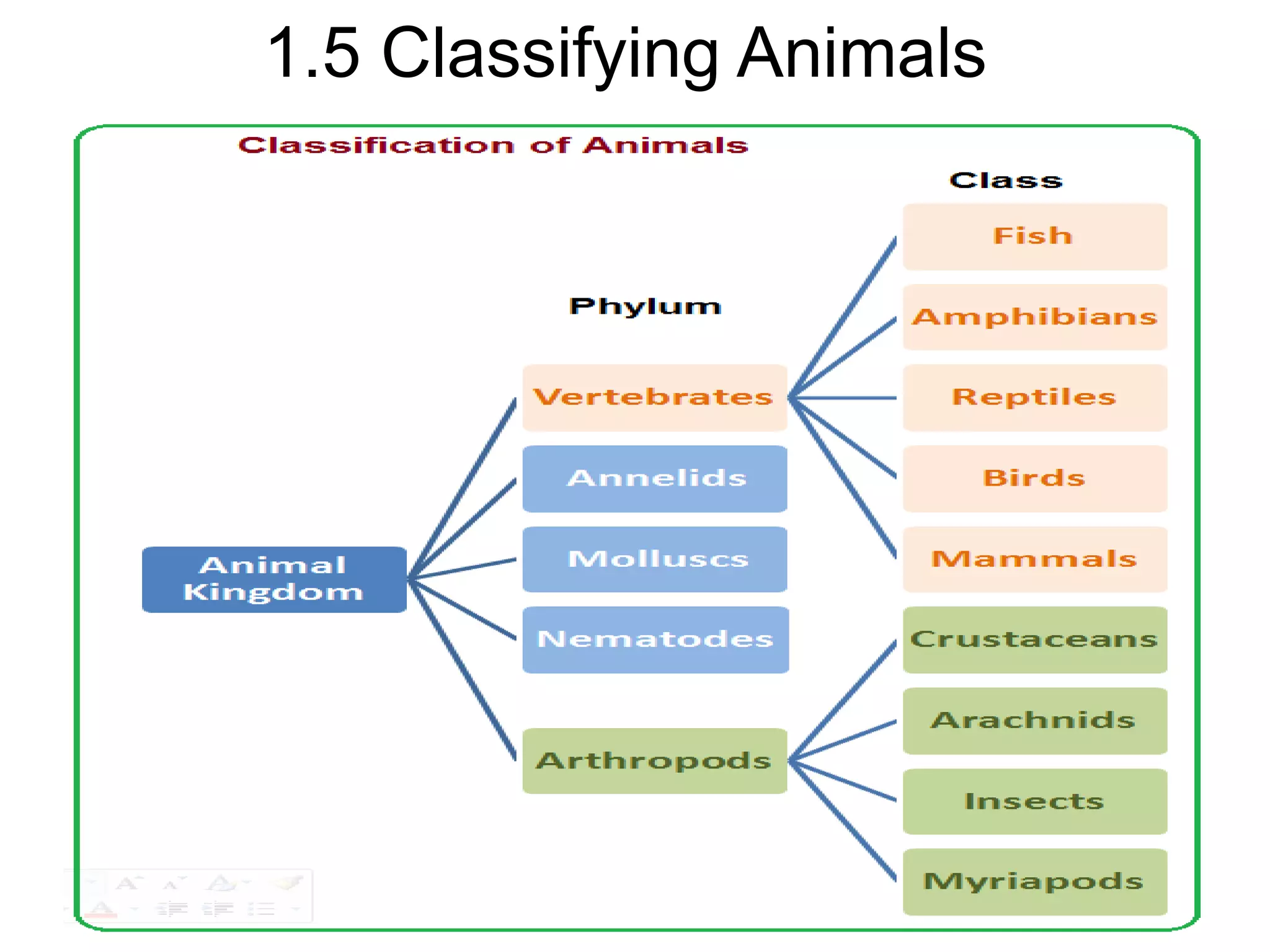
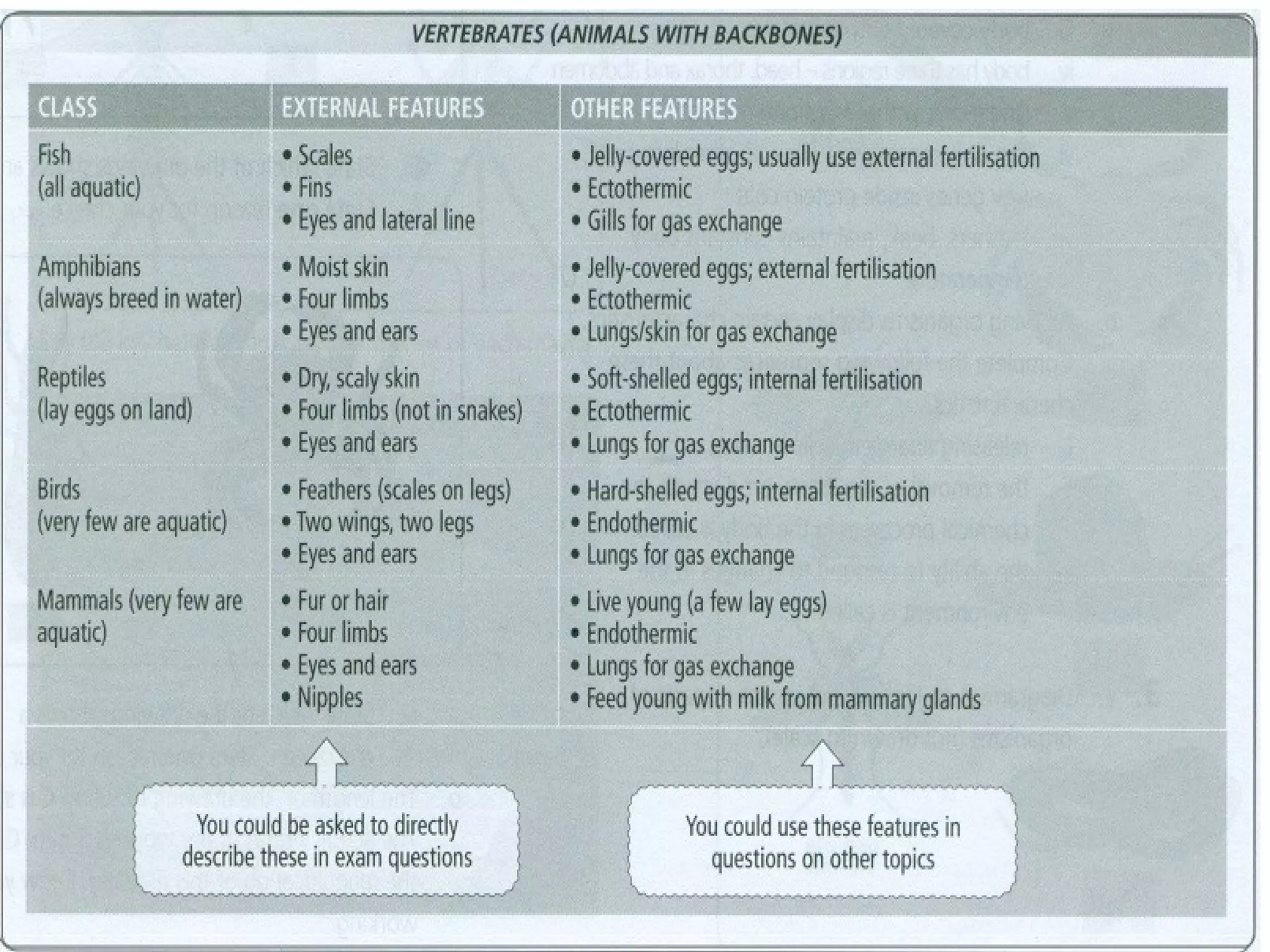
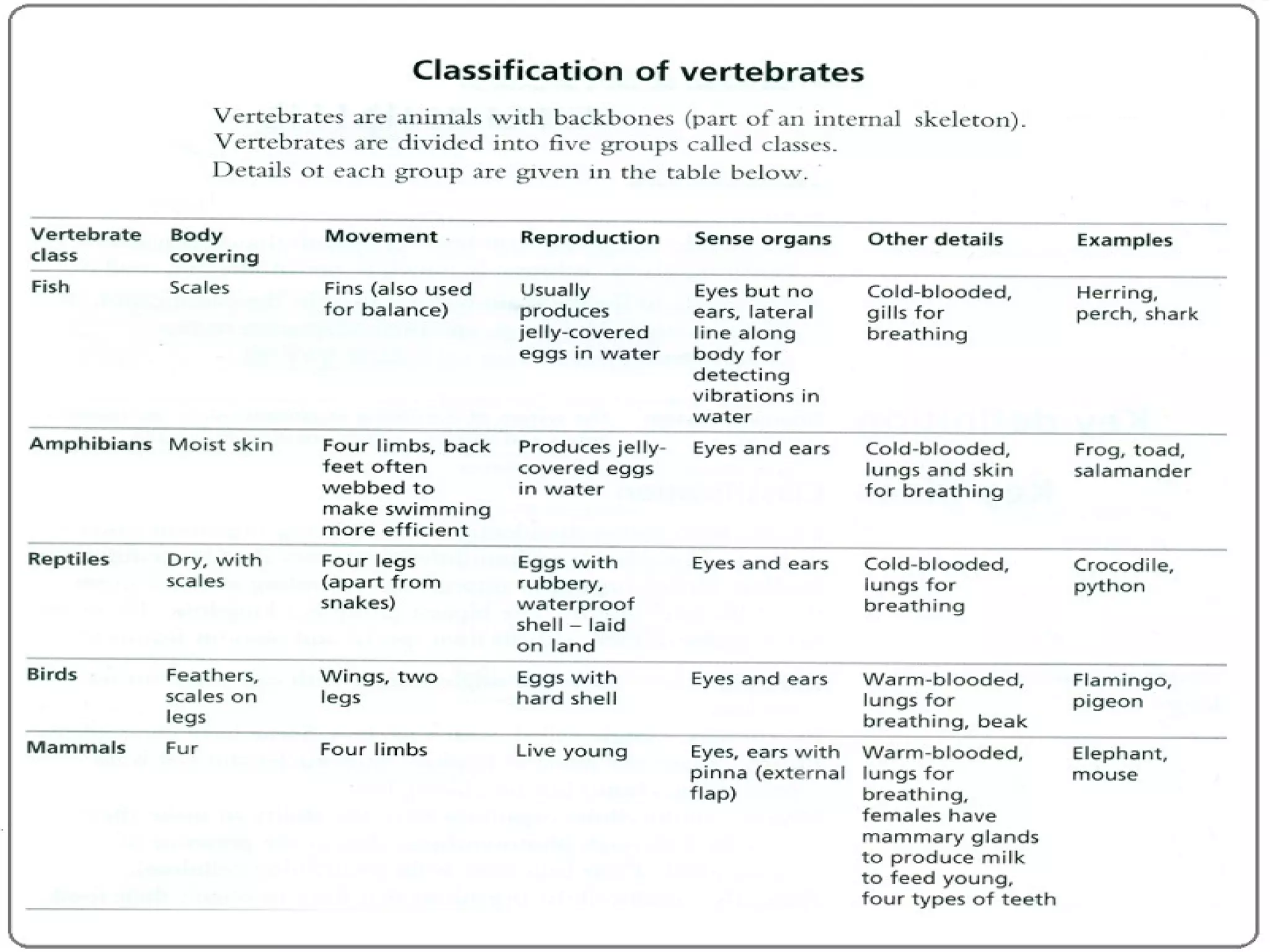
Vertebrates are animals with backbones. They are divided into 5 groups
called classes: Fish, Amphibians, Reptiles, Birds and Mammals.
Class Fish
Notes
● Periophthalmus barbarus - mudskippers in The
Gambia
● Sharks practice internal fertilisation.
Class Birds, also known as Aves, are a group of
endothermic vertebrates, characterised by feathers, toothless
beaked jaws, the laying of hard-shelled eggs, a high
metabolic rate, a four-chambered heart, and a strong yet
lightweight skeleton
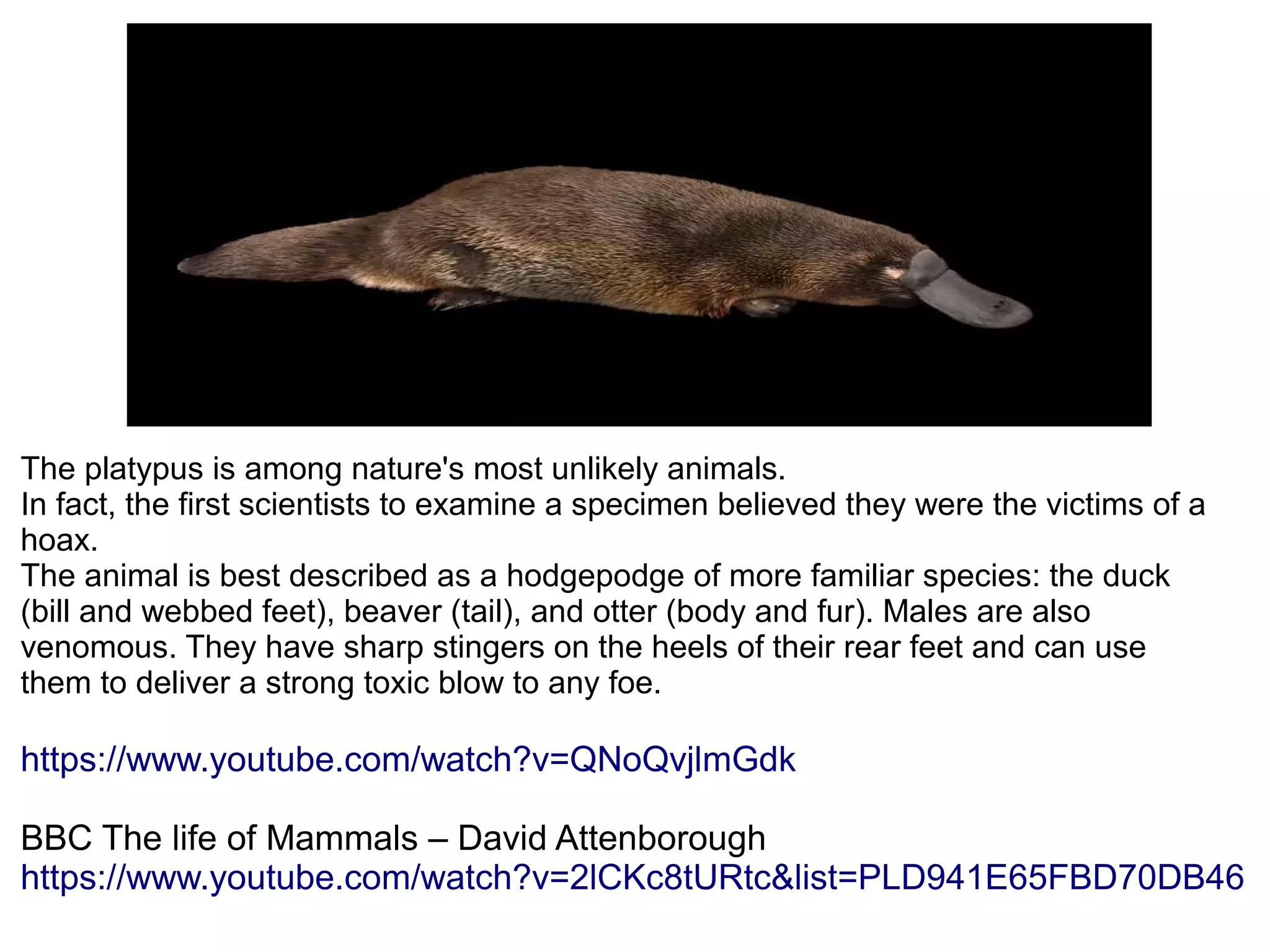
COMMON NAME: Platypus
SCIENTIFIC NAME: Ornithorhynchus anatinus
TYPE: Mammals
DIET: Carnivores
SIZE: Head and body, 15 in; tail, 5 in
WEIGHT: 3 lbs
The platypus is among nature's most unlikely animals.
In fact, the first scientists to examine a specimen believed they were the victims of a
hoax.
The animal is best described as a hodgepodge of more familiar species: the duck
(bill and webbed feet), beaver (tail), and otter (body and fur). Males are also
venomous. They have sharp stingers on the heels of their rear feet and can use
them to deliver a strong toxic blow to any foe.
https://www.youtube.com/watch?v=QNoQvjlmGdk
BBC The life of Mammals – David Attenborough
https://www.youtube.com/watch?v=2lCKc8tURtc&list=PLD941E65FBD70DB46
IGCSE Biology - classifying animals   phylum vertebrates - five classes

IGCSE Biology - classifying animals phylum vertebrates - five classes

  • 2.
  • 4.
    Phylum Vertebrates Vertebrates areanimals with backbones. They are divided into 5 groups called classes: Fish, Amphibians, Reptiles, Birds and Mammals.
  • 6.
  • 8.
    Notes ● Periophthalmus barbarus- mudskippers in The Gambia ● Sharks practice internal fertilisation.
  • 15.
    Class Birds, alsoknown as Aves, are a group of endothermic vertebrates, characterised by feathers, toothless beaked jaws, the laying of hard-shelled eggs, a high metabolic rate, a four-chambered heart, and a strong yet lightweight skeleton
  • 18.
    COMMON NAME: Platypus SCIENTIFICNAME: Ornithorhynchus anatinus TYPE: Mammals DIET: Carnivores SIZE: Head and body, 15 in; tail, 5 in WEIGHT: 3 lbs
  • 19.
    The platypus isamong nature's most unlikely animals. In fact, the first scientists to examine a specimen believed they were the victims of a hoax. The animal is best described as a hodgepodge of more familiar species: the duck (bill and webbed feet), beaver (tail), and otter (body and fur). Males are also venomous. They have sharp stingers on the heels of their rear feet and can use them to deliver a strong toxic blow to any foe. https://www.youtube.com/watch?v=QNoQvjlmGdk BBC The life of Mammals – David Attenborough https://www.youtube.com/watch?v=2lCKc8tURtc&list=PLD941E65FBD70DB46