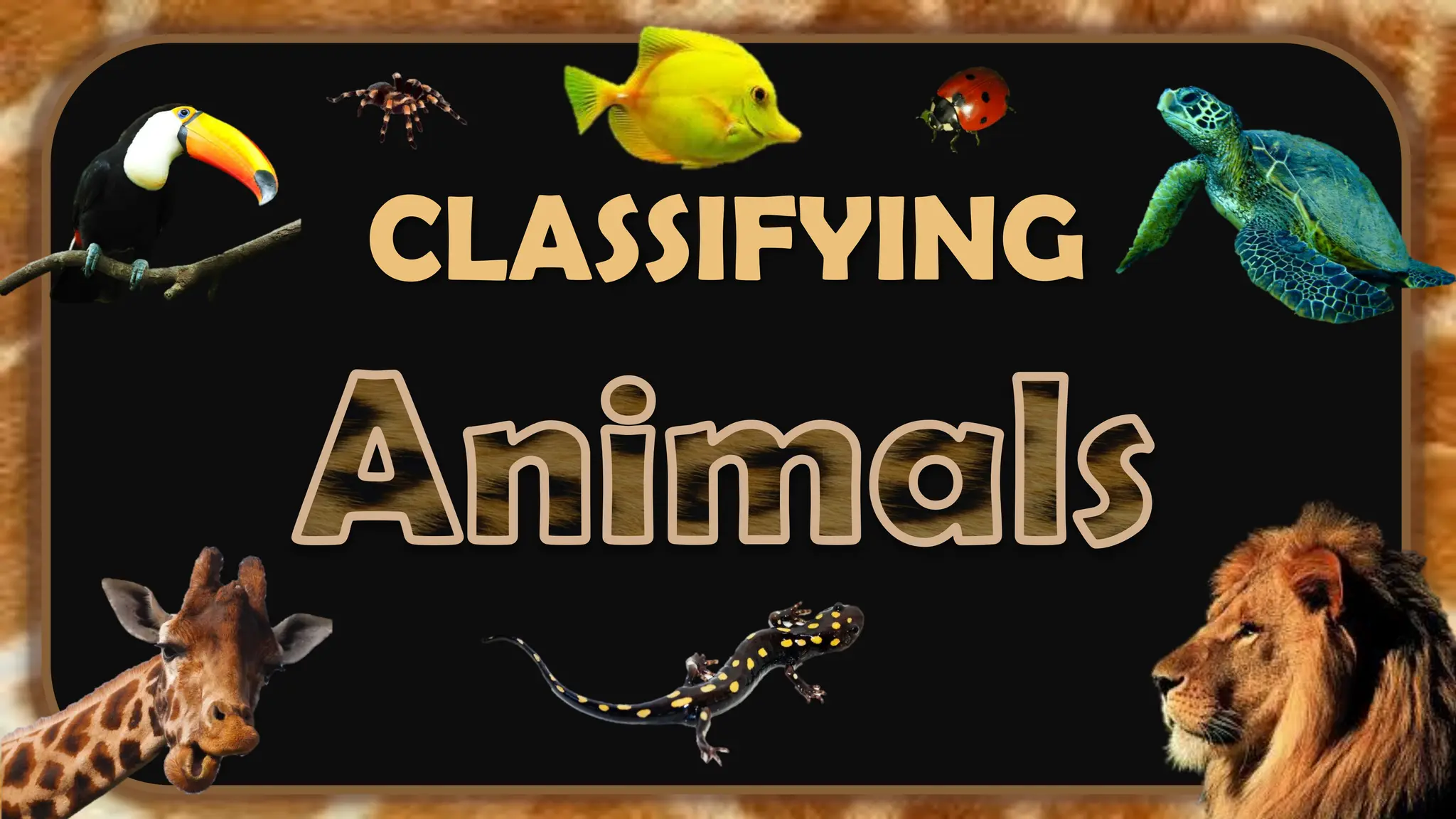
CLASSIFYING
Animals are organisms that can be
made of many parts.
They’re not capable of making their
own food.
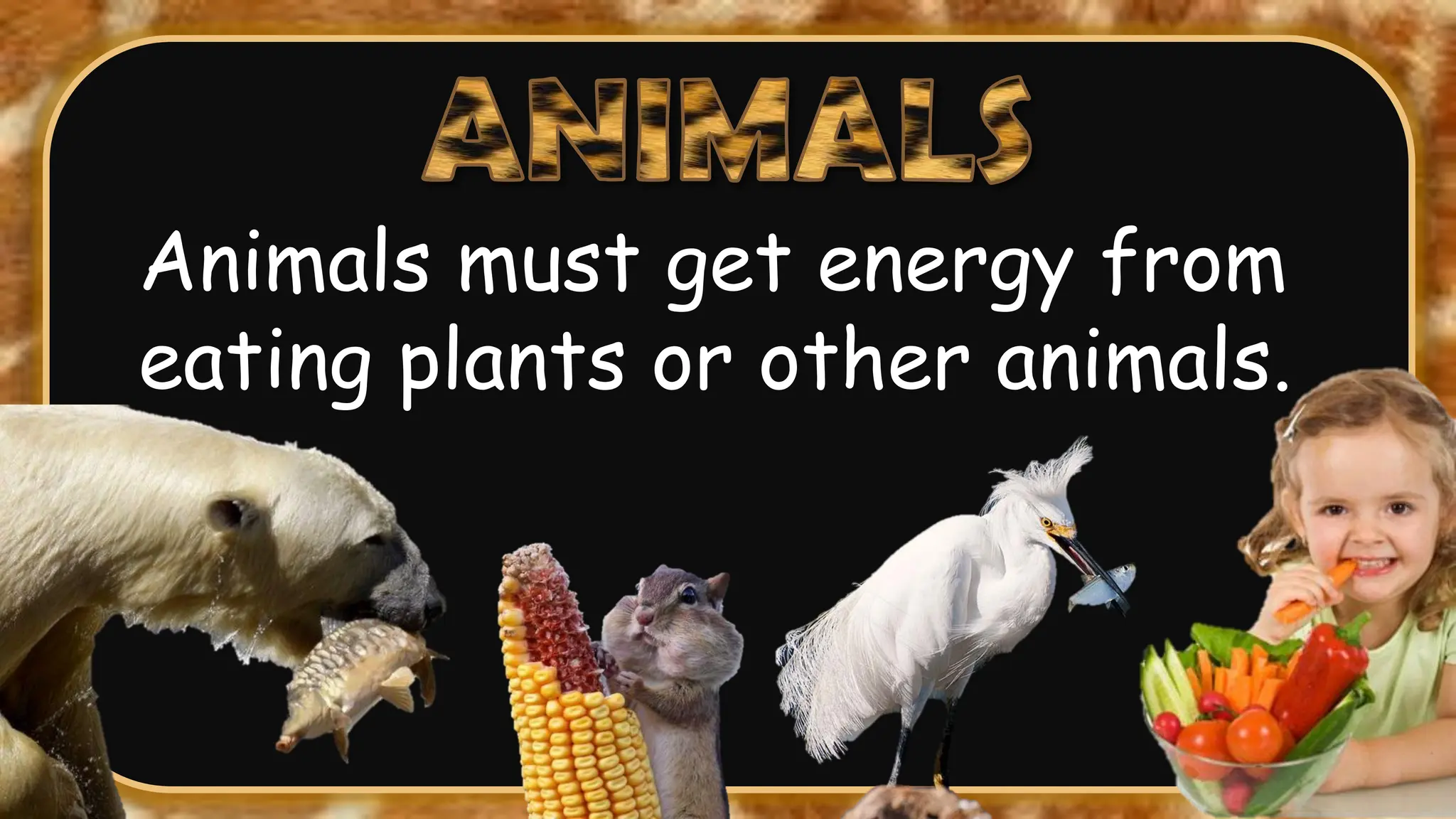
Animals must get energy from
eating plants or other animals.
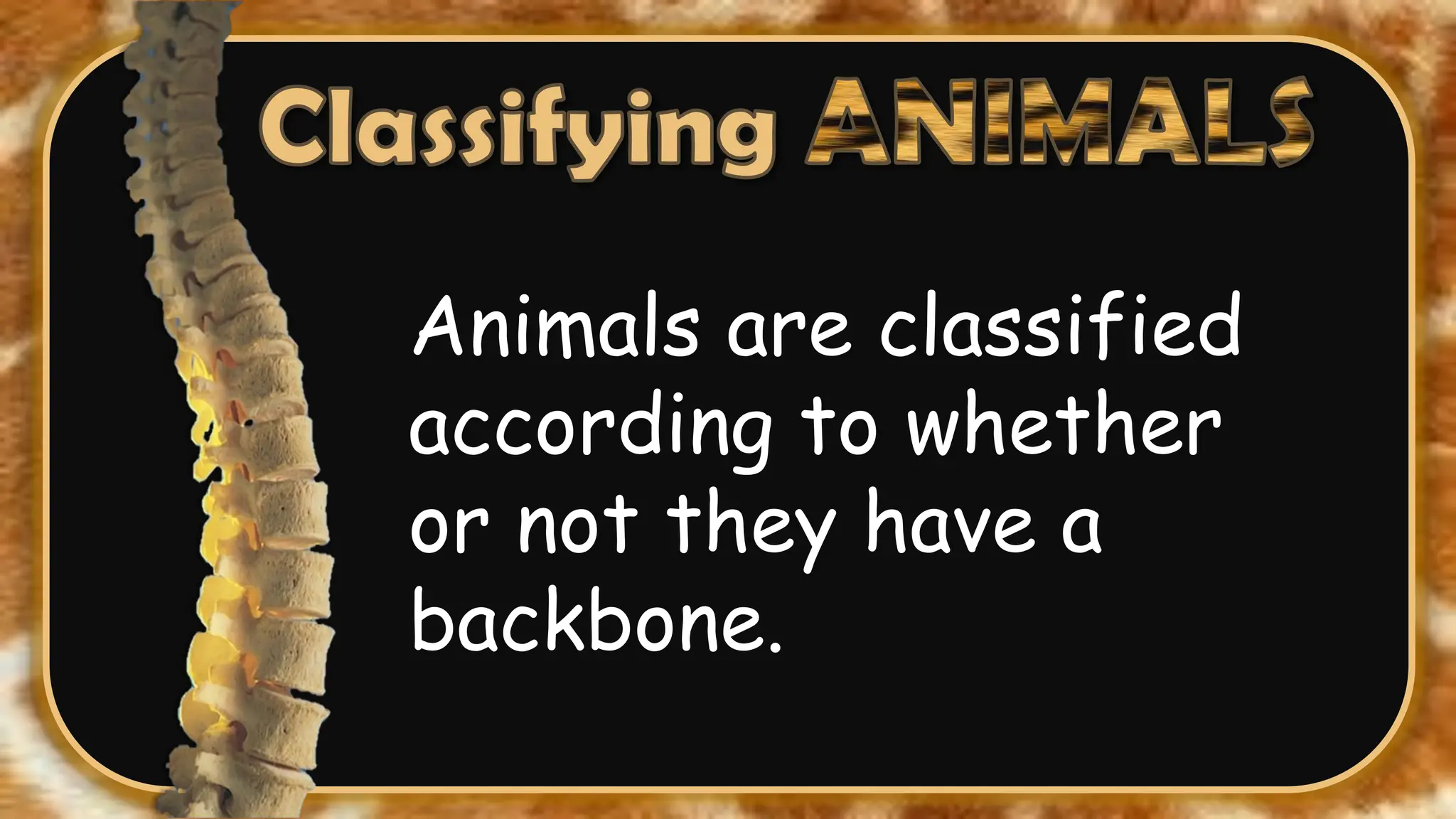
Animals are classified
according to whether
or not they have a
backbone.
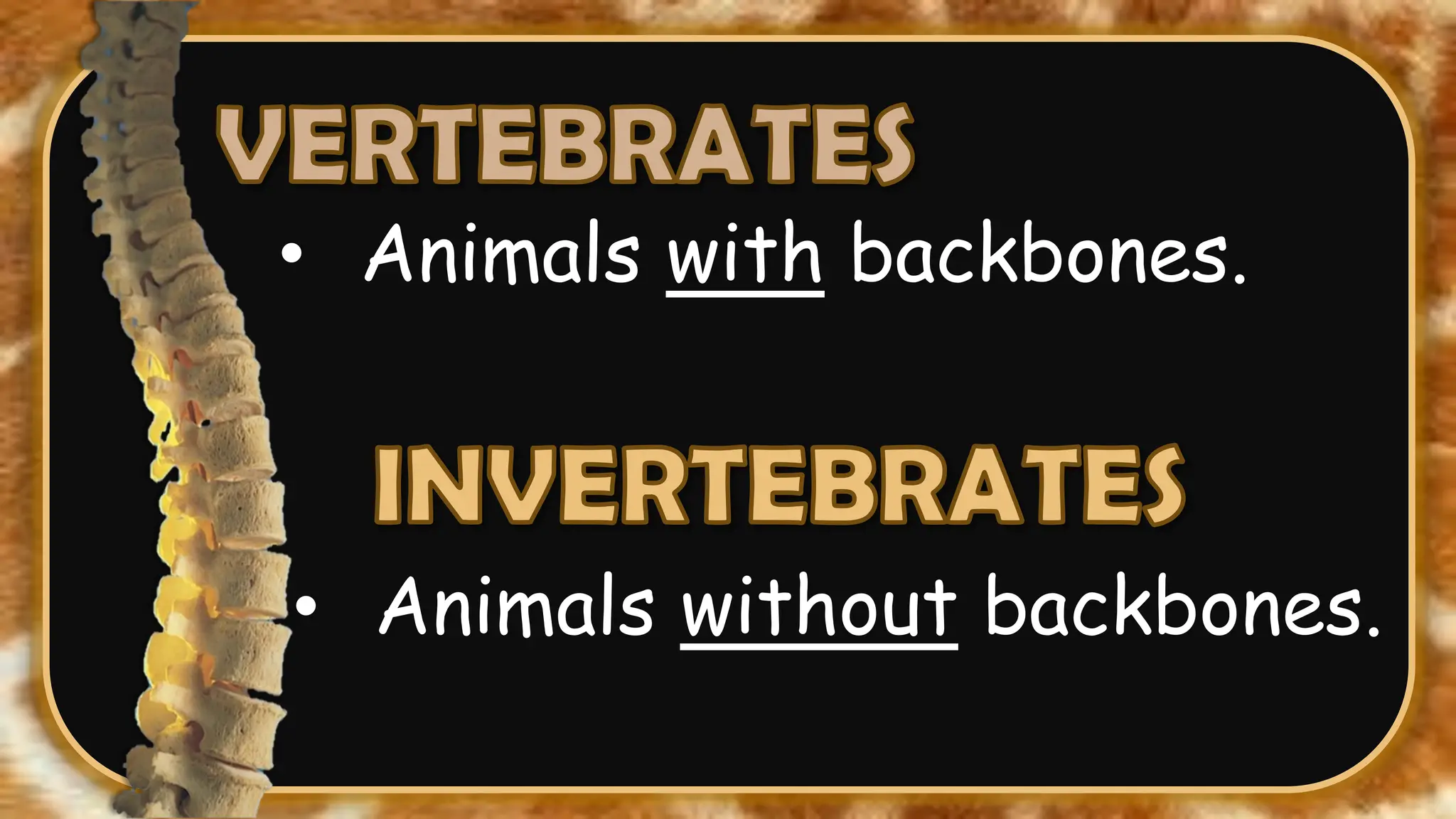
• Animals with backbones.
• Animals without backbones.
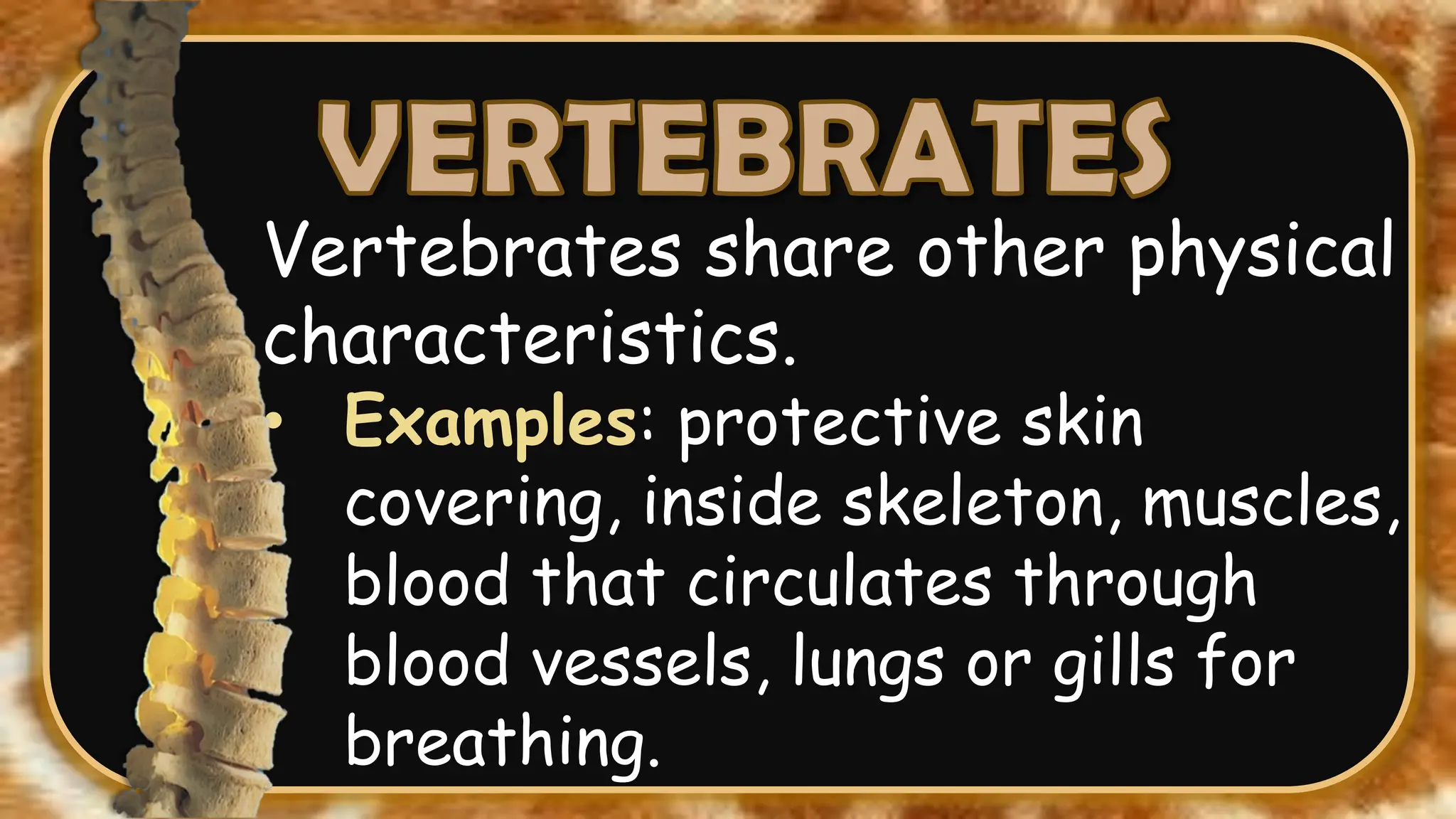
Vertebrates share other physical
characteristics.
• Examples: protective skin
covering, inside skeleton, muscles,
blood that circulates through
blood vessels, lungs or gills for
breathing.
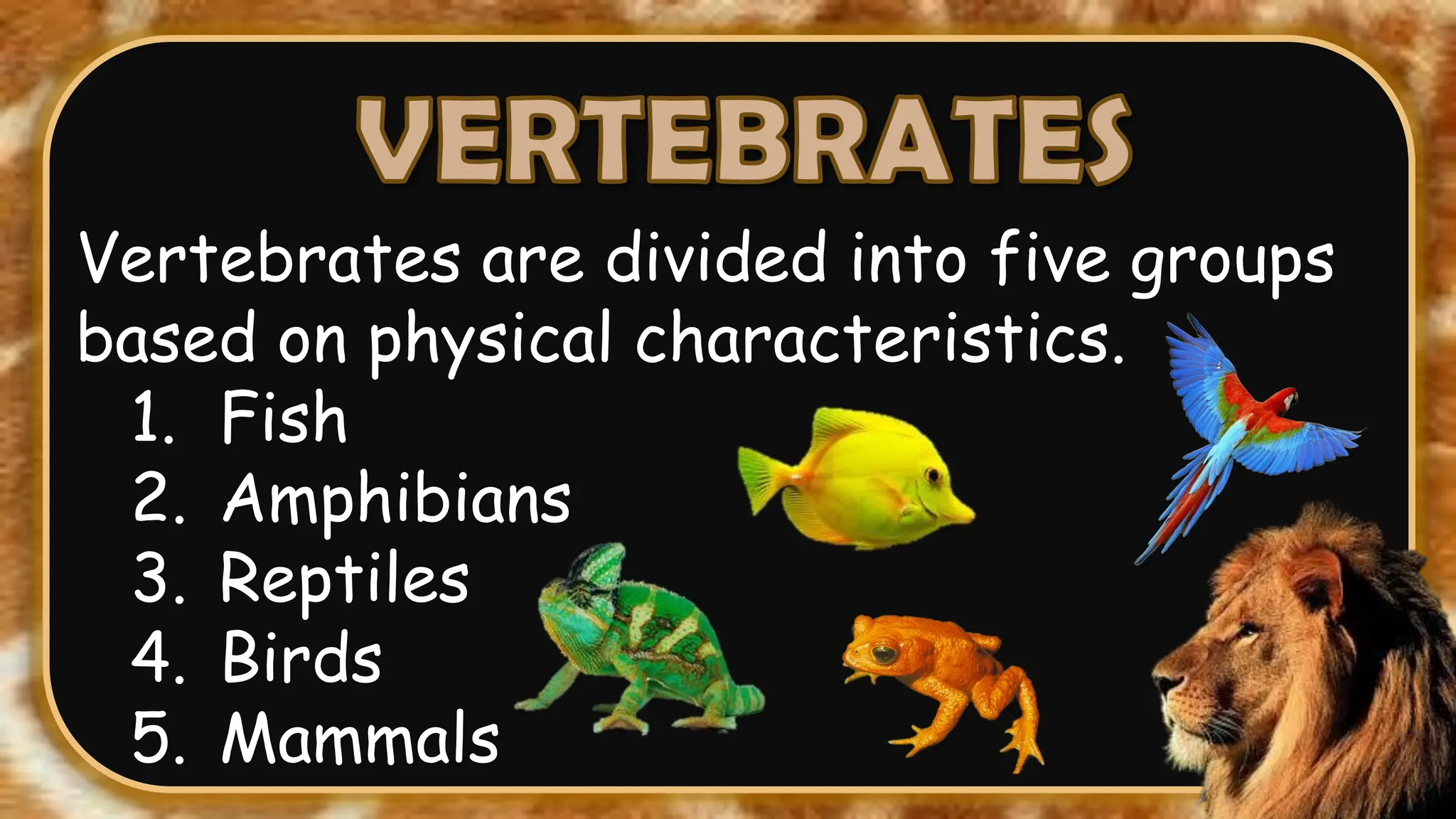
Vertebrates are divided into five groups
based on physical characteristics.
1. Fish
2. Amphibians
3. Reptiles
4. Birds
5. Mammals
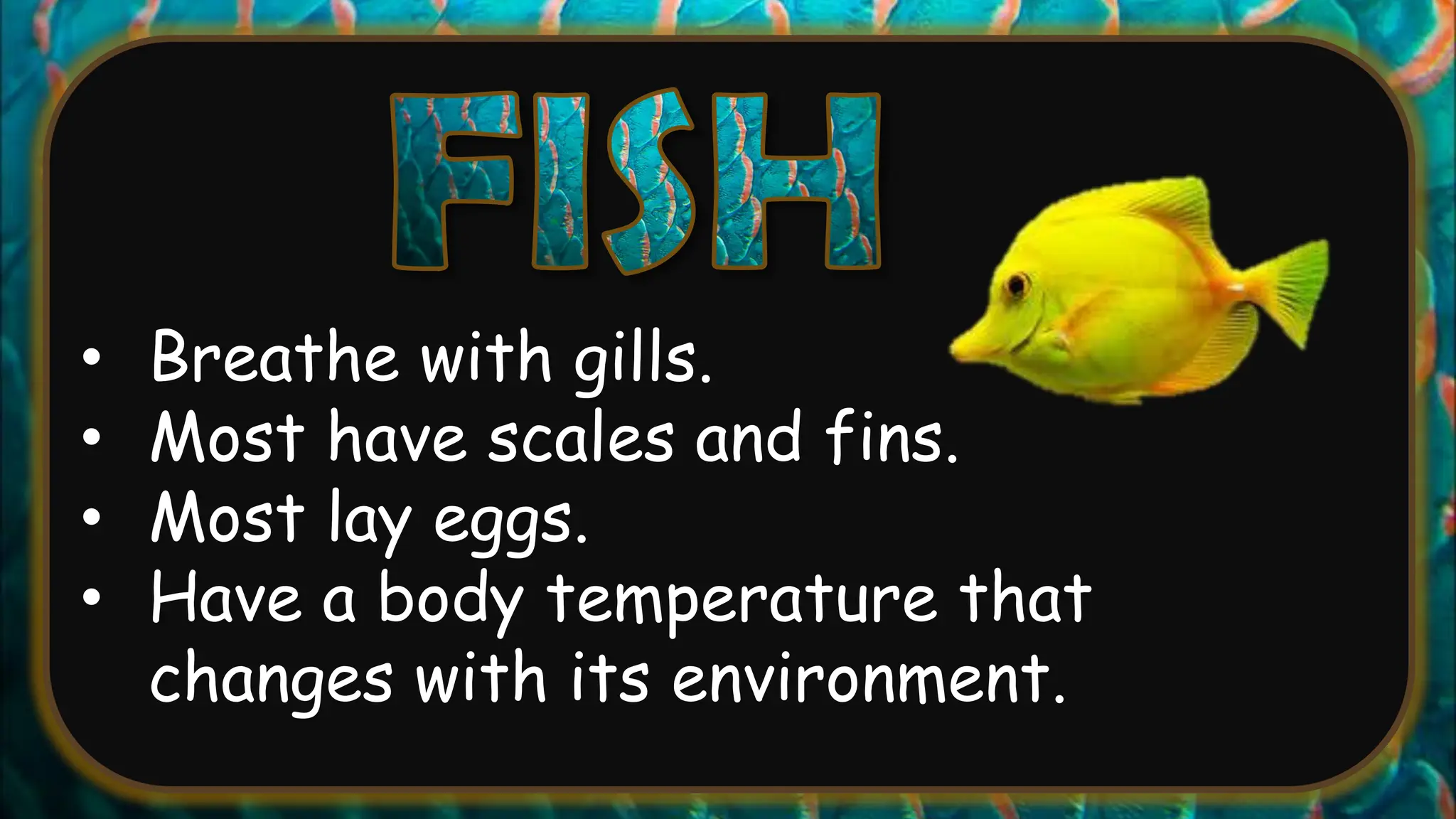
• Breathe with gills.
• Most have scales and fins.
• Most lay eggs.
• Have a body temperature that
changes with its environment.
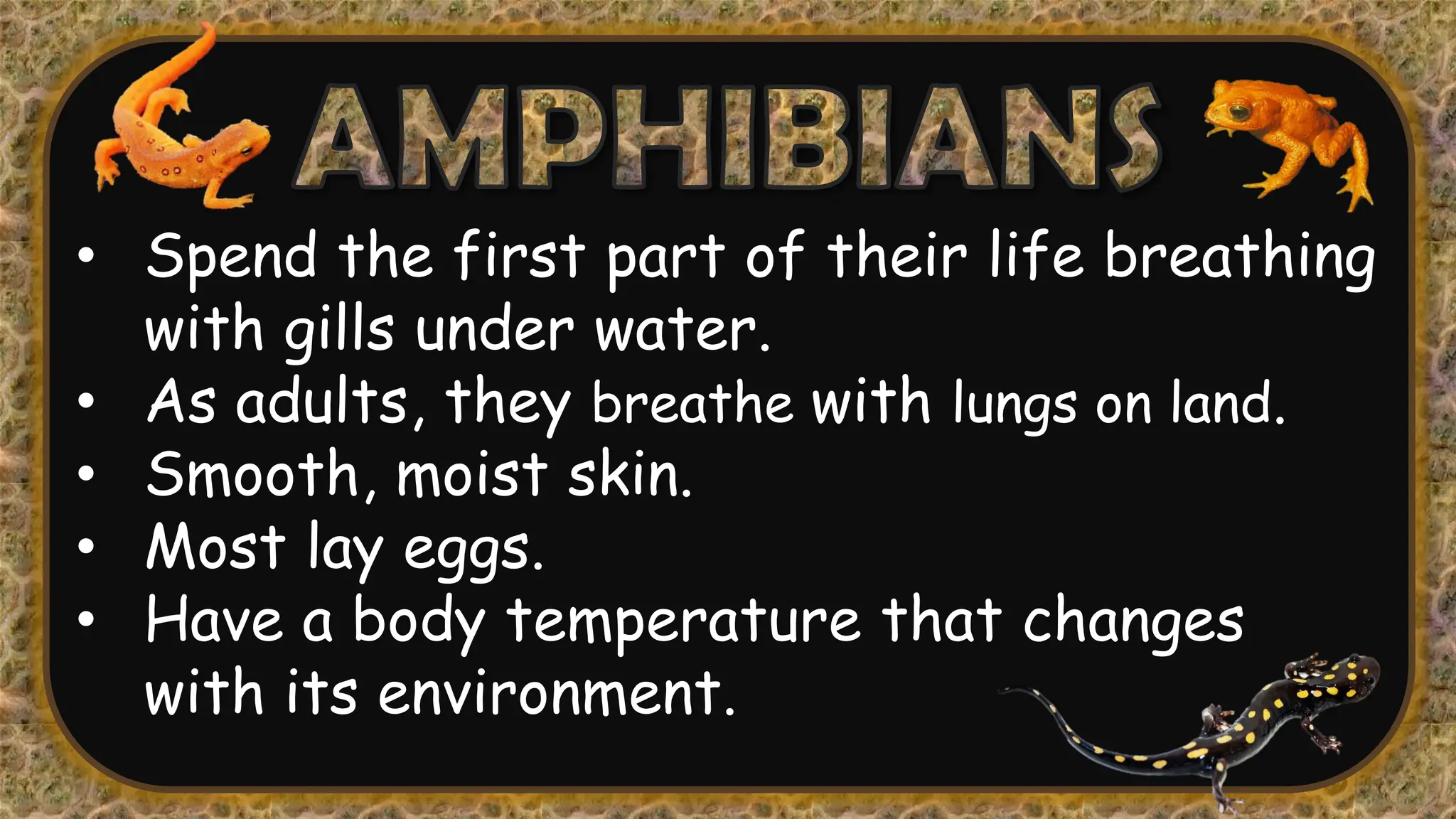
• Spend the first part of their life breathing
with gills under water.
• As adults, they breathe with lungs on land.
• Smooth, moist skin.
• Most lay eggs.
• Have a body temperature that changes
with its environment.
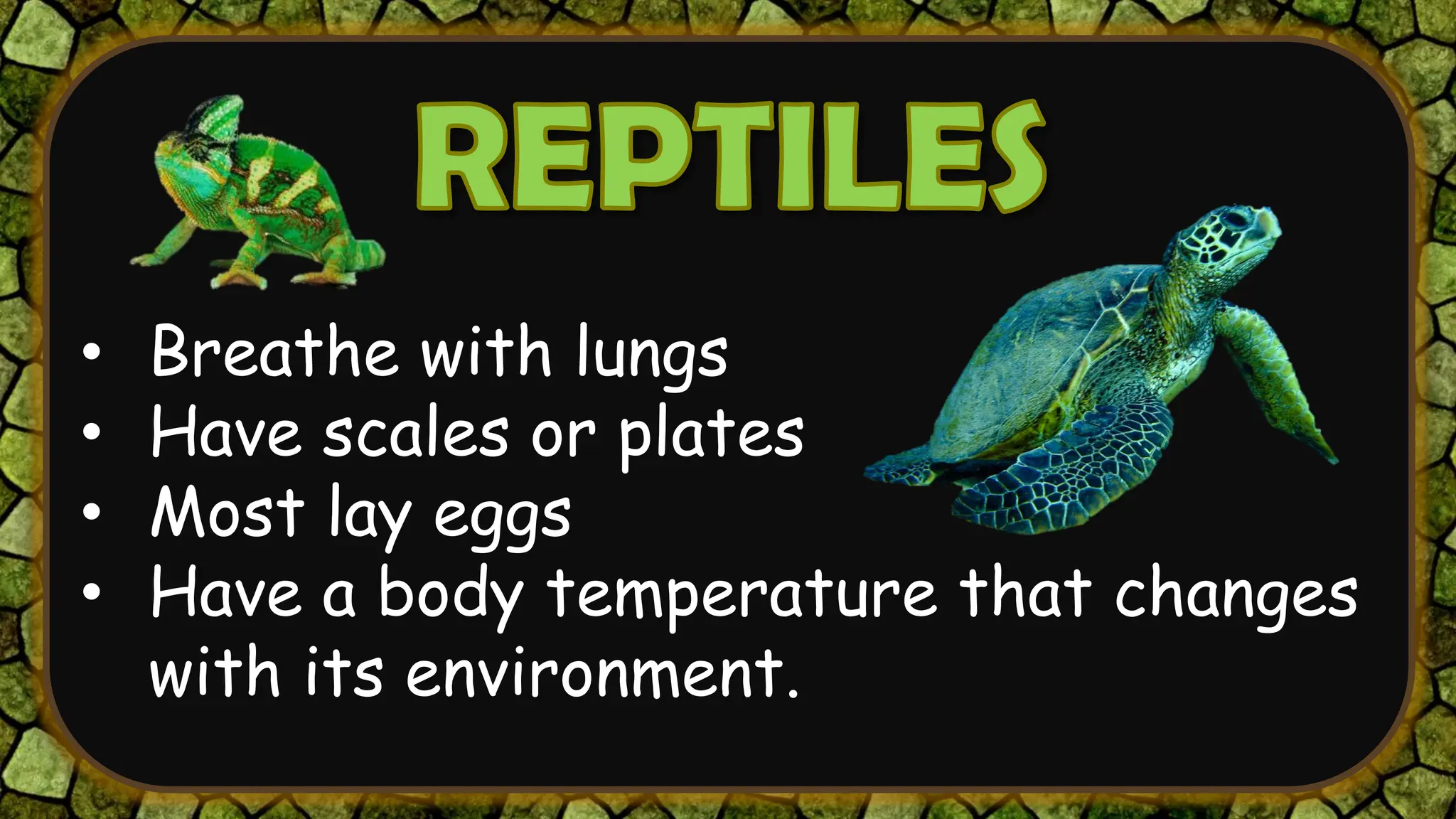
• Breathe with lungs
• Have scales or plates
• Most lay eggs
• Have a body temperature that changes
with its environment.
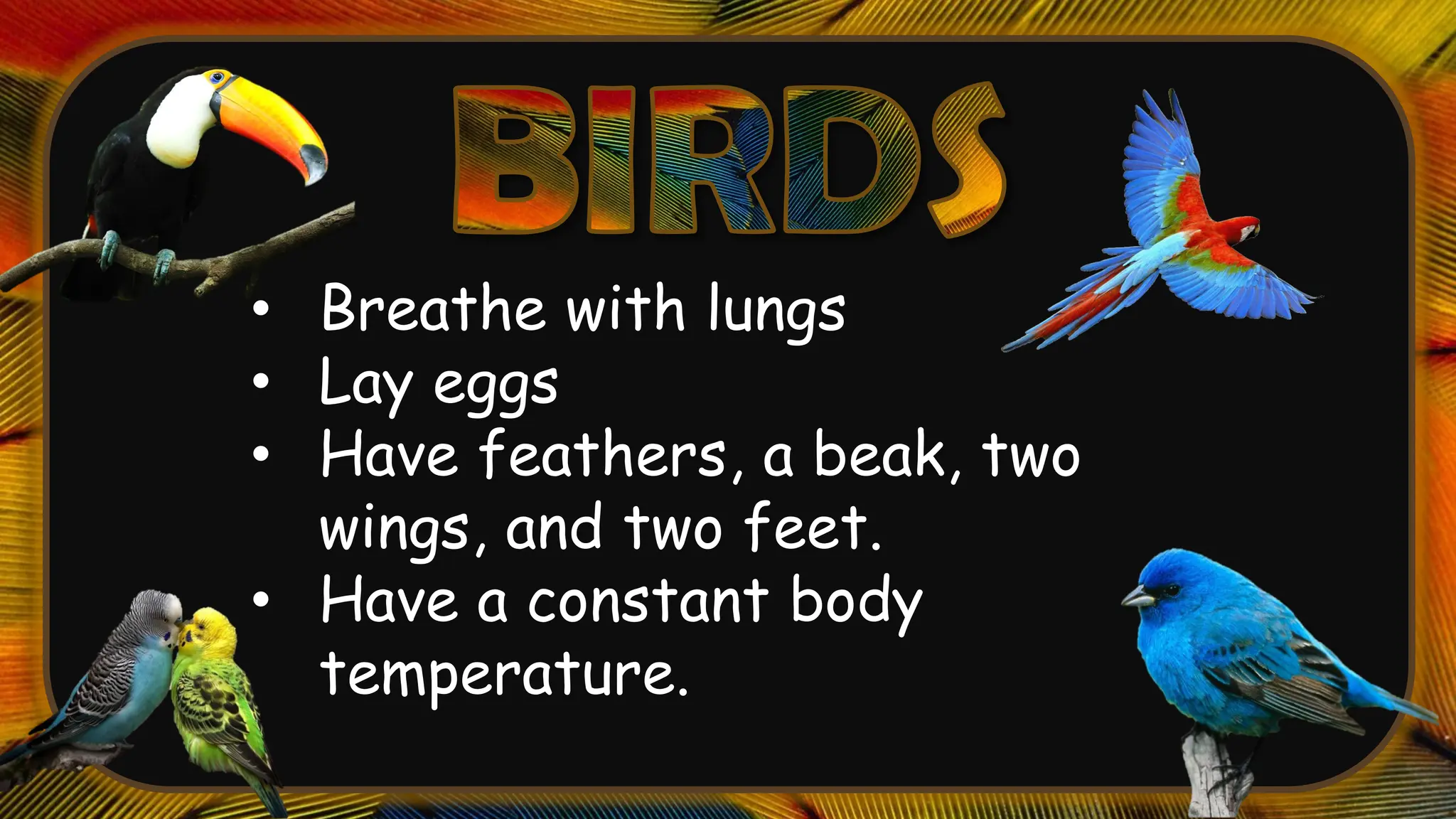
• Breathe with lungs
• Lay eggs
• Have feathers, a beak, two
wings, and two feet.
• Have a constant body
temperature.
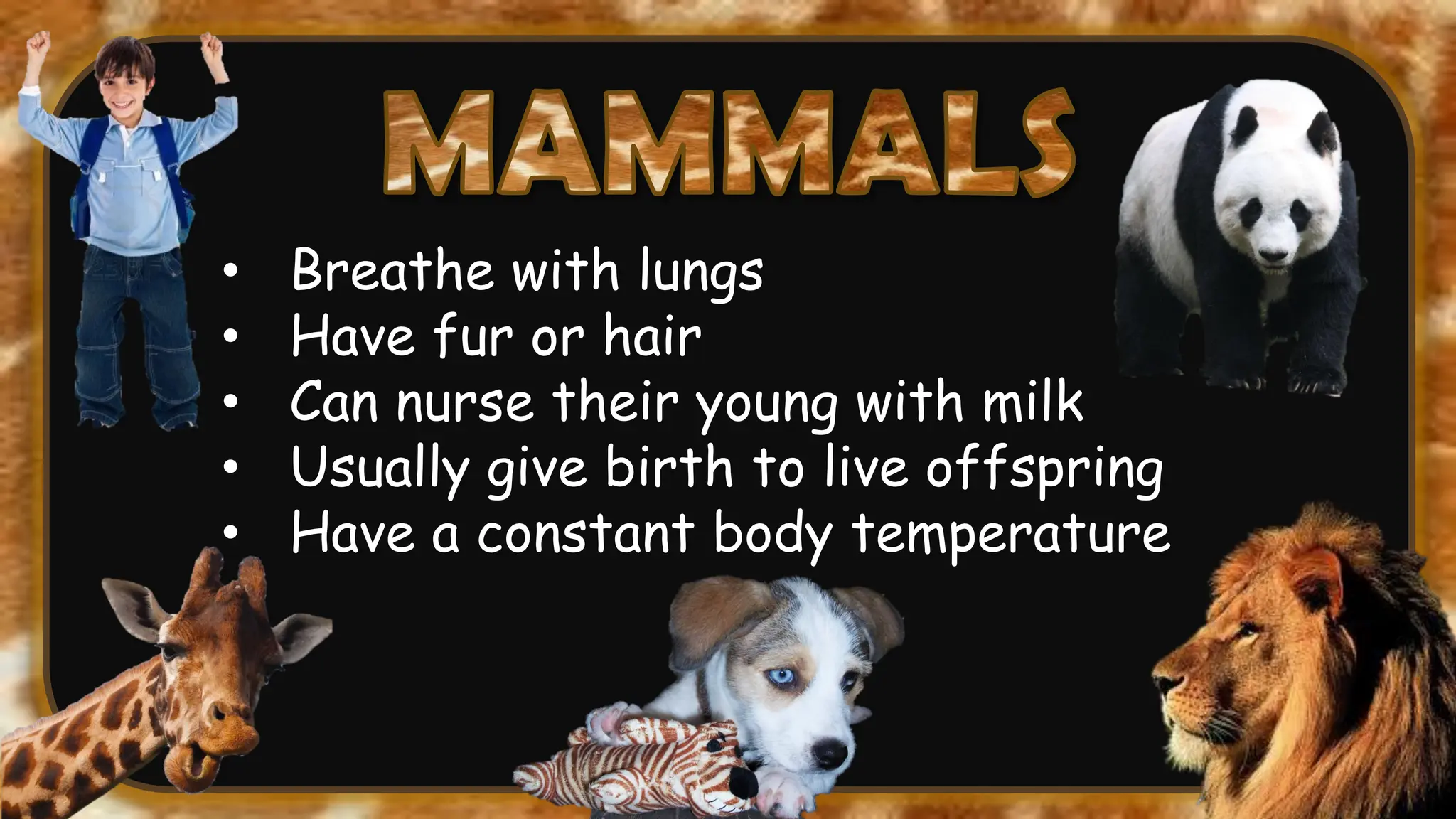
• Breathe with lungs
• Have fur or hair
• Can nurse their young with milk
• Usually give birth to live offspring
• Have a constant body temperature
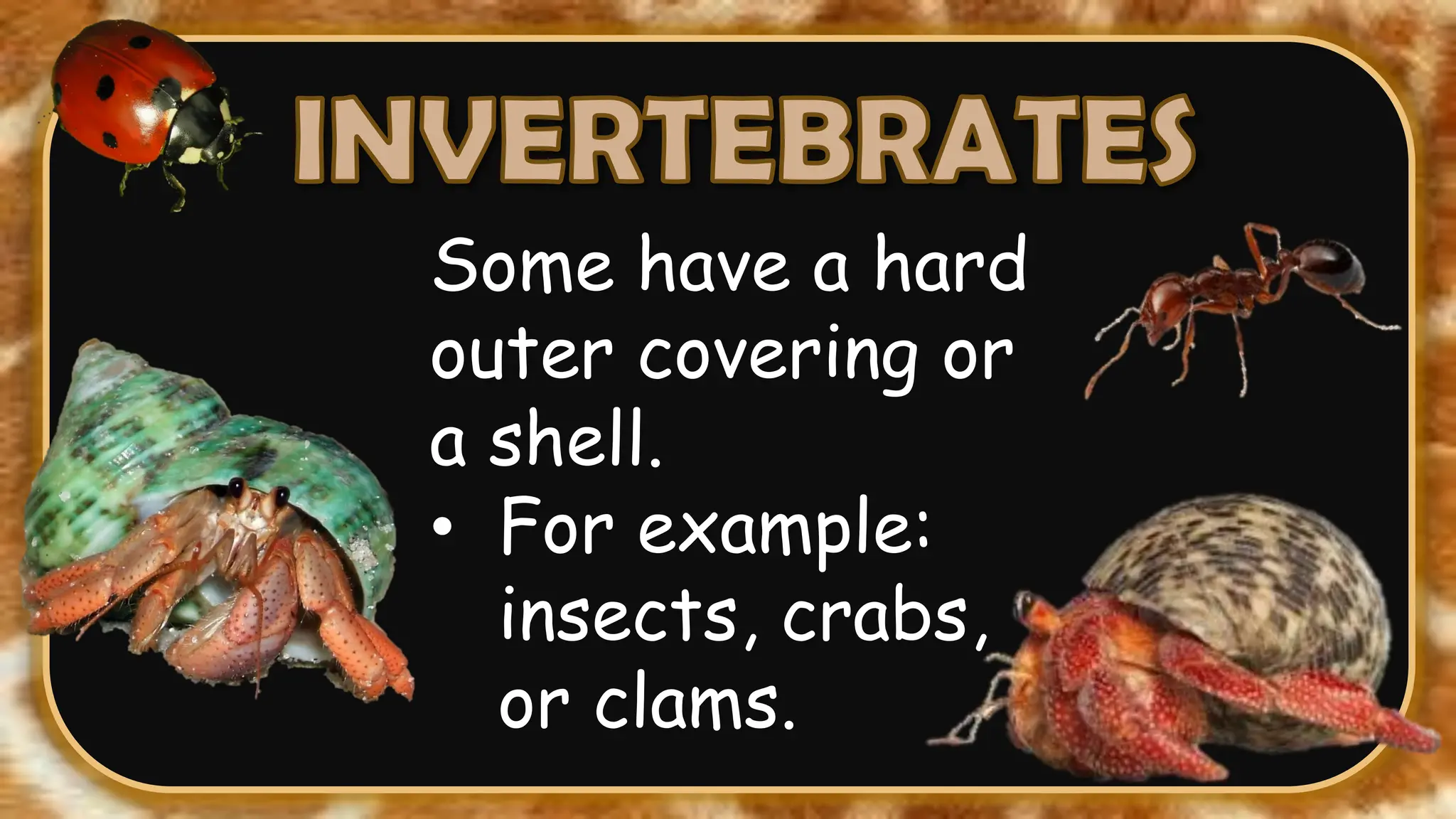
Some have a hard
outer covering or
a shell.
• For example:
insects, crabs,
or clams.
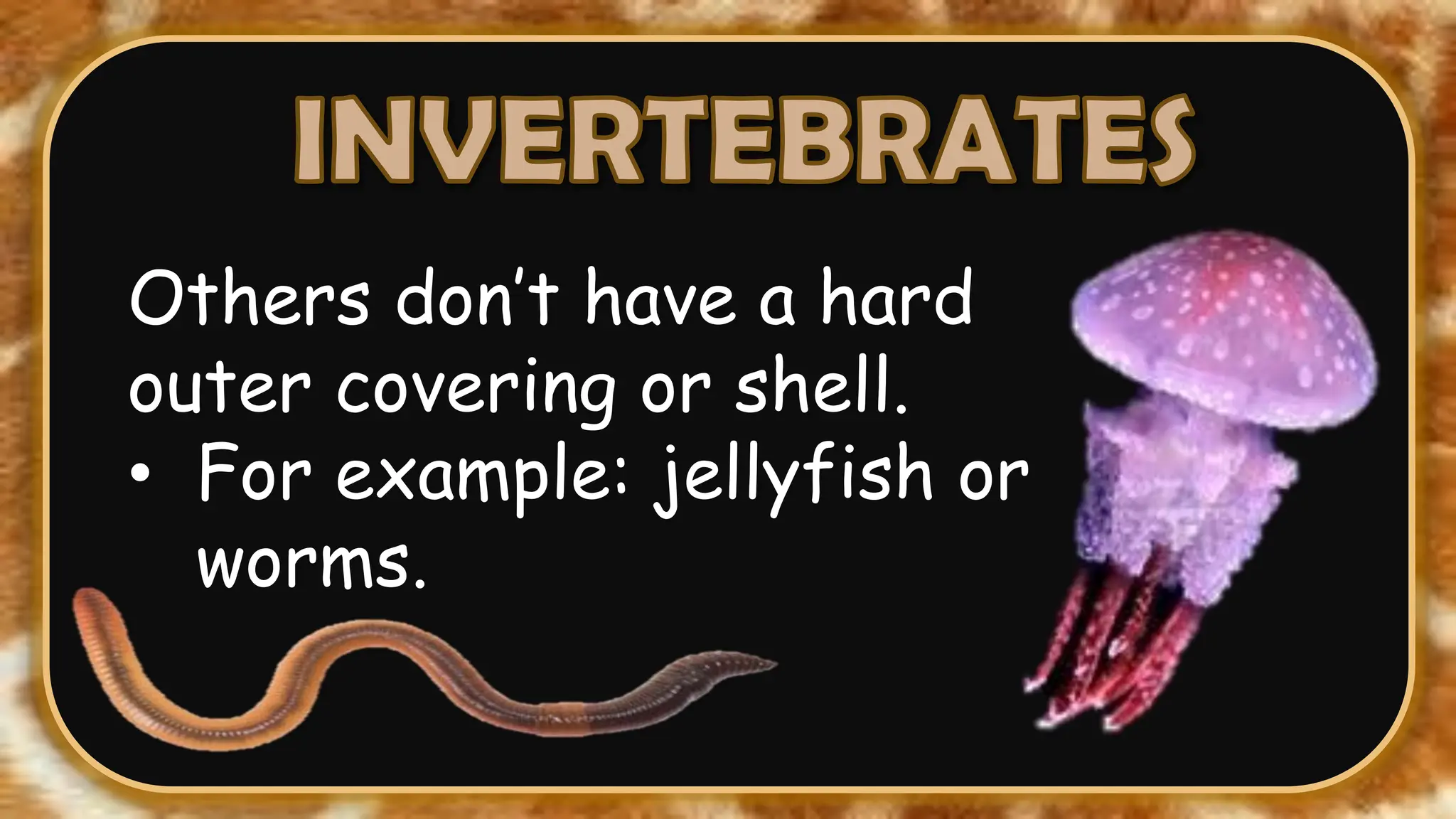
Others don’t have a hard
outer covering or shell.
• For example: jellyfish or
worms.
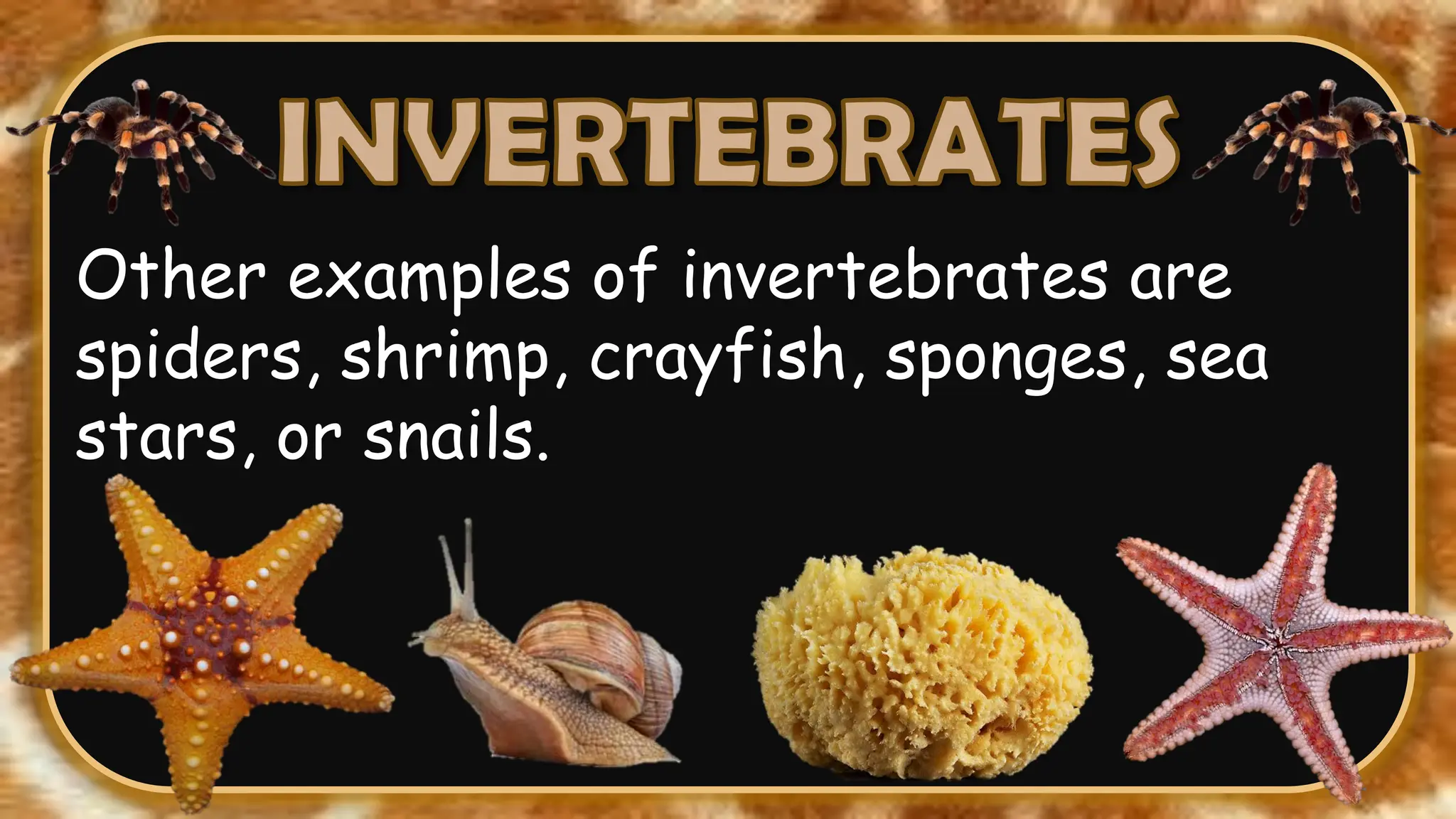
Other examples of invertebrates are
spiders, shrimp, crayfish, sponges, sea
stars, or snails.
Thank you for downloading my product! Make sure
to follow my store for new products and future
freebies!
The content information was gleaned from the 2005
South Carolina State Standards (support
documents).

1ClassifyingAnimalsPowerpoint.pdf

  • 1.
  • 2.
    Animals are organismsthat can be made of many parts. They’re not capable of making their own food.
  • 3.
    Animals must getenergy from eating plants or other animals.
  • 4.
    Animals are classified accordingto whether or not they have a backbone.
  • 5.
    • Animals withbackbones. • Animals without backbones.
  • 6.
    Vertebrates share otherphysical characteristics. • Examples: protective skin covering, inside skeleton, muscles, blood that circulates through blood vessels, lungs or gills for breathing.
  • 7.
    Vertebrates are dividedinto five groups based on physical characteristics. 1. Fish 2. Amphibians 3. Reptiles 4. Birds 5. Mammals
  • 8.
    • Breathe withgills. • Most have scales and fins. • Most lay eggs. • Have a body temperature that changes with its environment.
  • 9.
    • Spend thefirst part of their life breathing with gills under water. • As adults, they breathe with lungs on land. • Smooth, moist skin. • Most lay eggs. • Have a body temperature that changes with its environment.
  • 10.
    • Breathe withlungs • Have scales or plates • Most lay eggs • Have a body temperature that changes with its environment.
  • 11.
    • Breathe withlungs • Lay eggs • Have feathers, a beak, two wings, and two feet. • Have a constant body temperature.
  • 12.
    • Breathe withlungs • Have fur or hair • Can nurse their young with milk • Usually give birth to live offspring • Have a constant body temperature
  • 13.
    Some have ahard outer covering or a shell. • For example: insects, crabs, or clams.
  • 14.
    Others don’t havea hard outer covering or shell. • For example: jellyfish or worms.
  • 15.
    Other examples ofinvertebrates are spiders, shrimp, crayfish, sponges, sea stars, or snails.
  • 16.
    Thank you fordownloading my product! Make sure to follow my store for new products and future freebies! The content information was gleaned from the 2005 South Carolina State Standards (support documents).