A POWER POINT PRESENTATION
                BY
    DR.SANGEETA CHOWDHRY &
         DR.SUNIL SHARMA
DEPARTMENT OF FORENSIC MEDICINE &
           TOXICOLOGY
  GOVT. MEDICAL COLLEGE, JAMMU
DEFINATION

This means throwing
 of any corrosive; not
 necessarily
 sulphuric acid, on a
 person            with
 malicious intent.
“GRIEVOUS HURT”.
It is a violent assault. It
  is commonly seen
  when a person with
  the       object      of
  destroying vision or
  disfigurement of the
  face. This amounts to
  “Grievous         hurt”.
  Women are common
  victims
COMMONLY CORROSIVES USED
 Sulphuric acid (oil of
vitriol)     is      most
commonly used and for
this purpose the name
given is Vitriolage. Nitric
acid and carbolic acid
are     sometimes     also
used. The use of caustic
soda, caustic potash,
iodine, and marking nut
juice has also been
recorded.
MOTIVE
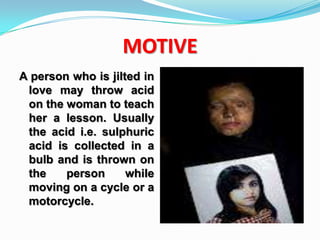
A person who is jilted in
 love may throw acid
 on the woman to teach
 her a lesson. Usually
 the acid i.e. sulphuric
 acid is collected in a
 bulb and is thrown on
 the    person      while
 moving on a cycle or a
 motorcycle.
EFFECTS OF CORROSIVES
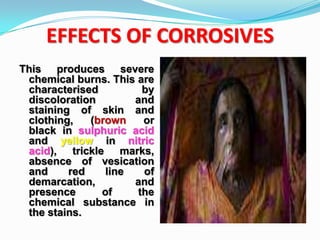
This produces severe
 chemical burns. This are
 characterised         by
 discoloration       and
 staining of skin and
 clothing,   (brown    or
 black in sulphuric acid
 and yellow in nitric
 acid), trickle marks,
 absence of vesication
 and     red    line   of
 demarcation,        and
 presence      of     the
 chemical substance in
 the stains.
EFFECTS ON EYES


 Eyes may also be
affected.     Corneal
destruction or even
blindness can result
PERMANENT SCAR


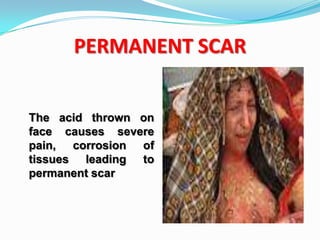
The acid thrown on
face causes severe
pain, corrosion of
tissues leading to
permanent scar
TREATMENT
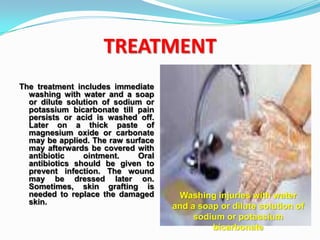
The treatment includes immediate
  washing with water and a soap
  or dilute solution of sodium or
  potassium bicarbonate till pain
  persists or acid is washed off.
  Later on a thick paste of
  magnesium oxide or carbonate
  may be applied. The raw surface
  may afterwards be covered with
  antibiotic    ointment.    Oral
  antibiotics should be given to
  prevent infection. The wound
  may be dressed later on.
  Sometimes, skin grafting is
  needed to replace the damaged      Washing injuries with water
  skin.
                                    and a soap or dilute solution of
                                         sodium or potassium
                                             bicarbonate
TREATMENT
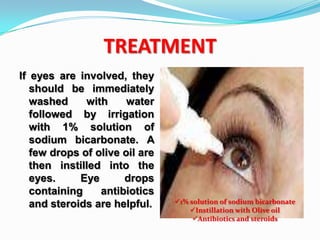
If eyes are involved, they
   should be immediately
   washed     with     water
   followed by irrigation
   with 1% solution of
   sodium bicarbonate. A
   few drops of olive oil are
   then instilled into the
   eyes.     Eye      drops
   containing    antibiotics
   and steroids are helpful.    1% solution of sodium bicarbonate
                                    Instillation with Olive oil
                                     Antibiotics and steroids
Accidental contact with
 sulphuric     acid   is
 possible in people
 working in factories
 and      manufacturing
 establishments where
 acid is used.
THANK YOU

Vitriolage

  • 1.
    A POWER POINTPRESENTATION BY DR.SANGEETA CHOWDHRY & DR.SUNIL SHARMA DEPARTMENT OF FORENSIC MEDICINE & TOXICOLOGY GOVT. MEDICAL COLLEGE, JAMMU
  • 3.
    DEFINATION This means throwing of any corrosive; not necessarily sulphuric acid, on a person with malicious intent.
  • 4.
    “GRIEVOUS HURT”. It isa violent assault. It is commonly seen when a person with the object of destroying vision or disfigurement of the face. This amounts to “Grievous hurt”. Women are common victims
  • 5.
    COMMONLY CORROSIVES USED Sulphuric acid (oil of vitriol) is most commonly used and for this purpose the name given is Vitriolage. Nitric acid and carbolic acid are sometimes also used. The use of caustic soda, caustic potash, iodine, and marking nut juice has also been recorded.
  • 6.
    MOTIVE A person whois jilted in love may throw acid on the woman to teach her a lesson. Usually the acid i.e. sulphuric acid is collected in a bulb and is thrown on the person while moving on a cycle or a motorcycle.
  • 7.
    EFFECTS OF CORROSIVES Thisproduces severe chemical burns. This are characterised by discoloration and staining of skin and clothing, (brown or black in sulphuric acid and yellow in nitric acid), trickle marks, absence of vesication and red line of demarcation, and presence of the chemical substance in the stains.
  • 8.
    EFFECTS ON EYES Eyes may also be affected. Corneal destruction or even blindness can result
  • 9.
    PERMANENT SCAR The acidthrown on face causes severe pain, corrosion of tissues leading to permanent scar
  • 10.
    TREATMENT The treatment includesimmediate washing with water and a soap or dilute solution of sodium or potassium bicarbonate till pain persists or acid is washed off. Later on a thick paste of magnesium oxide or carbonate may be applied. The raw surface may afterwards be covered with antibiotic ointment. Oral antibiotics should be given to prevent infection. The wound may be dressed later on. Sometimes, skin grafting is needed to replace the damaged Washing injuries with water skin. and a soap or dilute solution of sodium or potassium bicarbonate
  • 11.
    TREATMENT If eyes areinvolved, they should be immediately washed with water followed by irrigation with 1% solution of sodium bicarbonate. A few drops of olive oil are then instilled into the eyes. Eye drops containing antibiotics and steroids are helpful. 1% solution of sodium bicarbonate Instillation with Olive oil Antibiotics and steroids
  • 12.
    Accidental contact with sulphuric acid is possible in people working in factories and manufacturing establishments where acid is used.
  • 13.