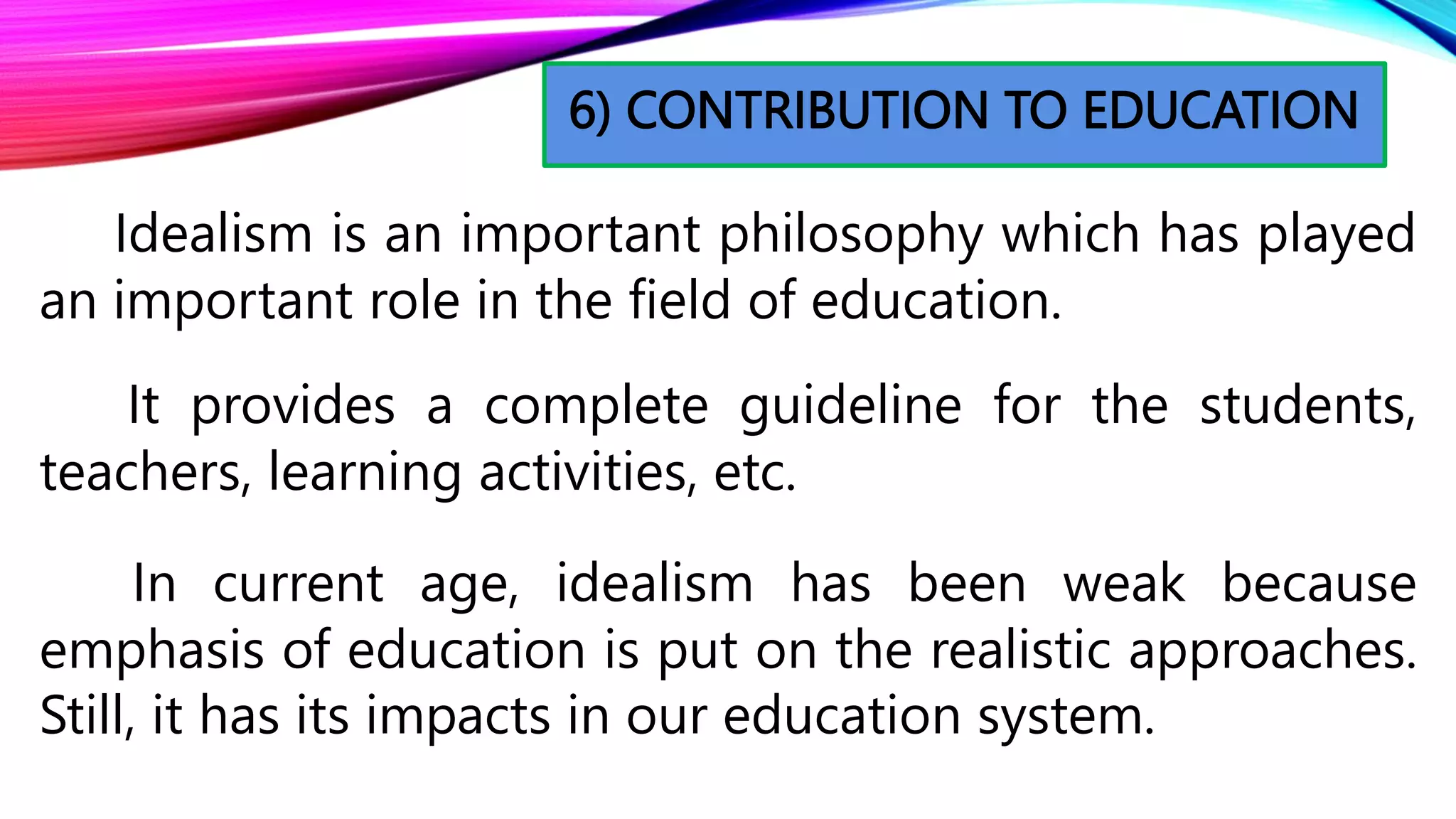
Idealism views ideas as the only true reality and sees the aim of education as self-realization and spiritual development. It emphasizes cultivating truth, beauty, goodness, and moral values. The teacher plays a central role in idealism as a moral exemplar who guides students through discussion and lectures. Discipline involves internal rather than external control through freedom. Idealism sees the teacher as crucial for spiritual development and believes curriculum should include cultural heritage, humanity's expressions, and experiences from the environment and other people. While other methods are also used, idealism considers the teacher the most important influence in education.










![PE-2[1].pptx](https://cdn.slidesharecdn.com/ss_thumbnails/pe-21-230723172350-a74c8fd7-thumbnail.jpg?width=640&height=640&fit=bounds)


![educational implications [anusree] (1).pptx](https://cdn.slidesharecdn.com/ss_thumbnails/educationalimplicationsanusree1-251226092844-eb883ffd-thumbnail.jpg?width=640&height=640&fit=bounds)


