• The intracranial compartment has fixed volume.
• Increases in volume of brain, blood, or CSF can lead to raised ICP,
compromising blood flow or causing herniation.
• Both IV & volatile anesthetic agents reduce brain metabolism. Balance of this
effect with blood flow, because of flow metabolism coupling, determines
extent of increase/decrease in CBF with a particular anesthetic agent.
• Cerebral preconditioning & augmentation of endogenous processes of repair,
including both neurogenesis & diaschisis, are promising approaches to
cerebral protection.
• Electrophysiologic & cerebral oxygenation/metabolism monitors are used
perioperatively to assess cerebral function & to detect cerebral ischemia.
• Image-guided neurosurgical procedures used for diagnosis, 3D localization, &
resection of intracranial lesions.
• Anesthesia for neurosurgical patients requires understanding of basic
principles of neurophysiology & effects of anesthetic agents on intracranial
dynamics.
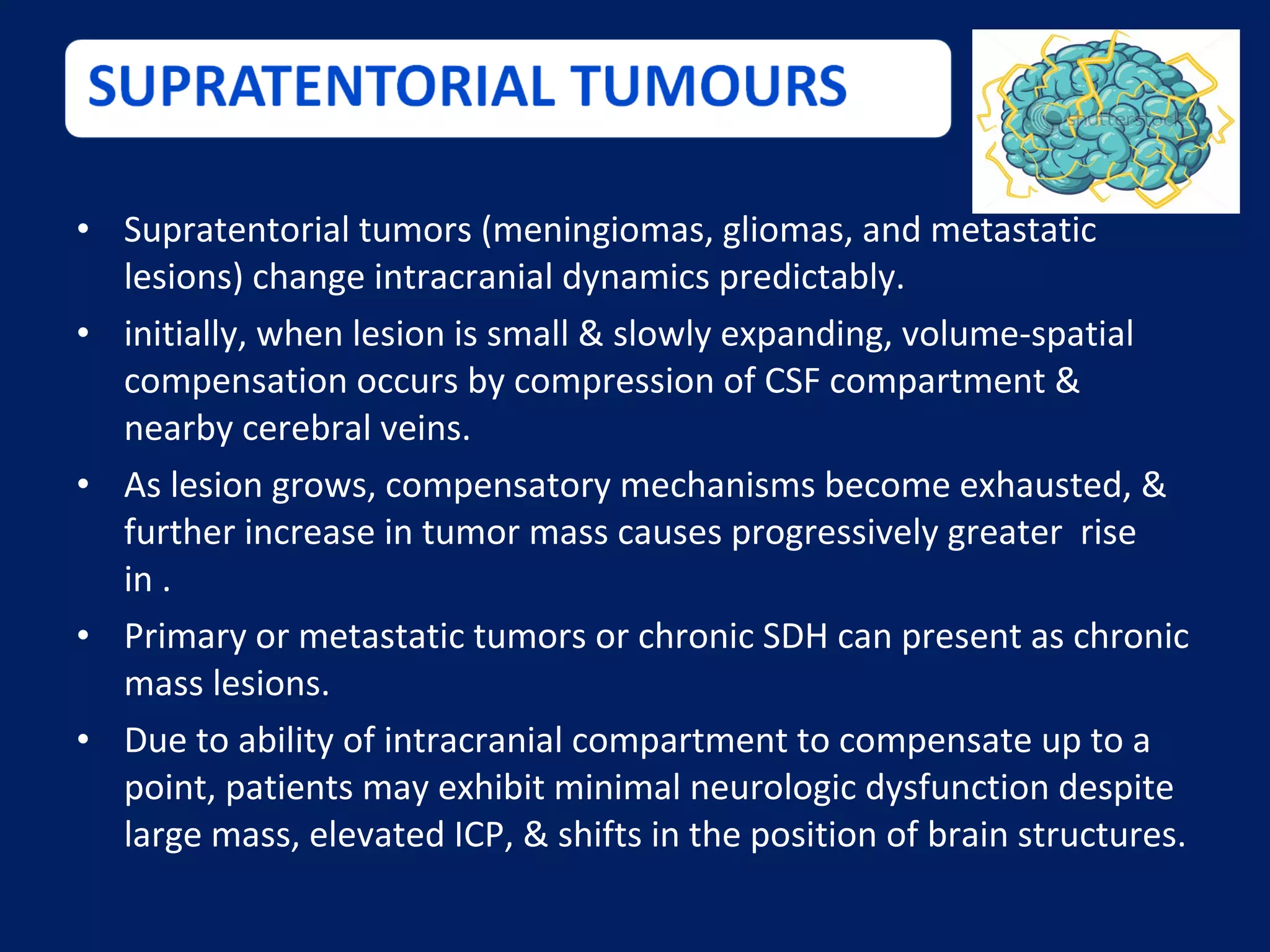
1.Uncal
2.Central (transtentorial)
3.Cingulate (subfalcine)
4.Transcalvarial
6.Tonsillar (downward cerebellar)
5.Upward (upward cerebellar or upward
transtentorial)
Supratentorial herniation
1. Uncal – Ptosis, Hemiparesis, pupillary
asymmetry
2. Central (transtentorial) – unconsciousness,
decerebration, bradycardia, hypo/HTN
3. Cingulate (subfalcine) – leg weakness
4.Transcalvarial
• Hydrocephalus
– Headache
– Vomiting
– Drowsiness
– Visual disturbances
• Hemiparesis
• Cranial nerve deficits
• Gait disturbances
• Supratentorial tumors (meningiomas, gliomas, and metastatic
lesions) change intracranial dynamics predictably.
• initially, when lesion is small & slowly expanding, volume-spatial
compensation occurs by compression of CSF compartment &
nearby cerebral veins.
• As lesion grows, compensatory mechanisms become exhausted, &
further increase in tumor mass causes progressively greater rise
in .
• Primary or metastatic tumors or chronic SDH can present as chronic
mass lesions.
• Due to ability of intracranial compartment to compensate up to a
point, patients may exhibit minimal neurologic dysfunction despite
large mass, elevated ICP, & shifts in the position of brain structures.
• As the tumor enlarges - outstrip its BS, developing central
hemorrhagic area that may expand rapidly, increasing ICP.
• Brain edema surrounding tumor increases effective bulk of tumor &
represents additional portion of the brain that is not
autoregulating.
• In such situations (compromised compliance), small increases in
arterial pressure may produce large increases in CBF, which can
markedly increase intracranial volume & ICP & cerebral
ischemia/herniation.
• In addition to HTN, other causes of increased CBV such as
1.hypercarbia,
2.hypoxia,
3.vasodilating agents,
4. jugular venous obstruction,
can adversely affect cerebral hemodynamics & must
be avoided perioperatively.
• Intracranial tumors may be classified as
1.primary (those arising from the brain and its coverings)
2. metastatic.
• Tumors can originate from any cell type within CNS.
• Supratentorial tumors more common in adults & often
present with headache, seizures, or new neurologic deficits,
whereas infratentorial tumors are more common in children
& present with obstructive hydrocephalus & ataxia.
• Treatment & prognosis depend both on tumor type &
location.
• Treatment may consist of surgical
resection/debulking/chemotherapy/ radiation.
Astrocytoma
• Often present in young adults with new-onset seizures. Upon
imaging, they generally show minimal enhancement with
contrast.
• Surgical or radiation treatment of low-grade gliomas usually
results in symptom-free long-term survival.
• Usually appears as a contrast-enhancing, well-demarcated
lesion with minimal to no surrounding edema.
• Because of its benign pathologic characteristics, prognosis
following surgical resection is generally very good; however,
the location of the lesion, such as within the brainstem, may
preclude resection.
• Gliobastoma multiforme (grade IV glioma) accounts for 30%
of all primary brain tumors in adults.
• Imaging usually reveals a ring-enhancing lesion due to central
necrosis as well as surrounding edema.
• Treatment typically involves debulking combined with
radiation and chemotherapy.
• Due to microscopic infiltration of normal brain by tumor cells,
resection alone is usually inadequate.
• Instead, treatment usually consists of surgical debulking
combined with chemotherapy and radiation and is aimed at
palliation, not cure. Despite treatment, life expectancy is
usually on the order of weeks.
Oligodendroglioma
• Arising from myelin-producing cells within CNS, account for only 6%
of primary intracranial tumors.
• Classically, seizures predate appearance of tumor on imaging, often
by many yrs.
• Calcifications are common & visualized on CT imaging.
• Usually consists of mixture of oligodendrocytic & astrocytic cells.
• Treatment & prognosis depend on the pathologic features.
• Initial treatment involves resection since, early in the course,
consists of primarily oligodendrocytic cells, which are
radioresistant.
• Due to presence of astrocytic cells, they commonly behave like
anaplastic astrocytomas or glioblastoma multiforme later in their
course.
Ependymoma
• Arising from cells lining ventricles & central canal of spinal cord,
ependymomas commonly present in childhood & young adulthood.
• Most common location is floor of 4th ventricle.
• Symptoms include
1.obstructive hydrocephalus,
2.headache,
3.nausea,
4.vomiting,
5.ataxia.
• Treatment consists of resection and radiation. Tumor infiltration
into surrounding tissues may preclude complete resection.
Primitive Neuroectodermal Tumor
• Diverse class of tumors including retinoblastoma,
medulloblastoma, pineoblastoma, & neuroblastoma, all
believed to arise from primitive neuroectodermal cells.
• Medulloblastoma is the most common pediatric primary
malignant brain tumor & may disseminate via CSF to
encompass spinal cord.
• Presentation of medulloblastoma is similar to ependymoma.
• Treatment usually involves a combination of resection &
radiation given its high radiosensitivity.
• Prognosis is very good in children, if there is disappearance of
tumor celIs within CSF.
Meningioma
• Usually extra-axial (arising outside of the brain proper),
slow-growing, well-circumscribed, benign tumors
arising from arachnoid cap cells, not dura mater
• Due to slow-growing nature, they can be very large at time of
diagnosis.
• Occur anywhere arachnoid cap cells exist, most common near
sagittal sinus, falx cerebri, & cerebral convexity.
• Usually apparent on plain radiographs & CT due to presence of
calcifications.
• On MRI & conventional angiography, these tumors often receive
their blood supply from external carotid artery.
• Surgical resection is mainstay of treatment.
• Prognosis is usually excellent; however, some tumors may be
recurrent and require additional resection.
Pituitary Tumors
• Arise from cells of anterior pituitary gland.
• May occur along with tumors of parathyroids & pancreatic islet
cells as part of MEN 1.
• Usually divided into functional (hormone secreting) &
nonfunctional.
• Former usually present due to endocrine disturbance related to
hormone secreted by the tumor.
• Functional tumors are usually smaller (<1 cm in diameter) at the
time of diagnosis (microadenomas).
• Macroadenomas are usually nonfunctional, present with symptoms
related to their mass (headache/visual changes due to compression
of optic chiasm), larger at diagnosis, usually >1 cm in diameter.
• Panhypopituitarism may be caused by either (compression of
normal functioning pituitary).
• Apoplexy - abrupt onset of headache, visual changes,
ophthalmoplegia, & altered mental status secondary to
hemorrhage/necrosis/infarction within the tumor.
• Can invade cavernous sinus/ICA/compress various cranial
nerves, causing an array of symptoms.
• Treatment depends on tumor type.
• Prolactinomas are often initially treated medically with
bromocriptine.
• Surgical resection transsphenoidally/open craniotomy
approach is often curative for most pituitary tumors.
Acoustic Neuroma
• Benign schwannoma involving vestibular component of cranial
nerve VIII within internal auditory canal.
• Bilateral tumors may occur as part of neurofibromatosis type 2.
• Common presenting symptoms - hearing loss, tinnitus &
disequilibrium.
• Larger tumors, which grow out of the internal auditory canal & into
CP angle, may cause symptoms related to compression of cranial
nerves, most commonly facial nerve (cranial nerve VII) & brainstem.
• Treatment usually consists of surgical resection +/- radiation.
• Surgery usually involves intraoperative cranial nerve monitoring
with electromyography or brainstem auditory evoked potentials.
• Prognosis is usually very good; however, recurrence of tumor is not
uncommon.
CNS Lymphoma
• Rare tumor that can arise as primary brain tumor, also known
as microglioma, or via metastatis from systemic lymphoma.
• Primary CNS lymphoma can occur anywhere, most common
in supratentorial locations (deep gray mater /corpus
callosum).
• Primary CNS lymphoma thought to be associated with a
variety of systemic disorders - SLE, Sjögren's syndrome, RA,
immunosuppressed states, EBV.
• Symptoms depend on location of tumor.
• Reasonable to wait to administer CTS, until after pathologic
findings are obtained as may be sensitive to steroids.
• CTS-associated tumor lysis prior to performing biopsy may
result in failure to obtain an adequate sample to make
diagnosis.
• Mainstay of treatment is chemotherapy (including
intraventricularly delivered drugs) & whole-brain radiation.
• Prognosis is poor despite treatment.
Metastatic Tumor
• Originate most often from primary sites in lungs or breasts.
• Malignant melanoma, hypernephroma, & Ca colon also likely
to spread to brain.
• Metastatic brain tumor is likely diagnosis when more than
one intracranial lesion is present.
• Lab tests should be ordered based on history & clinical findings,
considering disease & complexity of Sx.
• Following are preoperative tests ordered:
– Hb, TC
– Platelet count
– PT/APTT & INR [individualized]
– Serum electrolytes, Blood sugar
– Glycosylated hemoglobin (HbA1c) in patients with long standing
DM
– BUN, Creatinine
– TEE in patients scheduled for tumors in sitting position.
– USG abdomen for polycystic kidney, pheochromocytoma
(Hemangioblastoma) .
1.Anti-convulsants 2. Antihypertensives
3.Steroids 4. Hypoglycaemic agents
5.Diuretics 6. Hormonal therapy
7.Anticoagulants / antiplatelets
NOTE:
• Requirement of nondepolarizing muscle relaxants is increased
in patients on anticonvulsants
• Lethargic patients do not receive premedication.
• Patients who are alert and anxious may receive an anxiolytic
(e.g., midazolam 5 mg po) before coming to OR.
Evidence of midline shifts (>0.5 cm) on CT /MRI
suggests raised ICP.
• Patients with intracranial pathology may be extremely
sensitive to CNS depressant effects of opioids & sedatives.
• Drug-induced hypoventilation - accumulation of arterial CO2
increases in ICP.
• Considering potential adverse effects of preop medication,
pharmacologic premedication should be used sparingly, if at all, in
patients with intracranial tumors.
• Preop depressant drugs best avoided in patients with diminished
levels of consciousness.
• In alert adult patients with intracranial tumors, BZDs in small doses
can provide anxiety relief without meaningfully affecting
ventilation.
• Decisions to administer anticholinergic drugs or H2-receptor
antagonists not influenced by presence/absence of increased ICP.
• ECG monitoring : necessary to detect responses related
to intracranial tumors/ surgery.
• ECG changes can reflect increased ICP or, more importantly,
surgical retraction or manipulation of the brainstem or cranial
nerves.
• CVS centers, RS control areas, nuclei of lower cranial nerves lie in
close proximity in brainstem.
• Manipulation of brainstem may produce systemic HTN &
bradycardia/ hypotension & tachycardia.
• Cardiac arrhythmias range from acute sinus arrhythmias to
ventricular premature beats/VT.
• Pulse oximetry is of obvious importance.
• Capnography : can facilitate ventilation & PaCO2 management
as well as detecting VAE.
• In elderly & those with V/Q mismatch, et CO2 may correlate
poorly with PaCO2.
• Nasopharyngeal /esophageal temperature monitored to prevent
hyperthermia/uncontrolled hypothermia.
• Urine output also measured as indicator of perioperative fluid
balance.
• Diuresis occurs following administration of osmotic/loop diuretics.
• Reduced urine output – hypovolemia/release of ADH.
• Needed in pts with diabetes insipidus/SIADH/aberrations of salt or
water physiology/ lengthy Sx anticipated & bladder distention is
concern.
• IV access with large-bore catheters , given likelihood
of bleeding & need for transfusion/
rapid administration of fluids.
• Measurement of intra-arterial blood pressure, ABG, CVP,
recommended for major neurosurgical procedures.
• Arterial cannula is inserted before induction of anesthesia to
continuously monitor ABP & estimate CPP.
• When pressure transducer is at midhead level (level of external
auditory meatus), MAP approximates MAP at level of circle of
Willis.
• CPP = difference btwn MAP & CVP in pts without intracranial HTN/
ICP in those with intracranial HTN.
• When cranium is open, ICP = atm pressure & CPP = MAP.
• With direct arterial pressure monitoring, hemodynamic
consequences of pharmacologic agents administered during
anesthesia recognized instantly.
Arterial catheter access for intraop ABG, hct, serum
electrolytes, glucose, & osmolality. (to verify
adequacy of hyperventilation).
Radial/femoral/brachial arteries suitable for
short-term; after ulnar artery collateral blood flow is
tested, cannulation of radial artery preferred.
• CVP - reliable means of large-bore IV, monitor of fluid status.
• When possible, CVP catheter should be inserted through
antecubital vein instead of jugular/subclavian veins.
• Avoids increased ICP from both head-down position & decreased
cerebral venous outflow.
• Position of antecubital central venous pressure verified by CXR,
transducer pressure waveform, or ECG.
• TEE & PAC selectively used, eg. In pts with IHD.
• Peripheral nerve stimulator : monitoring persistence of drug-
induced skeletal muscle weakness/paralysis.
• If paresis/paralysis of an extremity is associated with brain tumor, it
is important to appreciate resistance (decreased sensitivity) to
NDMR in paretic extremity, compared with normal extremity.
• Therefore, monitoring skeletal muscle paralysis on paretic limb may
be misleading.
• In these instances, the altered muscle response to relaxants may
reflect the proliferation of acetylcholine-responsive cholinergic
receptors that can occur after denervation.
Preoperative ICP monitoring
• Rarely used in patients for elective supratentorial tumor operations.
• ICP monitoring is invasive procedure that can cause bleeding or
infection.
• When performed with LA before induction, can be uncomfortable to
pt.
Hazards of Positioning Prone
• Pressure over the eyeballs, pinna , genitalia
• Kinking of the neck veins
• Extreme flexion – endobronchial migration of the tube,
kinking
• Brachial plexus , ulnar and sciatic nerve injuries
• Ventilation perfusion
mismatch
• Common peroneal nerve
injury
• Dependent pinna injury
• Achieved with drugs ( thiopental, etomidate, propofol)
produce rapid, reliable onset of unconsciousness without increasing ICP.
• In presence of raised ICP, thiopental is commonly used.
• Alternative agents : propofol / midazolam depending on pt's condition.
• Following induction sequence suggested: IV administration of thiopental
(3-5 mg/kg) or propofol (1.25-2.5 mg/kg), followed by opioid (fentanyl, 3-
5 µg/kg) & muscle relaxant.
• In pts who have been vomiting due to raised ICP, cricoid pressure is
applied during mask ventilation.
• If no airway difficulties anticipated, NDMR administered while controlled
hyperventilation with 100% oxygen is instituted, with goal of decreasing
PaCO2 to near 35 mm Hg.
• Administration of succinylcholine associated with modest, transient
increases in ICP. (risk benefit assessment)
• Adequate depth & profound skeletal muscle paralysis should be
achieved prior to laryngoscopy, (as movement can abruptly
increase CBF, CBV & ICP).
• Abrupt, sustained increases in systemic blood pressure, particularly
in areas of impaired cerebrovascular tone, may be accompanied by
undesirable increases in CBF, CBV, and ICP, and followed by
cerebral edema.
• To deepen, fentanyl administered in 50µg increments to total dose
of 10µg/kg, depending on BP.
• Lidocaine (1.5 mg/kg) also administered IV 90sec before intubation
to suppress laryngeal reflexes ( & other forms of intraop
stimulation like placement of pinions, skin incision).
• Esmolol infusion / bolus may be used to reduce HR & BP response
to DLscopy & intubation.
• Sustained hypotension must also be avoided (ischemia due to
decreased CPP).
• New-onset seizures or repeat episodes of seizures are another
possible origin of unexpected movement.
• ET intubation is performed as rapidly & smoothly as possible.
• Patient's lungs are ventilated at a rate & tidal volume that maintain
PaCO2 near 35 mm Hg.
• Routine hyperventilation no longer recommended in neurosurgical
patients due to risk of ischemia in some pathologic conditions.
(surgical conditions should define PaCO2 level for each pt).
• Eg, in pts with significant intracranial HTN / using volatile agents,
PaCO2 adjusted btwn 30-35 mmHg to reduce brain bulk.
• Opiods selected are usually fentanyl or remifentanil.
• PEPP should be used with caution, attention paid to
ICP, MAP & CPP effects.
MUSCLE RELAXANTS
SUCCINYLCHOLINE
• IV administration of succinylcholine activation of
EEG & increases in CBF / ICP.
• Cerebral effects Attributed to scoline-induced increase in
muscle afferent activity - cerebral stimulation.
• Pts with compromised intracranial compliance, scoline shown
to increase ICP.
• Not recommended for elective cases; but remains best agent
for achieving total paralysis for rapid-sequence intubation.
• Anesthetic depth required to protect against ICP-elevating
effects of such noxious stimuli as well as scoline itself.
• In Hemiplegic /paraplegic) pt, scoline avoided due to risk of
hyperkalemia.
• Agents that release histamine avoided (Histamine alone may lower
BP & increase ICP, thus lowering CPP).
• When BBB disrupted, histamine can produce cerebrovasodilation &
increases in CBF.
• Most benzylisoquinolinium compounds (d-tc, metocurine,
atracurium, mivacurium) potential to release histamine.
• Doxacurium & cisatracurium produce minimal /no histamine
release.
• Atracurium in intubating doses, reported to have no significant effect
on ICP, BP, or CPP in neurosurgical patients.
• Steroidals (pancuronium, pipecuronium, vecuronium & rocuronium)
may be better relaxants (do not directly affect ICP).
• Pancuronium does not produce an increase in CBF, CMRO2,ICP.
• However, pancuronium's vagolytic effects can increase HR & BP, &
elevate ICP in pts with disturbed autoregulation.
• Pipecuronium, reported to have no significant effect on ICP or CPP
in patients with intracranial tumors & no hemodynamic side effects.
• Vecuronium has no effect on ICP, HR/BP in neurosurgical pts.
• To achieve relatively rapid airway control (within 90 seconds), a
priming dose of vecuronium (0.01 mg/kg) can be administered
followed by a higher dose (0.10 mg/kg), or high doses of
vecuronium (to 0.4 mg/kg) without hemodynamic consequence.
• Rocuronium also has no effect on ICP in neurosurgical pts, but may
have mild vagolytic activity in higher doses (0.9 mg/kg).
MAINTENANCE
• Popular technique - continuous infusion of propofol with
remifentanil / fentanyl. (shown to reduce ICP more effectively than
iso/ sevo), propofol with remifentanil produced quicker emergence
than des/sevo.
• In susceptible pts, risk of cerebral hypoperfusion greater when pts
hyperventilated under propofol anesthesia.
• Nitrous oxide & volatile anesthetics potential to increase CBV & ICP
as result of direct cerebral vasodilation.
• Nitrous oxide, 50 -70% in O2, administered by some to decrease
total dose of IV agent / volatile agent.
• In elevated ICP / low compliance, some clinicians avoid nitrous
oxide / high conc of isoflurane (> 1.0%).
• Opioid ,thiopental / propofol with midazolam / low-dose iso.
• Peripheral vasodilating drugs (nitroprusside/nitroglycerin), may
increase CBV & ICP despite decrease in SBP (best used after
craniotomy & opening dura).
• Spontaneous movement by pts must be prevented (dangerous
increases in ICP/herniation/bleeding).
• In addition to adequate depths of anesthesia, skeletal muscle
paralysis maintained.
MEASURES TO REDUCE ICP
Diuretics:
• Osmotic: Mannitol (0.25-1 g/kg iv), hypertonic saline.
Furosemide: 0.5-1 mg/kg iv, or 0.15-0.3 mg/kg with mannitol.
Corticosteroids:
• Dexamethasone (localized cerebral edema surrounding tumors;
requires 12-36 hrs).
Adequate ventilation:
• PaO2 100 mmHg, PaCO2 33-35 mmHg.
Optimize hemodynamics
• (MAP, CVP, PCWP, HR): normotension, maintain CPP .
Fluid therapy: Normovolemia before induction - prevent hypotension.
Position improve cerebral venous return (neutral, head-up position).
Drug-induced cerebral vasoconstriction (e.g., thiopental, propofol).
Temperature control mild intraoperative hypothermia.
CSF drainage to acutely reduce brain tension.
CLINICAL CONTROL OF RAISED ICP
• Severe intracranial HTN - reflex arterial hypertension &
bradycardia (Cushing's triad).
• Reduction in SBP can further aggravate ischemia (reducing CPP).
• Rapid brain dehydration & ICP reduction produced by administering
osmotic diuretic, mannitol / loop diuretic, furosemide.
Mannitol:
• Infusion 0.25-1.0 g/kg.
• Action begins within 10-15 mins, effective for approx 2 hrs.
• Larger doses produce a longer duration of action but do not
necessarily reduce ICP more effectively (metabolic derangement).
• Mannitol is effective when the blood-brain barrier is intact.
• By increasing osmolality of blood relative to brain,
pulls water across intact BBB from brain to blood
to restore the osmolar balance.
• Shown to cause vasodilation of VSM, dependent on dose & rate of
administration.
• Mannitol-induced vasodilation affects intracranial & extracranial
vessels & can transiently increase CBV & ICP while simultaneously
decreasing SBP.
• Hence should be given slowly (10-minute infusion) in conjunction
with maneuvers that decrease ICV (steroids / hyperventilation).
• Prolonged use of mannitol may produce
1.dehydration,
2.electrolyte disturbances,
3.hyperosmolality,
4.impaired renal function.
Hypertonic saline
• Currently under investigation.
• Shown to reduce ICP in animals & human studies
may be more effective than other diuretics in certain conditions
(refractory intracranial HTN/ brain debulking ).
• Alternative /adjunct to mannitol.
Potential Adverse Effects of IV Administration
CENTRAL NERVOUS SYSTEM & SYSTEMIC
1.Decreased level of consciousness 8. Hyperchloremic acidosis
2.Hyperosmolality Hypernatremia 9. Coagulopathy
3.Seizures 10. Rebound edema
4.CHF 11. Phlebitis
5.Central pontine myelinolysis 12. Renal failure
6.Hypokalemia
7.Subdural & intraparenchymal hemorrhagea
FUROSEMIDE
• better agent in pts with impaired cardiac reserve.
• Loop diuretic : reduces ICP by inducing systemic diuresis,
decreasing CSF production & resolving cerebral edema by
improving cellular water transport.
• lowers ICP without increasing CBV or blood osmolality; but not as
effective as mannitol.
• Can be given alone,initial dose (0.5-1 mg/kg) or lower dose with
mannitol (0.15-0.30 mg/kg).
• combination of mannitol & furosemide diuresis more effective
than mannitol alone in reducing ICP & brain bulk but causes more
severe dehydration & electrolyte imbalances.
• Thus necessary to monitor electrolytes intraop & replace K as
indicated.
CORTICOSTEROIDS
• reduce edema around tumors; require many hrs/days
before reduction in ICP.
• Steroids preop frequently cause neurologic improvement that
precede ICP reduction.
Postulated MOA for steroidal reduction in brain edema
• 1.brain dehydration,
• 2.BBB repair,
• 3.prevention of lysosomal activity,
• 4.enhanced cerebral electrolyte transport,
• 5.improved brain metabolism,
• 6.promotion of H2O & electrolyte excretion,
• 7.inhibition of phospholipase A2 activity.
Potential complications of continuous
periop steroid
• 1.hyperglycemia,
• 2.glucosuria,
• 3.gastrointestinal bleeding,
• 4.increased incidence of infection.
• 5.electrolyte disturbances
• Therefore, the potential risks and benefits of continuous steroid
administration need to be evaluated in these patients.
HYPERVENTILATION
• reduces brain volume by decreasing CBF through
cerebral vasoconstriction.
• For every 1 mm Hg change in PaCO2, CBF changes by 2 mL/100
g/min.
• Duration of effectiveness for lowering ICP as short as 4-6 hrs,
depending on pH of CSF.
• Only effective when CO2 reactivity of cerebrovasculature intact.
• Impaired responsiveness to changes in CO2 in areas of vasoparalysis
(associated with ischemia, trauma, tumor & infection).
• Target PaCO2 is 30-35 mmHg.
• By monitoring global cerebral oxygenation with, for example, SjVO2,
therapeutic effectiveness of hyperventilation determined & more
safely applied.
NOTE
• Therapeutic goals are to maintain CPP &
control intracranial dynamics so that cerebral ischemia,
edema, hemorrhage & herniation are avoided.
• Severe hypotension results in cerebral ischemia & should be
treated with volume replacement, inotropes, or vasopressors
as dictated by clinical need.
• Severe HTN, can worsen edema & cause IC hemorrhage &
herniation.
• β2-adrenergic blockers propranolol & esmolol , combined αβ-
adrenergic blocker labetalol effective in reducing SBP in pts
with raised ICP with minimal or no effect on CBF / ICP.
FLUID THERAPY
1.Do not dehydrate
2.Avoid hypotonic solutions
3.Colloids
4.Blood
5Avoid over-transfusion
• Restricted fluid intake was traditional approach to IC
decompression therapy but now rarely used.
• Severe fluid restriction over several days only modestly effective in
reducing oedema & can cause hypovolemia, hypotension,
inadequate renal perfusion, electrolyte & acid-base disturbances,
hypoxemia, reduced CBF.
• In pts who are dehydrated preop, IV volume must be restored to
normal before induction to prevent hypotension.
• Relatively iso-osmolar solutions (NS, RL) do not adversely affect
oedema (if intact BBB).
• Free water in hypo-osmolar solutions (0.45% NaCl) adversely
affects ICP management.
• Hyper-osmolar solutions, 3% NaCL, initially tend to decrease brain
water by increasing osmolarity of plasma.
• Regardless of solutions selected, any solution administered in large
amounts can increase CBV & ICP.
• Blood loss should be corrected with PRBCs/ colloids supplemented
with balanced salt solutions.
• Glucose-containing solutions should be used with caution since
hyperglycemia, in CNS ischemia exacerbates neuronal injury.
• Replacement at approx 3:1 ratio (crystalloid:blood) to hct of approx
25-30%, depending on physiologic status.
POSITION
• Neutral head position, elevated 15-30° to decrease
ICP by improving venous drainage.
• Flexing /turning of head may obstruct cerebral venous outflow
(dramatic ICP elevation, resolves with neutral head position).
PEEP
• Can increase ICP (increases mean intrathoracic pressure, impairing
cerebral venous outflow & CO).
• If PEEP required to maintain SpO2, applied cautiously & with
appropriate monitoring to minimize decreases in CO & increases in
ICP.
• PEEP 10 cm H2O < used without significant increases in ICP /
decreases in CPP.
• If higher levels of PEEP required to optimize SpO2, both CVP & ICP
monitoring indicated.
TEMPERATURE
• Intraop, modest degree of hypothermia, approx 34°C, way to
confer neuronal protection during focal ischemia.
• Hypothermic techniques for febrile neurosurgical patients.
• Hyperthermia particularly dangerous as it increases brain
metabolism, CBF & cerebral edema.
CSF DRAINAGE
• To acutely reduce ICP, CSF drainage either by direct surgical
puncture of lateral ventricle /lumbar spinal catheter employed.
• Lumbar CSF drainage used cautiously & only when dura open & pt
mildly hyperventilated to prevent acute brain herniation.
• Brain tension can be effectively reduced by draining 10-20 mL of
CSF.
EMERGENCE
Neurologically intact preop & uneventful Intraop
• Smooth emergence
• No coughing or straining
Neurologically compromised & extensive manipulations
• Continue intubation & ventilation
• Also if there is facial or neck swelling
Causes of Delayed Awakening
1.Preoperative low GCS 6.Surgical complications
2.Large tumor 7.Cerebral edema
3.Residual anesthetics 8.Hematoma
4.Metabolic / electrolyte disturbances 9. Pneumocephalus
5.Residual hypothermia 10.Vessel occlusion/ischemia
• IC hematoma & major cerebral edema most
feared complications.
• Emergence from anesthesia should be as smooth as possible,
avoiding straining/ bucking.
• Bucking can cause HTN & elevated ICP, leading to postop hge &
cerebral edema.
• Relaxants not reversed until head dressing applied. IV lidocaine (1.5
mg/kg) 90 seconds before suctioning & extubation .
• Extubated only when fully reversed or awake & following
commands. If not responsive, not extubated.
• Brief neurologic exam performed before & after extubation.
• Pt positioned with head elevated 15-30°, shifted to recovery room
with oxygen by mask & SpO2 monitoring.
• General assertion states that larger the resection, lower the risk of
recurrence of lesion & higher chance of pt's survival.
• But extensive tissue excision may favor occurrence of unpredictable
degree of functio laesa, (depending on location).
• Neurological sequelae due to tumor excision may cause severe
disability compromising pt's social life.
• Therefore, aim to remove max amount of lesion without impairing
neurological function has pushed physicians & industry to develop
sophisticated approaches performed in awake & responding pts, to
evaluate neurological dysfunction before tissue removal.
• Awake craniotomy dates back to 2nd half 19th century, when only
indication was epilepsy & Sx done under LA.
• Subsequently, surgical practice extended to resection of tumors
involving functional cortex.
• In more recent years, indications further extended to removal of
supratentorial tumors, regardless of cortical involvement.
• Awake Craniotomy evolved as direct consequence of following:
1.huge improvement of diagnostic tools;
2.impressive development of intraoperative functional neurosurgical
technology;
3.enhancement of anesthesia monitoring devices,
4.Pharmacokinetic & dynamic properties of new anesthetic agents &
delivery systems.
• Main advantage : intraop electrocorticography & mapping for
accurate identification of brain areas controling motor function &
speech.
• Allows maximal tumor resection with minimal postop deficits from
retraction, edema &/or resection of eloquent tissue.
• Other advantages include :
1.avoidance of GA
2. avoidance of more intensive monitoring intra-op & postop,
3. low complication rate,
4.reduction in resource utilization (shorter ICU & hospital stay).
• Functional mapping performed by stimulating brain with small
electrical charge.
• Neuropsychologist then performs neurocognitive testing &/or
monitors motor responses during mapping & later tumor resection.
• Intraop testing of language & motor function gold std.
• Intraop monitoring severely inhibited by GA: some higher cortical
brain functions (i.e. speech) cannot be monitored during surgery.
• "Awake craniotomy" is misleading term, as different Sx phases
require various levels of sedation & pt maintained completely
awake only during mapping procedure & early resection of tumor.
• Preop selection, evaluation & preparation of pts different than GA.
• Cooperative, able to participate in neurocognitive testing.
• Must have uncomplicated airway, also candidate for GA.
• Accurate detailed explanation of procedure (i.e. intraop sounds of
surgical instruments, head immobilization, voices...).
• Regarding sequence of events during Sx & possible complications,
to minimize fear. (pt's confidence & agreement,
cooperation fundamental factor for successful
procedure).
• Like any craniotomy, adequate surgical exposure & brain relaxation
required.
• Providing appropriate sedation & analgesia greatest challenge.
• Continuous, rapid modulation of sedation & analgesia level
necessary to manage painful stimuli & cortical testing.
• Adequate analgesia & sedation needed for head frame application,
skin incision, craniotomy & opening of dura.
• Of utmost importance, pt must be awake & alert during brain
mapping, able to participate in complex neurocognitive testing.
• Vital functions to be ensured, emergency support if deterioration of
clinical status occurs.
• Positioning : comfortably with bolsters & additional padding.
Technique selected requires
1.optimal analgesia during nociceptive stimulations
2.sedation/anxiolysis, immobility/comfort during mapping & resection
3. prevention of nausea, vomiting & seizures
4.Maintenance of airway & adequate ventilation
5.hemodynamic stability
6.brain relaxation
Techniques described for more secure airway
protection include
(a) ETT & awakening without tube withdrawal (disallowing vocalization
testing); extubation & re-intubation after testing
(b) placement, removal & replacement of LMA
(c) Non-IPPV has also been described (CPAP, BiPAP).
• Whichever technique used, must anticipate respiratory
complications (low SpO2, increase in EtCO2, hypoventilation/airway
obstruction) & plan of action & required equipment to deal with
difficult airway management.
• In asleep, awake, asleep techniques, initial phase of GA, with
insertion of supraglottic airway device, followed by intraop
awakening for language mapping during tumor resection & finally,
back to GA during craniotomy closure.
• Sarang & Dinsmore retrospectively examined 3 techniques:
(a)sedation with propofol, fentanyl, droperidol & midazolam
(b)propofol infusion, i.v. fentanyl & spontaneous ventilation LMA
(c) propofol & remifentani, IPPV via a LMA.
• Found that profound sedation & apnoea was possible in three
scenarios, must be vigilant to avoid.
• Limitations to NIPPV: nasal mask may be difficult to position,
interfere with surgical field; pts may find it unpleasant.
• Successful use of pressure support ventilation described for pt with
OSAS undergoing awake craniotomy.
1. Supraorbital
2. Supratrochlear
3. Zygomaticotemporal
4. Auriculotemporal
5. Greater occipital
6. Lesser occipital
• In addition, line of scalp incision infiltrated with LA.
• Scalp blocks & infiltration with large volumes of LA carry potential
of toxicity in pts already prone to seizures.
• Studies have shown LA absorbed rapidly & potentially toxic conc
achieved in some pts.
Propofol
• 1st choice hypnotic
• Can be administrated using target control infusion
• With remifentanil, which has very short t1/2, rapid & fine
modulation of sedation depth
• Accurate titration of both avoids devices for airways control.
Dexmedetomidine
• Highly specific α2 adrenoreceptor agonist, recommended for use.
• Advantage of providing sedation & analgesia without respiratory
depression.
• Provides sedation closer to natural sleep, anxiolysis & analgesia,
decreasing need for opioids & antiHTN drugs.
α2 agonist clonidine often used as analgesic co-adjuvant
• Nerves blocked
1.supraorbital,
2.supratrochlear,
3.zygomatico temporal,
4.auricuculotemporal,
5.posterior auricular,
5.lesser & greater occipital.
• Total solution– 80ml
• 0.5% Bupivacaine – 40ml
• 2% Lidocaine – 20ml
• Adrenaline – 400 mcg(in
4ml saline)
• Saline – 16ml
(a).Supraorbial & supratrochear - above eyebrow at midpoint,
needle inserted perpendicular to skin, & medial margin of orbit.
(b) Auriculotemporal - 1.5cm anterior to tragus, perpendicular to skin.
(c) Zygomatico temporal - midway btwn supraorbital ridge & post
margin of Zygoma; deep infiltration within temporalis & fascia.
(d) Post auricular branches(greater auricular) - 1.5 cm posterior to ear
at level of tragus btwn skin & bone.
(e) Greater & lesser occipital- along superior nuchal line approx
halfway btwn occipital protruberance & mastoid process;
infiltration done with 22 G spinal needle.( all others with 23G)
• Remaining soultion used to infiltrate pin sites & line of incision, 15
mins before procedure & lasts atleast 4-5 hours.
• In lesions near motor cortex, electrical stimulation used to test
motor function & map area.
• With speech, considerable inter-patient variability in location &
cortical representation of speech areas.
• Intraoperative mapping of speech involves the identification of
Broca’s area by producing speech arrest with cortical stimulation, &
other speech areas by a series of naming & word/sentence
comprehension tests using books or slides.
• Computer programs available that allow dysphasic patients to
respond to images.
• In pts who are fluent in >1 language, localization problematic as
multiple representation sites.
1.Seizures 2. Decreased level of consciousness
3.Increased ICP 4. Neurological deficit
5.HTN 6. Nausea & vomiting
7.Pain & loss of patient cooperation
• Onset of new seizures common presentation, esp during brain
mapping (5-20 %), due to decreased levels of anticonvulsants /LA
toxicity.
• Focal / general, usually self-limiting.
• Protocols include prophylaxis with antiHTNs, anticonvulsants &
antiemetics to prevent these complications.
Anaesthesia for supratentorial tumor surgeries

Anaesthesia for supratentorial tumor surgeries

  • 2.
    • The intracranialcompartment has fixed volume. • Increases in volume of brain, blood, or CSF can lead to raised ICP, compromising blood flow or causing herniation. • Both IV & volatile anesthetic agents reduce brain metabolism. Balance of this effect with blood flow, because of flow metabolism coupling, determines extent of increase/decrease in CBF with a particular anesthetic agent. • Cerebral preconditioning & augmentation of endogenous processes of repair, including both neurogenesis & diaschisis, are promising approaches to cerebral protection. • Electrophysiologic & cerebral oxygenation/metabolism monitors are used perioperatively to assess cerebral function & to detect cerebral ischemia. • Image-guided neurosurgical procedures used for diagnosis, 3D localization, & resection of intracranial lesions. • Anesthesia for neurosurgical patients requires understanding of basic principles of neurophysiology & effects of anesthetic agents on intracranial dynamics.
  • 3.
    1.Uncal 2.Central (transtentorial) 3.Cingulate (subfalcine) 4.Transcalvarial 6.Tonsillar(downward cerebellar) 5.Upward (upward cerebellar or upward transtentorial) Supratentorial herniation 1. Uncal – Ptosis, Hemiparesis, pupillary asymmetry 2. Central (transtentorial) – unconsciousness, decerebration, bradycardia, hypo/HTN 3. Cingulate (subfalcine) – leg weakness 4.Transcalvarial
  • 4.
    • Hydrocephalus – Headache –Vomiting – Drowsiness – Visual disturbances • Hemiparesis • Cranial nerve deficits • Gait disturbances
  • 6.
    • Supratentorial tumors(meningiomas, gliomas, and metastatic lesions) change intracranial dynamics predictably. • initially, when lesion is small & slowly expanding, volume-spatial compensation occurs by compression of CSF compartment & nearby cerebral veins. • As lesion grows, compensatory mechanisms become exhausted, & further increase in tumor mass causes progressively greater rise in . • Primary or metastatic tumors or chronic SDH can present as chronic mass lesions. • Due to ability of intracranial compartment to compensate up to a point, patients may exhibit minimal neurologic dysfunction despite large mass, elevated ICP, & shifts in the position of brain structures.
  • 7.
    • As thetumor enlarges - outstrip its BS, developing central hemorrhagic area that may expand rapidly, increasing ICP. • Brain edema surrounding tumor increases effective bulk of tumor & represents additional portion of the brain that is not autoregulating. • In such situations (compromised compliance), small increases in arterial pressure may produce large increases in CBF, which can markedly increase intracranial volume & ICP & cerebral ischemia/herniation. • In addition to HTN, other causes of increased CBV such as 1.hypercarbia, 2.hypoxia, 3.vasodilating agents, 4. jugular venous obstruction, can adversely affect cerebral hemodynamics & must be avoided perioperatively.
  • 8.
    • Intracranial tumorsmay be classified as 1.primary (those arising from the brain and its coverings) 2. metastatic. • Tumors can originate from any cell type within CNS. • Supratentorial tumors more common in adults & often present with headache, seizures, or new neurologic deficits, whereas infratentorial tumors are more common in children & present with obstructive hydrocephalus & ataxia. • Treatment & prognosis depend both on tumor type & location. • Treatment may consist of surgical resection/debulking/chemotherapy/ radiation.
  • 9.
    Astrocytoma • Often presentin young adults with new-onset seizures. Upon imaging, they generally show minimal enhancement with contrast. • Surgical or radiation treatment of low-grade gliomas usually results in symptom-free long-term survival. • Usually appears as a contrast-enhancing, well-demarcated lesion with minimal to no surrounding edema. • Because of its benign pathologic characteristics, prognosis following surgical resection is generally very good; however, the location of the lesion, such as within the brainstem, may preclude resection.
  • 10.
    • Gliobastoma multiforme(grade IV glioma) accounts for 30% of all primary brain tumors in adults. • Imaging usually reveals a ring-enhancing lesion due to central necrosis as well as surrounding edema. • Treatment typically involves debulking combined with radiation and chemotherapy. • Due to microscopic infiltration of normal brain by tumor cells, resection alone is usually inadequate. • Instead, treatment usually consists of surgical debulking combined with chemotherapy and radiation and is aimed at palliation, not cure. Despite treatment, life expectancy is usually on the order of weeks.
  • 11.
    Oligodendroglioma • Arising frommyelin-producing cells within CNS, account for only 6% of primary intracranial tumors. • Classically, seizures predate appearance of tumor on imaging, often by many yrs. • Calcifications are common & visualized on CT imaging. • Usually consists of mixture of oligodendrocytic & astrocytic cells. • Treatment & prognosis depend on the pathologic features. • Initial treatment involves resection since, early in the course, consists of primarily oligodendrocytic cells, which are radioresistant. • Due to presence of astrocytic cells, they commonly behave like anaplastic astrocytomas or glioblastoma multiforme later in their course.
  • 12.
    Ependymoma • Arising fromcells lining ventricles & central canal of spinal cord, ependymomas commonly present in childhood & young adulthood. • Most common location is floor of 4th ventricle. • Symptoms include 1.obstructive hydrocephalus, 2.headache, 3.nausea, 4.vomiting, 5.ataxia. • Treatment consists of resection and radiation. Tumor infiltration into surrounding tissues may preclude complete resection.
  • 13.
    Primitive Neuroectodermal Tumor •Diverse class of tumors including retinoblastoma, medulloblastoma, pineoblastoma, & neuroblastoma, all believed to arise from primitive neuroectodermal cells. • Medulloblastoma is the most common pediatric primary malignant brain tumor & may disseminate via CSF to encompass spinal cord. • Presentation of medulloblastoma is similar to ependymoma. • Treatment usually involves a combination of resection & radiation given its high radiosensitivity. • Prognosis is very good in children, if there is disappearance of tumor celIs within CSF.
  • 14.
    Meningioma • Usually extra-axial(arising outside of the brain proper), slow-growing, well-circumscribed, benign tumors arising from arachnoid cap cells, not dura mater • Due to slow-growing nature, they can be very large at time of diagnosis. • Occur anywhere arachnoid cap cells exist, most common near sagittal sinus, falx cerebri, & cerebral convexity. • Usually apparent on plain radiographs & CT due to presence of calcifications. • On MRI & conventional angiography, these tumors often receive their blood supply from external carotid artery. • Surgical resection is mainstay of treatment. • Prognosis is usually excellent; however, some tumors may be recurrent and require additional resection.
  • 15.
    Pituitary Tumors • Arisefrom cells of anterior pituitary gland. • May occur along with tumors of parathyroids & pancreatic islet cells as part of MEN 1. • Usually divided into functional (hormone secreting) & nonfunctional. • Former usually present due to endocrine disturbance related to hormone secreted by the tumor. • Functional tumors are usually smaller (<1 cm in diameter) at the time of diagnosis (microadenomas). • Macroadenomas are usually nonfunctional, present with symptoms related to their mass (headache/visual changes due to compression of optic chiasm), larger at diagnosis, usually >1 cm in diameter.
  • 16.
    • Panhypopituitarism maybe caused by either (compression of normal functioning pituitary). • Apoplexy - abrupt onset of headache, visual changes, ophthalmoplegia, & altered mental status secondary to hemorrhage/necrosis/infarction within the tumor. • Can invade cavernous sinus/ICA/compress various cranial nerves, causing an array of symptoms. • Treatment depends on tumor type. • Prolactinomas are often initially treated medically with bromocriptine. • Surgical resection transsphenoidally/open craniotomy approach is often curative for most pituitary tumors.
  • 17.
    Acoustic Neuroma • Benignschwannoma involving vestibular component of cranial nerve VIII within internal auditory canal. • Bilateral tumors may occur as part of neurofibromatosis type 2. • Common presenting symptoms - hearing loss, tinnitus & disequilibrium. • Larger tumors, which grow out of the internal auditory canal & into CP angle, may cause symptoms related to compression of cranial nerves, most commonly facial nerve (cranial nerve VII) & brainstem. • Treatment usually consists of surgical resection +/- radiation. • Surgery usually involves intraoperative cranial nerve monitoring with electromyography or brainstem auditory evoked potentials. • Prognosis is usually very good; however, recurrence of tumor is not uncommon.
  • 18.
    CNS Lymphoma • Raretumor that can arise as primary brain tumor, also known as microglioma, or via metastatis from systemic lymphoma. • Primary CNS lymphoma can occur anywhere, most common in supratentorial locations (deep gray mater /corpus callosum). • Primary CNS lymphoma thought to be associated with a variety of systemic disorders - SLE, Sjögren's syndrome, RA, immunosuppressed states, EBV. • Symptoms depend on location of tumor. • Reasonable to wait to administer CTS, until after pathologic findings are obtained as may be sensitive to steroids.
  • 19.
    • CTS-associated tumorlysis prior to performing biopsy may result in failure to obtain an adequate sample to make diagnosis. • Mainstay of treatment is chemotherapy (including intraventricularly delivered drugs) & whole-brain radiation. • Prognosis is poor despite treatment. Metastatic Tumor • Originate most often from primary sites in lungs or breasts. • Malignant melanoma, hypernephroma, & Ca colon also likely to spread to brain. • Metastatic brain tumor is likely diagnosis when more than one intracranial lesion is present.
  • 21.
    • Lab testsshould be ordered based on history & clinical findings, considering disease & complexity of Sx. • Following are preoperative tests ordered: – Hb, TC – Platelet count – PT/APTT & INR [individualized] – Serum electrolytes, Blood sugar – Glycosylated hemoglobin (HbA1c) in patients with long standing DM – BUN, Creatinine – TEE in patients scheduled for tumors in sitting position. – USG abdomen for polycystic kidney, pheochromocytoma (Hemangioblastoma) .
  • 23.
    1.Anti-convulsants 2. Antihypertensives 3.Steroids4. Hypoglycaemic agents 5.Diuretics 6. Hormonal therapy 7.Anticoagulants / antiplatelets NOTE: • Requirement of nondepolarizing muscle relaxants is increased in patients on anticonvulsants • Lethargic patients do not receive premedication. • Patients who are alert and anxious may receive an anxiolytic (e.g., midazolam 5 mg po) before coming to OR.
  • 25.
    Evidence of midlineshifts (>0.5 cm) on CT /MRI suggests raised ICP. • Patients with intracranial pathology may be extremely sensitive to CNS depressant effects of opioids & sedatives. • Drug-induced hypoventilation - accumulation of arterial CO2 increases in ICP. • Considering potential adverse effects of preop medication, pharmacologic premedication should be used sparingly, if at all, in patients with intracranial tumors. • Preop depressant drugs best avoided in patients with diminished levels of consciousness. • In alert adult patients with intracranial tumors, BZDs in small doses can provide anxiety relief without meaningfully affecting ventilation. • Decisions to administer anticholinergic drugs or H2-receptor antagonists not influenced by presence/absence of increased ICP.
  • 26.
    • ECG monitoring: necessary to detect responses related to intracranial tumors/ surgery. • ECG changes can reflect increased ICP or, more importantly, surgical retraction or manipulation of the brainstem or cranial nerves. • CVS centers, RS control areas, nuclei of lower cranial nerves lie in close proximity in brainstem. • Manipulation of brainstem may produce systemic HTN & bradycardia/ hypotension & tachycardia. • Cardiac arrhythmias range from acute sinus arrhythmias to ventricular premature beats/VT. • Pulse oximetry is of obvious importance.
  • 27.
    • Capnography :can facilitate ventilation & PaCO2 management as well as detecting VAE. • In elderly & those with V/Q mismatch, et CO2 may correlate poorly with PaCO2. • Nasopharyngeal /esophageal temperature monitored to prevent hyperthermia/uncontrolled hypothermia. • Urine output also measured as indicator of perioperative fluid balance. • Diuresis occurs following administration of osmotic/loop diuretics. • Reduced urine output – hypovolemia/release of ADH. • Needed in pts with diabetes insipidus/SIADH/aberrations of salt or water physiology/ lengthy Sx anticipated & bladder distention is concern. • IV access with large-bore catheters , given likelihood of bleeding & need for transfusion/ rapid administration of fluids.
  • 28.
    • Measurement ofintra-arterial blood pressure, ABG, CVP, recommended for major neurosurgical procedures. • Arterial cannula is inserted before induction of anesthesia to continuously monitor ABP & estimate CPP. • When pressure transducer is at midhead level (level of external auditory meatus), MAP approximates MAP at level of circle of Willis. • CPP = difference btwn MAP & CVP in pts without intracranial HTN/ ICP in those with intracranial HTN. • When cranium is open, ICP = atm pressure & CPP = MAP. • With direct arterial pressure monitoring, hemodynamic consequences of pharmacologic agents administered during anesthesia recognized instantly. Arterial catheter access for intraop ABG, hct, serum electrolytes, glucose, & osmolality. (to verify adequacy of hyperventilation).
  • 29.
    Radial/femoral/brachial arteries suitablefor short-term; after ulnar artery collateral blood flow is tested, cannulation of radial artery preferred. • CVP - reliable means of large-bore IV, monitor of fluid status. • When possible, CVP catheter should be inserted through antecubital vein instead of jugular/subclavian veins. • Avoids increased ICP from both head-down position & decreased cerebral venous outflow. • Position of antecubital central venous pressure verified by CXR, transducer pressure waveform, or ECG. • TEE & PAC selectively used, eg. In pts with IHD. • Peripheral nerve stimulator : monitoring persistence of drug- induced skeletal muscle weakness/paralysis.
  • 30.
    • If paresis/paralysisof an extremity is associated with brain tumor, it is important to appreciate resistance (decreased sensitivity) to NDMR in paretic extremity, compared with normal extremity. • Therefore, monitoring skeletal muscle paralysis on paretic limb may be misleading. • In these instances, the altered muscle response to relaxants may reflect the proliferation of acetylcholine-responsive cholinergic receptors that can occur after denervation. Preoperative ICP monitoring • Rarely used in patients for elective supratentorial tumor operations. • ICP monitoring is invasive procedure that can cause bleeding or infection. • When performed with LA before induction, can be uncomfortable to pt.
  • 31.
    Hazards of PositioningProne • Pressure over the eyeballs, pinna , genitalia • Kinking of the neck veins • Extreme flexion – endobronchial migration of the tube, kinking • Brachial plexus , ulnar and sciatic nerve injuries
  • 32.
    • Ventilation perfusion mismatch •Common peroneal nerve injury • Dependent pinna injury
  • 33.
    • Achieved withdrugs ( thiopental, etomidate, propofol) produce rapid, reliable onset of unconsciousness without increasing ICP. • In presence of raised ICP, thiopental is commonly used. • Alternative agents : propofol / midazolam depending on pt's condition. • Following induction sequence suggested: IV administration of thiopental (3-5 mg/kg) or propofol (1.25-2.5 mg/kg), followed by opioid (fentanyl, 3- 5 µg/kg) & muscle relaxant. • In pts who have been vomiting due to raised ICP, cricoid pressure is applied during mask ventilation. • If no airway difficulties anticipated, NDMR administered while controlled hyperventilation with 100% oxygen is instituted, with goal of decreasing PaCO2 to near 35 mm Hg. • Administration of succinylcholine associated with modest, transient increases in ICP. (risk benefit assessment)
  • 34.
    • Adequate depth& profound skeletal muscle paralysis should be achieved prior to laryngoscopy, (as movement can abruptly increase CBF, CBV & ICP). • Abrupt, sustained increases in systemic blood pressure, particularly in areas of impaired cerebrovascular tone, may be accompanied by undesirable increases in CBF, CBV, and ICP, and followed by cerebral edema. • To deepen, fentanyl administered in 50µg increments to total dose of 10µg/kg, depending on BP. • Lidocaine (1.5 mg/kg) also administered IV 90sec before intubation to suppress laryngeal reflexes ( & other forms of intraop stimulation like placement of pinions, skin incision). • Esmolol infusion / bolus may be used to reduce HR & BP response to DLscopy & intubation.
  • 35.
    • Sustained hypotensionmust also be avoided (ischemia due to decreased CPP). • New-onset seizures or repeat episodes of seizures are another possible origin of unexpected movement. • ET intubation is performed as rapidly & smoothly as possible. • Patient's lungs are ventilated at a rate & tidal volume that maintain PaCO2 near 35 mm Hg. • Routine hyperventilation no longer recommended in neurosurgical patients due to risk of ischemia in some pathologic conditions. (surgical conditions should define PaCO2 level for each pt). • Eg, in pts with significant intracranial HTN / using volatile agents, PaCO2 adjusted btwn 30-35 mmHg to reduce brain bulk. • Opiods selected are usually fentanyl or remifentanil. • PEPP should be used with caution, attention paid to ICP, MAP & CPP effects.
  • 37.
    MUSCLE RELAXANTS SUCCINYLCHOLINE • IVadministration of succinylcholine activation of EEG & increases in CBF / ICP. • Cerebral effects Attributed to scoline-induced increase in muscle afferent activity - cerebral stimulation. • Pts with compromised intracranial compliance, scoline shown to increase ICP. • Not recommended for elective cases; but remains best agent for achieving total paralysis for rapid-sequence intubation. • Anesthetic depth required to protect against ICP-elevating effects of such noxious stimuli as well as scoline itself. • In Hemiplegic /paraplegic) pt, scoline avoided due to risk of hyperkalemia.
  • 38.
    • Agents thatrelease histamine avoided (Histamine alone may lower BP & increase ICP, thus lowering CPP). • When BBB disrupted, histamine can produce cerebrovasodilation & increases in CBF. • Most benzylisoquinolinium compounds (d-tc, metocurine, atracurium, mivacurium) potential to release histamine. • Doxacurium & cisatracurium produce minimal /no histamine release. • Atracurium in intubating doses, reported to have no significant effect on ICP, BP, or CPP in neurosurgical patients. • Steroidals (pancuronium, pipecuronium, vecuronium & rocuronium) may be better relaxants (do not directly affect ICP).
  • 39.
    • Pancuronium doesnot produce an increase in CBF, CMRO2,ICP. • However, pancuronium's vagolytic effects can increase HR & BP, & elevate ICP in pts with disturbed autoregulation. • Pipecuronium, reported to have no significant effect on ICP or CPP in patients with intracranial tumors & no hemodynamic side effects. • Vecuronium has no effect on ICP, HR/BP in neurosurgical pts. • To achieve relatively rapid airway control (within 90 seconds), a priming dose of vecuronium (0.01 mg/kg) can be administered followed by a higher dose (0.10 mg/kg), or high doses of vecuronium (to 0.4 mg/kg) without hemodynamic consequence. • Rocuronium also has no effect on ICP in neurosurgical pts, but may have mild vagolytic activity in higher doses (0.9 mg/kg).
  • 40.
    MAINTENANCE • Popular technique- continuous infusion of propofol with remifentanil / fentanyl. (shown to reduce ICP more effectively than iso/ sevo), propofol with remifentanil produced quicker emergence than des/sevo. • In susceptible pts, risk of cerebral hypoperfusion greater when pts hyperventilated under propofol anesthesia.
  • 41.
    • Nitrous oxide& volatile anesthetics potential to increase CBV & ICP as result of direct cerebral vasodilation. • Nitrous oxide, 50 -70% in O2, administered by some to decrease total dose of IV agent / volatile agent. • In elevated ICP / low compliance, some clinicians avoid nitrous oxide / high conc of isoflurane (> 1.0%). • Opioid ,thiopental / propofol with midazolam / low-dose iso. • Peripheral vasodilating drugs (nitroprusside/nitroglycerin), may increase CBV & ICP despite decrease in SBP (best used after craniotomy & opening dura). • Spontaneous movement by pts must be prevented (dangerous increases in ICP/herniation/bleeding). • In addition to adequate depths of anesthesia, skeletal muscle paralysis maintained.
  • 42.
    MEASURES TO REDUCEICP Diuretics: • Osmotic: Mannitol (0.25-1 g/kg iv), hypertonic saline. Furosemide: 0.5-1 mg/kg iv, or 0.15-0.3 mg/kg with mannitol. Corticosteroids: • Dexamethasone (localized cerebral edema surrounding tumors; requires 12-36 hrs). Adequate ventilation: • PaO2 100 mmHg, PaCO2 33-35 mmHg. Optimize hemodynamics • (MAP, CVP, PCWP, HR): normotension, maintain CPP . Fluid therapy: Normovolemia before induction - prevent hypotension. Position improve cerebral venous return (neutral, head-up position). Drug-induced cerebral vasoconstriction (e.g., thiopental, propofol). Temperature control mild intraoperative hypothermia. CSF drainage to acutely reduce brain tension.
  • 43.
    CLINICAL CONTROL OFRAISED ICP • Severe intracranial HTN - reflex arterial hypertension & bradycardia (Cushing's triad). • Reduction in SBP can further aggravate ischemia (reducing CPP). • Rapid brain dehydration & ICP reduction produced by administering osmotic diuretic, mannitol / loop diuretic, furosemide. Mannitol: • Infusion 0.25-1.0 g/kg. • Action begins within 10-15 mins, effective for approx 2 hrs. • Larger doses produce a longer duration of action but do not necessarily reduce ICP more effectively (metabolic derangement). • Mannitol is effective when the blood-brain barrier is intact.
  • 44.
    • By increasingosmolality of blood relative to brain, pulls water across intact BBB from brain to blood to restore the osmolar balance. • Shown to cause vasodilation of VSM, dependent on dose & rate of administration. • Mannitol-induced vasodilation affects intracranial & extracranial vessels & can transiently increase CBV & ICP while simultaneously decreasing SBP. • Hence should be given slowly (10-minute infusion) in conjunction with maneuvers that decrease ICV (steroids / hyperventilation). • Prolonged use of mannitol may produce 1.dehydration, 2.electrolyte disturbances, 3.hyperosmolality, 4.impaired renal function.
  • 45.
    Hypertonic saline • Currentlyunder investigation. • Shown to reduce ICP in animals & human studies may be more effective than other diuretics in certain conditions (refractory intracranial HTN/ brain debulking ). • Alternative /adjunct to mannitol. Potential Adverse Effects of IV Administration CENTRAL NERVOUS SYSTEM & SYSTEMIC 1.Decreased level of consciousness 8. Hyperchloremic acidosis 2.Hyperosmolality Hypernatremia 9. Coagulopathy 3.Seizures 10. Rebound edema 4.CHF 11. Phlebitis 5.Central pontine myelinolysis 12. Renal failure 6.Hypokalemia 7.Subdural & intraparenchymal hemorrhagea
  • 46.
    FUROSEMIDE • better agentin pts with impaired cardiac reserve. • Loop diuretic : reduces ICP by inducing systemic diuresis, decreasing CSF production & resolving cerebral edema by improving cellular water transport. • lowers ICP without increasing CBV or blood osmolality; but not as effective as mannitol. • Can be given alone,initial dose (0.5-1 mg/kg) or lower dose with mannitol (0.15-0.30 mg/kg). • combination of mannitol & furosemide diuresis more effective than mannitol alone in reducing ICP & brain bulk but causes more severe dehydration & electrolyte imbalances. • Thus necessary to monitor electrolytes intraop & replace K as indicated.
  • 47.
    CORTICOSTEROIDS • reduce edemaaround tumors; require many hrs/days before reduction in ICP. • Steroids preop frequently cause neurologic improvement that precede ICP reduction. Postulated MOA for steroidal reduction in brain edema • 1.brain dehydration, • 2.BBB repair, • 3.prevention of lysosomal activity, • 4.enhanced cerebral electrolyte transport, • 5.improved brain metabolism, • 6.promotion of H2O & electrolyte excretion, • 7.inhibition of phospholipase A2 activity.
  • 48.
    Potential complications ofcontinuous periop steroid • 1.hyperglycemia, • 2.glucosuria, • 3.gastrointestinal bleeding, • 4.increased incidence of infection. • 5.electrolyte disturbances • Therefore, the potential risks and benefits of continuous steroid administration need to be evaluated in these patients.
  • 49.
    HYPERVENTILATION • reduces brainvolume by decreasing CBF through cerebral vasoconstriction. • For every 1 mm Hg change in PaCO2, CBF changes by 2 mL/100 g/min. • Duration of effectiveness for lowering ICP as short as 4-6 hrs, depending on pH of CSF. • Only effective when CO2 reactivity of cerebrovasculature intact. • Impaired responsiveness to changes in CO2 in areas of vasoparalysis (associated with ischemia, trauma, tumor & infection). • Target PaCO2 is 30-35 mmHg. • By monitoring global cerebral oxygenation with, for example, SjVO2, therapeutic effectiveness of hyperventilation determined & more safely applied.
  • 50.
    NOTE • Therapeutic goalsare to maintain CPP & control intracranial dynamics so that cerebral ischemia, edema, hemorrhage & herniation are avoided. • Severe hypotension results in cerebral ischemia & should be treated with volume replacement, inotropes, or vasopressors as dictated by clinical need. • Severe HTN, can worsen edema & cause IC hemorrhage & herniation. • β2-adrenergic blockers propranolol & esmolol , combined αβ- adrenergic blocker labetalol effective in reducing SBP in pts with raised ICP with minimal or no effect on CBF / ICP.
  • 51.
    FLUID THERAPY 1.Do notdehydrate 2.Avoid hypotonic solutions 3.Colloids 4.Blood 5Avoid over-transfusion • Restricted fluid intake was traditional approach to IC decompression therapy but now rarely used. • Severe fluid restriction over several days only modestly effective in reducing oedema & can cause hypovolemia, hypotension, inadequate renal perfusion, electrolyte & acid-base disturbances, hypoxemia, reduced CBF. • In pts who are dehydrated preop, IV volume must be restored to normal before induction to prevent hypotension.
  • 52.
    • Relatively iso-osmolarsolutions (NS, RL) do not adversely affect oedema (if intact BBB). • Free water in hypo-osmolar solutions (0.45% NaCl) adversely affects ICP management. • Hyper-osmolar solutions, 3% NaCL, initially tend to decrease brain water by increasing osmolarity of plasma. • Regardless of solutions selected, any solution administered in large amounts can increase CBV & ICP. • Blood loss should be corrected with PRBCs/ colloids supplemented with balanced salt solutions. • Glucose-containing solutions should be used with caution since hyperglycemia, in CNS ischemia exacerbates neuronal injury. • Replacement at approx 3:1 ratio (crystalloid:blood) to hct of approx 25-30%, depending on physiologic status.
  • 53.
    POSITION • Neutral headposition, elevated 15-30° to decrease ICP by improving venous drainage. • Flexing /turning of head may obstruct cerebral venous outflow (dramatic ICP elevation, resolves with neutral head position). PEEP • Can increase ICP (increases mean intrathoracic pressure, impairing cerebral venous outflow & CO). • If PEEP required to maintain SpO2, applied cautiously & with appropriate monitoring to minimize decreases in CO & increases in ICP. • PEEP 10 cm H2O < used without significant increases in ICP / decreases in CPP. • If higher levels of PEEP required to optimize SpO2, both CVP & ICP monitoring indicated.
  • 54.
    TEMPERATURE • Intraop, modestdegree of hypothermia, approx 34°C, way to confer neuronal protection during focal ischemia. • Hypothermic techniques for febrile neurosurgical patients. • Hyperthermia particularly dangerous as it increases brain metabolism, CBF & cerebral edema. CSF DRAINAGE • To acutely reduce ICP, CSF drainage either by direct surgical puncture of lateral ventricle /lumbar spinal catheter employed. • Lumbar CSF drainage used cautiously & only when dura open & pt mildly hyperventilated to prevent acute brain herniation. • Brain tension can be effectively reduced by draining 10-20 mL of CSF.
  • 55.
    EMERGENCE Neurologically intact preop& uneventful Intraop • Smooth emergence • No coughing or straining Neurologically compromised & extensive manipulations • Continue intubation & ventilation • Also if there is facial or neck swelling Causes of Delayed Awakening 1.Preoperative low GCS 6.Surgical complications 2.Large tumor 7.Cerebral edema 3.Residual anesthetics 8.Hematoma 4.Metabolic / electrolyte disturbances 9. Pneumocephalus 5.Residual hypothermia 10.Vessel occlusion/ischemia
  • 56.
    • IC hematoma& major cerebral edema most feared complications. • Emergence from anesthesia should be as smooth as possible, avoiding straining/ bucking. • Bucking can cause HTN & elevated ICP, leading to postop hge & cerebral edema. • Relaxants not reversed until head dressing applied. IV lidocaine (1.5 mg/kg) 90 seconds before suctioning & extubation . • Extubated only when fully reversed or awake & following commands. If not responsive, not extubated. • Brief neurologic exam performed before & after extubation. • Pt positioned with head elevated 15-30°, shifted to recovery room with oxygen by mask & SpO2 monitoring.
  • 58.
    • General assertionstates that larger the resection, lower the risk of recurrence of lesion & higher chance of pt's survival. • But extensive tissue excision may favor occurrence of unpredictable degree of functio laesa, (depending on location). • Neurological sequelae due to tumor excision may cause severe disability compromising pt's social life. • Therefore, aim to remove max amount of lesion without impairing neurological function has pushed physicians & industry to develop sophisticated approaches performed in awake & responding pts, to evaluate neurological dysfunction before tissue removal.
  • 59.
    • Awake craniotomydates back to 2nd half 19th century, when only indication was epilepsy & Sx done under LA. • Subsequently, surgical practice extended to resection of tumors involving functional cortex. • In more recent years, indications further extended to removal of supratentorial tumors, regardless of cortical involvement. • Awake Craniotomy evolved as direct consequence of following: 1.huge improvement of diagnostic tools; 2.impressive development of intraoperative functional neurosurgical technology; 3.enhancement of anesthesia monitoring devices, 4.Pharmacokinetic & dynamic properties of new anesthetic agents & delivery systems.
  • 60.
    • Main advantage: intraop electrocorticography & mapping for accurate identification of brain areas controling motor function & speech. • Allows maximal tumor resection with minimal postop deficits from retraction, edema &/or resection of eloquent tissue. • Other advantages include : 1.avoidance of GA 2. avoidance of more intensive monitoring intra-op & postop, 3. low complication rate, 4.reduction in resource utilization (shorter ICU & hospital stay). • Functional mapping performed by stimulating brain with small electrical charge. • Neuropsychologist then performs neurocognitive testing &/or monitors motor responses during mapping & later tumor resection.
  • 61.
    • Intraop testingof language & motor function gold std. • Intraop monitoring severely inhibited by GA: some higher cortical brain functions (i.e. speech) cannot be monitored during surgery. • "Awake craniotomy" is misleading term, as different Sx phases require various levels of sedation & pt maintained completely awake only during mapping procedure & early resection of tumor. • Preop selection, evaluation & preparation of pts different than GA. • Cooperative, able to participate in neurocognitive testing. • Must have uncomplicated airway, also candidate for GA. • Accurate detailed explanation of procedure (i.e. intraop sounds of surgical instruments, head immobilization, voices...). • Regarding sequence of events during Sx & possible complications, to minimize fear. (pt's confidence & agreement, cooperation fundamental factor for successful procedure).
  • 62.
    • Like anycraniotomy, adequate surgical exposure & brain relaxation required. • Providing appropriate sedation & analgesia greatest challenge. • Continuous, rapid modulation of sedation & analgesia level necessary to manage painful stimuli & cortical testing. • Adequate analgesia & sedation needed for head frame application, skin incision, craniotomy & opening of dura. • Of utmost importance, pt must be awake & alert during brain mapping, able to participate in complex neurocognitive testing. • Vital functions to be ensured, emergency support if deterioration of clinical status occurs. • Positioning : comfortably with bolsters & additional padding.
  • 65.
    Technique selected requires 1.optimalanalgesia during nociceptive stimulations 2.sedation/anxiolysis, immobility/comfort during mapping & resection 3. prevention of nausea, vomiting & seizures 4.Maintenance of airway & adequate ventilation 5.hemodynamic stability 6.brain relaxation Techniques described for more secure airway protection include (a) ETT & awakening without tube withdrawal (disallowing vocalization testing); extubation & re-intubation after testing (b) placement, removal & replacement of LMA (c) Non-IPPV has also been described (CPAP, BiPAP).
  • 66.
    • Whichever techniqueused, must anticipate respiratory complications (low SpO2, increase in EtCO2, hypoventilation/airway obstruction) & plan of action & required equipment to deal with difficult airway management. • In asleep, awake, asleep techniques, initial phase of GA, with insertion of supraglottic airway device, followed by intraop awakening for language mapping during tumor resection & finally, back to GA during craniotomy closure. • Sarang & Dinsmore retrospectively examined 3 techniques: (a)sedation with propofol, fentanyl, droperidol & midazolam (b)propofol infusion, i.v. fentanyl & spontaneous ventilation LMA (c) propofol & remifentani, IPPV via a LMA. • Found that profound sedation & apnoea was possible in three scenarios, must be vigilant to avoid.
  • 67.
    • Limitations toNIPPV: nasal mask may be difficult to position, interfere with surgical field; pts may find it unpleasant. • Successful use of pressure support ventilation described for pt with OSAS undergoing awake craniotomy.
  • 68.
    1. Supraorbital 2. Supratrochlear 3.Zygomaticotemporal 4. Auriculotemporal 5. Greater occipital 6. Lesser occipital • In addition, line of scalp incision infiltrated with LA. • Scalp blocks & infiltration with large volumes of LA carry potential of toxicity in pts already prone to seizures. • Studies have shown LA absorbed rapidly & potentially toxic conc achieved in some pts.
  • 69.
    Propofol • 1st choicehypnotic • Can be administrated using target control infusion • With remifentanil, which has very short t1/2, rapid & fine modulation of sedation depth • Accurate titration of both avoids devices for airways control. Dexmedetomidine • Highly specific α2 adrenoreceptor agonist, recommended for use. • Advantage of providing sedation & analgesia without respiratory depression. • Provides sedation closer to natural sleep, anxiolysis & analgesia, decreasing need for opioids & antiHTN drugs. α2 agonist clonidine often used as analgesic co-adjuvant
  • 70.
    • Nerves blocked 1.supraorbital, 2.supratrochlear, 3.zygomaticotemporal, 4.auricuculotemporal, 5.posterior auricular, 5.lesser & greater occipital. • Total solution– 80ml • 0.5% Bupivacaine – 40ml • 2% Lidocaine – 20ml • Adrenaline – 400 mcg(in 4ml saline) • Saline – 16ml
  • 71.
    (a).Supraorbial & supratrochear- above eyebrow at midpoint, needle inserted perpendicular to skin, & medial margin of orbit. (b) Auriculotemporal - 1.5cm anterior to tragus, perpendicular to skin. (c) Zygomatico temporal - midway btwn supraorbital ridge & post margin of Zygoma; deep infiltration within temporalis & fascia. (d) Post auricular branches(greater auricular) - 1.5 cm posterior to ear at level of tragus btwn skin & bone. (e) Greater & lesser occipital- along superior nuchal line approx halfway btwn occipital protruberance & mastoid process; infiltration done with 22 G spinal needle.( all others with 23G) • Remaining soultion used to infiltrate pin sites & line of incision, 15 mins before procedure & lasts atleast 4-5 hours.
  • 72.
    • In lesionsnear motor cortex, electrical stimulation used to test motor function & map area. • With speech, considerable inter-patient variability in location & cortical representation of speech areas. • Intraoperative mapping of speech involves the identification of Broca’s area by producing speech arrest with cortical stimulation, & other speech areas by a series of naming & word/sentence comprehension tests using books or slides. • Computer programs available that allow dysphasic patients to respond to images. • In pts who are fluent in >1 language, localization problematic as multiple representation sites.
  • 73.
    1.Seizures 2. Decreasedlevel of consciousness 3.Increased ICP 4. Neurological deficit 5.HTN 6. Nausea & vomiting 7.Pain & loss of patient cooperation • Onset of new seizures common presentation, esp during brain mapping (5-20 %), due to decreased levels of anticonvulsants /LA toxicity. • Focal / general, usually self-limiting. • Protocols include prophylaxis with antiHTNs, anticonvulsants & antiemetics to prevent these complications.