Download to read offline
![INTERNATIONAL JOURNAL FOR TRENDS IN ENGINEERING & TECHNOLOGY
VOLUME 4 ISSUE 2 – APRIL 2015 - ISSN: 2349 - 9303
36
Efficient Utility Based Infrequent Weighted Item-Set
Mining
R.Priyanka1
1
Department of Computer Science and Engineering,
Kumaraguru College of Technology,
Coimbatore, Tamil Nadu, India.
Priyankarajan123@gmail.com
S.P. Siddique Ibrahim2
2
Department of Computer Science and Engineering,
Kumaraguru College of Technology,
Coimbatore, Tamil Nadu, India.
Siddiqueibrahim.sp.cse@kct.ac.in
Abstract— Association Rule Mining (ARM) is one of the most popular data mining techniques. Most of the past work is
based on frequent item-set. In current years, the concentration of researchers has been focused on infrequent item-set
mining. The infrequent item-set mining problem is discovering item-sets whose frequency of the data is less than or equal
to maximum threshold. This paper addresses the mining of infrequent item-set. To address this issue, the IWI-support
measure is defined as a weighted frequency of occurrence of an item set in the analyzed data. This Infrequent weighted
item set mining discovers frequent item sets from transactional databases using only items occurrence frequency and not
considering items utility. But in many real world situations, utility of item sets based upon user‘s perspective such as cost,
profit or revenue is of significant importance. In our proposed system we are proposing the High Utility based Infrequent
Weighted Item set mining (HUIWIM). High Utility based Infrequent Weighted Item set mining (HUIWIM) to find high
utility Infrequent weighted item set based on minimum threshold values and user preferences. The proposed system is
used for efficiently and effectively mine high utility infrequent weighted item set from databases and it can improve the
performance of the system compared to the existing system.
Index Terms— Data Mining, Frequent item -set, infrequent item set, FP- growth Algorithm, HUIWIM
—————————— ——————————
1 INTRODUCTION
ata Mining is defined as ―Extraction interesting patterns or
knowledge from the huge amount of data‖. Association rule
mining (ARM) is one of the most widely used techniques in
data mining and knowledge discovery and has tremendous
applications like business, science and other domains. A group of
items in a transaction database is called Item Sets. Item Set mining is
an exploratory data mining. technique widely used for discovering
correlation among data. Item-set mining focused on discovering
frequent item-set
Item-set is frequent if its support satisfies given minimum support
threshold. Frequent item-set find application in many real life
contexts. For example digital camera, then a memory card and then
buying PC if it occurs frequently in shopping history, then it is called
frequent pattern. Market basket analysis [1] is one of the frequent
item-set mining applications. A weight is associated with each item
and characterizes its importance within each transaction.
Most of the past work is based on frequent Item Set. In recent years,
the concentration of researcher is focused on infrequent Item Set
mining problem, i.e., discovering Item Sets whose frequency of
occurrence of analyzed data is less than or equal to threshold value.
In [7], [8] used an algorithm for finding minimal infrequent Item Set,
they proposed that infrequent Item Sets does not contain any
infrequent subset. (i) Fraud detection (ii) Statistical disclosure risk
assessment for census data are real life application of infrequent Item
Set discovery. In [4],[5],[6] are used to derive frequent weighted
Item Set mining process.
Consider an example, the data set reported in Table 1. It includes
five transactions, each one composed of five distinct items weighted
by the corresponding degree of interest (e.g., item System1 has
weight 0 in Tied 1,and 100 in Tied 4). For instance, Tied 1 means
that, at a point of time, item jelly is fully utilized (weight 100), butter
and milk have used intermediary (weights 57 and 71 respectively),
and item bread is temporarily idle (weight 0).
This paper addresses the discovery of utility based infrequent and
weighted Item Sets. Here considers both the individual profit of each
item in a database and the bought quantity of each one in a
transaction simultaneously. . Here utility threshold value is given
based on the user's interest. Infrequent Weighted Item-set having
utility value greater than the minimum utility threshold is generated
from different time periods.
TABLE 1
EXAMPLE OF WEIGHTED TRANSACTIONAL DATA SET
Tie
d
System utilization
1 Sys1, 0 Sys2,100 Sys3,57 Sys4,71
2 Sys1, 0 Sys2,43 Sys3,29 Sys4,71
3 Sys1, 43 Sys2,0 Sys3,43 Sys4,43
4 Sys1, 100 Sys2,0 Sys3,0 Sys4,100
5 Sys1, 86 Sys2,71 Sys3,0 Sys4,71
D](https://image.slidesharecdn.com/icarte066-150504001031-conversion-gate01/85/Efficient-Utility-Based-Infrequent-Weighted-Item-Set-Mining-1-320.jpg)
![INTERNATIONAL JOURNAL FOR TRENDS IN ENGINEERING & TECHNOLOGY
VOLUME 4 ISSUE 2 – APRIL 2015 - ISSN: 2349 - 9303
36
Efficient Utility Based Infrequent Weighted Item-Set
Mining
R.Priyanka1
1
Department of Computer Science and Engineering,
Kumaraguru College of Technology,
Coimbatore, Tamil Nadu, India.
Priyankarajan123@gmail.com
S.P. Siddique Ibrahim2
2
Department of Computer Science and Engineering,
Kumaraguru College of Technology,
Coimbatore, Tamil Nadu, India.
Siddiqueibrahim.sp.cse@kct.ac.in
Abstract— Association Rule Mining (ARM) is one of the most popular data mining techniques. Most of the past work is
based on frequent item-set. In current years, the concentration of researchers has been focused on infrequent item-set
mining. The infrequent item-set mining problem is discovering item-sets whose frequency of the data is less than or equal
to maximum threshold. This paper addresses the mining of infrequent item-set. To address this issue, the IWI-support
measure is defined as a weighted frequency of occurrence of an item set in the analyzed data. This Infrequent weighted
item set mining discovers frequent item sets from transactional databases using only items occurrence frequency and not
considering items utility. But in many real world situations, utility of item sets based upon user‘s perspective such as cost,
profit or revenue is of significant importance. In our proposed system we are proposing the High Utility based Infrequent
Weighted Item set mining (HUIWIM). High Utility based Infrequent Weighted Item set mining (HUIWIM) to find high
utility Infrequent weighted item set based on minimum threshold values and user preferences. The proposed system is
used for efficiently and effectively mine high utility infrequent weighted item set from databases and it can improve the
performance of the system compared to the existing system.
Index Terms— Data Mining, Frequent item -set, infrequent item set, FP- growth Algorithm, HUIWIM
—————————— ——————————
1 INTRODUCTION
ata Mining is defined as ―Extraction interesting patterns or
knowledge from the huge amount of data‖. Association rule
mining (ARM) is one of the most widely used techniques in
data mining and knowledge discovery and has tremendous
applications like business, science and other domains. A group of
items in a transaction database is called Item Sets. Item Set mining is
an exploratory data mining. technique widely used for discovering
correlation among data. Item-set mining focused on discovering
frequent item-set
Item-set is frequent if its support satisfies given minimum support
threshold. Frequent item-set find application in many real life
contexts. For example digital camera, then a memory card and then
buying PC if it occurs frequently in shopping history, then it is called
frequent pattern. Market basket analysis [1] is one of the frequent
item-set mining applications. A weight is associated with each item
and characterizes its importance within each transaction.
Most of the past work is based on frequent Item Set. In recent years,
the concentration of researcher is focused on infrequent Item Set
mining problem, i.e., discovering Item Sets whose frequency of
occurrence of analyzed data is less than or equal to threshold value.
In [7], [8] used an algorithm for finding minimal infrequent Item Set,
they proposed that infrequent Item Sets does not contain any
infrequent subset. (i) Fraud detection (ii) Statistical disclosure risk
assessment for census data are real life application of infrequent Item
Set discovery. In [4],[5],[6] are used to derive frequent weighted
Item Set mining process.
Consider an example, the data set reported in Table 1. It includes
five transactions, each one composed of five distinct items weighted
by the corresponding degree of interest (e.g., item System1 has
weight 0 in Tied 1,and 100 in Tied 4). For instance, Tied 1 means
that, at a point of time, item jelly is fully utilized (weight 100), butter
and milk have used intermediary (weights 57 and 71 respectively),
and item bread is temporarily idle (weight 0).
This paper addresses the discovery of utility based infrequent and
weighted Item Sets. Here considers both the individual profit of each
item in a database and the bought quantity of each one in a
transaction simultaneously. . Here utility threshold value is given
based on the user's interest. Infrequent Weighted Item-set having
utility value greater than the minimum utility threshold is generated
from different time periods.
TABLE 1
EXAMPLE OF WEIGHTED TRANSACTIONAL DATA SET
Tie
d
System utilization
1 Sys1, 0 Sys2,100 Sys3,57 Sys4,71
2 Sys1, 0 Sys2,43 Sys3,29 Sys4,71
3 Sys1, 43 Sys2,0 Sys3,43 Sys4,43
4 Sys1, 100 Sys2,0 Sys3,0 Sys4,100
5 Sys1, 86 Sys2,71 Sys3,0 Sys4,71
D](https://image.slidesharecdn.com/icarte066-150504001031-conversion-gate01/75/Efficient-Utility-Based-Infrequent-Weighted-Item-Set-Mining-1-2048.jpg)
![INTERNATIONAL JOURNAL FOR TRENDS IN ENGINEERING & TECHNOLOGY
VOLUME 4 ISSUE 2 – APRIL 2015 - ISSN: 2349 - 9303
37
2 RELATED WORK
Author in [1] has proposed a new algorithm called MINIT (Minimal
Infrequent Item-set), which is a used for mining minimal infrequent
item-set (MIIs) . This is the first algorithm for finding rare item-set.
Item-set that satisfy a maximum support threshold and does not
contain any infrequent subset, from transactional data set. It is based
on SUDA2 algorithm. Author in [2] has proposed a new measure w-
support, which is used to find weight of item-set, and weight of
transaction does not require preassigned weight. These weights are
completely based on internal structure of the database. HITS model
and algorithm are used to derive the weights of transactions from a
database with only binary attributes. Based on these weights, a new
measure w-support is defined to give significance of item-set, and it
differs from the traditional support in taking the quality of
transactions into consideration. An apriori-like algorithm is proposed
to extract association rules whose w-support and w-confidence are
above some give thresholds.
Probabilistic frequent item-set mining in uncertain transactional
database. Based on world semantics in [3], [4] author introduces new
probabilistic formulations of frequent item-sets. To address this
issue, probabilistic models have been constructed and integrated in
Apriori-based [3] or projection-based [5] algorithm. In a
probabilistic model, an item-set is said to be frequent if the
probability that item-set happens in at least min support is higher
than that of given threshold. In addition to probabilistic model,
framework is presented which has a capacity to solve the
Probabilistic Frequent Item-set Mining (PFIM) problem powerfully.
Based on interest/intensity of the item within the transaction Wei
Wang in [6] has proposed by allowing weight to be associated with
each item within the transaction. In turn, to associate a weight
parameter with each item in a resulting association rules. Then it is
called as weighted association rule (WAR). This method produces a
higher quality results than previous known method on quantitative
association rules. In weighted settings author in [7] deal with the
problem of finding significant binary relationship in transactional
dataset. In weighted association rule mining problem each item is
allowed to have a weight. The aim is to focus on mining significant
relationship relating items with significant weights rather than
insignificant relationship. A new algorithm called WARM
(Weighted Association Rule Mining) is developed. WARM
algorithm is both scalable and efficient in discovering significant
relationship in weighted settings
Author in [8] present SUDA2 a recursive algorithm for finding
Minimal Sample Uniques (MSUs). SUDA2 uses a new method for
demonstrating the search space for MSUs and observe about the
properties of MSUs to prune and traverse this space. It has a ability
to identify the boundaries of the search space for MSUs with an
execution time which is several orders of magnitude faster than that
of SUDA. SUDA2 is a good candidate for parallelism as a search
can be divided up according to rank; it will produce efficient load
balancing.
Ashish Gupta, Akshay Mittal, Arnab Bhattacharya [9] propose a new
algorithm based on pattern-growth paradigm for finding minimally
infrequent item-set. They introduce a new concept called residual
tree. To mine a multiple level minimum support item-sets, different
length of the item-set by using residual tree. For mining minimally
infrequent item-sets (MIIs) author [7] introduces a new algorithm
called IFP min. Here Apriori algorithm is proposed to find MIIs.
Extension of the algorithm is designed for finding frequent item-set
in the multislevel minimum support (MLMS) model.
Luca Cagliero and Paolo Garza [10] deal with the issues of
discovering rare and weighted item-sets, i.e., the infrequent item-set
mining problem. Finding rare data correlations is more interesting
than mining frequent ones. The IWI-support measure is defined as a
weighted frequency of occurrence of an item-set in the analyzed
data. Occurrence weights are derived from the weights associated
with items in each transaction by applying a given cost function.
They mainly focus on IWI- support-min measure and IWI-support-
max measure.
Author in [17] introduces a new algorithm High Utility Interesting
Pattern Mining with a strong frequency affinity. HUP mining extracts
important knowledge from databases, it requires long calculations
and multiple database scans. In this framework, new measure called
frequency affinity is introduced among the items in a HUP. High
utility interesting pattern (HUIP) with a strong frequency affinity is
defined using this measure. A new tree structure, UTFA, and a novel
algorithm, HUIPM, are proposed for the single-pass mining of all
HUIPs from a database. Therefore, it significantly reduces the
overall runtime of the existing HUP mining algorithms. This
algorithm is scalable and can handle a large number of distinct items
and transactions.
3 EXISTING SYSTEM
Infrequent weighted Item Set mining discovers infrequent and
weighted Item Sets, from transactional data sets. Here weighted
frequency of occurrence of an Item Set in the analyzed data is
defined using IWI-support measures. Two different IWI-support
measures, i.e.(i) The IWI-support- min measure, which based on a
minimum cost function, i.e., the occurrence of an Item Set in a given
transaction is weighted by the weight of its least interesting item, (ii)
The IWI-support-max measure, which based on a maximum cost
function, i.e., the occurrence of an Item Set in a given transaction is
weighted by the weight of the most interesting item. Minimum and
maximum are the most commonly used cost functions, when dealing
with optimization problems.
Here present two new algorithms, namely Infrequent Weighted
Item Set Miner (IWI Miner) and Minimal Infrequent Weighted Item
Set Miner (MIWI Miner), which performs IWI and MIWI mining
driven by IWI-support thresholds. IWI Miner and MIWI Miner are
FP-Growth-like mining algorithms. (i) Early FP-tree node pruning
driven by the maximum IWI-support constraint, i.e., early discarding
of part of the search space thanks to a novel item pruning strategy,
and (ii) cost function-independence, i.e. they work in the same way,
regardless of which constraint (either IWI-support-min or IWI-
support-max) is applied, (iii) early stopping of the recursive FP-tree
search in MIWI Miner to avoid extracting non-minimal IWIs.
In IWI- miner algorithm, first weighted transactional dataset,
and maximum threshold is given as input. Scan each weighted
—————————————
R.Priyanakae is currently pursuing masters of engineering degree program
in computer science &engineering in Kumaraguru College of Technology,
India, PH-9790590322. E-mail: priyankarajan123@gmail.com
S.P. Siddiqueibrahim is currently working as Assistant Professor in
computer science & engineering in Kumaraguru College of Technology,
India, PH-01123456789. E-mail: siddiqueibrahim.sp.cse@kct.ac.in (This
information is optional; change it according to your need.)](https://image.slidesharecdn.com/icarte066-150504001031-conversion-gate01/85/Efficient-Utility-Based-Infrequent-Weighted-Item-Set-Mining-2-320.jpg)
![INTERNATIONAL JOURNAL FOR TRENDS IN ENGINEERING & TECHNOLOGY
VOLUME 4 ISSUE 2 – APRIL 2015 - ISSN: 2349 - 9303
39
6 CONCLUSION
In this paper, methods for mining text documents along with the use
of side-information are presented. Side-information or meta-
information is present in many forms of databases. It can be used to
improve the clustering process. In order to design the advance
clustering method, iterative partitioning technique and a probability
estimation process are combined. It computes the importance of
different kinds of side-information. For designing the clustering and
classification algorithms a general approach is used. COATES
Algorithm proves to be very effective. Effective feature selection
method is used to extract the features in text documents. Besides
using Gini index, correlation based feature selection and symmetric
uncertainty are used. Thus it improves the accuracy of text clustering
in less time complexity.
REFERENCES
[1] D. J. Haglin and A.M. Manning, ―On Minimal Infrequent
Item-set Mining,‖ Proc. Int‘l Conf. Data Mining (DMIN
‘07), pp. 141-147, 2007
[2] K. Sun and F. Bai, ―Mining Weighted Association Rules
Without Preassigned Weights,‖ IEEE Trans. Knowledge and
Data Eng.,vol. 20, no. 4, pp. 489-495, Apr. 2008.
[3] C.-K. Chui, B. Kao, and E. Hung, ―Mining Frequent Item-sets
from Uncertain Data,‖ Proc. 11th Pacific-Asia Conf.
Advances in Knowledge Discovery and Data Mining
(PAKDD ‘07), pp. 47-58, 2007.
[4] T. Bernecker, H.-P. Kriegel, M. Renz, F. Verhein, and A.
Zuefle, ―Probabilistic Frequent Itemset Mining in Uncertain
Databases, ‖ Proc. 15th
ACM SIGKDD Int‘l Conf.
Knowledge Discovery and Data Mining (KDD ‘09), pp. 119-
128, 2009.
[5] C.K.-S. Leung, C.L. Carmichael, and B. Hao, ―Efficient
Mining of Frequent Patterns from Uncertain Data,‖ Proc.
Seventh IEEE Int‘l Conf. Data Mining Workshops (ICDMW
‘07), pp. 489-494, 2007.
[6] W. Wang, J. Yang, and P.S. Yu, ―Efficient Mining of Weighted
Association Rules (WAR),‖ Proc. Sixth ACM SIGKDD Int‘l
Conf. Knowledge Discovery and data Mining (KDD ‘00), pp.
270-274, 2000.
[7] F. Tao, F. Murtagh, and M. Farid, ―Weighted Association Rule
Mining Using Weighted Support and Significance
Framework,‖ Proc. nineth ACM SIGKDD Int‘l Conf.
Knowledge Discovery and Data Mining (KDD ‘03), pp. 661-
666, 2003.
[8] A. Manning and D. Haglin, ―A New Algorithm for Finding
Minimal Sample Uniques for Use in Statistical Disclosure
Assessment,‖ Proc. IEEE Fifth Int‘l Conf. Data Mining
(ICDM ‘05), pp. 290-297, 2005
.
[9]A. Gupta, A. Mittal, and A. Bhattacharya, ―Minimally
Infrequen Item-set Mining Using Pattern-Growth Paradigm
and Residual Trees,‖ Proc. Int‘l Conf. Management of Data
(COMAD), pp. 57-68, 2011.
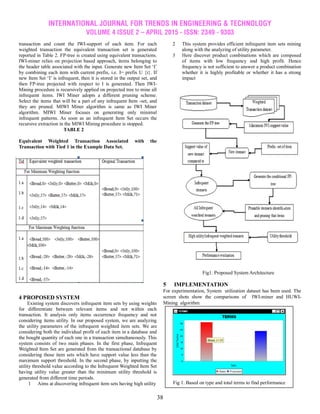
Fig 2. . Based on type and total time to find performance
Fig3. Based on threshold and minimal value to find accurate
infrequent items
Fig4. . Based on threshold and maximal value to find accurate
infrequent items](https://image.slidesharecdn.com/icarte066-150504001031-conversion-gate01/85/Efficient-Utility-Based-Infrequent-Weighted-Item-Set-Mining-4-320.jpg)
![INTERNATIONAL JOURNAL FOR TRENDS IN ENGINEERING & TECHNOLOGY
VOLUME 4 ISSUE 2 – APRIL 2015 - ISSN: 2349 - 9303
40
[10] Luca Cagliero and Paolo Garza,‖ Infrequent Weighted Item
set Mining Using Frequent Pattern Growth‖ IEEE
Transactions On Knowledge And Data Engineering, Volume
26, No.4, April 2014
[11] X. Dong, Z. Zheng, Z. Niu, and Q. Jia, ―Mining Infrequent
Item-sets Based on Multiple Level Minimum
Supports,‖Proc. Second Int‘l Conf. Innovative Computing,
Information and Control (ICICIC ‘07), pp. 528-531, 2007
[12] J. Han, J. Pei, and Y. Yin, ―Mining Frequent Patterns without
Candidate Generation,‖ Proc. ACM SIGMOD Int‘l Conf.
Management of Data, pp. 1-12, 2000.
[13] X. Wu, C. Zhang, and S. Zhang, ―Efficient Mining of Both
Positive and Negative Association Rules,‖ ACM Trans.
Information Systems, vol. 22, no. 3, pp. 381-405, 2004.
[14] Anis Suhailis Abdul Kadir, Azuraliza Abu Bakar, Abdul
Razak Hamdan, ―Frequent Absence and Presence Item-set for
Negative Association Rule Mining,‖ 11th
International
Conference On Intelligent System Design and Applications,
2011.
[15] T. Bernecker, H.-P. Kriegel, M. Renz, F. Verhein, and A.
Zuefle, ―Probabilistic Frequent Item-set Mining in Uncertain
Databases,‖Proc. 15th ACM SIGKDD Int‘l Conf. Knowledge
Discovery and Data Mining (KDD ‘09), pp. 119-128, 2009.
[16] Mehdi Adda, Lei Wu, Sharon White(2012), Yi Feng ―
Pattern detection with rare item-set mining‖ International
Journal on Soft Computing, Artificial Intelligence and
Applications (IJSCAI), Vol.1, No.1, August 2012.
[17]IdhebaMohamad Ali O. Swesi, Azuraliza Abu Bakar,
AnisSuhailis Abdul Kadir,‖ Mining Positive and Negative
Association Rules from Interesting Frequent and Infrequent
Item-sets‖, 9th International Conference on Fuzzy Systems
and Knowledge Discovery, 2012.
[18] Chowdhury Farhan Ahmed, Syed Khairuzzaman Tanbeer,
Byeong-Soo Jeong, Ho-Jin Choi, ―A framework for mining
interesting high utility patterns with a strongfrequency
affinity‖, Information Science, 2011.
[19] Adinarayanareddy B , O Srinivasa Rao, MHM Krishna
Prasad, ‖An Improved UP-Growth High Utility Itemset
Mining‖, International Journal of Computer Applications
(0975 – 8887) Volume 58– No.2, November 2011.](https://image.slidesharecdn.com/icarte066-150504001031-conversion-gate01/85/Efficient-Utility-Based-Infrequent-Weighted-Item-Set-Mining-5-320.jpg)

This paper proposes a high utility based infrequent weighted item set mining (HUIWIM) approach to address the challenges of mining infrequent item sets with user-defined utility thresholds. The approach improves efficiency by analyzing both item occurrence frequencies and their utility parameters, thereby enabling the discovery of product combinations that are infrequent yet highly profitable. The proposed methods show enhanced performance over existing systems in mining high utility infrequent item sets from transactional databases.


