Irritable Bowel Syndrome
Updates in Clinical Practice
Speaker : Dr Chong Chern Hao
Moderator : Dr Reuben Wong KM
Mount Elizabeth Medical Centre
Gleneagles Medical Centre
gutCARE Digestive◦Liver◦Endoscopy Associates
Special Thanks to
Main objectives
• Understand the changing epidemiology of IBS
in Singapore
• Changes in diagnostic criteria from ROME III
to ROME IV
• Have a greater understanding the
relationship between SIBO and IBS and the
role of hydrogen breath testing in IBS
• Treatments available
• When to refer to specialist
3
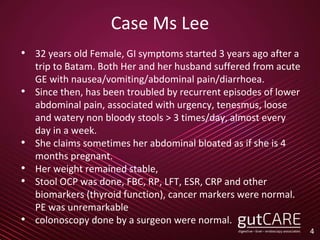
Case Ms Lee
• 32 years old Female, GI symptoms started 3 years ago after a
trip to Batam. Both Her and her husband suffered from acute
GE with nausea/vomiting/abdominal pain/diarrhoea.
• Since then, has been troubled by recurrent episodes of lower
abdominal pain, associated with urgency, tenesmus, loose
and watery non bloody stools > 3 times/day, almost every
day in a week.
• She claims sometimes her abdominal bloated as if she is 4
months pregnant.
• Her weight remained stable,
• Stool OCP was done, FBC, RP, LFT, ESR, CRP and other
biomarkers (thyroid function), cancer markers were normal.
PE was unremarkable
• colonoscopy done by a surgeon were normal.
4
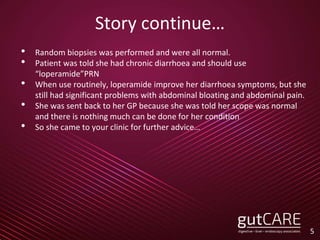
Story continue…
• Random biopsies was performed and were all normal.
• Patient was told she had chronic diarrhoea and should use
“loperamide”PRN
• When use routinely, loperamide improve her diarrhoea symptoms, but she
still had significant problems with abdominal bloating and abdominal pain.
• She was sent back to her GP because she was told her scope was normal
and there is nothing much can be done for her condition
• So she came to your clinic for further advice…
5
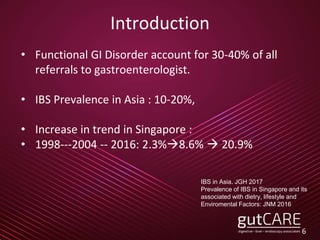
Introduction
• Functional GI Disorder account for 30-40% of all
referrals to gastroenterologist.
• IBS Prevalence in Asia : 10-20%,
• Increase in trend in Singapore :
• 1998---2004 -- 2016: 2.3%8.6%  20.9%
6
IBS in Asia. JGH 2017
Prevalence of IBS in Singapore and its
associated with dietry, lifestyle and
Enviromental Factors: JNM 2016
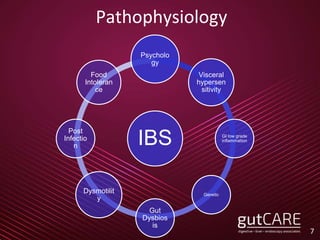
Pathophysiology
7
IBS
Psycholo
gy
Visceral
hypersen
sitivity
GI low grade
inflammation
Genetic
Gut
Dysbios
is
Dysmotilit
y
Post
Infectio
n
Food
Intoleran
ce
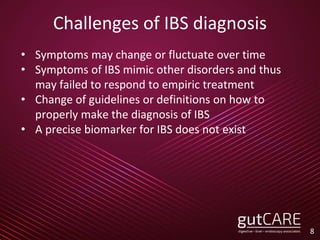
Challenges of IBS diagnosis
• Symptoms may change or fluctuate over time
• Symptoms of IBS mimic other disorders and thus
may failed to respond to empiric treatment
• Change of guidelines or definitions on how to
properly make the diagnosis of IBS
• A precise biomarker for IBS does not exist
8
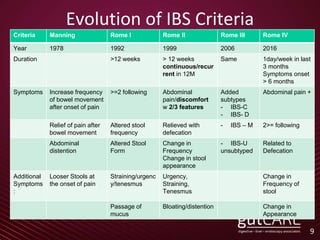
Evolution of IBS Criteria
9
Criteria Manning Rome I Rome II Rome III Rome IV
Year 1978 1992 1999 2006 2016
Duration >12 weeks > 12 weeks
continuous/recur
rent in 12M
Same 1day/week in last
3 months
Symptoms onset
> 6 months
Symptoms Increase frequency
of bowel movement
after onset of pain
>=2 following Abdominal
pain/discomfort
w 2/3 features
Added
subtypes
- IBS-C
- IBS- D
Abdominal pain +
Relief of pain after
bowel movement
Altered stool
frequency
Relieved with
defecation
- IBS – M 2>= following
Abdominal
distention
Altered Stool
Form
Change in
Frequency
Change in stool
appearance
- IBS-U
unsubtyped
Related to
Defecation
Additional
Symptoms
:
Looser Stools at
the onset of pain
Straining/urgenc
y/tenesmus
Urgency,
Straining,
Tenesmus
Change in
Frequency of
stool
Passage of
mucus
Bloating/distention Change in
Appearance
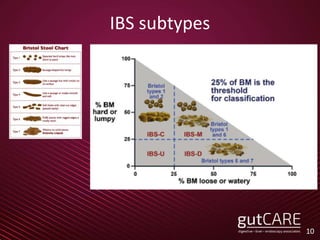
IBS subtypes
10
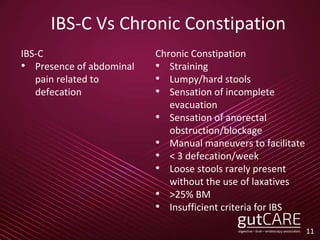
IBS-C Vs Chronic Constipation
IBS-C
• Presence of abdominal
pain related to
defecation
11
Chronic Constipation
• Straining
• Lumpy/hard stools
• Sensation of incomplete
evacuation
• Sensation of anorectal
obstruction/blockage
• Manual maneuvers to facilitate
• < 3 defecation/week
• Loose stools rarely present
without the use of laxatives
• >25% BM
• Insufficient criteria for IBS
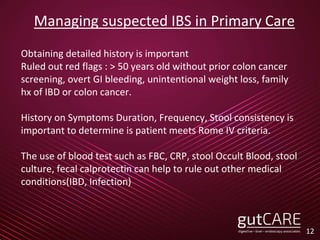
Managing suspected IBS in Primary Care
Obtaining detailed history is important
Ruled out red flags : > 50 years old without prior colon cancer
screening, overt GI bleeding, unintentional weight loss, family
hx of IBD or colon cancer.
History on Symptoms Duration, Frequency, Stool consistency is
important to determine is patient meets Rome IV criteria.
The use of blood test such as FBC, CRP, stool Occult Blood, stool
culture, fecal calprotectin can help to rule out other medical
conditions(IBD, Infection)
12
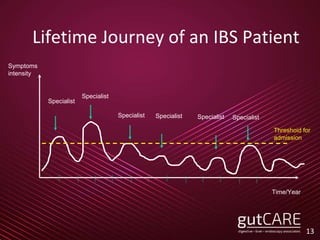
Lifetime Journey of an IBS Patient
13
Symptoms
intensity
Time/Year
Specialist
Specialist
SpecialistSpecialist Specialist Specialist
Threshoid for
admission
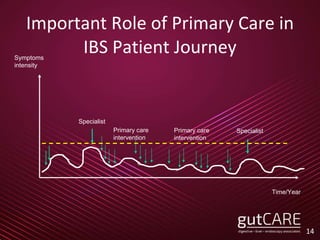
Important Role of Primary Care in
IBS Patient Journey
14
Symptoms
intensity
Time/Year
Specialist
SpecialistPrimary care
intervention
Primary care
intervention
When to refer to specialists
• When there is presence of red flags
• When there is lack of response to initial
symptomatic treatment in new patient
• When there is a change of bowel pattern from
baseline in a stable IBS patient
• When there is an unmet expectations from the
patient
• When there is lack of resource(medication/time) to
manage the patient
15
Part 2: Ms Lee First Consult
• She was referred to my clinic for further management
of IBS-D due to concerns of persistent symptoms
16
Key points managing IBS patient
• These patient usually saw a lot of doctors
• A lot of tests usually being done
• Some have tried a lot of different regimes, dietry modification,
lifestyle changes etc
• They have done their home work
Strategy during consult:
• Listen, listen and listen, allow patients to tell their story, helps
to establish good foundation of Doctor-patient relationship
• Review all prior tests, scopes, treatment (what works and what
doesn’t) prevent unnecessary retest or therapeutic trials.
• Ask about fear and concerns ( Patient often worried about
malignancy or something serious happening in their body)
• Examination to shows complaint taken seriously
• Rectal examination often required for constipation patient
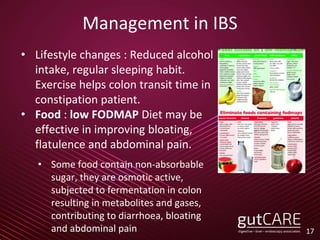
Management in IBS
• Lifestyle changes : Reduced alcohol
intake, regular sleeping habit.
Exercise helps colon transit time in
constipation patient.
• Food : low FODMAP Diet may be
effective in improving bloating,
flatulence and abdominal pain.
• Some food contain non-absorbable
sugar, they are osmotic active,
subjected to fermentation in colon
resulting in metabolites and gases,
contributing to diarrhoea, bloating
and abdominal pain 17
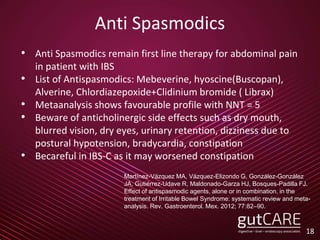
Anti Spasmodics
• Anti Spasmodics remain first line therapy for abdominal pain
in patient with IBS
• List of Antispasmodics: Mebeverine, hyoscine(Buscopan),
Alverine, Chlordiazepoxide+Clidinium bromide ( Librax)
• Metaanalysis shows favourable profile with NNT = 5
• Beware of anticholinergic side effects such as dry mouth,
blurred vision, dry eyes, urinary retention, dizziness due to
postural hypotension, bradycardia, constipation
• Becareful in IBS-C as it may worsened constipation
18
Martínez-Vázquez MA, Vázquez-Elizondo G, González-González
JA, Gutiérrez-Udave R, Maldonado-Garza HJ, Bosques-Padilla FJ.
Effect of antispasmodic agents, alone or in combination, in the
treatment of Irritable Bowel Syndrome: systematic review and meta-
analysis. Rev. Gastroenterol. Mex. 2012; 77:82–90.
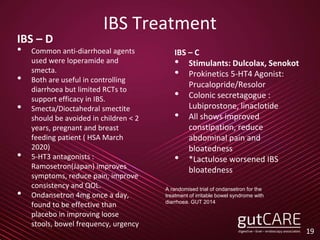
IBS Treatment
IBS – D
• Common anti-diarrhoeal agents
used were loperamide and
smecta.
• Both are useful in controlling
diarrhoea but limited RCTs to
support efficacy in IBS.
• Smecta/Dioctahedral smectite
should be avoided in children < 2
years, pregnant and breast
feeding patient ( HSA March
2020)
• 5-HT3 antagonists :
Ramosetron(Japan) improves
symptoms, reduce pain, improve
consistency and QOL.
• Ondansetron 4mg once a day,
found to be effective than
placebo in improving loose
stools, bowel frequency, urgency
19
IBS – C
• Stimulants: Dulcolax, Senokot
• Prokinetics 5-HT4 Agonist:
Prucalopride/Resolor
• Colonic secretagogue :
Lubiprostone, linaclotide
• All shows improved
constipation, reduce
abdominal pain and
bloatedness
• *Lactulose worsened IBS
bloatedness
A randomised trial of ondansetron for the
treatment of irritable bowel syndrome with
diarrhoea. GUT 2014
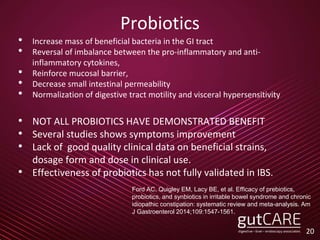
Probiotics
• Increase mass of beneficial bacteria in the GI tract
• Reversal of imbalance between the pro-inflammatory and anti-
inflammatory cytokines,
• Reinforce mucosal barrier,
• Decrease small intestinal permeability
• Normalization of digestive tract motility and visceral hypersensitivity
• NOT ALL PROBIOTICS HAVE DEMONSTRATED BENEFIT
• Several studies shows symptoms improvement
• Lack of good quality clinical data on beneficial strains,
dosage form and dose in clinical use.
• Effectiveness of probiotics has not fully validated in IBS.
20
Ford AC, Quigley EM, Lacy BE, et al. Efficacy of prebiotics,
probiotics, and synbiotics in irritable bowel syndrome and chronic
idiopathic constipation: systematic review and meta-analysis. Am
J Gastroenterol 2014;109:1547-1561.
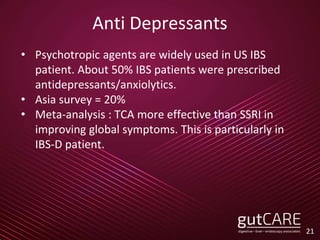
Anti Depressants
• Psychotropic agents are widely used in US IBS
patient. About 50% IBS patients were prescribed
antidepressants/anxiolytics.
• Asia survey = 20%
• Meta-analysis : TCA more effective than SSRI in
improving global symptoms. This is particularly in
IBS-D patient.
21
Complementary and Alternative
Medication
• High heterogeneity makes it hard to evaluate the
efficacy as single treatment class.
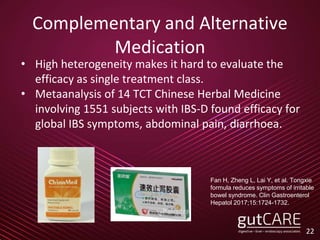
• Metaanalysis of 14 TCT Chinese Herbal Medicine
involving 1551 subjects with IBS-D found efficacy for
global IBS symptoms, abdominal pain, diarrhoea.
22
Fan H, Zheng L, Lai Y, et al. Tongxie
formula reduces symptoms of irritable
bowel syndrome. Clin Gastroenterol
Hepatol 2017;15:1724-1732.
Check list of Tests/Treatment
23
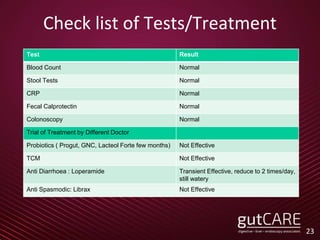
Test Result
Blood Count Normal
Stool Tests Normal
CRP Normal
Fecal Calprotectin Normal
Colonoscopy Normal
Trial of Treatment by Different Doctor
Probiotics ( Progut, GNC, Lacteol Forte few months) Not Effective
TCM Not Effective
Anti Diarrhoea : Loperamide Transient Effective, reduce to 2 times/day,
still watery
Anti Spasmodic: Librax Not Effective
SIBO and IBS
24
Ms Lee: “Doctor, is there any other test I should
do?”
25
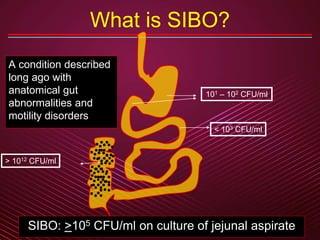
101 – 102 CFU/ml
< 103 CFU/ml
> 1012 CFU/ml
What is SIBO?
SIBO: >105 CFU/ml on culture of jejunal aspirate
A condition described
long ago with
anatomical gut
abnormalities and
motility disorders
26
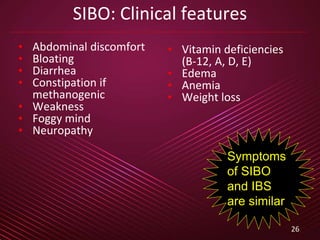
SIBO: Clinical features
• Abdominal discomfort
• Bloating
• Diarrhea
• Constipation if
methanogenic
• Weakness
• Foggy mind
• Neuropathy
• Vitamin deficiencies
(B-12, A, D, E)
• Edema
• Anemia
• Weight loss
Symptoms
of SIBO
and IBS
are similar
27
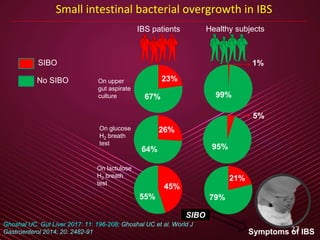
Small intestinal bacterial overgrowth in IBS
Ghoshal UC. Gut Liver 2017: 11: 196-208; Ghoshal UC et al. World J
Gastroenterol 2014; 20: 2482-91
IBS patients Healthy subjects
On upper
gut aspirate
culture
On lactulose
H2 breath
test
On glucose
H2 breath
test
SIBO
No SIBO
Symptoms of IBS
SIBO
23%
67%
26%
64%
45%
55%
21%
79%
95%
5%
99%
1%
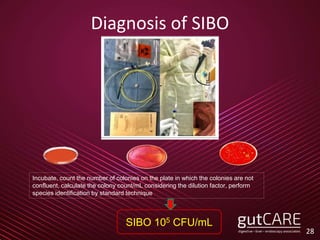
Diagnosis of SIBO
28
SIBO 105 CFU/mL
Incubate, count the number of colonies on the plate in which the colonies are not
confluent, calculate the colony count/mL considering the dilution factor, perform
species identification by standard technique
Breath Testing
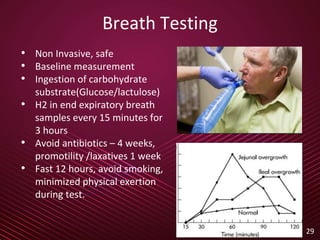
• Non Invasive, safe
• Baseline measurement
• Ingestion of carbohydrate
substrate(Glucose/lactulose)
• H2 in end expiratory breath
samples every 15 minutes for
3 hours
• Avoid antibiotics – 4 weeks,
promotility /laxatives 1 week
• Fast 12 hours, avoid smoking,
minimized physical exertion
during test.
29
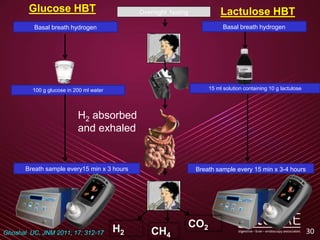
30
Glucose HBT Lactulose HBTOvernight fasting
Breath sample every15 min x 3 hours Breath sample every 15 min x 3-4 hours
100 g glucose in 200 ml water 15 ml solution containing 10 g lactulose
Basal breath hydrogen Basal breath hydrogen
H2 CH4
CO2
H2 absorbed
and exhaled
Ghoshal UC, JNM 2011; 17: 312-17
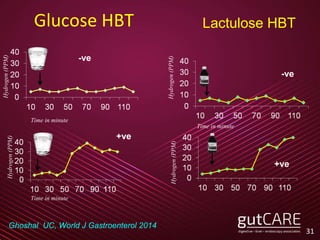
31
Glucose HBT
Hydrogen(PPM)
Hydrogen(PPM)
Hydrogen(PPM)Hydrogen(PPM)
Time in minute
Time in minute
Time in minute
Lactulose HBT
Ghoshal UC, World J Gastroenterol 2014
-ve
+ve
+ve
-ve
32
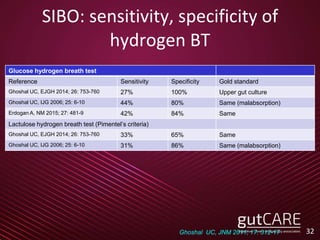
SIBO: sensitivity, specificity of
hydrogen BT
Glucose hydrogen breath test
Reference Sensitivity Specificity Gold standard
Ghoshal UC, EJGH 2014; 26: 753-760 27% 100% Upper gut culture
Ghoshal UC, IJG 2006; 25: 6-10 44% 80% Same (malabsorption)
Erdogan A, NM 2015; 27: 481-9 42% 84% Same
Lactulose hydrogen breath test (Pimentel’s criteria)
Ghoshal UC, EJGH 2014; 26: 753-760 33% 65% Same
Ghoshal UC, IJG 2006; 25: 6-10 31% 86% Same (malabsorption)
Ghoshal UC, JNM 2011; 17: 312-17
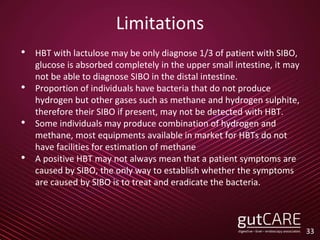
Limitations
• HBT with lactulose may be only diagnose 1/3 of patient with SIBO,
glucose is absorbed completely in the upper small intestine, it may
not be able to diagnose SIBO in the distal intestine.
• Proportion of individuals have bacteria that do not produce
hydrogen but other gases such as methane and hydrogen sulphite,
therefore their SIBO if present, may not be detected with HBT.
• Some individuals may produce combination of hydrogen and
methane, most equipments available in market for HBTs do not
have facilities for estimation of methane
• A positive HBT may not always mean that a patient symptoms are
caused by SIBO, the only way to establish whether the symptoms
are caused by SIBO is to treat and eradicate the bacteria.
33
34
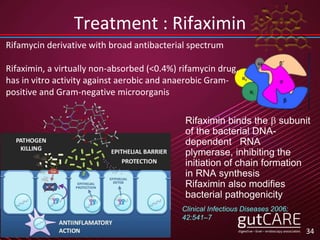
Treatment : Rifaximin
Rifaximin binds the b subunit
of the bacterial DNA-
dependent RNA
plymerase, inhibiting the
initiation of chain formation
in RNA synthesis
Rifaximin also modifies
bacterial pathogenicity
Clinical Infectious Diseases 2006;
42:541–7
Rifamycin derivative with broad antibacterial spectrum
Rifaximin, a virtually non-absorbed (<0.4%) rifamycin drug,
has in vitro activity against aerobic and anaerobic Gram-
positive and Gram-negative microorganis
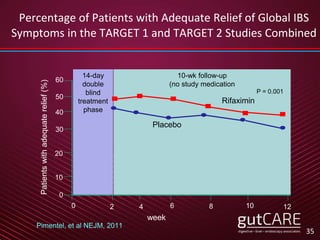
35
14-day
double
blind
treatment
phase
10-wk follow-up
(no study medication
0 2 4 6 8 10 12
0
10
20
30
40
50
60
P = 0.001
Rifaximin
Placebo
Patientswithadequaterelief(%)
week
Percentage of Patients with Adequate Relief of Global IBS
Symptoms in the TARGET 1 and TARGET 2 Studies Combined
Pimentel, et al NEJM, 2011
36
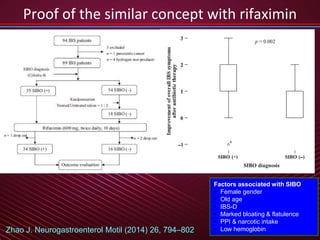
Proof of the similar concept with rifaximin
Zhao J. Neurogastroenterol Motil (2014) 26, 794–802
Factors associated with SIBO
• Female gender
• Old age
• IBS-D
• Marked bloating & flatulence
• PPI & narcotic intake
• Low hemoglobin
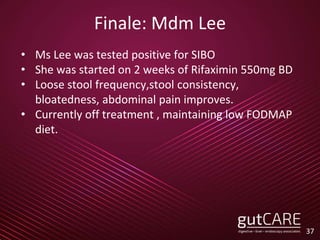
Finale: Mdm Lee
• Ms Lee was tested positive for SIBO
• She was started on 2 weeks of Rifaximin 550mg BD
• Loose stool frequency,stool consistency,
bloatedness, abdominal pain improves.
• Currently off treatment , maintaining low FODMAP
diet.
37
Conclusion
• Primary care plays an important role in managing new and
stable IBS patient in community.
• The diagnosis of IBS requires careful history taking with
reference to the diagnostic criteria of IBS, PE, and
investigations.
• Alarm features should prompt for investigations including
colonoscopy.
• In patient lack of response to first line IBS-non constipation
treatment, Hydrogen Breath Testing should be considered to
evaluate possibility of SIBO
• Rifaximin is useful in treatment of SIBO
38
Discussions
39
THANK YOU
Join our upcoming talks!
41
Date Topic Speaker
3/6/2020 Updates on
Helicobacter Pylori
infection
Chong Chern Hao
Helicobacter Pylori
Challenges and Updates in 2020
OUR CLINICS
• Mount Elizabeth Novena Specialist Center
• Mount Alvernia Hospital
• Gleneagles Medical Center
• Farrer Park Medical Center
• Parkway East Medical Center
• Mount Elizabeth Medical Center
OUR SERVICES
•General Endoscopy
•Advanced Endoscopy (EUS, ERCP,
Capsule Endoscopy, Small Bowel
Entersocopy, Complex Polyp Removal,
Dilation and Stenting)
•24hr pH Monitoring and High Resolution
Manometry
•Hydrogen Breath Testing
•Colon Transit Studies
•Fibroscan Liver Assessment
•Nutrition and Dietetics
•Specialized Psychological Services

Ibs update 2020

  • 1.
    Irritable Bowel Syndrome Updatesin Clinical Practice Speaker : Dr Chong Chern Hao Moderator : Dr Reuben Wong KM Mount Elizabeth Medical Centre Gleneagles Medical Centre gutCARE Digestive◦Liver◦Endoscopy Associates
  • 2.
  • 3.
    Main objectives • Understandthe changing epidemiology of IBS in Singapore • Changes in diagnostic criteria from ROME III to ROME IV • Have a greater understanding the relationship between SIBO and IBS and the role of hydrogen breath testing in IBS • Treatments available • When to refer to specialist 3
  • 4.
    Case Ms Lee •32 years old Female, GI symptoms started 3 years ago after a trip to Batam. Both Her and her husband suffered from acute GE with nausea/vomiting/abdominal pain/diarrhoea. • Since then, has been troubled by recurrent episodes of lower abdominal pain, associated with urgency, tenesmus, loose and watery non bloody stools > 3 times/day, almost every day in a week. • She claims sometimes her abdominal bloated as if she is 4 months pregnant. • Her weight remained stable, • Stool OCP was done, FBC, RP, LFT, ESR, CRP and other biomarkers (thyroid function), cancer markers were normal. PE was unremarkable • colonoscopy done by a surgeon were normal. 4
  • 5.
    Story continue… • Randombiopsies was performed and were all normal. • Patient was told she had chronic diarrhoea and should use “loperamide”PRN • When use routinely, loperamide improve her diarrhoea symptoms, but she still had significant problems with abdominal bloating and abdominal pain. • She was sent back to her GP because she was told her scope was normal and there is nothing much can be done for her condition • So she came to your clinic for further advice… 5
  • 6.
    Introduction • Functional GIDisorder account for 30-40% of all referrals to gastroenterologist. • IBS Prevalence in Asia : 10-20%, • Increase in trend in Singapore : • 1998---2004 -- 2016: 2.3%8.6%  20.9% 6 IBS in Asia. JGH 2017 Prevalence of IBS in Singapore and its associated with dietry, lifestyle and Enviromental Factors: JNM 2016
  • 7.
  • 8.
    Challenges of IBSdiagnosis • Symptoms may change or fluctuate over time • Symptoms of IBS mimic other disorders and thus may failed to respond to empiric treatment • Change of guidelines or definitions on how to properly make the diagnosis of IBS • A precise biomarker for IBS does not exist 8
  • 9.
    Evolution of IBSCriteria 9 Criteria Manning Rome I Rome II Rome III Rome IV Year 1978 1992 1999 2006 2016 Duration >12 weeks > 12 weeks continuous/recur rent in 12M Same 1day/week in last 3 months Symptoms onset > 6 months Symptoms Increase frequency of bowel movement after onset of pain >=2 following Abdominal pain/discomfort w 2/3 features Added subtypes - IBS-C - IBS- D Abdominal pain + Relief of pain after bowel movement Altered stool frequency Relieved with defecation - IBS – M 2>= following Abdominal distention Altered Stool Form Change in Frequency Change in stool appearance - IBS-U unsubtyped Related to Defecation Additional Symptoms : Looser Stools at the onset of pain Straining/urgenc y/tenesmus Urgency, Straining, Tenesmus Change in Frequency of stool Passage of mucus Bloating/distention Change in Appearance
  • 10.
  • 11.
    IBS-C Vs ChronicConstipation IBS-C • Presence of abdominal pain related to defecation 11 Chronic Constipation • Straining • Lumpy/hard stools • Sensation of incomplete evacuation • Sensation of anorectal obstruction/blockage • Manual maneuvers to facilitate • < 3 defecation/week • Loose stools rarely present without the use of laxatives • >25% BM • Insufficient criteria for IBS
  • 12.
    Managing suspected IBSin Primary Care Obtaining detailed history is important Ruled out red flags : > 50 years old without prior colon cancer screening, overt GI bleeding, unintentional weight loss, family hx of IBD or colon cancer. History on Symptoms Duration, Frequency, Stool consistency is important to determine is patient meets Rome IV criteria. The use of blood test such as FBC, CRP, stool Occult Blood, stool culture, fecal calprotectin can help to rule out other medical conditions(IBD, Infection) 12
  • 13.
    Lifetime Journey ofan IBS Patient 13 Symptoms intensity Time/Year Specialist Specialist SpecialistSpecialist Specialist Specialist Threshoid for admission
  • 14.
    Important Role ofPrimary Care in IBS Patient Journey 14 Symptoms intensity Time/Year Specialist SpecialistPrimary care intervention Primary care intervention
  • 15.
    When to referto specialists • When there is presence of red flags • When there is lack of response to initial symptomatic treatment in new patient • When there is a change of bowel pattern from baseline in a stable IBS patient • When there is an unmet expectations from the patient • When there is lack of resource(medication/time) to manage the patient 15
  • 16.
    Part 2: MsLee First Consult • She was referred to my clinic for further management of IBS-D due to concerns of persistent symptoms 16 Key points managing IBS patient • These patient usually saw a lot of doctors • A lot of tests usually being done • Some have tried a lot of different regimes, dietry modification, lifestyle changes etc • They have done their home work Strategy during consult: • Listen, listen and listen, allow patients to tell their story, helps to establish good foundation of Doctor-patient relationship • Review all prior tests, scopes, treatment (what works and what doesn’t) prevent unnecessary retest or therapeutic trials. • Ask about fear and concerns ( Patient often worried about malignancy or something serious happening in their body) • Examination to shows complaint taken seriously • Rectal examination often required for constipation patient
  • 17.
    Management in IBS •Lifestyle changes : Reduced alcohol intake, regular sleeping habit. Exercise helps colon transit time in constipation patient. • Food : low FODMAP Diet may be effective in improving bloating, flatulence and abdominal pain. • Some food contain non-absorbable sugar, they are osmotic active, subjected to fermentation in colon resulting in metabolites and gases, contributing to diarrhoea, bloating and abdominal pain 17
  • 18.
    Anti Spasmodics • AntiSpasmodics remain first line therapy for abdominal pain in patient with IBS • List of Antispasmodics: Mebeverine, hyoscine(Buscopan), Alverine, Chlordiazepoxide+Clidinium bromide ( Librax) • Metaanalysis shows favourable profile with NNT = 5 • Beware of anticholinergic side effects such as dry mouth, blurred vision, dry eyes, urinary retention, dizziness due to postural hypotension, bradycardia, constipation • Becareful in IBS-C as it may worsened constipation 18 Martínez-Vázquez MA, Vázquez-Elizondo G, González-González JA, Gutiérrez-Udave R, Maldonado-Garza HJ, Bosques-Padilla FJ. Effect of antispasmodic agents, alone or in combination, in the treatment of Irritable Bowel Syndrome: systematic review and meta- analysis. Rev. Gastroenterol. Mex. 2012; 77:82–90.
  • 19.
    IBS Treatment IBS –D • Common anti-diarrhoeal agents used were loperamide and smecta. • Both are useful in controlling diarrhoea but limited RCTs to support efficacy in IBS. • Smecta/Dioctahedral smectite should be avoided in children < 2 years, pregnant and breast feeding patient ( HSA March 2020) • 5-HT3 antagonists : Ramosetron(Japan) improves symptoms, reduce pain, improve consistency and QOL. • Ondansetron 4mg once a day, found to be effective than placebo in improving loose stools, bowel frequency, urgency 19 IBS – C • Stimulants: Dulcolax, Senokot • Prokinetics 5-HT4 Agonist: Prucalopride/Resolor • Colonic secretagogue : Lubiprostone, linaclotide • All shows improved constipation, reduce abdominal pain and bloatedness • *Lactulose worsened IBS bloatedness A randomised trial of ondansetron for the treatment of irritable bowel syndrome with diarrhoea. GUT 2014
  • 20.
    Probiotics • Increase massof beneficial bacteria in the GI tract • Reversal of imbalance between the pro-inflammatory and anti- inflammatory cytokines, • Reinforce mucosal barrier, • Decrease small intestinal permeability • Normalization of digestive tract motility and visceral hypersensitivity • NOT ALL PROBIOTICS HAVE DEMONSTRATED BENEFIT • Several studies shows symptoms improvement • Lack of good quality clinical data on beneficial strains, dosage form and dose in clinical use. • Effectiveness of probiotics has not fully validated in IBS. 20 Ford AC, Quigley EM, Lacy BE, et al. Efficacy of prebiotics, probiotics, and synbiotics in irritable bowel syndrome and chronic idiopathic constipation: systematic review and meta-analysis. Am J Gastroenterol 2014;109:1547-1561.
  • 21.
    Anti Depressants • Psychotropicagents are widely used in US IBS patient. About 50% IBS patients were prescribed antidepressants/anxiolytics. • Asia survey = 20% • Meta-analysis : TCA more effective than SSRI in improving global symptoms. This is particularly in IBS-D patient. 21
  • 22.
    Complementary and Alternative Medication •High heterogeneity makes it hard to evaluate the efficacy as single treatment class. • Metaanalysis of 14 TCT Chinese Herbal Medicine involving 1551 subjects with IBS-D found efficacy for global IBS symptoms, abdominal pain, diarrhoea. 22 Fan H, Zheng L, Lai Y, et al. Tongxie formula reduces symptoms of irritable bowel syndrome. Clin Gastroenterol Hepatol 2017;15:1724-1732.
  • 23.
    Check list ofTests/Treatment 23 Test Result Blood Count Normal Stool Tests Normal CRP Normal Fecal Calprotectin Normal Colonoscopy Normal Trial of Treatment by Different Doctor Probiotics ( Progut, GNC, Lacteol Forte few months) Not Effective TCM Not Effective Anti Diarrhoea : Loperamide Transient Effective, reduce to 2 times/day, still watery Anti Spasmodic: Librax Not Effective
  • 24.
    SIBO and IBS 24 MsLee: “Doctor, is there any other test I should do?”
  • 25.
    25 101 – 102CFU/ml < 103 CFU/ml > 1012 CFU/ml What is SIBO? SIBO: >105 CFU/ml on culture of jejunal aspirate A condition described long ago with anatomical gut abnormalities and motility disorders
  • 26.
    26 SIBO: Clinical features •Abdominal discomfort • Bloating • Diarrhea • Constipation if methanogenic • Weakness • Foggy mind • Neuropathy • Vitamin deficiencies (B-12, A, D, E) • Edema • Anemia • Weight loss Symptoms of SIBO and IBS are similar
  • 27.
    27 Small intestinal bacterialovergrowth in IBS Ghoshal UC. Gut Liver 2017: 11: 196-208; Ghoshal UC et al. World J Gastroenterol 2014; 20: 2482-91 IBS patients Healthy subjects On upper gut aspirate culture On lactulose H2 breath test On glucose H2 breath test SIBO No SIBO Symptoms of IBS SIBO 23% 67% 26% 64% 45% 55% 21% 79% 95% 5% 99% 1%
  • 28.
    Diagnosis of SIBO 28 SIBO105 CFU/mL Incubate, count the number of colonies on the plate in which the colonies are not confluent, calculate the colony count/mL considering the dilution factor, perform species identification by standard technique
  • 29.
    Breath Testing • NonInvasive, safe • Baseline measurement • Ingestion of carbohydrate substrate(Glucose/lactulose) • H2 in end expiratory breath samples every 15 minutes for 3 hours • Avoid antibiotics – 4 weeks, promotility /laxatives 1 week • Fast 12 hours, avoid smoking, minimized physical exertion during test. 29
  • 30.
    30 Glucose HBT LactuloseHBTOvernight fasting Breath sample every15 min x 3 hours Breath sample every 15 min x 3-4 hours 100 g glucose in 200 ml water 15 ml solution containing 10 g lactulose Basal breath hydrogen Basal breath hydrogen H2 CH4 CO2 H2 absorbed and exhaled Ghoshal UC, JNM 2011; 17: 312-17
  • 31.
    31 Glucose HBT Hydrogen(PPM) Hydrogen(PPM) Hydrogen(PPM)Hydrogen(PPM) Time inminute Time in minute Time in minute Lactulose HBT Ghoshal UC, World J Gastroenterol 2014 -ve +ve +ve -ve
  • 32.
    32 SIBO: sensitivity, specificityof hydrogen BT Glucose hydrogen breath test Reference Sensitivity Specificity Gold standard Ghoshal UC, EJGH 2014; 26: 753-760 27% 100% Upper gut culture Ghoshal UC, IJG 2006; 25: 6-10 44% 80% Same (malabsorption) Erdogan A, NM 2015; 27: 481-9 42% 84% Same Lactulose hydrogen breath test (Pimentel’s criteria) Ghoshal UC, EJGH 2014; 26: 753-760 33% 65% Same Ghoshal UC, IJG 2006; 25: 6-10 31% 86% Same (malabsorption) Ghoshal UC, JNM 2011; 17: 312-17
  • 33.
    Limitations • HBT withlactulose may be only diagnose 1/3 of patient with SIBO, glucose is absorbed completely in the upper small intestine, it may not be able to diagnose SIBO in the distal intestine. • Proportion of individuals have bacteria that do not produce hydrogen but other gases such as methane and hydrogen sulphite, therefore their SIBO if present, may not be detected with HBT. • Some individuals may produce combination of hydrogen and methane, most equipments available in market for HBTs do not have facilities for estimation of methane • A positive HBT may not always mean that a patient symptoms are caused by SIBO, the only way to establish whether the symptoms are caused by SIBO is to treat and eradicate the bacteria. 33
  • 34.
    34 Treatment : Rifaximin Rifaximinbinds the b subunit of the bacterial DNA- dependent RNA plymerase, inhibiting the initiation of chain formation in RNA synthesis Rifaximin also modifies bacterial pathogenicity Clinical Infectious Diseases 2006; 42:541–7 Rifamycin derivative with broad antibacterial spectrum Rifaximin, a virtually non-absorbed (<0.4%) rifamycin drug, has in vitro activity against aerobic and anaerobic Gram- positive and Gram-negative microorganis
  • 35.
    35 14-day double blind treatment phase 10-wk follow-up (no studymedication 0 2 4 6 8 10 12 0 10 20 30 40 50 60 P = 0.001 Rifaximin Placebo Patientswithadequaterelief(%) week Percentage of Patients with Adequate Relief of Global IBS Symptoms in the TARGET 1 and TARGET 2 Studies Combined Pimentel, et al NEJM, 2011
  • 36.
    36 Proof of thesimilar concept with rifaximin Zhao J. Neurogastroenterol Motil (2014) 26, 794–802 Factors associated with SIBO • Female gender • Old age • IBS-D • Marked bloating & flatulence • PPI & narcotic intake • Low hemoglobin
  • 37.
    Finale: Mdm Lee •Ms Lee was tested positive for SIBO • She was started on 2 weeks of Rifaximin 550mg BD • Loose stool frequency,stool consistency, bloatedness, abdominal pain improves. • Currently off treatment , maintaining low FODMAP diet. 37
  • 38.
    Conclusion • Primary careplays an important role in managing new and stable IBS patient in community. • The diagnosis of IBS requires careful history taking with reference to the diagnostic criteria of IBS, PE, and investigations. • Alarm features should prompt for investigations including colonoscopy. • In patient lack of response to first line IBS-non constipation treatment, Hydrogen Breath Testing should be considered to evaluate possibility of SIBO • Rifaximin is useful in treatment of SIBO 38
  • 39.
  • 40.
  • 41.
    Join our upcomingtalks! 41 Date Topic Speaker 3/6/2020 Updates on Helicobacter Pylori infection Chong Chern Hao Helicobacter Pylori Challenges and Updates in 2020
  • 42.
    OUR CLINICS • MountElizabeth Novena Specialist Center • Mount Alvernia Hospital • Gleneagles Medical Center • Farrer Park Medical Center • Parkway East Medical Center • Mount Elizabeth Medical Center
  • 43.
    OUR SERVICES •General Endoscopy •AdvancedEndoscopy (EUS, ERCP, Capsule Endoscopy, Small Bowel Entersocopy, Complex Polyp Removal, Dilation and Stenting) •24hr pH Monitoring and High Resolution Manometry •Hydrogen Breath Testing •Colon Transit Studies •Fibroscan Liver Assessment •Nutrition and Dietetics •Specialized Psychological Services