POWER CAPTURE SAFE TEST PATTERN DETERMINATION
FOR AT-SPEED SCAN BASED TESTING
1
P.Praveen Kumar, 2
B.Naresh Babu, 3
N.Pushpalatha
M.Tech (DECS) Student, Assistant professor, Assistant professor
Department of ECE, AITS
Annamacharya Institute of Technology and Sciences, Tirupati, India-517520
1
pnani427@gmail.com
2
naresh.birudala@gamil.com
3
pushpalatha_nainaru@rediff.com
Abstract — Scan based test proves a better choice of
test methodology for testing digital circuits. During an
at-speed scan-based test, excessive capture power may
cause significant current demand, resulting in the IR-
drop problem and unnecessary yield loss. Many
methods address this problem by reducing the
switching activities of power-risky patterns. These
methods may not be efficient when the number of
power-risky patterns is large or when some of the
patterns require extremely high power. The proposed
method in this project discards all power-risky
patterns and starts with power-safe patterns only,
which includes two processes, namely, test pattern
refinement and low-power test pattern regeneration.
The test pattern refinement process is used to refine
the power-safe patterns to detect faults originally
detected only by power-risky patterns. If some faults
are still undetected after this process, the low power
test pattern regeneration process is applied to generate
new power-safe patterns to detect these faults. The
patterns obtained using the proposed procedure are
guaranteed to be power-safe for the given power
constraints. Among these, the first method refines only
the power-safe patterns to address the capture power
problem. The designs are verified using Verilog HDL
in Xilinx 10.1i Synthesizer for the Spartan 3E FPGA
Kit. The required test data volume can be reduced by
nearly 12.76% on average with little or no fault
coverage loss.
Index Terms—At-speed testing, low capture power
testing,
scan-based testing, transition fault.
I INTRODUCTION
SCAN-BASED testing is the most widely used
design for test (DFT) methodology due to its simple
structure, high fault coverage, and strong diagnostic
support. However, the test power of scan tests may
be significantly higher than normal functional
power because circuits may en ter non-functional
states during testing. The test power required to load
or unload test data with shift clock control is called
shift power, and the power required to capture test
responses with an at-speed clock rate is called
capture power. Excessive shift power can lead to
high temperatures that can damage the circuit under
test (CUT) and may reduce the circuit’s reliability.
Excessive capture power induced by test patterns
may lead to large current demand and induce a
supply voltage drop, known as the IR-drop problem.
This would cause a normal circuit to slow down and
eventually fail the test, thereby inducing
unnecessary yield loss.
To estimate shift power and capture power,
several metrics have been proposed.
1. The circuit level simulation metric
a. The most accurate one.
b. Time consuming and memory
intensive.
2. Most previous works use simpler metrics. The
toggle count metric considers the state changes
of nodes (FFs or gates) and the weighted
switching activity (WSA) metric considers both
node state changes and fanouts of nodes. Metrics
that consider paths are also proposed.
3. The critical capture transition (CCT) metric
assesses launch switching activities around
critical paths, and the critical area targeted
(CAT) metric estimates launch switching
activities caused by test patterns around the
longest sensitized path. In this paper, we will
employ the WSA metric as it is highly correlated
to the real capture power and has been used in
most related work to determine power-safe test
patterns.
4. The capture-power-safe patterns: To address the
capture-safe-power problem, numerous methods
have been proposed.
a) The hardware-based methods attempt to reduce
test power by modifying the circuit/clock in test
INTERNATIONAL CONFERENCE ON CIVIL AND MECHANICAL ENGINEERING, ICCME-2014
INTERNATIONAL ASSOCIATION OF ENGINEERING & TECHNOLOGY FOR SKILL DEVELOPMENT www.iaetsd.in
23
ISBN:378-26-138420-0229
structures or by adding some additional
hardware to the CUT.
I. In scan chain segmentation methods are
proposed to reduce both shift and capture
power.
II. In a partial launch on- capture (LOC) scheme
is proposed to reduce the capture power,
which allows only partial scan cells to be
activated during the capture cycle.
Advantages:
1. Some clock gating schemes have also been
proposed to limit the test power
consumption.
2. They effectively reduce test power.
Disadvantages:
1. They may increase circuit area
2. Degrade circuit performance
3. They may be incompatible with existing
design flows
b) software-based methods attempt to generate
power safe test patterns that will not consume
excess power during testing by modifying the
traditional automatic test pattern generation
(ATPG) procedure or by modifying
predetermined test sets. These methods are
generally based on the X-filling technique to
assign fixed logic values to don’t care bits (X-
bits) in test patterns to minimize test power
dissipation.
c) Instead of modifying the ATPG procedure, some
post-ATPG methods modify a given test set by
using X-filling to reduce as much test power as
possible [7], [10], [16] or to satisfy the power
constraints [6], [21], [26]. Butler et al. [16]
propose a method, named adjacency fill, which
assigns deterministic values to the X-bits in line
with the adjacent bit values to reduce shift
power.
d) Another method to reduce the capture power is
to use the circuit’s steady states to fill X-bits [7].
This method, called ACF in [7], first fills X-bit
randomly. Then, it applies a number of
functional clock cycles starting from the scan-in
state of a test.
e) Vector to obtain the final states and uses these
states to fill the X-bits to get more realistic
patterns. Although both the Preferred Fill and
the ACF methods can quickly assign the X-bits
in PPI, they cannot ensure capture power
safety because they do not consider the power
constraint of the circuit. Another problem with
the above two methods is that they try to
assign values to all X-bits in all test patterns to
reduce test power as much as possible.
However, not all of the test patterns are power-
risky [19].
I. Devanathan et al.and Wu et al. modified the
PODEM-based ATPG procedure by adding
some power constraints to the back trace and
dynamic compaction processes to directly
generate power-safe test sets.
II. In a low-capture power (LCP) X-filling method
is proposed and incorporated into the dynamic
compaction process of the test generation flow
to reduce the capture power.
III. Although these methods can achieve a large
reduction in capture power, they often increase
the test data volume in comparison with that
produced by conventional at-speed scan test
methods due to the fact that during the dynamic
compaction process, many X-bits that can be
assigned to detect more faults are reserved to
reduce capture power.
II METHODS TO REDUCE CAPTURE
POWER
1. Instead of modifying the ATPG procedure,
some post-ATPG methods modify a given
test set by using X-filling to reduce as
much test power as possible or to satisfy
the power constraints.
a) Adjacency fill assigns deterministic values
to the X-bits in line with the adjacent bit
values to reduce shift power.
eg,-given the test pattern (1, X, X, 1, 0), the
X-bits in this pattern are filled as (1, 1, 1,
1, 0).
b) The circuit’s steady states to fill X-bits
(ACF), this method first fills X-bit
randomly. Then, it applies a number of
functional clock cycles starting from the
scan-in state of a test vector to obtain the
final states and uses these states to fill the
X-bits to get more realistic patterns.
INTERNATIONAL CONFERENCE ON CIVIL AND MECHANICAL ENGINEERING, ICCME-2014
INTERNATIONAL ASSOCIATION OF ENGINEERING & TECHNOLOGY FOR SKILL DEVELOPMENT www.iaetsd.in
24
ISBN:378-26-138420-0230
Disadvantages:
1. Although both the Preferred Fill and the
ACF methods can quickly assign the X-bits
in PPI, they cannot ensure capture power
safety because they do not consider the
power constraint of the circuit.
2. They try to assign values to all X-bits in all test
patterns to reduce test power as much as
possible.
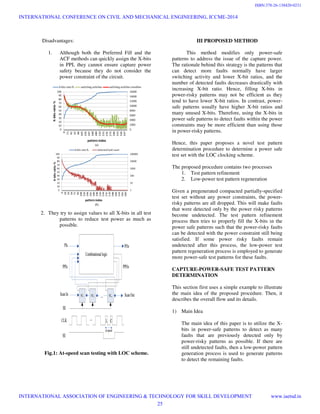
Fig.1: At-speed scan testing with LOC scheme.
III PROPOSED METHOD
This method modifies only power-safe
patterns to address the issue of the capture power.
The rationale behind this strategy is the patterns that
can detect more faults normally have larger
switching activity and lower X-bit ratios, and the
number of detected faults decreases drastically with
increasing X-bit ratio. Hence, filling X-bits in
power-risky patterns may not be efficient as they
tend to have lower X-bit ratios. In contrast, power-
safe patterns usually have higher X-bit ratios and
many unused X-bits. Therefore, using the X-bits in
power safe patterns to detect faults within the power
constraints may be more efficient than using those
in power-risky patterns.
Hence, this paper proposes a novel test pattern
determination procedure to determine a power safe
test set with the LOC clocking scheme.
The proposed procedure contains two processes
1. Test pattern refinement
2. Low-power test pattern regeneration
Given a pregenerated compacted partially-specified
test set without any power constraints, the power-
risky patterns are all dropped. This will make faults
that were detected only by the power risky patterns
become undetected. The test pattern refinement
process then tries to properly fill the X-bits in the
power safe patterns such that the power-risky faults
can be detected with the power constraint still being
satisfied. If some power risky faults remain
undetected after this process, the low-power test
pattern regeneration process is employed to generate
more power-safe test patterns for these faults.
CAPTURE-POWER-SAFE TEST PATTERN
DETERMINATION
This section first uses a simple example to illustrate
the main idea of the proposed procedure. Then, it
describes the overall flow and its details.
1) Main Idea
The main idea of this paper is to utilize the X-
bits in power-safe patterns to detect as many
faults that are previously detected only by
power-risky patterns as possible. If there are
still undetected faults, then a low-power pattern
generation process is used to generate patterns
to detect the remaining faults.
INTERNATIONAL CONFERENCE ON CIVIL AND MECHANICAL ENGINEERING, ICCME-2014
INTERNATIONAL ASSOCIATION OF ENGINEERING & TECHNOLOGY FOR SKILL DEVELOPMENT www.iaetsd.in
25
ISBN:378-26-138420-0231
2) Overall Flow of Proposed Procedure
Based on the main idea, a technique is
proposed to determine a test set such that the
power constraint is satisfied and the test data
inflation is minimized
3) Algorithm for Test Pattern Refinement Process
1. The goal of the test pattern refinement
process is to utilize the X-bits in power-
safe patterns to to utilize the X-bits in
power-safe patterns to This process ends
when there are no remaining faults
In Fr or all the power-safe patterns in Ts have
been refined.
4) Algorithm for Low Power Test Generation
Process
The low-power test generation process
attempts to generate a new power-safe test
set to detect all the undetected faults and
minimize the test data inflation at the same
time. In order to achieve this goal, this
process uses a dynamic data compression
flow [20]
IV CONCLUSION AND FUTURE SCOPE
This paper proposed a novel capture-power-safe test
pattern determination procedure to address the
capture power problem. Unlike previous methods,
the test pattern refinement processing the proposed
procedure refines power-safe patterns to detect the
power-risky faults and discards the power-risky
patterns to ensure the capture power safety. The
capture power of newly generated patterns is also
guaranteed to be under the power constraints. The
experimental results show that more than 75% of
power-risky faults can be detected by refining the
power safe patterns, and that the required test data
volumes can be reduced by 12.76% on average
under the appropriate power constraints without
fault coverage loss.
References:
[1] N. Ahmed, M. Tehranipoor, and V. Jayaram,
“Transition delay fault test
pattern generation considering supply voltage noise
in a SOC design,”
in Proc. Design Autom. Conf., 2007, pp. 533–538
[2] Y. Bonhomme, P. Girard, L. Guiller, C.
Landrault, and S. Pravossoudovitch,
“A gated clock scheme for low power scan testing
of logic
ICs or embedded cores, ” in Proc. Asian Test Symp.,
2001, pp. 253–258.
[3] K. Enokimoto, X. Wen, Y. Yamato, K. Miyase,
H. Sone, S. Kajihara,
M. Aso, and H. Furukawa, “CAT: A critical-area-
targeted test set
modification scheme for reducing launch switching
activity in at-speed
scan testing,” in Proc. Asian Test Symp., 2009, pp.
99–104
[4] T.-C. Huang and K.-J. Lee, “A token scan
architecture for low power
testing,” in Proc. Int. Test Conf., 2001, pp. 660–669.
INTERNATIONAL CONFERENCE ON CIVIL AND MECHANICAL ENGINEERING, ICCME-2014
INTERNATIONAL ASSOCIATION OF ENGINEERING & TECHNOLOGY FOR SKILL DEVELOPMENT www.iaetsd.in
26
ISBN:378-26-138420-0232
[5] K.-J. Lee, S.-J. Hsu, and C.-M. Ho, “Test power
reduction with multiple
capture orders,” in Proc. Asian Test Symp., 2004,
pp. 26–31.
[6] J. Li, Q. Xu, Y. Hu, and X. Li, “X-Filling for
simultaneous shift- and
capture-power reduction in at-speed scan-based
testing,” IEEE Trans.
Very Large Scale Integr. Syst., vol. 18, no. 7, pp.
1081–1092, Jul.
2010.
[7] E. K. Moghaddam, J. Rajski, S. M. Reddy, and
M. Kassab, “At-speed
scan test with low switching activity,” in Proc. VLSI
Test Symp., 2010,
pp. 177–182.
[8] K. Miyase and S. Kajihara, “XID: Don’t care
identification of test
patterns for combinational circuits,” IEEE Trans.
Comput. Aided Design
Integr. Circuits Syst., vol. 23, no. 2, pp. 321–326,
Feb. 2004.
[9] I. Pomeranz and S. M. Reddy, “Switching
activity as a test compaction
heuristic for transition faults,” IEEE Trans. Very
Large Scale Integr. Syst.,
vol. 18, no. 9, pp. 1357–1361, Sep. 2010.
[10] S. Remersaro, X. Lin, Z. Zhang, S. M. Reddy,
I. Pomeranz, and
J. Rajski, “Preferred fill: A scalable method to
reduce capture power
for scan based designs,” in Proc. Int. Test Conf.,
2006, pp. 1–10.
INTERNATIONAL CONFERENCE ON CIVIL AND MECHANICAL ENGINEERING, ICCME-2014
INTERNATIONAL ASSOCIATION OF ENGINEERING & TECHNOLOGY FOR SKILL DEVELOPMENT www.iaetsd.in
27
ISBN:378-26-138420-0233

Iaetsd power capture safe test pattern determination

  • 1.
    POWER CAPTURE SAFETEST PATTERN DETERMINATION FOR AT-SPEED SCAN BASED TESTING 1 P.Praveen Kumar, 2 B.Naresh Babu, 3 N.Pushpalatha M.Tech (DECS) Student, Assistant professor, Assistant professor Department of ECE, AITS Annamacharya Institute of Technology and Sciences, Tirupati, India-517520 1 pnani427@gmail.com 2 naresh.birudala@gamil.com 3 pushpalatha_nainaru@rediff.com Abstract — Scan based test proves a better choice of test methodology for testing digital circuits. During an at-speed scan-based test, excessive capture power may cause significant current demand, resulting in the IR- drop problem and unnecessary yield loss. Many methods address this problem by reducing the switching activities of power-risky patterns. These methods may not be efficient when the number of power-risky patterns is large or when some of the patterns require extremely high power. The proposed method in this project discards all power-risky patterns and starts with power-safe patterns only, which includes two processes, namely, test pattern refinement and low-power test pattern regeneration. The test pattern refinement process is used to refine the power-safe patterns to detect faults originally detected only by power-risky patterns. If some faults are still undetected after this process, the low power test pattern regeneration process is applied to generate new power-safe patterns to detect these faults. The patterns obtained using the proposed procedure are guaranteed to be power-safe for the given power constraints. Among these, the first method refines only the power-safe patterns to address the capture power problem. The designs are verified using Verilog HDL in Xilinx 10.1i Synthesizer for the Spartan 3E FPGA Kit. The required test data volume can be reduced by nearly 12.76% on average with little or no fault coverage loss. Index Terms—At-speed testing, low capture power testing, scan-based testing, transition fault. I INTRODUCTION SCAN-BASED testing is the most widely used design for test (DFT) methodology due to its simple structure, high fault coverage, and strong diagnostic support. However, the test power of scan tests may be significantly higher than normal functional power because circuits may en ter non-functional states during testing. The test power required to load or unload test data with shift clock control is called shift power, and the power required to capture test responses with an at-speed clock rate is called capture power. Excessive shift power can lead to high temperatures that can damage the circuit under test (CUT) and may reduce the circuit’s reliability. Excessive capture power induced by test patterns may lead to large current demand and induce a supply voltage drop, known as the IR-drop problem. This would cause a normal circuit to slow down and eventually fail the test, thereby inducing unnecessary yield loss. To estimate shift power and capture power, several metrics have been proposed. 1. The circuit level simulation metric a. The most accurate one. b. Time consuming and memory intensive. 2. Most previous works use simpler metrics. The toggle count metric considers the state changes of nodes (FFs or gates) and the weighted switching activity (WSA) metric considers both node state changes and fanouts of nodes. Metrics that consider paths are also proposed. 3. The critical capture transition (CCT) metric assesses launch switching activities around critical paths, and the critical area targeted (CAT) metric estimates launch switching activities caused by test patterns around the longest sensitized path. In this paper, we will employ the WSA metric as it is highly correlated to the real capture power and has been used in most related work to determine power-safe test patterns. 4. The capture-power-safe patterns: To address the capture-safe-power problem, numerous methods have been proposed. a) The hardware-based methods attempt to reduce test power by modifying the circuit/clock in test INTERNATIONAL CONFERENCE ON CIVIL AND MECHANICAL ENGINEERING, ICCME-2014 INTERNATIONAL ASSOCIATION OF ENGINEERING & TECHNOLOGY FOR SKILL DEVELOPMENT www.iaetsd.in 23 ISBN:378-26-138420-0229
  • 2.
    structures or byadding some additional hardware to the CUT. I. In scan chain segmentation methods are proposed to reduce both shift and capture power. II. In a partial launch on- capture (LOC) scheme is proposed to reduce the capture power, which allows only partial scan cells to be activated during the capture cycle. Advantages: 1. Some clock gating schemes have also been proposed to limit the test power consumption. 2. They effectively reduce test power. Disadvantages: 1. They may increase circuit area 2. Degrade circuit performance 3. They may be incompatible with existing design flows b) software-based methods attempt to generate power safe test patterns that will not consume excess power during testing by modifying the traditional automatic test pattern generation (ATPG) procedure or by modifying predetermined test sets. These methods are generally based on the X-filling technique to assign fixed logic values to don’t care bits (X- bits) in test patterns to minimize test power dissipation. c) Instead of modifying the ATPG procedure, some post-ATPG methods modify a given test set by using X-filling to reduce as much test power as possible [7], [10], [16] or to satisfy the power constraints [6], [21], [26]. Butler et al. [16] propose a method, named adjacency fill, which assigns deterministic values to the X-bits in line with the adjacent bit values to reduce shift power. d) Another method to reduce the capture power is to use the circuit’s steady states to fill X-bits [7]. This method, called ACF in [7], first fills X-bit randomly. Then, it applies a number of functional clock cycles starting from the scan-in state of a test. e) Vector to obtain the final states and uses these states to fill the X-bits to get more realistic patterns. Although both the Preferred Fill and the ACF methods can quickly assign the X-bits in PPI, they cannot ensure capture power safety because they do not consider the power constraint of the circuit. Another problem with the above two methods is that they try to assign values to all X-bits in all test patterns to reduce test power as much as possible. However, not all of the test patterns are power- risky [19]. I. Devanathan et al.and Wu et al. modified the PODEM-based ATPG procedure by adding some power constraints to the back trace and dynamic compaction processes to directly generate power-safe test sets. II. In a low-capture power (LCP) X-filling method is proposed and incorporated into the dynamic compaction process of the test generation flow to reduce the capture power. III. Although these methods can achieve a large reduction in capture power, they often increase the test data volume in comparison with that produced by conventional at-speed scan test methods due to the fact that during the dynamic compaction process, many X-bits that can be assigned to detect more faults are reserved to reduce capture power. II METHODS TO REDUCE CAPTURE POWER 1. Instead of modifying the ATPG procedure, some post-ATPG methods modify a given test set by using X-filling to reduce as much test power as possible or to satisfy the power constraints. a) Adjacency fill assigns deterministic values to the X-bits in line with the adjacent bit values to reduce shift power. eg,-given the test pattern (1, X, X, 1, 0), the X-bits in this pattern are filled as (1, 1, 1, 1, 0). b) The circuit’s steady states to fill X-bits (ACF), this method first fills X-bit randomly. Then, it applies a number of functional clock cycles starting from the scan-in state of a test vector to obtain the final states and uses these states to fill the X-bits to get more realistic patterns. INTERNATIONAL CONFERENCE ON CIVIL AND MECHANICAL ENGINEERING, ICCME-2014 INTERNATIONAL ASSOCIATION OF ENGINEERING & TECHNOLOGY FOR SKILL DEVELOPMENT www.iaetsd.in 24 ISBN:378-26-138420-0230
  • 3.
    Disadvantages: 1. Although boththe Preferred Fill and the ACF methods can quickly assign the X-bits in PPI, they cannot ensure capture power safety because they do not consider the power constraint of the circuit. 2. They try to assign values to all X-bits in all test patterns to reduce test power as much as possible. Fig.1: At-speed scan testing with LOC scheme. III PROPOSED METHOD This method modifies only power-safe patterns to address the issue of the capture power. The rationale behind this strategy is the patterns that can detect more faults normally have larger switching activity and lower X-bit ratios, and the number of detected faults decreases drastically with increasing X-bit ratio. Hence, filling X-bits in power-risky patterns may not be efficient as they tend to have lower X-bit ratios. In contrast, power- safe patterns usually have higher X-bit ratios and many unused X-bits. Therefore, using the X-bits in power safe patterns to detect faults within the power constraints may be more efficient than using those in power-risky patterns. Hence, this paper proposes a novel test pattern determination procedure to determine a power safe test set with the LOC clocking scheme. The proposed procedure contains two processes 1. Test pattern refinement 2. Low-power test pattern regeneration Given a pregenerated compacted partially-specified test set without any power constraints, the power- risky patterns are all dropped. This will make faults that were detected only by the power risky patterns become undetected. The test pattern refinement process then tries to properly fill the X-bits in the power safe patterns such that the power-risky faults can be detected with the power constraint still being satisfied. If some power risky faults remain undetected after this process, the low-power test pattern regeneration process is employed to generate more power-safe test patterns for these faults. CAPTURE-POWER-SAFE TEST PATTERN DETERMINATION This section first uses a simple example to illustrate the main idea of the proposed procedure. Then, it describes the overall flow and its details. 1) Main Idea The main idea of this paper is to utilize the X- bits in power-safe patterns to detect as many faults that are previously detected only by power-risky patterns as possible. If there are still undetected faults, then a low-power pattern generation process is used to generate patterns to detect the remaining faults. INTERNATIONAL CONFERENCE ON CIVIL AND MECHANICAL ENGINEERING, ICCME-2014 INTERNATIONAL ASSOCIATION OF ENGINEERING & TECHNOLOGY FOR SKILL DEVELOPMENT www.iaetsd.in 25 ISBN:378-26-138420-0231
  • 4.
    2) Overall Flowof Proposed Procedure Based on the main idea, a technique is proposed to determine a test set such that the power constraint is satisfied and the test data inflation is minimized 3) Algorithm for Test Pattern Refinement Process 1. The goal of the test pattern refinement process is to utilize the X-bits in power- safe patterns to to utilize the X-bits in power-safe patterns to This process ends when there are no remaining faults In Fr or all the power-safe patterns in Ts have been refined. 4) Algorithm for Low Power Test Generation Process The low-power test generation process attempts to generate a new power-safe test set to detect all the undetected faults and minimize the test data inflation at the same time. In order to achieve this goal, this process uses a dynamic data compression flow [20] IV CONCLUSION AND FUTURE SCOPE This paper proposed a novel capture-power-safe test pattern determination procedure to address the capture power problem. Unlike previous methods, the test pattern refinement processing the proposed procedure refines power-safe patterns to detect the power-risky faults and discards the power-risky patterns to ensure the capture power safety. The capture power of newly generated patterns is also guaranteed to be under the power constraints. The experimental results show that more than 75% of power-risky faults can be detected by refining the power safe patterns, and that the required test data volumes can be reduced by 12.76% on average under the appropriate power constraints without fault coverage loss. References: [1] N. Ahmed, M. Tehranipoor, and V. Jayaram, “Transition delay fault test pattern generation considering supply voltage noise in a SOC design,” in Proc. Design Autom. Conf., 2007, pp. 533–538 [2] Y. Bonhomme, P. Girard, L. Guiller, C. Landrault, and S. Pravossoudovitch, “A gated clock scheme for low power scan testing of logic ICs or embedded cores, ” in Proc. Asian Test Symp., 2001, pp. 253–258. [3] K. Enokimoto, X. Wen, Y. Yamato, K. Miyase, H. Sone, S. Kajihara, M. Aso, and H. Furukawa, “CAT: A critical-area- targeted test set modification scheme for reducing launch switching activity in at-speed scan testing,” in Proc. Asian Test Symp., 2009, pp. 99–104 [4] T.-C. Huang and K.-J. Lee, “A token scan architecture for low power testing,” in Proc. Int. Test Conf., 2001, pp. 660–669. INTERNATIONAL CONFERENCE ON CIVIL AND MECHANICAL ENGINEERING, ICCME-2014 INTERNATIONAL ASSOCIATION OF ENGINEERING & TECHNOLOGY FOR SKILL DEVELOPMENT www.iaetsd.in 26 ISBN:378-26-138420-0232
  • 5.
    [5] K.-J. Lee,S.-J. Hsu, and C.-M. Ho, “Test power reduction with multiple capture orders,” in Proc. Asian Test Symp., 2004, pp. 26–31. [6] J. Li, Q. Xu, Y. Hu, and X. Li, “X-Filling for simultaneous shift- and capture-power reduction in at-speed scan-based testing,” IEEE Trans. Very Large Scale Integr. Syst., vol. 18, no. 7, pp. 1081–1092, Jul. 2010. [7] E. K. Moghaddam, J. Rajski, S. M. Reddy, and M. Kassab, “At-speed scan test with low switching activity,” in Proc. VLSI Test Symp., 2010, pp. 177–182. [8] K. Miyase and S. Kajihara, “XID: Don’t care identification of test patterns for combinational circuits,” IEEE Trans. Comput. Aided Design Integr. Circuits Syst., vol. 23, no. 2, pp. 321–326, Feb. 2004. [9] I. Pomeranz and S. M. Reddy, “Switching activity as a test compaction heuristic for transition faults,” IEEE Trans. Very Large Scale Integr. Syst., vol. 18, no. 9, pp. 1357–1361, Sep. 2010. [10] S. Remersaro, X. Lin, Z. Zhang, S. M. Reddy, I. Pomeranz, and J. Rajski, “Preferred fill: A scalable method to reduce capture power for scan based designs,” in Proc. Int. Test Conf., 2006, pp. 1–10. INTERNATIONAL CONFERENCE ON CIVIL AND MECHANICAL ENGINEERING, ICCME-2014 INTERNATIONAL ASSOCIATION OF ENGINEERING & TECHNOLOGY FOR SKILL DEVELOPMENT www.iaetsd.in 27 ISBN:378-26-138420-0233