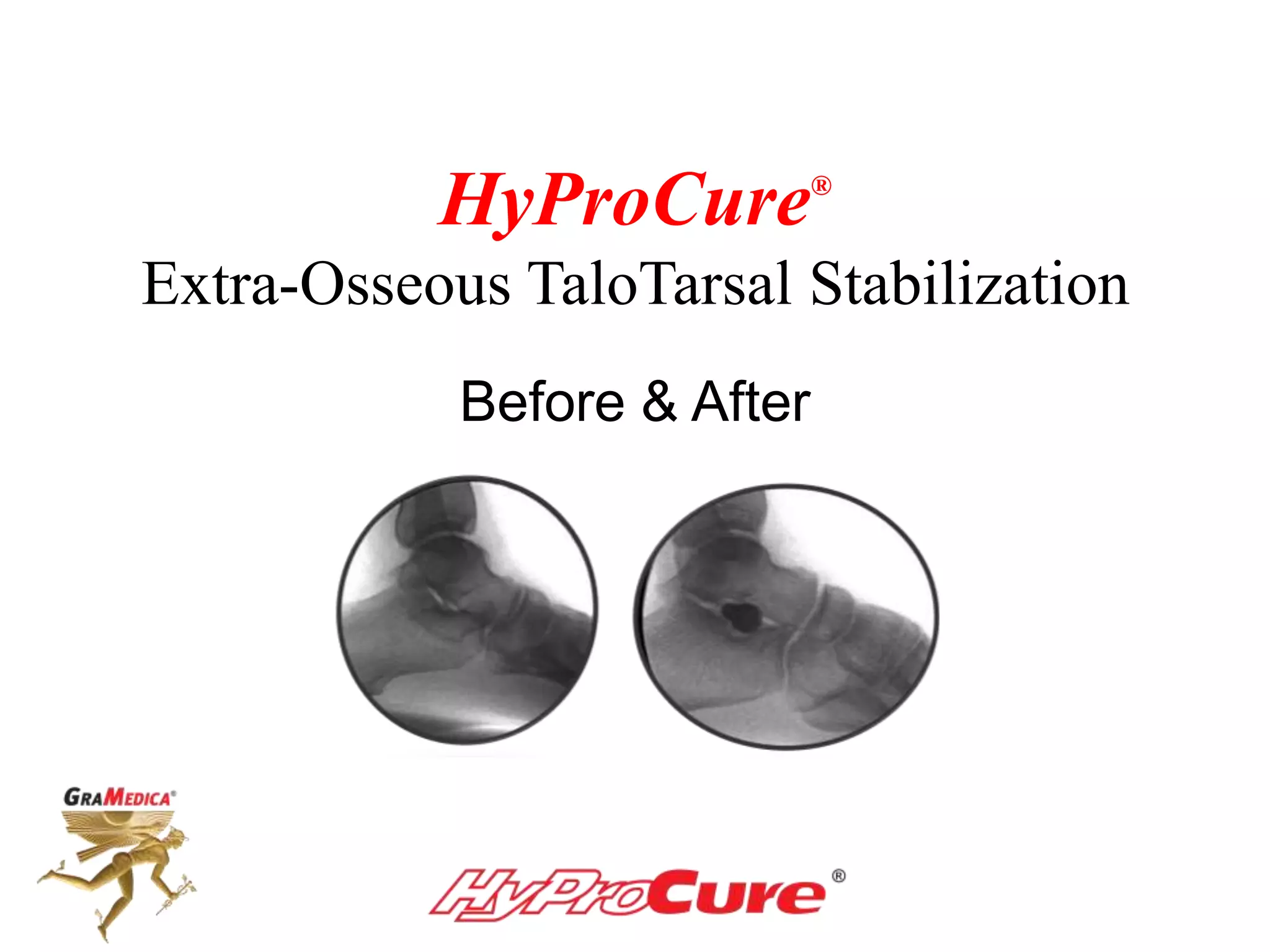



HyProCure®
Extra-Osseous TaloTarsal Stabilization
Before & After
“Simplicity is
achieving maximum results
with minimal effort”
What exactly can be achieved
with HyProCure®
?
HyProCure®
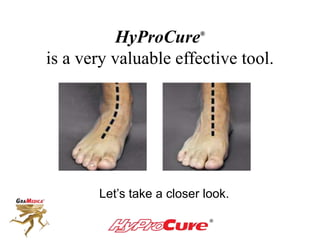
is a very valuable effective tool.
Let’s take a closer look.
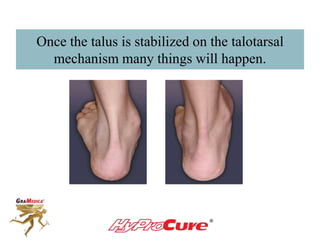
Once the talus is stabilized on the talotarsal
mechanism many things will happen.
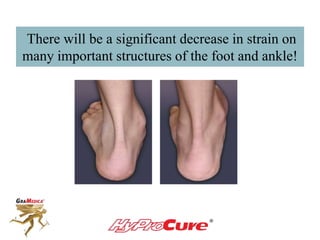
There will be a significant decrease in strain on
many important structures of the foot and ankle!
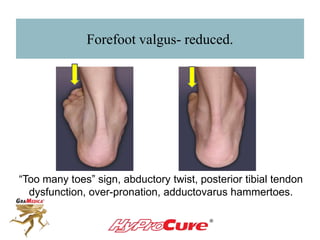
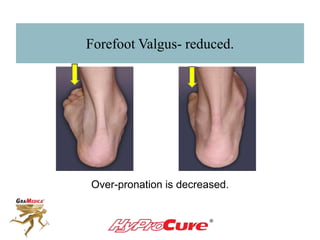
Forefoot valgus- reduced.
“Too many toes” sign, abductory twist, posterior tibial tendon
dysfunction, over-pronation, adductovarus hammertoes.
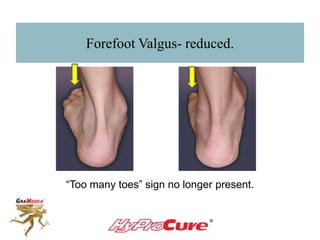
Forefoot Valgus- reduced.
“Too many toes” sign no longer present.
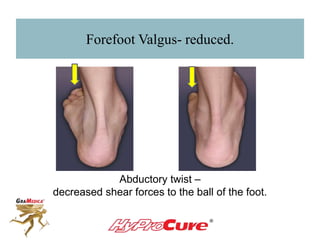
Forefoot Valgus- reduced.
Abductory twist –
decreased shear forces to the ball of the foot.
Forefoot Valgus- reduced.
Over-pronation is decreased.
Forefoot Valgus- reduced.
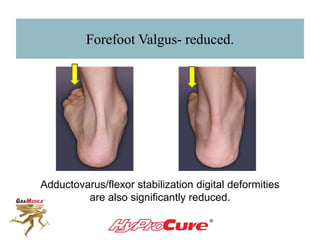
Adductovarus/flexor stabilization digital deformities
are also significantly reduced.
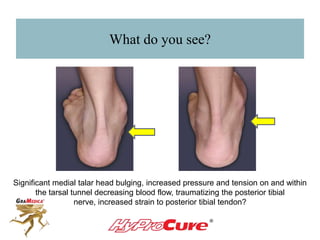
What do you see?
Significant medial talar head bulging, increased pressure and tension on and within
the tarsal tunnel decreasing blood flow, traumatizing the posterior tibial nerve,
increased strain to posterior tibial tendon?
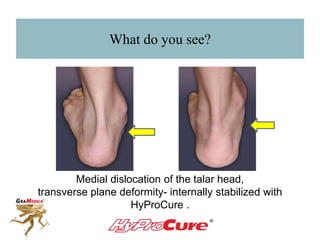
What do you see?
Medial dislocation of the talar head,
transverse plane deformity- internally stabilized with
HyProCure®
.
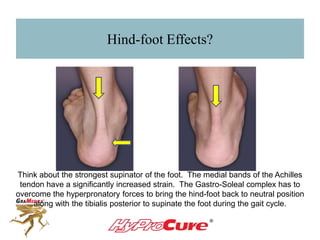
Hind-foot Effects?
The medial bands of the Achilles tendon have a significantly increased strain. The
Gastro-Soleal complex has to overcome the hyperpronatory forces to bring the
hind-foot back to neutral position along with the tibialis posterior to supinate the foot
during the gait cycle.
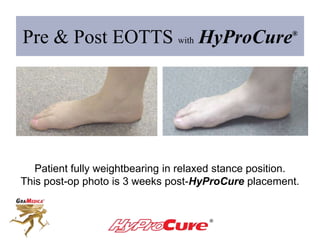
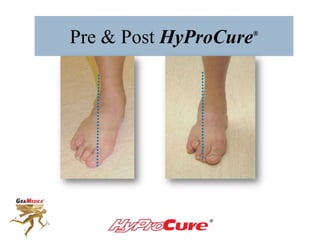
Pre & Post EOTTS with HyProCure®
Patient fully weightbearing in relaxed stance position.
This post-op photo is 3 weeks post-HyProCure®
placement.
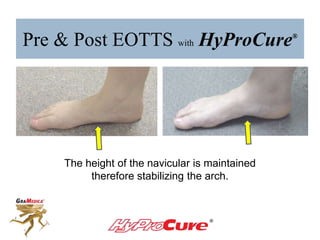
Pre & Post EOTTS with HyProCure®
The height of the navicular is maintained
therefore stabilizing the arch.
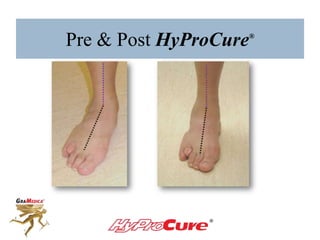
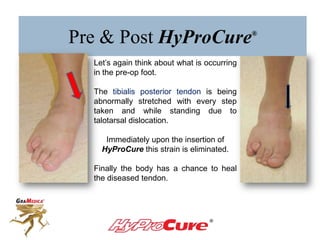
Pre & Post HyProCure®
Let’s again think about what is occurring
in the pre-op foot.
The tibialis posterior tendon is being
abnormally stretched with every step
taken and while standing due to
talotarsal dislocation.
Immediately upon the insertion of
HyProCure®
this strain is eliminated.
Finally the body has a chance to heal
the diseased tendon.
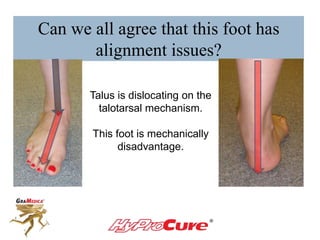
Can we all agree that this foot has
alignment issues?
Talus is dislocating on the
talotarsal mechanism.
This foot is mechanically
disadvantage.
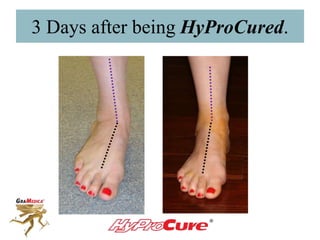
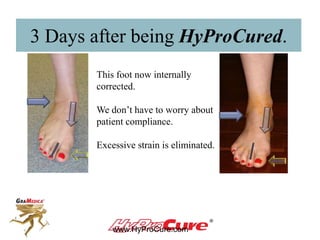
3 Days after being HyProCured.
This foot now internally
corrected.
We don’t have to worry about
patient compliance.
Excessive strain is eliminated.
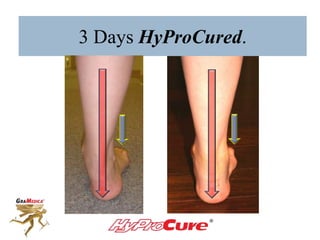
3 Days HyProCured.
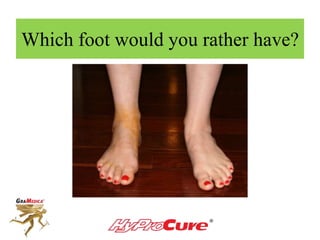
Which foot would you rather have?
Let’s take a look
at what happens
inside.
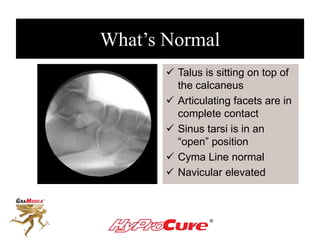
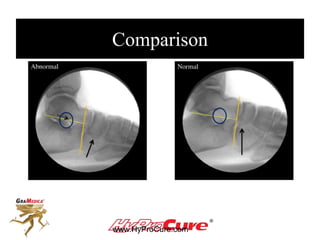
What’s Normal
 Talus is sitting on top of
the calcaneus
 Articulating facets are in
complete contact
 Sinus tarsi is in an
“open” position
 Cyma Line normal
 Navicular elevated
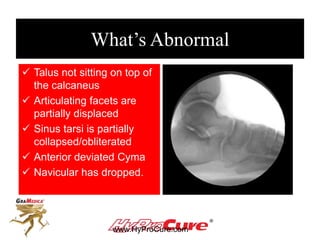
What’s Abnormal
 Talus not sitting on top of
the calcaneus
 Articulating facets are
partially displaced
 Sinus tarsi is partially
collapsed/obliterated
 Anterior deviated Cyma
 Navicular has dropped.
www.HyProCure.com
Comparison
www.HyProCure.com
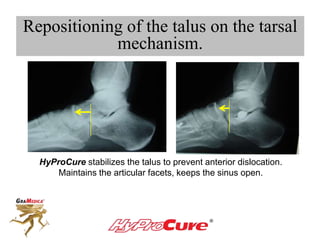
HyProCure stabilizes the talus to prevent anterior dislocation.
Maintains the articular facets, keeps the sinus open.
Repositioning of the talus on the tarsal
mechanism.
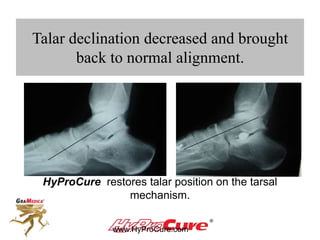
Talar declination decreased and brought
back to normal alignment.
HyProCure restores talar position on the tarsal
mechanism.
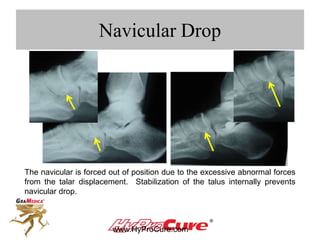
Navicular Drop
The navicular is forced out of position due to the excessive abnormal forces
from the talar displacement. Stabilization of the talus internally prevents
navicular drop.
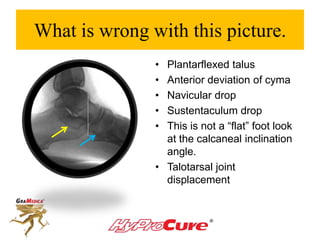
What is wrong with this picture.
• Plantarflexed talus
• Anterior deviation of cyma
• Navicular drop
• Sustentaculum drop
• This is not a “flat” foot look
at the calcaneal inclination
angle.
• Talotarsal joint
displacement
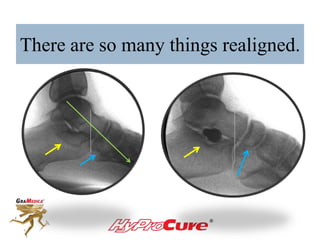
There are so many things realigned.
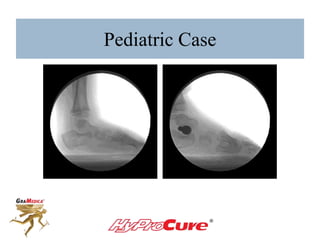
Pediatric Case
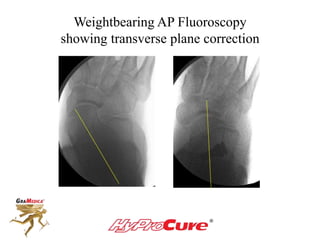
Weightbearing AP Fluoroscopy
showing transverse plane correction
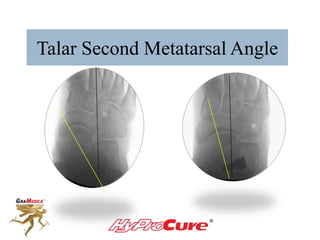
Talar Second Metatarsal Angle
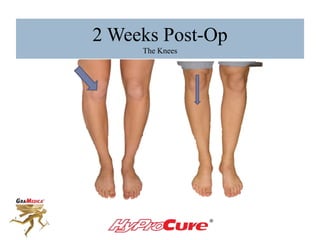
2 Weeks Post-Op
The Knees
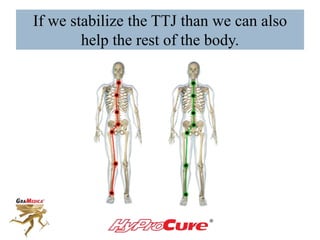
If we stabilize the TTJ than we can also
help the rest of the body.
“Changing Lives, One Step at a Time”

HyProCure Before & After

  • 1.
  • 2.
    “Simplicity is achieving maximumresults with minimal effort”
  • 3.
    What exactly canbe achieved with HyProCure® ?
  • 4.
    HyProCure® is a veryvaluable effective tool. Let’s take a closer look.
  • 5.
    Once the talusis stabilized on the talotarsal mechanism many things will happen.
  • 6.
    There will bea significant decrease in strain on many important structures of the foot and ankle!
  • 7.
    Forefoot valgus- reduced. “Toomany toes” sign, abductory twist, posterior tibial tendon dysfunction, over-pronation, adductovarus hammertoes.
  • 8.
    Forefoot Valgus- reduced. “Toomany toes” sign no longer present.
  • 9.
    Forefoot Valgus- reduced. Abductorytwist – decreased shear forces to the ball of the foot.
  • 10.
  • 11.
    Forefoot Valgus- reduced. Adductovarus/flexorstabilization digital deformities are also significantly reduced.
  • 12.
    What do yousee? Significant medial talar head bulging, increased pressure and tension on and within the tarsal tunnel decreasing blood flow, traumatizing the posterior tibial nerve, increased strain to posterior tibial tendon?
  • 13.
    What do yousee? Medial dislocation of the talar head, transverse plane deformity- internally stabilized with HyProCure® .
  • 14.
    Hind-foot Effects? The medialbands of the Achilles tendon have a significantly increased strain. The Gastro-Soleal complex has to overcome the hyperpronatory forces to bring the hind-foot back to neutral position along with the tibialis posterior to supinate the foot during the gait cycle.
  • 15.
    Pre & PostEOTTS with HyProCure® Patient fully weightbearing in relaxed stance position. This post-op photo is 3 weeks post-HyProCure® placement.
  • 16.
    Pre & PostEOTTS with HyProCure® The height of the navicular is maintained therefore stabilizing the arch.
  • 17.
    Pre & PostHyProCure®
  • 18.
    Pre & PostHyProCure®
  • 19.
    Pre & PostHyProCure® Let’s again think about what is occurring in the pre-op foot. The tibialis posterior tendon is being abnormally stretched with every step taken and while standing due to talotarsal dislocation. Immediately upon the insertion of HyProCure® this strain is eliminated. Finally the body has a chance to heal the diseased tendon.
  • 20.
    Can we allagree that this foot has alignment issues? Talus is dislocating on the talotarsal mechanism. This foot is mechanically disadvantage.
  • 21.
    3 Days afterbeing HyProCured.
  • 22.
    3 Days afterbeing HyProCured. This foot now internally corrected. We don’t have to worry about patient compliance. Excessive strain is eliminated.
  • 23.
  • 24.
    Which foot wouldyou rather have?
  • 25.
    Let’s take alook at what happens inside.
  • 26.
    What’s Normal  Talusis sitting on top of the calcaneus  Articulating facets are in complete contact  Sinus tarsi is in an “open” position  Cyma Line normal  Navicular elevated
  • 27.
    What’s Abnormal  Talusnot sitting on top of the calcaneus  Articulating facets are partially displaced  Sinus tarsi is partially collapsed/obliterated  Anterior deviated Cyma  Navicular has dropped. www.HyProCure.com
  • 28.
  • 29.
    HyProCure stabilizes thetalus to prevent anterior dislocation. Maintains the articular facets, keeps the sinus open. Repositioning of the talus on the tarsal mechanism.
  • 30.
    Talar declination decreasedand brought back to normal alignment. HyProCure restores talar position on the tarsal mechanism.
  • 31.
    Navicular Drop The navicularis forced out of position due to the excessive abnormal forces from the talar displacement. Stabilization of the talus internally prevents navicular drop.
  • 32.
    What is wrongwith this picture. • Plantarflexed talus • Anterior deviation of cyma • Navicular drop • Sustentaculum drop • This is not a “flat” foot look at the calcaneal inclination angle. • Talotarsal joint displacement
  • 33.
    There are somany things realigned.
  • 34.
  • 35.
    Weightbearing AP Fluoroscopy showingtransverse plane correction
  • 36.
  • 37.
  • 38.
    If we stabilizethe TTJ than we can also help the rest of the body.
  • 39.
    “Changing Lives, OneStep at a Time”