By
M.HARIHARAN
B.SC RT
 Breathing is the process by which oxygen is
taken in and carbondioxide is given out of
the body.
 The normal relaxed breathing is called
eupnea
 There are two phases of breathing:
 1. Inhalation /Inspiration
 2. Expiration / Exhalation
 Apnea
 Tachypnea
 Bradypnea
 Hyperventilation
 Kussumaul breathing
 Biot breathing
 Cheyne-Stoke breathing
 During apnea there is no movement of
muscles for inhalation and the volume of
lungs remain unchanged.
 CAUSES;
Apnea can occur while choking food, called
deglutition apnea.
It can also occur due to laughing,crying,etc .
voluntary apnea can also occur due to closure
of vocal cords.
 Apnea
 Coma
 Absence of pulse
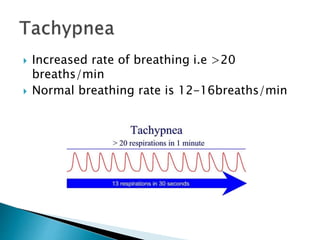
 Increased rate of breathing i.e >20
breaths/min
 Normal breathing rate is 12-16breaths/min
 During labor
 Exercise
 PATHOLOGICAL VARIATION;
Carbon monoxide poisioning in which oxygen
delivery to tissues and organs are blocked
and leads to hypoxia and direct cell injury.
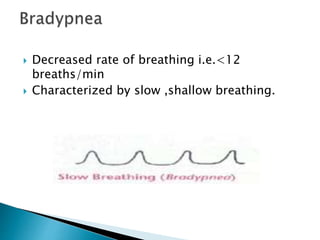
 Decreased rate of breathing i.e.<12
breaths/min
 Characterized by slow ,shallow breathing.
 May be due to congenital heart disease
 High blood pressure or hypertension
 Hypothyrodism
 Damage to heart tissues due to heart attack
or heart diseases
 Degeneration of heart tissues because of
ageing
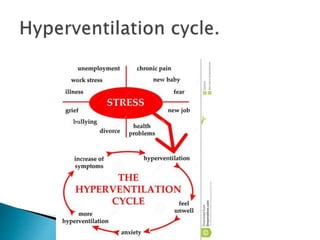
Hyperventilation occurs when the rate and
quantity of alveolar ventilation of
carbondioxide exceeds the production of
carbondioxide.
It is characterized by rapid and deep breathing.
CAUSES;
It may be voluntary or involuntary more
common in stress,exercise etc.
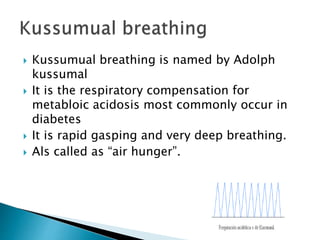
 Kussumual breathing is named by Adolph
kussumal
 It is the respiratory compensation for
metabloic acidosis most commonly occur in
diabetes
 It is rapid gasping and very deep breathing.
 Als called as “air hunger”.
 It is named by camille biot .
 It is characterizied by apnea and hyperapnea.
 CAUSES FOR BIOTS BREATHING;
 Due to apnea carbondioxide accumulate and
it stimulate respiratory centres lead to
hyperventilation.
 During hyperventilation the carbondioxide
level get decreases and cause apnea.

 Normal physiological condition biot’s
breathing does not occurs.
 Pathological condition such as trauma
nervous disorder due to lesions or injury to
brain may cause biot’s breathing.
 This condition is named by John cheyne and
William stoke.
 It is characterizied by hyperpnea and apnea.
 There are two period in this type of
breathing;
 Hyperapneic period.
 Apneic period.
 There is a waxing and waning in this breathing
 CAUSES FOR WAXING AND WANING;
 When the breathing is shallow force of
respiration increaes and reaches high and cause
hyperpnea
 At certain level it decreases gradually and cause
apnea.
 when the breathing reach maximum it is called
‘’Waxing’’.
 When the breathing is gradually decrease it cause
 ‘’Waning’’.
 Forced breathing oxygen level get increased
ancd carbon dixoide level decreases.
 Therefore respiratory centre become inactive
and cause Apnea.
 Accumulation of carbondioxide lead to
hypecapnea and hypoxia they activate
respiratory centre and cause increase in force
of breathing.
 Physiological condition;
 during sleep
 In high altitude
 New born babies
 Severe muscular exercise.
 PATHOLOGICAL CONDITION;
 Increase in intracranial pressure
 During cardiac disease.
 Apnea ; temporary stoppage of breathing.
 Tachypnea; increased rate of breathing.
 Bradypnea; decreased rate of breathing.
 Hyperventilation;rapid and deep breathing.
 Kussumual breathing;very deep breathing.
 Biot’s breathing; apnea and hyperpnea occurs
 Cheyne stoke breathing;waxing and waning
occurs.
periodic breathing

periodic breathing

  • 1.
  • 2.
     Breathing isthe process by which oxygen is taken in and carbondioxide is given out of the body.  The normal relaxed breathing is called eupnea  There are two phases of breathing:  1. Inhalation /Inspiration  2. Expiration / Exhalation
  • 4.
     Apnea  Tachypnea Bradypnea  Hyperventilation  Kussumaul breathing  Biot breathing  Cheyne-Stoke breathing
  • 5.
     During apneathere is no movement of muscles for inhalation and the volume of lungs remain unchanged.  CAUSES; Apnea can occur while choking food, called deglutition apnea. It can also occur due to laughing,crying,etc . voluntary apnea can also occur due to closure of vocal cords.
  • 7.
     Apnea  Coma Absence of pulse
  • 8.
     Increased rateof breathing i.e >20 breaths/min  Normal breathing rate is 12-16breaths/min
  • 9.
     During labor Exercise  PATHOLOGICAL VARIATION; Carbon monoxide poisioning in which oxygen delivery to tissues and organs are blocked and leads to hypoxia and direct cell injury.
  • 10.
     Decreased rateof breathing i.e.<12 breaths/min  Characterized by slow ,shallow breathing.
  • 11.
     May bedue to congenital heart disease  High blood pressure or hypertension  Hypothyrodism  Damage to heart tissues due to heart attack or heart diseases  Degeneration of heart tissues because of ageing
  • 12.
    Hyperventilation occurs whenthe rate and quantity of alveolar ventilation of carbondioxide exceeds the production of carbondioxide. It is characterized by rapid and deep breathing. CAUSES; It may be voluntary or involuntary more common in stress,exercise etc.
  • 14.
     Kussumual breathingis named by Adolph kussumal  It is the respiratory compensation for metabloic acidosis most commonly occur in diabetes  It is rapid gasping and very deep breathing.  Als called as “air hunger”.
  • 15.
     It isnamed by camille biot .  It is characterizied by apnea and hyperapnea.  CAUSES FOR BIOTS BREATHING;  Due to apnea carbondioxide accumulate and it stimulate respiratory centres lead to hyperventilation.  During hyperventilation the carbondioxide level get decreases and cause apnea. 
  • 16.
     Normal physiologicalcondition biot’s breathing does not occurs.  Pathological condition such as trauma nervous disorder due to lesions or injury to brain may cause biot’s breathing.
  • 17.
     This conditionis named by John cheyne and William stoke.  It is characterizied by hyperpnea and apnea.  There are two period in this type of breathing;  Hyperapneic period.  Apneic period.
  • 18.
     There isa waxing and waning in this breathing  CAUSES FOR WAXING AND WANING;  When the breathing is shallow force of respiration increaes and reaches high and cause hyperpnea  At certain level it decreases gradually and cause apnea.  when the breathing reach maximum it is called ‘’Waxing’’.  When the breathing is gradually decrease it cause  ‘’Waning’’.
  • 19.
     Forced breathingoxygen level get increased ancd carbon dixoide level decreases.  Therefore respiratory centre become inactive and cause Apnea.  Accumulation of carbondioxide lead to hypecapnea and hypoxia they activate respiratory centre and cause increase in force of breathing.
  • 20.
     Physiological condition; during sleep  In high altitude  New born babies  Severe muscular exercise.  PATHOLOGICAL CONDITION;  Increase in intracranial pressure  During cardiac disease.
  • 22.
     Apnea ;temporary stoppage of breathing.  Tachypnea; increased rate of breathing.  Bradypnea; decreased rate of breathing.  Hyperventilation;rapid and deep breathing.  Kussumual breathing;very deep breathing.  Biot’s breathing; apnea and hyperpnea occurs  Cheyne stoke breathing;waxing and waning occurs.