Principles of
Physiotherapy Practice
Prof. (Dr.) Asir John Samuel, PhD
(Physiotherapy), MPT (Neurosciences and Paediatric
Neurology), BPT, BSc (Psychology), DYScEd, MAc,
PGDBEME,
Additional Professor Cum Vice Principal,
Yenepoya Physiotherapy College, Mangalore
History of the
development of the
physiotherapy
profession
In Hippocrates Era
• Hippocrates (460–385 BCE) - the father of medicine
• Describe spinal manipulative techniques using
gravity, for the treatment of scoliosis
• Use of a table with various straps, wheels, and axles
enabling traction
• Introduced the idea of manual manipulation for
pain relief
Hector
• Hector - In Ancient Greece around 460 BC
• Practiced a water-based physiotherapy technique
called “hydrotherapy” – which is Greek for water
treatment
Claudius Galen
• Claudius Galen (131–202 CE) - a Roman surgeon
• Provided evidence of manipulation
• Acts of standing or walking on the dysfunctional
spinal region
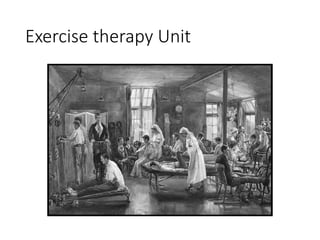
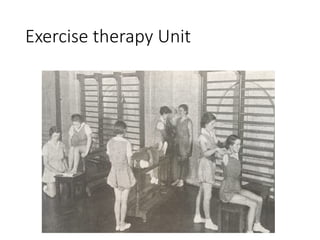
Exercise therapy Unit
Professional group
• Per Henrik Ling - "father of Swedish gymnastics."
• He founded the Royal Central Institute of
Gymnastics in the year 1813
• Massage, manipulation and exercise
Exercise therapy Unit
Term physiotherapy
• 1851
• The term "Physiotherapy" first appeared in its
German form "Physiotherapie"
• In an article written by Dr. Lorenz Gleich
• A military physician from Bavaria
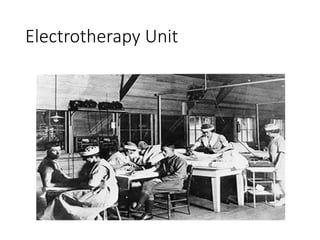
Electrotherapy Unit
Term physiotherapy
• 1894
• Dr. Edward Playter used the word "Physiotherapy”
• In an English article published in Montreal Medical
Journal
• "Physiotherapie" changed to "Physiotherapy" and
then to "Physical therapy"
Terminologies
• "Physiotherapie"
• "Physiotherapy”
• "Physical therapy”
• "Physiotherapy”
Education
• 1913 - The School of Physiotherapy’ was
established at the University of Otago in New
Zealand
• 1914 - Reed College was established in Portland in
the United States of America to educate about the
‘reconstitution aides’.
Historical event witnessed
• 1916 – polio epidemic
• 1926 – US President - Franklin D. Roosevelt suffered
by polio went through various therapies, including
hydrotherapy
• 1942 – Military rankings
History of Physiotherapy in India
• Polio outbreak in Mumbai in 1952
• 1952 - Physiotherapy became a full-fledged medical
profession in India
• 1953 - India's first physiotherapy school and center
opened in Mumbai
• 1962 - The Indian Association of Physiotherapists (IAP)
World physiotherapy
• 1951
• World Confederation for Physical
Therapy (WCPT)
• WCPT rebrands as World Physiotherapy
in 2020
• >6,00,000 physiotherapist worldwide
• 128 member nations
The Indian Association Of
Physiotherapist (IAP)
• A non-profit, non-governmental organization that
represents the physiotherapy profession at National
and international Level
• Registered under Indian society act, in the year
1955
• Member of WCPT from 1967
Principles of practice in
physiotherapy
Autonomy
Autonomy- NCAHCPA, 2021
• The physiotherapist can practice independently or
as a part of a multi-disciplinary team and has a
minimum qualification of a baccalaureate degree
• Who has obtained any qualification of degree
under NCAHCP Act, the duration of which shall not
be less than three thousand six hundred (3600)
hours spread over a period of three years to six
years divided into specific semester
Autonomy – World Physiotherapy
• Physiotherapists as autonomous professional, have
the freedom to exercise their professional judgment
and decision-making, wherever they practice, within
the physiotherapist's knowledge, competence and
scope of practice
• Physiotherapists operate as independent practitioners,
as well as members of health service provider teams
Autonomy – World Physiotherapy
• Physiotherapists are subject to the ethical
principles of WCPT and the codes of ethics and best
practices in the country in which they practice
• They can act as first-contact practitioners, and
patients/clients may seek direct services without
referral from another health professional
Autonomy – World Physiotherapy
• Services provided by physiotherapists encompass
• Health Promotion
• Prevention
• Examination/assessment
• Evaluation
• Diagnosis
• Interventions/treatments
• Outcomes assessment
Autonomy – World Physiotherapy
• The actions of individual physiotherapists are their
own responsibility, and their professional decisions
cannot be controlled or compromised by
employers, members of other professions or other
individuals
Shared-decision making
• Physiotherapists should have policies and
procedures in place to ensure communication with
their patients’/clients’ or their medical practitioners
and other relevant professionals.
• These policies and procedures will facilitate
consultation and accurate documentation and
reports by physical therapists to other service
delivery providers
Privacy
• Area of treatment
• Screen
• Bystander, if available
• Private area
Confidentiality
• Not revealing names
• Masking faces
• Identity concealed
Equality Vs Equity
Equality Vs Equity
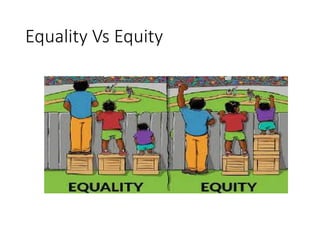
•Equality means
each individual or
group of people is
given the same
resources or
opportunities
•Equity means
each individual or
group of people
allocates the exact
resources and
opportunities
needed to reach
an equal outcome
Principles of Physiotherapy (Physical therapy) Practice

Principles of Physiotherapy (Physical therapy) Practice

  • 1.
    Principles of Physiotherapy Practice Prof.(Dr.) Asir John Samuel, PhD (Physiotherapy), MPT (Neurosciences and Paediatric Neurology), BPT, BSc (Psychology), DYScEd, MAc, PGDBEME, Additional Professor Cum Vice Principal, Yenepoya Physiotherapy College, Mangalore
  • 2.
    History of the developmentof the physiotherapy profession
  • 3.
    In Hippocrates Era •Hippocrates (460–385 BCE) - the father of medicine • Describe spinal manipulative techniques using gravity, for the treatment of scoliosis • Use of a table with various straps, wheels, and axles enabling traction • Introduced the idea of manual manipulation for pain relief
  • 4.
    Hector • Hector -In Ancient Greece around 460 BC • Practiced a water-based physiotherapy technique called “hydrotherapy” – which is Greek for water treatment
  • 5.
    Claudius Galen • ClaudiusGalen (131–202 CE) - a Roman surgeon • Provided evidence of manipulation • Acts of standing or walking on the dysfunctional spinal region
  • 6.
  • 7.
    Professional group • PerHenrik Ling - "father of Swedish gymnastics." • He founded the Royal Central Institute of Gymnastics in the year 1813 • Massage, manipulation and exercise
  • 8.
  • 9.
    Term physiotherapy • 1851 •The term "Physiotherapy" first appeared in its German form "Physiotherapie" • In an article written by Dr. Lorenz Gleich • A military physician from Bavaria
  • 10.
  • 11.
    Term physiotherapy • 1894 •Dr. Edward Playter used the word "Physiotherapy” • In an English article published in Montreal Medical Journal • "Physiotherapie" changed to "Physiotherapy" and then to "Physical therapy"
  • 12.
    Terminologies • "Physiotherapie" • "Physiotherapy” •"Physical therapy” • "Physiotherapy”
  • 13.
    Education • 1913 -The School of Physiotherapy’ was established at the University of Otago in New Zealand • 1914 - Reed College was established in Portland in the United States of America to educate about the ‘reconstitution aides’.
  • 14.
    Historical event witnessed •1916 – polio epidemic • 1926 – US President - Franklin D. Roosevelt suffered by polio went through various therapies, including hydrotherapy • 1942 – Military rankings
  • 15.
    History of Physiotherapyin India • Polio outbreak in Mumbai in 1952 • 1952 - Physiotherapy became a full-fledged medical profession in India • 1953 - India's first physiotherapy school and center opened in Mumbai • 1962 - The Indian Association of Physiotherapists (IAP)
  • 16.
    World physiotherapy • 1951 •World Confederation for Physical Therapy (WCPT) • WCPT rebrands as World Physiotherapy in 2020 • >6,00,000 physiotherapist worldwide • 128 member nations
  • 17.
    The Indian AssociationOf Physiotherapist (IAP) • A non-profit, non-governmental organization that represents the physiotherapy profession at National and international Level • Registered under Indian society act, in the year 1955 • Member of WCPT from 1967
  • 18.
    Principles of practicein physiotherapy
  • 19.
  • 20.
    Autonomy- NCAHCPA, 2021 •The physiotherapist can practice independently or as a part of a multi-disciplinary team and has a minimum qualification of a baccalaureate degree • Who has obtained any qualification of degree under NCAHCP Act, the duration of which shall not be less than three thousand six hundred (3600) hours spread over a period of three years to six years divided into specific semester
  • 21.
    Autonomy – WorldPhysiotherapy • Physiotherapists as autonomous professional, have the freedom to exercise their professional judgment and decision-making, wherever they practice, within the physiotherapist's knowledge, competence and scope of practice • Physiotherapists operate as independent practitioners, as well as members of health service provider teams
  • 22.
    Autonomy – WorldPhysiotherapy • Physiotherapists are subject to the ethical principles of WCPT and the codes of ethics and best practices in the country in which they practice • They can act as first-contact practitioners, and patients/clients may seek direct services without referral from another health professional
  • 23.
    Autonomy – WorldPhysiotherapy • Services provided by physiotherapists encompass • Health Promotion • Prevention • Examination/assessment • Evaluation • Diagnosis • Interventions/treatments • Outcomes assessment
  • 24.
    Autonomy – WorldPhysiotherapy • The actions of individual physiotherapists are their own responsibility, and their professional decisions cannot be controlled or compromised by employers, members of other professions or other individuals
  • 25.
    Shared-decision making • Physiotherapistsshould have policies and procedures in place to ensure communication with their patients’/clients’ or their medical practitioners and other relevant professionals. • These policies and procedures will facilitate consultation and accurate documentation and reports by physical therapists to other service delivery providers
  • 26.
    Privacy • Area oftreatment • Screen • Bystander, if available • Private area
  • 27.
    Confidentiality • Not revealingnames • Masking faces • Identity concealed
  • 28.
  • 29.
    Equality Vs Equity •Equalitymeans each individual or group of people is given the same resources or opportunities •Equity means each individual or group of people allocates the exact resources and opportunities needed to reach an equal outcome