Hypohidrosis
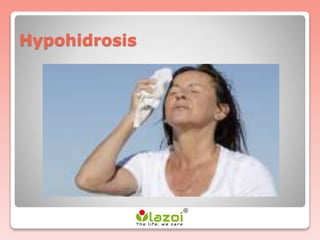
Hypohidrosis
Hypohidrosis is a condition in which a person loses
his ability to sweat even in hot and humid
conditions. Our body releases the heat in the form of
sweating. The inability of the body to sweat due to
Hypohidrosis often increases the amount of heat in
the body. This overheating can result in fatal heat
stroke and other serious sweat gland complications.
Hypohidrosis can affect smaller or larger areas of the
body. Most people are not aware that they are
suffering from Hypohidrosis. If left untreated,
Hypohidrosis can lead to the development of another
serious condition known as Anhidrosis which results
in complete absence of sweating.
Causes of Hypohidrosis
The abnormality in sweat glands is the most common
cause behind the occurrence of Hypohidrosis. The
sweat glands of the body may not work properly
thus, causing excessive dryness of skin. People who
do not sweat even while exercising are at higher risk
of developing Hypohidrosis. Other possible causes of
Hypohidrosis are:
Excessive alcohol consumption
 Immune system disorder such as Sjogren’s syndrome
 Skin damage
 Leprosy
 Nervous system disorder
 Pulmonary problems
Causes of Hypohidrosis
 Trauma
 Dead skin cells
 Uncontrolled diabetes
 Scleroderma
 Bone marrow disorder
 Accumulation of abnormal proteins
 Genetic defect
 Drug abuse
 Dehydration
 Congenital disorder
 Thyroid disorder
Continue:
Symptoms
The signs and symptoms of Hypohidrosis depend on which
part of the body is affected by Hypohidrosis. Hypohidrosis
may affect one part of the body or the whole body. Consult
a dermatologist immediately if you experience any of these
symptoms. The common symptoms of Hypohidrosis are:
Dizziness
 Flushing
 Weakness
 Loss of body sweat
 Body cramps
 Heat stroke
 Rapid heart beat
 Nausea
 Fatigue
 Blurred vision
Diagnosis of Hypohidrosis
A dermatologist will start the diagnosis of Hypohidrosis by
performing a physical exam and asking a patient about their
medical history. After this, he may order a diagnostic test to get
detailed information about the condition. Diagnostic tests for
Hypohidrosis may include:
 Sweat imprint Test - For measuring the sweat in the patient’s
body.
 Quantitative sudomotor axon reflex test (QSART) - For
detecting the amount of sweat produced from the patient’s body
in response to a given stimulus.
 Tissue biopsy - Taking the sample of the affected tissue from
the sweat gland and observing it under the microscope.
 Thermoregulatory test - In this test, sweat production is
measured by exposing the skin to an increased temperature. The
alizarin powder is sprinkled, which changes its color from purple
to orange if sweat appears.
Treatments
The treatment of Hypohidrosis focuses on suppressing the
underlying causes of Hypohidrosis. A dermatologist may
inject local anesthetic into the sympathetic nerve tissue in
the neck. In some cases, a he may prescribe tropical
antiperspirants to get relief from the symptoms.
Natural treatment of Hypohidrosis
Drink plenty of water
 Avoid exercising in hot weather
 Wear comfortable and loose clothes
 Avoid alcohol
 Sponge skin with cold water
Logon to
www.lazoi.com
Like us on Facebook
https://www.facebook.com/LazoiTheLife
Follow us on Twitter
https://www.twitter.com/lazoithelife
Follow us on Pinterest
https://www.in.pinterest.com/lazoithelife

Hypohidrosis

  • 1.
  • 2.
    Hypohidrosis Hypohidrosis is acondition in which a person loses his ability to sweat even in hot and humid conditions. Our body releases the heat in the form of sweating. The inability of the body to sweat due to Hypohidrosis often increases the amount of heat in the body. This overheating can result in fatal heat stroke and other serious sweat gland complications. Hypohidrosis can affect smaller or larger areas of the body. Most people are not aware that they are suffering from Hypohidrosis. If left untreated, Hypohidrosis can lead to the development of another serious condition known as Anhidrosis which results in complete absence of sweating.
  • 3.
    Causes of Hypohidrosis Theabnormality in sweat glands is the most common cause behind the occurrence of Hypohidrosis. The sweat glands of the body may not work properly thus, causing excessive dryness of skin. People who do not sweat even while exercising are at higher risk of developing Hypohidrosis. Other possible causes of Hypohidrosis are: Excessive alcohol consumption  Immune system disorder such as Sjogren’s syndrome  Skin damage  Leprosy  Nervous system disorder  Pulmonary problems
  • 4.
    Causes of Hypohidrosis Trauma  Dead skin cells  Uncontrolled diabetes  Scleroderma  Bone marrow disorder  Accumulation of abnormal proteins  Genetic defect  Drug abuse  Dehydration  Congenital disorder  Thyroid disorder Continue:
  • 5.
    Symptoms The signs andsymptoms of Hypohidrosis depend on which part of the body is affected by Hypohidrosis. Hypohidrosis may affect one part of the body or the whole body. Consult a dermatologist immediately if you experience any of these symptoms. The common symptoms of Hypohidrosis are: Dizziness  Flushing  Weakness  Loss of body sweat  Body cramps  Heat stroke  Rapid heart beat  Nausea  Fatigue  Blurred vision
  • 6.
    Diagnosis of Hypohidrosis Adermatologist will start the diagnosis of Hypohidrosis by performing a physical exam and asking a patient about their medical history. After this, he may order a diagnostic test to get detailed information about the condition. Diagnostic tests for Hypohidrosis may include:  Sweat imprint Test - For measuring the sweat in the patient’s body.  Quantitative sudomotor axon reflex test (QSART) - For detecting the amount of sweat produced from the patient’s body in response to a given stimulus.  Tissue biopsy - Taking the sample of the affected tissue from the sweat gland and observing it under the microscope.  Thermoregulatory test - In this test, sweat production is measured by exposing the skin to an increased temperature. The alizarin powder is sprinkled, which changes its color from purple to orange if sweat appears.
  • 7.
    Treatments The treatment ofHypohidrosis focuses on suppressing the underlying causes of Hypohidrosis. A dermatologist may inject local anesthetic into the sympathetic nerve tissue in the neck. In some cases, a he may prescribe tropical antiperspirants to get relief from the symptoms. Natural treatment of Hypohidrosis Drink plenty of water  Avoid exercising in hot weather  Wear comfortable and loose clothes  Avoid alcohol  Sponge skin with cold water
  • 8.
    Logon to www.lazoi.com Like uson Facebook https://www.facebook.com/LazoiTheLife Follow us on Twitter https://www.twitter.com/lazoithelife Follow us on Pinterest https://www.in.pinterest.com/lazoithelife