I don’t care if my
PowerPoint
presentation has
320 slides. You
are staying until
it’s over.
1
2
Contents:
Introduction
History of Hydropower Plants
Hydropower Plants in Pakistan
Principle of Hydropower Generation
Essential Elements of Hydropower Plant
Advantages
Disadvantages
Conclusion
3
Introduction:
In Hydro Power Plant the water is utilized to move the turbines which in
turn the electric generator’s.
The Potential energy of the water stored in the dam gets converted into
the Kinetic Energy of the moving water in the penstock. And this Kinetic
Energy gets converted into the Electrical Energy with the help of Turbine &
Generator (T-G) combination.
Hydro Power Plant was invented by H.F. Rogers.
4
History of Hydropower Plants:
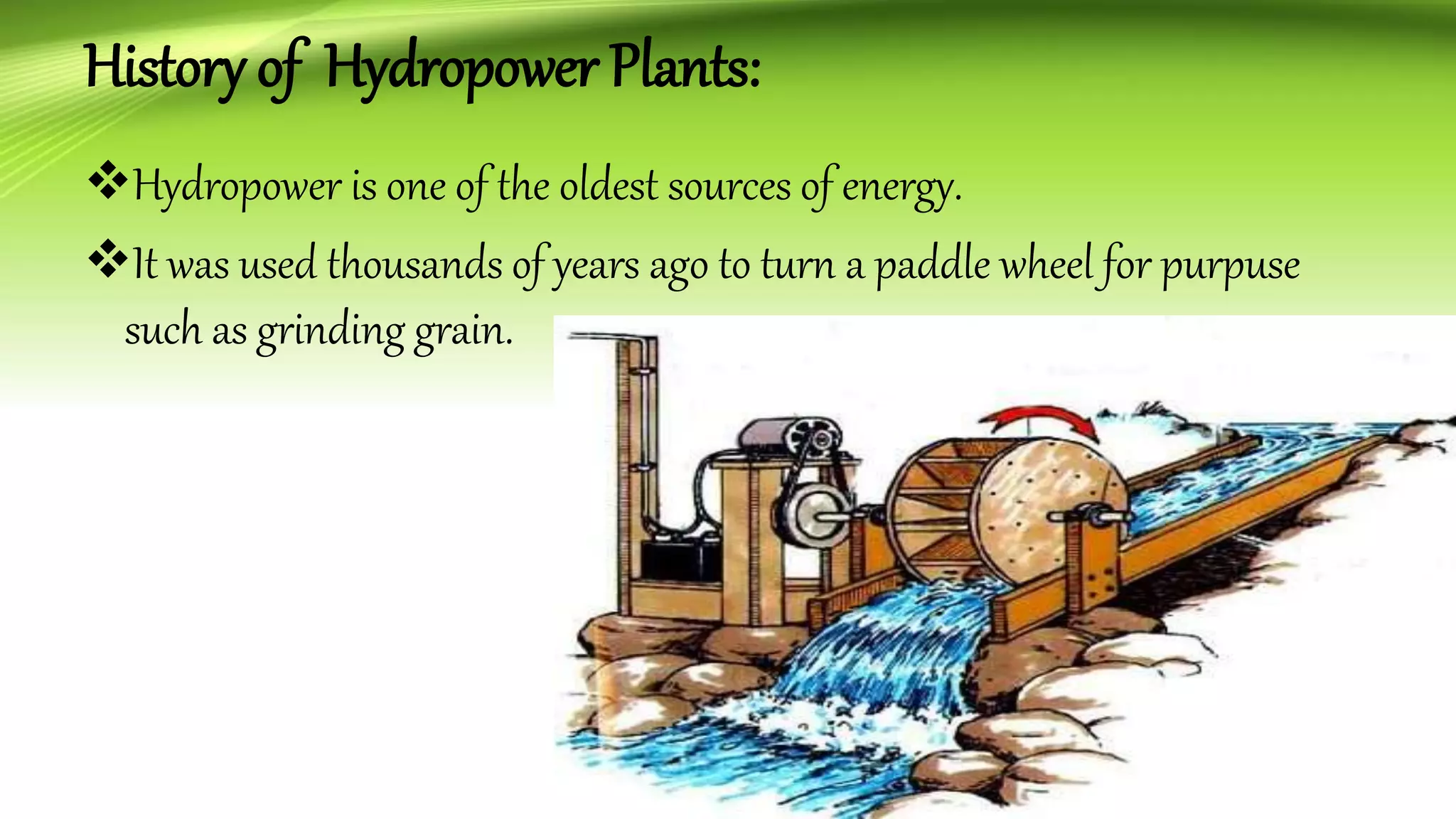
Hydropower is one of the oldest sources of energy.
It was used thousands of years ago to turn a paddle wheel for purpuse
such as grinding grain.
5
Continue... History:
In 19th century, Hydropower became a source for generating electricity.
The first Powerplant was built at Nigeria Falls in 1879, street lamps in the
city of Nigeria Falls were powered by Hydropower.
The first Hydropower plant in the Indo- Pak subcontinent built in 1925,
with the construction of the Renala 1 MW Hydropower station.
6
Hydropower Plants in Pakistan:
According to Pakistan’s Water and Power Development Authority
(WAPDA), there is 60,000 MW of hydropower potential in the country, of
which only 7,320 MW has been developed.
Pakistan’s untapped hydropower potential largely lies in the mountainous
north along the Indus River in the provinces of Gilgit-Baltistan and
Khyber Pakhtunkhwa, as well as the Jhelum River in the provinces of
Punjab and Azad Jammu and Kashmir.
7
Some Main Hydropower Plants In Pakistan:
SN
#
Station Capacity
(MW)
Current Status
01 Tarbela Dam 4888 Operational, proposed extension project to increase
electricity generation by 1410 MW
02 Mangla Dam 1150 Operational, plan to increase generation by 120 M
03 Ghazi-Barotha
Hydropower Project
1450 Operational; Run-of-the-river
04 KalabaghDam 3600 Ready to be constructed. Engineering study completed but
project is currently at pause due to lack of consensus
between provinces.
05 Neelum–Jhelum
Hydropower Plant
969 Under construction. To be completed by 2016, two years
ahead of schedule since WAPDA has purchase 2 TBM,s
which will become functional by July 2012. 8
Principle of Hydropower
Generation:
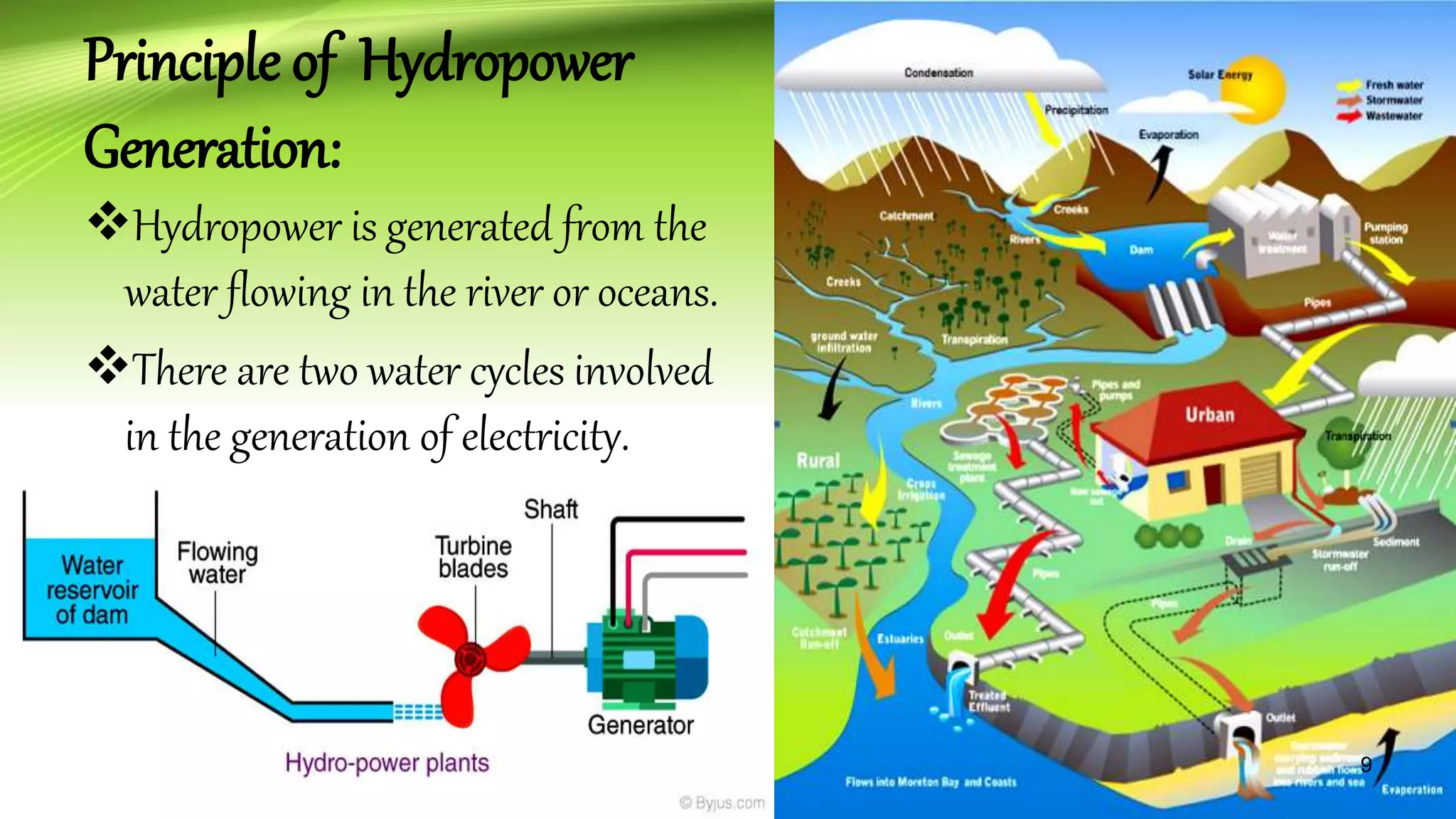
Hydropower is generated from the
water flowing in the river or oceans.
There are two water cycles involved
in the generation of electricity.
9
10
Esential Parts of a Hydropower Plant:
Dam (Flow of Water)
Water reservoir
Control gates or intake
Penstock
Surge Tank
Water Turbine
Generator
11
Dam:
The dam is the most important
component of Hydropower plant.
The dam is built on a large river
that has aboundant quantity of
water throughout the year.
It should be built at a location
where the height of the river is
sufficient to get maximum
possible potential energy from
water. 12
Water Reservoir:
The water reservoir is the place behind the dam
where water is stored.
The water in the reservoir is located higher than the
rest of the dam structure.
The hight of water in the reservoir decides how
much potential energy the water have.
The higher the height of water, the more its
potential energy.
The high position of water in the reservoir also
enables it to move downwards effortlessly. 13
Control Gates or Intake:
These are the gates built on the inside
of dam.
The water from reservoir is released
and controlled through these gates.
These are called inlet gates because
water enters the power generation unit
through these gates.
When the control gates are opened the
water flows due to gravity through the
penstock and towards the turbines. 14
Penstock:
The penstock is the long pipe or the shaft that carries the water flowing
from the reservoir towards the power generation unit, comprised of the
turbines and generator.
The water in the penstock possesses Kinetic Energy due to its motion and
potential energy due to its height.
The total amount of power generated in the Hydropower plant depends
on the hight of the water reservoir and the amount of water flowing
through the penstock.
The amount of water flow through the penstock is controlled by the
control gates. 15
Continue...
Why Penstock:
16
Surge Tank:
Surge tanks are used for dissipate the water hammer pressure in high
head hydropower project.
17
Water Turbine:
When water falls on the blades of the
turbine the Kinetic and Potential Energy
of water is converted into the rotational
motion of the blades of the turbine.
The rotating blades causes the shaft of
the turbine to rotate.
The turbine shaft is enclosed inside the
generator.
18
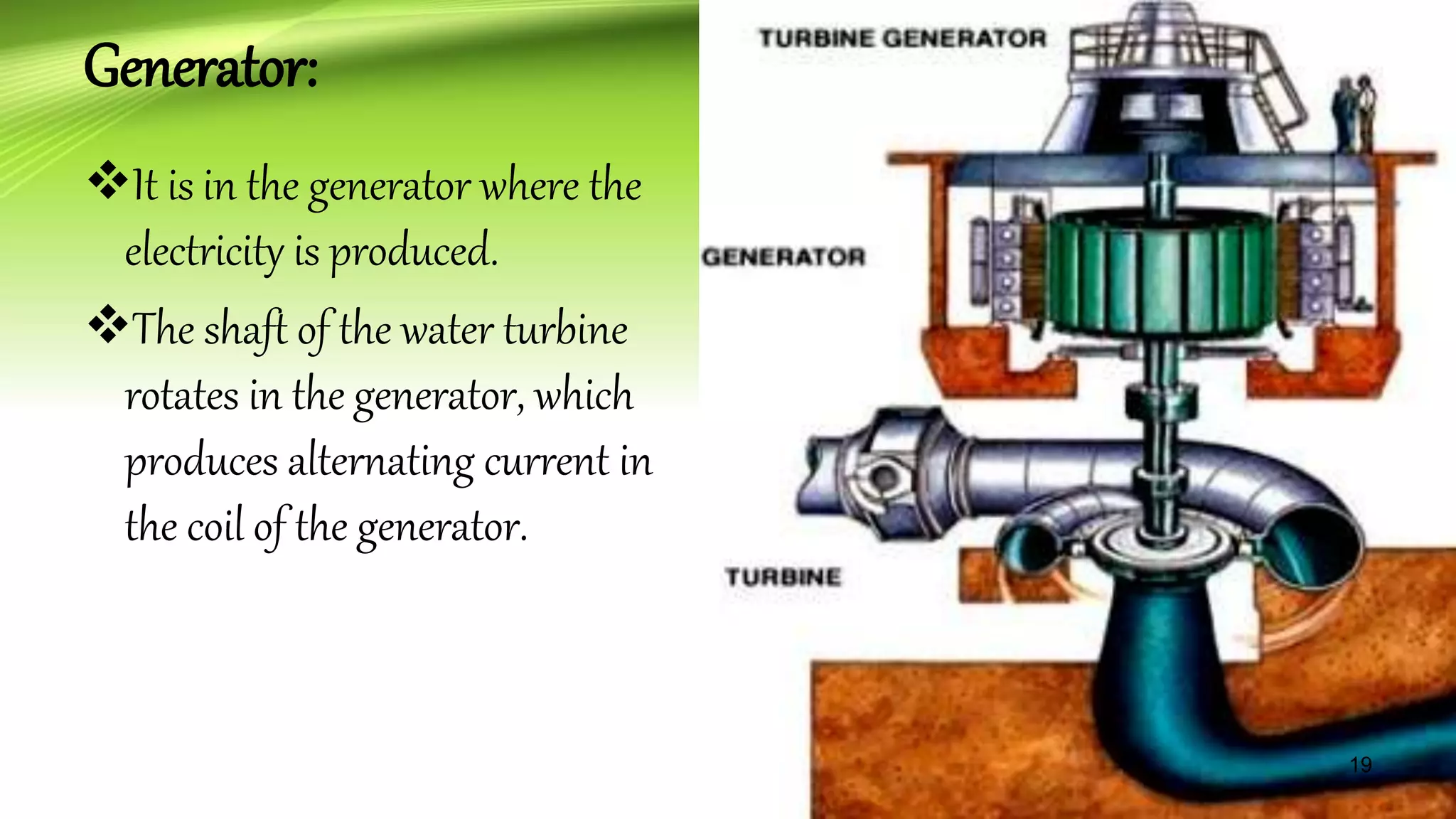
Generator:
It is in the generator where the
electricity is produced.
The shaft of the water turbine
rotates in the generator, which
produces alternating current in
the coil of the generator.
19
Advantages:
It is clean fuel source, does not pollute the air like power plants that burn
fossil fuels, such as coal or natural gas.
It is a renewable power source.
Hydropower is generally available as needed. Also our engineers can
control the flow of moving water through the turbines to produce
electricity on demand.
Other uses of reservoir water
20
Disadvantages:
Impact water quality and flow can cause low dissolved oxygen levels in
water harmful to riparian habitats.
Hydropower plants can be impacted by drought. When water is not
available then it can’t produce electricity.
New Hydropower facilities impact the local envoirment and complete with
the uses for land which may be more highly valued than electricity
generation.
Methane emissions ( from reservoirs )
Relocation 21
Conclusion:
When Water drops through a height, its energy can be used to generate
electricity.
Hydroplants do not required fuel.
Water inflows during every monsoon mean that it is a renewable energy.
There operating cost is very low.
22
23

Hydro Electric Power Plant | Hydel Power Plant

  • 1.
    I don’t careif my PowerPoint presentation has 320 slides. You are staying until it’s over. 1
  • 2.
  • 3.
    Contents: Introduction History of HydropowerPlants Hydropower Plants in Pakistan Principle of Hydropower Generation Essential Elements of Hydropower Plant Advantages Disadvantages Conclusion 3
  • 4.
    Introduction: In Hydro PowerPlant the water is utilized to move the turbines which in turn the electric generator’s. The Potential energy of the water stored in the dam gets converted into the Kinetic Energy of the moving water in the penstock. And this Kinetic Energy gets converted into the Electrical Energy with the help of Turbine & Generator (T-G) combination. Hydro Power Plant was invented by H.F. Rogers. 4
  • 5.
    History of HydropowerPlants: Hydropower is one of the oldest sources of energy. It was used thousands of years ago to turn a paddle wheel for purpuse such as grinding grain. 5
  • 6.
    Continue... History: In 19thcentury, Hydropower became a source for generating electricity. The first Powerplant was built at Nigeria Falls in 1879, street lamps in the city of Nigeria Falls were powered by Hydropower. The first Hydropower plant in the Indo- Pak subcontinent built in 1925, with the construction of the Renala 1 MW Hydropower station. 6
  • 7.
    Hydropower Plants inPakistan: According to Pakistan’s Water and Power Development Authority (WAPDA), there is 60,000 MW of hydropower potential in the country, of which only 7,320 MW has been developed. Pakistan’s untapped hydropower potential largely lies in the mountainous north along the Indus River in the provinces of Gilgit-Baltistan and Khyber Pakhtunkhwa, as well as the Jhelum River in the provinces of Punjab and Azad Jammu and Kashmir. 7
  • 8.
    Some Main HydropowerPlants In Pakistan: SN # Station Capacity (MW) Current Status 01 Tarbela Dam 4888 Operational, proposed extension project to increase electricity generation by 1410 MW 02 Mangla Dam 1150 Operational, plan to increase generation by 120 M 03 Ghazi-Barotha Hydropower Project 1450 Operational; Run-of-the-river 04 KalabaghDam 3600 Ready to be constructed. Engineering study completed but project is currently at pause due to lack of consensus between provinces. 05 Neelum–Jhelum Hydropower Plant 969 Under construction. To be completed by 2016, two years ahead of schedule since WAPDA has purchase 2 TBM,s which will become functional by July 2012. 8
  • 9.
    Principle of Hydropower Generation: Hydropoweris generated from the water flowing in the river or oceans. There are two water cycles involved in the generation of electricity. 9
  • 10.
  • 11.
    Esential Parts ofa Hydropower Plant: Dam (Flow of Water) Water reservoir Control gates or intake Penstock Surge Tank Water Turbine Generator 11
  • 12.
    Dam: The dam isthe most important component of Hydropower plant. The dam is built on a large river that has aboundant quantity of water throughout the year. It should be built at a location where the height of the river is sufficient to get maximum possible potential energy from water. 12
  • 13.
    Water Reservoir: The waterreservoir is the place behind the dam where water is stored. The water in the reservoir is located higher than the rest of the dam structure. The hight of water in the reservoir decides how much potential energy the water have. The higher the height of water, the more its potential energy. The high position of water in the reservoir also enables it to move downwards effortlessly. 13
  • 14.
    Control Gates orIntake: These are the gates built on the inside of dam. The water from reservoir is released and controlled through these gates. These are called inlet gates because water enters the power generation unit through these gates. When the control gates are opened the water flows due to gravity through the penstock and towards the turbines. 14
  • 15.
    Penstock: The penstock isthe long pipe or the shaft that carries the water flowing from the reservoir towards the power generation unit, comprised of the turbines and generator. The water in the penstock possesses Kinetic Energy due to its motion and potential energy due to its height. The total amount of power generated in the Hydropower plant depends on the hight of the water reservoir and the amount of water flowing through the penstock. The amount of water flow through the penstock is controlled by the control gates. 15
  • 16.
  • 17.
    Surge Tank: Surge tanksare used for dissipate the water hammer pressure in high head hydropower project. 17
  • 18.
    Water Turbine: When waterfalls on the blades of the turbine the Kinetic and Potential Energy of water is converted into the rotational motion of the blades of the turbine. The rotating blades causes the shaft of the turbine to rotate. The turbine shaft is enclosed inside the generator. 18
  • 19.
    Generator: It is inthe generator where the electricity is produced. The shaft of the water turbine rotates in the generator, which produces alternating current in the coil of the generator. 19
  • 20.
    Advantages: It is cleanfuel source, does not pollute the air like power plants that burn fossil fuels, such as coal or natural gas. It is a renewable power source. Hydropower is generally available as needed. Also our engineers can control the flow of moving water through the turbines to produce electricity on demand. Other uses of reservoir water 20
  • 21.
    Disadvantages: Impact water qualityand flow can cause low dissolved oxygen levels in water harmful to riparian habitats. Hydropower plants can be impacted by drought. When water is not available then it can’t produce electricity. New Hydropower facilities impact the local envoirment and complete with the uses for land which may be more highly valued than electricity generation. Methane emissions ( from reservoirs ) Relocation 21
  • 22.
    Conclusion: When Water dropsthrough a height, its energy can be used to generate electricity. Hydroplants do not required fuel. Water inflows during every monsoon mean that it is a renewable energy. There operating cost is very low. 22
  • 23.