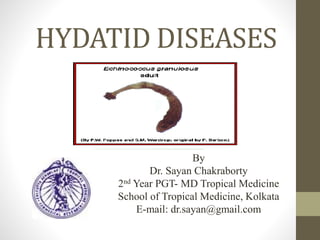
HYDATID DISEASES
By
Dr. Sayan Chakraborty
2nd Year PGT- MD Tropical Medicine
School of Tropical Medicine, Kolkata
E-mail: dr.sayan@gmail.com
WHO/CDC NTDs
CASE HISTORY
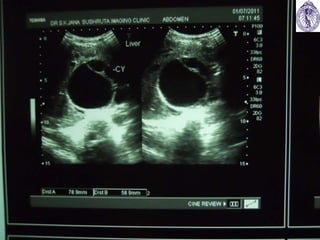
 An 26 yrs old female presented with dull pain right side
of upper abdomen, a dragging sensation over right
hypochondrium and occasional fever nearly one month
• Pain not relieved with analgesics
• Examination revealed mild hepatomegaly
• Routine blood test was normal
• Advised for imaging study of abdomen
DIFFERENTIAL DIAGNOSIS
HEPATIC SAPCE
OCCUPYING LESIONS
Cystic/Pseudocystic
Space-Occupying Lesions
with Liquid Content
Solid Space-Occupying
Lesions
CONGENITAL SPACE-
OCCUPYING LESIONS
Simple cyst Haemorrhagic simple
cyst
VASCULAR SPACE-
OCCUPYING LESIONS
Haematoma Haematoma
Haemangioma
INFECTIOUS SPACE-
OCCUPYING LESIONS
CE [CE1, CE2, CE3a,
CE3b (mixed cystic-
solid)]
AE with pseudocyst
Abscess
CE [CE3b (mixed cystic-
solid),
CE4 and CE5]
AE
Tuberculoma
BENIGN SPACE-
OCCUPYING LESIONS
Cystadenoma Hepatic adenoma
Focal nodular
hyperplasia
MALIGNANT SPACE-
OCCUPYING LESIONS
Cystadenocarcinoma
Liver metastases with
central necrosis
Metastatic liver tumours
Hepatocellular
carcinoma
Cholangiocarcinoma
INTRODUCTION
• Zoonosis
• 3 forms of Echinococcosis:
Cystic echinococcosis (CE): Tropical and subtropical regions;
Echinococcus granulosus (Unilocular cyst)
Alveolar echinococcosis (AE): Temperate northern
hemisphere; Echinococcus multilocularis (Multilocular cyst)
Polycystic echinococcosis (PE): Latin America; Echinococcus
vogeli & Echinococcus oligarthus
 CE eradicated in Iceland, New Zealand and Tasmania.
 Definitive host: Dogs and other canines
 Intermediate host: Sheep, goat, swine etc
GLOBAL DISTRIBUTION
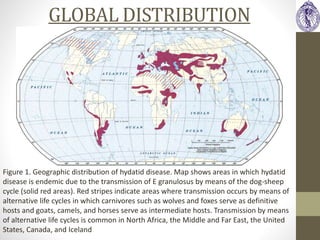
Figure 1. Geographic distribution of hydatid disease. Map shows areas in which hydatid
disease is endemic due to the transmission of E granulosus by means of the dog-sheep
cycle (solid red areas). Red stripes indicate areas where transmission occurs by means of
alternative life cycles in which carnivores such as wolves and foxes serve as definitive
hosts and goats, camels, and horses serve as intermediate hosts. Transmission by means
of alternative life cycles is common in North Africa, the Middle and Far East, the United
States, Canada, and Iceland
LIFE CYCLE
EPIDEMIOLOGY
 Cystic Echinococcosis:
• Highly endemic in pastoral communities
• Genotypes G1–10; G1 strain of E. granulosus accounts for 95%
of human infections and has a dog-sheep transmission
• Incidence rates as high as 50/100 000 person-years
• Risk factors: Ownership of livestock (mainly dogs, sheep);
occupation (pastoralism, agriculture);
uncontrolled slaughtering; poor water hygiene
 Alveolar Echinococcosis:
• Definitive hosts: mainly foxes and domestic dogs
• Intermediate hosts: Arvicolid and Cricetid rodents
• Prevalence: 0.02% and 1.4%
• Global annual incidence 18,235 cases per year
CYSTIC
ECHINOCOCCOSIS
PATHOGENESIS
• One or more spherical cysts, most frequently in liver & lungs
• Tissue damage & organ dysfunction by gradual process of
space occupying compression
• Cyst structure:
o Outer pericyst: composed of modified host cells that form a
dense and fibrous protective zone
o Middle laminated membrane: acellular and allows the passage
of nutrient
o Inner germinal layer: forms brood capsule which develops
asexually into protoscolices (the larval stage of the parasite)
from which daughter cysts are produced.
• Cysts modulate immune response by Th1 cell activation &
impairment of macrophages
Natural Evolution of Cysts
CLINICAL FEATURES
• Asymptomatic in most cases; incidental finding
• Most symptomatic cysts are ≥ 5 cm
• Pressure effect on liver and biliary tree
• Abdominal pain , hepatomegaly, jaundice
• Pulmonary cysts: Cough with expectoration, SOB,
chest pain, hemoptysis
• Other sites: Pathological #, Brain SOL, Conduction
defects, Pericarditis, Pelvic mass
• Leakage of cyst contents or infection of cyst
• Pain, flushing and urticaria
• Anaphylactic reaction
• Fever and sepsis
COMPLICATION OF CYSTS
• Cysts with fistulas
• Biliary/bronchial obstruction (due to spillage of cyst
content via cysto-biliary/cysto-bronchial fistulas)
• Bacterial infection
• Compression syndromes
Blood vessels (leading to thrombosis, Budd–Chiari
syndrome)
Biliary ducts
Bronchi
Parenchyma/muscles, nerves (leading to atrophy)
• Cyst rupture
• Venous/arterial embolism
OTHER DDx
• Neurocysticercosis
• Cholangiocarcinoma
• Imaging in NonSmall Cell Lung Cancer
• Imaging in Small Cell Lung Cancer
• Imaging of Benign Breast Calcifications
• Lung Metastases Imaging
• Metastatic Cancer With Unknown Primary Site
• Pancreatic Pseudocyst Imaging
• Pyonephrosis
• Renal Cancer
• Splenic Abscess
INVESTIGATIONS
 LABORATORY WORK UP:
• Routine lab tests: No specific findings
• Cyst rupture in biliary tree: marked & transient elevation of
cholestatic enzyme levels , often with hyperamylasemia and
eosinophilia <15% (in 60% cases)
• SEROLOGY: Confirmatory role; Indirect hemagglutination test
& ELISA for detection of anti-Echinococcus Antibodies [IgG]
• 10% hepatic cysts & 40% pulmonary cysts exhibit false
negative results
-ve in CE1/CE2/CE4/CE5; +ve only when endocyst ruptures
• Diagnostic puncture & aspiration can be performed for
histological diagnosis
• PCR contribute to the differential diagnosis between CE and
AE in doubt.
INVESTIGATIONS
 IMAGING: USG is Inv of choice (Gharbi US classification of
1981 & WHO-IWGE 2003 classification)
OTHER INVESTIGATIONS
• CT scan can detect extrahepatic smaller cysts, differentiating
parasitic from nonparasitic by measurement of cyst density &
for follow up studies during chemotherapy
• MRI used in the evaluation of postsurgical residual lesions,
recurrences & cardiac infections. Also superior in identifying
changes of the intrahepatic and extrahepatic venous system &
in identifying cystobiliary fistulas.
• Assessment of Parasite Viability:
 Histopathology (intact parasite-derived cyst wall including
germinal layer)
 Evaluation of the protoscolices (flame cell activity and
morphological integrity; eosin staining)
 Metabolic viability assessment using high-field H-MRS of cyst
content
 RT-PCR
CASONI’S TEST
MANAGEMENT
 Depends on the size, location and manifestations of cysts
 In uncomplicated cysts: “Expert consensus for the diagnosis
and treatment of cystic and alveolar echinococcosis in
humans”, published by the WHO-Informal Working Group on
Echinococcosis recommends four treatment modalities:
• 1. Drug treatment with benzimidazoles
• 2. Percutaneous sterilization techniques
• 3. Surgery
• 4. ‘Watch and wait’
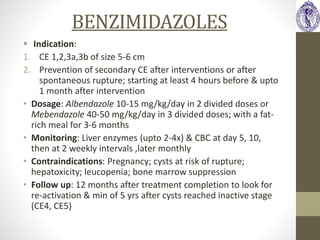
BENZIMIDAZOLES
 Indication:
1. CE 1,2,3a,3b of size 5-6 cm
2. Prevention of secondary CE after interventions or after
spontaneous rupture; starting at least 4 hours before & upto
1 month after intervention
• Dosage: Albendazole 10-15 mg/kg/day in 2 divided doses or
Mebendazole 40-50 mg/kg/day in 3 divided doses; with a fat-
rich meal for 3-6 months
• Monitoring: Liver enzymes (upto 2-4x) & CBC at day 5, 10,
then at 2 weekly intervals ,later monthly
• Contraindications: Pregnancy; cysts at risk of rupture;
hepatoxicity; leucopenia; bone marrow suppression
• Follow up: 12 months after treatment completion to look for
re-activation & min of 5 yrs after cysts reached inactive stage
(CE4, CE5)
Puncture – Aspiration – Injection –
Re-Aspiration (PAIR)
• Indication: CE1 and CE3a cysts of liver of size 5–6 to <10 cm
• Principle: Sterilization of the germinal layer and protoscolices.
Only fluid is removed; all other parasitic material remains
• Prerequisites: Experienced interventionalist; resuscitation set
up for severe anaphylactic reactions & surgical back-up
Puncture – Aspiration – Injection –
Re-Aspiration (PAIR)
• Major steps :
1. Prophylaxis of secondary echinococcosis with albendazole
2. Percutaneous puncture of the cyst under US (or CT) guidance
3. Aspiration of cyst fluid
4. Testing for bilirubin (evaluation of aspect of fluid and test strip
result) and injection of contrast medium (verification of absence
of cysto-biliary communications)
5. Aspiration of contrast medium
6. If fistulas are reliably ruled out: injection of protoscolicidal
agent – 95% ethanol or 20% NaCl to remain in the cyst for 10–15
mins
7. Re-aspiration of the fluid
8. Follow-up for a minimum of 5 years to detect relapses and
secondary CE
SURGERY
• INDICATION:
1. Any cyst >10 cm
irrespective of CE staging
2. Cysts 5-6 to <10 cm in CE 2
and CE 3b
3. Complicated cysts
• FOLLOW-UP: minimum of 5
years.
SURGERY
1. Partial Cystectomy: Removal
of the parasite-derived cyst
components (endocyst) & part
of the pericyst (host-derived
connective tissue capsule).
2. Total cystectomy and
Resection
a. Total cystectomy: endocyst
and the entire pericyst
b. Resection: additional removal
of part of the organ where CE-
cyst is embedded
‘Watch and Wait’
• Cyst allowed to
progress along its
natural course if
asymptomatic
• Indicated in CE 4 & CE 5
Stages
• Follow-up patients with
CE4 and CE5 cysts for a
min of 5 years
Management of Complicated
Cyst
 Cysto-biliary and cysto-bronchial fistulas: ERCP, if possible,
followed by early surgery under albendazole cover
 Bacterial Infection: Initially, abscess management with
drainage and antibiotics followed by specific management of
residual CE cyst/cavity & albendazole therapy
 Compression Syndromes: Rapid decompression of blood
vessels, bile ducts, bronchi, parenchyma, muscle, nerves
 Cyst Rupture: Allergic Reactions and Secondary CE:
• standard approach to allergic reactions including anaphylactic
shock followed by CE-specific treatment
• To prevent secondary CE, surgical intervention to clear CE cyst
material and benzimidazole therapy
PREVENTION
 4 phases: (1) planning; (2) attack; (3) consolidation; and (4)
maintenance of eradication
 Horizontal approaches: Slow-track (>25 yrs)
• reduction of disease transmission through primary healthcare
interventions, including health education, general husbandry
improvements, upgrading of abattoirs & meat inspection
• regular deworming of dogs by their owners
 Vertical or fast-track approach: 3-5 yrs
• Mass treatment of dogs, dog registration and reduction of
stray dog numbers
• EG95 vaccine 95% effective against ovine hydatidosis
ALVEOLAR
ECHINOCOCCOSIS
INTRODUCTION
 Organism: Echinococcus multilocularis
 Global distribution: Temperate northern hemisphere
 Epidemiology:
• Definitive hosts: mainly foxes and domestic dogs
• Intermediate hosts: Arvicolid and Cricetid rodents
• Prevalence: 0.02% and 1.4%
• Global annual incidence: 18,235 cases per year
 Site of infection:
• E. multilocularis metacestode (larva) develops primarily in the
liver.
• In advanced stages, other sites may become metastasized
such as retroperitoneum, lungs, brain and bones
PATHOLOGY
• Conglomerate of scattered vesicles, each ranging from a few
mm to cm in size
• Germinal layer represents the proliferating metacestode
generating new vesicles, which leads to the tumour-like
behaviour of the parasite.
• A granulomatous host reaction surrounds the metacestode,
including a vigorous synthesis of fibrous and germinative
tissue.
• 3 immune mediated clinical outcome:
(1) resistance as shown by the presence of ‘dying out’ or
‘aborted’ metacestodes;
(2) controlled susceptibility by a slowly growing metacestode
tissue – presents 5–15 years after infection;
(3) Uncontrolled hyperproliferation of the metacestode due to
an impaired immune response
DIAGNOSIS
• Serology: Em2, Em2+, Em18 antigens
• Imaging: USG/CT/MRI/PET
• Diagnostic puncture and aspiration of parasitic material
• Histology
• RT-PCR
• PNM Classification: Resemblance to malignant diseases
P primary mass in the liver
N involvement of neighbouring organs (lymph nodes)
M metastases
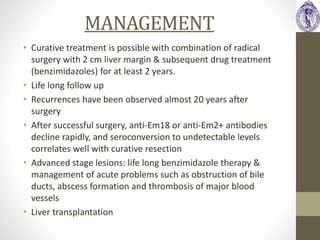
MANAGEMENT
• Curative treatment is possible with combination of radical
surgery with 2 cm liver margin & subsequent drug treatment
(benzimidazoles) for at least 2 years.
• Life long follow up
• Recurrences have been observed almost 20 years after
surgery
• After successful surgery, anti-Em18 or anti-Em2+ antibodies
decline rapidly, and seroconversion to undetectable levels
correlates well with curative resection
• Advanced stage lesions: life long benzimidazole therapy &
management of acute problems such as obstruction of bile
ducts, abscess formation and thrombosis of major blood
vessels
• Liver transplantation
ATYPICAL
CASES
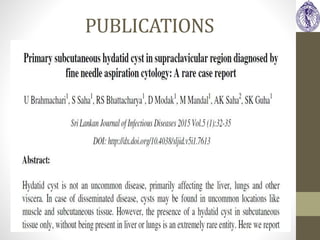
PUBLICATIONS
PUBLICATIONS
PUBLICATIONS
HYDATID CYST OF BRAIN
HYDATID CYST OF BONE
HYDATID CYST OF SEMINAL
VESICLE
HYDATID CYST OF SPINE
REFERENCES
1. Manson’s Tropical Diseases (23rd Ed)
2. Harrison’s Principles of Internal Medicine 19th edition
3. Mandell Douglas and Bennett Principles and Practice of
Infectious Diseases 7th Edition
4. WHO | Echinococcosis; www.who.int/echinococcosis/en/
5. CDC – Echinococcosis;
www.cdc.gov/parasites/echinococcosis/
6. Links:
http://www.ncbi.nlm.nih.gov/pmc/articles/PMC3716240/
http://europepmc.org/abstract/med/593481
http://pmj.bmj.com/content/79/928/113.full
Hydatid diseases

Hydatid diseases

  • 1.
    HYDATID DISEASES By Dr. SayanChakraborty 2nd Year PGT- MD Tropical Medicine School of Tropical Medicine, Kolkata E-mail: dr.sayan@gmail.com
  • 2.
  • 3.
    CASE HISTORY  An26 yrs old female presented with dull pain right side of upper abdomen, a dragging sensation over right hypochondrium and occasional fever nearly one month • Pain not relieved with analgesics • Examination revealed mild hepatomegaly • Routine blood test was normal • Advised for imaging study of abdomen
  • 6.
    DIFFERENTIAL DIAGNOSIS HEPATIC SAPCE OCCUPYINGLESIONS Cystic/Pseudocystic Space-Occupying Lesions with Liquid Content Solid Space-Occupying Lesions CONGENITAL SPACE- OCCUPYING LESIONS Simple cyst Haemorrhagic simple cyst VASCULAR SPACE- OCCUPYING LESIONS Haematoma Haematoma Haemangioma INFECTIOUS SPACE- OCCUPYING LESIONS CE [CE1, CE2, CE3a, CE3b (mixed cystic- solid)] AE with pseudocyst Abscess CE [CE3b (mixed cystic- solid), CE4 and CE5] AE Tuberculoma BENIGN SPACE- OCCUPYING LESIONS Cystadenoma Hepatic adenoma Focal nodular hyperplasia MALIGNANT SPACE- OCCUPYING LESIONS Cystadenocarcinoma Liver metastases with central necrosis Metastatic liver tumours Hepatocellular carcinoma Cholangiocarcinoma
  • 7.
    INTRODUCTION • Zoonosis • 3forms of Echinococcosis: Cystic echinococcosis (CE): Tropical and subtropical regions; Echinococcus granulosus (Unilocular cyst) Alveolar echinococcosis (AE): Temperate northern hemisphere; Echinococcus multilocularis (Multilocular cyst) Polycystic echinococcosis (PE): Latin America; Echinococcus vogeli & Echinococcus oligarthus  CE eradicated in Iceland, New Zealand and Tasmania.  Definitive host: Dogs and other canines  Intermediate host: Sheep, goat, swine etc
  • 8.
    GLOBAL DISTRIBUTION Figure 1.Geographic distribution of hydatid disease. Map shows areas in which hydatid disease is endemic due to the transmission of E granulosus by means of the dog-sheep cycle (solid red areas). Red stripes indicate areas where transmission occurs by means of alternative life cycles in which carnivores such as wolves and foxes serve as definitive hosts and goats, camels, and horses serve as intermediate hosts. Transmission by means of alternative life cycles is common in North Africa, the Middle and Far East, the United States, Canada, and Iceland
  • 9.
  • 10.
    EPIDEMIOLOGY  Cystic Echinococcosis: •Highly endemic in pastoral communities • Genotypes G1–10; G1 strain of E. granulosus accounts for 95% of human infections and has a dog-sheep transmission • Incidence rates as high as 50/100 000 person-years • Risk factors: Ownership of livestock (mainly dogs, sheep); occupation (pastoralism, agriculture); uncontrolled slaughtering; poor water hygiene  Alveolar Echinococcosis: • Definitive hosts: mainly foxes and domestic dogs • Intermediate hosts: Arvicolid and Cricetid rodents • Prevalence: 0.02% and 1.4% • Global annual incidence 18,235 cases per year
  • 11.
  • 12.
    PATHOGENESIS • One ormore spherical cysts, most frequently in liver & lungs • Tissue damage & organ dysfunction by gradual process of space occupying compression • Cyst structure: o Outer pericyst: composed of modified host cells that form a dense and fibrous protective zone o Middle laminated membrane: acellular and allows the passage of nutrient o Inner germinal layer: forms brood capsule which develops asexually into protoscolices (the larval stage of the parasite) from which daughter cysts are produced. • Cysts modulate immune response by Th1 cell activation & impairment of macrophages
  • 14.
  • 15.
    CLINICAL FEATURES • Asymptomaticin most cases; incidental finding • Most symptomatic cysts are ≥ 5 cm • Pressure effect on liver and biliary tree • Abdominal pain , hepatomegaly, jaundice • Pulmonary cysts: Cough with expectoration, SOB, chest pain, hemoptysis • Other sites: Pathological #, Brain SOL, Conduction defects, Pericarditis, Pelvic mass • Leakage of cyst contents or infection of cyst • Pain, flushing and urticaria • Anaphylactic reaction • Fever and sepsis
  • 16.
    COMPLICATION OF CYSTS •Cysts with fistulas • Biliary/bronchial obstruction (due to spillage of cyst content via cysto-biliary/cysto-bronchial fistulas) • Bacterial infection • Compression syndromes Blood vessels (leading to thrombosis, Budd–Chiari syndrome) Biliary ducts Bronchi Parenchyma/muscles, nerves (leading to atrophy) • Cyst rupture • Venous/arterial embolism
  • 17.
    OTHER DDx • Neurocysticercosis •Cholangiocarcinoma • Imaging in NonSmall Cell Lung Cancer • Imaging in Small Cell Lung Cancer • Imaging of Benign Breast Calcifications • Lung Metastases Imaging • Metastatic Cancer With Unknown Primary Site • Pancreatic Pseudocyst Imaging • Pyonephrosis • Renal Cancer • Splenic Abscess
  • 18.
    INVESTIGATIONS  LABORATORY WORKUP: • Routine lab tests: No specific findings • Cyst rupture in biliary tree: marked & transient elevation of cholestatic enzyme levels , often with hyperamylasemia and eosinophilia <15% (in 60% cases) • SEROLOGY: Confirmatory role; Indirect hemagglutination test & ELISA for detection of anti-Echinococcus Antibodies [IgG] • 10% hepatic cysts & 40% pulmonary cysts exhibit false negative results -ve in CE1/CE2/CE4/CE5; +ve only when endocyst ruptures • Diagnostic puncture & aspiration can be performed for histological diagnosis • PCR contribute to the differential diagnosis between CE and AE in doubt.
  • 19.
    INVESTIGATIONS  IMAGING: USGis Inv of choice (Gharbi US classification of 1981 & WHO-IWGE 2003 classification)
  • 20.
    OTHER INVESTIGATIONS • CTscan can detect extrahepatic smaller cysts, differentiating parasitic from nonparasitic by measurement of cyst density & for follow up studies during chemotherapy • MRI used in the evaluation of postsurgical residual lesions, recurrences & cardiac infections. Also superior in identifying changes of the intrahepatic and extrahepatic venous system & in identifying cystobiliary fistulas. • Assessment of Parasite Viability:  Histopathology (intact parasite-derived cyst wall including germinal layer)  Evaluation of the protoscolices (flame cell activity and morphological integrity; eosin staining)  Metabolic viability assessment using high-field H-MRS of cyst content  RT-PCR
  • 21.
  • 22.
    MANAGEMENT  Depends onthe size, location and manifestations of cysts  In uncomplicated cysts: “Expert consensus for the diagnosis and treatment of cystic and alveolar echinococcosis in humans”, published by the WHO-Informal Working Group on Echinococcosis recommends four treatment modalities: • 1. Drug treatment with benzimidazoles • 2. Percutaneous sterilization techniques • 3. Surgery • 4. ‘Watch and wait’
  • 24.
    BENZIMIDAZOLES  Indication: 1. CE1,2,3a,3b of size 5-6 cm 2. Prevention of secondary CE after interventions or after spontaneous rupture; starting at least 4 hours before & upto 1 month after intervention • Dosage: Albendazole 10-15 mg/kg/day in 2 divided doses or Mebendazole 40-50 mg/kg/day in 3 divided doses; with a fat- rich meal for 3-6 months • Monitoring: Liver enzymes (upto 2-4x) & CBC at day 5, 10, then at 2 weekly intervals ,later monthly • Contraindications: Pregnancy; cysts at risk of rupture; hepatoxicity; leucopenia; bone marrow suppression • Follow up: 12 months after treatment completion to look for re-activation & min of 5 yrs after cysts reached inactive stage (CE4, CE5)
  • 25.
    Puncture – Aspiration– Injection – Re-Aspiration (PAIR) • Indication: CE1 and CE3a cysts of liver of size 5–6 to <10 cm • Principle: Sterilization of the germinal layer and protoscolices. Only fluid is removed; all other parasitic material remains • Prerequisites: Experienced interventionalist; resuscitation set up for severe anaphylactic reactions & surgical back-up
  • 26.
    Puncture – Aspiration– Injection – Re-Aspiration (PAIR) • Major steps : 1. Prophylaxis of secondary echinococcosis with albendazole 2. Percutaneous puncture of the cyst under US (or CT) guidance 3. Aspiration of cyst fluid 4. Testing for bilirubin (evaluation of aspect of fluid and test strip result) and injection of contrast medium (verification of absence of cysto-biliary communications) 5. Aspiration of contrast medium 6. If fistulas are reliably ruled out: injection of protoscolicidal agent – 95% ethanol or 20% NaCl to remain in the cyst for 10–15 mins 7. Re-aspiration of the fluid 8. Follow-up for a minimum of 5 years to detect relapses and secondary CE
  • 27.
    SURGERY • INDICATION: 1. Anycyst >10 cm irrespective of CE staging 2. Cysts 5-6 to <10 cm in CE 2 and CE 3b 3. Complicated cysts • FOLLOW-UP: minimum of 5 years.
  • 28.
    SURGERY 1. Partial Cystectomy:Removal of the parasite-derived cyst components (endocyst) & part of the pericyst (host-derived connective tissue capsule). 2. Total cystectomy and Resection a. Total cystectomy: endocyst and the entire pericyst b. Resection: additional removal of part of the organ where CE- cyst is embedded
  • 29.
    ‘Watch and Wait’ •Cyst allowed to progress along its natural course if asymptomatic • Indicated in CE 4 & CE 5 Stages • Follow-up patients with CE4 and CE5 cysts for a min of 5 years
  • 30.
    Management of Complicated Cyst Cysto-biliary and cysto-bronchial fistulas: ERCP, if possible, followed by early surgery under albendazole cover  Bacterial Infection: Initially, abscess management with drainage and antibiotics followed by specific management of residual CE cyst/cavity & albendazole therapy  Compression Syndromes: Rapid decompression of blood vessels, bile ducts, bronchi, parenchyma, muscle, nerves  Cyst Rupture: Allergic Reactions and Secondary CE: • standard approach to allergic reactions including anaphylactic shock followed by CE-specific treatment • To prevent secondary CE, surgical intervention to clear CE cyst material and benzimidazole therapy
  • 31.
    PREVENTION  4 phases:(1) planning; (2) attack; (3) consolidation; and (4) maintenance of eradication  Horizontal approaches: Slow-track (>25 yrs) • reduction of disease transmission through primary healthcare interventions, including health education, general husbandry improvements, upgrading of abattoirs & meat inspection • regular deworming of dogs by their owners  Vertical or fast-track approach: 3-5 yrs • Mass treatment of dogs, dog registration and reduction of stray dog numbers • EG95 vaccine 95% effective against ovine hydatidosis
  • 32.
  • 33.
    INTRODUCTION  Organism: Echinococcusmultilocularis  Global distribution: Temperate northern hemisphere  Epidemiology: • Definitive hosts: mainly foxes and domestic dogs • Intermediate hosts: Arvicolid and Cricetid rodents • Prevalence: 0.02% and 1.4% • Global annual incidence: 18,235 cases per year  Site of infection: • E. multilocularis metacestode (larva) develops primarily in the liver. • In advanced stages, other sites may become metastasized such as retroperitoneum, lungs, brain and bones
  • 34.
    PATHOLOGY • Conglomerate ofscattered vesicles, each ranging from a few mm to cm in size • Germinal layer represents the proliferating metacestode generating new vesicles, which leads to the tumour-like behaviour of the parasite. • A granulomatous host reaction surrounds the metacestode, including a vigorous synthesis of fibrous and germinative tissue. • 3 immune mediated clinical outcome: (1) resistance as shown by the presence of ‘dying out’ or ‘aborted’ metacestodes; (2) controlled susceptibility by a slowly growing metacestode tissue – presents 5–15 years after infection; (3) Uncontrolled hyperproliferation of the metacestode due to an impaired immune response
  • 35.
    DIAGNOSIS • Serology: Em2,Em2+, Em18 antigens • Imaging: USG/CT/MRI/PET • Diagnostic puncture and aspiration of parasitic material • Histology • RT-PCR • PNM Classification: Resemblance to malignant diseases P primary mass in the liver N involvement of neighbouring organs (lymph nodes) M metastases
  • 36.
    MANAGEMENT • Curative treatmentis possible with combination of radical surgery with 2 cm liver margin & subsequent drug treatment (benzimidazoles) for at least 2 years. • Life long follow up • Recurrences have been observed almost 20 years after surgery • After successful surgery, anti-Em18 or anti-Em2+ antibodies decline rapidly, and seroconversion to undetectable levels correlates well with curative resection • Advanced stage lesions: life long benzimidazole therapy & management of acute problems such as obstruction of bile ducts, abscess formation and thrombosis of major blood vessels • Liver transplantation
  • 37.
  • 38.
  • 39.
  • 40.
  • 41.
  • 42.
  • 43.
    HYDATID CYST OFSEMINAL VESICLE
  • 44.
  • 45.
    REFERENCES 1. Manson’s TropicalDiseases (23rd Ed) 2. Harrison’s Principles of Internal Medicine 19th edition 3. Mandell Douglas and Bennett Principles and Practice of Infectious Diseases 7th Edition 4. WHO | Echinococcosis; www.who.int/echinococcosis/en/ 5. CDC – Echinococcosis; www.cdc.gov/parasites/echinococcosis/ 6. Links: http://www.ncbi.nlm.nih.gov/pmc/articles/PMC3716240/ http://europepmc.org/abstract/med/593481 http://pmj.bmj.com/content/79/928/113.full