Study of Hybrid Combustion using
Paraffin Wax Fuel and N2O/N2O4 as Oxidizer

                      BY
                Sandeep Patnala
                ME/SER/1022/09

             UNDER THE GUIDANCE OF
                 Dr. P.C. JOSHI


 DEPARTMENT OF SPACE ENGINEERING AND ROCKETRY
      BIRLA INSTITUTE OF TECHNOLOGY, MESRA
INTRODUCTION
   In Hybrid Propulsion Systems one component of the propellant is stored in
    liquid/gaseous phase while the other is stored in solid phase

   Depending on the physical states of fuel and oxidizer the hybrid system is
    divided in to Direct and Reverse hybrid propulsion system.


                         Direct Hybrid         Reverse Hybrid

                       Oxidizer : Liquid        Oxidizer : Solid


                          Fuel : Solid           Fuel    : Liquid


   The specific impulse for hybrid rockets can range from 275 - 350 sec.
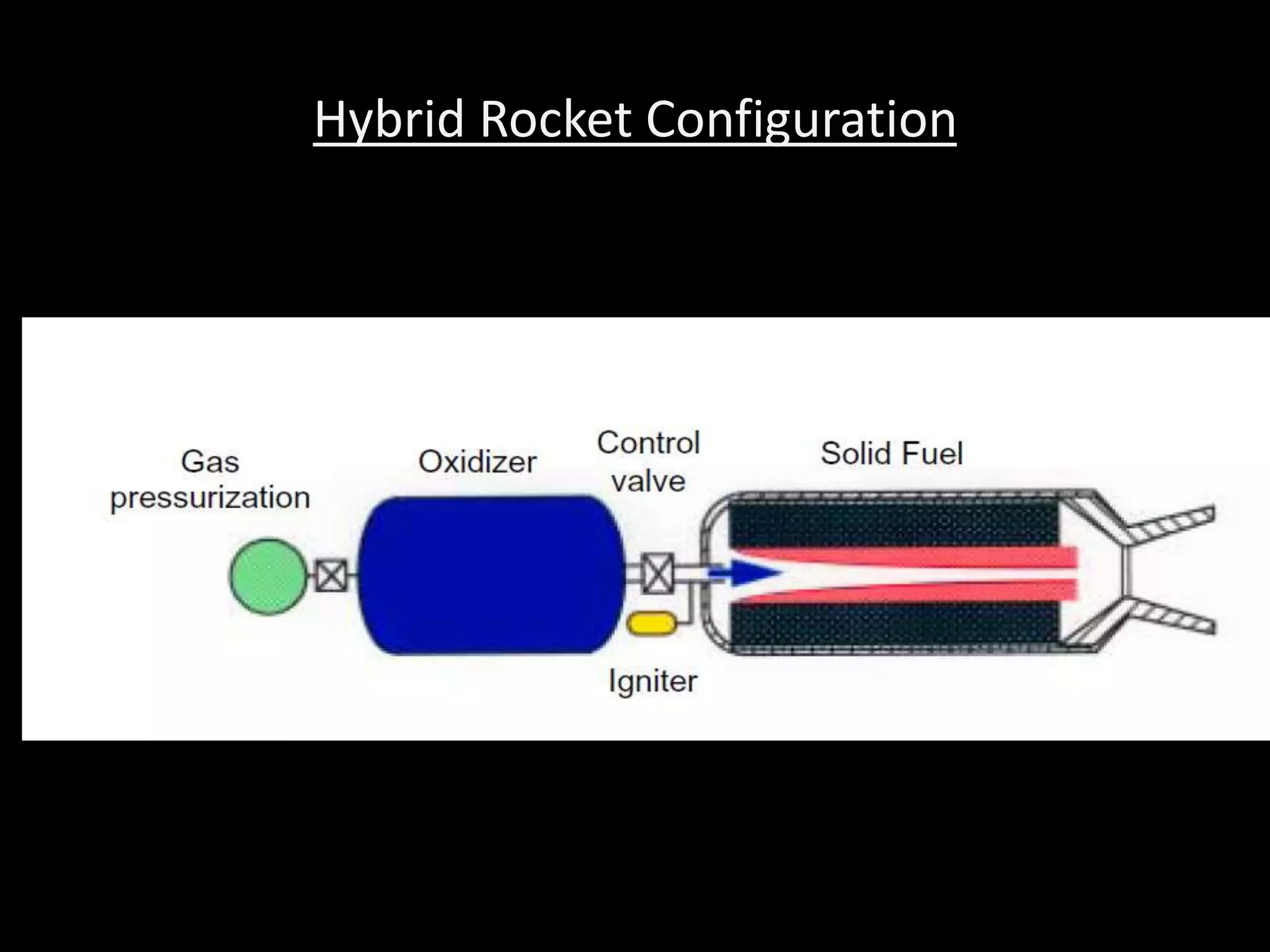
Hybrid Rocket Configuration
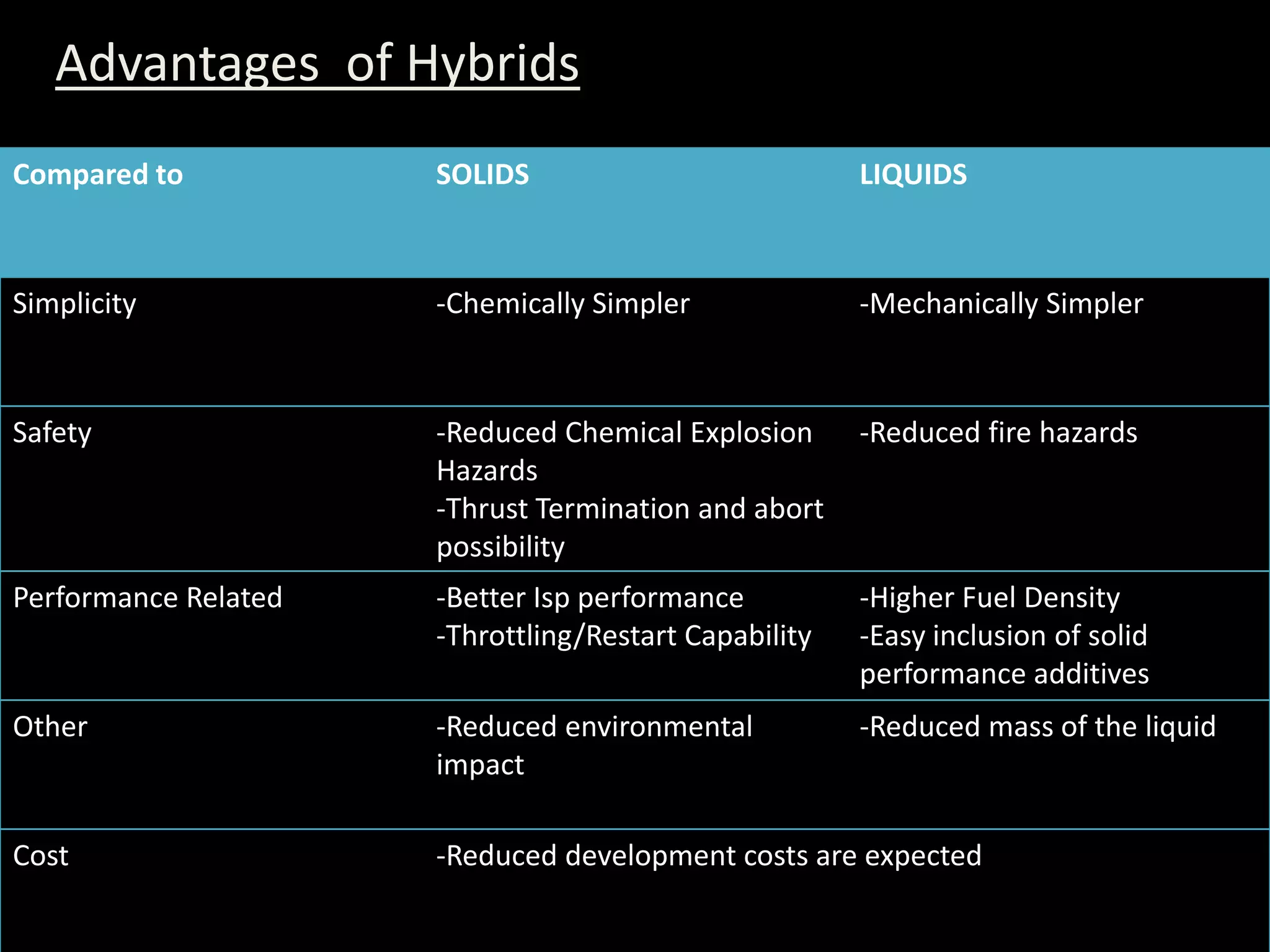
Advantages of Hybrids
Compared to           SOLIDS                           LIQUIDS


Simplicity            -Chemically Simpler              -Mechanically Simpler


Safety                -Reduced Chemical Explosion      -Reduced fire hazards
                      Hazards
                      -Thrust Termination and abort
                      possibility
Performance Related   -Better Isp performance          -Higher Fuel Density
                      -Throttling/Restart Capability   -Easy inclusion of solid
                                                       performance additives
Other                 -Reduced environmental           -Reduced mass of the liquid
                      impact

Cost                  -Reduced development costs are expected
Disadvantages of Hybrid Rockets:-

  Hybrid rockets also exhibit some disadvantages when compared to
  Liquid and Solid Rockets
 Oxidizer-to-Fuel ratio shift.
 Low regression rate.
 Uneven regression rate along the length of the grain.


  The primary hazards associated with hybrids are:
 Blow back.
 Hard starts.
Objective

 To study the following combustion characteristics of paraffin wax and
  nitrous oxide/nitrogen tetroxide hybrid system
1. Regression rate at different injection pressures
2. Mass consumption rate at different injection pressures
3. Pressure-Time history of hybrid rocket motor
4. Thrust and Specific impulse of above hybrid system
Methodology
 Literature review
 Design and fabrication of the rocket motor, mould with
  mandrel and nozzle
 Theoretical Analysis
 Preparation of N2O4
 Experimental work
 Results
Literature Review

M.A.Karabeyoglu, D.Altman ---> Ref (1)
i)For several classes of liquefying fuels, the layer is hydro dynamically
    unstable leading to substantial droplet entrainment from the melt
    layer into the gas stream.
ii) The susceptibility of a given fuel to this shear driven instability
    increases with decreasing viscosity and surface tension of the melt
    layer.
iii)For practical oxidizer flux levels encountered in hybrid rocket
    applications, droplet entrainment can dominate direct gasification.
iv)Several methods for increasing regression rates in hybrids were
    tested.
Liquid Layer Combustion Theory
A) Liquid Layer Thickness Estimation :
                 The thickness of the energy liquid layer can be determined by the
   energy transfer relations in the solid and liquid phases.

        To estimate the liquid layer thickness following assumptions are made
                1)        Steady state regression rate of the slab
                2)        Physical properties of the material in both liquid and
                          solid phase are uniform.
                3)        The effect of convection in the liquid layer is ignored.

        The possibility of the penetration of the thermal radiation into the fuel slab is
        analyzed and several assumptions are made in the radiation treatment, which
        are
                1)         Radiative flux is one dimensional.
                2)         Since the temperature levels in the slab are small, the
                           contribution of radiation emitted by internal material
                           to the radiative intensity is negligable.
                3)         The absorption coefficient of both liquid and solid
                           material behaves like a gray body.
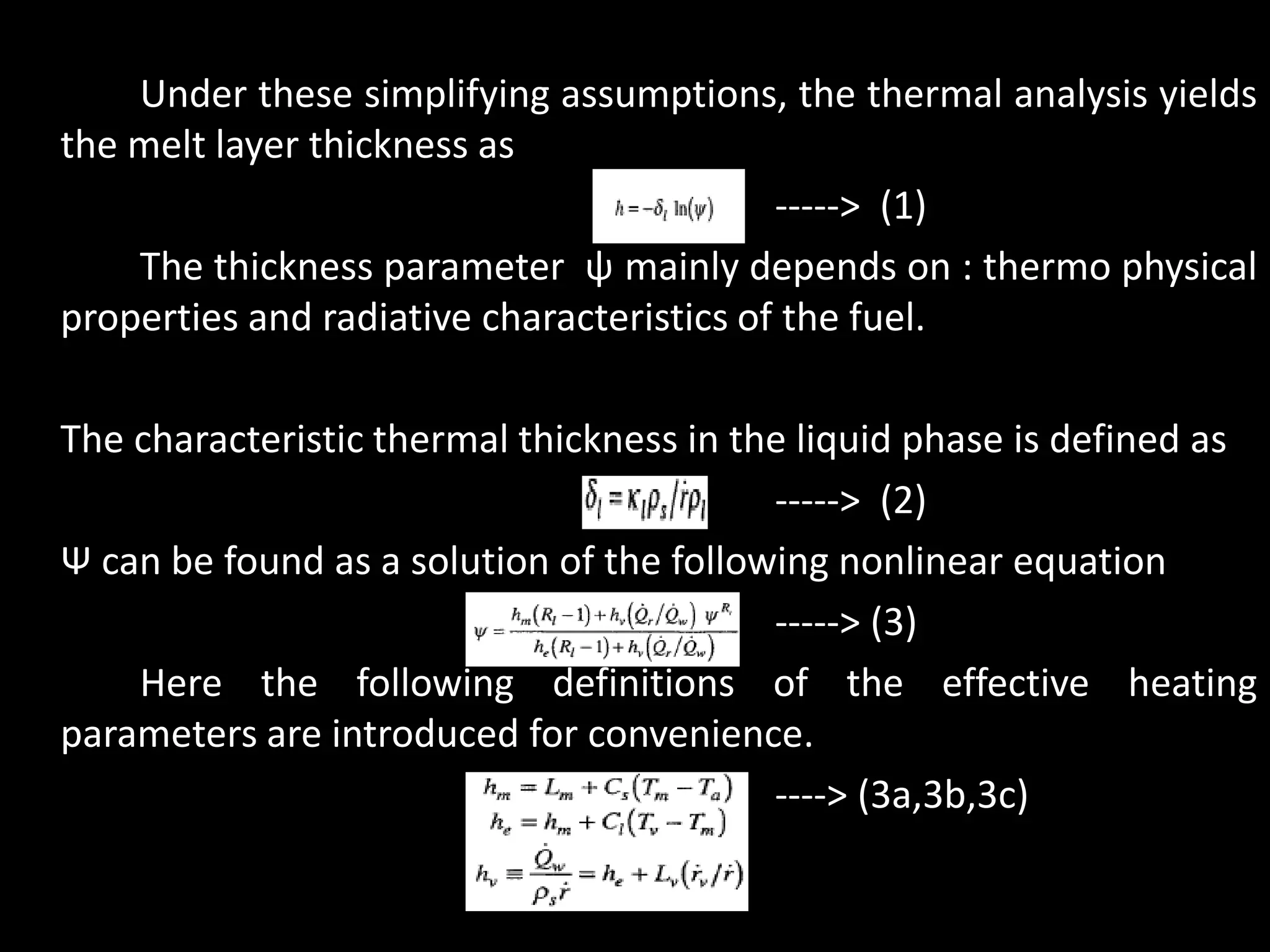
Under these simplifying assumptions, the thermal analysis yields
the melt layer thickness as
                                           -----> (1)
    The thickness parameter ψ mainly depends on : thermo physical
properties and radiative characteristics of the fuel.

The characteristic thermal thickness in the liquid phase is defined as
                                          -----> (2)
Ψ can be found as a solution of the following nonlinear equation
                                          -----> (3)
    Here the following definitions of the effective heating
parameters are introduced for convenience.
                                          ----> (3a,3b,3c)
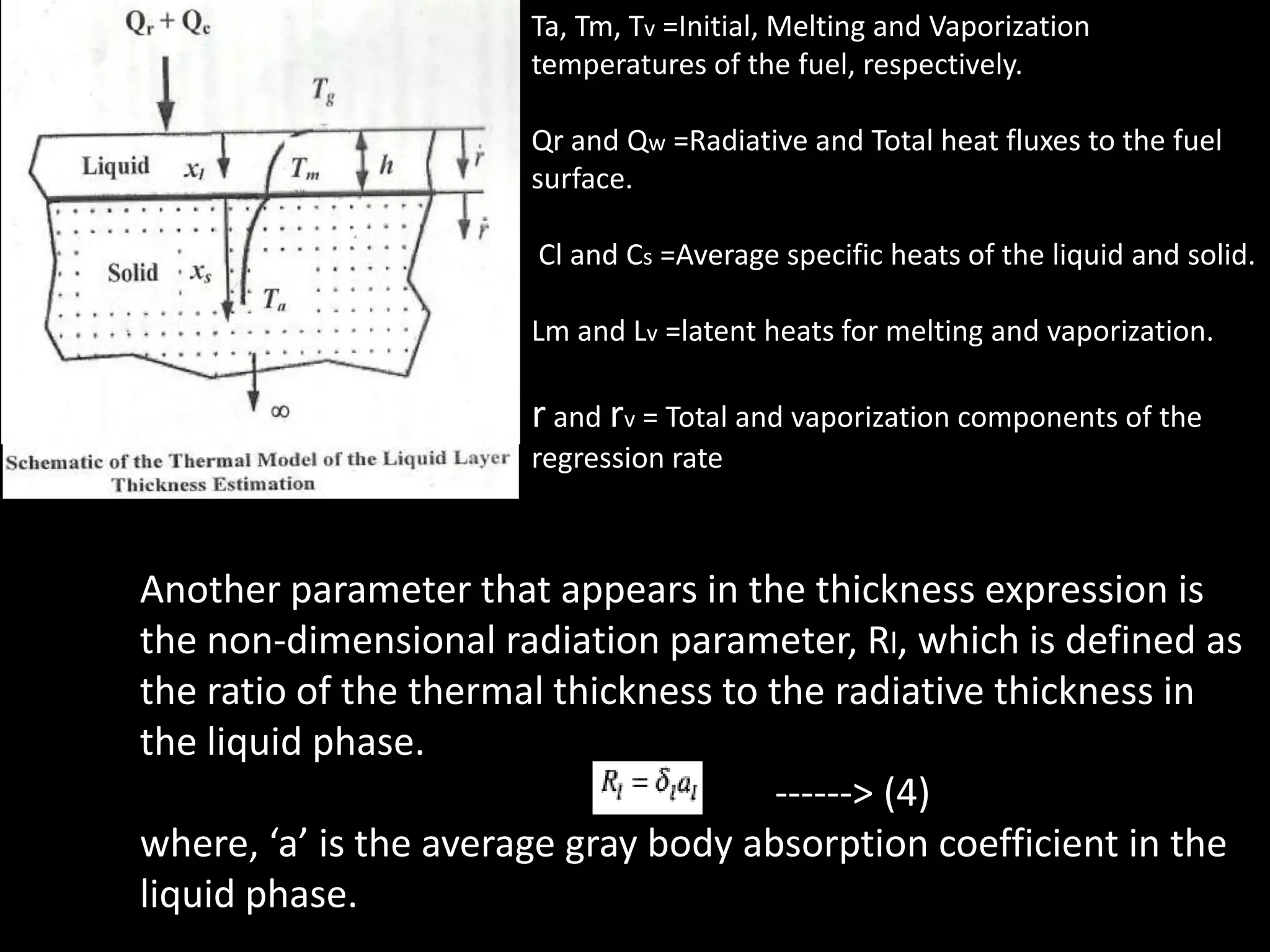
Ta, Tm, Tv =Initial, Melting and Vaporization
                       temperatures of the fuel, respectively.

                       Qr and Qw =Radiative and Total heat fluxes to the fuel
                       surface.

                       Cl and Cs =Average specific heats of the liquid and solid.

                       Lm and Lv =latent heats for melting and vaporization.

                       r and rv = Total and vaporization components of the
                       regression rate


Another parameter that appears in the thickness expression is
the non-dimensional radiation parameter, Rl, which is defined as
the ratio of the thermal thickness to the radiative thickness in
the liquid phase.
                                      ------> (4)
where, ‘a’ is the average gray body absorption coefficient in the
liquid phase.
An explicit solution for the algebric nonlinear equation, eqn(3),
     for the general case could not be obtained.
The two limiting cases are :
     1) Rl >>1, the absorption of the radiation in the liquid layer is very large. The
        thickness can be solved explicitly as


                                                     ----> (5)
                  All the thermo physical properties of the fuel material are lumped in
         the logarithmic term and the Qr/Qc ratio does not affect the thickness. This
         case is important for propellants that are loaded with strongly absorbing
         material such as carbon black.

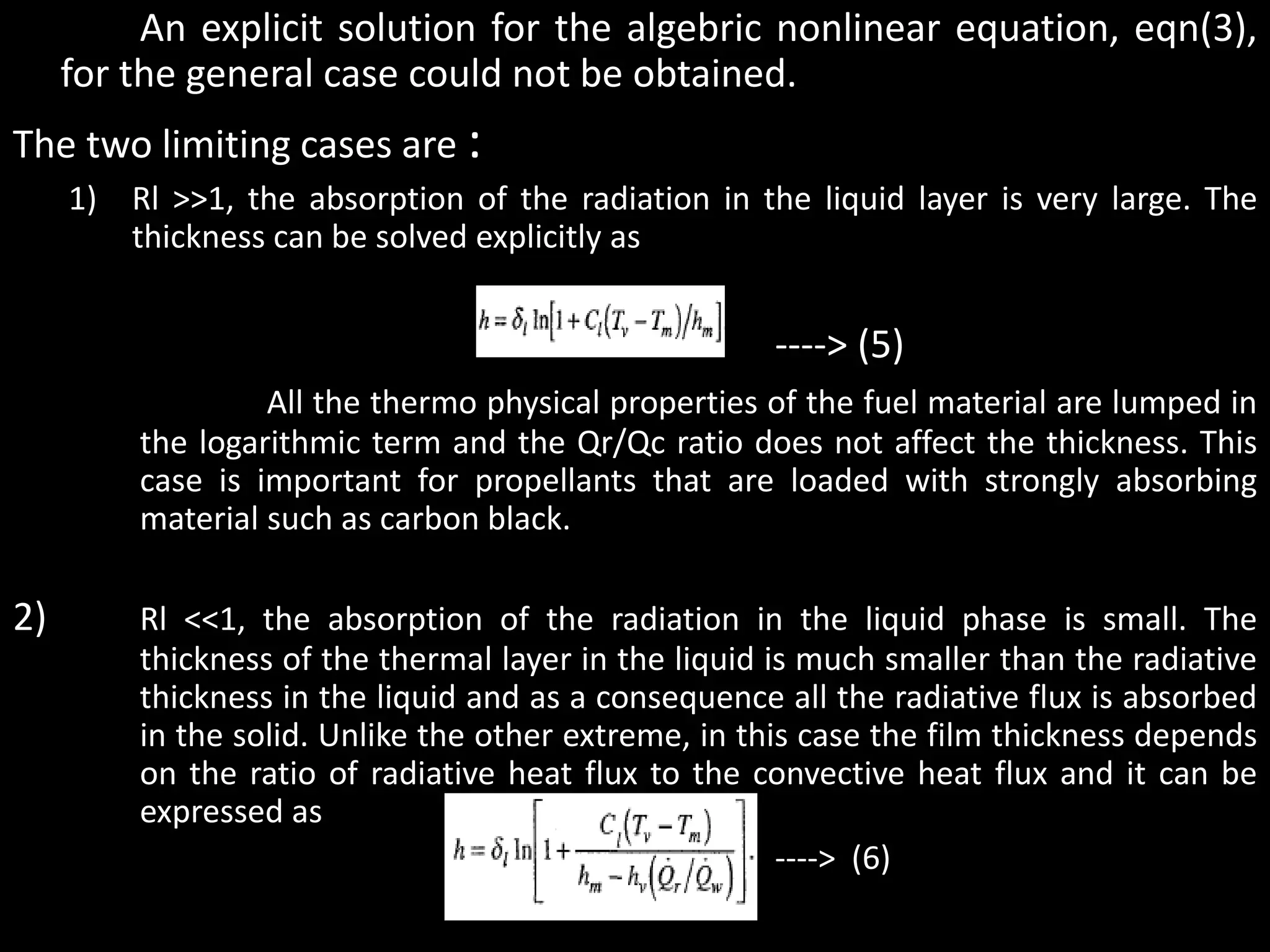
2)       Rl <<1, the absorption of the radiation in the liquid phase is small. The
         thickness of the thermal layer in the liquid is much smaller than the radiative
         thickness in the liquid and as a consequence all the radiative flux is absorbed
         in the solid. Unlike the other extreme, in this case the film thickness depends
         on the ratio of radiative heat flux to the convective heat flux and it can be
         expressed as
                                     •                 ----> (6)
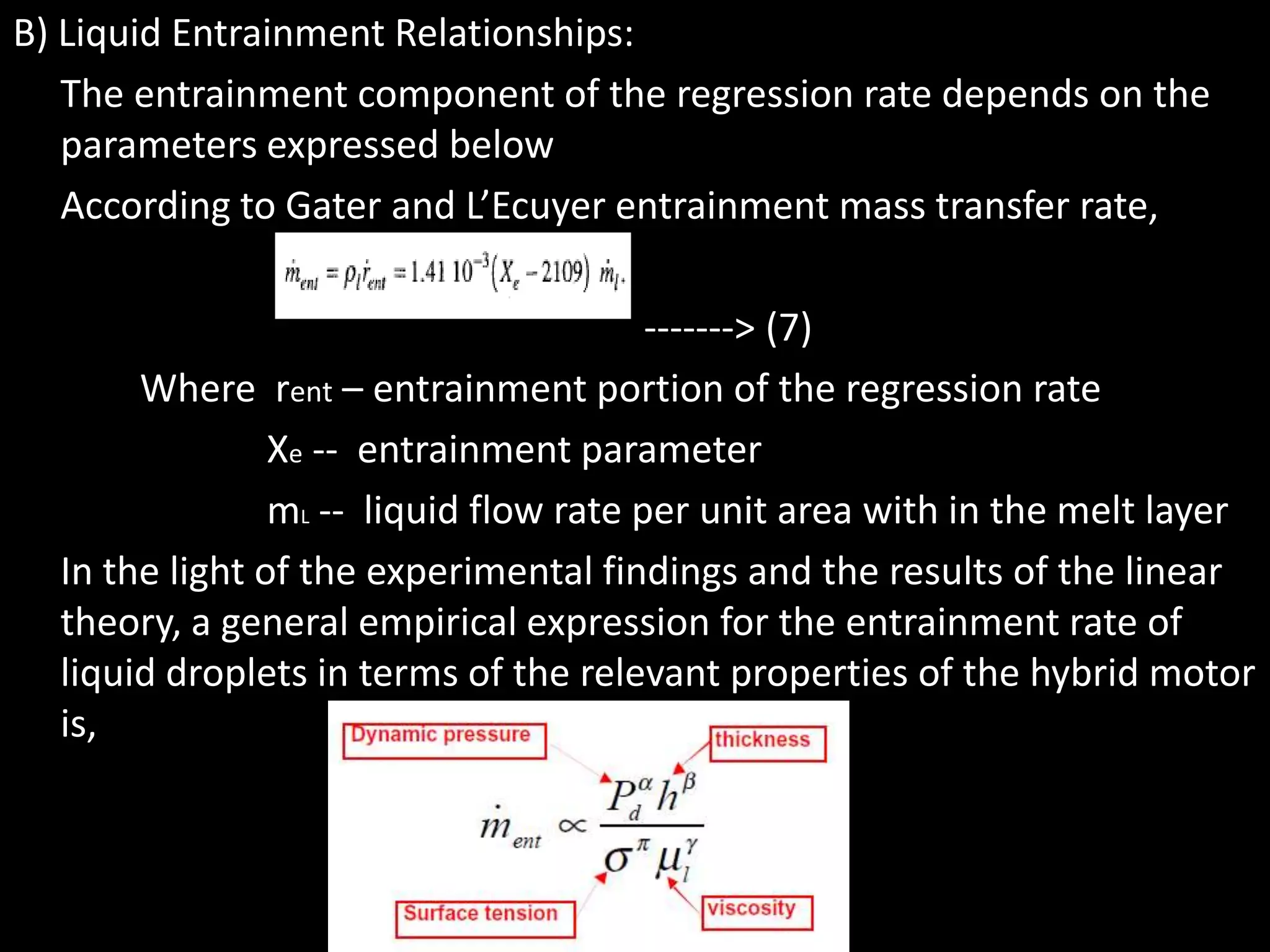
B) Liquid Entrainment Relationships:
   The entrainment component of the regression rate depends on the
   parameters expressed below
   According to Gater and L’Ecuyer entrainment mass transfer rate,

                                        -------> (7)
       Where rent – entrainment portion of the regression rate
                Xe -- entrainment parameter
                mL -- liquid flow rate per unit area with in the melt layer
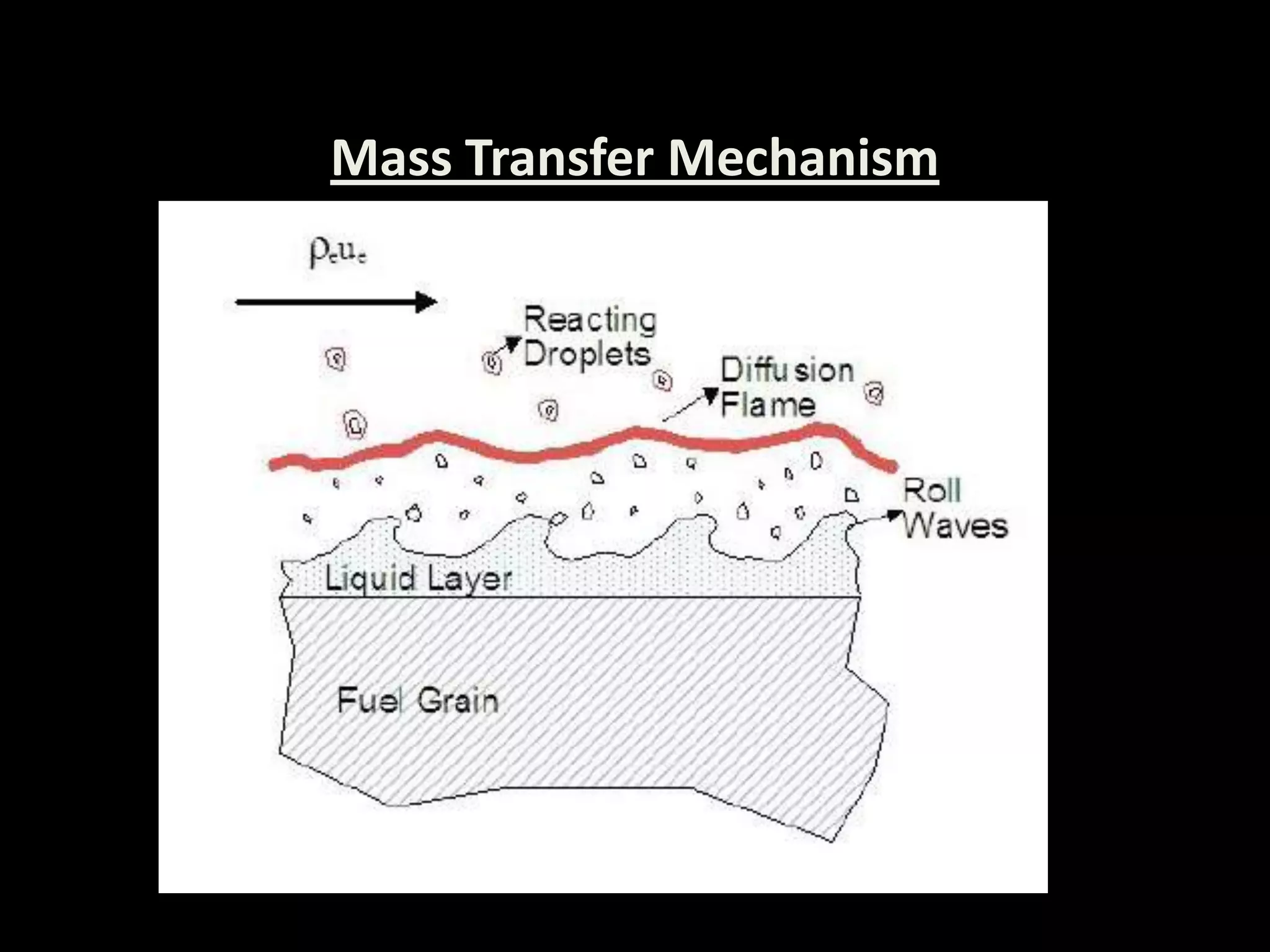
  In the light of the experimental findings and the results of the linear
  theory, a general empirical expression for the entrainment rate of
  liquid droplets in terms of the relevant properties of the hybrid motor
  is,
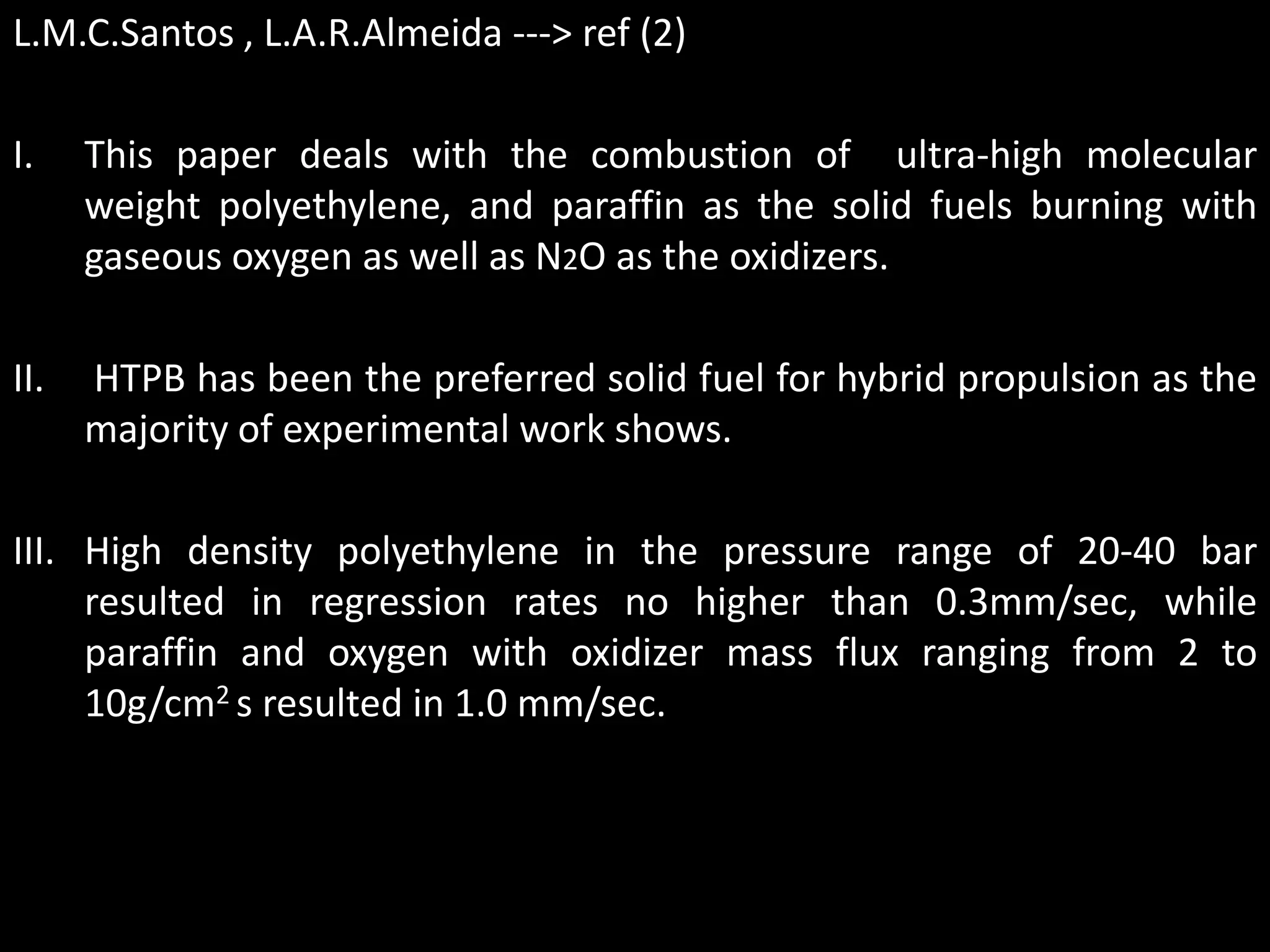
Mass Transfer Mechanism
L.M.C.Santos , L.A.R.Almeida ---> ref (2)

I.    This paper deals with the combustion of ultra-high molecular
      weight polyethylene, and paraffin as the solid fuels burning with
      gaseous oxygen as well as N2O as the oxidizers.

II.   HTPB has been the preferred solid fuel for hybrid propulsion as the
      majority of experimental work shows.

III. High density polyethylene in the pressure range of 20-40 bar
     resulted in regression rates no higher than 0.3mm/sec, while
     paraffin and oxygen with oxidizer mass flux ranging from 2 to
     10g/cm2 s resulted in 1.0 mm/sec.
Tsong-Sheng Lee and Hsin-Luen Tsai ----> ref(3)

I.   A series of Paraffin-HTPB based nitrous oxide hybrid rocket fuels
     have been studies experimentally in a laboratory scale motor.

II. About 3 to 4 times the regression rate is increased by burning
    paraffin wax as compared to regression rates of HTPB swirling O2
    hybrid system as oxidizer mass flux at 90kg/ m2 sec.

III. Isp of 50p fuel can reach up to 220sec wit oxidizer mass flux of
     110kg/ m2 sec. Lower regression rate of HTPB fuel resulted in a
     lower Isp value and presenting fuel-lean combustion as oxidizer
     mass flux went beyond 80kg/ m2 sec due to part of the oxygen
     ejecting through nozzle directly without reacting with fuel vapors.
Alexandra Lazarav, Alon Gray ----> ref (4)

I.    The paper presents an experimental investigation of a laboratory
      hybrid motor employing paraffin fuel and gaseous oxidizer.

II.    Several types of paraffin has been tested and it is said that paraffin
      fuels have poor mechanical characteristics. This was over come by
      adding polymer to paraffin .

III. Plain Paraffin :-
     Some fuel was blown through the nozzle, unburned, thus reducing
     the performance, while some fuel was accumulated in the motor.
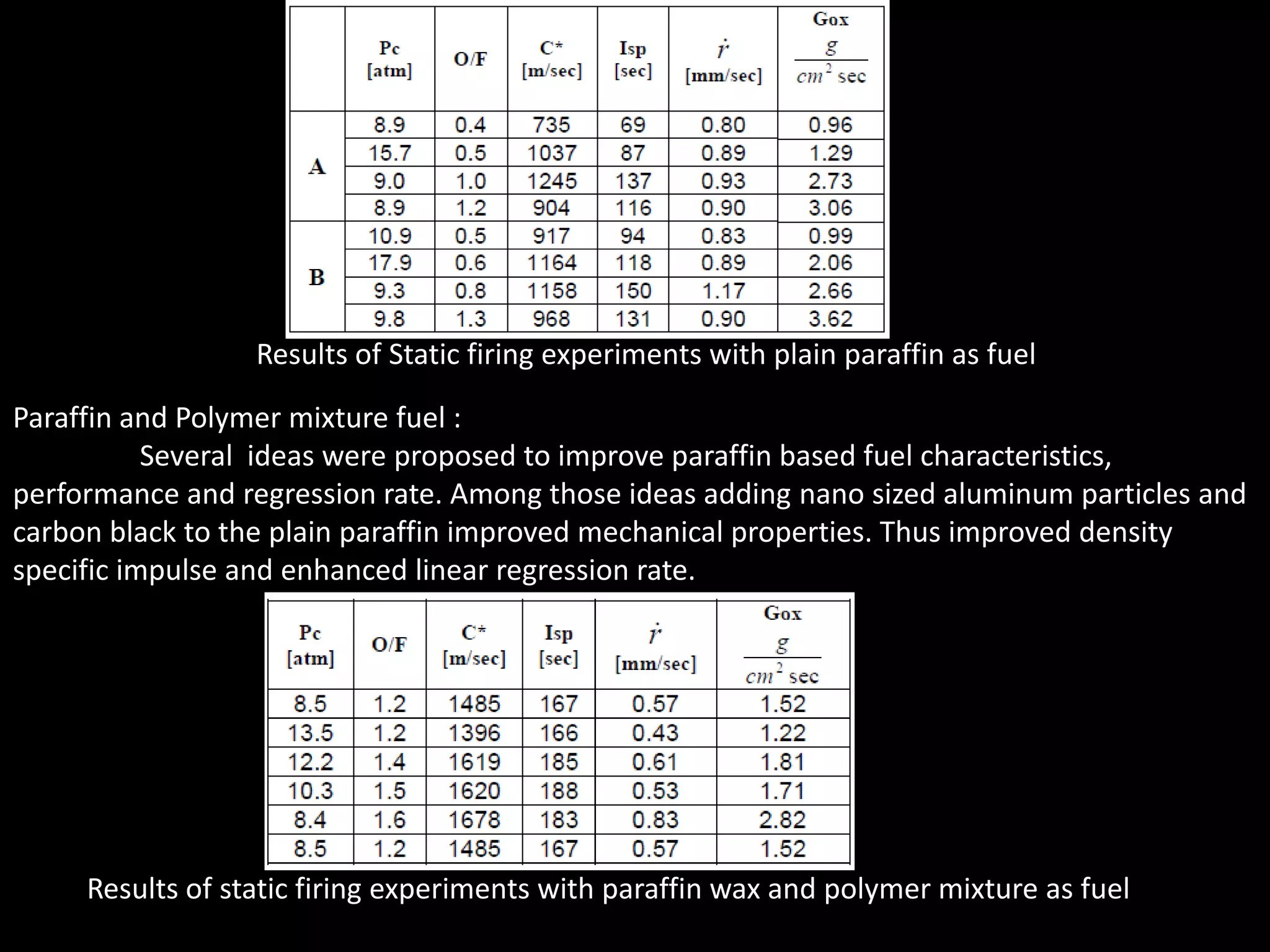
Results of Static firing experiments with plain paraffin as fuel

Paraffin and Polymer mixture fuel :
           Several ideas were proposed to improve paraffin based fuel characteristics,
performance and regression rate. Among those ideas adding nano sized aluminum particles and
carbon black to the plain paraffin improved mechanical properties. Thus improved density
specific impulse and enhanced linear regression rate.


     Results of static firing experiments with paraffin wax and polymer mixture as fuel
Work Done
 Literature survey

 Design and modification of Combustion Chamber

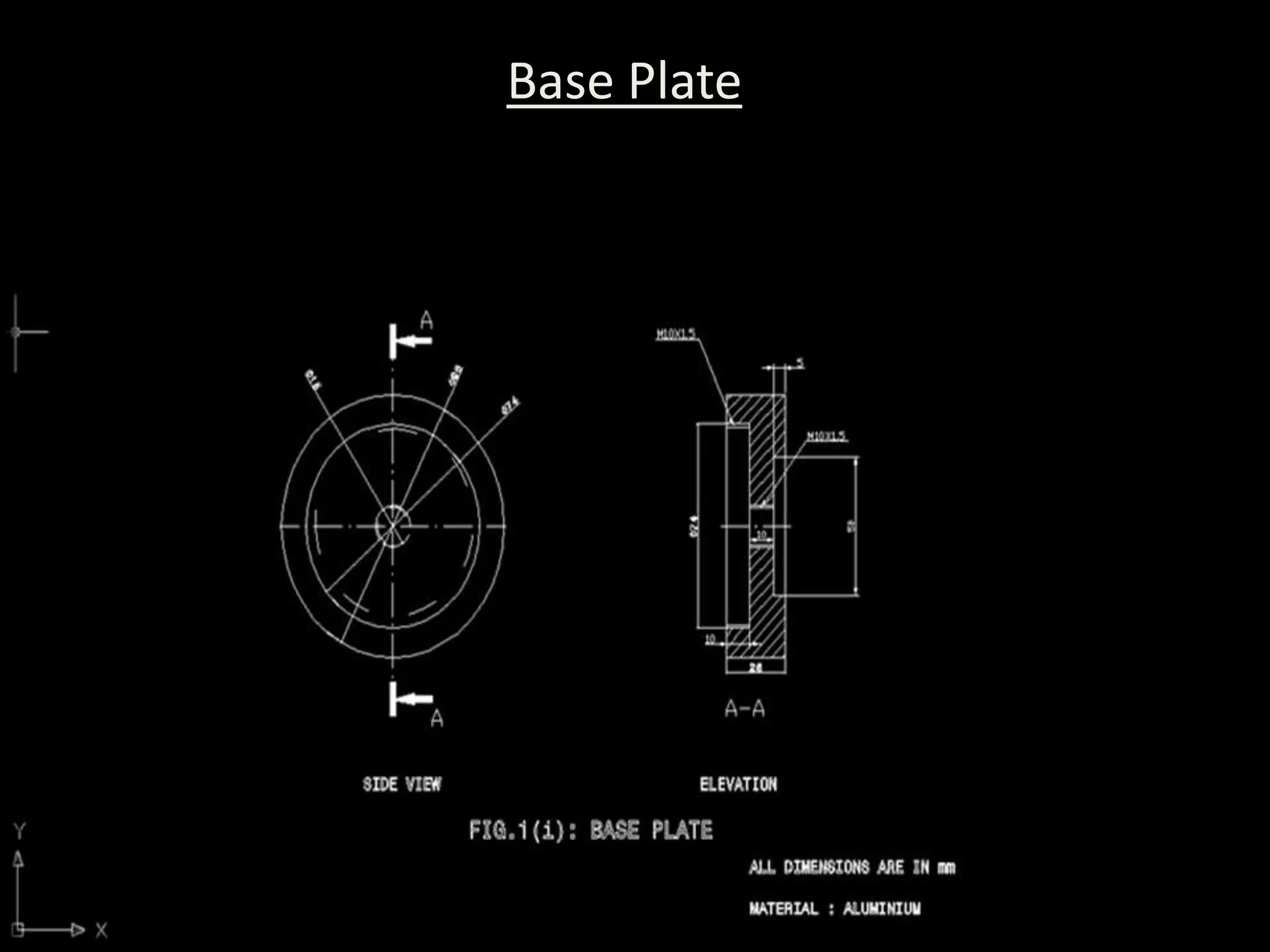
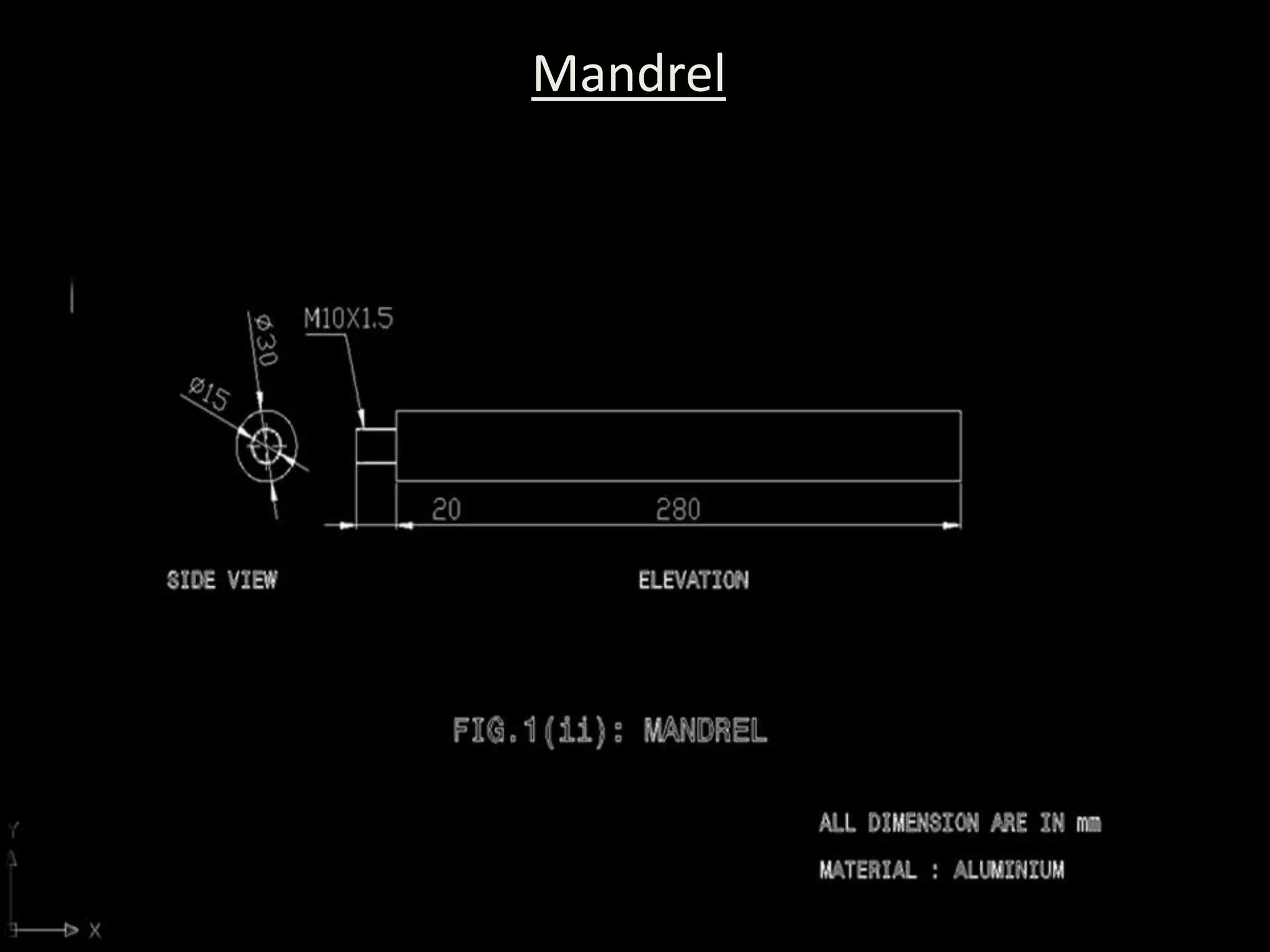
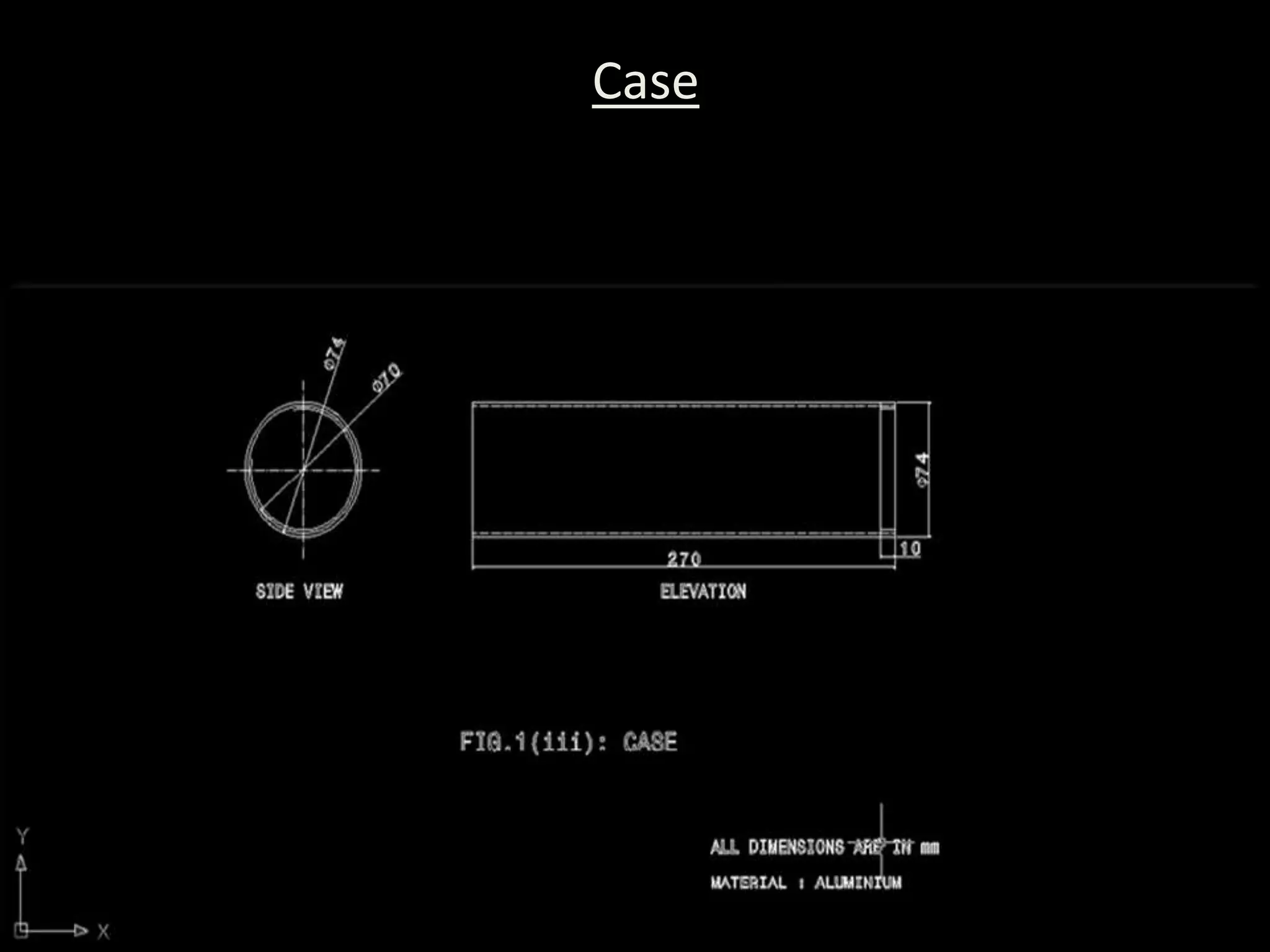
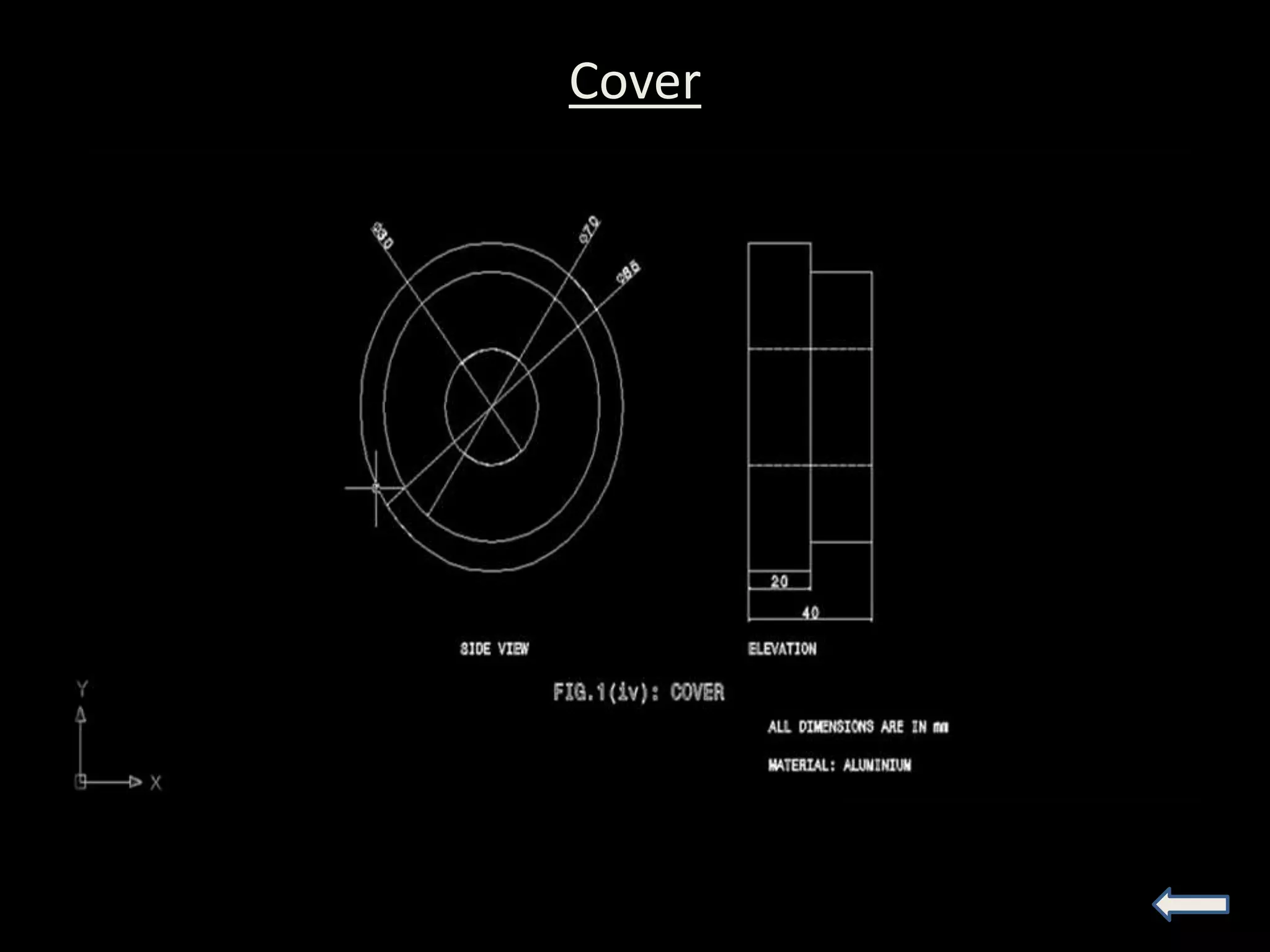
 Design and fabrication of Mandrel, Case, Cover, Base Plate

 Design of Nozzle

 Evaluation of the performance parameters

 A small quantity of N2O4 has been Prepared
Work to be done

   Preparation of N2O4

   Preparation of fuel Grain

   Experimental work

   Results and discussion
Procedure for the preparation of N2O4
   Step 1 :-
NaNO3
1. NaNO3 is placed in an open pan in an oven at approx 315°C for
   20minutes or at a lesser temperature for a longer period.
2. Care has to be taken to ensure that the temp remains below the
   decomposition temperature of NaNO3 ( 380°C).
MnSO4
1. MnSO4 is roasted in an open pan in an oven for an hour at 315°C.
 Step 2 :-
1. The powders are placed in a separate bag and are pound into
   pieces.
2. 155gm of MnSO4 and 170gm of NaNO3 are mixed thoroughly and
   they are rolled to ensure proper mixing.
 Step 3 :-
1. The ingredients( reactants) are pound in a high temperature
   resistant vessel.
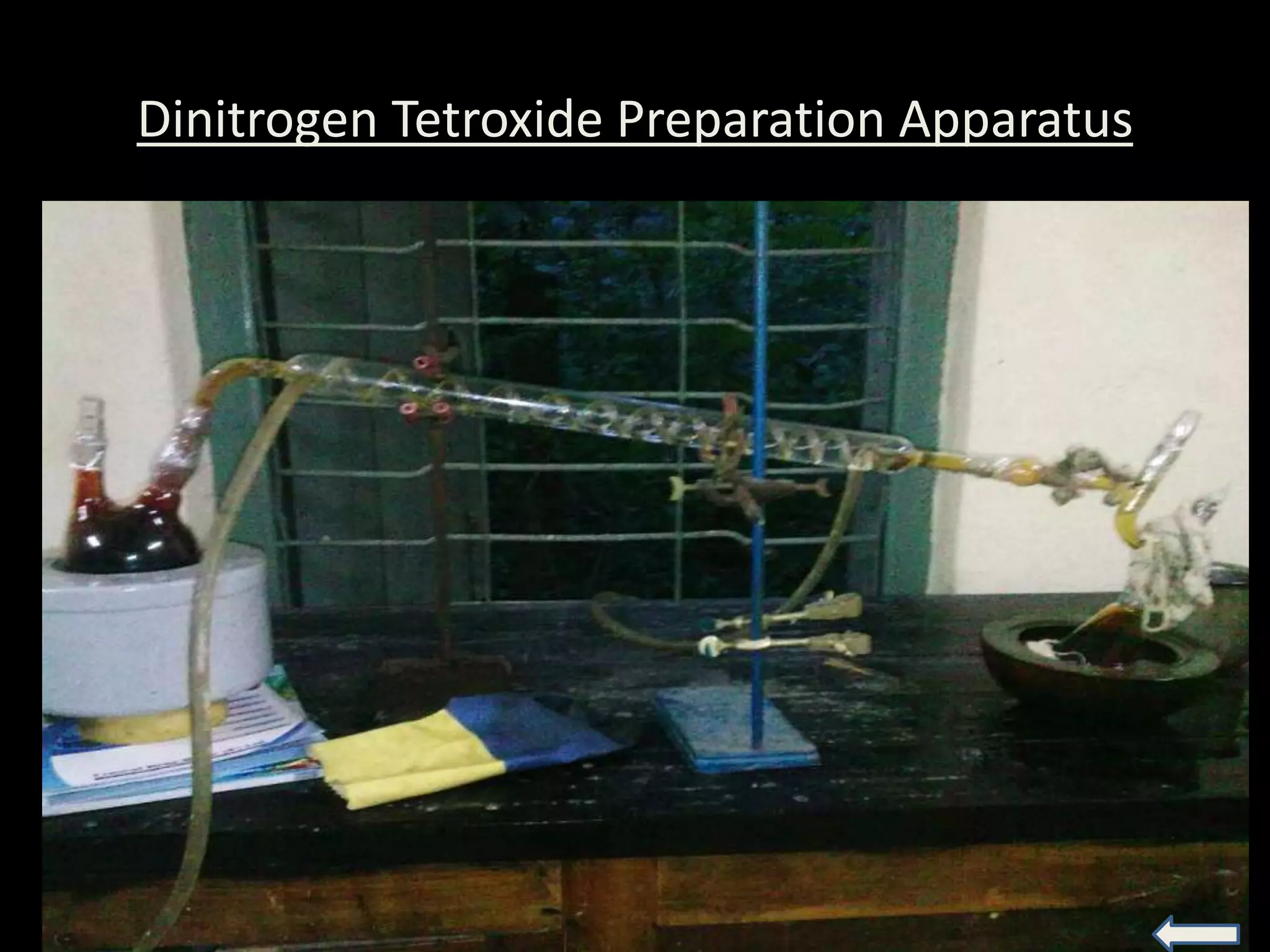
2. The vessel is heated to produce vapors which are cooled using a
   condenser and an ice bath to get liquid N2O4.
Dinitrogen Tetroxide Preparation Apparatus
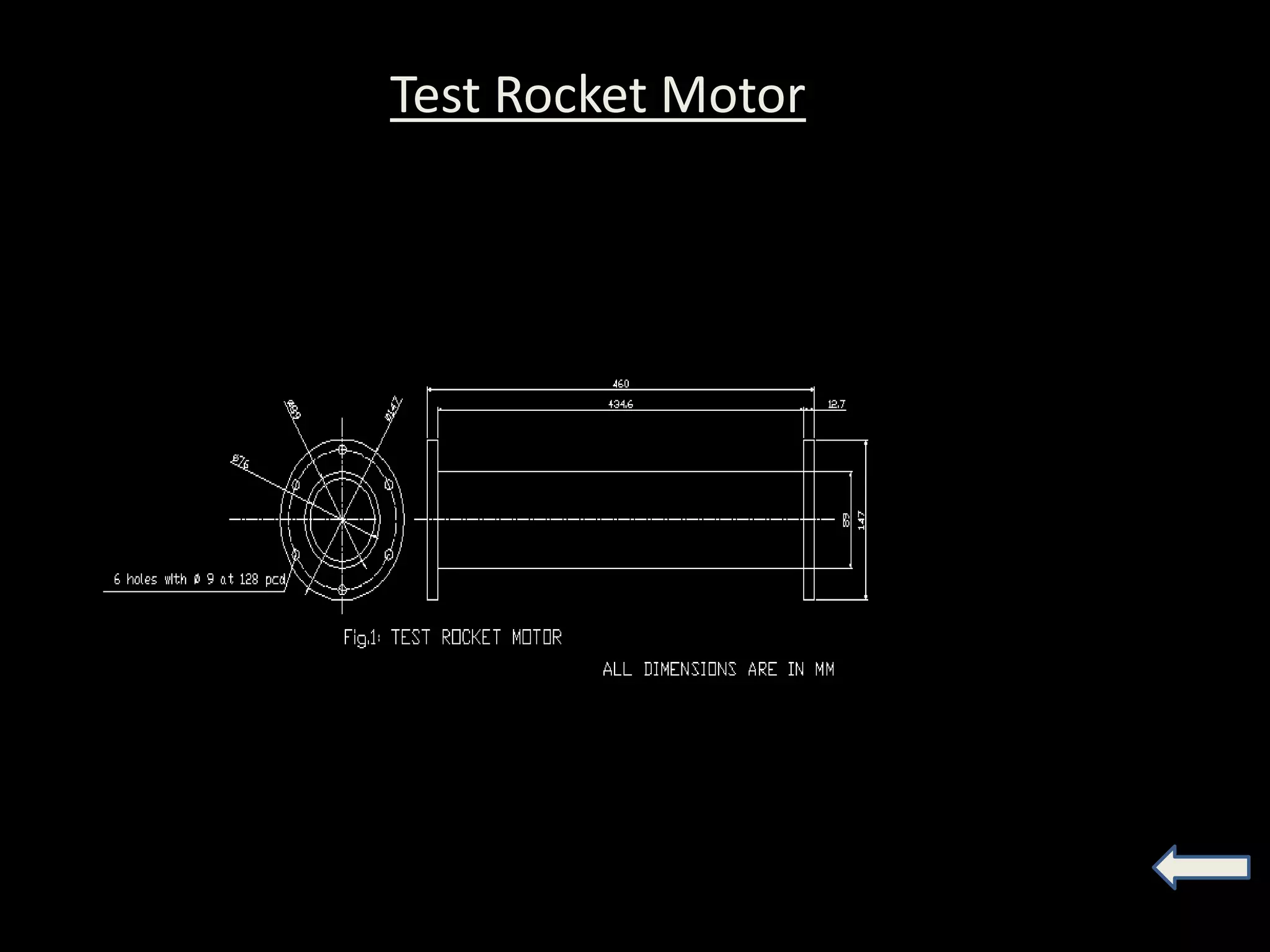
Test Rocket Motor
Base Plate
Mandrel
Case
Cover
Convergent –Divergent Nozzle
References
 Karabeyogul, M.A., Cantwell, B.J., and Altman,D., “ Development and
  Testing of Paraffin-Based Hybrid Rocket Fuels”, AIAA/SAE/ASME/ASEE,
  37th Joint Propulsion Conference and Exhibit, July 8-11, 2001, Salt Lake
  City, Utah, AIAA-2001-4503.
 Alexandra, L., Alon Gany “Experimental Investigation of Paraffin-Fueled
  Hybrid Combustion”, Third European Combustion Meeting 2007.
 L.M.C.Santos.,     L.A.R.Almeida,    A.M.Fraga      and     C.A.G.Veras
  “Experimental Investigation of a Paraffin based Hybrid Rocket” .
 Karabeyoglu, M.A., Altman, D., Cantwell, B.J., Patent Pending, “High
  Regression Rate Hybrid Rocket Fuels”, US Patent,1999.
 McCormick, Anthony et al.,“Design, Optimization, and Launch of a 3”
  Diameter N2O/ Aluminized Paraffin Rocket”, 41st AIAA/ ASME/ SAE/
  ASEE Joint Propulsion Conference & Exhibit; Tucson, AZ; USA; 10-13
  July 2005. pp. 1-14-2005.
 Tsong-Sheng Lee., Hsin-Luen Tsai.,”Fuel Regression Rate in a Paraffin-
  HTPB Nitrous Oxide Hybrid Rocket”, 7th Asian-Pasific Conference on
  Combustion; Nation Taiwan University, Taipei, Taiwan;24-27 May2009.
 Martin J. Chiaverini; George C. Harting; Yen-Cherng Lu; Kenneth
    K. Kuo.,” Combustion of Solid Fuel Slabs with Gaseous Oxygen in
    a Hybrid Motor Analog” NASA-CR-201116.
   Chatterjee,A.k., and Joshi,P.C., “Length and Port Size Effect on
    Combustion of PVC Plastisol Hybrid Fuel,” Propellant and
    Explosive Journal, Vol.15, 1980, pp.163-167.
   Chatterjee,A.K., “Some Combustion Studies of PVC-O2 Hybrid
    Systems”, Thesis of Masters of Science in Space Engineering and
    Rocketry, Birla Institute of Technology, Mesra, Ranchi,
    India,1972.
   Matthas Grosse., Bad Reichenhall., “ HERA experimental rocket
    project”.
   Marxman,G.A., Wooldrige,C.E., and Muzzy,R.J., “Fundamentals
    of Hybrid Boundary Layer Combustion”, Progress in Aeronautics
    and Astronautics, Vol.15,AIAA,New York., 1966,pp.269-289.
 Martin J.Chiaverini., Kenneth K.Kuo., Aeretz., and George
  C.Harting., “ Regression-Rate and Heat-Transfer Corellations
  for Hybrid Rocket Combustion”, Journal Of Propulsion And
  Power, Vol.17.No1, January-February2001.
 Phimon George., Krishnan.S., Varkey.P.M., Ravindran.M., and
  Lalitha Ramachandran., “ Fuel Regression Rate in Hydroxyl-
  Terminated-Polybutadiene/Gaseous-Oygen Hybrid Rocket
  Motors”, Journal Of Propulsion And Power, Vol.17.No.1,
  January-February2001.
 Rajeshwar Dayal Swami., Alon Gany., “ Analysis and Testing of
  Similarity and Scale Effects in Hybrid Rocket Motor”, Science
  Direct, Acta Astronautics 52(2003),pp.619-628.
 Potapkin.A.V., and Lee.T.S., “ Experimental Study of Thrust
  Performance of a Hybrid Rocket Motor with Various Methods
  of Oxidizer Injection”, Combustion, Explosion, and Shock
  Wave. Vol.40, No.4,pp.386-392,2004.
 Michael Harris., Bruce Helming., Jacob Teufert “PANTHR
  Paraffin and Nitrous-Oxide test Hybrid Rocket”,MAE
  4291,2006.
HYBRID ROCKET COMBUSTION

HYBRID ROCKET COMBUSTION

  • 1.
    Study of HybridCombustion using Paraffin Wax Fuel and N2O/N2O4 as Oxidizer BY Sandeep Patnala ME/SER/1022/09 UNDER THE GUIDANCE OF Dr. P.C. JOSHI DEPARTMENT OF SPACE ENGINEERING AND ROCKETRY BIRLA INSTITUTE OF TECHNOLOGY, MESRA
  • 2.
    INTRODUCTION  In Hybrid Propulsion Systems one component of the propellant is stored in liquid/gaseous phase while the other is stored in solid phase  Depending on the physical states of fuel and oxidizer the hybrid system is divided in to Direct and Reverse hybrid propulsion system. Direct Hybrid Reverse Hybrid Oxidizer : Liquid Oxidizer : Solid Fuel : Solid Fuel : Liquid  The specific impulse for hybrid rockets can range from 275 - 350 sec.
  • 3.
  • 4.
    Advantages of Hybrids Comparedto SOLIDS LIQUIDS Simplicity -Chemically Simpler -Mechanically Simpler Safety -Reduced Chemical Explosion -Reduced fire hazards Hazards -Thrust Termination and abort possibility Performance Related -Better Isp performance -Higher Fuel Density -Throttling/Restart Capability -Easy inclusion of solid performance additives Other -Reduced environmental -Reduced mass of the liquid impact Cost -Reduced development costs are expected
  • 5.
    Disadvantages of HybridRockets:- Hybrid rockets also exhibit some disadvantages when compared to Liquid and Solid Rockets  Oxidizer-to-Fuel ratio shift.  Low regression rate.  Uneven regression rate along the length of the grain. The primary hazards associated with hybrids are:  Blow back.  Hard starts.
  • 6.
    Objective  To studythe following combustion characteristics of paraffin wax and nitrous oxide/nitrogen tetroxide hybrid system 1. Regression rate at different injection pressures 2. Mass consumption rate at different injection pressures 3. Pressure-Time history of hybrid rocket motor 4. Thrust and Specific impulse of above hybrid system
  • 7.
    Methodology  Literature review Design and fabrication of the rocket motor, mould with mandrel and nozzle  Theoretical Analysis  Preparation of N2O4  Experimental work  Results
  • 8.
    Literature Review M.A.Karabeyoglu, D.Altman---> Ref (1) i)For several classes of liquefying fuels, the layer is hydro dynamically unstable leading to substantial droplet entrainment from the melt layer into the gas stream. ii) The susceptibility of a given fuel to this shear driven instability increases with decreasing viscosity and surface tension of the melt layer. iii)For practical oxidizer flux levels encountered in hybrid rocket applications, droplet entrainment can dominate direct gasification. iv)Several methods for increasing regression rates in hybrids were tested.
  • 9.
    Liquid Layer CombustionTheory A) Liquid Layer Thickness Estimation : The thickness of the energy liquid layer can be determined by the energy transfer relations in the solid and liquid phases. To estimate the liquid layer thickness following assumptions are made 1) Steady state regression rate of the slab 2) Physical properties of the material in both liquid and solid phase are uniform. 3) The effect of convection in the liquid layer is ignored. The possibility of the penetration of the thermal radiation into the fuel slab is analyzed and several assumptions are made in the radiation treatment, which are 1) Radiative flux is one dimensional. 2) Since the temperature levels in the slab are small, the contribution of radiation emitted by internal material to the radiative intensity is negligable. 3) The absorption coefficient of both liquid and solid material behaves like a gray body.
  • 10.
    Under these simplifyingassumptions, the thermal analysis yields the melt layer thickness as -----> (1) The thickness parameter ψ mainly depends on : thermo physical properties and radiative characteristics of the fuel. The characteristic thermal thickness in the liquid phase is defined as -----> (2) Ψ can be found as a solution of the following nonlinear equation -----> (3) Here the following definitions of the effective heating parameters are introduced for convenience. ----> (3a,3b,3c)
  • 11.
    Ta, Tm, Tv=Initial, Melting and Vaporization temperatures of the fuel, respectively. Qr and Qw =Radiative and Total heat fluxes to the fuel surface. Cl and Cs =Average specific heats of the liquid and solid. Lm and Lv =latent heats for melting and vaporization. r and rv = Total and vaporization components of the regression rate Another parameter that appears in the thickness expression is the non-dimensional radiation parameter, Rl, which is defined as the ratio of the thermal thickness to the radiative thickness in the liquid phase. ------> (4) where, ‘a’ is the average gray body absorption coefficient in the liquid phase.
  • 12.
    An explicit solutionfor the algebric nonlinear equation, eqn(3), for the general case could not be obtained. The two limiting cases are : 1) Rl >>1, the absorption of the radiation in the liquid layer is very large. The thickness can be solved explicitly as ----> (5) All the thermo physical properties of the fuel material are lumped in the logarithmic term and the Qr/Qc ratio does not affect the thickness. This case is important for propellants that are loaded with strongly absorbing material such as carbon black. 2) Rl <<1, the absorption of the radiation in the liquid phase is small. The thickness of the thermal layer in the liquid is much smaller than the radiative thickness in the liquid and as a consequence all the radiative flux is absorbed in the solid. Unlike the other extreme, in this case the film thickness depends on the ratio of radiative heat flux to the convective heat flux and it can be expressed as • ----> (6)
  • 13.
    B) Liquid EntrainmentRelationships: The entrainment component of the regression rate depends on the parameters expressed below According to Gater and L’Ecuyer entrainment mass transfer rate, -------> (7) Where rent – entrainment portion of the regression rate Xe -- entrainment parameter mL -- liquid flow rate per unit area with in the melt layer In the light of the experimental findings and the results of the linear theory, a general empirical expression for the entrainment rate of liquid droplets in terms of the relevant properties of the hybrid motor is,
  • 14.
  • 15.
    L.M.C.Santos , L.A.R.Almeida---> ref (2) I. This paper deals with the combustion of ultra-high molecular weight polyethylene, and paraffin as the solid fuels burning with gaseous oxygen as well as N2O as the oxidizers. II. HTPB has been the preferred solid fuel for hybrid propulsion as the majority of experimental work shows. III. High density polyethylene in the pressure range of 20-40 bar resulted in regression rates no higher than 0.3mm/sec, while paraffin and oxygen with oxidizer mass flux ranging from 2 to 10g/cm2 s resulted in 1.0 mm/sec.
  • 16.
    Tsong-Sheng Lee andHsin-Luen Tsai ----> ref(3) I. A series of Paraffin-HTPB based nitrous oxide hybrid rocket fuels have been studies experimentally in a laboratory scale motor. II. About 3 to 4 times the regression rate is increased by burning paraffin wax as compared to regression rates of HTPB swirling O2 hybrid system as oxidizer mass flux at 90kg/ m2 sec. III. Isp of 50p fuel can reach up to 220sec wit oxidizer mass flux of 110kg/ m2 sec. Lower regression rate of HTPB fuel resulted in a lower Isp value and presenting fuel-lean combustion as oxidizer mass flux went beyond 80kg/ m2 sec due to part of the oxygen ejecting through nozzle directly without reacting with fuel vapors.
  • 17.
    Alexandra Lazarav, AlonGray ----> ref (4) I. The paper presents an experimental investigation of a laboratory hybrid motor employing paraffin fuel and gaseous oxidizer. II. Several types of paraffin has been tested and it is said that paraffin fuels have poor mechanical characteristics. This was over come by adding polymer to paraffin . III. Plain Paraffin :- Some fuel was blown through the nozzle, unburned, thus reducing the performance, while some fuel was accumulated in the motor.
  • 18.
    Results of Staticfiring experiments with plain paraffin as fuel Paraffin and Polymer mixture fuel : Several ideas were proposed to improve paraffin based fuel characteristics, performance and regression rate. Among those ideas adding nano sized aluminum particles and carbon black to the plain paraffin improved mechanical properties. Thus improved density specific impulse and enhanced linear regression rate. Results of static firing experiments with paraffin wax and polymer mixture as fuel
  • 19.
    Work Done  Literaturesurvey  Design and modification of Combustion Chamber  Design and fabrication of Mandrel, Case, Cover, Base Plate  Design of Nozzle  Evaluation of the performance parameters  A small quantity of N2O4 has been Prepared
  • 20.
    Work to bedone  Preparation of N2O4  Preparation of fuel Grain  Experimental work  Results and discussion
  • 21.
    Procedure for thepreparation of N2O4  Step 1 :- NaNO3 1. NaNO3 is placed in an open pan in an oven at approx 315°C for 20minutes or at a lesser temperature for a longer period. 2. Care has to be taken to ensure that the temp remains below the decomposition temperature of NaNO3 ( 380°C). MnSO4 1. MnSO4 is roasted in an open pan in an oven for an hour at 315°C.  Step 2 :- 1. The powders are placed in a separate bag and are pound into pieces. 2. 155gm of MnSO4 and 170gm of NaNO3 are mixed thoroughly and they are rolled to ensure proper mixing.
  • 22.
     Step 3:- 1. The ingredients( reactants) are pound in a high temperature resistant vessel. 2. The vessel is heated to produce vapors which are cooled using a condenser and an ice bath to get liquid N2O4.
  • 23.
  • 24.
  • 25.
  • 26.
  • 27.
  • 28.
  • 29.
  • 30.
    References  Karabeyogul, M.A.,Cantwell, B.J., and Altman,D., “ Development and Testing of Paraffin-Based Hybrid Rocket Fuels”, AIAA/SAE/ASME/ASEE, 37th Joint Propulsion Conference and Exhibit, July 8-11, 2001, Salt Lake City, Utah, AIAA-2001-4503.  Alexandra, L., Alon Gany “Experimental Investigation of Paraffin-Fueled Hybrid Combustion”, Third European Combustion Meeting 2007.  L.M.C.Santos., L.A.R.Almeida, A.M.Fraga and C.A.G.Veras “Experimental Investigation of a Paraffin based Hybrid Rocket” .  Karabeyoglu, M.A., Altman, D., Cantwell, B.J., Patent Pending, “High Regression Rate Hybrid Rocket Fuels”, US Patent,1999.  McCormick, Anthony et al.,“Design, Optimization, and Launch of a 3” Diameter N2O/ Aluminized Paraffin Rocket”, 41st AIAA/ ASME/ SAE/ ASEE Joint Propulsion Conference & Exhibit; Tucson, AZ; USA; 10-13 July 2005. pp. 1-14-2005.  Tsong-Sheng Lee., Hsin-Luen Tsai.,”Fuel Regression Rate in a Paraffin- HTPB Nitrous Oxide Hybrid Rocket”, 7th Asian-Pasific Conference on Combustion; Nation Taiwan University, Taipei, Taiwan;24-27 May2009.
  • 31.
     Martin J.Chiaverini; George C. Harting; Yen-Cherng Lu; Kenneth K. Kuo.,” Combustion of Solid Fuel Slabs with Gaseous Oxygen in a Hybrid Motor Analog” NASA-CR-201116.  Chatterjee,A.k., and Joshi,P.C., “Length and Port Size Effect on Combustion of PVC Plastisol Hybrid Fuel,” Propellant and Explosive Journal, Vol.15, 1980, pp.163-167.  Chatterjee,A.K., “Some Combustion Studies of PVC-O2 Hybrid Systems”, Thesis of Masters of Science in Space Engineering and Rocketry, Birla Institute of Technology, Mesra, Ranchi, India,1972.  Matthas Grosse., Bad Reichenhall., “ HERA experimental rocket project”.  Marxman,G.A., Wooldrige,C.E., and Muzzy,R.J., “Fundamentals of Hybrid Boundary Layer Combustion”, Progress in Aeronautics and Astronautics, Vol.15,AIAA,New York., 1966,pp.269-289.
  • 32.
     Martin J.Chiaverini.,Kenneth K.Kuo., Aeretz., and George C.Harting., “ Regression-Rate and Heat-Transfer Corellations for Hybrid Rocket Combustion”, Journal Of Propulsion And Power, Vol.17.No1, January-February2001.  Phimon George., Krishnan.S., Varkey.P.M., Ravindran.M., and Lalitha Ramachandran., “ Fuel Regression Rate in Hydroxyl- Terminated-Polybutadiene/Gaseous-Oygen Hybrid Rocket Motors”, Journal Of Propulsion And Power, Vol.17.No.1, January-February2001.  Rajeshwar Dayal Swami., Alon Gany., “ Analysis and Testing of Similarity and Scale Effects in Hybrid Rocket Motor”, Science Direct, Acta Astronautics 52(2003),pp.619-628.  Potapkin.A.V., and Lee.T.S., “ Experimental Study of Thrust Performance of a Hybrid Rocket Motor with Various Methods of Oxidizer Injection”, Combustion, Explosion, and Shock Wave. Vol.40, No.4,pp.386-392,2004.  Michael Harris., Bruce Helming., Jacob Teufert “PANTHR Paraffin and Nitrous-Oxide test Hybrid Rocket”,MAE 4291,2006.