THE HUMANISTIC
PERSPECTIVE
HUMANISTIC PSYCHOLOGY
Focus on conscious experiences
Focus on an individuals own ability to change attitudes and behavior (free will)
Focus on personal responsibility and growth (internal locus of control)
Have an optimistic perspective on human nature
Thought psychology should focus on human strengths and virtues
ABRAHAM MASLOW
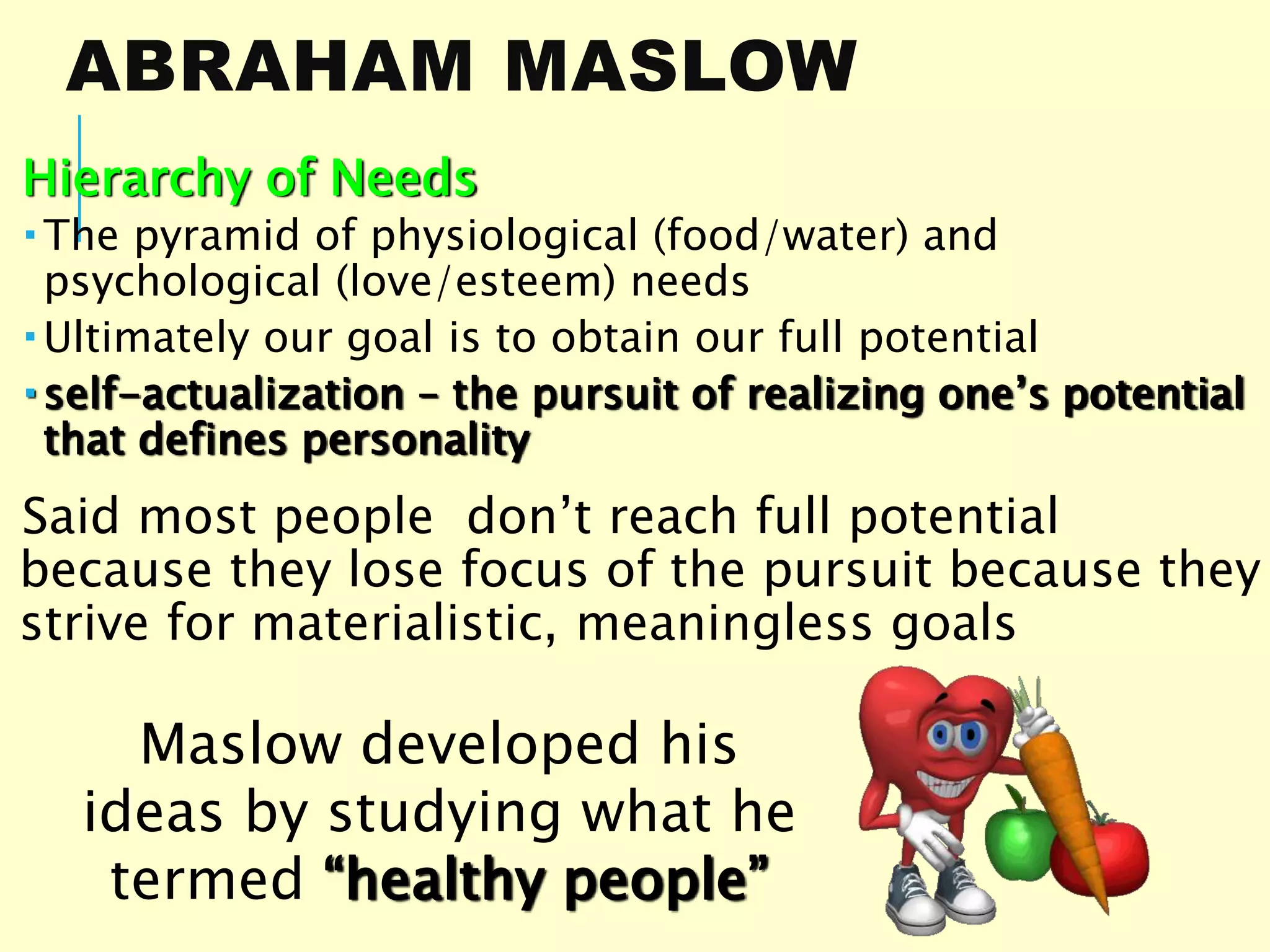
Hierarchy of Needs
 The pyramid of physiological (food/water) and
psychological (love/esteem) needs
 Ultimately our goal is to obtain our full potential
 self-actualization – the pursuit of realizing one’s potential
that defines personality
Said most people don’t reach full potential
because they lose focus of the pursuit because they
strive for materialistic, meaningless goals
Maslow developed his
ideas by studying what he
termed “healthy people”
Maslow’s
Hierarchy of Needs
SELF ACTUALIZED PEOPLE
•They are self aware and self accepting
•Open and spontaneous
•Loving and caring
•Not paralyzed by others’
opinions.
•They are secure in who they are.
•They enjoy work and see work as a
mission to fulfill
SELF-ACTUALIZED PEOPLE
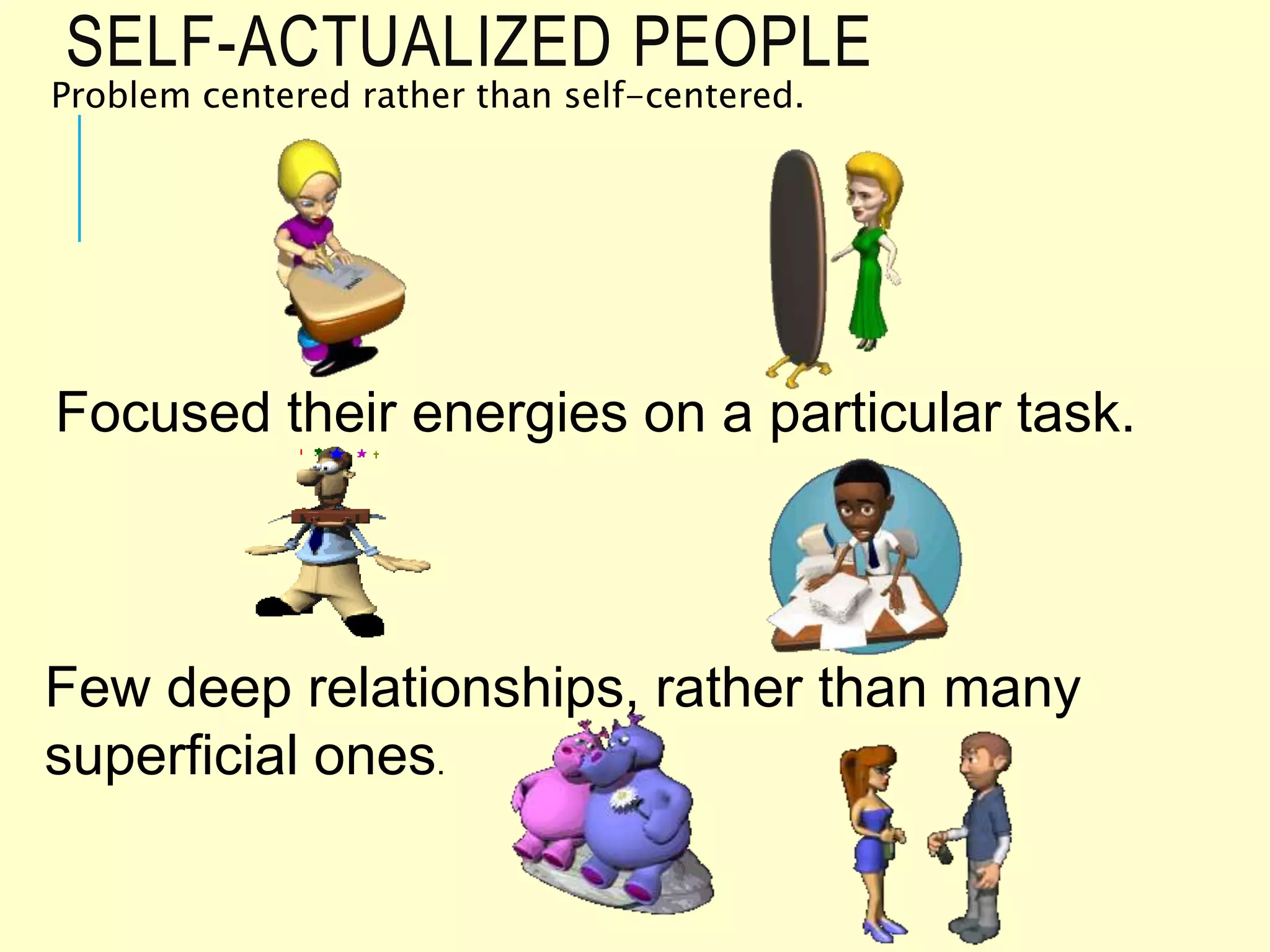
Problem centered rather than self-centered.
Focused their energies on a particular task.
Few deep relationships, rather than many
superficial ones.
CARL ROGERS: THE IMPORTANCE OF SELF
•We are like seeds
Need Water, Sun and
Nutrients to Grow into
a big healthy plant
We need acceptance,genuineness,
and empathy for us to grow.
Humanistic psychologist who agreed with
Masow
AGE
ACCEPTANCE
Unconditional Positive Regard:
An attitude of acceptance
regardless of
circumstances.
Accepting yourself or others
completely regardless of behavior at
that time.
Rogers believed that many parents display what
he called conditional positive regard
children only feel accepted when they are
pleasing others
GENUINENESS
Being open with
your own feelings.
•Dropping your
guard.
•Being transparent
and self-disclosing.
EMPATHY
Listening, sharing,
understanding and
mirroring feelings
and reflecting their
meanings.
ASSESSING PERSONALITY FROM A
HUMANISTIC PERSPECTIVE
Humanistic psychologists
evaluate your personality by
looking at your self-concept
(or self-identity)
 How YOU saw yourself and how you would personally answer
the question…
WHO AM I?
#1 - ask clients to describe their self-concept
#2 – ask them how they would ideally like to be
When your ideal self and your self-concept are alike -
you are generally happy.
How did Rogers
assess personality?
ASSESSING YOUR SELF-
CONCEPT
ME
Or my self-concept My Ideal Self
SELF-CONCEPT
Both Rogers and Maslow believed that your self-concept is at the
center of your personality.
•If our self concept is positive….
We tend to act and perceive the world
positively.
•If our self-concept is negative….
We fall short of our “ideal self” and
feel dissatisfied and unhappy
ROGERS SAID THAT OFTEN PEOPLE’S SELF-
CONCEPTS DON’T EXACTLY MATCH REALITY
Congruence
 a fairly accurate match between the self-concept and reality
Incongruence
 the difference between the self-concept and reality
Results of Incongruence
 can experience anxiety when self-concepts are threatened
 therefore people distort their experiences to hold on to their self-concept
SOMETIMES TO HOLD ON TO OUR
SELF-CONCEPT WE USE A SELF-
SERVING BIAS
A readiness to perceive oneself favorable.
• People accept more responsibility for
successes than failures.
•Most people see
themselves as better
than average.
DOES CULTURE PLAY A PART IN OUR
PERSONALITY AND OUR SELF-IDENTITY?
(ACCORDING TO HUMANISTIC
PSYCHOLOGISTS)
Individualism: giving priority to one’s own goals over group
goals. Defining your identity in terms of yourself.
•Collectivism: giving priority to the goals
of a group and defining your identity as part
of that group.
Which is really better?
“the squeaky wheel gets the grease”
“the quaking duck gets shot”
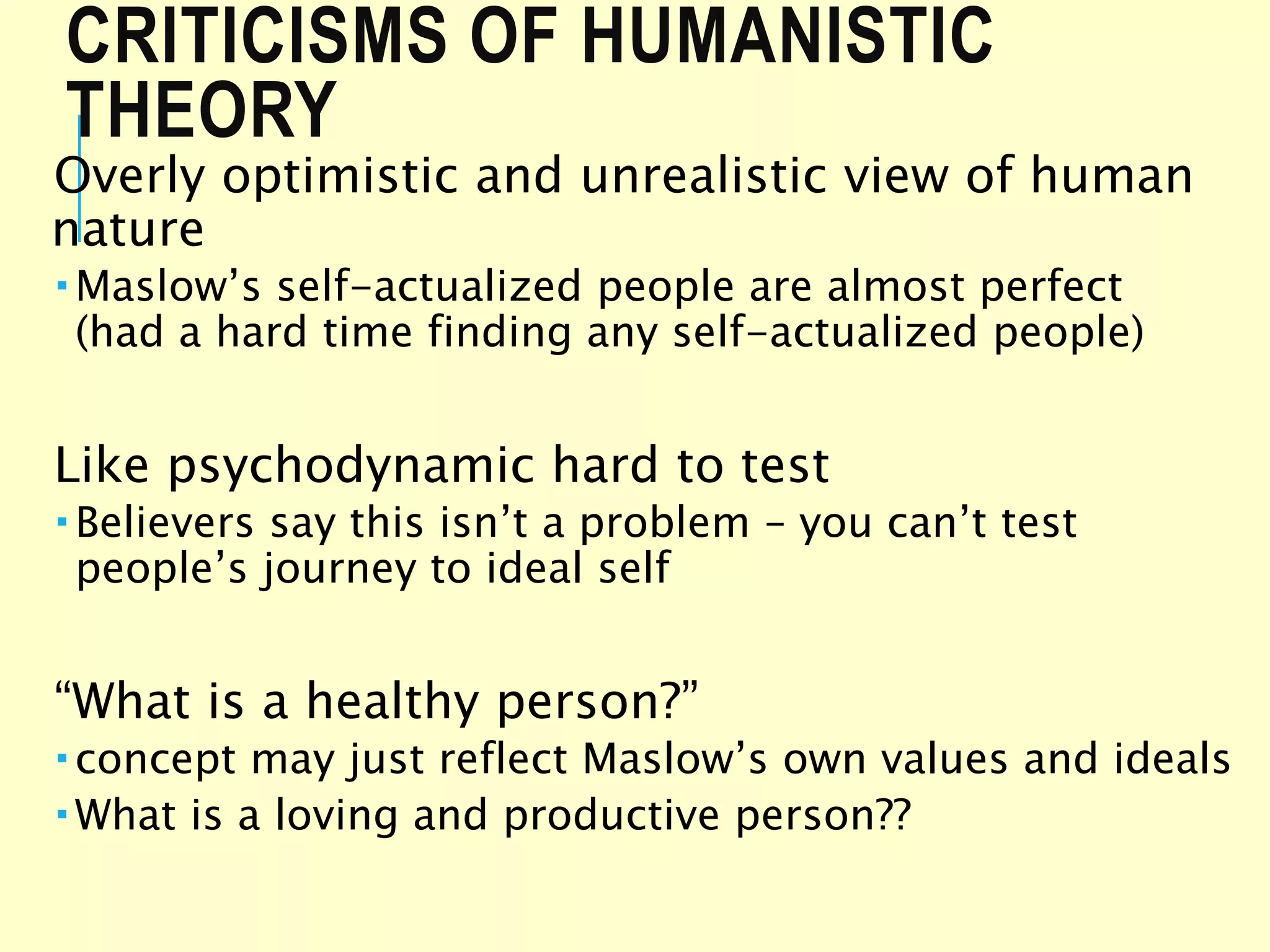
CRITICISMS OF HUMANISTIC
THEORY
Overly optimistic and unrealistic view of human
nature
 Maslow’s self-actualized people are almost perfect
(had a hard time finding any self-actualized people)
Like psychodynamic hard to test
 Believers say this isn’t a problem – you can’t test
people’s journey to ideal self
“What is a healthy person?”
 concept may just reflect Maslow’s own values and ideals
 What is a loving and productive person??

Humanistic Perspective.ppt

  • 1.
  • 2.
    HUMANISTIC PSYCHOLOGY Focus onconscious experiences Focus on an individuals own ability to change attitudes and behavior (free will) Focus on personal responsibility and growth (internal locus of control) Have an optimistic perspective on human nature Thought psychology should focus on human strengths and virtues
  • 3.
    ABRAHAM MASLOW Hierarchy ofNeeds  The pyramid of physiological (food/water) and psychological (love/esteem) needs  Ultimately our goal is to obtain our full potential  self-actualization – the pursuit of realizing one’s potential that defines personality Said most people don’t reach full potential because they lose focus of the pursuit because they strive for materialistic, meaningless goals Maslow developed his ideas by studying what he termed “healthy people”
  • 4.
  • 5.
    SELF ACTUALIZED PEOPLE •Theyare self aware and self accepting •Open and spontaneous •Loving and caring •Not paralyzed by others’ opinions. •They are secure in who they are. •They enjoy work and see work as a mission to fulfill
  • 6.
    SELF-ACTUALIZED PEOPLE Problem centeredrather than self-centered. Focused their energies on a particular task. Few deep relationships, rather than many superficial ones.
  • 7.
    CARL ROGERS: THEIMPORTANCE OF SELF •We are like seeds Need Water, Sun and Nutrients to Grow into a big healthy plant We need acceptance,genuineness, and empathy for us to grow. Humanistic psychologist who agreed with Masow AGE
  • 8.
    ACCEPTANCE Unconditional Positive Regard: Anattitude of acceptance regardless of circumstances. Accepting yourself or others completely regardless of behavior at that time. Rogers believed that many parents display what he called conditional positive regard children only feel accepted when they are pleasing others
  • 9.
    GENUINENESS Being open with yourown feelings. •Dropping your guard. •Being transparent and self-disclosing.
  • 10.
    EMPATHY Listening, sharing, understanding and mirroringfeelings and reflecting their meanings.
  • 11.
    ASSESSING PERSONALITY FROMA HUMANISTIC PERSPECTIVE Humanistic psychologists evaluate your personality by looking at your self-concept (or self-identity)  How YOU saw yourself and how you would personally answer the question… WHO AM I? #1 - ask clients to describe their self-concept #2 – ask them how they would ideally like to be When your ideal self and your self-concept are alike - you are generally happy. How did Rogers assess personality?
  • 12.
    ASSESSING YOUR SELF- CONCEPT ME Ormy self-concept My Ideal Self
  • 13.
    SELF-CONCEPT Both Rogers andMaslow believed that your self-concept is at the center of your personality. •If our self concept is positive…. We tend to act and perceive the world positively. •If our self-concept is negative…. We fall short of our “ideal self” and feel dissatisfied and unhappy
  • 14.
    ROGERS SAID THATOFTEN PEOPLE’S SELF- CONCEPTS DON’T EXACTLY MATCH REALITY Congruence  a fairly accurate match between the self-concept and reality Incongruence  the difference between the self-concept and reality Results of Incongruence  can experience anxiety when self-concepts are threatened  therefore people distort their experiences to hold on to their self-concept
  • 15.
    SOMETIMES TO HOLDON TO OUR SELF-CONCEPT WE USE A SELF- SERVING BIAS A readiness to perceive oneself favorable. • People accept more responsibility for successes than failures. •Most people see themselves as better than average.
  • 16.
    DOES CULTURE PLAYA PART IN OUR PERSONALITY AND OUR SELF-IDENTITY? (ACCORDING TO HUMANISTIC PSYCHOLOGISTS) Individualism: giving priority to one’s own goals over group goals. Defining your identity in terms of yourself. •Collectivism: giving priority to the goals of a group and defining your identity as part of that group. Which is really better? “the squeaky wheel gets the grease” “the quaking duck gets shot”
  • 17.
    CRITICISMS OF HUMANISTIC THEORY Overlyoptimistic and unrealistic view of human nature  Maslow’s self-actualized people are almost perfect (had a hard time finding any self-actualized people) Like psychodynamic hard to test  Believers say this isn’t a problem – you can’t test people’s journey to ideal self “What is a healthy person?”  concept may just reflect Maslow’s own values and ideals  What is a loving and productive person??