Human
Resource Management
  MBA (G)/MBA (B&F)
      MBA 201

               Yogesh Kumar
               Faculty (HR)
               Amity University Gurgaon
Why Study HR Management?

 It’s the people who run organizations.

 Need to manage their skills, abilities & aptitude.

 HRM is study about people i.e. how they are
hired, trained, compensated, motivated & maintained.
Meaning

• HRM is a management function that helps managers
  recruit, select, train and develop members of an organisation.

• A series of integrated decisions that form the employment
  relationship; their quality contributes to the ability of the
  organisations and the employee to achieve their objectives.

• HRM is the planning, organising, directing and controlling of
  the
  procurement, development, compensation, integration, mainte
  nance and separation of human resources to the end that
  individual, organisational and social objectives are
  accomplished.
Nature of HRM
• Pervasive force

• Action oriented
• Future oriented
• People oriented
• Comprehensive function
• Individual oriented
• Inter disciplinary functions
• Continuous function
• Staff function
• Development oriented
Scope of HRM

The scope of HRM is very wide. It is thus divided into three
  categories:

A. Personnel aspect
B. Welfare aspect
C. Industrial Relation Aspect
A.     Personnel Aspect includes

•   HR Planning
•   Recruitment
•   Selection
•   Placement
•   Transfer
•   Promotion
•   Training and Development
•   Remuneration
•   Incentives
B.     Welfare Aspect includes

• Working Conditions
• Amenities such as Canteens, Creches, Rest rooms, Lunch
  rooms.
• Housing
• Transport
• Medical Assistance
• Education
• Health and Safety
• Recreation facilities
C.     Industrial Relation Aspect includes

•   Union Management Relations
•   Joint Consultation
•   Collective Bargaining
•   Grievance Redressal
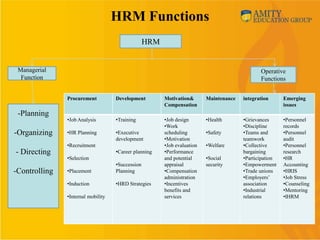
HRM Functions
                                                  HRM


 Managerial                                                                                    Operative
  Function                                                                                     Functions


               Procurement          Development         Motivation&       Maintenance   integration      Emerging
                                                        Compensation                                     issues
 -Planning
               •Job Analysis        •Training           •Job design       •Health       •Grievances      •Personnel
                                                        •Work                           •Discipline      records
-Organizing    •HR Planning         •Executive          scheduling        •Safety       •Teams and       •Personnel
                                    development         •Motivation                     teamwork         audit
               •Recruitment                             •Job evaluation   •Welfare      •Collective      •Personnel
- Directing                         •Career planning    •Performance                    bargaining       research
               •Selection                               and potential     •Social       •Participation   •HR
                                    •Succession         appraisal         security      •Empowerment     Accounting
-Controlling   •Placement           Planning            •Compensation                   •Trade unions    •HRIS
                                                        administration                  •Employers’      •Job Stress
               •Induction           •HRD Strategies     •Incentives                     association      •Counseling
                                                        benefits and                    •Industrial      •Mentoring
               •Internal mobility                       services                        relations        •IHRM
HRM MODELS
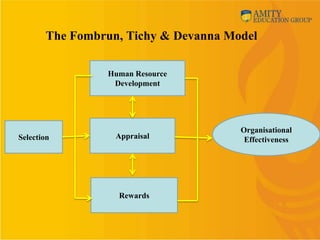
The Fombrun, Tichy & Devanna Model

                Human Resource
                 Development


                                      Organisational
Selection         Appraisal            Effectiveness


                  Rewards
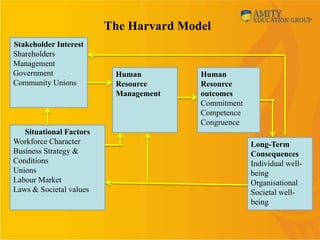
The Harvard Model
Stakeholder Interest
Shareholders
Management
Government                Human         Human
Community Unions          Resource      Resource
                          Management    outcomes
                                        Commitment
                                        Competence
                                        Congruence
   Situational Factors
Workforce Character                                  Long-Term
Business Strategy &                                  Consequences
Conditions                                           Individual well-
Unions                                               being
Labour Market                                        Organisational
Laws & Societal values                               Societal well-
                                                     being
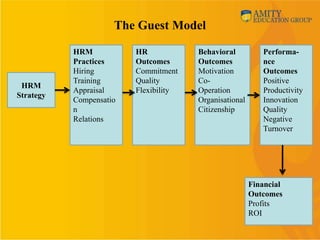
The Guest Model

           HRM           HR            Behavioral          Performa-
           Practices     Outcomes      Outcomes            nce
           Hiring        Commitment    Motivation          Outcomes
           Training      Quality       Co-                 Positive
 HRM
           Appraisal     Flexibility   Operation           Productivity
Strategy
           Compensatio                 Organisational      Innovation
           n                           Citizenship         Quality
           Relations                                       Negative
                                                           Turnover


                                                        Financial
                                                        Outcomes
                                                        Profits
                                                        ROI
The Warwick Model of HRM
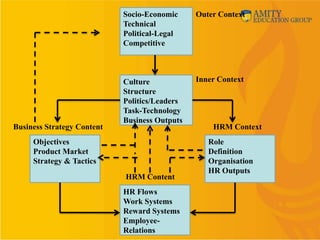
Socio-Economic     Outer Context
                            Technical
                            Political-Legal
                            Competitive


                            Culture            Inner Context
                            Structure
                            Politics/Leaders
                            Task-Technology
                            Business Outputs
Business Strategy Content                          HRM Context
     Objectives                                   Role
     Product Market                               Definition
     Strategy & Tactics                           Organisation
                                                  HR Outputs
                            HRM Content
                            HR Flows
                            Work Systems
                            Reward Systems
                            Employee-
                            Relations
Concept of Personnel Management, HRD &
                  SHRM
• Personnel Management - Personnel Management is basically
  an administrative recordkeeping function, at the operational
  level.
• Personnel Management attempts to maintain fair terms and
  conditions of employment, while at the same time, efficiently
  managing personnel activities for individual departments etc.
• It is assumed that the outcomes from providing justice and
  achieving efficiency in the management of personnel activities
  will result ultimately in achieving organisational success.
• Human Resource Development in the organization context is
  a process by which the employees of an organization are
  helped, in a continuous and planned way to:
a.   Acquire capabilities required to perform various functions associated with
     their present or expected future roles.
b.   Develop their general capabilities as individuals and discover and exploit
     their own inner potentials for their own and organizational development
     purpose.
c.   Develop an organizational culture in which supervisor-subordinate
     relationship, teamwork, and collaborations among sub-units are strong and
     contribute to the professional well being, motivation, and pride of
     employees.
• Strategic HRM is a process that involves the use of
  overarching approaches to the development of HR
  strategies, which are integrated vertically with the business
  strategy and horizontally with one another.
• Linking HRM with strategic goals and objectives to improve
  business performance and develop organizational cultures
  fostering innovation and flexibility.
HRM Environment

External factors includes:
a) Economic factors (Customers, Suppliers, competitors & Globalization)
b) Political & Legislative factors ( The Legislative, the Employers, & The
    Judiciary)
c) Technological Factors
d) Social & Cultural factors
e) Demographic factors
Internal factors include:
a) Shareholders
b) Customers
c) Suppliers
d) Government
e) Public
f) Unions
g) The employees
h) Top Management
Changing Role/Challenges in HRM

•   The Management of Workplace Diversity
•   Planning a Mentoring Program
•   Organizing Talents Strategically
•   Leading the Talk
•   Control and Measure Results
•   Motivational Approaches
•   Managing Gain-sharing
•   Managing Executive Information Systems
Any Queries???

Hrm module i

  • 1.
    Human Resource Management MBA (G)/MBA (B&F) MBA 201 Yogesh Kumar Faculty (HR) Amity University Gurgaon
  • 2.
    Why Study HRManagement?  It’s the people who run organizations.  Need to manage their skills, abilities & aptitude.  HRM is study about people i.e. how they are hired, trained, compensated, motivated & maintained.
  • 3.
    Meaning • HRM isa management function that helps managers recruit, select, train and develop members of an organisation. • A series of integrated decisions that form the employment relationship; their quality contributes to the ability of the organisations and the employee to achieve their objectives. • HRM is the planning, organising, directing and controlling of the procurement, development, compensation, integration, mainte nance and separation of human resources to the end that individual, organisational and social objectives are accomplished.
  • 4.
    Nature of HRM •Pervasive force • Action oriented • Future oriented • People oriented • Comprehensive function • Individual oriented • Inter disciplinary functions • Continuous function • Staff function • Development oriented
  • 5.
    Scope of HRM Thescope of HRM is very wide. It is thus divided into three categories: A. Personnel aspect B. Welfare aspect C. Industrial Relation Aspect
  • 6.
    A. Personnel Aspect includes • HR Planning • Recruitment • Selection • Placement • Transfer • Promotion • Training and Development • Remuneration • Incentives
  • 7.
    B. Welfare Aspect includes • Working Conditions • Amenities such as Canteens, Creches, Rest rooms, Lunch rooms. • Housing • Transport • Medical Assistance • Education • Health and Safety • Recreation facilities
  • 8.
    C. Industrial Relation Aspect includes • Union Management Relations • Joint Consultation • Collective Bargaining • Grievance Redressal
  • 9.
    HRM Functions HRM Managerial Operative Function Functions Procurement Development Motivation& Maintenance integration Emerging Compensation issues -Planning •Job Analysis •Training •Job design •Health •Grievances •Personnel •Work •Discipline records -Organizing •HR Planning •Executive scheduling •Safety •Teams and •Personnel development •Motivation teamwork audit •Recruitment •Job evaluation •Welfare •Collective •Personnel - Directing •Career planning •Performance bargaining research •Selection and potential •Social •Participation •HR •Succession appraisal security •Empowerment Accounting -Controlling •Placement Planning •Compensation •Trade unions •HRIS administration •Employers’ •Job Stress •Induction •HRD Strategies •Incentives association •Counseling benefits and •Industrial •Mentoring •Internal mobility services relations •IHRM
  • 10.
  • 11.
    The Fombrun, Tichy& Devanna Model Human Resource Development Organisational Selection Appraisal Effectiveness Rewards
  • 12.
    The Harvard Model StakeholderInterest Shareholders Management Government Human Human Community Unions Resource Resource Management outcomes Commitment Competence Congruence Situational Factors Workforce Character Long-Term Business Strategy & Consequences Conditions Individual well- Unions being Labour Market Organisational Laws & Societal values Societal well- being
  • 13.
    The Guest Model HRM HR Behavioral Performa- Practices Outcomes Outcomes nce Hiring Commitment Motivation Outcomes Training Quality Co- Positive HRM Appraisal Flexibility Operation Productivity Strategy Compensatio Organisational Innovation n Citizenship Quality Relations Negative Turnover Financial Outcomes Profits ROI
  • 14.
  • 15.
    Socio-Economic Outer Context Technical Political-Legal Competitive Culture Inner Context Structure Politics/Leaders Task-Technology Business Outputs Business Strategy Content HRM Context Objectives Role Product Market Definition Strategy & Tactics Organisation HR Outputs HRM Content HR Flows Work Systems Reward Systems Employee- Relations
  • 16.
    Concept of PersonnelManagement, HRD & SHRM • Personnel Management - Personnel Management is basically an administrative recordkeeping function, at the operational level. • Personnel Management attempts to maintain fair terms and conditions of employment, while at the same time, efficiently managing personnel activities for individual departments etc. • It is assumed that the outcomes from providing justice and achieving efficiency in the management of personnel activities will result ultimately in achieving organisational success.
  • 17.
    • Human ResourceDevelopment in the organization context is a process by which the employees of an organization are helped, in a continuous and planned way to: a. Acquire capabilities required to perform various functions associated with their present or expected future roles. b. Develop their general capabilities as individuals and discover and exploit their own inner potentials for their own and organizational development purpose. c. Develop an organizational culture in which supervisor-subordinate relationship, teamwork, and collaborations among sub-units are strong and contribute to the professional well being, motivation, and pride of employees.
  • 18.
    • Strategic HRMis a process that involves the use of overarching approaches to the development of HR strategies, which are integrated vertically with the business strategy and horizontally with one another. • Linking HRM with strategic goals and objectives to improve business performance and develop organizational cultures fostering innovation and flexibility.
  • 19.
    HRM Environment External factorsincludes: a) Economic factors (Customers, Suppliers, competitors & Globalization) b) Political & Legislative factors ( The Legislative, the Employers, & The Judiciary) c) Technological Factors d) Social & Cultural factors e) Demographic factors Internal factors include: a) Shareholders b) Customers c) Suppliers d) Government e) Public f) Unions g) The employees h) Top Management
  • 20.
    Changing Role/Challenges inHRM • The Management of Workplace Diversity • Planning a Mentoring Program • Organizing Talents Strategically • Leading the Talk • Control and Measure Results • Motivational Approaches • Managing Gain-sharing • Managing Executive Information Systems
  • 21.