
HRM 4133
PERFORMANCE
MANAGEMENT
Group Presentation
Group - 02
GROUP MEMBERS
Miss. K. Gowsiga 2012/BAD/056
Miss. S. Jency 2012/BAD/075
Miss. T. Mithula 2012/BAD/136
Mr. R. Vivek 2012/BAD/305
Mr. W. Parasuraman 2012/BAD/168
DEFINING PERFORMANCE
MANAGEMENT
AND CHOOSING
A MEASUREMENT
APPROACH
OVERVIEW
 Defining Performance.
 Determinants of Performance.
 Performance Dimensions.
 Approaches to Measuring Performance.
DEFINING PERFORMANCE
Performance is,
 Behavior
 What employees do
Performance is NOT,
 Results or Outcomes
 What employees produce
BEHAVIORS LABELED AS
PERFORMANCE
Evaluative
 Negative
 Neutral
 Positive
Multidimensional
 Many different kinds of behaviors
 Advance or hinder organizational goals
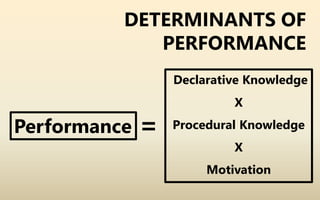
DETERMINANTS OF
PERFORMANCE
Declarative Knowledge
X
Procedural Knowledge
X
Motivation
Performance =
DECLARATIVE KNOWLEDGE
 Information about,
 Facts
 Labels
 Principles
 Goals
 Understanding of task requirements.
PROCEDURAL KNOWLEDGE
 Knowing
 What to do
 How to do it
 Skills
 Cognitive
 Physical
 Perceptual
 Motor
 Interpersonal
MOTIVATION
 Choices
 Expenditure of effort
 Level of effort
 Persistence of effort
 Deliberate practice leads to excellence
DELIBERATE PRACTICE
 Approach performance with goal of getting
better and better
 Focus on performance
 What is happening?
 Why?
 Seek feedback from expert sources
 Build mental models of job, situation, and
organization
 Repeat first four steps on an ongoing basis
IMPLICATIONS FOR
ADDRESSING PERFORMANCE
PROBLEMS
 Managers need information to accurately
identify source(s) of performance
problems
 Performance management systems must
 Measure performance
 Provide information on source(s) of problems
FACTORS INFLUENCING
DETERMINANTS OF PERFORMANCE
 Individual characteristics
 Procedural knowledge
 Declarative knowledge
 Motivation
 HR practices
 Work environment
PERFORMANCE DIMENSIONS:
TYPES OF MULTIDIMENSIONAL
BEHAVIORS
 Task performance
 Contextual performance
 Prosaically behaviors
 Organizational citizenship
TASK PERFORMANCE
Activities that
 Transform raw materials
 Help with the transformation process
 Replenishing
 Distributing
 Supporting
CONTEXTUAL PERFORMANCE
Behaviors that
 Contribute to the organization’s effectiveness
 Provide a good environment in which task
performance can occur
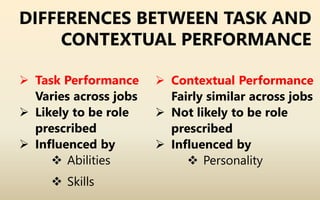
DIFFERENCES BETWEEN TASK AND
CONTEXTUAL PERFORMANCE
 Task Performance
Varies across jobs
 Likely to be role
prescribed
 Influenced by
 Abilities
 Skills
 Contextual Performance
Fairly similar across jobs
 Not likely to be role
prescribed
 Influenced by
 Personality
WHY INCLUDE TASK AND
CONTEXTUAL
PERFORMANCE DIMENSIONS?
 Global competition
 Customer service
 Teamwork
 Employee perceptions of PM
 Supervisor views
 Cultural differences
VOICE BEHAVIOR
 Behavior that emphasizes expression of
constructive challenge with the goal to
improve rather than merely criticize
 Challenges the status quo in a positive way
 Makes innovative suggestions for change
 Recommends modifications to standard
procedures
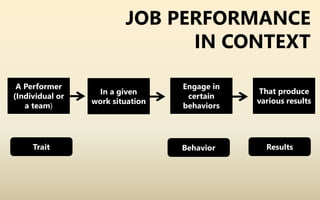
A Performer
(Individual or
a team)
In a given
work situation
Engage in
certain
behaviors
That produce
various results
Trait Behavior Results
JOB PERFORMANCE
IN CONTEXT
APPROACHES TO MEASURING
PERFORMANCE
 Behavior Approach
Emphasizes how employees do the job
 Results Approach
Emphasizes what employees produce
 Trait Approach
• Emphasizes individual traits of employees
BEHAVIOR APPROACH
 Appropriate if
 Employees take a long time to achieve desired
outcomes
 Link between behaviors and results is not obvious
 Outcomes occur in the distant future
 Poor results are due to causes beyond the
performer’s control
 Not appropriate if
 Above conditions are not present
RESULTS APPROACH
 Advantages of results approach
 Less time
 Lower cost
 Data appear objective
 Most appropriate when
 Workers skilled in necessary behaviors
 Behaviors and results obviously related
 Consistent improvement in results over time
 Many ways to do the job right
TRAIT APPROACH
 Most appropriate when:
 Emphasis on individual
 Evaluate stable traits (i.e., cognitive abilities, personality)
 Positive relationship between abilities, personality traits,
and desirable work-related behaviors
 Appropriate if structural changes planned for organization
 Disadvantages
 Improvement not under individual’s control
 Trait may not lead to desired behaviors or results
THANK YOU
for your valuable time!

Performance Management

  • 1.
  • 2.
    GROUP MEMBERS Miss. K.Gowsiga 2012/BAD/056 Miss. S. Jency 2012/BAD/075 Miss. T. Mithula 2012/BAD/136 Mr. R. Vivek 2012/BAD/305 Mr. W. Parasuraman 2012/BAD/168
  • 3.
  • 4.
    OVERVIEW  Defining Performance. Determinants of Performance.  Performance Dimensions.  Approaches to Measuring Performance.
  • 5.
    DEFINING PERFORMANCE Performance is, Behavior  What employees do Performance is NOT,  Results or Outcomes  What employees produce
  • 6.
    BEHAVIORS LABELED AS PERFORMANCE Evaluative Negative  Neutral  Positive Multidimensional  Many different kinds of behaviors  Advance or hinder organizational goals
  • 7.
  • 8.
    DECLARATIVE KNOWLEDGE  Informationabout,  Facts  Labels  Principles  Goals  Understanding of task requirements.
  • 9.
    PROCEDURAL KNOWLEDGE  Knowing What to do  How to do it  Skills  Cognitive  Physical  Perceptual  Motor  Interpersonal
  • 10.
    MOTIVATION  Choices  Expenditureof effort  Level of effort  Persistence of effort  Deliberate practice leads to excellence
  • 11.
    DELIBERATE PRACTICE  Approachperformance with goal of getting better and better  Focus on performance  What is happening?  Why?  Seek feedback from expert sources  Build mental models of job, situation, and organization  Repeat first four steps on an ongoing basis
  • 12.
    IMPLICATIONS FOR ADDRESSING PERFORMANCE PROBLEMS Managers need information to accurately identify source(s) of performance problems  Performance management systems must  Measure performance  Provide information on source(s) of problems
  • 13.
    FACTORS INFLUENCING DETERMINANTS OFPERFORMANCE  Individual characteristics  Procedural knowledge  Declarative knowledge  Motivation  HR practices  Work environment
  • 14.
    PERFORMANCE DIMENSIONS: TYPES OFMULTIDIMENSIONAL BEHAVIORS  Task performance  Contextual performance  Prosaically behaviors  Organizational citizenship
  • 15.
    TASK PERFORMANCE Activities that Transform raw materials  Help with the transformation process  Replenishing  Distributing  Supporting
  • 16.
    CONTEXTUAL PERFORMANCE Behaviors that Contribute to the organization’s effectiveness  Provide a good environment in which task performance can occur
  • 17.
    DIFFERENCES BETWEEN TASKAND CONTEXTUAL PERFORMANCE  Task Performance Varies across jobs  Likely to be role prescribed  Influenced by  Abilities  Skills  Contextual Performance Fairly similar across jobs  Not likely to be role prescribed  Influenced by  Personality
  • 18.
    WHY INCLUDE TASKAND CONTEXTUAL PERFORMANCE DIMENSIONS?  Global competition  Customer service  Teamwork  Employee perceptions of PM  Supervisor views  Cultural differences
  • 19.
    VOICE BEHAVIOR  Behaviorthat emphasizes expression of constructive challenge with the goal to improve rather than merely criticize  Challenges the status quo in a positive way  Makes innovative suggestions for change  Recommends modifications to standard procedures
  • 20.
    A Performer (Individual or ateam) In a given work situation Engage in certain behaviors That produce various results Trait Behavior Results JOB PERFORMANCE IN CONTEXT
  • 21.
    APPROACHES TO MEASURING PERFORMANCE Behavior Approach Emphasizes how employees do the job  Results Approach Emphasizes what employees produce  Trait Approach • Emphasizes individual traits of employees
  • 22.
    BEHAVIOR APPROACH  Appropriateif  Employees take a long time to achieve desired outcomes  Link between behaviors and results is not obvious  Outcomes occur in the distant future  Poor results are due to causes beyond the performer’s control  Not appropriate if  Above conditions are not present
  • 23.
    RESULTS APPROACH  Advantagesof results approach  Less time  Lower cost  Data appear objective  Most appropriate when  Workers skilled in necessary behaviors  Behaviors and results obviously related  Consistent improvement in results over time  Many ways to do the job right
  • 24.
    TRAIT APPROACH  Mostappropriate when:  Emphasis on individual  Evaluate stable traits (i.e., cognitive abilities, personality)  Positive relationship between abilities, personality traits, and desirable work-related behaviors  Appropriate if structural changes planned for organization  Disadvantages  Improvement not under individual’s control  Trait may not lead to desired behaviors or results
  • 25.
    THANK YOU for yourvaluable time!