SUBMITTED BY :
Haseena Bibi
04-2599-2015
M.Sc (Extension Education)
Presentation on “Human Resourse Accounting”
HUMAN RESOURCE ACCOUNTING
CONTENTS
• Introduction
• Definitions
• Objectives
• Advantages
• Position of HRA in India
• Need &Importance of HRA
• Limitations
• Measurement in HRA
• Methods of HRA
• Summary
Introduction
Process of identifying and measuring data about
human resources and communicating this information
to interested parties.
Quantification of the economic value of the people in
an organization.
Art of valuing, recording and presenting systematically
the worth of human resources in the books of account
of an organization.
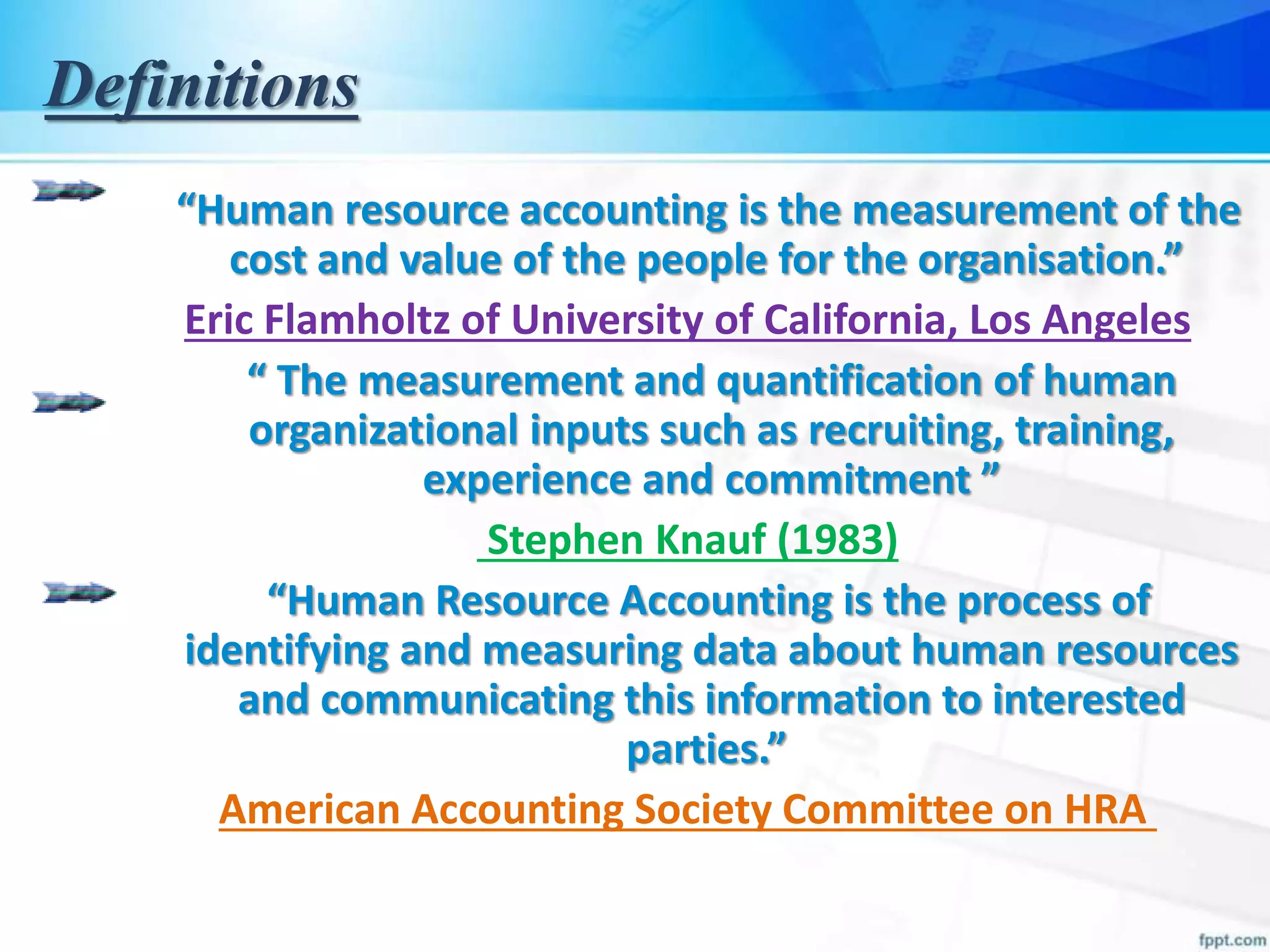
Definitions
“Human resource accounting is the measurement of the
cost and value of the people for the organisation.”
Eric Flamholtz of University of California, Los Angeles
“ The measurement and quantification of human
organizational inputs such as recruiting, training,
experience and commitment ”
Stephen Knauf (1983)
“Human Resource Accounting is the process of
identifying and measuring data about human resources
and communicating this information to interested
parties.”
American Accounting Society Committee on HRA
Objectives
Improve management by analyzing investment in HR
Consider people as its asset
Attract and retain qualified people
Profile the organization in financial terms
To have an analysis of the human asset
To aid in the development of management principles, and proper
decision making for the future
It provides a sound and effective basis of human asset control, that
is, whether the asset is appreciated, depleted or conserved
Advantages
Throws light on the strengths and weaknesses of the
existing workforce in an organization.
Helps management in recruitment planning.
Offers valuable feedback regarding the effectiveness of
HR policies and practices.
Helps potential investors judge a company better on the
strength of the human assets utilized therein .
Organizations can find out how much they earn from an
individual.
Provides a sound and effective basis for human asset
control.
Reflects the extent to which organization contributes to
society’s human capital by investing in its development.
Position of HRA in India
In India, very few companies use HRA.
HRA is not compulsory in India.
Infosys Technologies and BPL are the leading
companies in India, which use HRA.
HRA reports give useful information to the
company management, employees and investors.
Need &Importance of HRA
It develops effective managerial
decision making.
It enhances the quality of
management.
It prevents misuse of human
resources.
It helps the efficient allocation of
resources.
It increases human asset
productivity.
It improves their morale,
cooperation, job satisfaction and
creativity.
Cont…
It influences the individual behavior, attitude and
thinking in desired direction
It helps in long term investment decisions.
It provides good basis of human asset control.
It helps the development of management principles.
It ensures good monitoring of effective uses of human
resources.
It develops human efficiency.
Limitations
No specific procedure for finding cost and value of human
resources of an organization.
Form and manner of including HRA value in the financial
statement is not clear.
Employee with a comparatively low value may feel
discouraged.
Tax laws do not recognize human beings as assets.
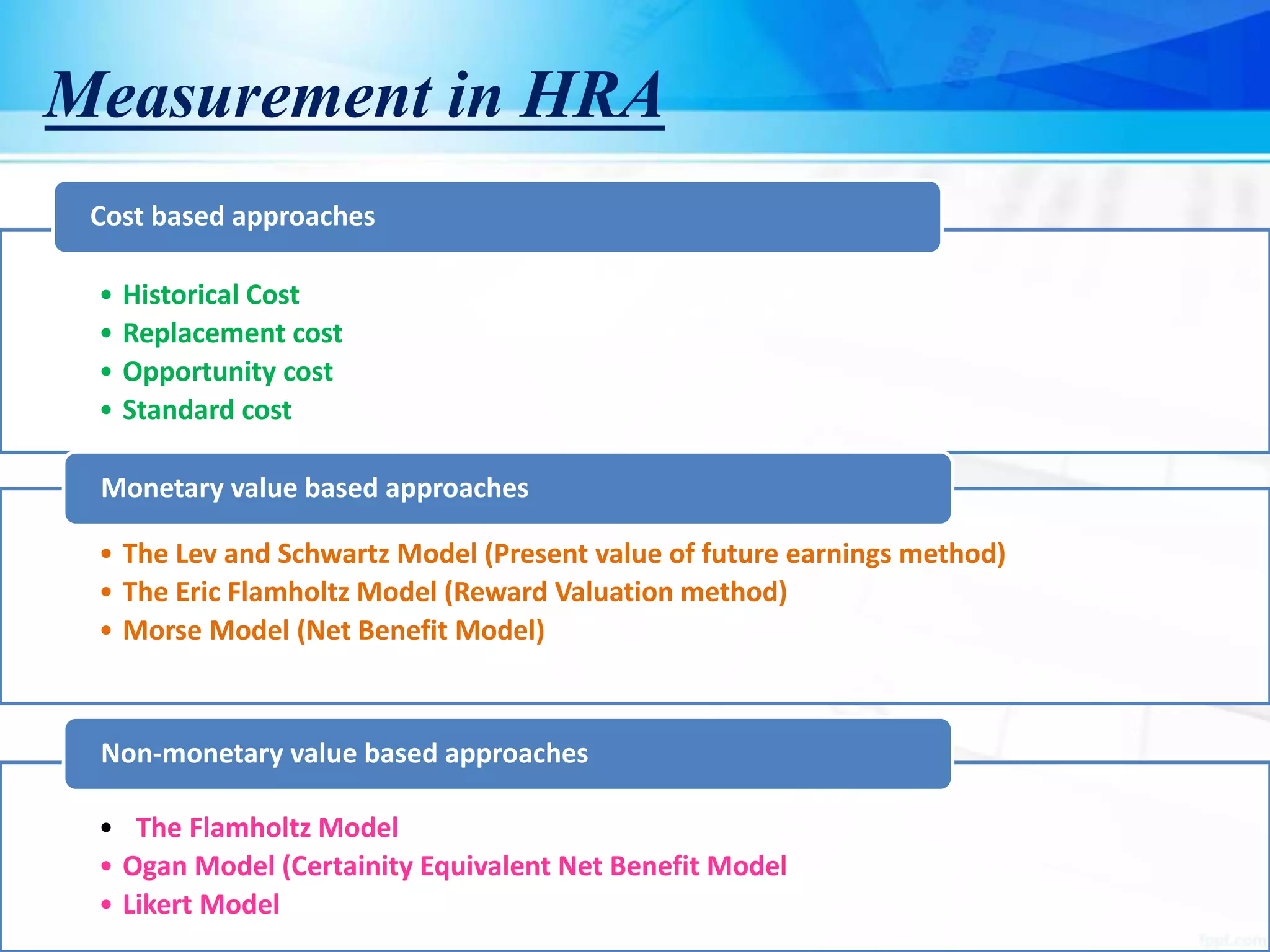
Measurement in HRA
• Historical Cost
• Replacement cost
• Opportunity cost
• Standard cost
Cost based approaches
• The Lev and Schwartz Model (Present value of future earnings method)
• The Eric Flamholtz Model (Reward Valuation method)
• Morse Model (Net Benefit Model)
Monetary value based approaches
• The Flamholtz Model
• Ogan Model (Certainity Equivalent Net Benefit Model
• Likert Model
Non-monetary value based approaches
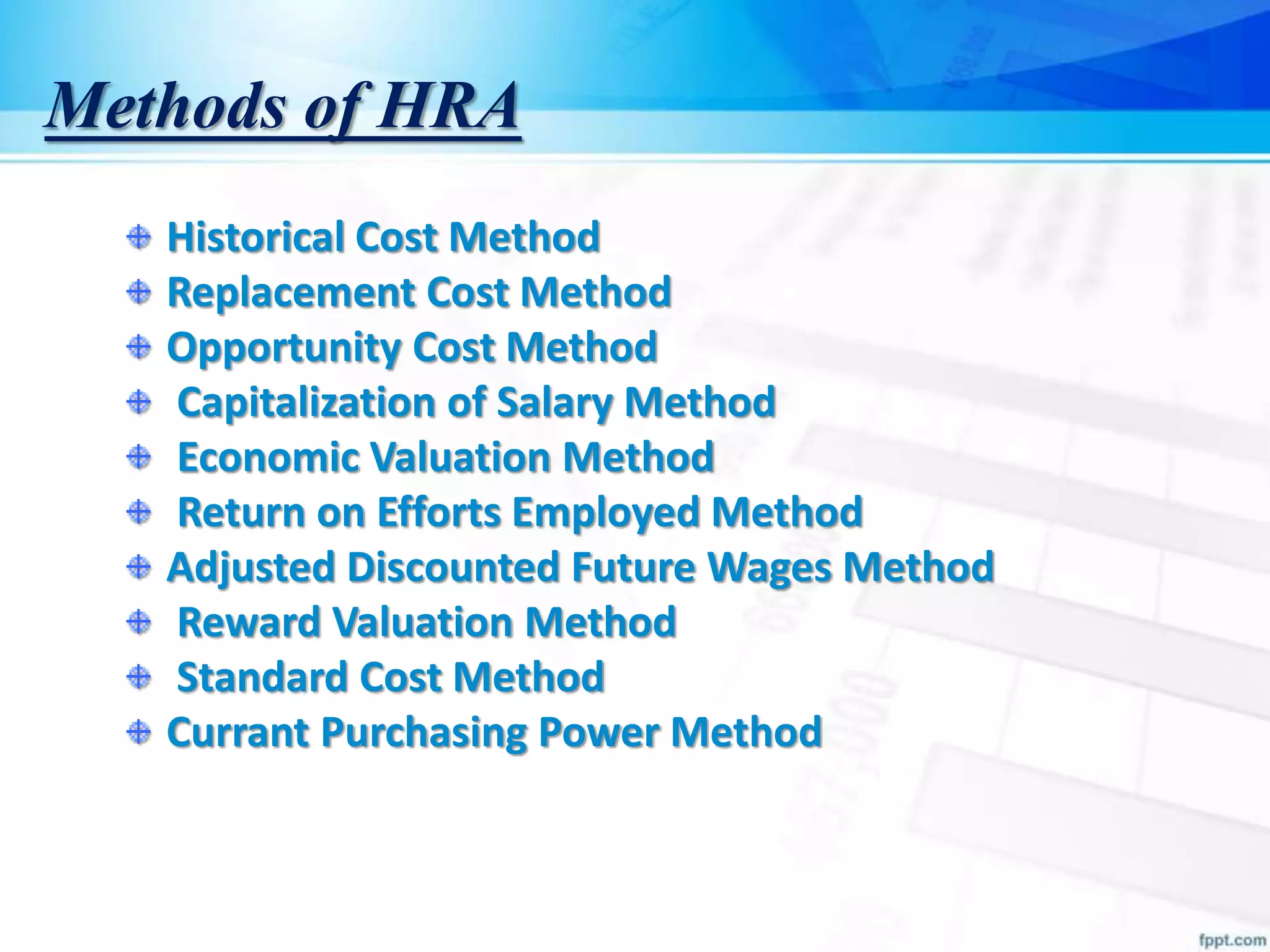
Methods of HRA
Historical Cost Method
Replacement Cost Method
Opportunity Cost Method
Capitalization of Salary Method
Economic Valuation Method
Return on Efforts Employed Method
Adjusted Discounted Future Wages Method
Reward Valuation Method
Standard Cost Method
Currant Purchasing Power Method
Summary
• Human resource accounting provides quantitative
information about the value of human assets, which helps
the top management to take decisions regarding the
adequacy of human resources.
• Based on these insights, further steps for recruitment and
selection of personnel are taken. Outside the organization,
quantitative data on the most valuable asset has an impact
on the decisions of the investors, clients, and potential staff
of the company.
• When proper valuation and accounting of the human
resources is not done then the management may not be able
to recognize the negative effects of certain programmes,
which are aimed at improving profits in the short run. If not
recognized on time, these programmes could lead to a fall in
productivity levels, high turnover rate existing employees.
Any Question
???
Human Resource Accounting

Human Resource Accounting

  • 2.
    SUBMITTED BY : HaseenaBibi 04-2599-2015 M.Sc (Extension Education) Presentation on “Human Resourse Accounting”
  • 3.
  • 4.
    CONTENTS • Introduction • Definitions •Objectives • Advantages • Position of HRA in India • Need &Importance of HRA • Limitations • Measurement in HRA • Methods of HRA • Summary
  • 5.
    Introduction Process of identifyingand measuring data about human resources and communicating this information to interested parties. Quantification of the economic value of the people in an organization. Art of valuing, recording and presenting systematically the worth of human resources in the books of account of an organization.
  • 6.
    Definitions “Human resource accountingis the measurement of the cost and value of the people for the organisation.” Eric Flamholtz of University of California, Los Angeles “ The measurement and quantification of human organizational inputs such as recruiting, training, experience and commitment ” Stephen Knauf (1983) “Human Resource Accounting is the process of identifying and measuring data about human resources and communicating this information to interested parties.” American Accounting Society Committee on HRA
  • 7.
    Objectives Improve management byanalyzing investment in HR Consider people as its asset Attract and retain qualified people Profile the organization in financial terms To have an analysis of the human asset To aid in the development of management principles, and proper decision making for the future It provides a sound and effective basis of human asset control, that is, whether the asset is appreciated, depleted or conserved
  • 8.
    Advantages Throws light onthe strengths and weaknesses of the existing workforce in an organization. Helps management in recruitment planning. Offers valuable feedback regarding the effectiveness of HR policies and practices. Helps potential investors judge a company better on the strength of the human assets utilized therein . Organizations can find out how much they earn from an individual. Provides a sound and effective basis for human asset control. Reflects the extent to which organization contributes to society’s human capital by investing in its development.
  • 9.
    Position of HRAin India In India, very few companies use HRA. HRA is not compulsory in India. Infosys Technologies and BPL are the leading companies in India, which use HRA. HRA reports give useful information to the company management, employees and investors.
  • 11.
    Need &Importance ofHRA It develops effective managerial decision making. It enhances the quality of management. It prevents misuse of human resources. It helps the efficient allocation of resources. It increases human asset productivity. It improves their morale, cooperation, job satisfaction and creativity.
  • 12.
    Cont… It influences theindividual behavior, attitude and thinking in desired direction It helps in long term investment decisions. It provides good basis of human asset control. It helps the development of management principles. It ensures good monitoring of effective uses of human resources. It develops human efficiency.
  • 13.
    Limitations No specific procedurefor finding cost and value of human resources of an organization. Form and manner of including HRA value in the financial statement is not clear. Employee with a comparatively low value may feel discouraged. Tax laws do not recognize human beings as assets.
  • 14.
    Measurement in HRA •Historical Cost • Replacement cost • Opportunity cost • Standard cost Cost based approaches • The Lev and Schwartz Model (Present value of future earnings method) • The Eric Flamholtz Model (Reward Valuation method) • Morse Model (Net Benefit Model) Monetary value based approaches • The Flamholtz Model • Ogan Model (Certainity Equivalent Net Benefit Model • Likert Model Non-monetary value based approaches
  • 15.
    Methods of HRA HistoricalCost Method Replacement Cost Method Opportunity Cost Method Capitalization of Salary Method Economic Valuation Method Return on Efforts Employed Method Adjusted Discounted Future Wages Method Reward Valuation Method Standard Cost Method Currant Purchasing Power Method
  • 16.
    Summary • Human resourceaccounting provides quantitative information about the value of human assets, which helps the top management to take decisions regarding the adequacy of human resources. • Based on these insights, further steps for recruitment and selection of personnel are taken. Outside the organization, quantitative data on the most valuable asset has an impact on the decisions of the investors, clients, and potential staff of the company. • When proper valuation and accounting of the human resources is not done then the management may not be able to recognize the negative effects of certain programmes, which are aimed at improving profits in the short run. If not recognized on time, these programmes could lead to a fall in productivity levels, high turnover rate existing employees.
  • 17.