HUMAN
BLOOD
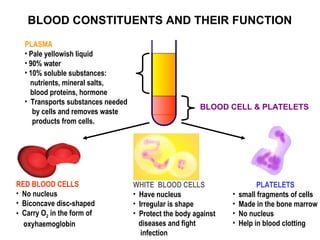
BLOOD CONSTITUENTS AND THEIR FUNCTION
PLASMA
• Pale yellowish liquid
• 90% water
• 10% soluble substances:
nutrients, mineral salts,
blood proteins, hormone
• Transports substances needed
by cells and removes waste
products from cells.

RED BLOOD CELLS
• No nucleus
• Biconcave disc-shaped
• Carry O2 in the form of
oxyhaemoglobin

BLOOD CELL & PLATELETS

WHITE BLOOD CELLS
• Have nucleus
• Irregular is shape
• Protect the body against
diseases and fight
infection

•
•
•
•

PLATELETS
small fragments of cells
Made in the bone marrow
No nucleus
Help in blood clotting
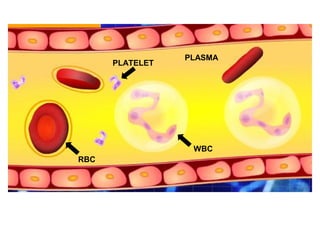
PLATELET

PLASMA

WBC
RBC
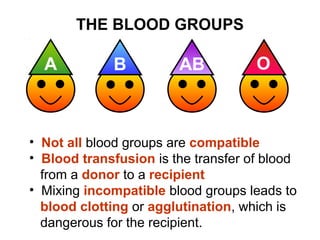
THE BLOOD GROUPS

A

B

AB

O

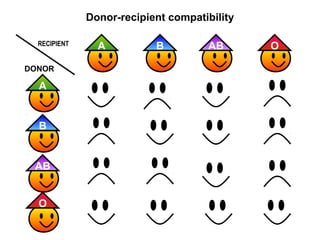
• Not all blood groups are compatible
• Blood transfusion is the transfer of blood
from a donor to a recipient
• Mixing incompatible blood groups leads to
blood clotting or agglutination, which is
dangerous for the recipient.
Donor-recipient compatibility
RECIPIENT

DONOR

A

B
A

AB
O

A

B

AB

O
O

AB

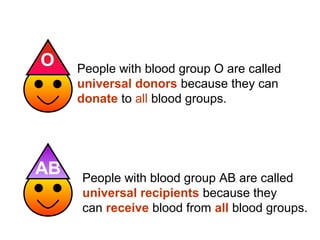
People with blood group O are called
universal donors because they can
donate to all blood groups.

People with blood group AB are called
universal recipients because they
can receive blood from all blood groups.
THE IMPORTANCE OF BLOOD DONATION

• Blood has no substitute and cannot be
manufactured synthetically.
• Blood is needed for surgery, the victims of
accidents and to treat patients with other
sicknesses and also during childbirth.
STORAGE & HANDLING DONATED BLOOD
HANDLING
• The donated blood is
tested for the blood
group.
• Then is screened for
diseases such as
hepatitis B and C, HIV or
sexually transmitted
diseases

•

•

•
•
•

STORAGE
May be stored as whole
blood or separated into
RBC, WBC, platelets or
plasma.
Collected in a plastic bag
which contains a
substance that prevent
coagulation.
Stored in blood banks at
4oC which can last for
about 40 days.
Fresh blood can last for
24 hours.
Before transfusion, the
bags are left at room
temperature for 2 hours.

Human blood

  • 1.
  • 2.
    BLOOD CONSTITUENTS ANDTHEIR FUNCTION PLASMA • Pale yellowish liquid • 90% water • 10% soluble substances: nutrients, mineral salts, blood proteins, hormone • Transports substances needed by cells and removes waste products from cells. RED BLOOD CELLS • No nucleus • Biconcave disc-shaped • Carry O2 in the form of oxyhaemoglobin BLOOD CELL & PLATELETS WHITE BLOOD CELLS • Have nucleus • Irregular is shape • Protect the body against diseases and fight infection • • • • PLATELETS small fragments of cells Made in the bone marrow No nucleus Help in blood clotting
  • 3.
  • 4.
    THE BLOOD GROUPS A B AB O •Not all blood groups are compatible • Blood transfusion is the transfer of blood from a donor to a recipient • Mixing incompatible blood groups leads to blood clotting or agglutination, which is dangerous for the recipient.
  • 5.
  • 6.
    O AB People with bloodgroup O are called universal donors because they can donate to all blood groups. People with blood group AB are called universal recipients because they can receive blood from all blood groups.
  • 7.
    THE IMPORTANCE OFBLOOD DONATION • Blood has no substitute and cannot be manufactured synthetically. • Blood is needed for surgery, the victims of accidents and to treat patients with other sicknesses and also during childbirth.
  • 8.
    STORAGE & HANDLINGDONATED BLOOD HANDLING • The donated blood is tested for the blood group. • Then is screened for diseases such as hepatitis B and C, HIV or sexually transmitted diseases • • • • • STORAGE May be stored as whole blood or separated into RBC, WBC, platelets or plasma. Collected in a plastic bag which contains a substance that prevent coagulation. Stored in blood banks at 4oC which can last for about 40 days. Fresh blood can last for 24 hours. Before transfusion, the bags are left at room temperature for 2 hours.