Hyper Text Transport Protocol Secure

Authors :

Pooya Sagharchi Ha 

April 18, 2015
1
2
Agenda
Introduction to HTTP

Limitations to HTTP

Introduction to HTTPS

Implementation of HTTPS

HTTPS Encryption 

Disadvantages of HTTPS

HTTP vs. HTTPS
3
Introduction to HTTP

HTTP is the set of rules for transferring files on the 

world wide web.

HTTP uses port 80 as default.

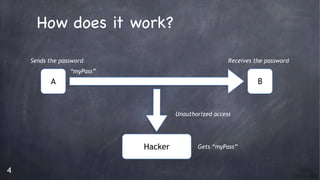
The client submits an HTTP request message to the server. 

The server, which provides resources such as HTML files and other 

content, returns a response message to the client.
4
How does it work?


A
Sends the password
B
HaHacker
Receives the password
“myPass”
Gets “myPass”
Unauthorized access
5
HTTP Limitations

Unsecured.

Does not use certificates.

Privacy.

Authentication.
6
HTTPS

HTTPS stand for Hypertext Transfer Protocol Secure. 

HTTPS = HTTP + SSL.

HTTPS uses port 443 as default.

URL’s beginning with HTTPS indicate that the connection is encrypted

using SSL.
7
HTTPS implementation

HTTPS is implemented using Secure Sockets Layer ( SSL )

HTTPS by purchasing an SSL Certificate.
8
What is an SSL Certificate?

The SSL certificates is installed on a web server to identify the 

business using it to encrypt sensitive data such as credit card 

information.

SSL Certificates give a website the ability to communicate securely 

with its web customers.
9
An SSL certificates enables encryption of sensitive information

during online transactions.

Each SSL Certificate contains unique, authenticated information 

about the certificate owner.
10
How Encryption Works?

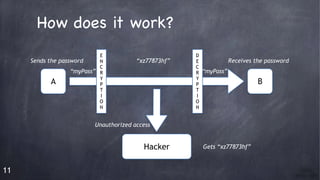
Each SSL certificate consists of a Public Key and a Private Key.

The browser encrypts the message using the Public Key and sends

it to the server. 

The message is decrypted on the server side using the Private Key.
11
How does it work?


Sends the password
A
“myPass”
Receives the password
B
Hacker
Unauthorized access
“myPass”
“xz77873hf”
Gets “xz77873hf”
E
N
C
R
Y
P
T
I
O
N
D
E
C
R
Y
P
T
I
O
N
12
Disadvantages of HTTPS

HTTPS is slightly slower than HTTP.

There is additional computational overhead on a per-byte basis, 

due to the work of encrypting and decrypting the request and 

response.
13
HTTPS vs HTTP:

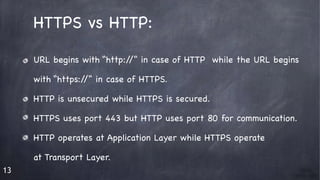
URL begins with “http://“ in case of HTTP while the URL begins 

with “https://“ in case of HTTPS.

HTTP is unsecured while HTTPS is secured.

HTTPS uses port 443 but HTTP uses port 80 for communication.

HTTP operates at Application Layer while HTTPS operate 

at Transport Layer.
14
Any Questions ?!

Https

  • 1.
    Hyper Text TransportProtocol Secure Authors : Pooya Sagharchi Ha April 18, 2015 1
  • 2.
    2 Agenda Introduction to HTTP Limitationsto HTTP Introduction to HTTPS Implementation of HTTPS HTTPS Encryption Disadvantages of HTTPS HTTP vs. HTTPS
  • 3.
    3 Introduction to HTTP HTTPis the set of rules for transferring files on the world wide web. HTTP uses port 80 as default. The client submits an HTTP request message to the server. The server, which provides resources such as HTML files and other content, returns a response message to the client.
  • 4.
    4 How does itwork? A Sends the password B HaHacker Receives the password “myPass” Gets “myPass” Unauthorized access
  • 5.
    5 HTTP Limitations Unsecured. Does notuse certificates. Privacy. Authentication.
  • 6.
    6 HTTPS HTTPS stand forHypertext Transfer Protocol Secure. HTTPS = HTTP + SSL. HTTPS uses port 443 as default. URL’s beginning with HTTPS indicate that the connection is encrypted using SSL.
  • 7.
    7 HTTPS implementation HTTPS isimplemented using Secure Sockets Layer ( SSL ) HTTPS by purchasing an SSL Certificate.
  • 8.
    8 What is anSSL Certificate? The SSL certificates is installed on a web server to identify the business using it to encrypt sensitive data such as credit card information. SSL Certificates give a website the ability to communicate securely with its web customers.
  • 9.
    9 An SSL certificatesenables encryption of sensitive information during online transactions. Each SSL Certificate contains unique, authenticated information about the certificate owner.
  • 10.
    10 How Encryption Works? EachSSL certificate consists of a Public Key and a Private Key. The browser encrypts the message using the Public Key and sends it to the server. The message is decrypted on the server side using the Private Key.
  • 11.
    11 How does itwork? Sends the password A “myPass” Receives the password B Hacker Unauthorized access “myPass” “xz77873hf” Gets “xz77873hf” E N C R Y P T I O N D E C R Y P T I O N
  • 12.
    12 Disadvantages of HTTPS HTTPSis slightly slower than HTTP. There is additional computational overhead on a per-byte basis, due to the work of encrypting and decrypting the request and response.
  • 13.
    13 HTTPS vs HTTP: URLbegins with “http://“ in case of HTTP while the URL begins with “https://“ in case of HTTPS. HTTP is unsecured while HTTPS is secured. HTTPS uses port 443 but HTTP uses port 80 for communication. HTTP operates at Application Layer while HTTPS operate at Transport Layer.
  • 14.