The World Wide Web (WWW) as we know it uses both HTTP and
HTTPS protocols to send and receive data over the internet. But,
what are the differences between HTTP vs HTTPS?
The Hypertext Transfer Protocol (HTTP) is a protocol for sending
and receiving data between a web server and a client. This
protocol is used to send almost any type of file, including images,
text, and video. The HTTP web server helps to connect with web
browsers including Chrome, Mozilla, IE, etc.
HTTP vs
HTTPS: A
Brief
Introduction
Here’s How it Works
The HTTP exchanges data in the simple text between the
above-mentioned browsers and the server. You can view the
information transferred if you have access to the network
where it is transmitted.
As a result, it’s quite probable that pushy advertising, security
agencies, etc. are scrutinizing or storing this information
somewhere along with this communication protocol.
The whole backbone of the internet is HTTP or Hypertext Transfer
Protocol. It’s the protocol that allows web pages to be processed,
rendered, and sent from the server to the client browser.
HTTP is the primary technique for transferring data from web
pages across a network. Web pages are stored on servers and
delivered to client computers when the user requests them.
What is HTTP?
HTTPS (HyperText Transfer Protocol Secure) is an encrypted variant of HTTP,
the most commonly used protocol for sending data over the Internet. Any
website that has a lock icon in the address bar is using HTTPS.
HTTPS prevents your browser’s and server’s communication from being
intercepted and tampered with by hackers. It does so by employing an SSL
(Secure Sockets Layer) certificate, which aids in the establishment of a secure
encrypted connection between the server and the browser.
SSL prevents any potentially sensitive data from being stolen during
transmission.
Understand HTTP vs HTTPS difference
What is HTTPS?
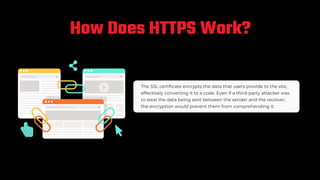
How Does HTTPS Work?
The SSL certificate encrypts the data that users provide to the site,
effectively converting it to a code. Even if a third-party attacker was
to steal the data being sent between the sender and the receiver,
the encryption would prevent them from comprehending it.
Understanding
The Terms Better
Imagine passing a written message to your final
recipient through a group of people. Now if the
message is written in a language readable by
everyone along the way, the recipients might
benefit, misuse or take advantage of the
information.
Basically, how they use it will be beyond your
control. This describes the working of HTTP.
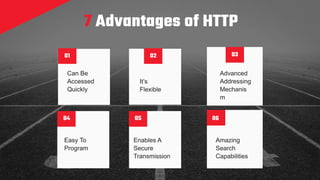
7 Advantages of HTTP
Can Be
Accessed
Quickly
01 02 03
It’s
Flexible
Advanced
Addressing
Mechanis
m
04 05 06
Easy To
Program
Enables A
Secure
Transmission
Amazing
Search
Capabilities
5 Advantages of HTTPS
Helps You
Build Trust
01 02 03
Helps Boost
Website
Rankings (
SEO)
Provides
Impeccable
Security
04 05 06
Helps
Preserve
Referrer
Data (SEO)
Qualifies
You For
AMP
Pages
Highly
Encrypte
d
Lack Of
Security
01 02 03
Lack Of
Privacy
Does Not
Support IoT
Devices
3 Disadvantages Of Implementing
Hypertext Transfer Protocol
Can Prove
Uneconomic
al
01 02 03
May
Render
Inaccessibl
e
Causes
Problems In
Catching
3 Disadvantages Of Implementing
HyperText Transfer Protocol Secure
HTTP vs HTTPS – A Word Of Advice For Website Owners
Traffic Payments
Trust Impulse Clicks
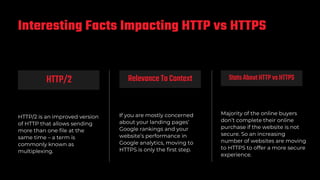
HTTP/2 Relevance To Context Stats About HTTP vs HTTPS
Interesting Facts Impacting HTTP vs HTTPS
If you are mostly concerned
about your landing pages’
Google rankings and your
website’s performance in
Google analytics, moving to
HTTPS is only the first step.
HTTP/2 is an improved version
of HTTP that allows sending
more than one file at the
same time – a term is
commonly known as
multiplexing.
Majority of the online buyers
don’t complete their online
purchase if the website is not
secure. So an increasing
number of websites are moving
to HTTPS to offer a more secure
experience.
Better Ranking Increased Traffic Higher Conversion Rate
Impact On SEO When Changing From
HTTP To HTTPS
As you’ll be able to reach a
wider audience who’ll trust
the security of your website,
the traffic on your website is
bound to increase.
HTTPS helps visitors to feel
secure, so they are more likely
to click on your website. You’ll
reach a wider set of audience
who’ll find your information
relevant.
Increased traffic increases your
chances of a higher rate of
conversion. More website
visitors will stay on your page
longer. In the end, it is a
numbers game.

HTTP vs HTTPS Difference

  • 2.
    The World WideWeb (WWW) as we know it uses both HTTP and HTTPS protocols to send and receive data over the internet. But, what are the differences between HTTP vs HTTPS? The Hypertext Transfer Protocol (HTTP) is a protocol for sending and receiving data between a web server and a client. This protocol is used to send almost any type of file, including images, text, and video. The HTTP web server helps to connect with web browsers including Chrome, Mozilla, IE, etc. HTTP vs HTTPS: A Brief Introduction
  • 4.
    Here’s How itWorks The HTTP exchanges data in the simple text between the above-mentioned browsers and the server. You can view the information transferred if you have access to the network where it is transmitted. As a result, it’s quite probable that pushy advertising, security agencies, etc. are scrutinizing or storing this information somewhere along with this communication protocol.
  • 6.
    The whole backboneof the internet is HTTP or Hypertext Transfer Protocol. It’s the protocol that allows web pages to be processed, rendered, and sent from the server to the client browser. HTTP is the primary technique for transferring data from web pages across a network. Web pages are stored on servers and delivered to client computers when the user requests them. What is HTTP?
  • 7.
    HTTPS (HyperText TransferProtocol Secure) is an encrypted variant of HTTP, the most commonly used protocol for sending data over the Internet. Any website that has a lock icon in the address bar is using HTTPS. HTTPS prevents your browser’s and server’s communication from being intercepted and tampered with by hackers. It does so by employing an SSL (Secure Sockets Layer) certificate, which aids in the establishment of a secure encrypted connection between the server and the browser. SSL prevents any potentially sensitive data from being stolen during transmission. Understand HTTP vs HTTPS difference What is HTTPS?
  • 8.
    How Does HTTPSWork? The SSL certificate encrypts the data that users provide to the site, effectively converting it to a code. Even if a third-party attacker was to steal the data being sent between the sender and the receiver, the encryption would prevent them from comprehending it.
  • 9.
    Understanding The Terms Better Imaginepassing a written message to your final recipient through a group of people. Now if the message is written in a language readable by everyone along the way, the recipients might benefit, misuse or take advantage of the information. Basically, how they use it will be beyond your control. This describes the working of HTTP.
  • 10.
    7 Advantages ofHTTP Can Be Accessed Quickly 01 02 03 It’s Flexible Advanced Addressing Mechanis m 04 05 06 Easy To Program Enables A Secure Transmission Amazing Search Capabilities
  • 11.
    5 Advantages ofHTTPS Helps You Build Trust 01 02 03 Helps Boost Website Rankings ( SEO) Provides Impeccable Security 04 05 06 Helps Preserve Referrer Data (SEO) Qualifies You For AMP Pages Highly Encrypte d
  • 12.
    Lack Of Security 01 0203 Lack Of Privacy Does Not Support IoT Devices 3 Disadvantages Of Implementing Hypertext Transfer Protocol
  • 13.
    Can Prove Uneconomic al 01 0203 May Render Inaccessibl e Causes Problems In Catching 3 Disadvantages Of Implementing HyperText Transfer Protocol Secure
  • 14.
    HTTP vs HTTPS– A Word Of Advice For Website Owners Traffic Payments Trust Impulse Clicks
  • 15.
    HTTP/2 Relevance ToContext Stats About HTTP vs HTTPS Interesting Facts Impacting HTTP vs HTTPS If you are mostly concerned about your landing pages’ Google rankings and your website’s performance in Google analytics, moving to HTTPS is only the first step. HTTP/2 is an improved version of HTTP that allows sending more than one file at the same time – a term is commonly known as multiplexing. Majority of the online buyers don’t complete their online purchase if the website is not secure. So an increasing number of websites are moving to HTTPS to offer a more secure experience.
  • 16.
    Better Ranking IncreasedTraffic Higher Conversion Rate Impact On SEO When Changing From HTTP To HTTPS As you’ll be able to reach a wider audience who’ll trust the security of your website, the traffic on your website is bound to increase. HTTPS helps visitors to feel secure, so they are more likely to click on your website. You’ll reach a wider set of audience who’ll find your information relevant. Increased traffic increases your chances of a higher rate of conversion. More website visitors will stay on your page longer. In the end, it is a numbers game.