Presented by-
Prakash N 250
Vivek Kumar 187
Yarroju Srimannarayana 278
Vishak John Thomas 168
Chirantan Ghosh 190
What is Coaching and mentoring
 Coaching means educating,
instructing and training subordinates.
coaching focuses on teaching shorter-
term job related skills
 Mentoring means advising, counseling
and guiding. It helps employees
navigate longer term career hazards
Importance of
coaching/mentoring
 Benefits to the Coach or Mentor
- Increased job satisfaction
- Further enhancement of their own skill level
- Enhanced skill in problem analysis and strategic
thinking
- Develops self-esteem
 Benefits to the Learner
- increases self-confidence and self-esteem
- Promotes professional career growth
- Enhances skills
- Identifies weak areas and turns them into potential
successes
- Enhances problem analysis
Importance of
coaching/mentoring
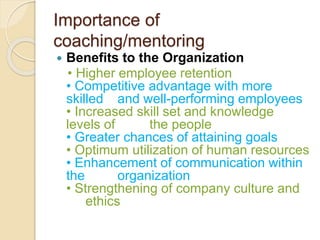
 Benefits to the Organization
• Higher employee retention
• Competitive advantage with more
skilled and well-performing employees
• Increased skill set and knowledge
levels of the people
• Greater chances of attaining goals
• Optimum utilization of human resources
• Enhancement of communication within
the organization
• Strengthening of company culture and
ethics
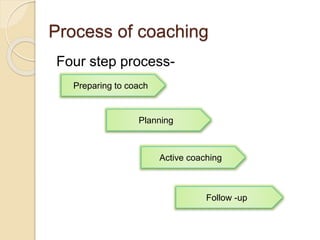
Process of coaching
Four step process-
Preparing to coach
Planning
Active coaching
Follow -up
The Basics of Career
Management
 Career
◦ The occupational positions a person has had
over many years.
 Career management
◦ The process for enabling employees to better
understand and develop their career skills
and interests, and to use these skills and
interests more effectively.
 Career development
◦ The lifelong series of activities that contribute
to a person’s career exploration,
establishment, success, and fulfillment.
The Basics of Career
Management
 Career planning
◦ The deliberate process through which
someone becomes aware of personal skills,
interests, knowledge, motivations, and other
characteristics; and establishes action plans
to attain specific goals.
 Careers today
◦ Careers are no simple progressions of
employment in one or two firms with a single
profession.
◦ Employees now want to exchange
performance for training, learning, and
development that keep them marketable.
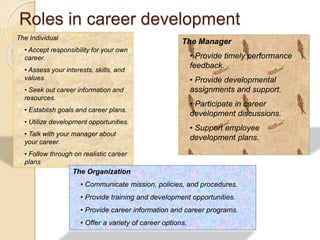
Roles in career development
The Individual
• Accept responsibility for your own
career.
• Assess your interests, skills, and
values.
• Seek out career information and
resources.
• Establish goals and career plans.
• Utilize development opportunities.
• Talk with your manager about
your career.
• Follow through on realistic career
plans
The Manager
• Provide timely performance
feedback.
• Provide developmental
assignments and support.
• Participate in career
development discussions.
• Support employee
development plans.
The Organization
• Communicate mission, policies, and procedures.
• Provide training and development opportunities.
• Provide career information and career programs.
• Offer a variety of career options.
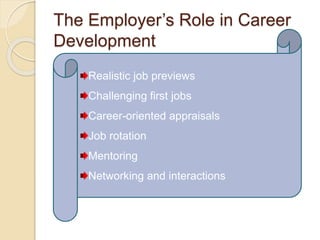
The Employer’s Role in Career
Development
Realistic job previews
Challenging first jobs
Career-oriented appraisals
Job rotation
Mentoring
Networking and interactions
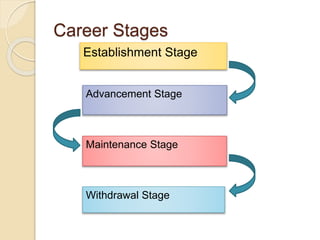
Career Stages
Establishment Stage
Advancement Stage
Maintenance Stage
Withdrawal Stage
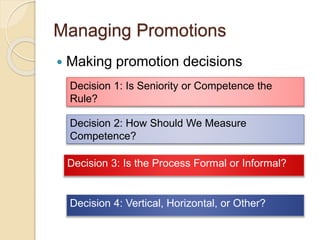
Managing Promotions
 Making promotion decisions
Decision 3: Is the Process Formal or Informal?
Decision 1: Is Seniority or Competence the
Rule?
Decision 2: How Should We Measure
Competence?
Decision 4: Vertical, Horizontal, or Other?
Managing Transfers
 Employees’ reasons for desiring transfers
◦ Personal enrichment and growth
◦ More interesting jobs
◦ Greater convenience (better hours, location)
◦ Greater advancement possibilities
 Employers’ reasons for transferring
employees
◦ To vacate a position where an employee is no
longer needed.
◦ To fill a position where an employee is needed.
◦ To find a better fit for an employee within the firm.
◦ To boost productivity by consolidating positions.
Retirement
 Retirement
◦ The point at which one gives up one’s work,
usually between the ages of 60 and 65.
 Preretirement practices
•Explanation of Social Security
benefits
•Leisure time counseling
•Financial and investment
counseling
•Health counseling
•Psychological counseling
•Counseling for second careers
What is talent management?
◦ Talent Management is the automated
end to end process of planning,
recruiting, developing, managing and
compensating employees throughout
the organization
 Talent management includes a series
of integrated systems of
recruiting
performance management
maximizing employee potential
retaining people with desired skills and
aptitude
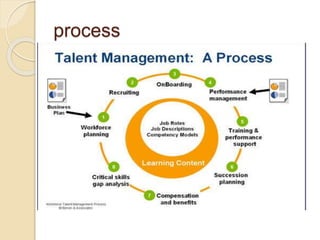
process
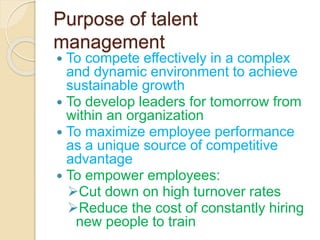
Purpose of talent
management
 To compete effectively in a complex
and dynamic environment to achieve
sustainable growth
 To develop leaders for tomorrow from
within an organization
 To maximize employee performance
as a unique source of competitive
advantage
 To empower employees:
Cut down on high turnover rates
Reduce the cost of constantly hiring
new people to train

Coaching,Career and Talent Management

  • 1.
    Presented by- Prakash N250 Vivek Kumar 187 Yarroju Srimannarayana 278 Vishak John Thomas 168 Chirantan Ghosh 190
  • 2.
    What is Coachingand mentoring  Coaching means educating, instructing and training subordinates. coaching focuses on teaching shorter- term job related skills  Mentoring means advising, counseling and guiding. It helps employees navigate longer term career hazards
  • 3.
    Importance of coaching/mentoring  Benefitsto the Coach or Mentor - Increased job satisfaction - Further enhancement of their own skill level - Enhanced skill in problem analysis and strategic thinking - Develops self-esteem  Benefits to the Learner - increases self-confidence and self-esteem - Promotes professional career growth - Enhances skills - Identifies weak areas and turns them into potential successes - Enhances problem analysis
  • 4.
    Importance of coaching/mentoring  Benefitsto the Organization • Higher employee retention • Competitive advantage with more skilled and well-performing employees • Increased skill set and knowledge levels of the people • Greater chances of attaining goals • Optimum utilization of human resources • Enhancement of communication within the organization • Strengthening of company culture and ethics
  • 5.
    Process of coaching Fourstep process- Preparing to coach Planning Active coaching Follow -up
  • 6.
    The Basics ofCareer Management  Career ◦ The occupational positions a person has had over many years.  Career management ◦ The process for enabling employees to better understand and develop their career skills and interests, and to use these skills and interests more effectively.  Career development ◦ The lifelong series of activities that contribute to a person’s career exploration, establishment, success, and fulfillment.
  • 7.
    The Basics ofCareer Management  Career planning ◦ The deliberate process through which someone becomes aware of personal skills, interests, knowledge, motivations, and other characteristics; and establishes action plans to attain specific goals.  Careers today ◦ Careers are no simple progressions of employment in one or two firms with a single profession. ◦ Employees now want to exchange performance for training, learning, and development that keep them marketable.
  • 8.
    Roles in careerdevelopment The Individual • Accept responsibility for your own career. • Assess your interests, skills, and values. • Seek out career information and resources. • Establish goals and career plans. • Utilize development opportunities. • Talk with your manager about your career. • Follow through on realistic career plans The Manager • Provide timely performance feedback. • Provide developmental assignments and support. • Participate in career development discussions. • Support employee development plans. The Organization • Communicate mission, policies, and procedures. • Provide training and development opportunities. • Provide career information and career programs. • Offer a variety of career options.
  • 9.
    The Employer’s Rolein Career Development Realistic job previews Challenging first jobs Career-oriented appraisals Job rotation Mentoring Networking and interactions
  • 10.
    Career Stages Establishment Stage AdvancementStage Maintenance Stage Withdrawal Stage
  • 11.
    Managing Promotions  Makingpromotion decisions Decision 3: Is the Process Formal or Informal? Decision 1: Is Seniority or Competence the Rule? Decision 2: How Should We Measure Competence? Decision 4: Vertical, Horizontal, or Other?
  • 12.
    Managing Transfers  Employees’reasons for desiring transfers ◦ Personal enrichment and growth ◦ More interesting jobs ◦ Greater convenience (better hours, location) ◦ Greater advancement possibilities  Employers’ reasons for transferring employees ◦ To vacate a position where an employee is no longer needed. ◦ To fill a position where an employee is needed. ◦ To find a better fit for an employee within the firm. ◦ To boost productivity by consolidating positions.
  • 13.
    Retirement  Retirement ◦ Thepoint at which one gives up one’s work, usually between the ages of 60 and 65.  Preretirement practices •Explanation of Social Security benefits •Leisure time counseling •Financial and investment counseling •Health counseling •Psychological counseling •Counseling for second careers
  • 14.
    What is talentmanagement? ◦ Talent Management is the automated end to end process of planning, recruiting, developing, managing and compensating employees throughout the organization  Talent management includes a series of integrated systems of recruiting performance management maximizing employee potential retaining people with desired skills and aptitude
  • 15.
  • 16.
    Purpose of talent management To compete effectively in a complex and dynamic environment to achieve sustainable growth  To develop leaders for tomorrow from within an organization  To maximize employee performance as a unique source of competitive advantage  To empower employees: Cut down on high turnover rates Reduce the cost of constantly hiring new people to train