CAREER BASED PERFORMANCE
       MANAGEMENT
                By-
          Avinash Kumar
     Kumaravinash23@gmail.com
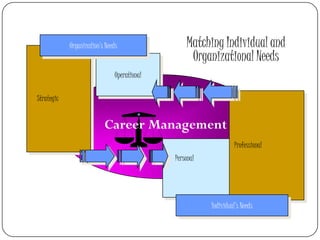
Organization’s Needs                 Matching Individual and
                                                  Organizational Needs
                               Operational

Strategic


                          Career Management
                                                                 Professional
                                             Personal


                                                        Individual’s Needs
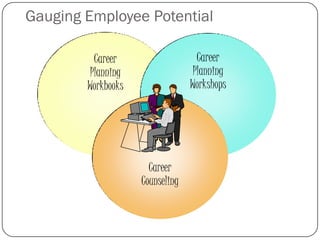
Gauging Employee Potential

          Career                   Career
         Planning                 Planning
        Workbooks                Workshops


                      Career
                    Counseling
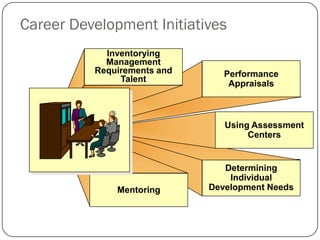
Career Development Initiatives
            Inventorying
            Management
          Requirements and      Performance
               Talent
                                 Appraisals


                                Using Assessment
                                     Centers


                                Determining
                                 Individual
              Mentoring      Development Needs
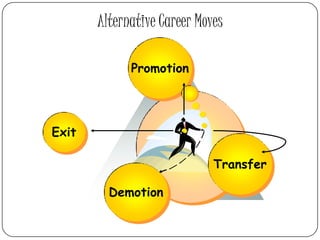
Alternative Career Moves

             Promotion


Exit

                             Transfer

         Demotion
Why Provide Career Development In Your
Organization?
 Employees who are skilled at managing their development are highly

  motivated to perform well in their jobs.

 They are more likely to remain productive and loyal.

 The availability of development management training reduces both

  turnover and absenteeism.

 Organizations that consistently rank high in “Best Companies To Work

  For” surveys are far more likely to provide performance and career

  development training. These kinds of rankings attract and keep the best

  people.
 Reduces both internal and external “job shopping and hopping” and
  keeps employees focused on the job at hand.


 When employees have the opportunity to access first-rate "worklife
  assessment", they are far less likely to consider that promotion is the
  only career move.


 The partnership between employee and manager can take on a whole
  new dimension with very little effort or time expended by the manager.
  Everyone wins.
 When employees are clear about the real goals of

 their development, the kind of development they
 elect is better focused than just learning the next
 competency that shows up in everyone's training
 inbox
There are 4 critical areas of assessment
 Style…How you do .
 Motivation…Why you do.
 Skills…What you use to do.
 Internal Barriers…What blocks you from doing what you do
  as well as possible.
MERITS ……
 FOR INDIVIDUALS

 -Knowledge of various career opportunities / individual priorities.

 -Internal promotuions, Up gradation and transfers

 -Improves employees performance

 -career growth as professionals

 -professional growth opportunities

 -opportunities for learning

 -rewards for achievements

 -performance oriented working
 FOR ORGANIZATIONS

 -attracting and retaining talent
 -Availability of human resources
 -It ensures that people get equal opportunities for growth
 and development.
 -Enhances cultural diversity
 -Promote organizational goodwill
 -roles are clarified in career counseling .
 -more realistic approach of what is expected of them.
 -personal career planning ability is increased
 -human resource systems are effectively utilized
DEMERITS
 Costly
 Trained people may leave after training.
 Its Implementation is comlex job.
 -individuals' short comings.
  -individuals' lack of initiatives.
  -individuals' lack of efforts.
 ORGANIZATION
 -poor management support.
 -lack of sufficient resources.
 -biased approach in appointments
Career Management Best Practices
 Providing Employee Assessment and Career Planning
    Workshops
   Conducting Career Coaching Workshops for Managers
   Establishing Employee Career Centers.
   Giving Open Business Briefings
   Creating an Internal Network of Information Providers
 Maintaining Internal Job and Talent Banks
 Establishing Individual Learning Accounts
 Starting a Mentoring Program
Tools of Career Planning Programs
 Self assessment tools
 Individual counselling
 Career Information within an Organization
       job posting
       skill inventory
       career ladders
       career resource center
 Employee assessment programes
 Employee development programes
 Career programes for special groups

Career Based Performance Management System

  • 1.
    CAREER BASED PERFORMANCE MANAGEMENT By- Avinash Kumar Kumaravinash23@gmail.com
  • 2.
    Organization’s Needs Matching Individual and Organizational Needs Operational Strategic Career Management Professional Personal Individual’s Needs
  • 3.
    Gauging Employee Potential Career Career Planning Planning Workbooks Workshops Career Counseling
  • 4.
    Career Development Initiatives Inventorying Management Requirements and Performance Talent Appraisals Using Assessment Centers Determining Individual Mentoring Development Needs
  • 5.
    Alternative Career Moves Promotion Exit Transfer Demotion
  • 6.
    Why Provide CareerDevelopment In Your Organization?  Employees who are skilled at managing their development are highly motivated to perform well in their jobs.  They are more likely to remain productive and loyal.  The availability of development management training reduces both turnover and absenteeism.  Organizations that consistently rank high in “Best Companies To Work For” surveys are far more likely to provide performance and career development training. These kinds of rankings attract and keep the best people.
  • 7.
     Reduces bothinternal and external “job shopping and hopping” and keeps employees focused on the job at hand.  When employees have the opportunity to access first-rate "worklife assessment", they are far less likely to consider that promotion is the only career move.  The partnership between employee and manager can take on a whole new dimension with very little effort or time expended by the manager. Everyone wins.
  • 8.
     When employeesare clear about the real goals of their development, the kind of development they elect is better focused than just learning the next competency that shows up in everyone's training inbox
  • 9.
    There are 4critical areas of assessment  Style…How you do .  Motivation…Why you do.  Skills…What you use to do.  Internal Barriers…What blocks you from doing what you do as well as possible.
  • 10.
    MERITS ……  FORINDIVIDUALS -Knowledge of various career opportunities / individual priorities. -Internal promotuions, Up gradation and transfers -Improves employees performance -career growth as professionals -professional growth opportunities -opportunities for learning -rewards for achievements -performance oriented working
  • 11.
     FOR ORGANIZATIONS -attracting and retaining talent -Availability of human resources -It ensures that people get equal opportunities for growth and development. -Enhances cultural diversity -Promote organizational goodwill -roles are clarified in career counseling . -more realistic approach of what is expected of them. -personal career planning ability is increased -human resource systems are effectively utilized
  • 12.
    DEMERITS  Costly  Trainedpeople may leave after training.  Its Implementation is comlex job.  -individuals' short comings. -individuals' lack of initiatives. -individuals' lack of efforts.
  • 13.
     ORGANIZATION -poormanagement support. -lack of sufficient resources. -biased approach in appointments
  • 14.
    Career Management BestPractices  Providing Employee Assessment and Career Planning Workshops  Conducting Career Coaching Workshops for Managers  Establishing Employee Career Centers.  Giving Open Business Briefings  Creating an Internal Network of Information Providers
  • 15.
     Maintaining InternalJob and Talent Banks  Establishing Individual Learning Accounts  Starting a Mentoring Program
  • 16.
    Tools of CareerPlanning Programs  Self assessment tools  Individual counselling  Career Information within an Organization job posting skill inventory career ladders career resource center  Employee assessment programes  Employee development programes  Career programes for special groups