
Human Resource Development 
By: 
Sonali Srivastava 
PGDM (II Sem)
Introduction 
Human resource management is concerned 
with the development and implementation 
of people strategies, and ensures that the 
culture, values and structure of the 
organization, and the quality, motivation 
and commitment of its members contribute 
fully to the achievement of its goals. 
Common Activities within HRD are: 
• Training 
• Education & 
• Development
What We Need to Know About Training and Development for the 21st Century 
Training and development play a significant role in 
achieving a company’s strategic goals. 
Training is crucial to bring about change and the 
operation of a world-class organization. 
Recognition of cultural differences and different 
work practices and approaches is important. 
Training and development programs must be 
monitored to respond to changing needs. 
Training and development must be differentiated.
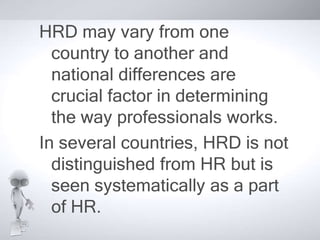
HRD may vary from one 
country to another and 
national differences are 
crucial factor in determining 
the way professionals works. 
In several countries, HRD is not 
distinguished from HR but is 
seen systematically as a part 
of HR.
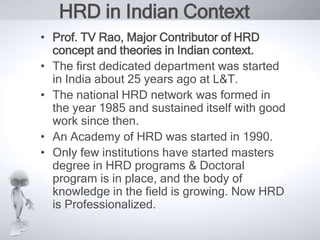
HRD in Indian Context 
• Prof. TV Rao, Major Contributor of HRD 
concept and theories in Indian context. 
• The first dedicated department was started 
in India about 25 years ago at L&T. 
• The national HRD network was formed in 
the year 1985 and sustained itself with good 
work since then. 
• An Academy of HRD was started in 1990. 
• Only few institutions have started masters 
degree in HRD programs & Doctoral 
program is in place, and the body of 
knowledge in the field is growing. Now HRD 
is Professionalized.
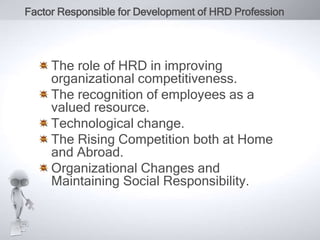
Factor Responsible for Development of HRD Profession 
The role of HRD in improving 
organizational competitiveness. 
The recognition of employees as a 
valued resource. 
Technological change. 
The Rising Competition both at Home 
and Abroad. 
Organizational Changes and 
Maintaining Social Responsibility.
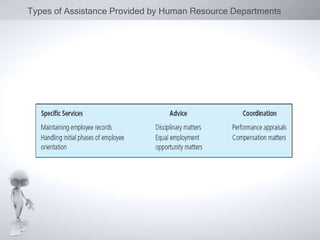
Types of Assistance Provided by Human Resource Departments
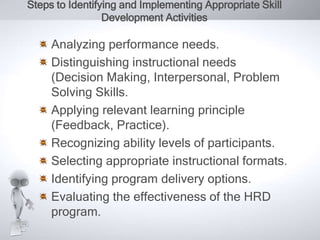
Steps to Identifying and Implementing Appropriate Skill 
Development Activities 
Analyzing performance needs. 
Distinguishing instructional needs 
(Decision Making, Interpersonal, Problem 
Solving Skills. 
Applying relevant learning principle 
(Feedback, Practice). 
Recognizing ability levels of participants. 
Selecting appropriate instructional formats. 
Identifying program delivery options. 
Evaluating the effectiveness of the HRD 
program.
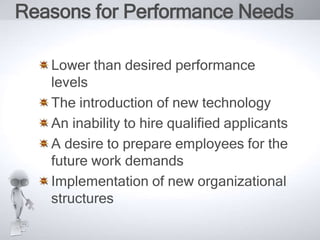
Reasons for Performance Needs 
Lower than desired performance 
levels 
The introduction of new technology 
An inability to hire qualified applicants 
A desire to prepare employees for the 
future work demands 
Implementation of new organizational 
structures
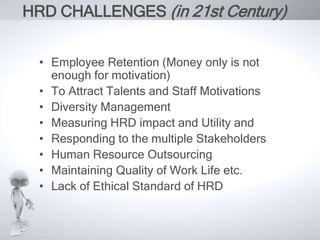
HRD CHALLENGES (in 21st Century) 
• Employee Retention (Money only is not 
enough for motivation) 
• To Attract Talents and Staff Motivations 
• Diversity Management 
• Measuring HRD impact and Utility and 
• Responding to the multiple Stakeholders 
• Human Resource Outsourcing 
• Maintaining Quality of Work Life etc. 
• Lack of Ethical Standard of HRD
Thank You

Human Resource Development

  • 1.
    Human Resource Development By: Sonali Srivastava PGDM (II Sem)
  • 2.
    Introduction Human resourcemanagement is concerned with the development and implementation of people strategies, and ensures that the culture, values and structure of the organization, and the quality, motivation and commitment of its members contribute fully to the achievement of its goals. Common Activities within HRD are: • Training • Education & • Development
  • 3.
    What We Needto Know About Training and Development for the 21st Century Training and development play a significant role in achieving a company’s strategic goals. Training is crucial to bring about change and the operation of a world-class organization. Recognition of cultural differences and different work practices and approaches is important. Training and development programs must be monitored to respond to changing needs. Training and development must be differentiated.
  • 4.
    HRD may varyfrom one country to another and national differences are crucial factor in determining the way professionals works. In several countries, HRD is not distinguished from HR but is seen systematically as a part of HR.
  • 5.
    HRD in IndianContext • Prof. TV Rao, Major Contributor of HRD concept and theories in Indian context. • The first dedicated department was started in India about 25 years ago at L&T. • The national HRD network was formed in the year 1985 and sustained itself with good work since then. • An Academy of HRD was started in 1990. • Only few institutions have started masters degree in HRD programs & Doctoral program is in place, and the body of knowledge in the field is growing. Now HRD is Professionalized.
  • 6.
    Factor Responsible forDevelopment of HRD Profession The role of HRD in improving organizational competitiveness. The recognition of employees as a valued resource. Technological change. The Rising Competition both at Home and Abroad. Organizational Changes and Maintaining Social Responsibility.
  • 7.
    Types of AssistanceProvided by Human Resource Departments
  • 8.
    Steps to Identifyingand Implementing Appropriate Skill Development Activities Analyzing performance needs. Distinguishing instructional needs (Decision Making, Interpersonal, Problem Solving Skills. Applying relevant learning principle (Feedback, Practice). Recognizing ability levels of participants. Selecting appropriate instructional formats. Identifying program delivery options. Evaluating the effectiveness of the HRD program.
  • 9.
    Reasons for PerformanceNeeds Lower than desired performance levels The introduction of new technology An inability to hire qualified applicants A desire to prepare employees for the future work demands Implementation of new organizational structures
  • 10.
    HRD CHALLENGES (in21st Century) • Employee Retention (Money only is not enough for motivation) • To Attract Talents and Staff Motivations • Diversity Management • Measuring HRD impact and Utility and • Responding to the multiple Stakeholders • Human Resource Outsourcing • Maintaining Quality of Work Life etc. • Lack of Ethical Standard of HRD
  • 11.