
HIGH PERFORMANCE 
THIN LAYER 
CHROMATOGRAPHY 
(HPTLC)
INTRODUCTION 
• HPTLC is a sophisticated & automated form of 
TLC 
• Efficient separation in short time 
• Number of sample analyzed in at a time 
• Less cost 
• Auto sampler
PRINCIPLE 
• Adsorption 
Advantages of HPTLC Over Other 
Chromatographic Methods 
1. In HPTLC, simultaneous processing of 
sample and standard – better analytical 
accuracy & precision 
2. Lower analysis time & less cost per analysis 
3. HPTLC is very simple 
4. In HPTLC, the sample preparation is simple
5. Solvent used in HPTLC needs no prior 
treatment like filtration & degassing 
6. In HPTLC, the M.P consumption for sample is 
extremely low 
7. HPTLC allows the use of corrosive & UV 
absorbing M.P
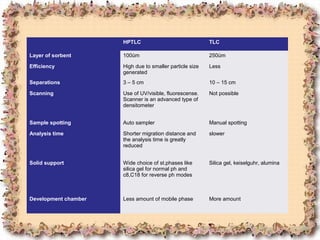
HPTLC TLC 
Layer of sorbent 100ům 250üm 
Efficiency High due to smaller particle size 
generated 
Less 
Separations 3 – 5 cm 10 – 15 cm 
Scanning Use of UV/visible, fluorescense. 
Scanner is an advanced type of 
densitometer 
Not possible 
Sample spotting Auto sampler Manual spotting 
Analysis time Shorter migration distance and 
the analysis time is greatly 
reduced 
slower 
Solid support Wide choice of st.phases like 
silica gel for normal ph and 
c8,C18 for reverse ph modes 
Silica gel, keiselguhr, alumina 
Development chamber Less amount of mobile phase More amount
STEPS INVOLVED IN HPTLC 
1.Sample preparation 
2.Selection of chromatographic layer 
3.Plates 
4.Pre-washing 
5.Conditioning 
6.Sample application 
7.Pre-conditioning 
8.M.P
9.Chromatographic development 
10.Detection of spots 
11.Scanning & documentation
Sample preparation 
• For normal phase chromatography using 
silica gel / alumina pre-coated plates, 
solvents – non polar 
• RP chromatography , usually polar solvents 
Selection of Chromatographic layer 
» Depends on the nature of material to be 
separated 
Commonly used materials are Silica gel 60F, 
Alumina, Cellulose etc
Plates 
Generally, plates of 20 x 20cm or 5 x 7.5cm 
size having 100-250mm adsorbent 
thickness. 
Silica gel 60F254 pore size 6mm with 
fluorescent indicator is a coat material 
Basic difference in TLC & HPTLC plates is 
particle size of coated materials which is 5- 
20μm – TLC, 4-8 μm - HPTLC
Pre-washing 
» to remove water vapors 
» volatile impurities 
Which might get trapped in the plates 
To avoid this, plates are cleaned by using 
methanol as solvent by ascending or 
descending etc.
Conditioning 
Plates activated by placing them in an oven 
at 120°C for 15 to 20 minutes. 
Sample Application 
Application of 1.0 - 5μl for HPTLC 
Application carried out by Linomat applicator 
on the plates which give uniform, safe & std. 
results
PRE-CONDITIONING (Chamber saturation) 
• For effective separation of sample 
• For RP chromatography – saturate the 
chamber with methanol or polar solvent 
MOBILE PHASE 
Selection of appropriate M.P is based on the 
trial and error.
Chromatographic development 
Ascending, descending, horizontal, 
continuous, gradient, multidimensional… 
HPTLC – migration distance of 5-6mm is 
sufficient, after development, plates 
removed & dried. 
Common problems encountered during chro. 
Development are as follows… 
1. Tailing: due to the presence of traces of 
impurities, this can be reduced by buffering 
the M.P
2.DIFFUSION: This is seen as zones on 
chromatographic plates. This may arise due 
to non-uniformity of M.P 
DETECTION OF SPOTS 
Detection can be done by iodine vapor in 
iodine chamber. Visual inspection at 254nm 
of UV region in UV cabinet
Scanning & Documentation 
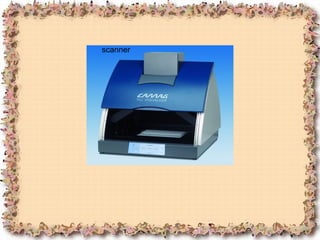
• HPTLC plates are scanned at selected UV 
regions WL by the instrument & the detected 
spots are seen on computer in the form of 
peaks. 
• The scanner converts band into peaks & 
peak height or area is related to the 
concentration of the substance on the spot.
APPLICATIONS 
• HPTLC rapidly gaining importance in 
several fields of science like 
• Pharmaceuticals analysis 
• Biochemistry 
• Pharmacokinetics studies
scanner
Hptlc

Hptlc

  • 1.
    HIGH PERFORMANCE THINLAYER CHROMATOGRAPHY (HPTLC)
  • 2.
    INTRODUCTION • HPTLCis a sophisticated & automated form of TLC • Efficient separation in short time • Number of sample analyzed in at a time • Less cost • Auto sampler
  • 4.
    PRINCIPLE • Adsorption Advantages of HPTLC Over Other Chromatographic Methods 1. In HPTLC, simultaneous processing of sample and standard – better analytical accuracy & precision 2. Lower analysis time & less cost per analysis 3. HPTLC is very simple 4. In HPTLC, the sample preparation is simple
  • 5.
    5. Solvent usedin HPTLC needs no prior treatment like filtration & degassing 6. In HPTLC, the M.P consumption for sample is extremely low 7. HPTLC allows the use of corrosive & UV absorbing M.P
  • 6.
    HPTLC TLC Layerof sorbent 100ům 250üm Efficiency High due to smaller particle size generated Less Separations 3 – 5 cm 10 – 15 cm Scanning Use of UV/visible, fluorescense. Scanner is an advanced type of densitometer Not possible Sample spotting Auto sampler Manual spotting Analysis time Shorter migration distance and the analysis time is greatly reduced slower Solid support Wide choice of st.phases like silica gel for normal ph and c8,C18 for reverse ph modes Silica gel, keiselguhr, alumina Development chamber Less amount of mobile phase More amount
  • 7.
    STEPS INVOLVED INHPTLC 1.Sample preparation 2.Selection of chromatographic layer 3.Plates 4.Pre-washing 5.Conditioning 6.Sample application 7.Pre-conditioning 8.M.P
  • 8.
    9.Chromatographic development 10.Detectionof spots 11.Scanning & documentation
  • 10.
    Sample preparation •For normal phase chromatography using silica gel / alumina pre-coated plates, solvents – non polar • RP chromatography , usually polar solvents Selection of Chromatographic layer » Depends on the nature of material to be separated Commonly used materials are Silica gel 60F, Alumina, Cellulose etc
  • 11.
    Plates Generally, platesof 20 x 20cm or 5 x 7.5cm size having 100-250mm adsorbent thickness. Silica gel 60F254 pore size 6mm with fluorescent indicator is a coat material Basic difference in TLC & HPTLC plates is particle size of coated materials which is 5- 20μm – TLC, 4-8 μm - HPTLC
  • 14.
    Pre-washing » toremove water vapors » volatile impurities Which might get trapped in the plates To avoid this, plates are cleaned by using methanol as solvent by ascending or descending etc.
  • 15.
    Conditioning Plates activatedby placing them in an oven at 120°C for 15 to 20 minutes. Sample Application Application of 1.0 - 5μl for HPTLC Application carried out by Linomat applicator on the plates which give uniform, safe & std. results
  • 16.
    PRE-CONDITIONING (Chamber saturation) • For effective separation of sample • For RP chromatography – saturate the chamber with methanol or polar solvent MOBILE PHASE Selection of appropriate M.P is based on the trial and error.
  • 17.
    Chromatographic development Ascending,descending, horizontal, continuous, gradient, multidimensional… HPTLC – migration distance of 5-6mm is sufficient, after development, plates removed & dried. Common problems encountered during chro. Development are as follows… 1. Tailing: due to the presence of traces of impurities, this can be reduced by buffering the M.P
  • 18.
    2.DIFFUSION: This isseen as zones on chromatographic plates. This may arise due to non-uniformity of M.P DETECTION OF SPOTS Detection can be done by iodine vapor in iodine chamber. Visual inspection at 254nm of UV region in UV cabinet
  • 19.
    Scanning & Documentation • HPTLC plates are scanned at selected UV regions WL by the instrument & the detected spots are seen on computer in the form of peaks. • The scanner converts band into peaks & peak height or area is related to the concentration of the substance on the spot.
  • 23.
    APPLICATIONS • HPTLCrapidly gaining importance in several fields of science like • Pharmaceuticals analysis • Biochemistry • Pharmacokinetics studies
  • 24.