
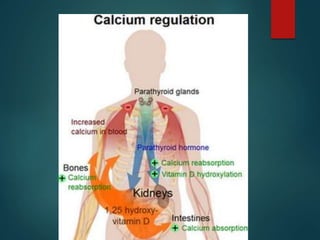
Hypocalcemia
BY
HAZEM SAMY HUSSEIN
ASS. LECTURER OF INTERNAL MEDICINE
Introduction
Why do we need it?
 Calcium messenger system – regulates cell function
 Activates cellular enzyme cascades
 Smooth muscle and myocardial contraction
 Nerve impulse conduction
 Secretory activity of exocrine glands
Pathophysiology
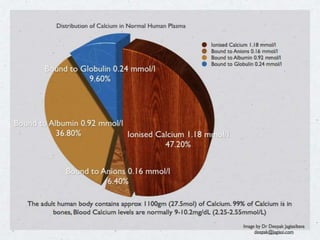
 Ionized calcium is affected by:
 Albumin
 Blood pH
 Serum phosphate
 Serum magnesium
 Serum bicarbonate
 Exogenous factors
 Citrate / free fatty acids (TPN)
Hypoalbuminemia
 produces a low total serum [Ca2+] because of a
reduction in the bound fraction of calcium, but the
ionized [Ca2+] is normal. The ionized [Ca2+] can be
determined directly, or the effect of hypoalbuminemia
can be roughly corrected for by using the following
formula:
 Corrected serum calcium = Measured serum calcium +
(0.8) (4 – Measured serum albumin)
 Thus, in a patient with a serum [Ca2+] of 7.8 mg/dL and
a serum albumin of 2 g/dL, the corrected serum [Ca2+]
is 7.8 + (0.8)(4 – 2) = 9.4 mg/dL.
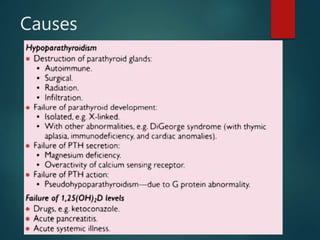
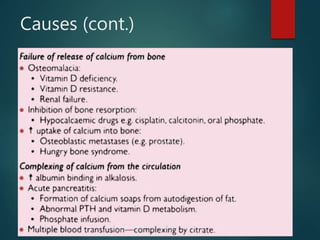
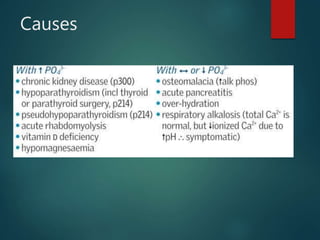
Aetiology
Causes
Causes (cont.)
Causes
Clinical picture
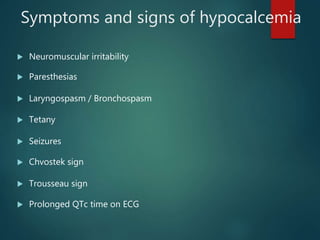
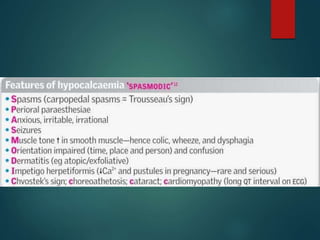
Symptoms and signs of hypocalcemia
 Neuromuscular irritability
 Paresthesias
 Laryngospasm / Bronchospasm
 Tetany
 Seizures
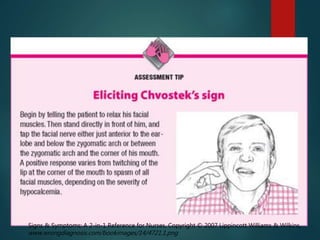
 Chvostek sign
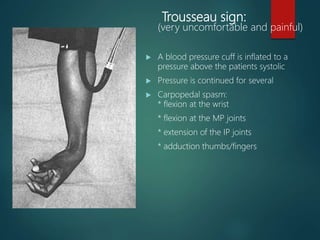
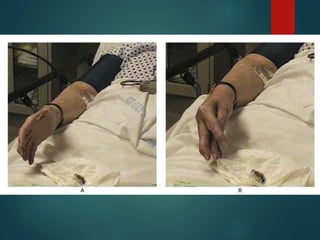
 Trousseau sign
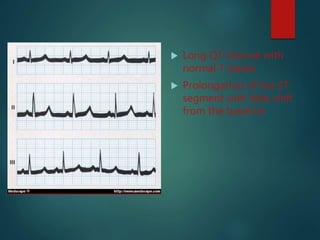
 Prolonged QTc time on ECG
 Tetany is not caused by increased excitability of the muscles.
 Muscle excitability is depressed
 hypocalcemia impedes ACh release at NM junctions
 However, the increase in neuronal excitability overrides the
inhibition of muscle contraction.
Signs & Symptoms: A 2-in-1 Reference for Nurses, Copyright © 2007 Lippincott Williams & Wilkins,
www.wrongdiagnosis.com/bookimages/14/4721.1.png
Trousseau sign:
(very uncomfortable and painful)
 A blood pressure cuff is inflated to a
pressure above the patients systolic
 Pressure is continued for several
 Carpopedal spasm:
* flexion at the wrist
* flexion at the MP joints
* extension of the IP joints
* adduction thumbs/fingers
 Long QT interval with
normal T waves
 Prolongation of the ST
segment with little shift
from the baseline
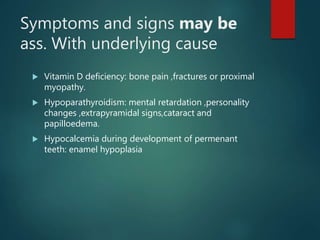
Symptoms and signs may be
ass. With underlying cause
 Vitamin D deficiency: bone pain ,fractures or proximal
myopathy.
 Hypoparathyroidism: mental retardation ,personality
changes ,extrapyramidal signs,cataract and
papilloedema.
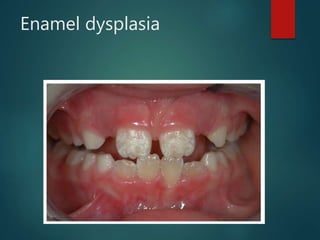
 Hypocalcemia during development of permenant
teeth: enamel hypoplasia
Enamel dysplasia
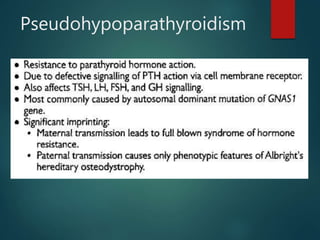
Pseudohypoparathyroidism
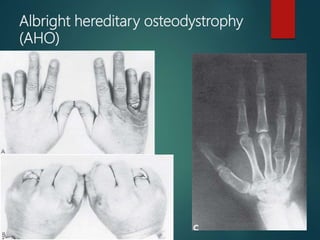
Albright hereditary osteodystrophy
(AHO)
Hungry bone syndrome
After prolonged period of calcium
absorption
Rebound phase
Avid uptake of calcium by bone
Parallel uptake of magnesium by
bone
 Following parathyroidectomy
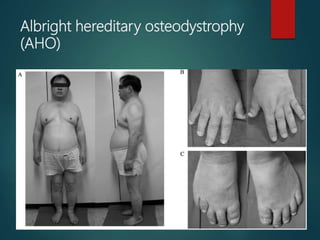
Albright hereditary osteodystrophy
(AHO)
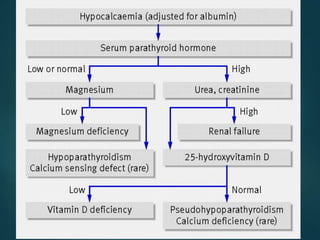
Work-up
Workup - blood
Total and ionized calcium
Magnesium
Phosphorus
KFT ,s. albumen
PTH
Vitamin D metabolite
creatinine
S-ALP
Workup - imaging
CXR
Ankle and wrist XR
Workup - other
ECG
Malabsorption workup
Karyotyping and family screening
Treatment of
Hypocalcemia
Acute Hypocalcemia
 Patients with tetany should receive intravenous
calcium as:
calcium chloride (272 mg calcium/10 mL),
calcium gluconate (90 mg calcium/10 mL), or
calcium gluceptate (90 mg calcium/10 mL).
 Approximately 200 mg of elemental calcium can be
given over several minutes.
 The patient must be observed for stridor and the
airway secured if necessary.
Acute Hypocalcemia
 If necessary, calcium can be infused in doses of 400 to
1000 mg/24 h until oral therapy has taken effect.
 Intravenous calcium is irritating to the veins and is
best infused into a large vein or through a central
venous catheter.
 Oral calcium and a rapidly acting preparation of
vitamin D should be started.
Chronic Hypocalcemia
 The aim of chronic therapy is to: keep the patient free
of symptoms and to maintain a serum [Ca2+] of
approximately 8.5 to 9.0 mg/dL.
 With lower serum [Ca2+], the patient may not only
experience symptoms but may be predisposed over
time to cataract formation if the phosphate level is also
high.
Chronic Hypocalcemia
 With higher serum calcium concentrations in the
upper normal range, there may be marked
hypercalciuria, which occurs because the hypocalciuric
effect of PTH has been lost. This may predispose to
nephrolithiasis, nephrocalcinosis, and chronic renal
insufficiency.
 In addition, the patient with borderline elevated
calcium is at increased risk of overshooting the
therapeutic goal and may develop symptomatic
hypercalcemia.
Chronic Hypocalcemia
 The mainstays of treatment are calcium and a form of
vitamin D.
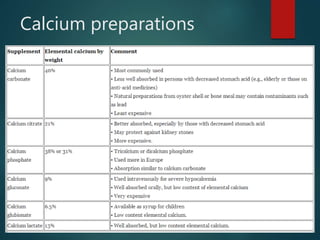
 Oral calcium can be given in a dose of 1.5 to 3 g of
elemental calcium or more per day. These large doses
of calcium reduce the doses of vitamin D that are
needed and allow for rapid normalization of serum
calcium if vitamin D intoxication subsequently occurs.
Numerous preparations of calcium are available.
Calcium preparations
Chronic Hypocalcemia
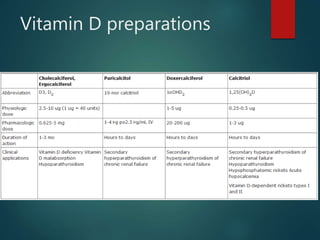
 A short-acting preparation of vitamin D (calcitriol) and
the very long-acting preparations such as vitamin D2
(ergocalciferol) are available.
 By far the most inexpensive regimens are those that
use ergocalciferol. In addition to economy, they have
the advantage of rather easy maintenance in most
patients. The disadvantage is that ergocalciferol can
slowly accumulate and produce prolonged vitamin D
intoxication.
Vitamin D preparations
Hpocalcemia
Hpocalcemia

Hpocalcemia

  • 1.
    Hypocalcemia BY HAZEM SAMY HUSSEIN ASS.LECTURER OF INTERNAL MEDICINE
  • 2.
  • 4.
    Why do weneed it?  Calcium messenger system – regulates cell function  Activates cellular enzyme cascades  Smooth muscle and myocardial contraction  Nerve impulse conduction  Secretory activity of exocrine glands
  • 6.
    Pathophysiology  Ionized calciumis affected by:  Albumin  Blood pH  Serum phosphate  Serum magnesium  Serum bicarbonate  Exogenous factors  Citrate / free fatty acids (TPN)
  • 7.
    Hypoalbuminemia  produces alow total serum [Ca2+] because of a reduction in the bound fraction of calcium, but the ionized [Ca2+] is normal. The ionized [Ca2+] can be determined directly, or the effect of hypoalbuminemia can be roughly corrected for by using the following formula:  Corrected serum calcium = Measured serum calcium + (0.8) (4 – Measured serum albumin)  Thus, in a patient with a serum [Ca2+] of 7.8 mg/dL and a serum albumin of 2 g/dL, the corrected serum [Ca2+] is 7.8 + (0.8)(4 – 2) = 9.4 mg/dL.
  • 8.
  • 9.
  • 10.
  • 11.
  • 12.
  • 13.
    Symptoms and signsof hypocalcemia  Neuromuscular irritability  Paresthesias  Laryngospasm / Bronchospasm  Tetany  Seizures  Chvostek sign  Trousseau sign  Prolonged QTc time on ECG
  • 14.
     Tetany isnot caused by increased excitability of the muscles.  Muscle excitability is depressed  hypocalcemia impedes ACh release at NM junctions  However, the increase in neuronal excitability overrides the inhibition of muscle contraction.
  • 15.
    Signs & Symptoms:A 2-in-1 Reference for Nurses, Copyright © 2007 Lippincott Williams & Wilkins, www.wrongdiagnosis.com/bookimages/14/4721.1.png
  • 16.
    Trousseau sign: (very uncomfortableand painful)  A blood pressure cuff is inflated to a pressure above the patients systolic  Pressure is continued for several  Carpopedal spasm: * flexion at the wrist * flexion at the MP joints * extension of the IP joints * adduction thumbs/fingers
  • 18.
     Long QTinterval with normal T waves  Prolongation of the ST segment with little shift from the baseline
  • 19.
    Symptoms and signsmay be ass. With underlying cause  Vitamin D deficiency: bone pain ,fractures or proximal myopathy.  Hypoparathyroidism: mental retardation ,personality changes ,extrapyramidal signs,cataract and papilloedema.  Hypocalcemia during development of permenant teeth: enamel hypoplasia
  • 20.
  • 22.
  • 23.
  • 24.
    Hungry bone syndrome Afterprolonged period of calcium absorption Rebound phase Avid uptake of calcium by bone Parallel uptake of magnesium by bone  Following parathyroidectomy
  • 25.
  • 26.
  • 27.
    Workup - blood Totaland ionized calcium Magnesium Phosphorus KFT ,s. albumen PTH Vitamin D metabolite creatinine S-ALP
  • 28.
  • 29.
    Workup - other ECG Malabsorptionworkup Karyotyping and family screening
  • 30.
  • 31.
    Acute Hypocalcemia  Patientswith tetany should receive intravenous calcium as: calcium chloride (272 mg calcium/10 mL), calcium gluconate (90 mg calcium/10 mL), or calcium gluceptate (90 mg calcium/10 mL).  Approximately 200 mg of elemental calcium can be given over several minutes.  The patient must be observed for stridor and the airway secured if necessary.
  • 32.
    Acute Hypocalcemia  Ifnecessary, calcium can be infused in doses of 400 to 1000 mg/24 h until oral therapy has taken effect.  Intravenous calcium is irritating to the veins and is best infused into a large vein or through a central venous catheter.  Oral calcium and a rapidly acting preparation of vitamin D should be started.
  • 33.
    Chronic Hypocalcemia  Theaim of chronic therapy is to: keep the patient free of symptoms and to maintain a serum [Ca2+] of approximately 8.5 to 9.0 mg/dL.  With lower serum [Ca2+], the patient may not only experience symptoms but may be predisposed over time to cataract formation if the phosphate level is also high.
  • 34.
    Chronic Hypocalcemia  Withhigher serum calcium concentrations in the upper normal range, there may be marked hypercalciuria, which occurs because the hypocalciuric effect of PTH has been lost. This may predispose to nephrolithiasis, nephrocalcinosis, and chronic renal insufficiency.  In addition, the patient with borderline elevated calcium is at increased risk of overshooting the therapeutic goal and may develop symptomatic hypercalcemia.
  • 35.
    Chronic Hypocalcemia  Themainstays of treatment are calcium and a form of vitamin D.  Oral calcium can be given in a dose of 1.5 to 3 g of elemental calcium or more per day. These large doses of calcium reduce the doses of vitamin D that are needed and allow for rapid normalization of serum calcium if vitamin D intoxication subsequently occurs. Numerous preparations of calcium are available.
  • 36.
  • 37.
    Chronic Hypocalcemia  Ashort-acting preparation of vitamin D (calcitriol) and the very long-acting preparations such as vitamin D2 (ergocalciferol) are available.  By far the most inexpensive regimens are those that use ergocalciferol. In addition to economy, they have the advantage of rather easy maintenance in most patients. The disadvantage is that ergocalciferol can slowly accumulate and produce prolonged vitamin D intoxication.
  • 38.