Calcium Disorders
Objectives
1. Overview of calcium
2. Hypercalcemia
3. Hypocalcemia
4. Inherited Calcium disorders
Overview of Calcium
Saleh Hassan Alorainy
Definition
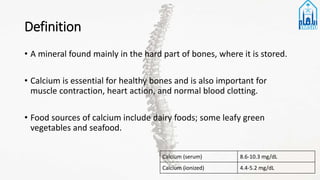
• A mineral found mainly in the hard part of bones, where it is stored.
• Calcium is essential for healthy bones and is also important for
muscle contraction, heart action, and normal blood clotting.
• Food sources of calcium include dairy foods; some leafy green
vegetables and seafood.
Calcium (serum) 8.6-10.3 mg/dL
Calcium (ionized) 4.4-5.2 mg/dL
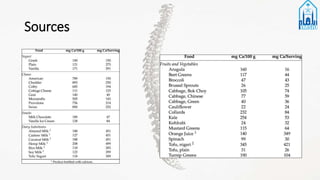
Sources
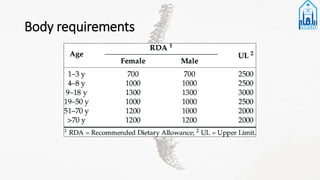
Body requirements
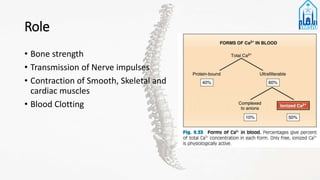
Role
• Bone strength
• Transmission of Nerve impulses
• Contraction of Smooth, Skeletal and
cardiac muscles
• Blood Clotting
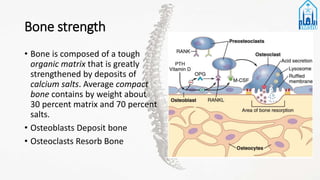
Bone strength
• Bone is composed of a tough
organic matrix that is greatly
strengthened by deposits of
calcium salts. Average compact
bone contains by weight about
30 percent matrix and 70 percent
salts.
• Osteoblasts Deposit bone
• Osteoclasts Resorb Bone
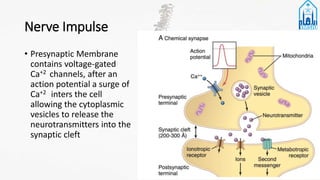
Nerve Impulse
• Presynaptic Membrane
contains voltage-gated
Ca+2 channels, after an
action potential a surge of
Ca+2 inters the cell
allowing the cytoplasmic
vesicles to release the
neurotransmitters into the
synaptic cleft
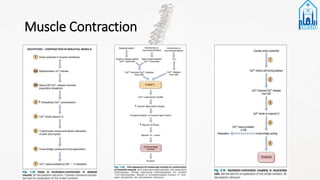
Muscle Contraction
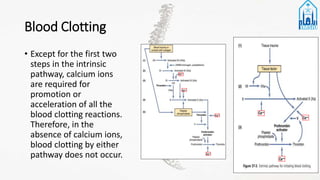
Blood Clotting
• Except for the first two
steps in the intrinsic
pathway, calcium ions
are required for
promotion or
acceleration of all the
blood clotting reactions.
Therefore, in the
absence of calcium ions,
blood clotting by either
pathway does not occur.
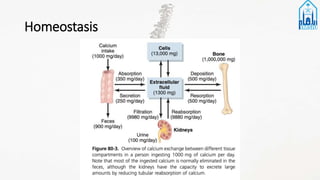
Homeostasis
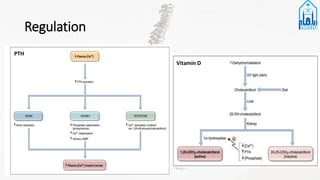
Regulation
PTH
Vitamin D
Regulation
• Calcitonin: increased plasma Ca2+ concentration Inhibition
of osteoclast bone resorption Decrease plasma Ca2+
concentration.
• Calcitonin Role in Calcium regulation is uncertain
Hypercalcemia
Definition, Etiology, Clinical Exam &
Differential Diagnosis
Khalid Mohammed Alkhalifah
Definition
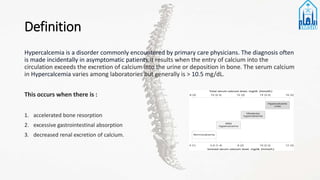
Hypercalcemia is a disorder commonly encountered by primary care physicians. The diagnosis often
is made incidentally in asymptomatic patients.It results when the entry of calcium into the
circulation exceeds the excretion of calcium into the urine or deposition in bone. The serum calcium
in Hypercalcemia varies among laboratories but generally is > 10.5 mg/dL.
This occurs when there is :
1. accelerated bone resorption
2. excessive gastrointestinal absorption
3. decreased renal excretion of calcium.
Etiology
The most common causes are the following:
1. Hyperparathyroidism (primary)
2. Malignancy (Multiple myeloma)
Other causes:
• Calcium supplementation
• Iatrogenic (thiazides)
• Immobility (especially in the ICU setting)
• Milk-alkali syndrome
• Paget disease
• Excess vitamin D
Clinical Exam
• History:
Usually asymptomatic but can present with:
1. bones (osteopenia, fractures)
2. stones (kidney stones)
3. abdominal groans (anorexia, constipation)
4. psychiatric overtones (weakness, fatigue, irritability, altered mental status).
5. coma in Severe elevations in calcium levels.
• Physical examination:
1. Hypertension and Short QT interval
2. pancreatitis in Abdominal examination
3. proximal muscle weakness
4. Hyperreflexia and tongue fasciculations
5. Polyuria and dehydration
Differential Diagnosis
1. Hyperparathyroidism
2. Malignancy
3. Vitamin Toxicity
4. Acute Complications of Sarcoidosis
Investigation, Management,
Complications & Prognosis
Fahad Saleh Alkhalaf
Investigations
• General investigations:
o Calcium level
o PO level
o Alkaline phosphate
o Parathyroid level
o Vitamin D level
1. Evaluate calcium imbalance
• Initial test: serum calcium concentration
• Confirm true hypercalcemia:
• measure ionized calcium or calculate corrected calcium.
Corrected calcium (mg/dL) = measured total Ca (mg/dL) + 0.8 (4.0 - serum albumin
[g/dL]). where 4.0 represents the average albumin level.
• Increased ionized calcium, regardless of total calcium levels → true hypercalcemia
(potentially symptomatic)
• Increased total calcium with normal ionized (active) calcium → factitious
hypercalcemia (asymptomatic finding)
Note
The corrected calcium concentration calculated using
serum albumin may not be accurate when major pH changes have
taken place in the body (e.g., following surgery).
In these cases, it is possible to measure the free calcium ion activity
directly (ie, ionized calcium level). directly.
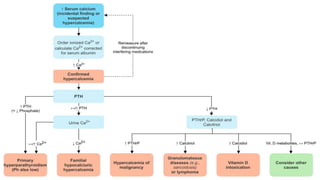
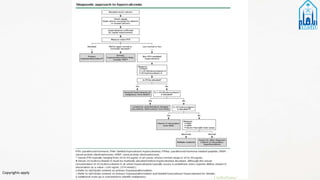
2. Differentiate between low PTH and high PTH:
To determine the underlying cause of hypercalcemia
PTH: the most important test for patients with disorders of calcium balance
3. Further tests
• ECG:
oQT interval shortening
oIn severe hypercalcemia: J wave
Copyrights apply
Management
• Treatment approach:
o treatment depends on the Ca2+ level and the symptoms
o treat the underlying cause of the hypercalcemia
o treat acute, symptomatic hypercalcemia aggressively
o bed rest
Mild or moderate asymptomatic
hypercalcemia
• Encourage adequate oral hydration
• Reduce dietary intake of calcium
• Avoid thiazide diuretics, lithium, high-calcium diet
• Monitor
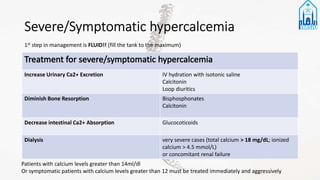
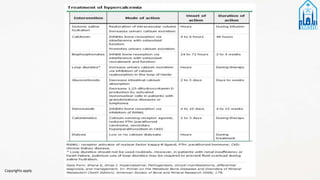
Increase Urinary Ca2+ Excretion IV hydration with isotonic saline
Calcitonin
Loop diuritics
Diminish Bone Resorption Bisphosphonates
Calcitonin
Decrease intestinal Ca2+ Absorption Glucocoticoids
Dialysis very severe cases (total calcium > 18 mg/dL; ionized
calcium > 4.5 mmol/L)
or concomitant renal failure
1st step in management is FLUID!! (fill the tank to the maximum)
Patients with calcium levels greater than 14ml/dl
Or symptomatic patients with calcium levels greater than 12 must be treated immediately and aggressively
Copyrights apply
Complications
• Osteoporosis
• Nephrolithiasis
• Arrythmias
• Altered mental status
Prognosis
Prognosis of hypercalcemia depends upon the underlying etiology
• Very poor if underlying cause is malignancy
• Excellent if underlying cause is treated properly
Hypocalcemia
Definition, Etiology, Clinical Exam &
Differential Diagnosis
Abdulmlk Abdullah AlMadhi
Definition
• Hypocalcemia Total calcium <8.5 mg/dL, if serum protein is normal
OR Ionized calcium < 4.5mg/dL.
• Because a significant portion of calcium is bound to albumin, any
alteration in the level of albumin will affect the measured level of
calcium.
Etiology
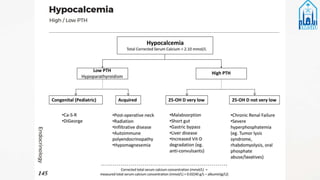
1. Hypoparathyroidism is a common cause of hypocalcemia. Calcium is
tightly regulated by the parathyroid hormone (PTH). in the setting of
absent, decreased, or ineffective PTH hormone, the body loses this
regulatory function, and cause hypocalcemia.
• Hypoparathyroidism is commonly due to surgical destruction of the
parathyroid glands ; Hypoparathyroidism may also be due to autoimmune
problem.
2. Renal insufficiency : decreased Ca reabsorption , or mainly due to
decreased production of 1,25-dihydroxy Vitamin D.
Etiology
3. Hypomagnesemia:
Always measure serum magnesium in a hypocalcemic patient.
Hypomagnesemia impairs PTH secretion
Magnesium plays a central role in adenylate cyclase activity and
subsequently in the production of cyclic adenosine monophosphate
(cAMP) .
Since PTH secretion is mediated by cAMP, altered adenylate cyclase
function in magnesium deficiency causes impairment in PTH levels.
4. Vitamin D deficiency .
Etiology
5. Pseudohypoparathyroidism:
autosomal recessive disease, causing congenital end-organ resistance to PTH
(so PTH levels are actually high); also characterized by mental retardation
and short metacarpal bones.
6. Hyperphosphatemia:
PO4 binds with Ca2+ resulting in calcium phosphate deposition.
7. DiGeorge syndrome
• Deletion on chromosome 22 .
Clinical Exam
• Asymptomatic
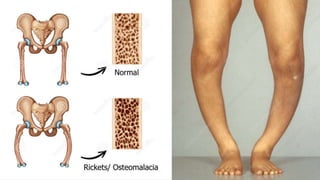
• Rickets and osteomalacia
• Increased neuromuscular irritability
The neuromuscular symptoms of hypocalcemia due to the decreased interaction of calcium
with sodium channels. Since calcium blocks sodium channels and inhibits depolarization of
nerve and muscle fibers, reduced calcium lowers the threshold for depolarization.
A. Numbness/tingling around the mouth and lips in fingers, and toes. This is often the
earliest symptom of hypocalcemia.
B. Tetany
• Hyperactive deep tendon reflexes
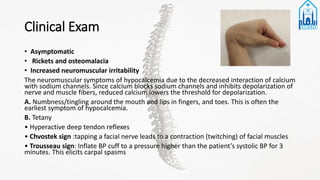
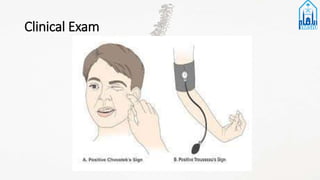
• Chvostek sign :tapping a facial nerve leads to a contraction (twitching) of facial muscles
• Trousseau sign: Inflate BP cuff to a pressure higher than the patient’s systolic BP for 3
minutes. This elicits carpal spasms
Clinical Exam
Investigation, Management,
Complications & Prognosis
Meshal Abdulrahman Almuhaidib
Investigation
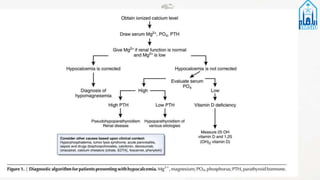
• Confirm true hypocalcemia
o Measure total and ionized calcium
o AND/OR check serum albumin and calculate corrected calcium
• Evaluate for other electrolyte abnormalities
o BMP
o Serum phosphate and magnesium
• Serum intact PTH: Indication: best initial study for confirmed hypocalcemia with
no clear etiology
• Interpretation
o Low (or normal) PTH suggests hypoparathyroidism
o High PTH suggests parathyroid gland function is preserved
• ECG: Prolonged QT interval
QRS complex and ST-segment changes (may mimic myocardial infarction)
Management
• Severe and/or symptomatic
hypocalcemia: e.g., tetany, seizures, prolonged QT interval, serum
calcium ≤ 7.5 mg/dL (< 1.9 mmol/L)
oIV calcium supplementation: calcium gluconate or calcium chloride
oContinuous telemetry
oConsider transfer to critical care unit
• Mild and/or chronic hypocalcemia: no symptoms or only mild
neuromuscular irritability (e.g., paresthesias), serum calcium 7.6–8.4
mg/dL (1.9–2.12 mmol/L)
• Oral calcium supplementation: calcium citrate, calcium carbonate
• Loop diuretics Lose calcium. Discontinue them in hypocalcemia.
Complications
• Nail and skin symptoms( eczema)
• Osteopenia and osteoporosis
• Painful premenstrual syndrome (PMS)
• Depression
• Dental Problems
Prognosis
• The prognosis of hypoglycemia depends on the cause of this condition, severity, and duration
• If the cause of fasting hypoglycemia is identified and treated early, the prognosis is excellent. If
the problem is not curable, such as a malignant tumor, the long-term prognosis is poor
• Severe and prolonged hypoglycemia can be life threatening and may be associated with increased
mortality in patients with diabetes.
• If the patient has reactive hypoglycemia, symptoms often spontaneously improve over time, and
the long-term prognosis is very good.
• Reactive hypoglycemia is often treated successfully with dietary changes and is associated with
minimal morbidity. Mortality is not observed
inherited Calcium Disorders
Saleh Alorainy
Inherited Diseases that present with Hypercalcemia
• Familial benign hypocalciuric hypercalcemia (FHH)
• Autosomal Dominant
• Asymptomatic Hypercalcemia
• Low urinary calcium excretion
• Normal PTH in 80% of patients
• Neonatal severe primary hyperparathyroidism
• symptomatic hypercalcemia, skeletal manifestations
of hyperparathyroidism, in the first 6 months of life.
• failure to thrive, dehydration, hypotonia, constipation,
rib cage deformities, and multiple fractures due to
bony undermineralization.
• require urgent parathyroidectomy
• Jansen’s disease
• Autosomal Dominant
• short-limbed dwarfism, severe hypercalcemia and
hypophosphatemia
• normal or undetectable serum levels of PTH.
• Williams syndrome
• Autosomal Dominant
• supravalvular aortic stenosis, elfin-like facies,
psychomotor retardation, and infantile
hypercalcemia.
• Infantile hypercalcemia
• Autosomal Recessive
• failure to thrive, severe hypercalcemia, hypercalciuria,
and nephrocalcinosis
• elevated circulating 1,25(OH)2D concentrations.
Inherited Diseases that present with Hypocalcemia
• Inherited hypoparathyroidism:
• may develop hypocalcemic seizures in the neonatal or infantile periods and require lifelong treatment
with oral vitamin D.
• Autosomal dominant, autosomal recessive, and X-linked recessive inheritances.
• Mutations of one or more PTH related genes
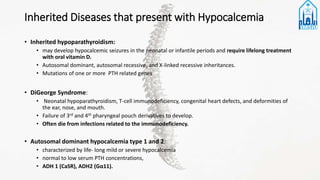
• DiGeorge Syndrome:
• Neonatal hypoparathyroidism, T-cell immunodeficiency, congenital heart defects, and deformities of
the ear, nose, and mouth.
• Failure of 3rd and 4th pharyngeal pouch derivatives to develop.
• Often die from infections related to the immunodeficiency.
• Autosomal dominant hypocalcemia type 1 and 2:
• characterized by life- long mild or severe hypocalcemia
• normal to low serum PTH concentrations,
• ADH 1 (CaSR), ADH2 (Gα11).
References
• Guyton and Hall Textbook of Medical Physiology 13TH EDITION
• Linda S. Costanzo - Physiology (2017)
• Goldman-Cecil Medicine 25th Edition
• Step-Up to Medicine 4th Edition
• Clinical medicine
• Osmosis
• National Institute of Health WebMed
• https://www.medicinenet.com/script/main/art.asp?articlekey=2575
• https://www.researchgate.net/figure/Calcium-recommendations-for-Americans-mg-d-12_tbl1_331976843
• https://www.researchgate.net/figure/Cont_tbl3_331976843
• https://www.researchgate.net/figure/Non-dairy-sources-of-calcium-in-the-diet-18_tbl4_331976843
• https://www.ncbi.nlm.nih.gov/books/NBK430714/
• UpToDate
• AMBOSS
• Medscape
Questions?
This Seminar Was Done By:-
• Saleh Hassan Alorainy
• Khalid Mohammed Alkhalifah
• Fahad Saleh Alkhalaf
• Abdulmlk Abdullah AlMadhi
• Meshal Abdulrahman Almuhaidib
Thank You!

Calcium disorders

  • 1.
  • 2.
    Objectives 1. Overview ofcalcium 2. Hypercalcemia 3. Hypocalcemia 4. Inherited Calcium disorders
  • 3.
  • 4.
    Definition • A mineralfound mainly in the hard part of bones, where it is stored. • Calcium is essential for healthy bones and is also important for muscle contraction, heart action, and normal blood clotting. • Food sources of calcium include dairy foods; some leafy green vegetables and seafood. Calcium (serum) 8.6-10.3 mg/dL Calcium (ionized) 4.4-5.2 mg/dL
  • 5.
  • 6.
  • 7.
    Role • Bone strength •Transmission of Nerve impulses • Contraction of Smooth, Skeletal and cardiac muscles • Blood Clotting
  • 8.
    Bone strength • Boneis composed of a tough organic matrix that is greatly strengthened by deposits of calcium salts. Average compact bone contains by weight about 30 percent matrix and 70 percent salts. • Osteoblasts Deposit bone • Osteoclasts Resorb Bone
  • 9.
    Nerve Impulse • PresynapticMembrane contains voltage-gated Ca+2 channels, after an action potential a surge of Ca+2 inters the cell allowing the cytoplasmic vesicles to release the neurotransmitters into the synaptic cleft
  • 10.
  • 11.
    Blood Clotting • Exceptfor the first two steps in the intrinsic pathway, calcium ions are required for promotion or acceleration of all the blood clotting reactions. Therefore, in the absence of calcium ions, blood clotting by either pathway does not occur.
  • 12.
  • 13.
  • 14.
    Regulation • Calcitonin: increasedplasma Ca2+ concentration Inhibition of osteoclast bone resorption Decrease plasma Ca2+ concentration. • Calcitonin Role in Calcium regulation is uncertain
  • 15.
  • 16.
    Definition, Etiology, ClinicalExam & Differential Diagnosis Khalid Mohammed Alkhalifah
  • 17.
    Definition Hypercalcemia is adisorder commonly encountered by primary care physicians. The diagnosis often is made incidentally in asymptomatic patients.It results when the entry of calcium into the circulation exceeds the excretion of calcium into the urine or deposition in bone. The serum calcium in Hypercalcemia varies among laboratories but generally is > 10.5 mg/dL. This occurs when there is : 1. accelerated bone resorption 2. excessive gastrointestinal absorption 3. decreased renal excretion of calcium.
  • 18.
    Etiology The most commoncauses are the following: 1. Hyperparathyroidism (primary) 2. Malignancy (Multiple myeloma) Other causes: • Calcium supplementation • Iatrogenic (thiazides) • Immobility (especially in the ICU setting) • Milk-alkali syndrome • Paget disease • Excess vitamin D
  • 19.
    Clinical Exam • History: Usuallyasymptomatic but can present with: 1. bones (osteopenia, fractures) 2. stones (kidney stones) 3. abdominal groans (anorexia, constipation) 4. psychiatric overtones (weakness, fatigue, irritability, altered mental status). 5. coma in Severe elevations in calcium levels. • Physical examination: 1. Hypertension and Short QT interval 2. pancreatitis in Abdominal examination 3. proximal muscle weakness 4. Hyperreflexia and tongue fasciculations 5. Polyuria and dehydration
  • 20.
    Differential Diagnosis 1. Hyperparathyroidism 2.Malignancy 3. Vitamin Toxicity 4. Acute Complications of Sarcoidosis
  • 21.
    Investigation, Management, Complications &Prognosis Fahad Saleh Alkhalaf
  • 22.
    Investigations • General investigations: oCalcium level o PO level o Alkaline phosphate o Parathyroid level o Vitamin D level
  • 23.
    1. Evaluate calciumimbalance • Initial test: serum calcium concentration • Confirm true hypercalcemia: • measure ionized calcium or calculate corrected calcium. Corrected calcium (mg/dL) = measured total Ca (mg/dL) + 0.8 (4.0 - serum albumin [g/dL]). where 4.0 represents the average albumin level. • Increased ionized calcium, regardless of total calcium levels → true hypercalcemia (potentially symptomatic) • Increased total calcium with normal ionized (active) calcium → factitious hypercalcemia (asymptomatic finding)
  • 24.
    Note The corrected calciumconcentration calculated using serum albumin may not be accurate when major pH changes have taken place in the body (e.g., following surgery). In these cases, it is possible to measure the free calcium ion activity directly (ie, ionized calcium level). directly.
  • 25.
    2. Differentiate betweenlow PTH and high PTH: To determine the underlying cause of hypercalcemia PTH: the most important test for patients with disorders of calcium balance 3. Further tests • ECG: oQT interval shortening oIn severe hypercalcemia: J wave
  • 27.
  • 28.
    Management • Treatment approach: otreatment depends on the Ca2+ level and the symptoms o treat the underlying cause of the hypercalcemia o treat acute, symptomatic hypercalcemia aggressively o bed rest
  • 29.
    Mild or moderateasymptomatic hypercalcemia • Encourage adequate oral hydration • Reduce dietary intake of calcium • Avoid thiazide diuretics, lithium, high-calcium diet • Monitor
  • 30.
    Increase Urinary Ca2+Excretion IV hydration with isotonic saline Calcitonin Loop diuritics Diminish Bone Resorption Bisphosphonates Calcitonin Decrease intestinal Ca2+ Absorption Glucocoticoids Dialysis very severe cases (total calcium > 18 mg/dL; ionized calcium > 4.5 mmol/L) or concomitant renal failure 1st step in management is FLUID!! (fill the tank to the maximum) Patients with calcium levels greater than 14ml/dl Or symptomatic patients with calcium levels greater than 12 must be treated immediately and aggressively
  • 31.
  • 32.
    Complications • Osteoporosis • Nephrolithiasis •Arrythmias • Altered mental status
  • 33.
    Prognosis Prognosis of hypercalcemiadepends upon the underlying etiology • Very poor if underlying cause is malignancy • Excellent if underlying cause is treated properly
  • 34.
  • 35.
    Definition, Etiology, ClinicalExam & Differential Diagnosis Abdulmlk Abdullah AlMadhi
  • 36.
    Definition • Hypocalcemia Totalcalcium <8.5 mg/dL, if serum protein is normal OR Ionized calcium < 4.5mg/dL. • Because a significant portion of calcium is bound to albumin, any alteration in the level of albumin will affect the measured level of calcium.
  • 38.
    Etiology 1. Hypoparathyroidism isa common cause of hypocalcemia. Calcium is tightly regulated by the parathyroid hormone (PTH). in the setting of absent, decreased, or ineffective PTH hormone, the body loses this regulatory function, and cause hypocalcemia. • Hypoparathyroidism is commonly due to surgical destruction of the parathyroid glands ; Hypoparathyroidism may also be due to autoimmune problem. 2. Renal insufficiency : decreased Ca reabsorption , or mainly due to decreased production of 1,25-dihydroxy Vitamin D.
  • 39.
    Etiology 3. Hypomagnesemia: Always measureserum magnesium in a hypocalcemic patient. Hypomagnesemia impairs PTH secretion Magnesium plays a central role in adenylate cyclase activity and subsequently in the production of cyclic adenosine monophosphate (cAMP) . Since PTH secretion is mediated by cAMP, altered adenylate cyclase function in magnesium deficiency causes impairment in PTH levels. 4. Vitamin D deficiency .
  • 40.
    Etiology 5. Pseudohypoparathyroidism: autosomal recessivedisease, causing congenital end-organ resistance to PTH (so PTH levels are actually high); also characterized by mental retardation and short metacarpal bones. 6. Hyperphosphatemia: PO4 binds with Ca2+ resulting in calcium phosphate deposition. 7. DiGeorge syndrome • Deletion on chromosome 22 .
  • 41.
    Clinical Exam • Asymptomatic •Rickets and osteomalacia • Increased neuromuscular irritability The neuromuscular symptoms of hypocalcemia due to the decreased interaction of calcium with sodium channels. Since calcium blocks sodium channels and inhibits depolarization of nerve and muscle fibers, reduced calcium lowers the threshold for depolarization. A. Numbness/tingling around the mouth and lips in fingers, and toes. This is often the earliest symptom of hypocalcemia. B. Tetany • Hyperactive deep tendon reflexes • Chvostek sign :tapping a facial nerve leads to a contraction (twitching) of facial muscles • Trousseau sign: Inflate BP cuff to a pressure higher than the patient’s systolic BP for 3 minutes. This elicits carpal spasms
  • 43.
  • 44.
    Investigation, Management, Complications &Prognosis Meshal Abdulrahman Almuhaidib
  • 45.
    Investigation • Confirm truehypocalcemia o Measure total and ionized calcium o AND/OR check serum albumin and calculate corrected calcium • Evaluate for other electrolyte abnormalities o BMP o Serum phosphate and magnesium • Serum intact PTH: Indication: best initial study for confirmed hypocalcemia with no clear etiology • Interpretation o Low (or normal) PTH suggests hypoparathyroidism o High PTH suggests parathyroid gland function is preserved • ECG: Prolonged QT interval QRS complex and ST-segment changes (may mimic myocardial infarction)
  • 47.
    Management • Severe and/orsymptomatic hypocalcemia: e.g., tetany, seizures, prolonged QT interval, serum calcium ≤ 7.5 mg/dL (< 1.9 mmol/L) oIV calcium supplementation: calcium gluconate or calcium chloride oContinuous telemetry oConsider transfer to critical care unit • Mild and/or chronic hypocalcemia: no symptoms or only mild neuromuscular irritability (e.g., paresthesias), serum calcium 7.6–8.4 mg/dL (1.9–2.12 mmol/L) • Oral calcium supplementation: calcium citrate, calcium carbonate • Loop diuretics Lose calcium. Discontinue them in hypocalcemia.
  • 48.
    Complications • Nail andskin symptoms( eczema) • Osteopenia and osteoporosis • Painful premenstrual syndrome (PMS) • Depression • Dental Problems
  • 49.
    Prognosis • The prognosisof hypoglycemia depends on the cause of this condition, severity, and duration • If the cause of fasting hypoglycemia is identified and treated early, the prognosis is excellent. If the problem is not curable, such as a malignant tumor, the long-term prognosis is poor • Severe and prolonged hypoglycemia can be life threatening and may be associated with increased mortality in patients with diabetes. • If the patient has reactive hypoglycemia, symptoms often spontaneously improve over time, and the long-term prognosis is very good. • Reactive hypoglycemia is often treated successfully with dietary changes and is associated with minimal morbidity. Mortality is not observed
  • 50.
  • 51.
    Inherited Diseases thatpresent with Hypercalcemia • Familial benign hypocalciuric hypercalcemia (FHH) • Autosomal Dominant • Asymptomatic Hypercalcemia • Low urinary calcium excretion • Normal PTH in 80% of patients • Neonatal severe primary hyperparathyroidism • symptomatic hypercalcemia, skeletal manifestations of hyperparathyroidism, in the first 6 months of life. • failure to thrive, dehydration, hypotonia, constipation, rib cage deformities, and multiple fractures due to bony undermineralization. • require urgent parathyroidectomy • Jansen’s disease • Autosomal Dominant • short-limbed dwarfism, severe hypercalcemia and hypophosphatemia • normal or undetectable serum levels of PTH. • Williams syndrome • Autosomal Dominant • supravalvular aortic stenosis, elfin-like facies, psychomotor retardation, and infantile hypercalcemia. • Infantile hypercalcemia • Autosomal Recessive • failure to thrive, severe hypercalcemia, hypercalciuria, and nephrocalcinosis • elevated circulating 1,25(OH)2D concentrations.
  • 52.
    Inherited Diseases thatpresent with Hypocalcemia • Inherited hypoparathyroidism: • may develop hypocalcemic seizures in the neonatal or infantile periods and require lifelong treatment with oral vitamin D. • Autosomal dominant, autosomal recessive, and X-linked recessive inheritances. • Mutations of one or more PTH related genes • DiGeorge Syndrome: • Neonatal hypoparathyroidism, T-cell immunodeficiency, congenital heart defects, and deformities of the ear, nose, and mouth. • Failure of 3rd and 4th pharyngeal pouch derivatives to develop. • Often die from infections related to the immunodeficiency. • Autosomal dominant hypocalcemia type 1 and 2: • characterized by life- long mild or severe hypocalcemia • normal to low serum PTH concentrations, • ADH 1 (CaSR), ADH2 (Gα11).
  • 53.
    References • Guyton andHall Textbook of Medical Physiology 13TH EDITION • Linda S. Costanzo - Physiology (2017) • Goldman-Cecil Medicine 25th Edition • Step-Up to Medicine 4th Edition • Clinical medicine • Osmosis • National Institute of Health WebMed • https://www.medicinenet.com/script/main/art.asp?articlekey=2575 • https://www.researchgate.net/figure/Calcium-recommendations-for-Americans-mg-d-12_tbl1_331976843 • https://www.researchgate.net/figure/Cont_tbl3_331976843 • https://www.researchgate.net/figure/Non-dairy-sources-of-calcium-in-the-diet-18_tbl4_331976843 • https://www.ncbi.nlm.nih.gov/books/NBK430714/ • UpToDate • AMBOSS • Medscape
  • 54.
  • 55.
    This Seminar WasDone By:- • Saleh Hassan Alorainy • Khalid Mohammed Alkhalifah • Fahad Saleh Alkhalaf • Abdulmlk Abdullah AlMadhi • Meshal Abdulrahman Almuhaidib
  • 56.

Editor's Notes

  • #7 In pregnancy, there is no recommendation regarding calcium requirement.
  • #15 Medullary Thyroid CA, Thyroidectomy does not cause a calcium derangement
  • #53 DiGeorge Syndrome: Most cases are sporadic, but an autosomal dominant inheritance of DiGeorge syndrome has been observed, and an association between the syndrome and an unbalanced translocation and deletions About 20% of ADH1 patients do not have a previously reported family history because they have de novo mutations.