INDEXING THE IDEA OF AN
BY:PRANAY KUMAR TODE
E-MAIL: PKTODE@YAHOO.CO.IN
o THIS PRESENTATION IS A GENERAL VIEW OF WRITING AN
ARCHITECTURAL THESIS, GENERATED BY SOME RESEARCH ON THE
WRITING AND READING SKILLS OF THE WRITERS AS WELL AS
READERS RESPECTIVELY.
o USE THIS PRESENTATION AS A REFERENCE ONLY,
o EACH THESIS TOPIC MAY DIFFER IN ITS CONTENTS, SYSTEM AND
METHODOLOGY OF RESEARCH.
o BE CAREFUL WHILE WRITING YOUR THESIS.
Thesis should contain
I. ABSTRACT
II. ACKNOWLEDGEMENTS
III. TABLE OF CONTENTS
IV.LIST OF MAPS, CHARTS, GRAPHS & TABLES
V. LIST OF ABBREVIATIONS AND ACRONYMS
CHAPTER 1 - INTRODUCTION
1.1: Background – Problem statement; Research questions
1.2: Objective – Sub-objectives
1.3: Methodology
1.4: Scope and Parameters
1.5: Rationale and Justification
1.6: Expected results
1.7: Use of Study
CHAPTER 2 – LITERATURE REVIEW
2.1: Definitions and descriptions (background of literature review)
2.2: Different Authors and their books, articles etc. (Summary of whatever literature
reviewed)
2.3: Architect’s perspective
2.4: Research Arguments ( view points of different authors both for and against)
2.5: Theoretical Framework (Identification of the gaps in arguments where you
want to work)
2.6: Conceptual Framework (Hypothesis development)
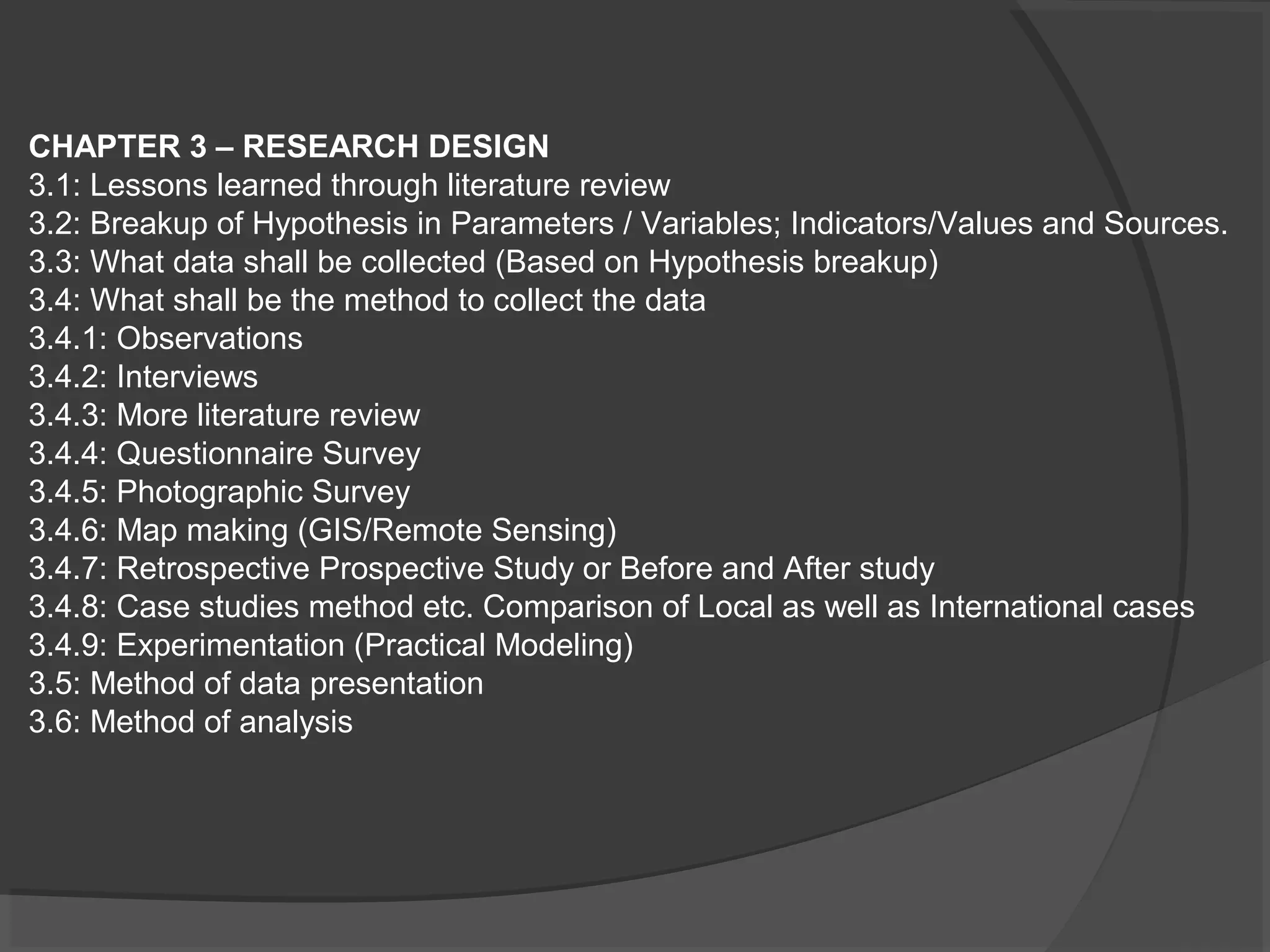
CHAPTER 3 – RESEARCH DESIGN
3.1: Lessons learned through literature review
3.2: Breakup of Hypothesis in Parameters / Variables; Indicators/Values and Sources.
3.3: What data shall be collected (Based on Hypothesis breakup)
3.4: What shall be the method to collect the data
3.4.1: Observations
3.4.2: Interviews
3.4.3: More literature review
3.4.4: Questionnaire Survey
3.4.5: Photographic Survey
3.4.6: Map making (GIS/Remote Sensing)
3.4.7: Retrospective Prospective Study or Before and After study
3.4.8: Case studies method etc. Comparison of Local as well as International cases
3.4.9: Experimentation (Practical Modeling)
3.5: Method of data presentation
3.6: Method of analysis
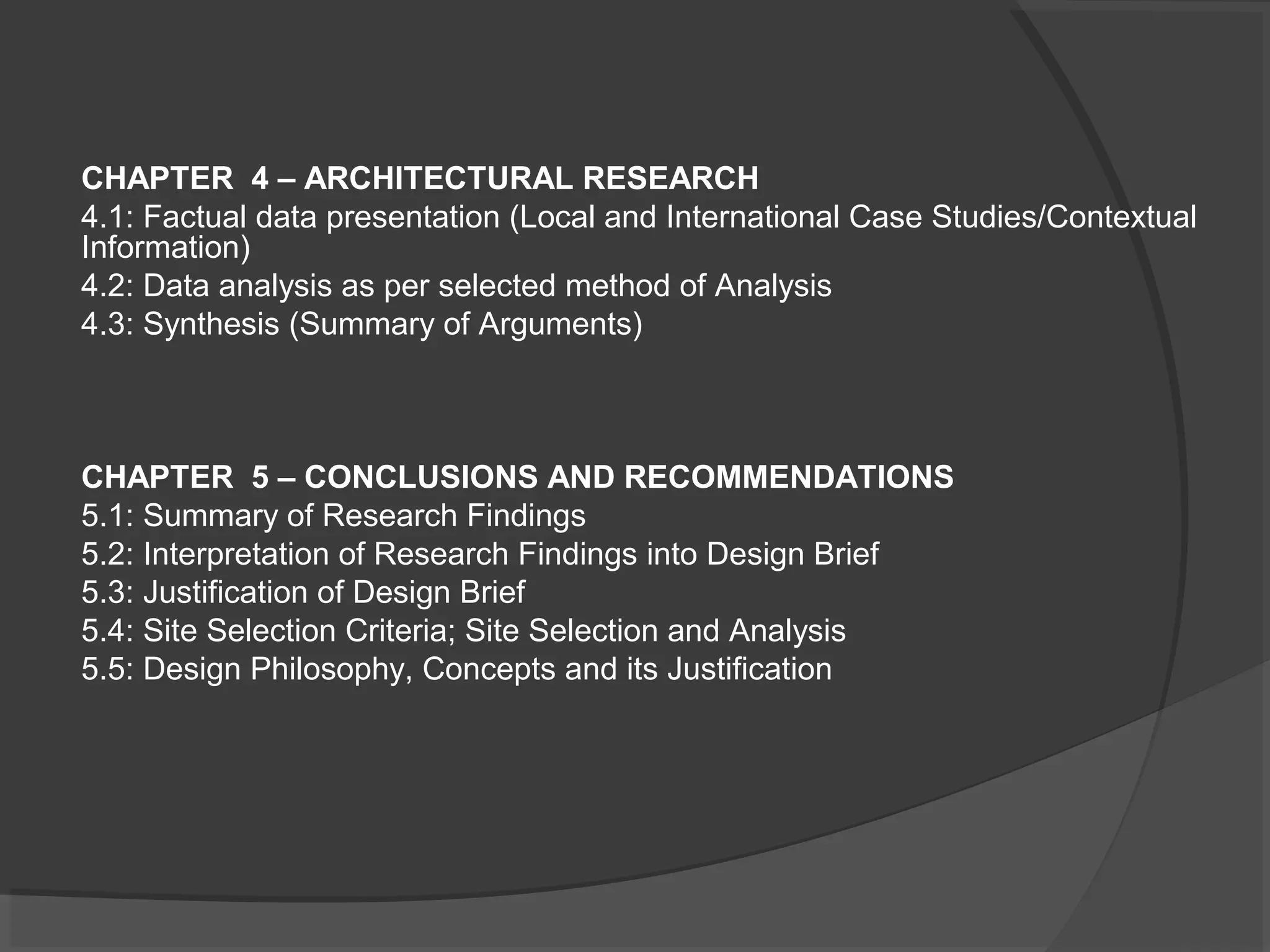
CHAPTER 4 – ARCHITECTURAL RESEARCH
4.1: Factual data presentation (Local and International Case Studies/Contextual
Information)
4.2: Data analysis as per selected method of Analysis
4.3: Synthesis (Summary of Arguments)
CHAPTER 5 – CONCLUSIONS AND RECOMMENDATIONS
5.1: Summary of Research Findings
5.2: Interpretation of Research Findings into Design Brief
5.3: Justification of Design Brief
5.4: Site Selection Criteria; Site Selection and Analysis
5.5: Design Philosophy, Concepts and its Justification
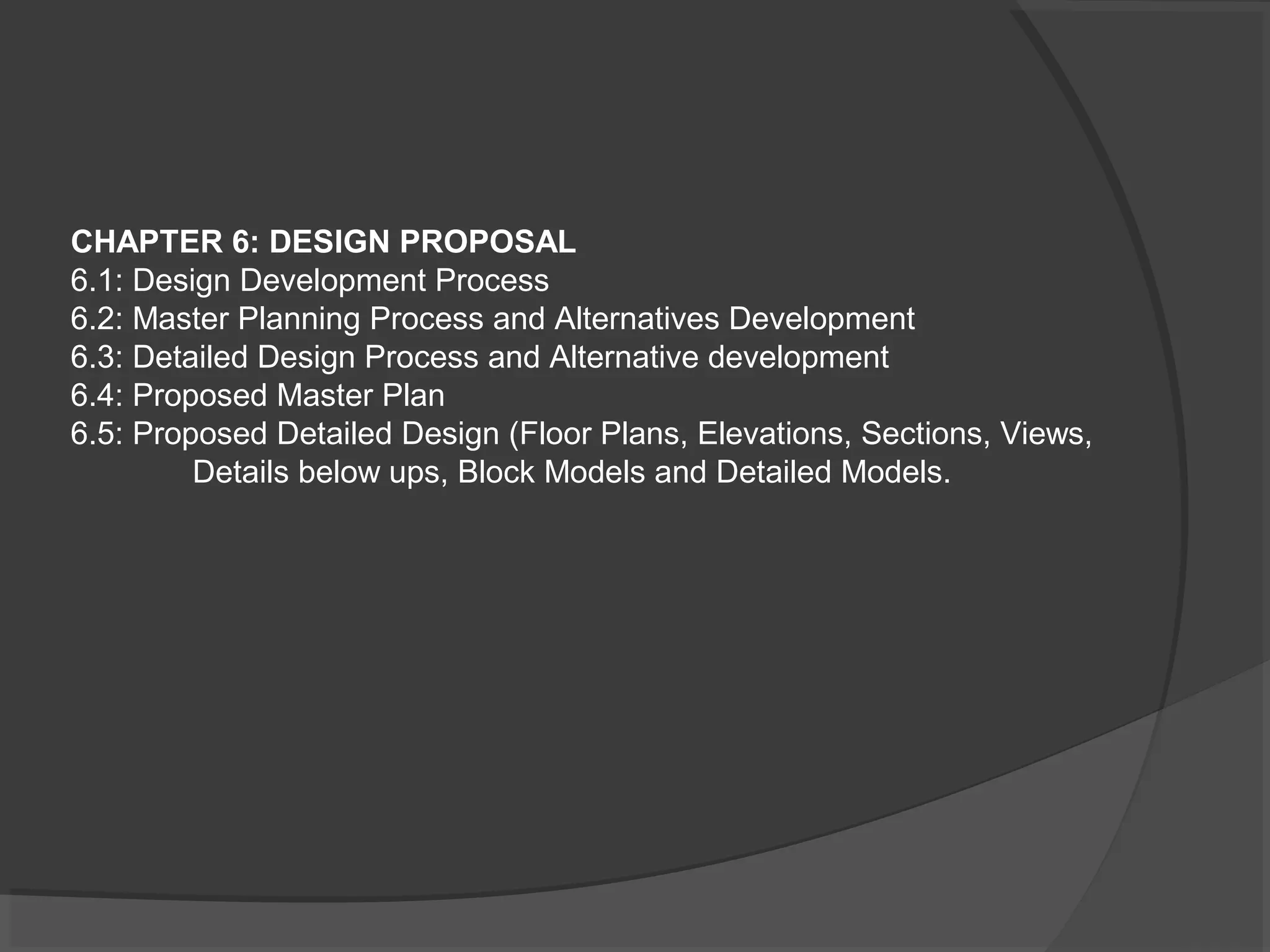
CHAPTER 6: DESIGN PROPOSAL
6.1: Design Development Process
6.2: Master Planning Process and Alternatives Development
6.3: Detailed Design Process and Alternative development
6.4: Proposed Master Plan
6.5: Proposed Detailed Design (Floor Plans, Elevations, Sections, Views,
Details below ups, Block Models and Detailed Models.
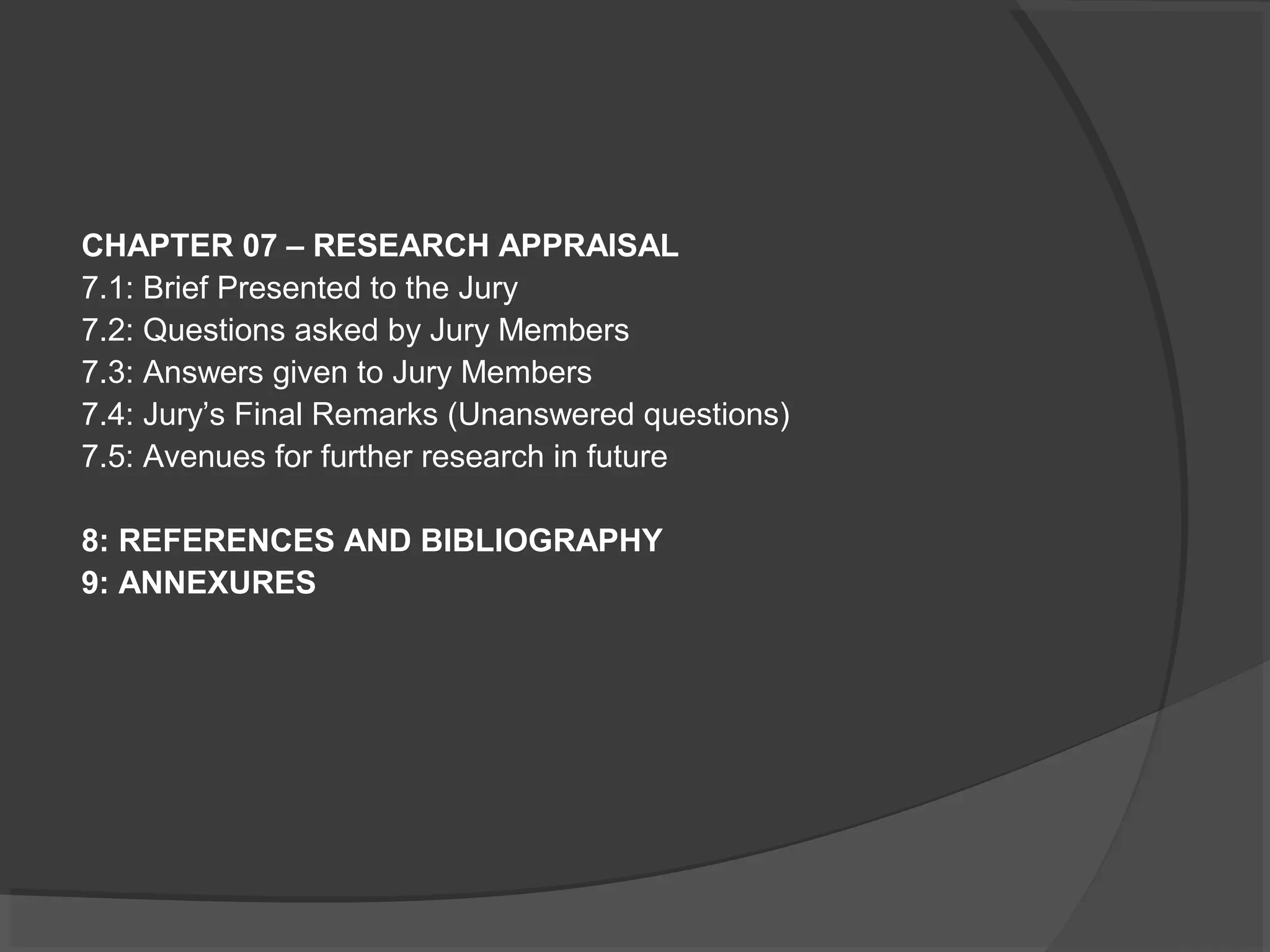
CHAPTER 07 – RESEARCH APPRAISAL
7.1: Brief Presented to the Jury
7.2: Questions asked by Jury Members
7.3: Answers given to Jury Members
7.4: Jury’s Final Remarks (Unanswered questions)
7.5: Avenues for further research in future
8: REFERENCES AND BIBLIOGRAPHY
9: ANNEXURES
THANK YOU
AND
HAPPY THESIS
THANK YOU
AND
HAPPY THESIS

How to write architectural thesis

  • 1.
    INDEXING THE IDEAOF AN BY:PRANAY KUMAR TODE E-MAIL: PKTODE@YAHOO.CO.IN
  • 2.
    o THIS PRESENTATIONIS A GENERAL VIEW OF WRITING AN ARCHITECTURAL THESIS, GENERATED BY SOME RESEARCH ON THE WRITING AND READING SKILLS OF THE WRITERS AS WELL AS READERS RESPECTIVELY. o USE THIS PRESENTATION AS A REFERENCE ONLY, o EACH THESIS TOPIC MAY DIFFER IN ITS CONTENTS, SYSTEM AND METHODOLOGY OF RESEARCH. o BE CAREFUL WHILE WRITING YOUR THESIS.
  • 3.
    Thesis should contain I.ABSTRACT II. ACKNOWLEDGEMENTS III. TABLE OF CONTENTS IV.LIST OF MAPS, CHARTS, GRAPHS & TABLES V. LIST OF ABBREVIATIONS AND ACRONYMS CHAPTER 1 - INTRODUCTION 1.1: Background – Problem statement; Research questions 1.2: Objective – Sub-objectives 1.3: Methodology 1.4: Scope and Parameters 1.5: Rationale and Justification 1.6: Expected results 1.7: Use of Study
  • 4.
    CHAPTER 2 –LITERATURE REVIEW 2.1: Definitions and descriptions (background of literature review) 2.2: Different Authors and their books, articles etc. (Summary of whatever literature reviewed) 2.3: Architect’s perspective 2.4: Research Arguments ( view points of different authors both for and against) 2.5: Theoretical Framework (Identification of the gaps in arguments where you want to work) 2.6: Conceptual Framework (Hypothesis development)
  • 5.
    CHAPTER 3 –RESEARCH DESIGN 3.1: Lessons learned through literature review 3.2: Breakup of Hypothesis in Parameters / Variables; Indicators/Values and Sources. 3.3: What data shall be collected (Based on Hypothesis breakup) 3.4: What shall be the method to collect the data 3.4.1: Observations 3.4.2: Interviews 3.4.3: More literature review 3.4.4: Questionnaire Survey 3.4.5: Photographic Survey 3.4.6: Map making (GIS/Remote Sensing) 3.4.7: Retrospective Prospective Study or Before and After study 3.4.8: Case studies method etc. Comparison of Local as well as International cases 3.4.9: Experimentation (Practical Modeling) 3.5: Method of data presentation 3.6: Method of analysis
  • 6.
    CHAPTER 4 –ARCHITECTURAL RESEARCH 4.1: Factual data presentation (Local and International Case Studies/Contextual Information) 4.2: Data analysis as per selected method of Analysis 4.3: Synthesis (Summary of Arguments) CHAPTER 5 – CONCLUSIONS AND RECOMMENDATIONS 5.1: Summary of Research Findings 5.2: Interpretation of Research Findings into Design Brief 5.3: Justification of Design Brief 5.4: Site Selection Criteria; Site Selection and Analysis 5.5: Design Philosophy, Concepts and its Justification
  • 7.
    CHAPTER 6: DESIGNPROPOSAL 6.1: Design Development Process 6.2: Master Planning Process and Alternatives Development 6.3: Detailed Design Process and Alternative development 6.4: Proposed Master Plan 6.5: Proposed Detailed Design (Floor Plans, Elevations, Sections, Views, Details below ups, Block Models and Detailed Models.
  • 8.
    CHAPTER 07 –RESEARCH APPRAISAL 7.1: Brief Presented to the Jury 7.2: Questions asked by Jury Members 7.3: Answers given to Jury Members 7.4: Jury’s Final Remarks (Unanswered questions) 7.5: Avenues for further research in future 8: REFERENCES AND BIBLIOGRAPHY 9: ANNEXURES
  • 9.
  • 10.