Your Hosts
Markus Ehlers Raiko Schulz
Agenda
•Common mistakes
•Common forms of attack
•Counter measures
•Unsafe passwords
•Missing firewall
•Public IP address
•Port forwarding instead of VPN
•Unencrypted telephony
•No strict call rights and limitations
•Access rights not limited
•Unused IP services and devices still being connected
•No backups
•Missing plan B
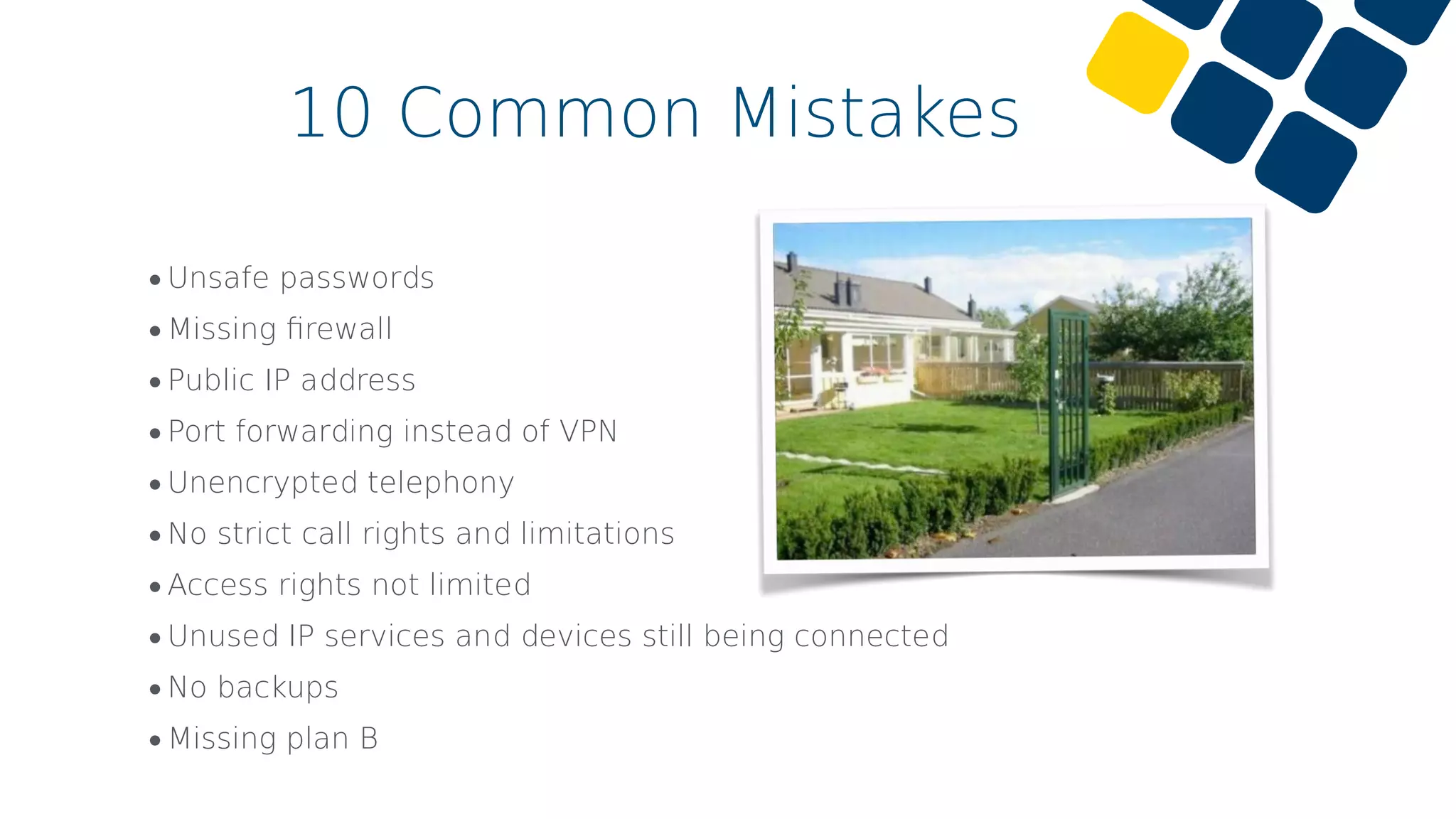
10 Common Mistakes
Common Cyber Attacks
Denial of
Service
Eavesdropping
SPIT
Toll Fraud
Man-in-the-
Middle Attack
Flooding
Infrastructure
Hijacking
Infrastructure
Highjacking
High Phone BillIdentity Highjacking
Brute Force
Attack
ARP Poisining
Bot Net
IP-Spoofing
•Much easier with VoIP
•No separate phone lines
•Aiming for log-in data and internal information
•Man-in-the-middle Attack
•ARP-Poisoning targeting Address Resolution Protocol
•Hijacking standard gateways and DHCP-Spoofing
•Infrastructure Hijacking
Common Cyber Attacks
Eavesdropping
•Port-scan followed by Brute-Force Attack
•Man-in-the-Middle Attack and Identity Spoofing
•Attacker faking identity to gain internal information or for fraud
•Expensive oversea calls, hotline and service numbers
Common Cyber Attacks
Fraud
•Spam-over-Internet
•IP PBX gets hijacked to act as a bot
•Forged RTP Packets
•Very difficult to back-trace and to oppose
•Identity Spoofing and Bot networks
•Content filter acts too late
•May only help in time for voicemail messages
Common Cyber Attacks
SPIT
•(D)DoS Attacks
•Aiming for malfunction of a system
•IP Spoofing to keep attacker hidden or to
•Overload victims with response packages
Common Cyber Attacks
Denial-of-Service
•Company guideline for network safety
•Regular review and update
•PBX and network security
•All network devices need to be secured!
Security Measures
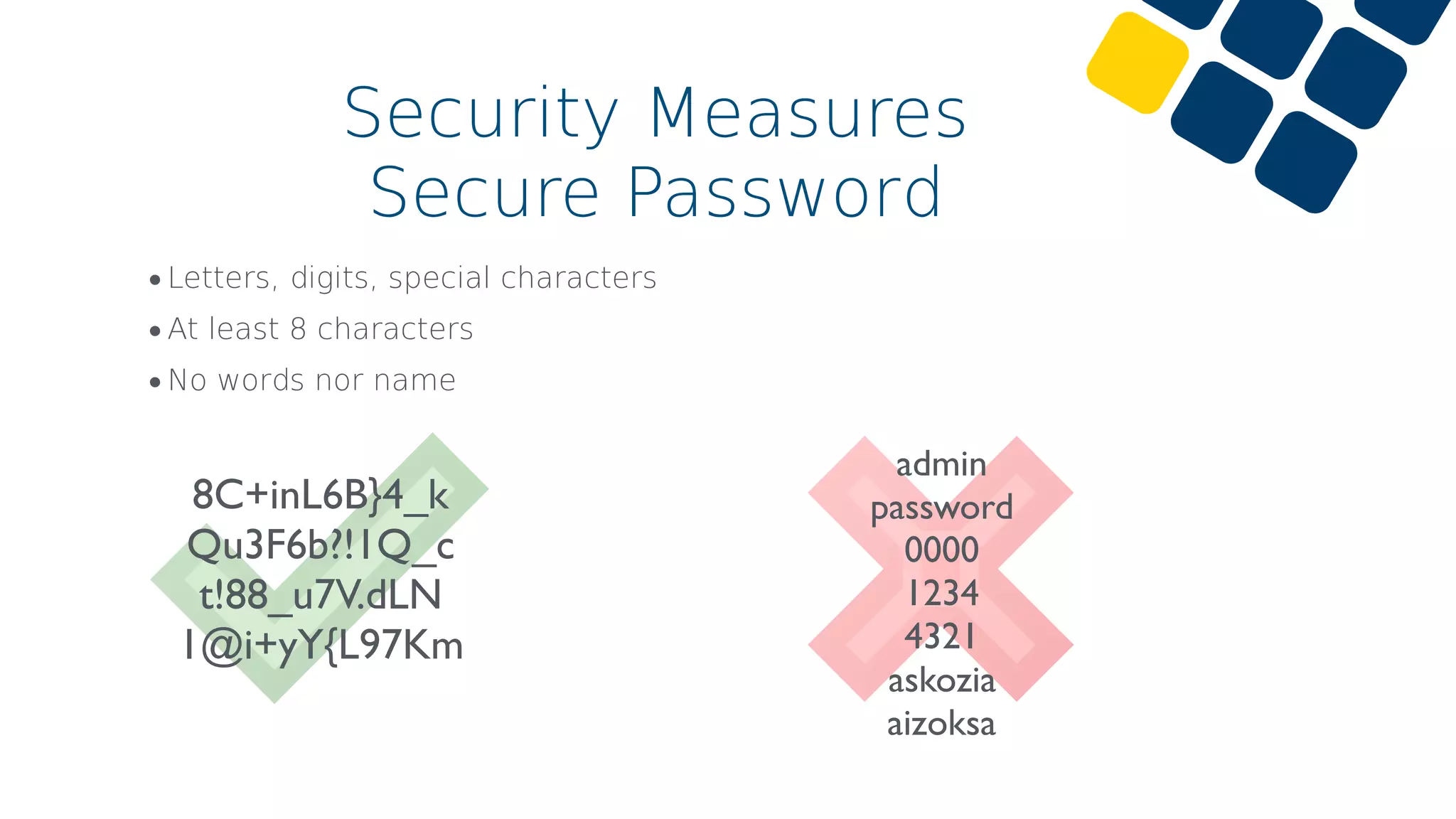
•Letters, digits, special characters
•At least 8 characters
•No words nor name
Security Measures
Secure Password
admin
password
0000
1234
4321
askozia
aizoksa
8C+inL6B}4_k
Qu3F6b?!1Q_c
t!88_u7V.dLN
1@i+yY{L97Km
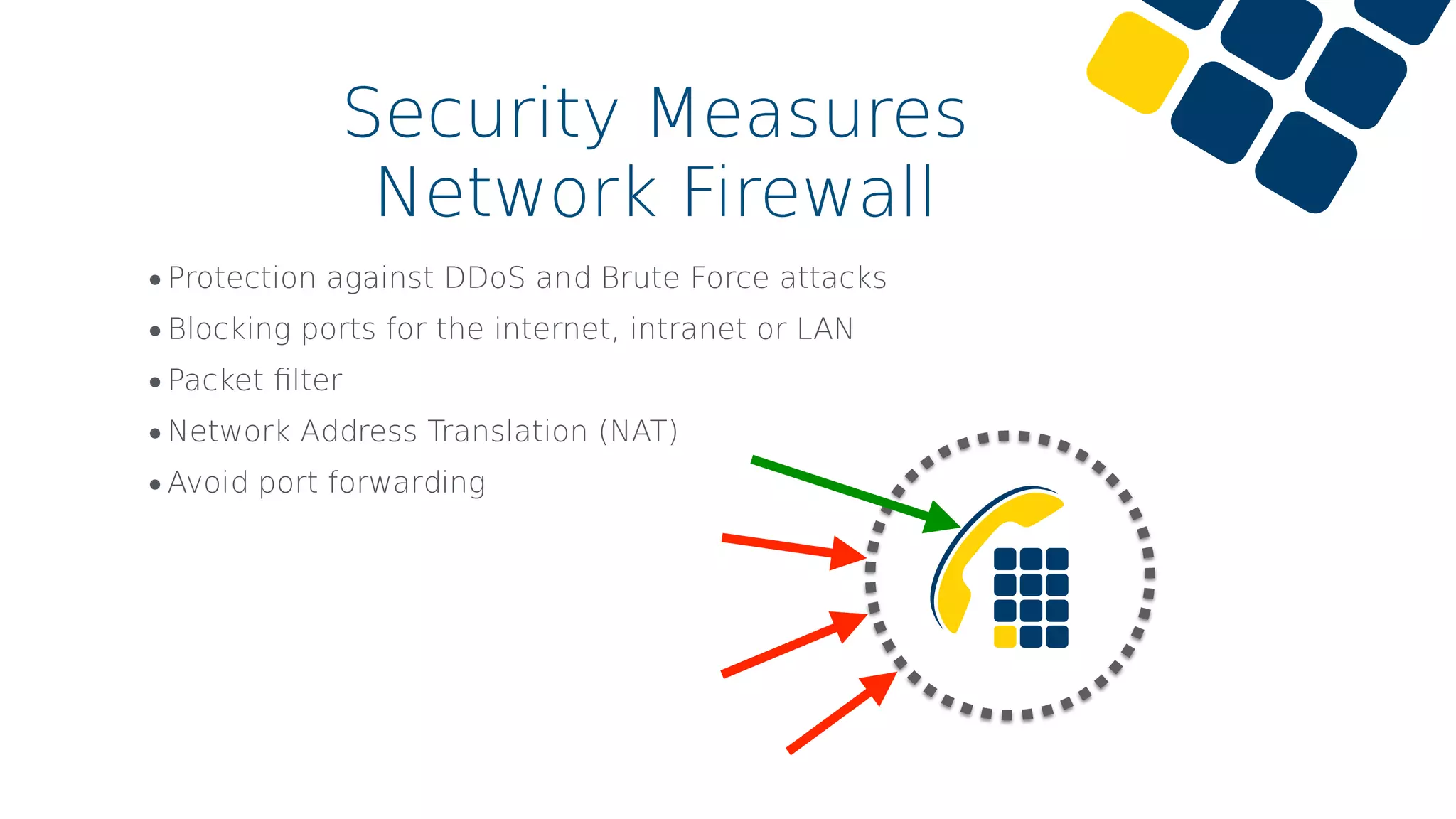
•Protection against DDoS and Brute Force attacks
•Blocking ports for the internet, intranet or LAN
•Packet filter
•Network Address Translation (NAT)
•Avoid port forwarding
Security Measures
Network Firewall
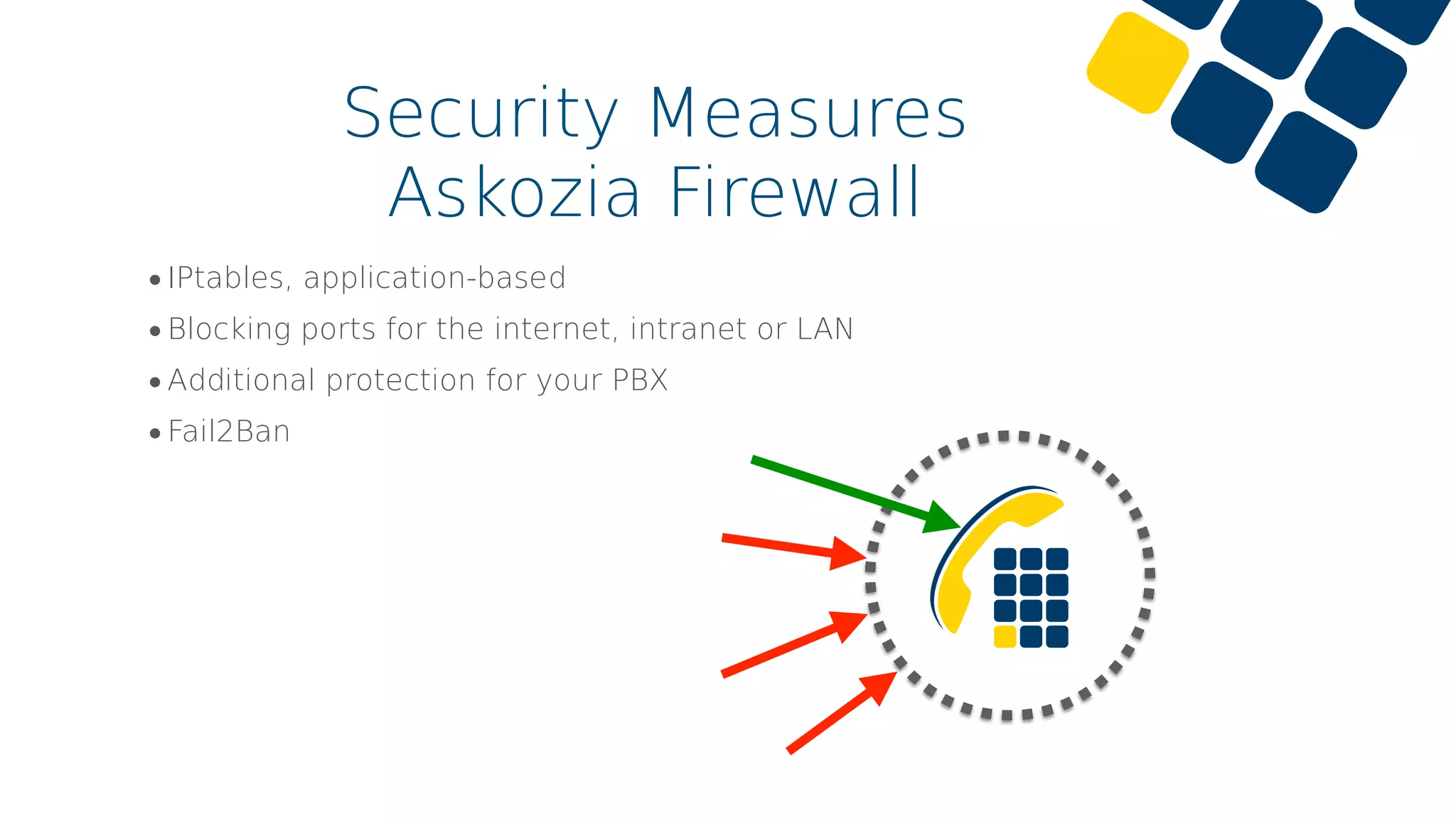
•IPtables, application-based
•Blocking ports for the internet, intranet or LAN
•Additional protection for your PBX
•Fail2Ban
Security Measures
Askozia Firewall
Security Measures
Fail2Ban
•Featured by Askozia firewall
•Further protection against Brute Force attacks.
•Blocking IPs that repeatedly use incorrect log-in data
•Preventing attackers from guessing an internal number
•alwaysauthreject = yes.
•Responses are always the same for both correct and incorrect user data
•Blocking or accepting certain numbers
•For example:
•Blocking certain numbers from calling through a provider
•Adding certain numbers as exceptions to Fail2Ban
Security Measures
Blacklist / Whitelist
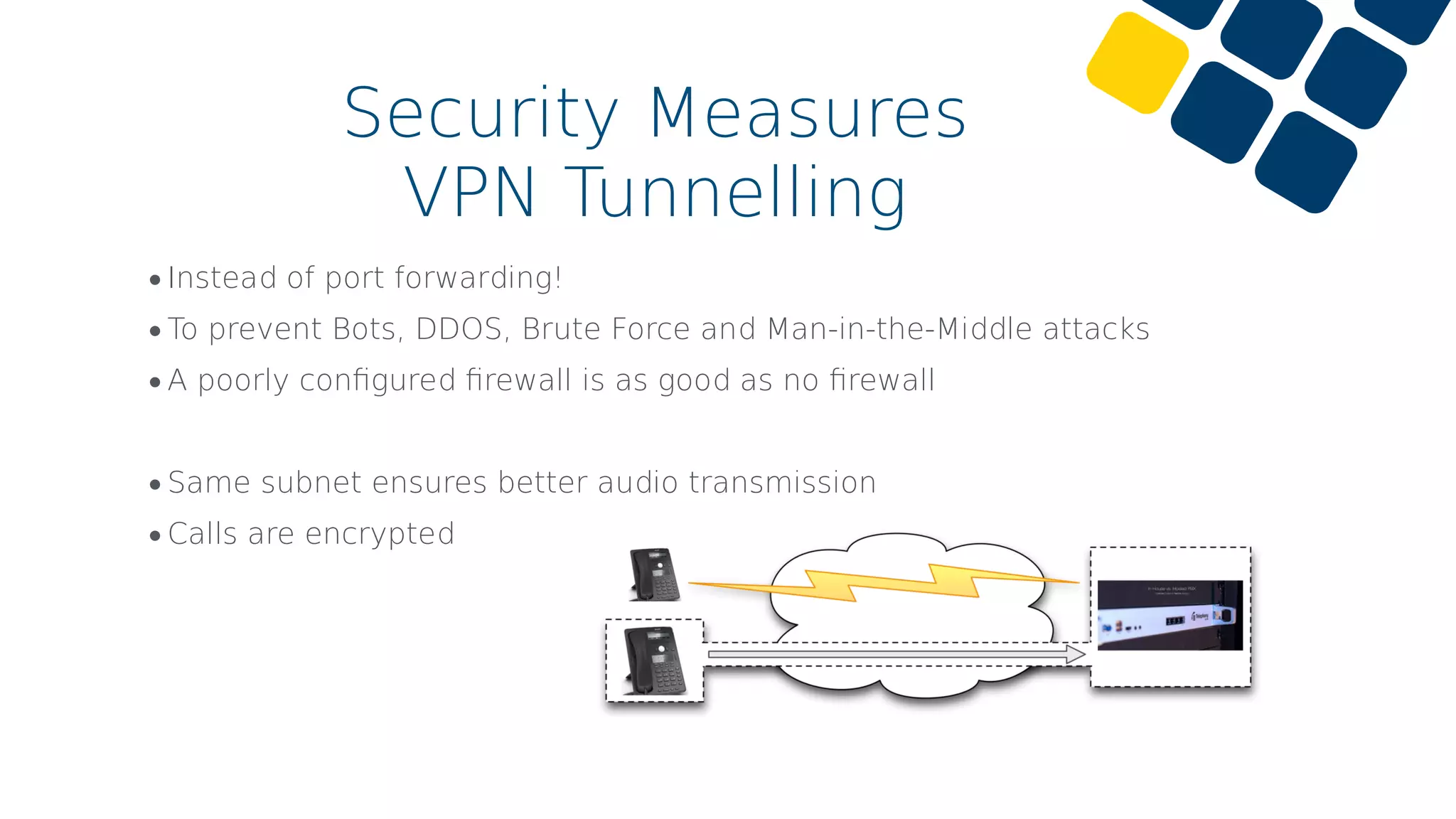
•Instead of port forwarding!
•To prevent Bots, DDOS, Brute Force and Man-in-the-Middle attacks
•A poorly configured firewall is as good as no firewall
•Same subnet ensures better audio transmission
•Calls are encrypted
Security Measures
VPN Tunnelling
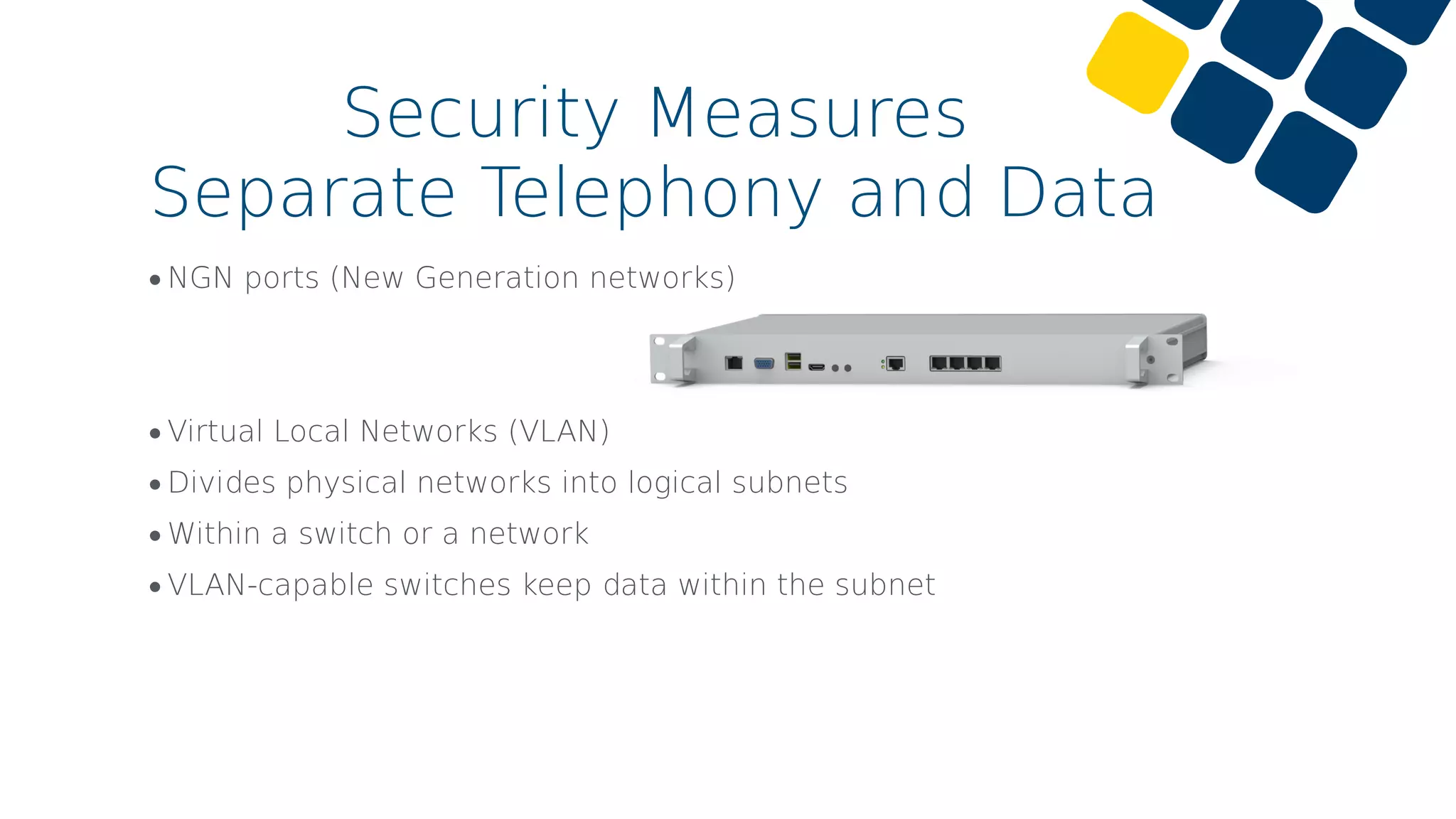
•NGN ports (New Generation networks)
•Virtual Local Networks (VLAN)
•Divides physical networks into logical subnets
•Within a switch or a network
•VLAN-capable switches keep data within the subnet
Security Measures
Separate Telephony and Data
•Man-in the-middle
•Receives requests and establishes connection
•No direct communication between two parties
•Costly
Security Measures
SIP Proxy
•Secure web server (HTTPS)
•Secure SIP (SIPS) and Secure RTP (SRTP)
•Protection against eavesdropping
•Certificates can be created or uploaded in AskoziaPBX
Security Measures
Encryption
•Restrictive dial patterns
•Prevent calls to other countries and national numbers with high charges
•Limit number of calls to other countries
•Limit call duration
•Block calls if thresholds are exceeded and attack seems likely
•VoIP prepaid credit
Security Measures
Call Rights
•Access to the network should be a privilege
•Only required and actually used IP devices
•Access rights limited to actual requirements
•In Askozia: Statistic Users, Client User Interface, etc.
•Not every user needs administration rights!
Security Measures
Access Privileges
•Enforce your security guidelines
•Regular review and updates
•Keep all IP devices and services up-to-date
•Don’t miss firmware and security updates
Security Measures
System Hardening
•There is no absolute safety
•What if a system still fails?
•Regular backups
•Premium Replacement or
•High Availability
Security Measures
Have a Plan B
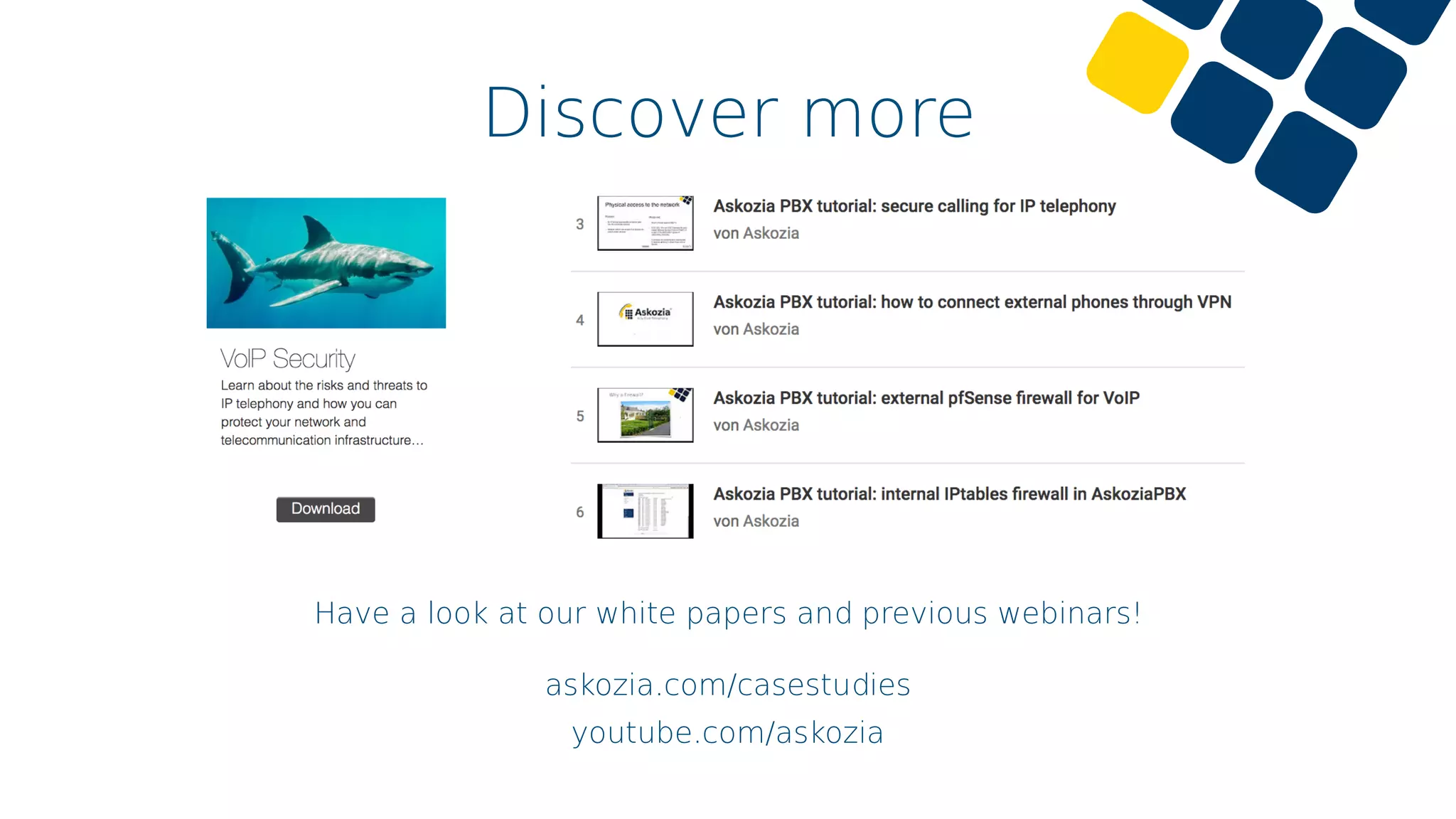
Discover more
Have a look at our white papers and previous webinars!
askozia.com/casestudies
youtube.com/askozia
Questions?
Time to wake up!
markus.ehlers@askozia.com

How to protect your business telephony from cyber attacks - webinar 2017, English

  • 2.
  • 3.
    Agenda •Common mistakes •Common formsof attack •Counter measures
  • 4.
    •Unsafe passwords •Missing firewall •PublicIP address •Port forwarding instead of VPN •Unencrypted telephony •No strict call rights and limitations •Access rights not limited •Unused IP services and devices still being connected •No backups •Missing plan B 10 Common Mistakes
  • 5.
    Common Cyber Attacks Denialof Service Eavesdropping SPIT Toll Fraud Man-in-the- Middle Attack Flooding Infrastructure Hijacking Infrastructure Highjacking High Phone BillIdentity Highjacking Brute Force Attack ARP Poisining Bot Net IP-Spoofing
  • 6.
    •Much easier withVoIP •No separate phone lines •Aiming for log-in data and internal information •Man-in-the-middle Attack •ARP-Poisoning targeting Address Resolution Protocol •Hijacking standard gateways and DHCP-Spoofing •Infrastructure Hijacking Common Cyber Attacks Eavesdropping
  • 7.
    •Port-scan followed byBrute-Force Attack •Man-in-the-Middle Attack and Identity Spoofing •Attacker faking identity to gain internal information or for fraud •Expensive oversea calls, hotline and service numbers Common Cyber Attacks Fraud
  • 8.
    •Spam-over-Internet •IP PBX getshijacked to act as a bot •Forged RTP Packets •Very difficult to back-trace and to oppose •Identity Spoofing and Bot networks •Content filter acts too late •May only help in time for voicemail messages Common Cyber Attacks SPIT
  • 9.
    •(D)DoS Attacks •Aiming formalfunction of a system •IP Spoofing to keep attacker hidden or to •Overload victims with response packages Common Cyber Attacks Denial-of-Service
  • 10.
    •Company guideline fornetwork safety •Regular review and update •PBX and network security •All network devices need to be secured! Security Measures
  • 11.
    •Letters, digits, specialcharacters •At least 8 characters •No words nor name Security Measures Secure Password admin password 0000 1234 4321 askozia aizoksa 8C+inL6B}4_k Qu3F6b?!1Q_c t!88_u7V.dLN 1@i+yY{L97Km
  • 12.
    •Protection against DDoSand Brute Force attacks •Blocking ports for the internet, intranet or LAN •Packet filter •Network Address Translation (NAT) •Avoid port forwarding Security Measures Network Firewall
  • 13.
    •IPtables, application-based •Blocking portsfor the internet, intranet or LAN •Additional protection for your PBX •Fail2Ban Security Measures Askozia Firewall
  • 14.
    Security Measures Fail2Ban •Featured byAskozia firewall •Further protection against Brute Force attacks. •Blocking IPs that repeatedly use incorrect log-in data •Preventing attackers from guessing an internal number •alwaysauthreject = yes. •Responses are always the same for both correct and incorrect user data
  • 15.
    •Blocking or acceptingcertain numbers •For example: •Blocking certain numbers from calling through a provider •Adding certain numbers as exceptions to Fail2Ban Security Measures Blacklist / Whitelist
  • 16.
    •Instead of portforwarding! •To prevent Bots, DDOS, Brute Force and Man-in-the-Middle attacks •A poorly configured firewall is as good as no firewall •Same subnet ensures better audio transmission •Calls are encrypted Security Measures VPN Tunnelling
  • 17.
    •NGN ports (NewGeneration networks) •Virtual Local Networks (VLAN) •Divides physical networks into logical subnets •Within a switch or a network •VLAN-capable switches keep data within the subnet Security Measures Separate Telephony and Data
  • 18.
    •Man-in the-middle •Receives requestsand establishes connection •No direct communication between two parties •Costly Security Measures SIP Proxy
  • 19.
    •Secure web server(HTTPS) •Secure SIP (SIPS) and Secure RTP (SRTP) •Protection against eavesdropping •Certificates can be created or uploaded in AskoziaPBX Security Measures Encryption
  • 20.
    •Restrictive dial patterns •Preventcalls to other countries and national numbers with high charges •Limit number of calls to other countries •Limit call duration •Block calls if thresholds are exceeded and attack seems likely •VoIP prepaid credit Security Measures Call Rights
  • 21.
    •Access to thenetwork should be a privilege •Only required and actually used IP devices •Access rights limited to actual requirements •In Askozia: Statistic Users, Client User Interface, etc. •Not every user needs administration rights! Security Measures Access Privileges
  • 22.
    •Enforce your securityguidelines •Regular review and updates •Keep all IP devices and services up-to-date •Don’t miss firmware and security updates Security Measures System Hardening
  • 23.
    •There is noabsolute safety •What if a system still fails? •Regular backups •Premium Replacement or •High Availability Security Measures Have a Plan B
  • 24.
    Discover more Have alook at our white papers and previous webinars! askozia.com/casestudies youtube.com/askozia
  • 25.
    Questions? Time to wakeup! markus.ehlers@askozia.com