How to Formulate
a Research Question
Dr. Bassem S. Kurdi, MBBS
Demonstrator
Department of Pediatrics
Faculty of Medicine, KAU
Objectives
 What is a research question?
 Topic vs. RQ vs. Hypothesis
 Sources for the RQ
 What makes a good RQ?
 Common problems in RQs
 What’s after the RQ
 References
Objectives
INSPIRATION!
What is a Research Question?
 The first methodological step to resolve a
scientific uncertainty.
 It is an organized and more specific
inquisitive statement of the topic under study
that can be translated into a research project
 “The single most important component of a
study... It is the keystone of the entire
exercise” (1)
Topic vs. RQ vs. Hypothesis
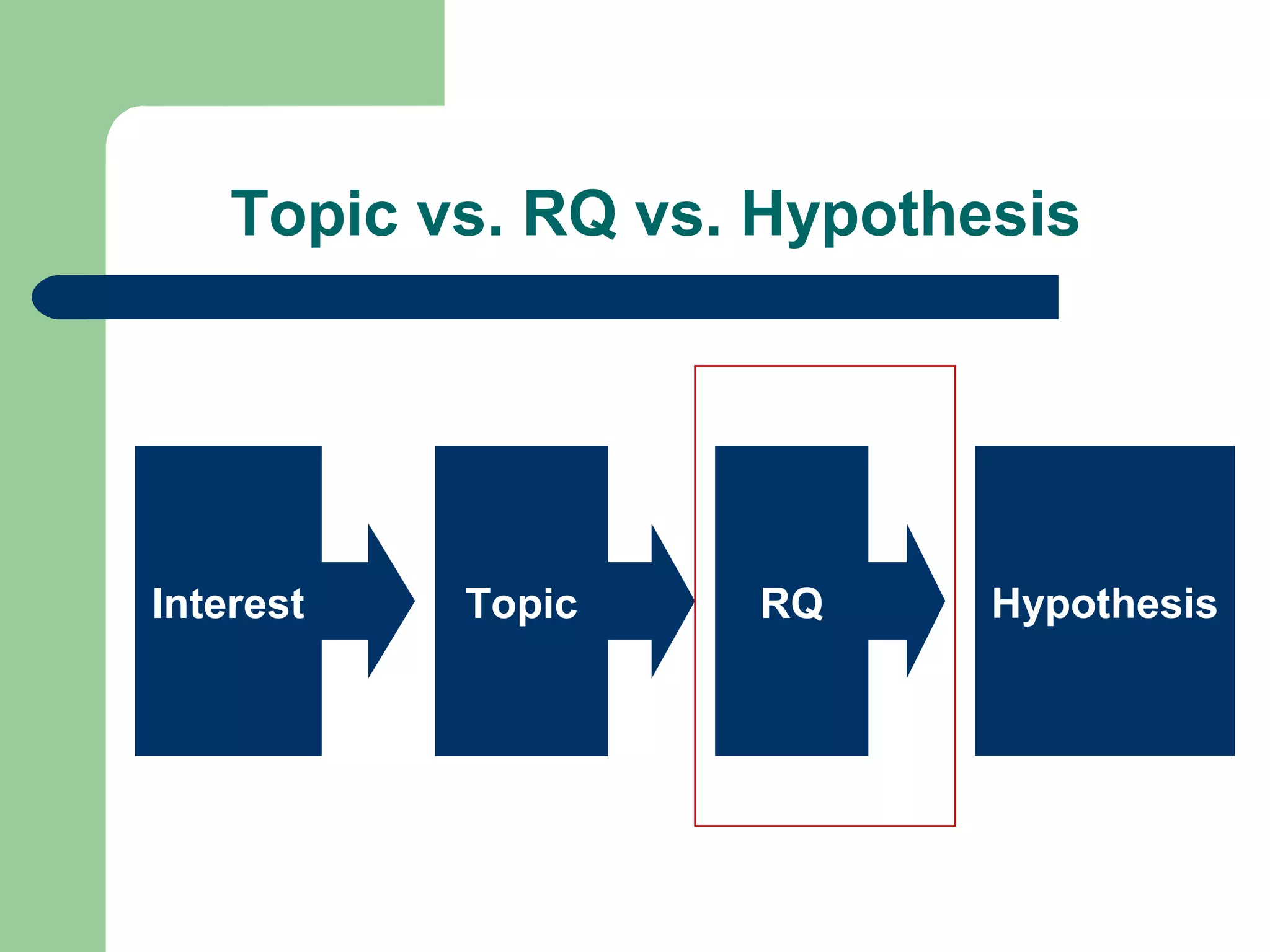
Interest Topic RQ Hypothesis
Topic vs. RQ vs. Hypothesis
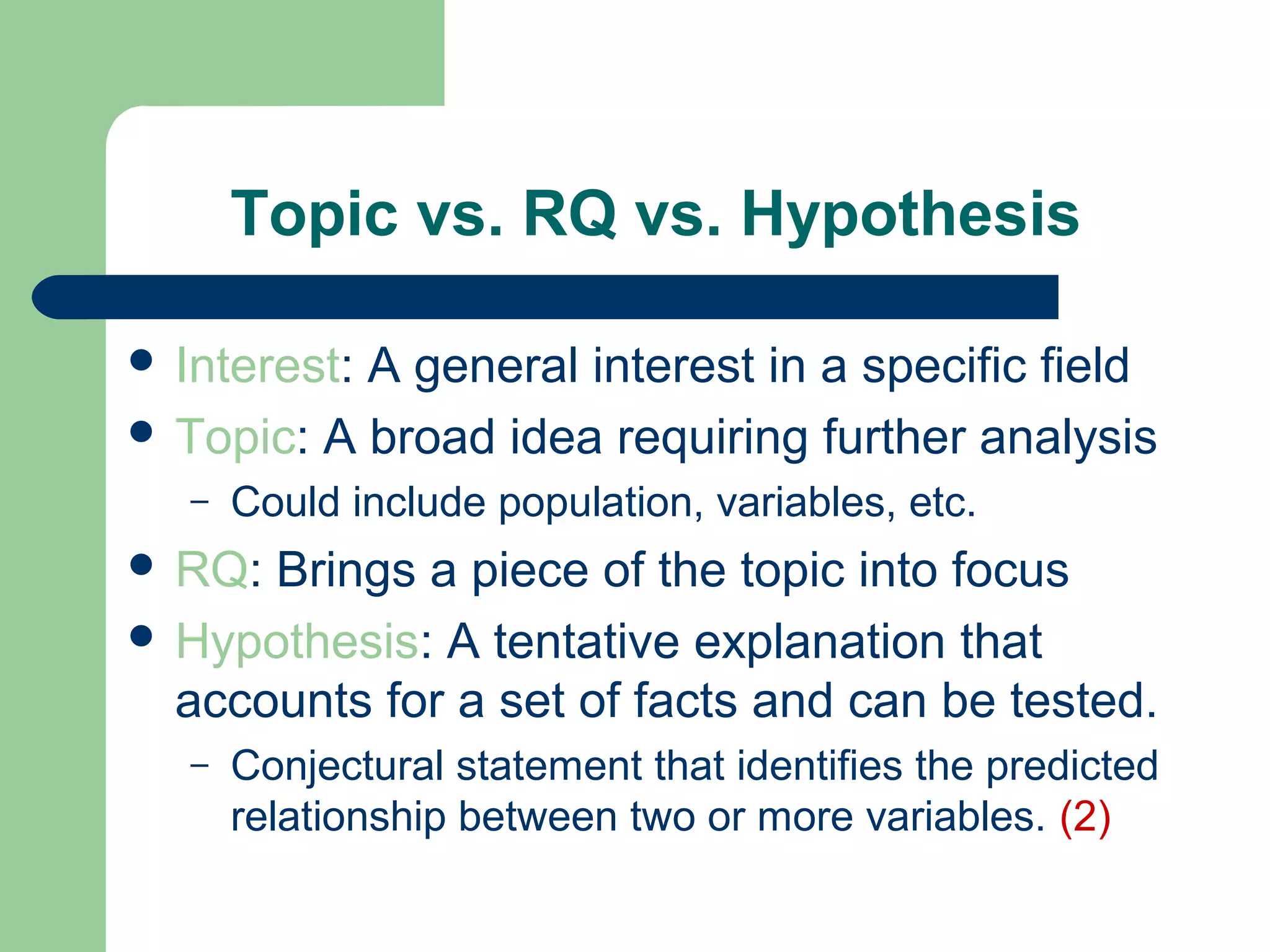
 Interest: A general interest in a specific field
 Topic: A broad idea requiring further analysis
– Could include population, variables, etc.
 RQ: Brings a piece of the topic into focus
 Hypothesis: A tentative explanation that
accounts for a set of facts and can be tested.
– Conjectural statement that identifies the predicted
relationship between two or more variables. (2)
Topic vs. RQ vs. Hypothesis
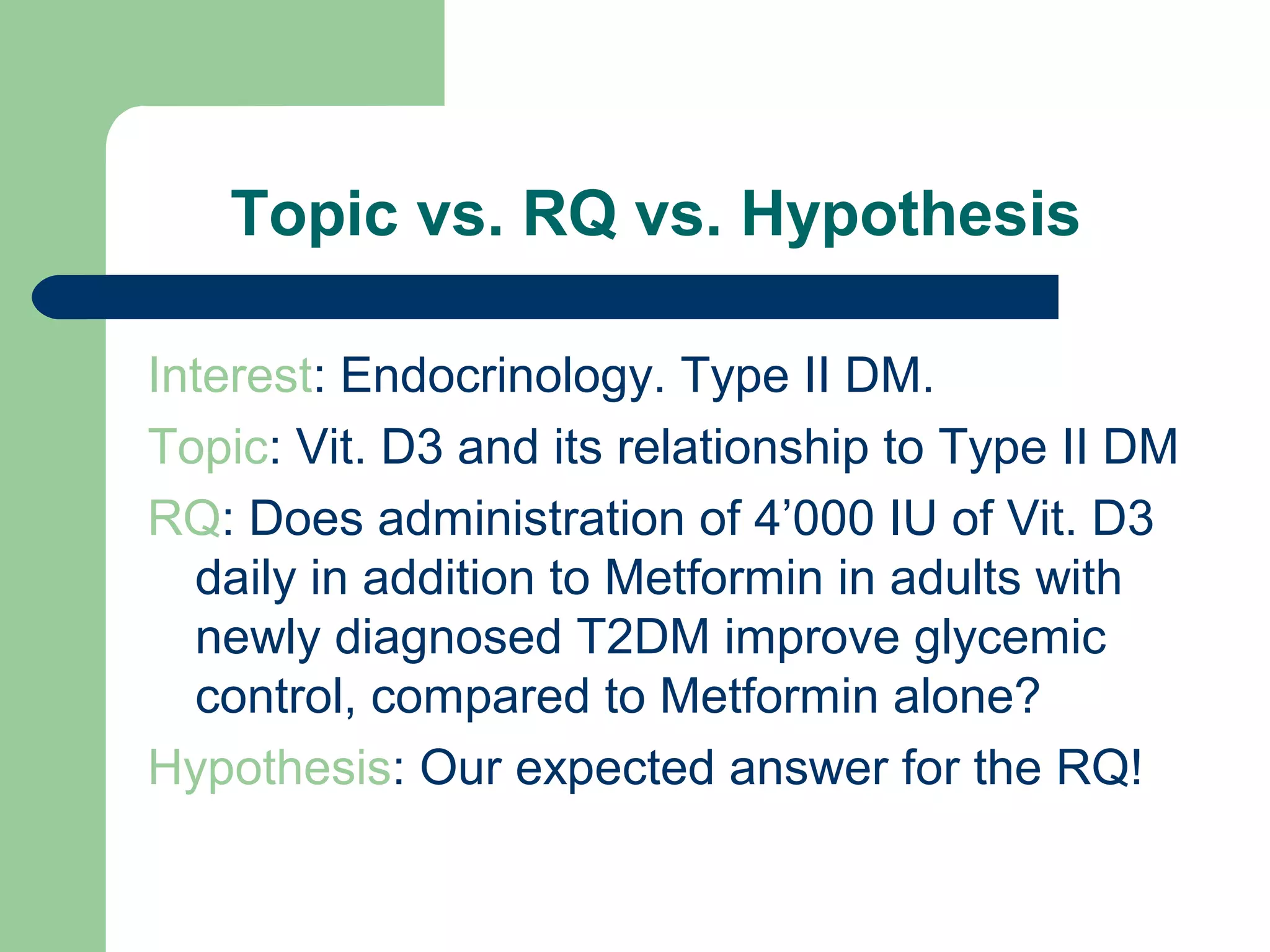
Interest: Endocrinology. Type II DM.
Topic: Vit. D3 and its relationship to Type II DM
RQ: Does administration of 4’000 IU of Vit. D3
daily in addition to Metformin in adults with
newly diagnosed T2DM improve glycemic
control, compared to Metformin alone?
Hypothesis: Our expected answer for the RQ!
The Hypothesis!
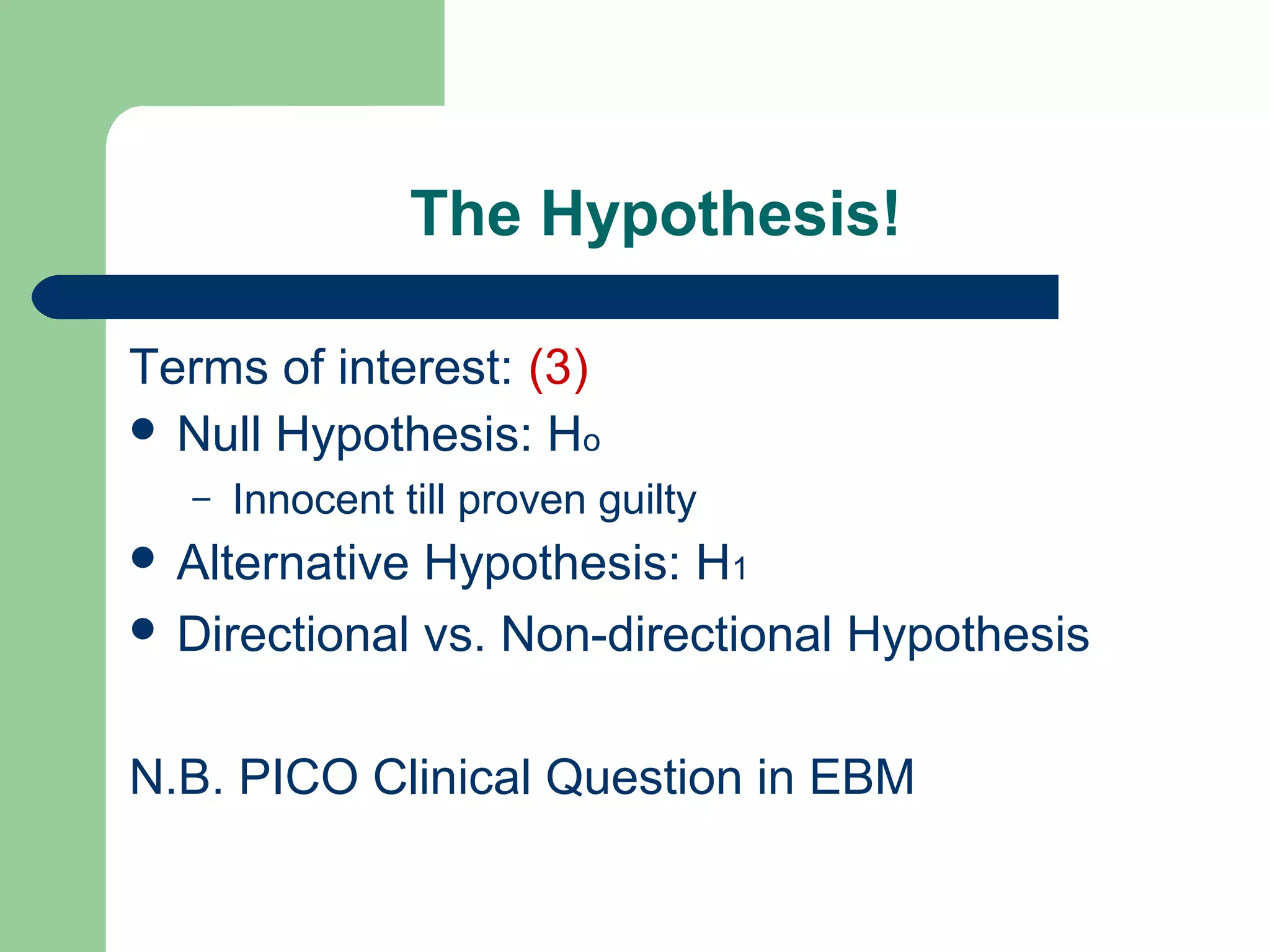
Terms of interest: (3)
 Null Hypothesis: Ho
– Innocent till proven guilty
 Alternative Hypothesis: H1
 Directional vs. Non-directional Hypothesis
N.B. PICO Clinical Question in EBM
It’s Only the Beginning!
Sources for the RQ
 Clinical Experience
 Mentor
 Literature Overview
 Conferences
 Research Experience
Clinical Experience
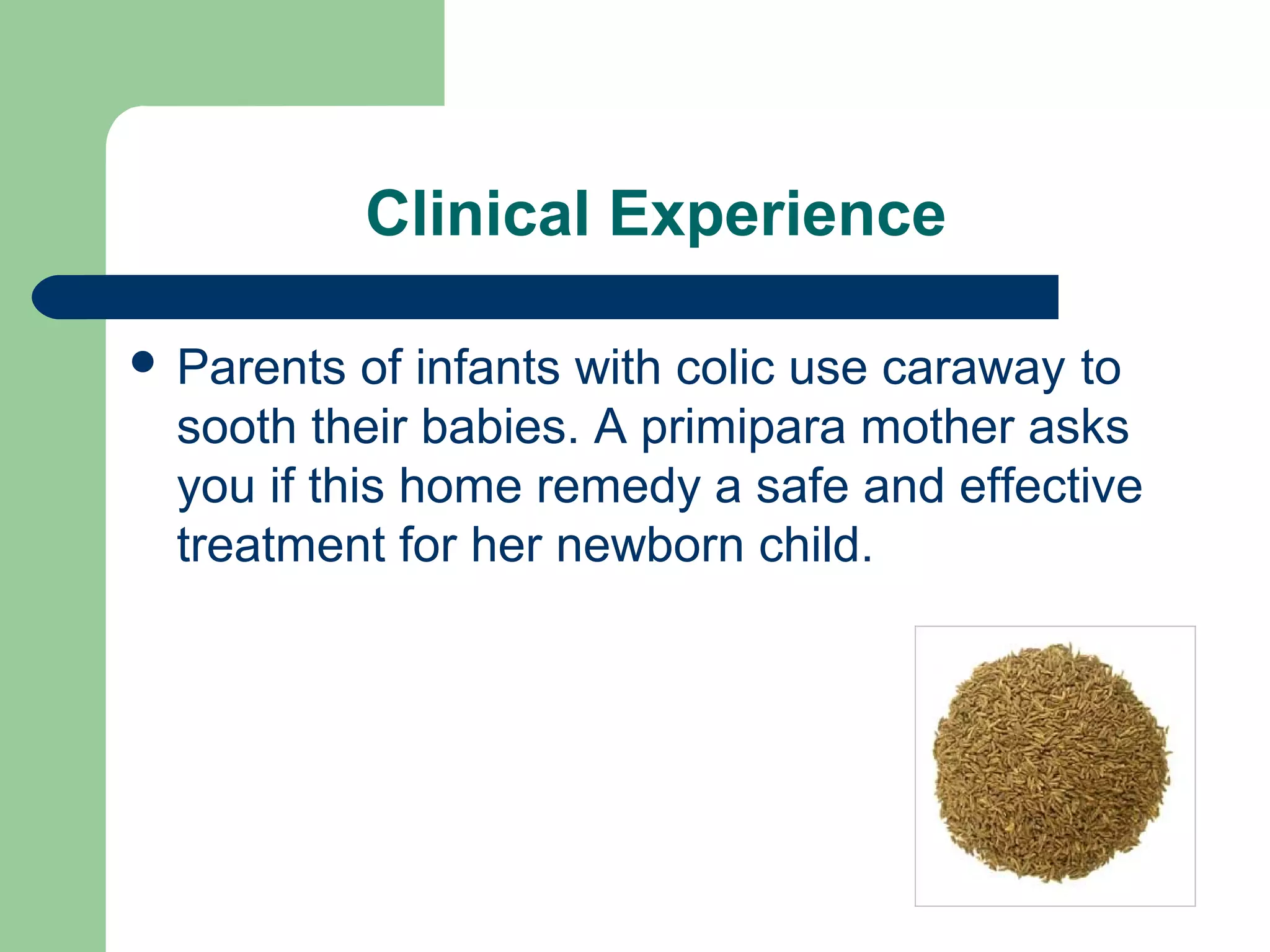
 Parents of infants with colic use caraway to
sooth their babies. A primipara mother asks
you if this home remedy a safe and effective
treatment for her newborn child.
Mentor
 Discuss ideas with an experienced physician
in the area of your interest.
 Other benefits.
 Do your homework
Literature Overview
 Journals: Pediatrics, NEJM, JAMA, Saudi
Medical Journal, etc.
 Online Databases: MedLine. PubMed,
Google Schoolar
 Local university publications database
 Don’t re-invent the wheel!
Conferences
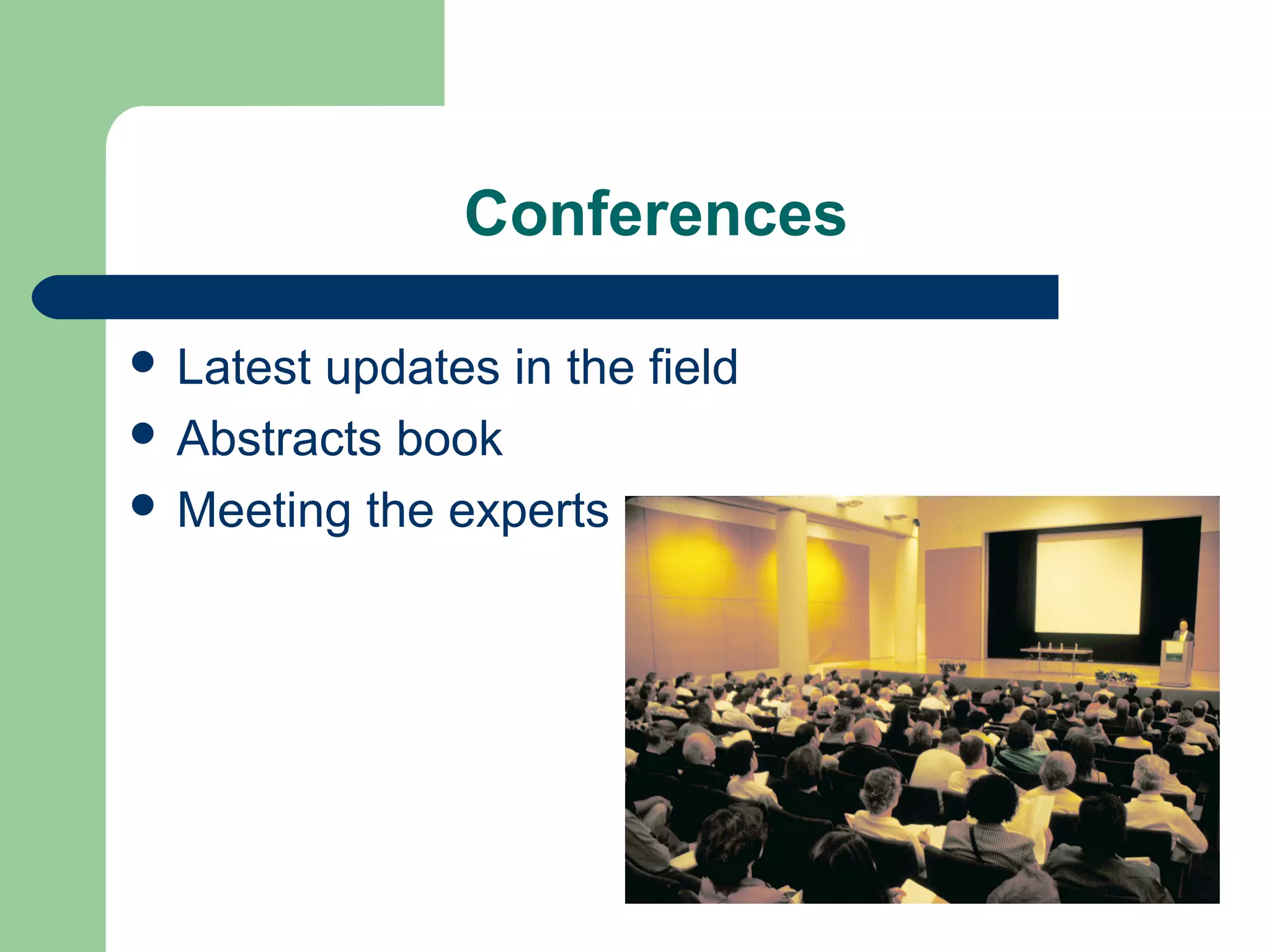
 Latest updates in the field
 Abstracts book
 Meeting the experts
Research Experience
 One’s previous research experience
 Do one and it will lead you to another
What Makes a Good RQ?
FINER Criteria (4)
 Feasible
 Interesting
 Novel
 Ethical
 Relevant
FINER: Feasible
 Time. Can this be done in a reasonable time
frame for me?
 Money. Can sufficient funding be collected?
Is it too expensive?
 Population. Can a large enough sample size
be secured?
 Skills. Are any special skills required and
available?
 Resources. Can I secure the required
resources?
FINER: Interesting
 Is it interesting to me?
 Is it interesting to others around me?
 Is it interesting to journal editors?
FINER: Novel
 Don’t reinvent the wheel
 Am I addressing something new?
 Am I addressing something old in a new
way?
FINER: Ethical
 Are there any ethical issues?
 What are the risks vs. benefits?
 Will my Local Research Ethics Committee
accept the proposal?
FINER: Relevant
 What will it add to the existing body of
knowledge?
 Will the results be applicable?
 Will the results be generalizable?
FINER is Fine!
Common Problems
 Reinventing the wheel: Review literature
thoroughly, give it a new spin
 Ethically questionable: Local research
committee
 Question too broad or too narrow: revise your
question. Discuss with a mentor
 Unavailable resources: patient records,
money, investigations: Allah m3ak!
 Unsupportive faculty: find someone else!
What’s Next?
 Extensive literature review
 Revise your RQ and Hypothesis
 Determine variables and confounding factors
 Discuss your project with an expert
 Check local university & college policies
 Proceed to study design
References
1. Bordage G, Dawson B. Experimental study design
and grant writing in eight steps and 28 questions.
Med Educ. 2003;37(4):376-85
2. Geri LoBiondo-Wood & Judith Haber. Nursing
Research: Methods and Critical Appraisal for
Evidence-Based Practice, 7th Edition
3. Steps Statistical Glossary v1.1
http://www.stats.gla.ac.uk/steps/glossary/index.html
4. Hulley SB, Cummings SR, eds. Designing clinical
research. Baltimore: Williams and Wilkins, 1998
How to Formulate a Research Question
This presentation can be found at:
www.bassemkurdi.com
Disclaimer: All images used in this presentation are property of their respective
owners unless otherwise stated. This presentation is for non-profit educational
purposes only.

How to formulate a research question

  • 1.
    How to Formulate aResearch Question Dr. Bassem S. Kurdi, MBBS Demonstrator Department of Pediatrics Faculty of Medicine, KAU
  • 2.
    Objectives  What isa research question?  Topic vs. RQ vs. Hypothesis  Sources for the RQ  What makes a good RQ?  Common problems in RQs  What’s after the RQ  References
  • 3.
  • 4.
    What is aResearch Question?  The first methodological step to resolve a scientific uncertainty.  It is an organized and more specific inquisitive statement of the topic under study that can be translated into a research project  “The single most important component of a study... It is the keystone of the entire exercise” (1)
  • 5.
    Topic vs. RQvs. Hypothesis Interest Topic RQ Hypothesis
  • 6.
    Topic vs. RQvs. Hypothesis  Interest: A general interest in a specific field  Topic: A broad idea requiring further analysis – Could include population, variables, etc.  RQ: Brings a piece of the topic into focus  Hypothesis: A tentative explanation that accounts for a set of facts and can be tested. – Conjectural statement that identifies the predicted relationship between two or more variables. (2)
  • 7.
    Topic vs. RQvs. Hypothesis Interest: Endocrinology. Type II DM. Topic: Vit. D3 and its relationship to Type II DM RQ: Does administration of 4’000 IU of Vit. D3 daily in addition to Metformin in adults with newly diagnosed T2DM improve glycemic control, compared to Metformin alone? Hypothesis: Our expected answer for the RQ!
  • 8.
    The Hypothesis! Terms ofinterest: (3)  Null Hypothesis: Ho – Innocent till proven guilty  Alternative Hypothesis: H1  Directional vs. Non-directional Hypothesis N.B. PICO Clinical Question in EBM
  • 9.
    It’s Only theBeginning!
  • 10.
    Sources for theRQ  Clinical Experience  Mentor  Literature Overview  Conferences  Research Experience
  • 11.
    Clinical Experience  Parentsof infants with colic use caraway to sooth their babies. A primipara mother asks you if this home remedy a safe and effective treatment for her newborn child.
  • 12.
    Mentor  Discuss ideaswith an experienced physician in the area of your interest.  Other benefits.  Do your homework
  • 13.
    Literature Overview  Journals:Pediatrics, NEJM, JAMA, Saudi Medical Journal, etc.  Online Databases: MedLine. PubMed, Google Schoolar  Local university publications database  Don’t re-invent the wheel!
  • 14.
    Conferences  Latest updatesin the field  Abstracts book  Meeting the experts
  • 15.
    Research Experience  One’sprevious research experience  Do one and it will lead you to another
  • 16.
    What Makes aGood RQ? FINER Criteria (4)  Feasible  Interesting  Novel  Ethical  Relevant
  • 17.
    FINER: Feasible  Time.Can this be done in a reasonable time frame for me?  Money. Can sufficient funding be collected? Is it too expensive?  Population. Can a large enough sample size be secured?  Skills. Are any special skills required and available?  Resources. Can I secure the required resources?
  • 18.
    FINER: Interesting  Isit interesting to me?  Is it interesting to others around me?  Is it interesting to journal editors?
  • 19.
    FINER: Novel  Don’treinvent the wheel  Am I addressing something new?  Am I addressing something old in a new way?
  • 20.
    FINER: Ethical  Arethere any ethical issues?  What are the risks vs. benefits?  Will my Local Research Ethics Committee accept the proposal?
  • 21.
    FINER: Relevant  Whatwill it add to the existing body of knowledge?  Will the results be applicable?  Will the results be generalizable?
  • 22.
  • 23.
    Common Problems  Reinventingthe wheel: Review literature thoroughly, give it a new spin  Ethically questionable: Local research committee  Question too broad or too narrow: revise your question. Discuss with a mentor  Unavailable resources: patient records, money, investigations: Allah m3ak!  Unsupportive faculty: find someone else!
  • 24.
    What’s Next?  Extensiveliterature review  Revise your RQ and Hypothesis  Determine variables and confounding factors  Discuss your project with an expert  Check local university & college policies  Proceed to study design
  • 25.
    References 1. Bordage G,Dawson B. Experimental study design and grant writing in eight steps and 28 questions. Med Educ. 2003;37(4):376-85 2. Geri LoBiondo-Wood & Judith Haber. Nursing Research: Methods and Critical Appraisal for Evidence-Based Practice, 7th Edition 3. Steps Statistical Glossary v1.1 http://www.stats.gla.ac.uk/steps/glossary/index.html 4. Hulley SB, Cummings SR, eds. Designing clinical research. Baltimore: Williams and Wilkins, 1998
  • 26.
    How to Formulatea Research Question This presentation can be found at: www.bassemkurdi.com Disclaimer: All images used in this presentation are property of their respective owners unless otherwise stated. This presentation is for non-profit educational purposes only.