How to plan a research study
Noha O. Mansour, PhD
Clinical Pharmacy and Pharmacy Practice
Department
Clinical Research Design and
Pharmacovigilance (PP 518)
Lecture Objectives
When you have completed this lecture, you will be able to understand:
» Steps in planning a research study
» The importance of the research questions,
hypothesis, and research objectives in planning a
research study
» Execution of the research study
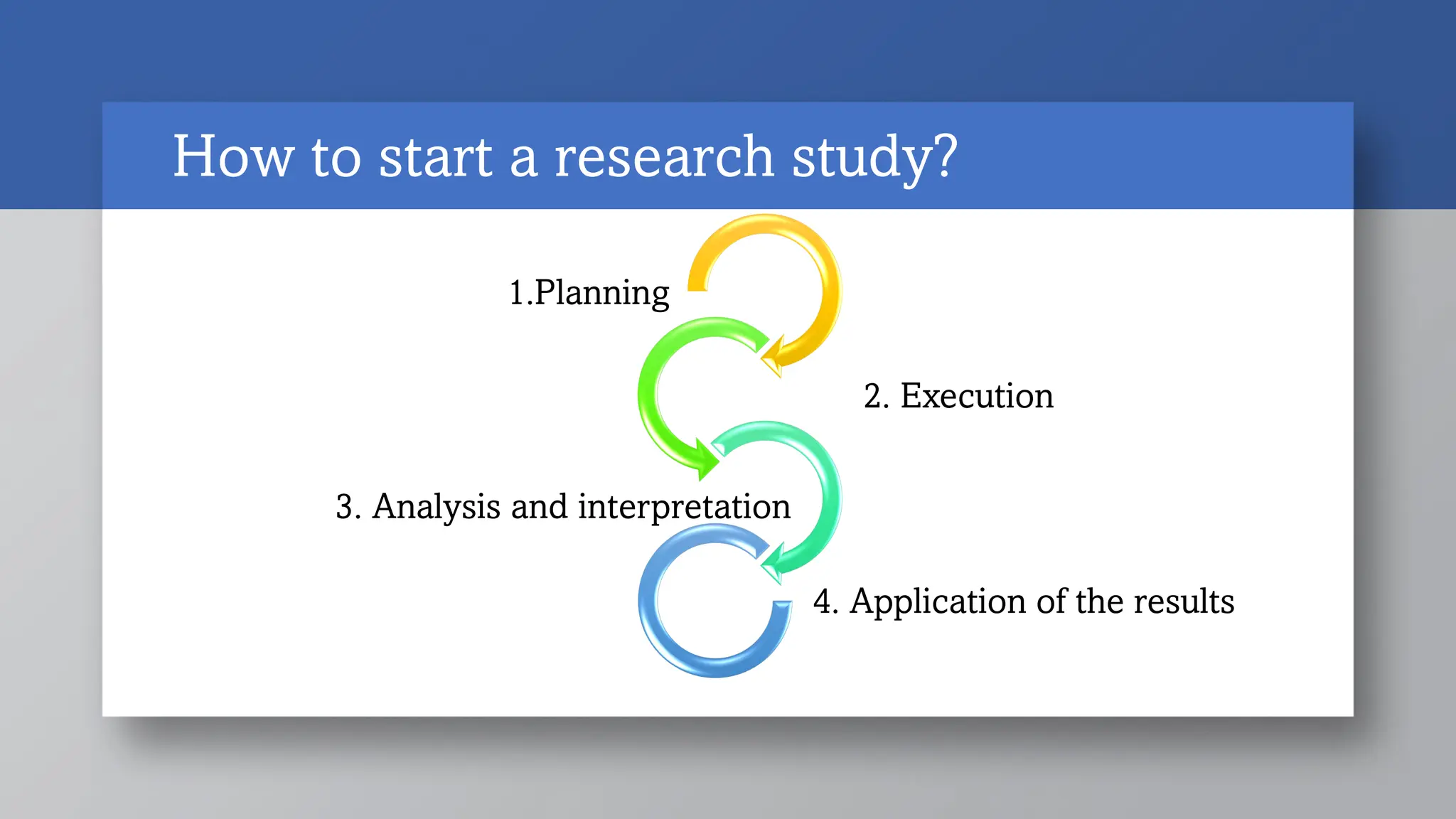
How to start a research study?
1.Planning
2. Execution
3. Analysis and interpretation
4. Application of the results
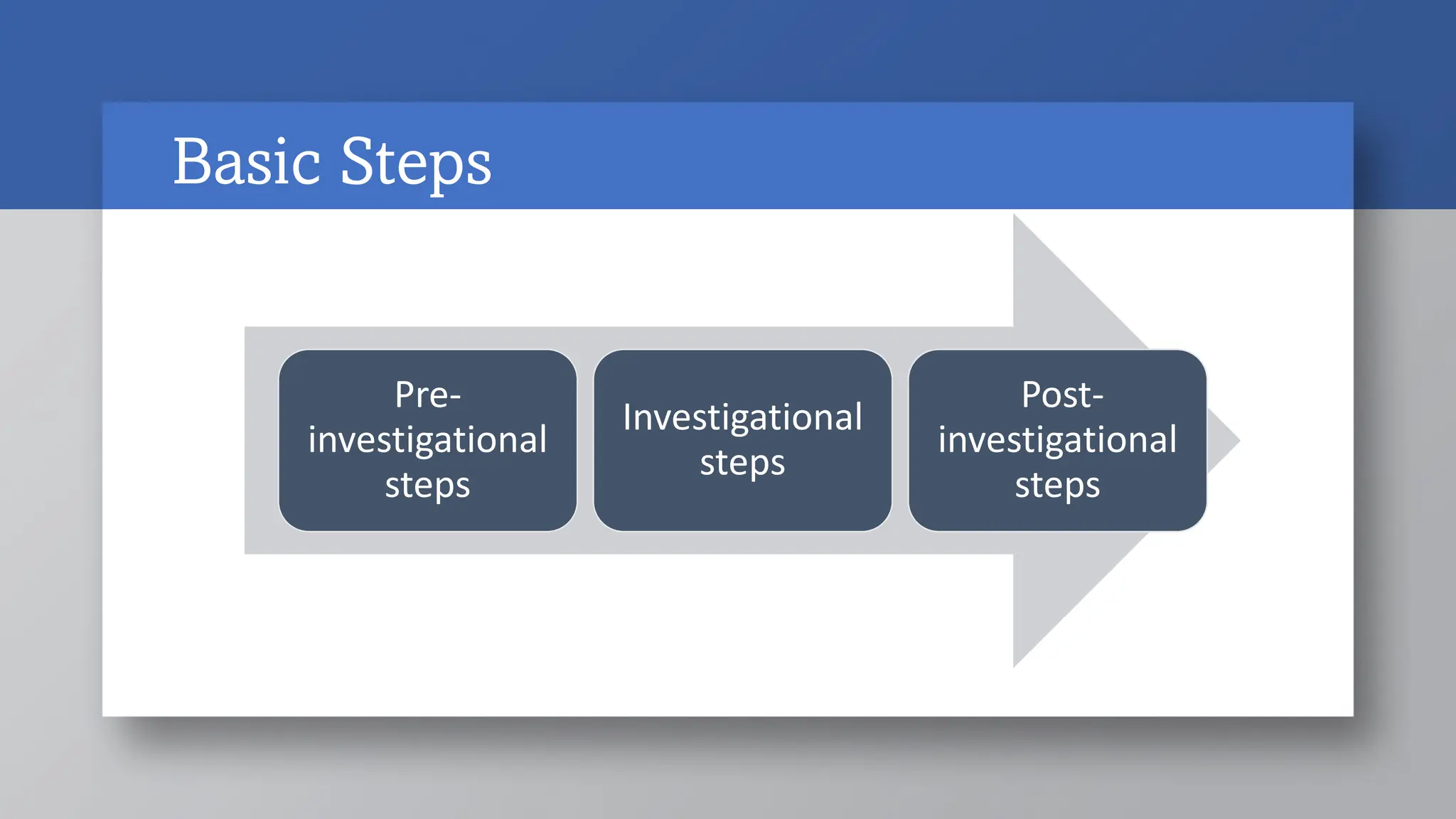
Basic Steps
Pre-
investigational
steps
Investigational
steps
Post-
investigational
steps
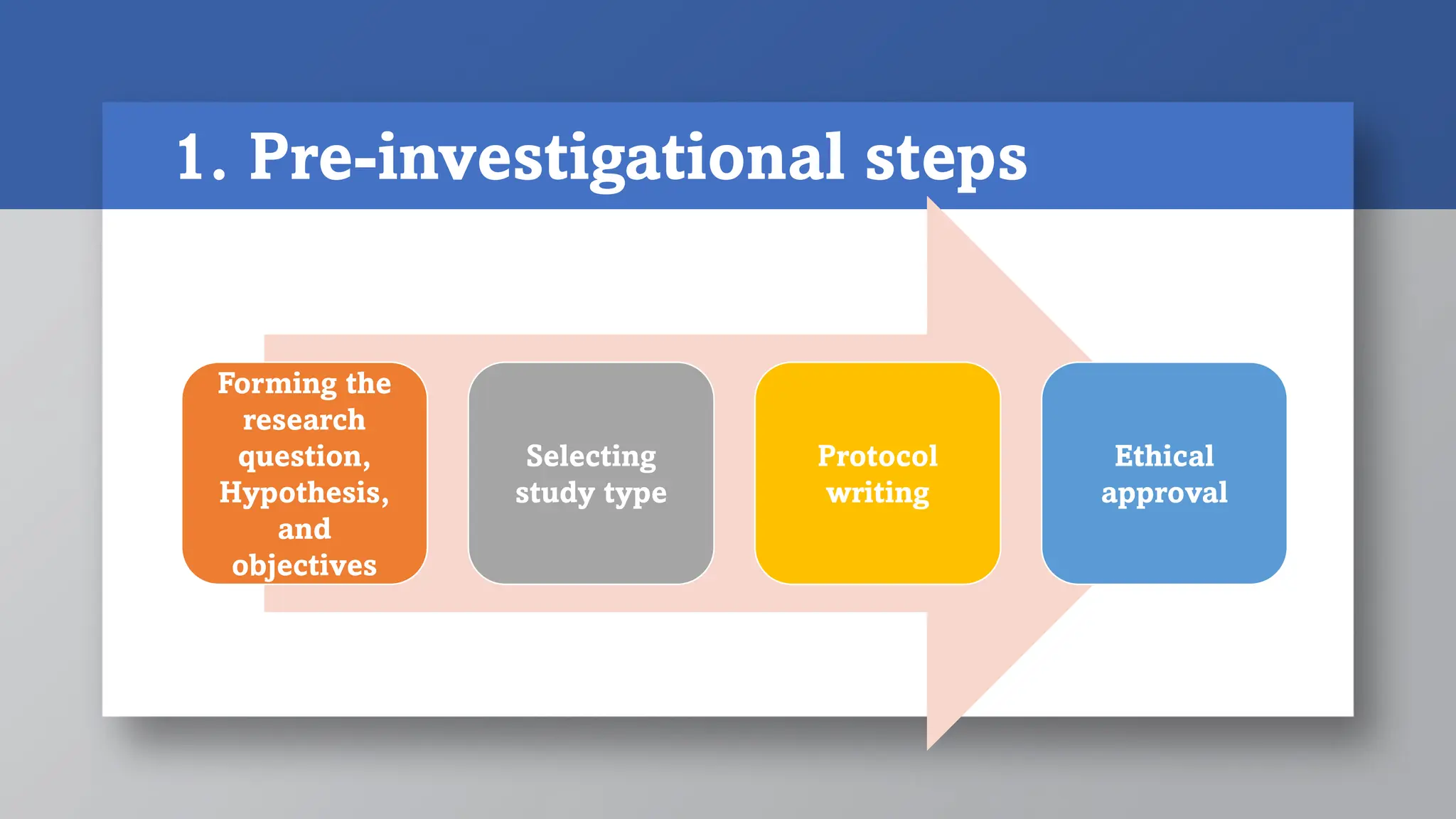
1. Pre-investigational steps
Forming the
research
question,
Hypothesis,
and
objectives
Selecting
study type
Protocol
writing
Ethical
approval
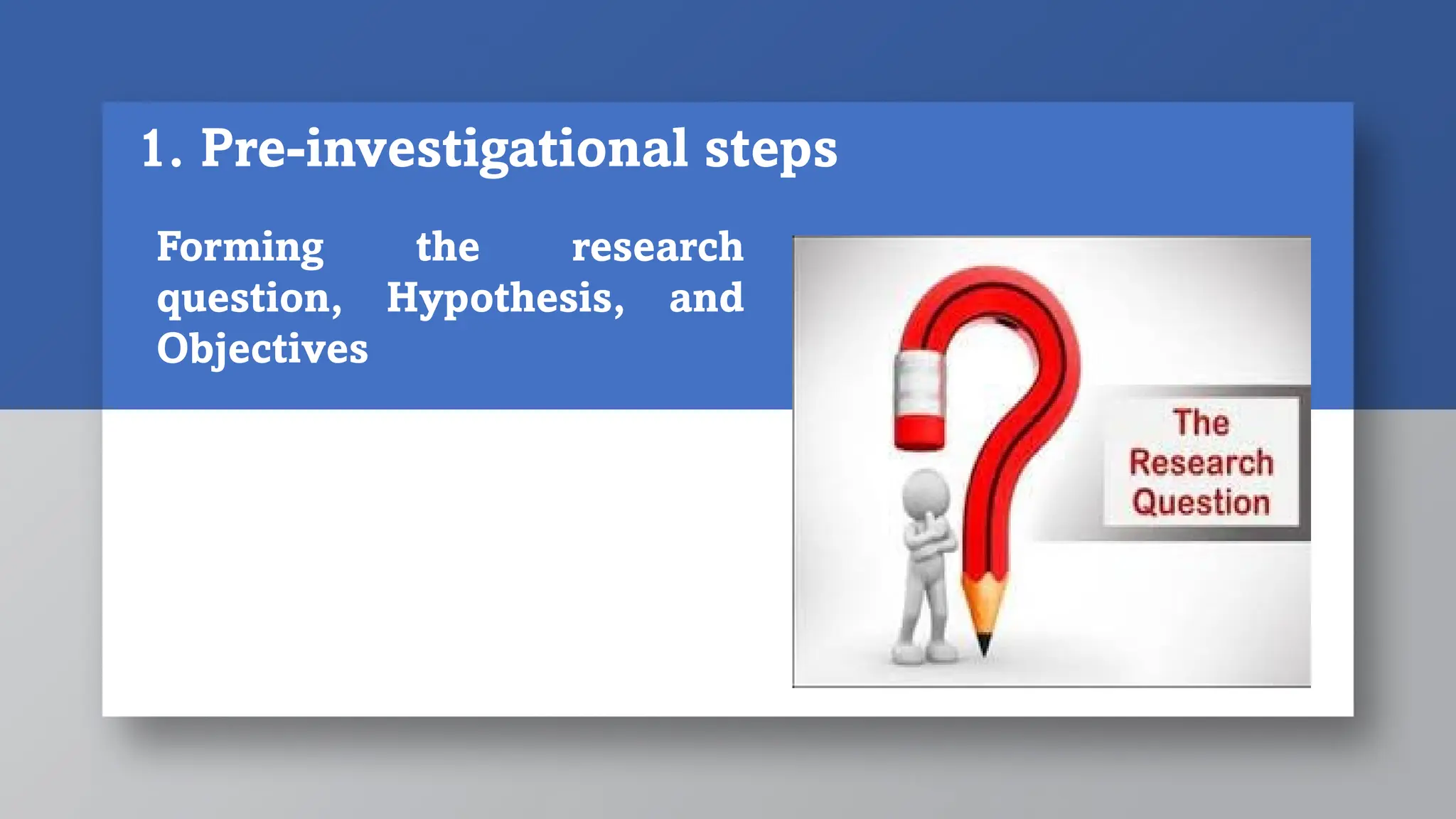
Forming the research
question, Hypothesis, and
Objectives
1. Pre-investigational steps
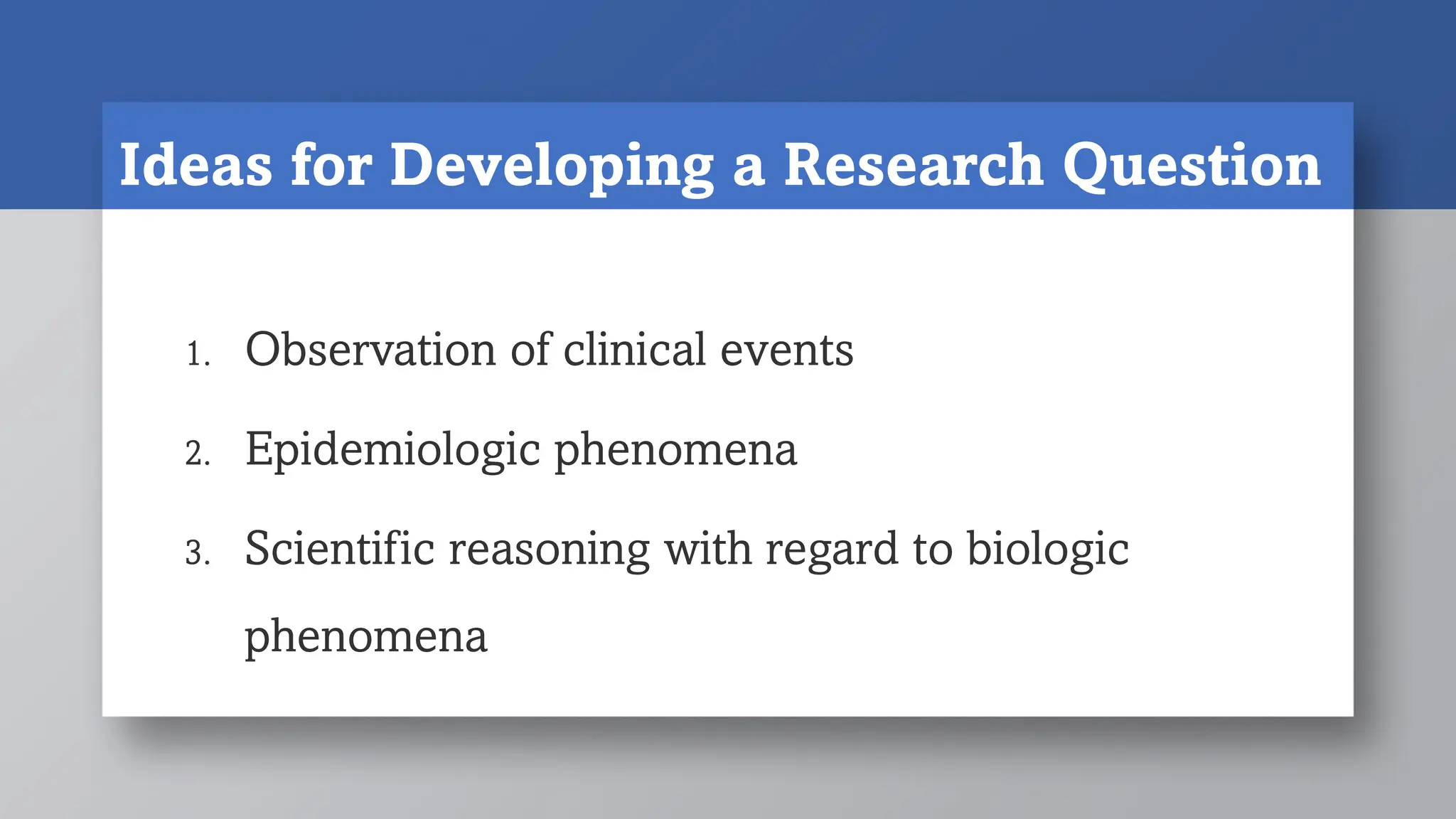
Ideas for Developing a Research Question
1. Observation of clinical events
2. Epidemiologic phenomena
3. Scientific reasoning with regard to biologic
phenomena
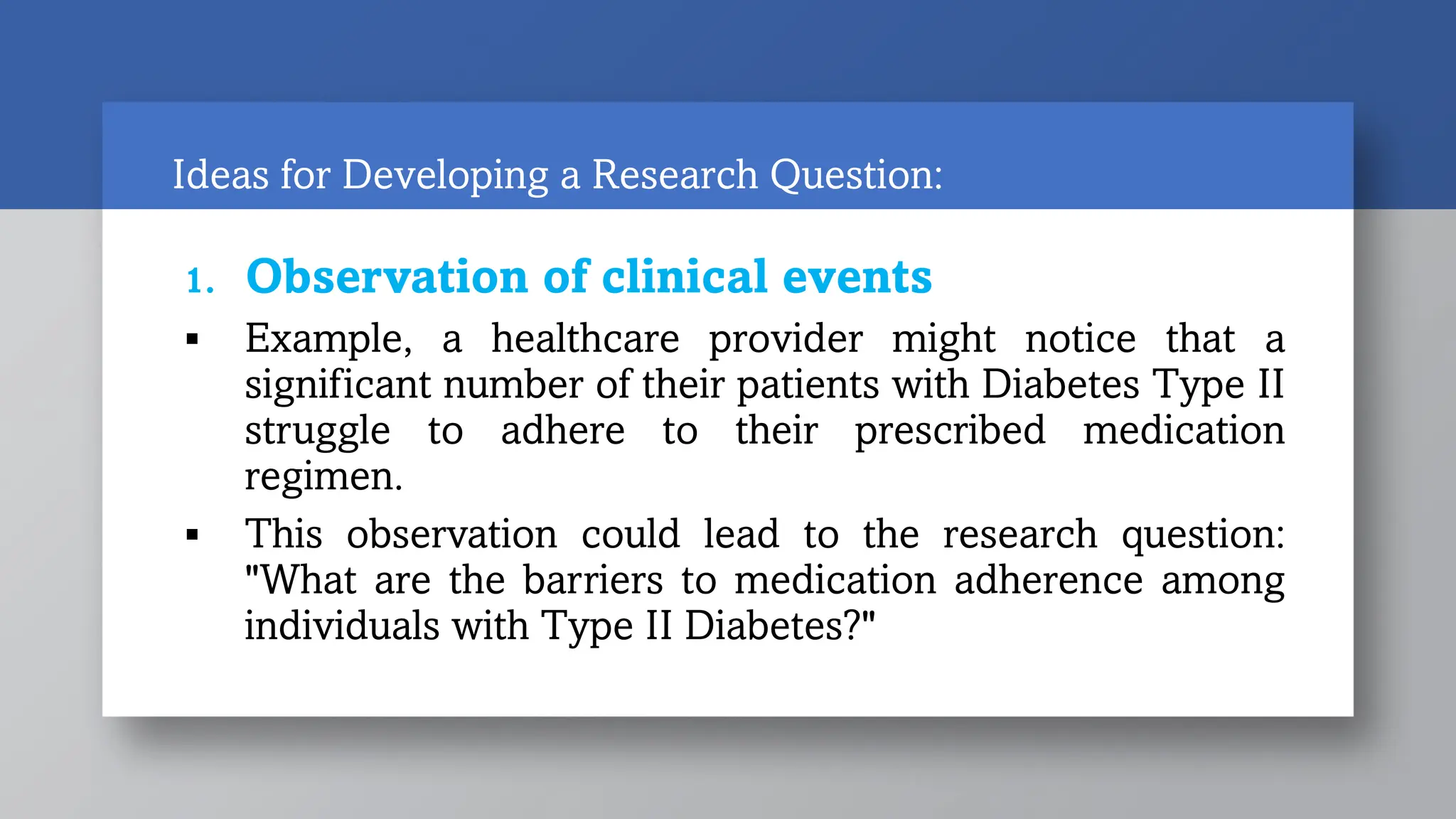
Ideas for Developing a Research Question:
1. Observation of clinical events
 Example, a healthcare provider might notice that a
significant number of their patients with Diabetes Type II
struggle to adhere to their prescribed medication
regimen.
 This observation could lead to the research question:
"What are the barriers to medication adherence among
individuals with Type II Diabetes?"
Ideas for Developing a Research Question:
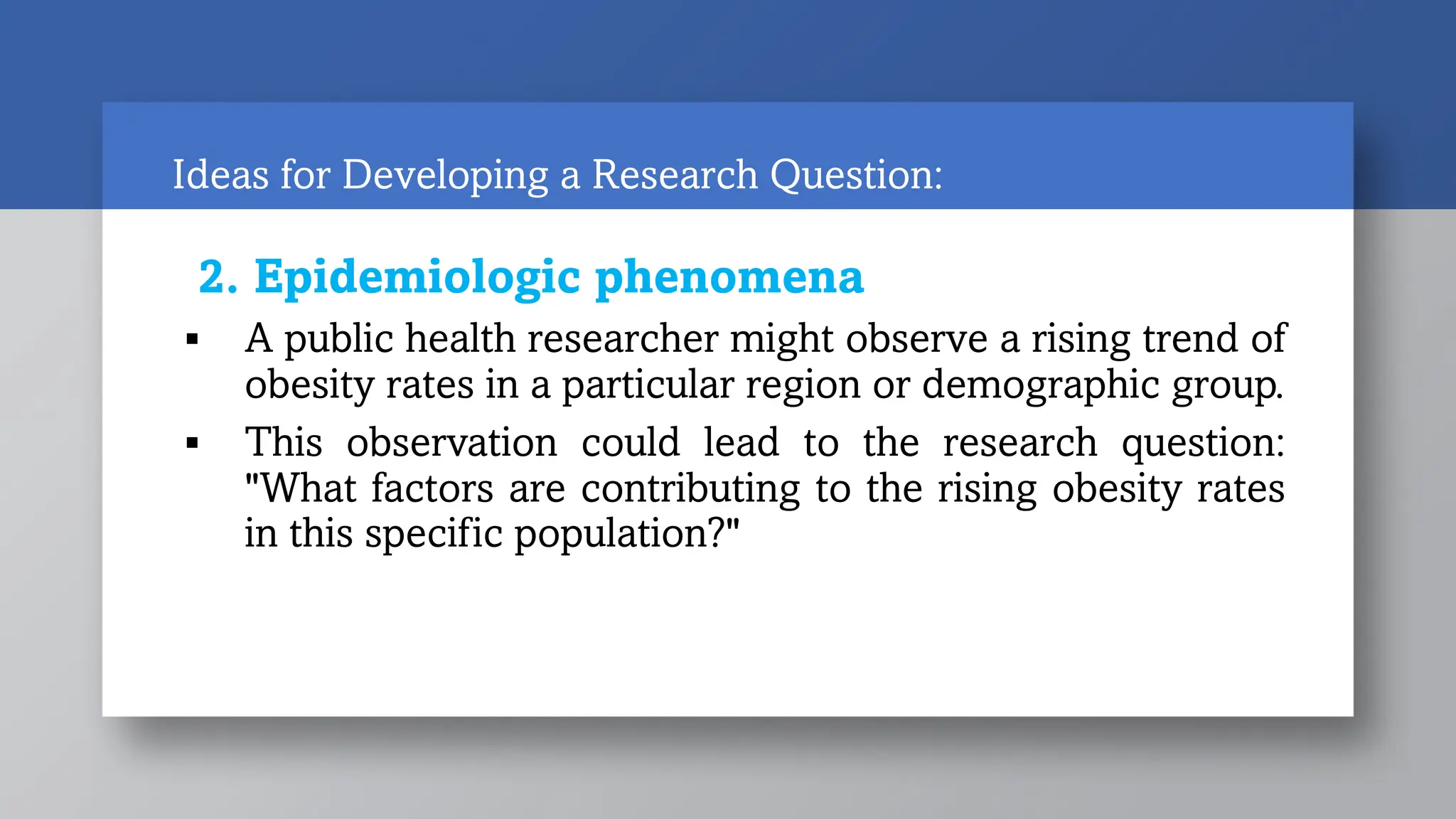
2. Epidemiologic phenomena
 A public health researcher might observe a rising trend of
obesity rates in a particular region or demographic group.
 This observation could lead to the research question:
"What factors are contributing to the rising obesity rates
in this specific population?"
Ideas for Developing a Research Question:
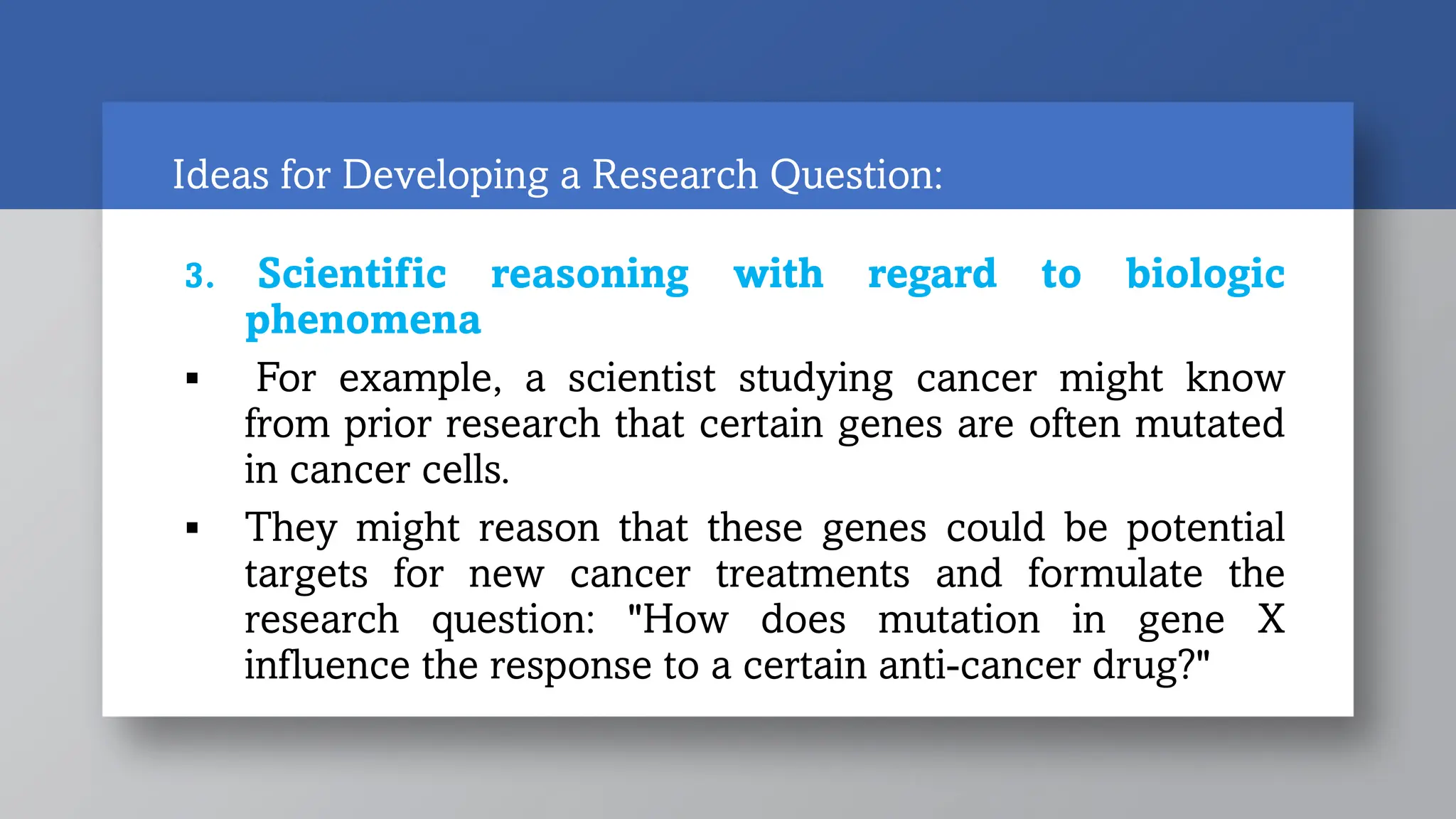
3. Scientific reasoning with regard to biologic
phenomena
 For example, a scientist studying cancer might know
from prior research that certain genes are often mutated
in cancer cells.
 They might reason that these genes could be potential
targets for new cancer treatments and formulate the
research question: "How does mutation in gene X
influence the response to a certain anti-cancer drug?"
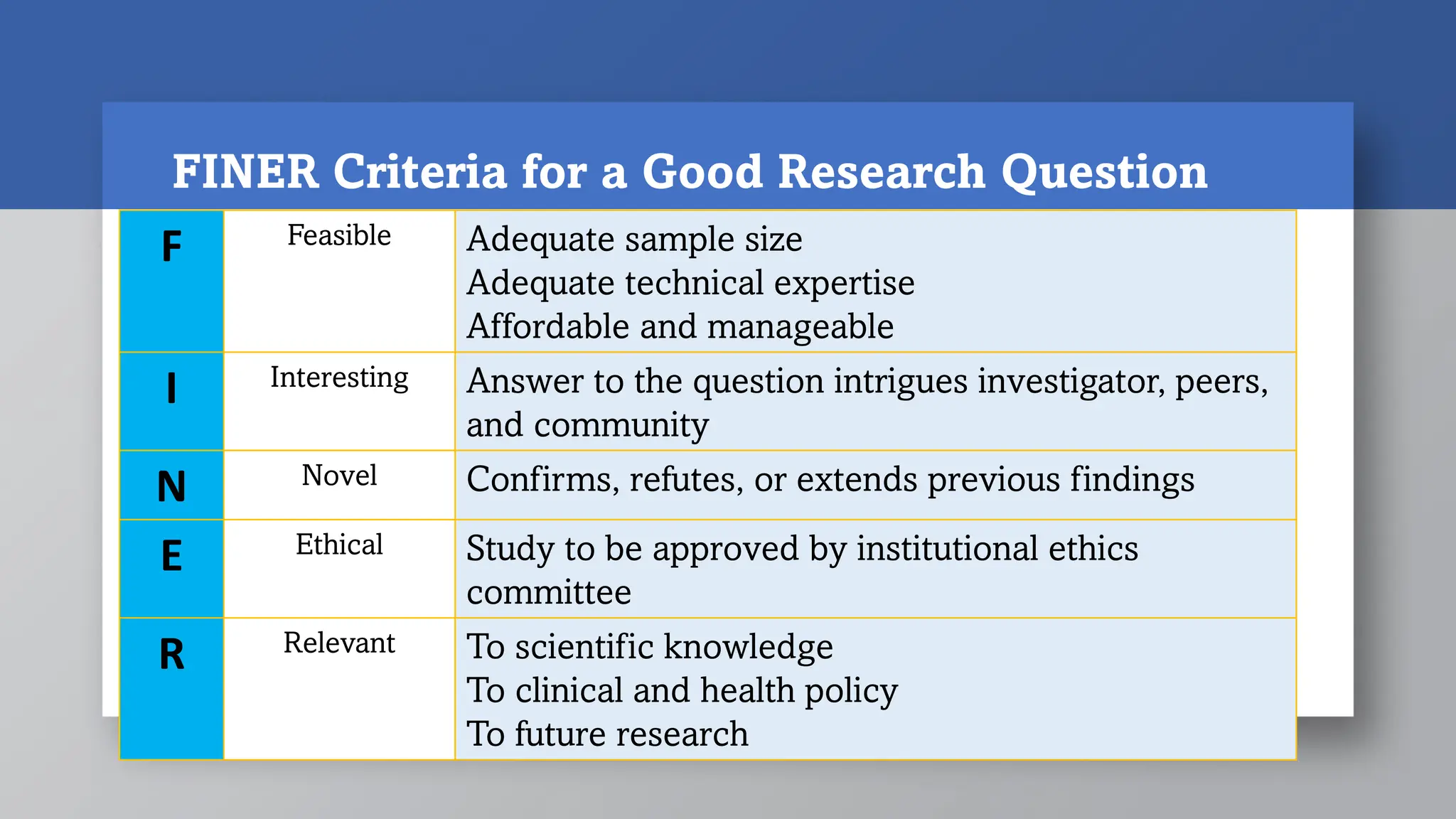
FINER Criteria for a Good Research Question
F Feasible Adequate sample size
Adequate technical expertise
Affordable and manageable
I Interesting Answer to the question intrigues investigator, peers,
and community
N Novel Confirms, refutes, or extends previous findings
E Ethical Study to be approved by institutional ethics
committee
R Relevant To scientific knowledge
To clinical and health policy
To future research
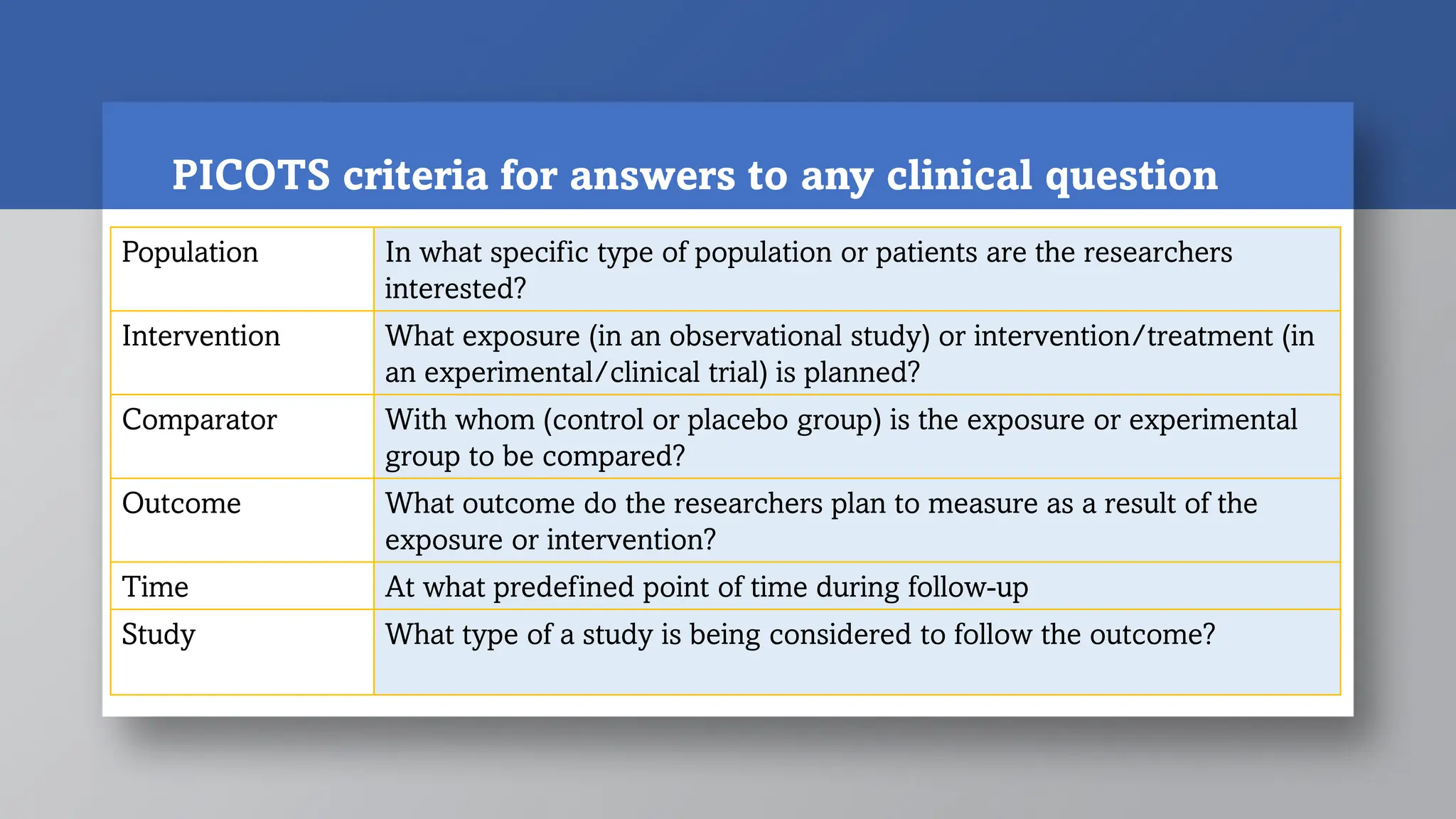
PICOTS criteria for answers to any clinical question
Population In what specific type of population or patients are the researchers
interested?
Intervention What exposure (in an observational study) or intervention/treatment (in
an experimental/clinical trial) is planned?
Comparator With whom (control or placebo group) is the exposure or experimental
group to be compared?
Outcome What outcome do the researchers plan to measure as a result of the
exposure or intervention?
Time At what predefined point of time during follow-up
Study What type of a study is being considered to follow the outcome?
Forming the research question,
Hypothesis, and objectives
1. Pre-investigational steps
Key Definitions
» Null Hypothesis (H0):
» In statistical hypothesis testing, the null
hypothesis is a premise asserting that no significant
difference or relationship exists between the
observed data and the expected data under the
assumption that the null hypothesis is true
Key Definitions
» Alternative Hypothesis (H1 or Ha)
» is a statement that suggests a statistical relationship
or effect that exists between variables.
» This statement is in opposition to the null hypothesis.
Generating a hypothesis
» To test the hypothesis, a null hypothesis is put forward and the study tries to
disprove it.
» For example, in an interventional study to compare a new treatment option with
the established conventional treatment—for example, laparoscopic repair of
hernia with conventional surgery
» The null hypothesis would state that, “The true difference in the outcome of
interest of laparoscopic surgery and conventional surgery in the treatment of
inguinal hernia is zero.”
» The alternative hypothesis would state that “There is a difference in the outcome
of interest of laparoscopic surgery and conventional surgery in the treatment of
inguinal hernia.”
Generating a hypothesis
» A research hypothesis is the statement created by the investigators
when they speculate on the outcome of a research or experiment,
and it is developed from the research question.
» A hypothesis should be logical and biologically plausible and
restricted to the research that is planned.
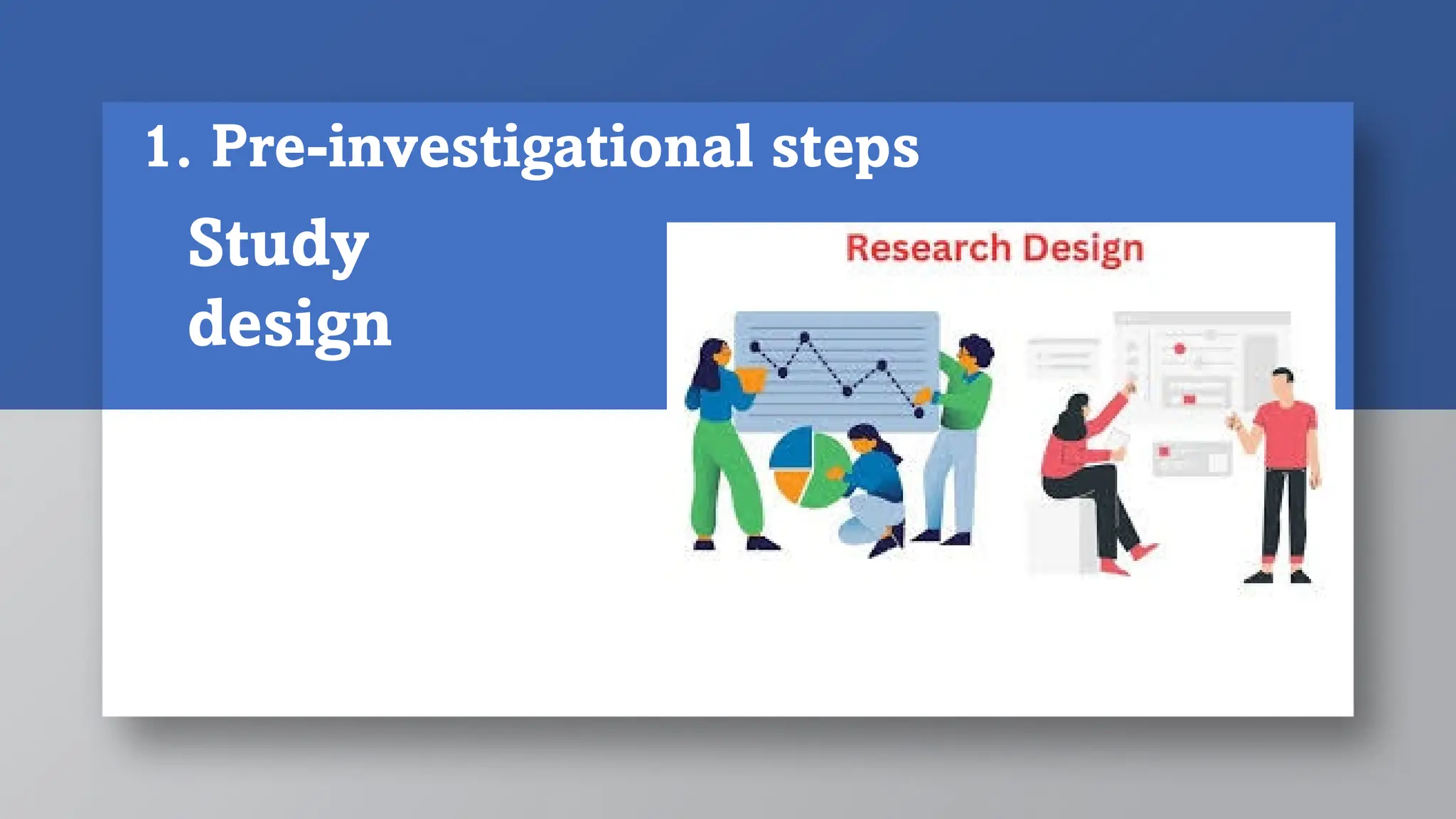
Study
design
1. Pre-investigational steps
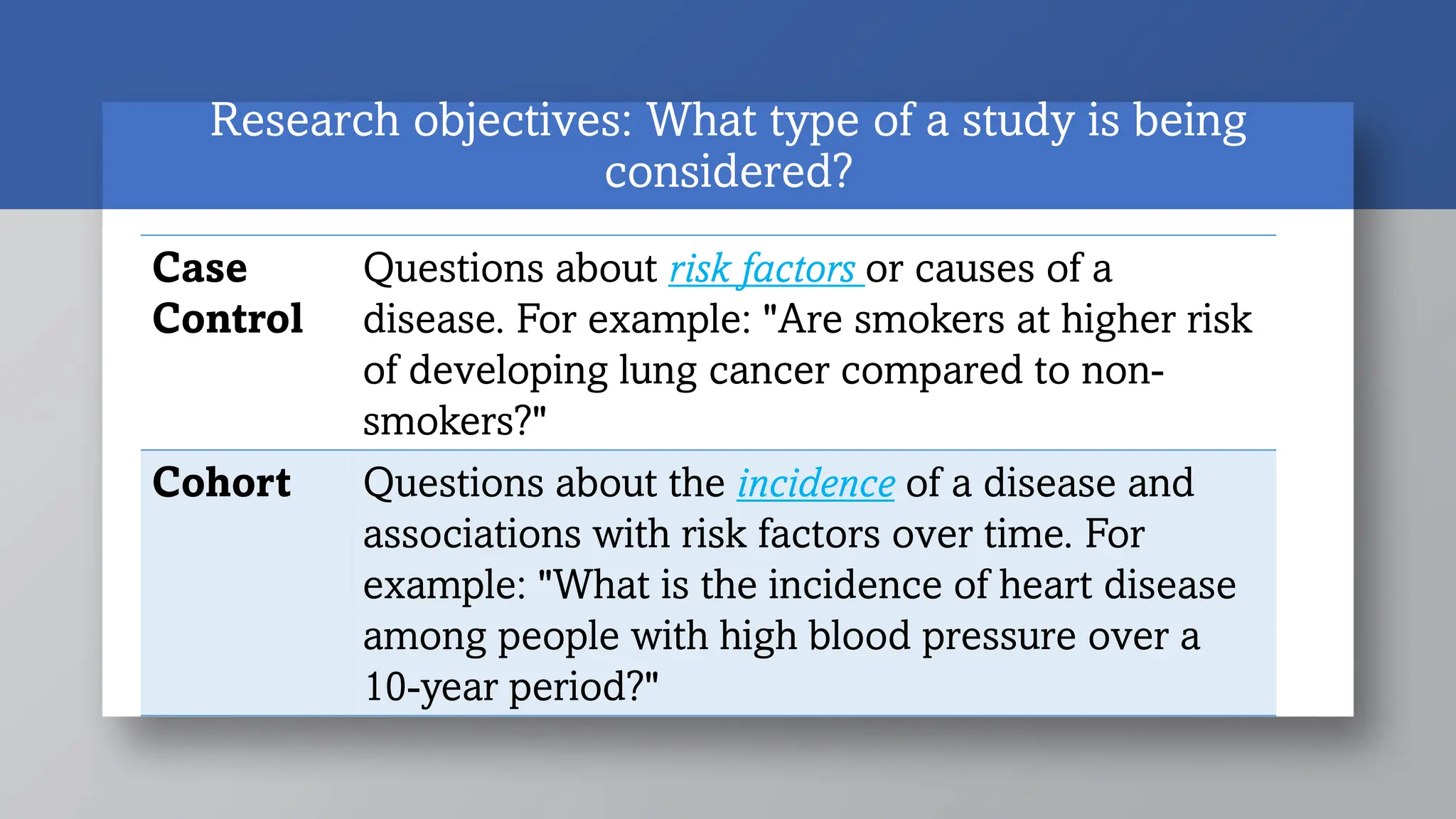
Research objectives: What type of a study is being
considered?
Case
Control
Questions about risk factors or causes of a
disease. For example: "Are smokers at higher risk
of developing lung cancer compared to non-
smokers?"
Cohort Questions about the incidence of a disease and
associations with risk factors over time. For
example: "What is the incidence of heart disease
among people with high blood pressure over a
10-year period?"
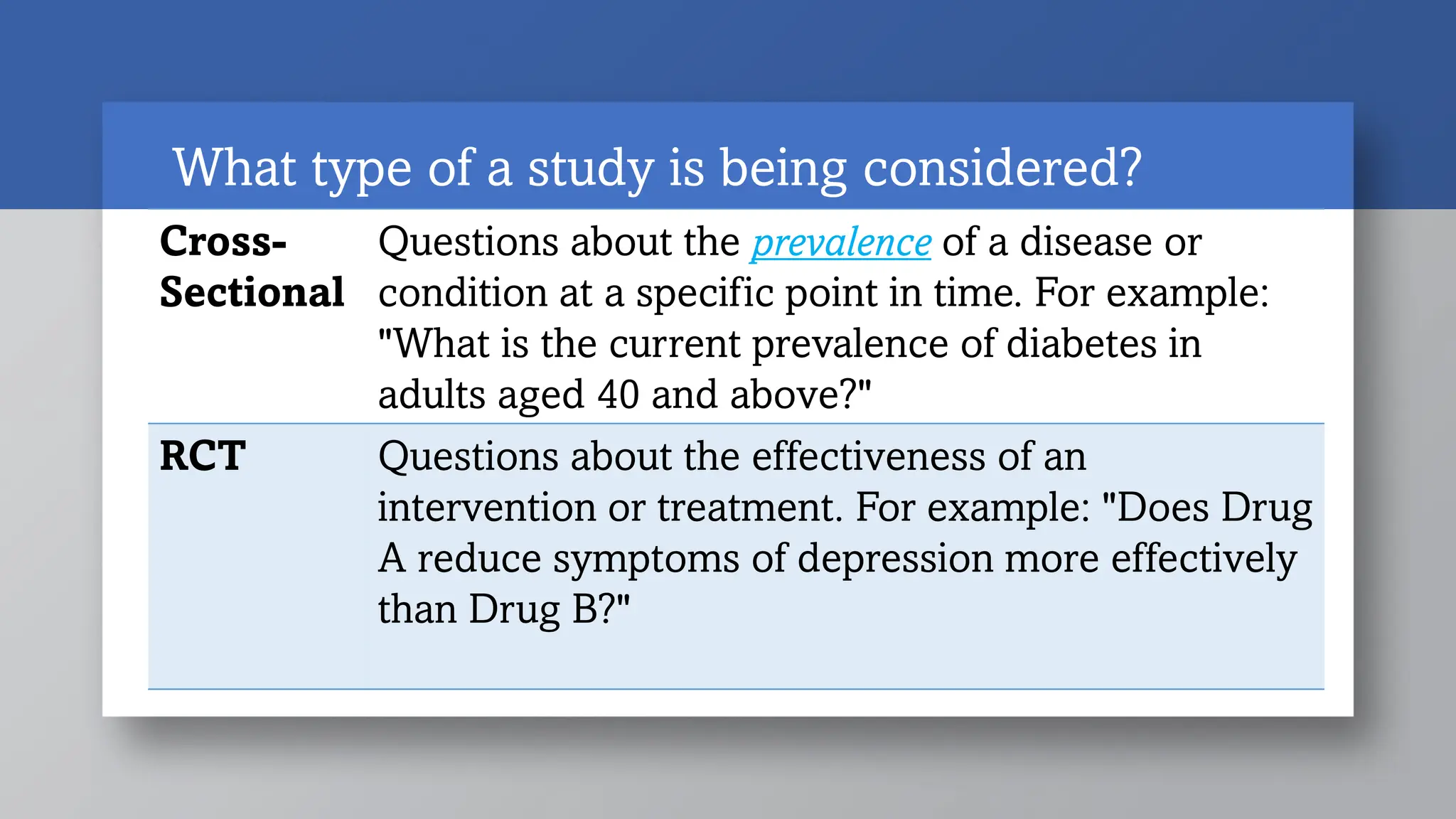
What type of a study is being considered?
Cross-
Sectional
Questions about the prevalence of a disease or
condition at a specific point in time. For example:
"What is the current prevalence of diabetes in
adults aged 40 and above?"
RCT Questions about the effectiveness of an
intervention or treatment. For example: "Does Drug
A reduce symptoms of depression more effectively
than Drug B?"
Key Definitions
» Incidence: This is the number of new cases of
something (like a disease) that happen in a certain group
of people over a certain time period.
» Prevalence: This is the total number of cases of
something (like a disease) in a certain group of people at
a certain time.
Writing a research protocol is crucial ?
Why
Protocol: This is like a detailed plan for a study that explains
the study's objectives, design, methodology, statistical
analysis.
1. Pre-investigational steps
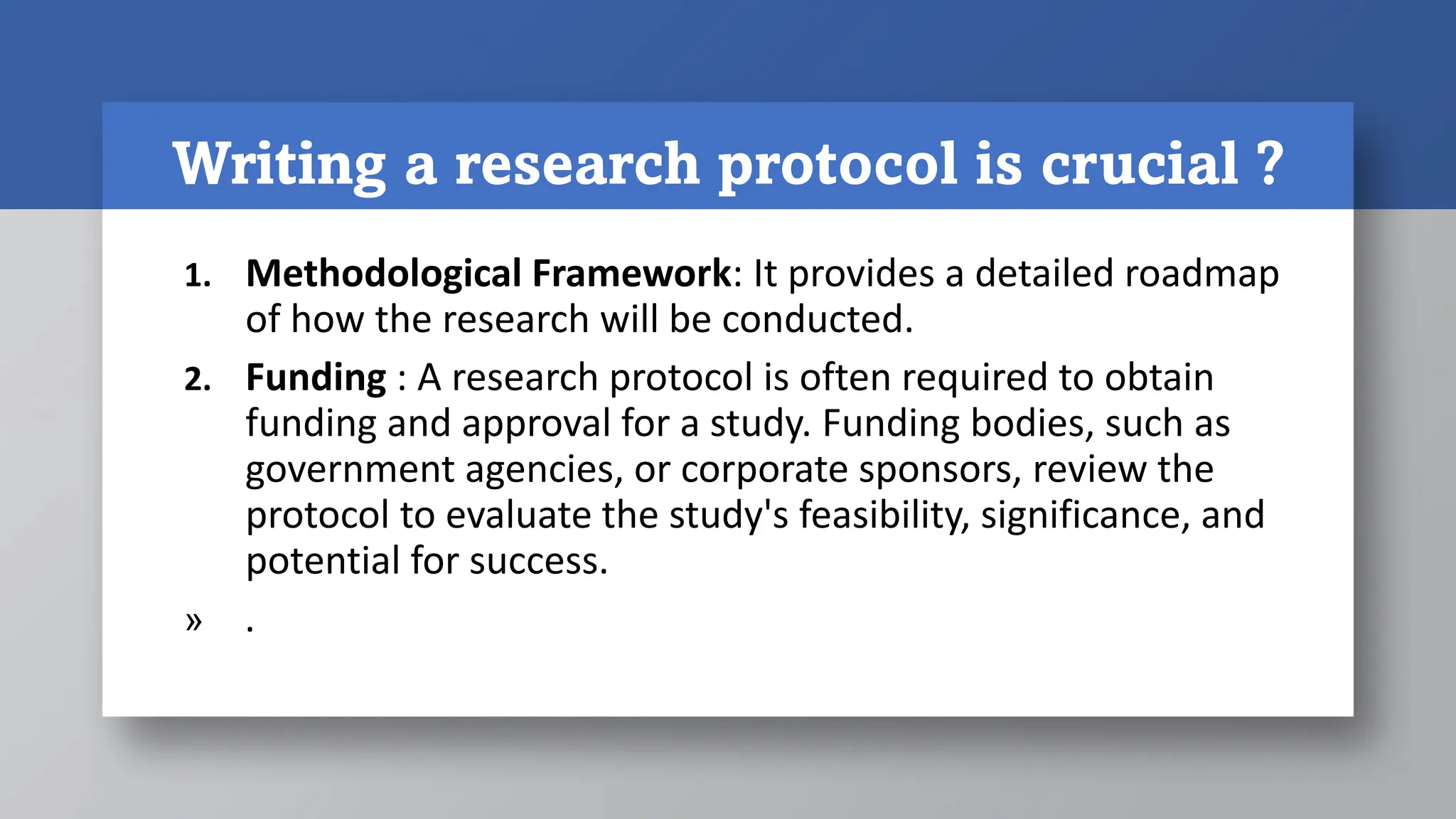
Writing a research protocol is crucial ?
1. Methodological Framework: It provides a detailed roadmap
of how the research will be conducted.
2. Funding : A research protocol is often required to obtain
funding and approval for a study. Funding bodies, such as
government agencies, or corporate sponsors, review the
protocol to evaluate the study's feasibility, significance, and
potential for success.
» .
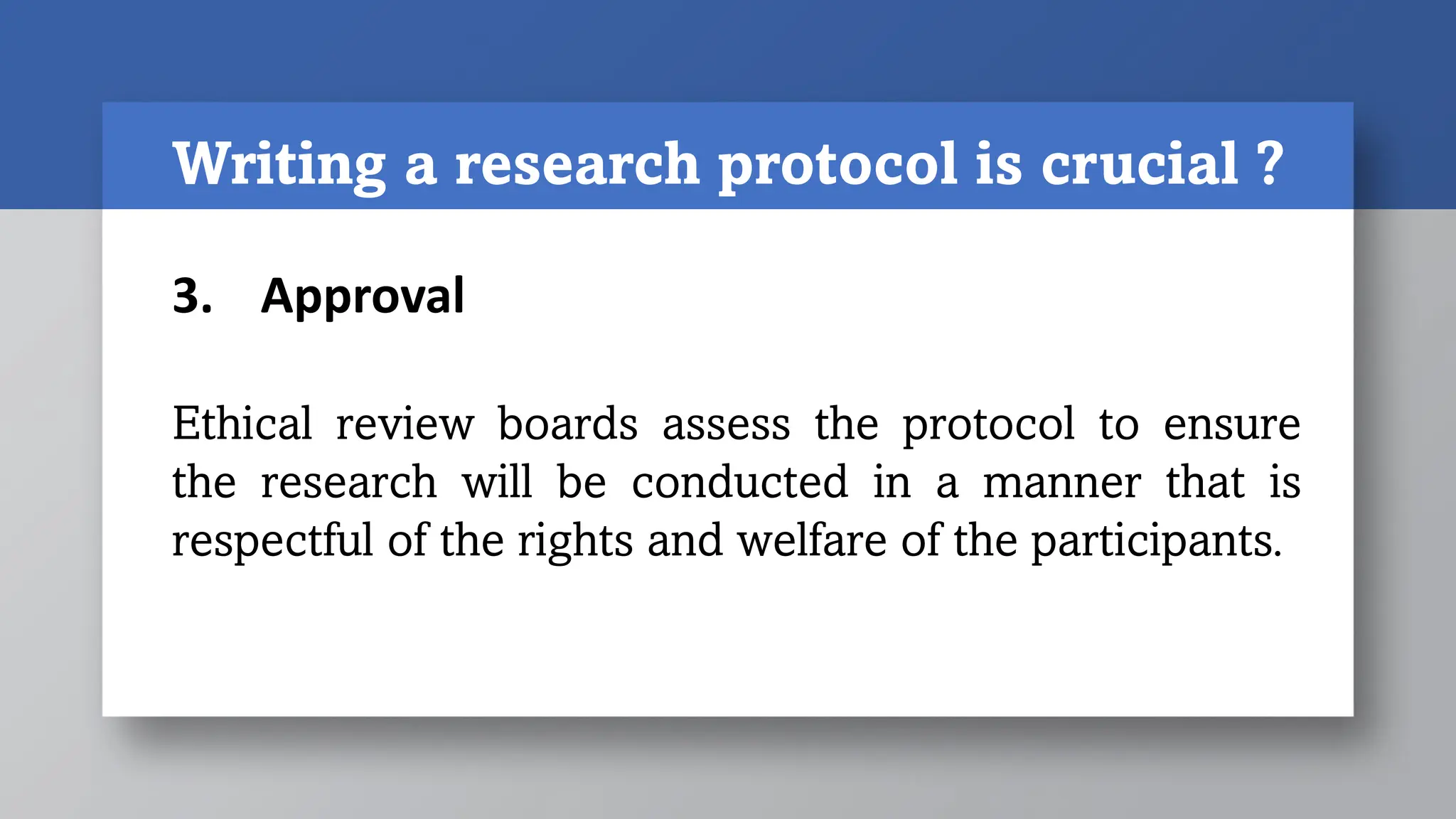
Writing a research protocol is crucial ?
3. Approval
Ethical review boards assess the protocol to ensure
the research will be conducted in a manner that is
respectful of the rights and welfare of the participants.
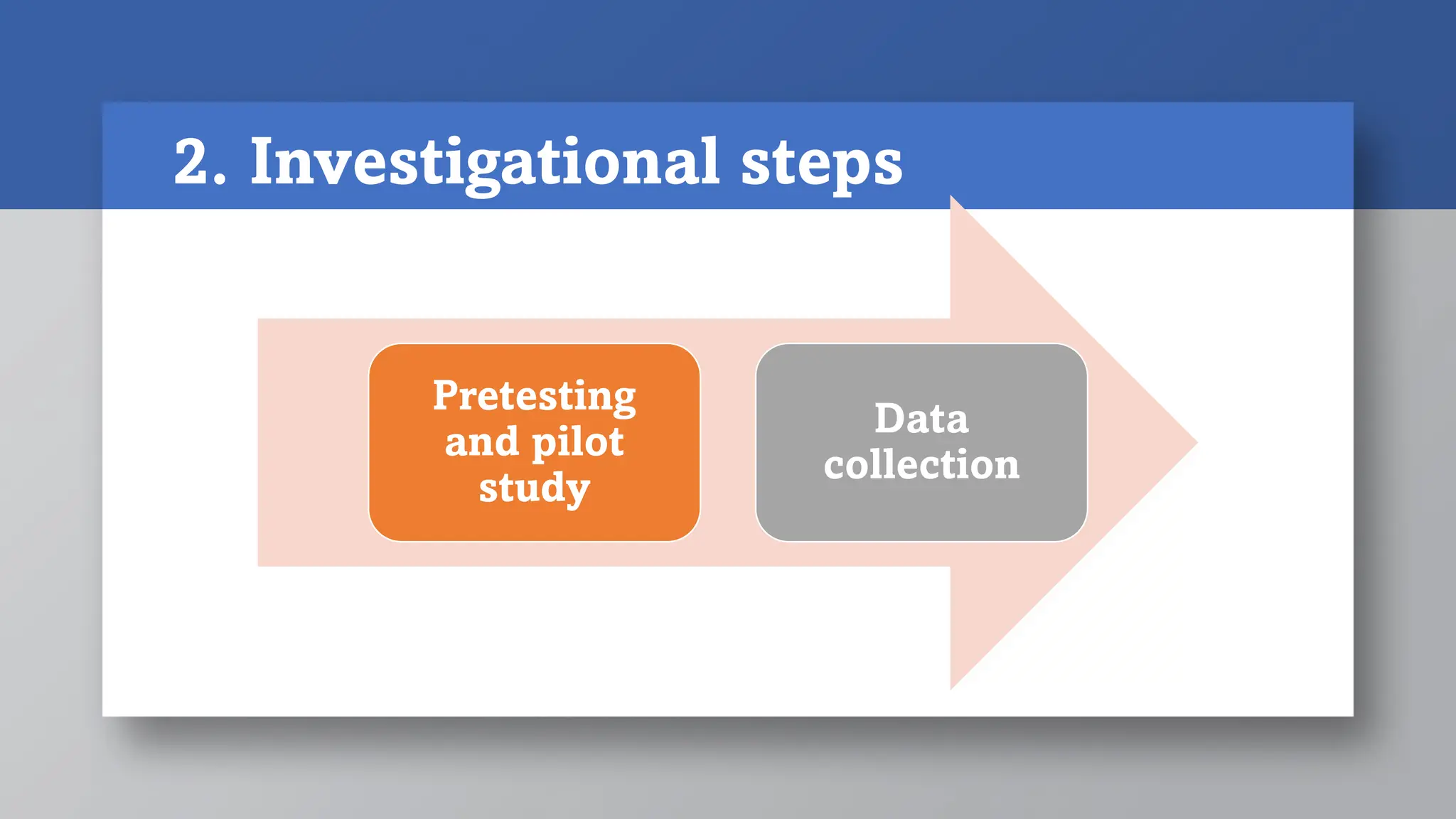
2. Investigational steps
Pretesting
and pilot
study
Data
collection
Investigational steps
» A pilot study, sometimes known as a feasibility study, is a
small-scale version of the main study conducted to test
whether the methodology, including data collection and
analysis, is effective and practical.
» It allows researchers to identify potential issues and
make necessary adjustments before the full-scale study,
minimizing the risk of time and resources being wasted
on an ineffective design.
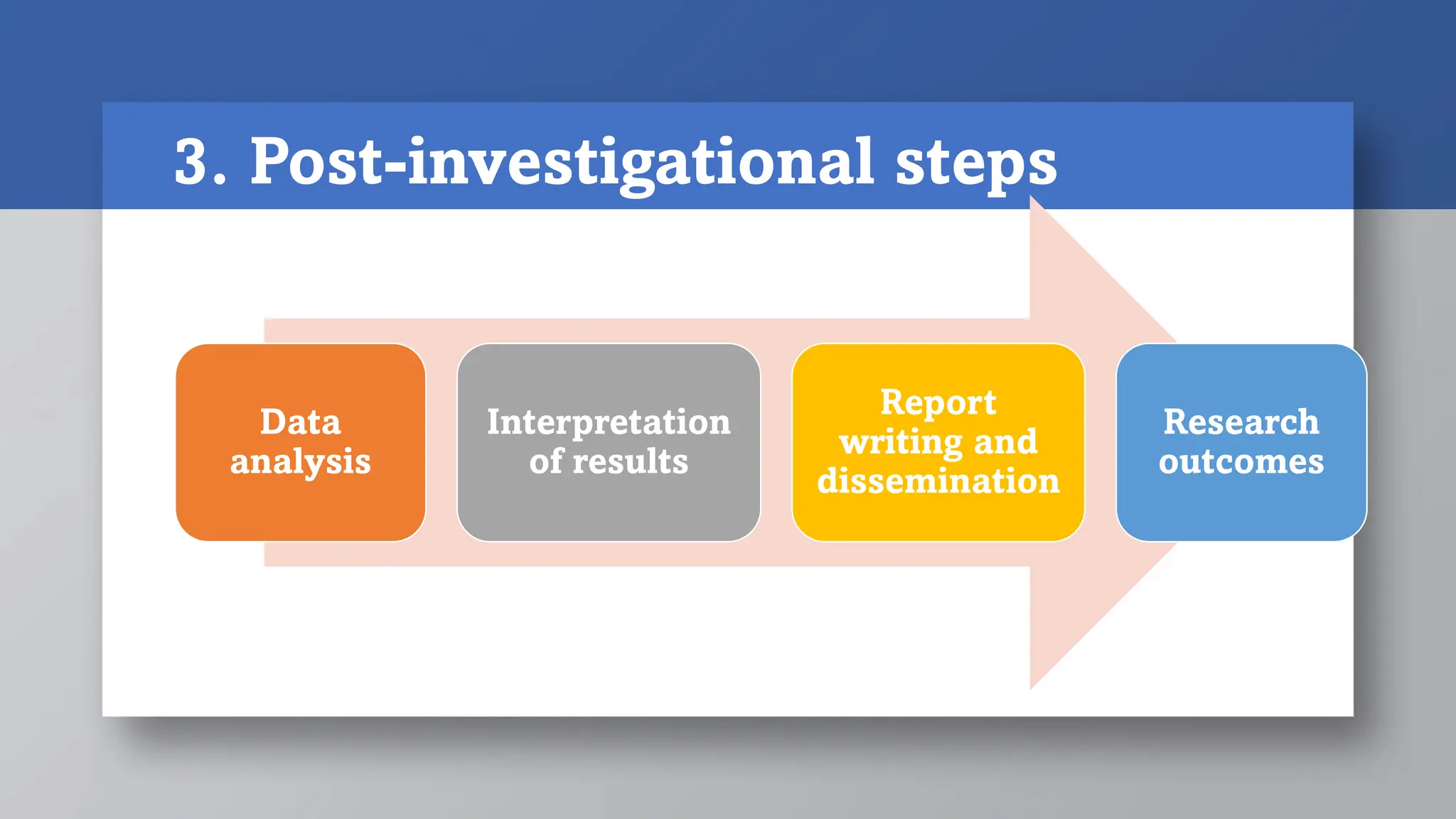
3. Post-investigational steps
Data
analysis
Interpretation
of results
Report
writing and
dissemination
Research
outcomes
How to plan a research study.pdf

How to plan a research study.pdf

  • 1.
    How to plana research study Noha O. Mansour, PhD Clinical Pharmacy and Pharmacy Practice Department Clinical Research Design and Pharmacovigilance (PP 518)
  • 2.
    Lecture Objectives When youhave completed this lecture, you will be able to understand: » Steps in planning a research study » The importance of the research questions, hypothesis, and research objectives in planning a research study » Execution of the research study
  • 3.
    How to starta research study? 1.Planning 2. Execution 3. Analysis and interpretation 4. Application of the results
  • 4.
  • 5.
    1. Pre-investigational steps Formingthe research question, Hypothesis, and objectives Selecting study type Protocol writing Ethical approval
  • 6.
    Forming the research question,Hypothesis, and Objectives 1. Pre-investigational steps
  • 7.
    Ideas for Developinga Research Question 1. Observation of clinical events 2. Epidemiologic phenomena 3. Scientific reasoning with regard to biologic phenomena
  • 8.
    Ideas for Developinga Research Question: 1. Observation of clinical events  Example, a healthcare provider might notice that a significant number of their patients with Diabetes Type II struggle to adhere to their prescribed medication regimen.  This observation could lead to the research question: "What are the barriers to medication adherence among individuals with Type II Diabetes?"
  • 9.
    Ideas for Developinga Research Question: 2. Epidemiologic phenomena  A public health researcher might observe a rising trend of obesity rates in a particular region or demographic group.  This observation could lead to the research question: "What factors are contributing to the rising obesity rates in this specific population?"
  • 10.
    Ideas for Developinga Research Question: 3. Scientific reasoning with regard to biologic phenomena  For example, a scientist studying cancer might know from prior research that certain genes are often mutated in cancer cells.  They might reason that these genes could be potential targets for new cancer treatments and formulate the research question: "How does mutation in gene X influence the response to a certain anti-cancer drug?"
  • 11.
    FINER Criteria fora Good Research Question F Feasible Adequate sample size Adequate technical expertise Affordable and manageable I Interesting Answer to the question intrigues investigator, peers, and community N Novel Confirms, refutes, or extends previous findings E Ethical Study to be approved by institutional ethics committee R Relevant To scientific knowledge To clinical and health policy To future research
  • 12.
    PICOTS criteria foranswers to any clinical question Population In what specific type of population or patients are the researchers interested? Intervention What exposure (in an observational study) or intervention/treatment (in an experimental/clinical trial) is planned? Comparator With whom (control or placebo group) is the exposure or experimental group to be compared? Outcome What outcome do the researchers plan to measure as a result of the exposure or intervention? Time At what predefined point of time during follow-up Study What type of a study is being considered to follow the outcome?
  • 13.
    Forming the researchquestion, Hypothesis, and objectives 1. Pre-investigational steps
  • 14.
    Key Definitions » NullHypothesis (H0): » In statistical hypothesis testing, the null hypothesis is a premise asserting that no significant difference or relationship exists between the observed data and the expected data under the assumption that the null hypothesis is true
  • 15.
    Key Definitions » AlternativeHypothesis (H1 or Ha) » is a statement that suggests a statistical relationship or effect that exists between variables. » This statement is in opposition to the null hypothesis.
  • 16.
    Generating a hypothesis »To test the hypothesis, a null hypothesis is put forward and the study tries to disprove it. » For example, in an interventional study to compare a new treatment option with the established conventional treatment—for example, laparoscopic repair of hernia with conventional surgery » The null hypothesis would state that, “The true difference in the outcome of interest of laparoscopic surgery and conventional surgery in the treatment of inguinal hernia is zero.” » The alternative hypothesis would state that “There is a difference in the outcome of interest of laparoscopic surgery and conventional surgery in the treatment of inguinal hernia.”
  • 17.
    Generating a hypothesis »A research hypothesis is the statement created by the investigators when they speculate on the outcome of a research or experiment, and it is developed from the research question. » A hypothesis should be logical and biologically plausible and restricted to the research that is planned.
  • 18.
  • 19.
    Research objectives: Whattype of a study is being considered? Case Control Questions about risk factors or causes of a disease. For example: "Are smokers at higher risk of developing lung cancer compared to non- smokers?" Cohort Questions about the incidence of a disease and associations with risk factors over time. For example: "What is the incidence of heart disease among people with high blood pressure over a 10-year period?"
  • 20.
    What type ofa study is being considered? Cross- Sectional Questions about the prevalence of a disease or condition at a specific point in time. For example: "What is the current prevalence of diabetes in adults aged 40 and above?" RCT Questions about the effectiveness of an intervention or treatment. For example: "Does Drug A reduce symptoms of depression more effectively than Drug B?"
  • 21.
    Key Definitions » Incidence:This is the number of new cases of something (like a disease) that happen in a certain group of people over a certain time period. » Prevalence: This is the total number of cases of something (like a disease) in a certain group of people at a certain time.
  • 22.
    Writing a researchprotocol is crucial ? Why Protocol: This is like a detailed plan for a study that explains the study's objectives, design, methodology, statistical analysis. 1. Pre-investigational steps
  • 23.
    Writing a researchprotocol is crucial ? 1. Methodological Framework: It provides a detailed roadmap of how the research will be conducted. 2. Funding : A research protocol is often required to obtain funding and approval for a study. Funding bodies, such as government agencies, or corporate sponsors, review the protocol to evaluate the study's feasibility, significance, and potential for success. » .
  • 24.
    Writing a researchprotocol is crucial ? 3. Approval Ethical review boards assess the protocol to ensure the research will be conducted in a manner that is respectful of the rights and welfare of the participants.
  • 25.
    2. Investigational steps Pretesting andpilot study Data collection
  • 26.
    Investigational steps » Apilot study, sometimes known as a feasibility study, is a small-scale version of the main study conducted to test whether the methodology, including data collection and analysis, is effective and practical. » It allows researchers to identify potential issues and make necessary adjustments before the full-scale study, minimizing the risk of time and resources being wasted on an ineffective design.
  • 27.
    3. Post-investigational steps Data analysis Interpretation ofresults Report writing and dissemination Research outcomes